Turning Machine Data Into Construction Intelligence with MyLiebherr
The construction and heavy equipment sectors have spent years talking about digital transformation. Yet for many fleet owners, contractors and equipment managers, the real challenge has never been collecting machine data. The challenge has been turning that information into practical decisions that reduce downtime, improve utilisation and control operating costs.
That challenge is becoming increasingly significant as construction equipment fleets grow more connected. Modern earthmoving machinery generates vast amounts of operational information, from fuel consumption and idle times to maintenance requirements, machine health indicators and location data. When managed effectively, those insights can improve productivity and extend equipment life. When ignored, they can leave costly inefficiencies hidden in plain sight.
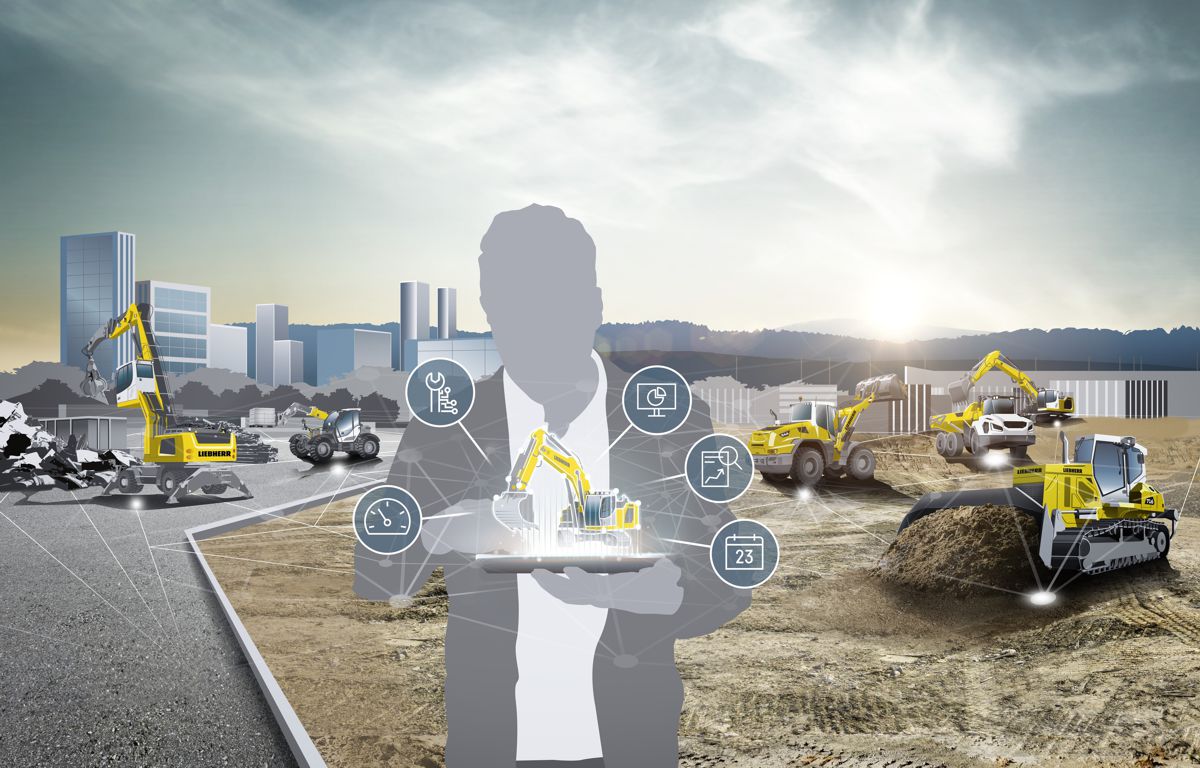
Liebherr has expanded its digital ecosystem with the introduction of MyLiebherr Maintenance and MyLiebherr Performance, two new services integrated into the MyLiebherr online platform for earthmoving equipment and material handlers. The services are designed to provide fleet operators, workshop managers and equipment owners with greater visibility into machine condition, utilisation and maintenance requirements, helping them make better-informed operational decisions.
Briefing
- Liebherr has introduced MyLiebherr Maintenance and MyLiebherr Performance for earthmoving machines and material handlers.
- The services provide maintenance planning, machine health monitoring, utilisation analysis and performance benchmarking.
- Fleet managers can identify maintenance requirements, monitor machine status and review service histories through a unified digital portal.
- Performance analytics help operators reduce idle time, improve utilisation rates and analyse fuel consumption and machine productivity.
- The services are powered by Liebherr Connect, which links connected machines to cloud-based management tools and can be retrofitted to older equipment generations.
The Growing Value of Connected Construction Equipment
Construction equipment manufacturers are increasingly positioning digital services alongside iron and hydraulics as critical components of modern fleet management. Industry analysts have repeatedly highlighted telematics, predictive maintenance and connected asset management as key drivers of productivity improvements across construction, mining and infrastructure projects.
The logic is straightforward. Heavy equipment often represents one of the largest capital investments on a project. Every unplanned breakdown can trigger delays, increase labour costs and create scheduling complications that ripple through an entire operation. Even relatively small inefficiencies such as excessive idling, poor utilisation rates or delayed maintenance intervals can have a measurable impact on profitability over the life of a machine.
Digital fleet management platforms seek to address these challenges by consolidating machine data into actionable information. Rather than requiring managers to interpret multiple data streams manually, the objective is to provide clear visibility into equipment condition and performance across an entire fleet.
Within that broader industry shift, equipment manufacturers are increasingly integrating machine monitoring, maintenance scheduling and operational analytics into unified digital ecosystems. Liebherr’s latest additions to the MyLiebherr platform follow this direction by combining maintenance management and operational performance analysis within a single customer portal.
Reducing Downtime Through Smarter Maintenance Management
For fleet operators, equipment availability remains one of the most important performance metrics. A machine sitting idle due to an unexpected fault generates costs without producing revenue. Consequently, maintenance planning has become a central focus for contractors seeking greater operational efficiency.
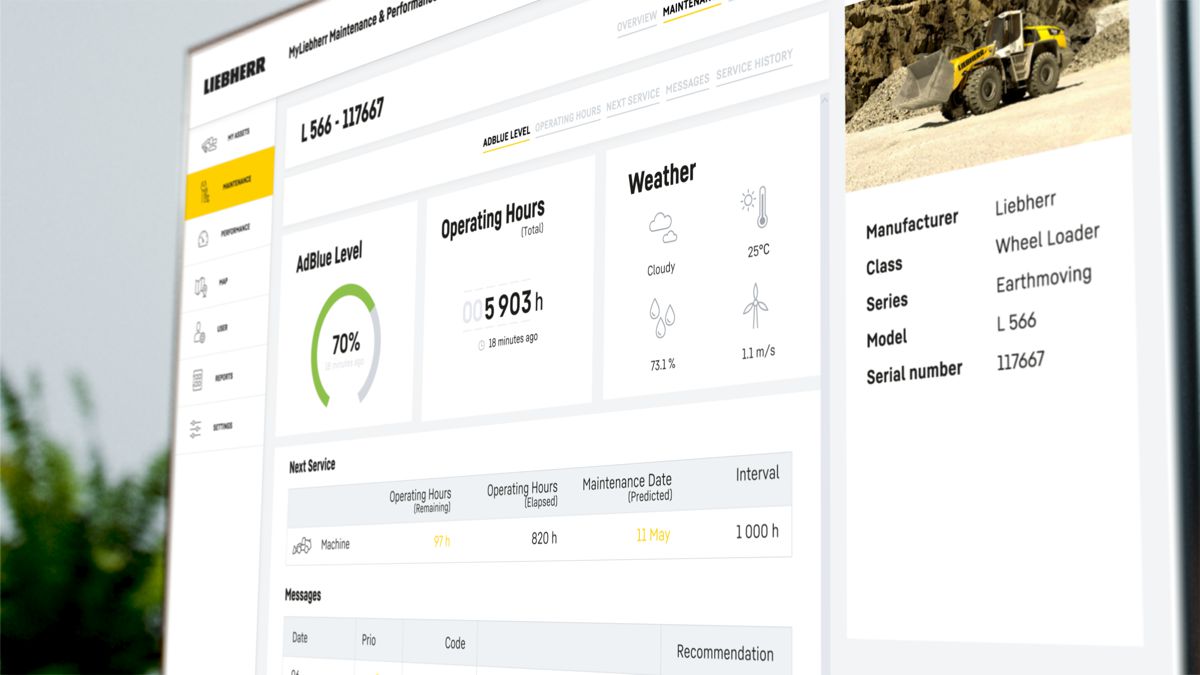
MyLiebherr Maintenance has been developed to support workshop managers and fleet supervisors in managing maintenance requirements across earthmoving equipment and material handlers. Integrated directly into the MyLiebherr portal, the service provides an overview of machine and attachment status across an operator’s fleet.
A traffic-light status system allows users to quickly identify machines requiring attention. Notifications can be categorised according to their cause, including scheduled maintenance requirements or operational alerts such as low fluid levels. Rather than forcing managers to investigate issues individually across multiple systems, the platform consolidates machine status information into a centralised interface.
The detailed machine view provides access to active notifications, service history information and prioritised alerts. Recommendations linked to individual notifications are also displayed, helping maintenance personnel evaluate potential responses and schedule corrective actions more effectively.
Bringing Maintenance Planning Into Daily Operations
Maintenance management often becomes complicated when service activities compete with operational demands. Machines may be required on active projects, making it difficult to schedule preventative maintenance without affecting productivity.
The MyLiebherr Maintenance service aims to improve planning by providing visibility of upcoming maintenance tasks directly through the portal. Maintenance requirements can be monitored in a manner similar to the information displayed within the machine itself, allowing operators to coordinate servicing activities around operational schedules.
This approach supports the bundling of maintenance activities where practical, reducing the number of service interruptions and helping maintenance teams allocate resources more efficiently. The platform also incorporates information relating to service appointments, including confirmed dates and locations provided by service partners.
For organisations operating large fleets across multiple locations, this visibility can simplify maintenance coordination and improve communication between workshop personnel, machine operators and external service providers.
Linking Operators and Workshops Through Digital Reporting
One recurring challenge in fleet management is the gap between machine operators working in the field and maintenance personnel responsible for repairs and servicing.
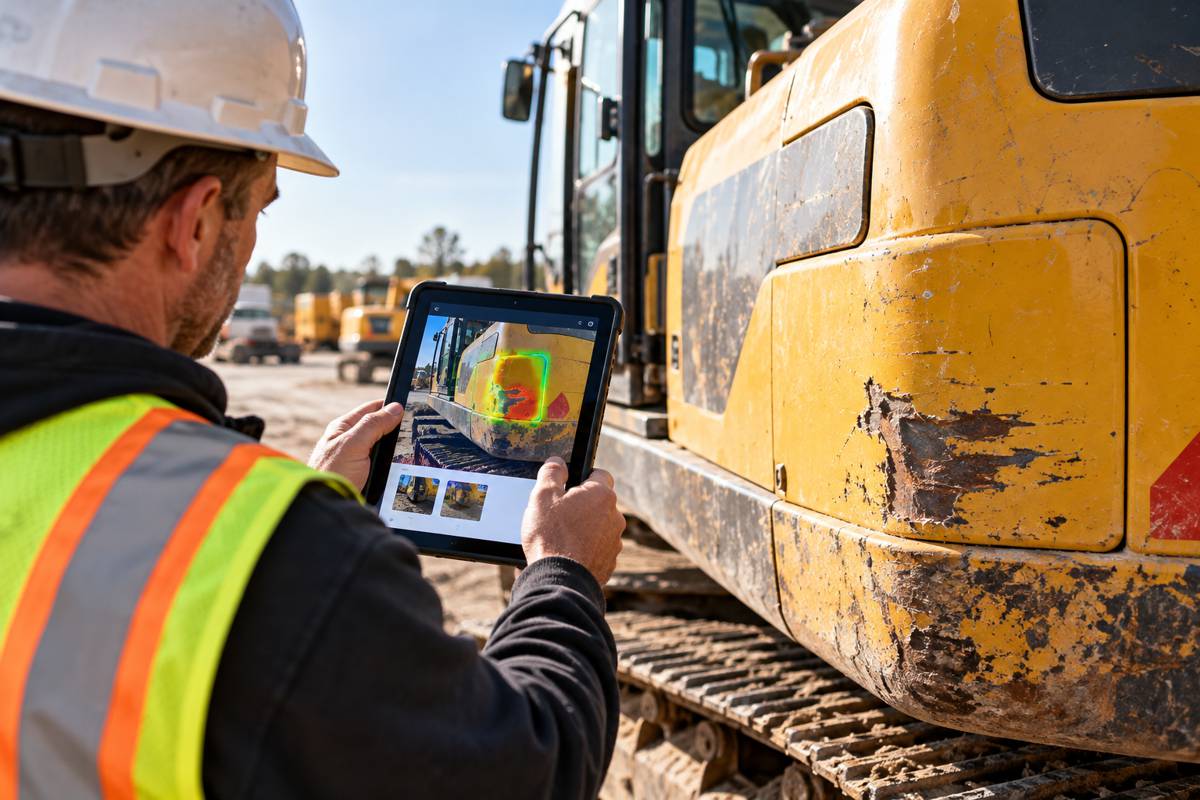
Liebherr has sought to address this issue by linking MyLiebherr Maintenance with its MyAssistant for Earthmoving application. Through this connection, operators can submit damage reports directly from the field, creating a digital record that becomes visible to workshop managers and maintenance personnel.
The integration creates a continuous flow of information between machine operators, maintenance teams and service processes. Damage reports can be reviewed within the service history, supporting faster diagnosis and more informed maintenance planning.
As construction projects become increasingly distributed across multiple sites, the ability to maintain a consistent digital record of machine condition is becoming more valuable. Such systems can help organisations reduce administrative delays while improving communication around equipment issues.
Measuring Productivity Through Performance Analytics
While maintenance management focuses on equipment reliability, operational efficiency requires a deeper understanding of how machines are being used in the field.
MyLiebherr Performance has been developed to provide that visibility through consolidated performance monitoring and fleet analytics. The platform enables operators to evaluate utilisation levels, fuel consumption and machine activity patterns across connected fleets.
One of its primary functions is identifying inefficient machine operation. Excessive idling remains a persistent issue across construction projects, increasing fuel consumption and operating costs while contributing unnecessary emissions. By analysing machine activity data, operators can identify opportunities to reduce idle time and improve equipment deployment strategies.
The system also supports weighing data analysis, helping operators gain a clearer understanding of machine productivity and material handling performance. Combined with operational expertise, these insights can contribute to more efficient project execution and lower equipment operating costs.
Benchmarking Fleet Performance Across Operations
Large contractors frequently manage equipment across multiple projects, regions and operational environments. Determining whether a machine is performing efficiently often requires comparison against similar equipment operating under comparable conditions.
MyLiebherr Performance includes utilisation monitoring tools that allow operators to assess how extensively individual machines are being used. Consumption data can also be compared against global averages, providing additional context for evaluating operational efficiency.
The platform’s group comparison functionality enables machines to be organised according to equipment type or operational role. Comparisons can then be made across working hours, idle hours and consumption metrics. This allows organisations to establish internal benchmarks, optimise fleet allocation strategies and identify areas where productivity improvements may be possible.
For companies operating mixed fleets across infrastructure, earthmoving and material handling applications, such benchmarking capabilities can support more informed equipment management decisions.
Using Location Data to Improve Operational Planning
Machine location data has become an increasingly valuable management tool, particularly on large-scale infrastructure projects where equipment movement can influence productivity and safety outcomes.
MyLiebherr Performance incorporates a Geo-Track mapping function that records and displays historical machine locations. Operational histories can be visualised geographically, allowing managers to review machine movements and analyse route efficiency.
Location analytics can support a range of operational objectives. Workflow bottlenecks may become easier to identify, haul routes can be assessed for efficiency and recurring safety concerns associated with particular site areas may become more apparent. The ability to visualise machine movement patterns can therefore contribute to both productivity improvements and operational risk management.
As infrastructure projects continue to expand in scale and complexity, spatial analysis tools are becoming increasingly relevant to day-to-day fleet operations.
Liebherr Connect Forms the Digital Foundation
Underlying both new services is Liebherr Connect, the company’s machine connectivity framework that links equipment to digital services within the MyLiebherr ecosystem.
The platform securely captures and transmits machine data, enabling cloud-based processing and access through the customer portal. Importantly, the system can also be retrofitted to older generations of Liebherr equipment, extending connectivity capabilities beyond newly delivered machines.
For fleet owners, this compatibility is significant. Digital transformation strategies often stall when organisations face the prospect of replacing large portions of their equipment fleet simply to access connected technologies. Retrofit options can provide a more gradual pathway toward data-driven fleet management while preserving existing capital investments.
The broader industry trend suggests that connectivity will increasingly become a standard expectation rather than a premium feature. As machine intelligence, predictive maintenance and operational analytics continue to evolve, platforms capable of converting equipment data into practical operational insights are likely to play a growing role in construction and infrastructure management.
Building a More Data Driven Fleet Future
Construction remains an industry where productivity gains are often achieved through incremental improvements rather than dramatic breakthroughs. Better maintenance planning, reduced idle time, improved machine utilisation and more effective scheduling may appear modest individually, yet together they can deliver meaningful operational benefits.
The expansion of the MyLiebherr platform through Maintenance and Performance reflects a wider shift across heavy equipment manufacturing toward integrated digital fleet management. Rather than focusing solely on machine hardware, manufacturers are increasingly investing in software ecosystems designed to help operators maximise asset value throughout the equipment lifecycle.
As infrastructure projects become larger, schedules tighter and operating costs more closely scrutinised, the ability to transform machine data into actionable intelligence is likely to become a competitive necessity. For fleet operators, the question is no longer whether connected equipment will influence future operations. The discussion has already moved on to how effectively organisations can use the information those machines provide.