Rethinking Road Intelligence with Aeva CityOS
There was a time when the role of transport infrastructure appeared relatively straightforward. Roads carried vehicles, signals regulated movement and intersections balanced competing flows as efficiently as engineering would allow. Success was usually visible in physical form. More lanes meant greater capacity. New junction layouts reduced delay. Better surfaces improved reliability. Investment could be measured in kilometres delivered and congestion relieved.
That model has served cities well for generations, but it is becoming increasingly difficult to sustain on its own. Urban transport systems now operate under pressures that cannot always be solved through additional concrete, wider corridors or more ambitious capital programmes. Cities are expected to move more people while reducing emissions, protecting vulnerable road users, improving public transport performance and making limited public budgets stretch further than ever before. Meanwhile, travel patterns have become less predictable, road users more diverse and public expectations considerably higher.
The consequence is not that traditional infrastructure is becoming less important. Quite the opposite. Roads, junctions and transport corridors remain the foundation upon which mobility depends. What is changing is the expectation placed upon those assets. Increasingly, transport authorities want infrastructure that does more than accommodate movement. They want infrastructure that understands movement, identifies emerging problems before they become visible in traditional reporting cycles and provides evidence that allows decisions to be made with greater confidence.
That broader evolution forms the context for Aeva’s planned appearance at ITS America Conference & Expo 2026 in Detroit, where the company will present CityOS, its traffic intelligence platform built around sensing, perception and real-time analytics. While the technology itself sits firmly within the intelligent transportation systems sector, the more interesting story is what its development says about where infrastructure management appears to be heading and why agencies are beginning to rethink the relationship between physical assets and digital awareness.
Briefing Summary
- Aeva will showcase CityOS during ITS America Conference & Expo 2026 in Detroit
- The platform combines 4D LiDAR sensing, edge AI and real-time traffic analytics
- CityOS is intended to support safer roads, improved operations and stronger planning decisions
- The system continuously monitors vehicles, cyclists and pedestrians across changing conditions
- The wider market increasingly favours infrastructure that can deliver operational intelligence rather than retrospective reporting
Roads Already Generate Data but Information Is Not the Same Thing as Understanding
Modern transport networks are hardly lacking information. Across most developed road systems, enormous volumes of data are already being collected every hour through cameras, loop detectors, connected signals, fleet telematics, GPS services and traffic management platforms. Yet for all this apparent visibility, many agencies still struggle to answer relatively simple operational questions quickly enough to influence outcomes.
Part of the reason lies in how existing infrastructure was designed. Traditional traffic monitoring technologies emerged to support a different era of transport planning where understanding aggregate behaviour was often sufficient. Vehicle counts, queue lengths and journey times provided enough information to support infrastructure investment and signal adjustments because roads themselves were generally built around more predictable usage patterns. Today’s transport environment is considerably more dynamic.
Urban intersections no longer exist simply to process private vehicles as efficiently as possible. The same physical space may now carry buses, delivery traffic, cyclists, pedestrians, ride sharing services and micro-mobility users whose movement patterns rarely follow the assumptions embedded within older traffic models. Congestion itself has become more complex too, influenced not only by capacity but by behavioural interaction, network disruption and changing travel habits. As a result, agencies are increasingly searching for ways to move beyond measuring volumes and begin understanding behaviour.
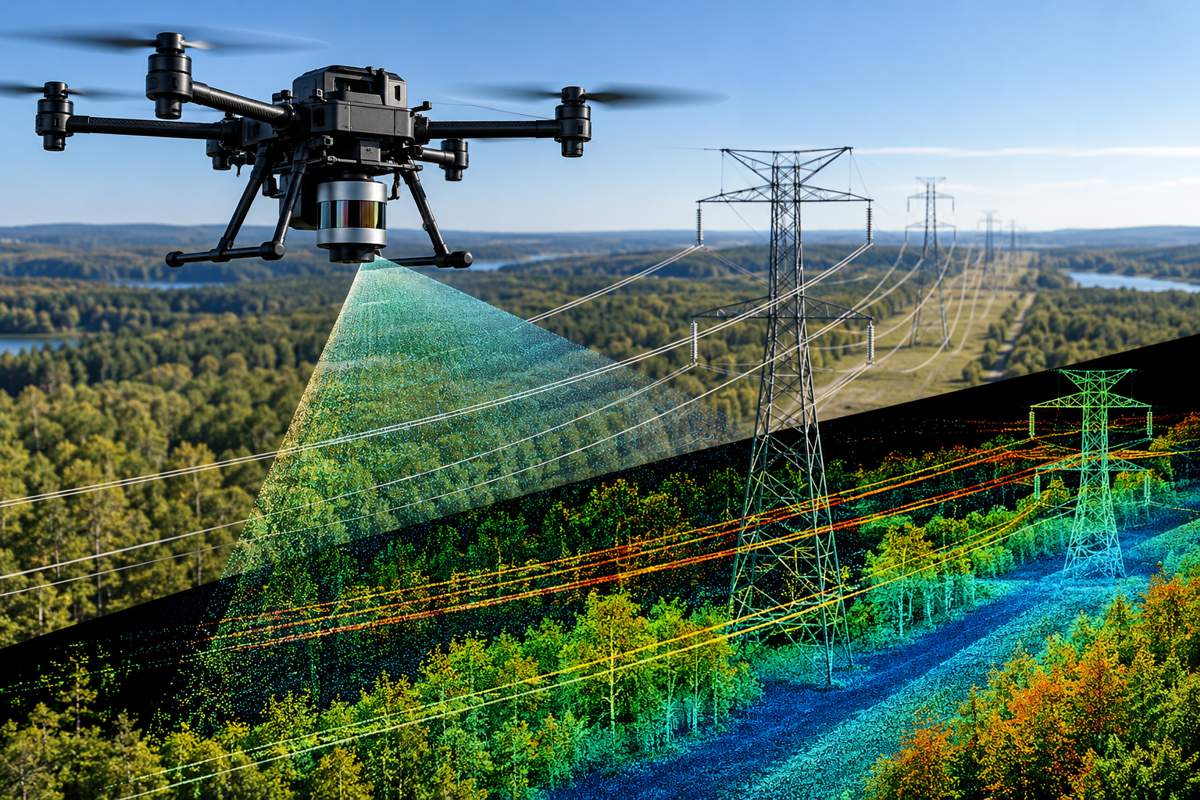
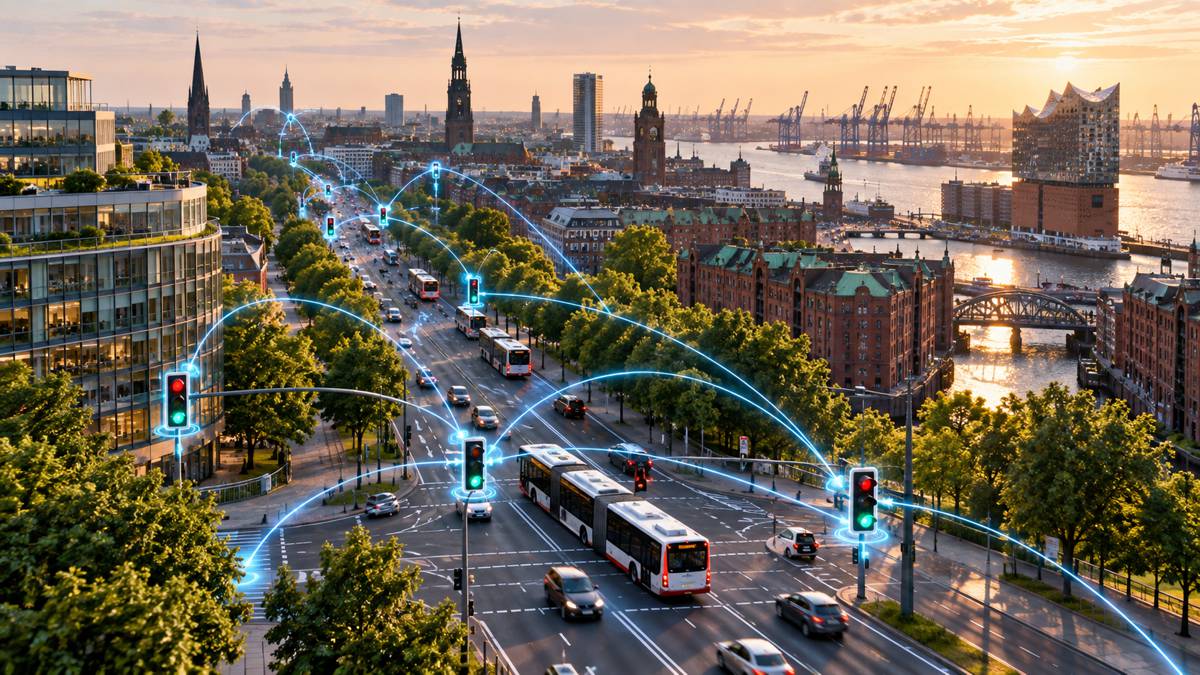
This is where systems such as CityOS attempt to reposition the conversation. According to Aeva, the platform combines its Atlas Orion 4D LiDAR sensors with edge processing and perception software to continuously detect and classify vehicles, pedestrians, cyclists and other road users while directly measuring both position and velocity. Rather than relying solely on visual interpretation or indirect detection methods, the intention is to create a continuously updated picture of how movement unfolds within a transport environment.
The distinction may appear subtle at first glance, but operationally it represents a different philosophy. Measuring whether something exists within a roadway environment and understanding how it behaves once there are two very different challenges.
The Next Transport Upgrade May Not Be Physical
One of the more interesting developments across infrastructure over recent years has been the growing recognition that operational intelligence itself has become an asset class.
Historically, improvements to transport performance were achieved primarily through intervention in the built environment. Roads were widened, junctions redesigned and additional corridors constructed. Those investments remain essential and, in many cases, unavoidable. Yet infrastructure owners increasingly face economic, environmental and political constraints that make continual expansion harder to justify and slower to deliver. Consequently, attention has begun shifting towards extracting greater value from existing networks.
The emergence of real-time sensing platforms reflects this change in emphasis. Rather than viewing roads as static assets that require periodic measurement, agencies are exploring whether continuous operational awareness can improve outcomes without immediate physical intervention. If changing traffic behaviour can be identified earlier, if signal timing can adapt more effectively or if recurring friction points can be observed before congestion becomes systemic, then infrastructure performance may improve without expanding the footprint of the network itself.
According to Aeva, CityOS supports capabilities including continuous monitoring, adaptive traffic management, signal optimisation and integration outputs for operations centres.
What stands out less than the feature list, however, is the direction of travel it represents. Infrastructure is increasingly being treated not simply as something that carries movement but as something capable of generating operational knowledge.
Safety Is Becoming More About Observation Than Reaction
Road safety has traditionally depended on learning from failure. Authorities reviewed collision records, identified recurring conditions and introduced interventions designed to reduce the probability of similar incidents occurring again. This approach delivered substantial improvements across many markets and remains an essential part of transport planning, but it also carries an unavoidable limitation because serious intervention often arrives only after patterns become statistically visible.
Over time, transport policy has started moving towards a more preventative approach. Vision Zero programmes and related initiatives have encouraged authorities to think differently about risk by focusing less on isolated incidents and more on identifying the conditions that make incidents more likely. That shift changes expectations placed upon infrastructure. Roads are increasingly expected not only to operate safely under normal conditions but also to reveal where instability is emerging before accidents occur.
Aeva identifies applications including vulnerable road user protection, near-miss analysis and crash prevention analytics as part of CityOS. The significance of these capabilities lies less in prediction and more in creating a richer understanding of interactions that previously passed unnoticed. Near misses, hesitation behaviour, unusual crossing patterns and recurring operational friction may not appear in conventional reporting, yet they can provide valuable evidence for improving infrastructure performance before outcomes deteriorate.
For agencies balancing public accountability with constrained budgets, being able to justify intervention through observable conditions rather than historical outcomes may become increasingly important.
Infrastructure Is Becoming More Aware and That Changes Everything
Transport infrastructure has always evolved alongside the demands placed upon it. Roads that once supported local movement became freight corridors. Junctions designed for lower traffic volumes adapted to urban growth. Signals that once operated on fixed cycles became connected and coordinated.
The next stage of that evolution appears likely to involve awareness. Not awareness in the abstract sense of smart cities marketing language, but in a practical operational sense where infrastructure develops the ability to observe conditions continuously, understand how those conditions change and support decisions while networks remain active.
Events such as ITS America increasingly reveal that this transition is already underway. Aeva’s CityOS demonstration may be one example among many, but it reflects a wider movement across infrastructure where sensing, analytics and operational intelligence are beginning to occupy the same strategic space once reserved exclusively for physical expansion.
The road network of the future will still depend on engineering expertise, construction investment and long-term planning. It may simply become far better informed.
The Most Valuable Road Improvements May Become Invisible
For generations, infrastructure progress could usually be seen from a distance. New roads appeared on maps, bridges transformed skylines and upgraded corridors created visible evidence of investment.
The next gains may look different. As transport systems become more connected and operational expectations continue to rise, some of the most valuable improvements may happen quietly in the background through better observation, faster interpretation and more informed decisions.
Infrastructure will still be built with steel, aggregates, asphalt and engineering skill. Increasingly, though, it may also be built with awareness.