ADF Invests $60m to Reshape West African Benin-Togo Trade
When development bankers in Abidjan signed off on a loan for a stretch of road most of the world has never heard of, they were betting on something far bigger than tarmac. The African Development Fund, the concessional lending arm of the African Development Bank Group, has approved a $59.78 million loan to rehabilitate 78.8 kilometres of road between Kara and Kabou along the Benin–Togo border.
On paper it reads like a routine infrastructure approval. Look a little closer, though, and you find a project that sits right at the heart of one of the continent’s most stubborn economic puzzles: why neighbours that share borders still struggle to trade with one another.
The financing, approved on 21 May, covers the first phase of the Transit Roads and Transport Facilitation Project on what planners call the CU18 corridor. It’s co-financed by the ADF alongside the Islamic Development Bank, the West African Economic and Monetary Union and the governments of Togo and Benin. The split tells its own story.
Of the ADF money, $50.28 million goes to the Togolese section and $9.5 million to the Beninese side, reflecting where most of the heavy construction will actually happen. For the engineers, financiers and trade officials watching West Africa’s slow march towards integration, this is the kind of unglamorous, high-stakes work that decides whether the region’s grand ambitions ever leave the page.
Briefing
- The African Development Fund has approved a $59.78 million loan to rehabilitate 78.8km of road between Kara and Kabou on the Benin-Togo border, with $50.28 million for Togo and $9.5 million for Benin.
- The work forms the first phase of the Transit Roads and Transport Facilitation Project on the CU18 corridor, co-financed with the Islamic Development Bank, WAEMU and both governments.
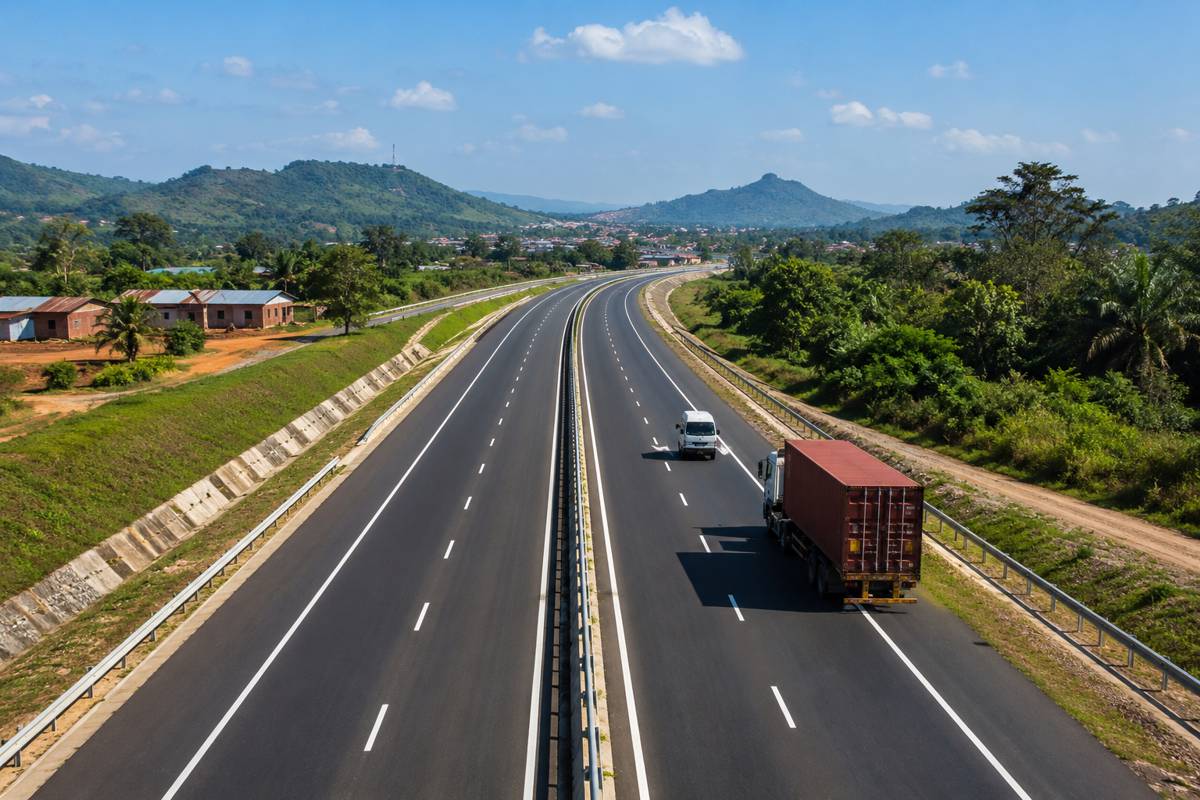
- Plans call for a 3.5-metre dual carriageway from Ouaké on the Benin border through Kémérida, Soundjina, Kara, Djamdé and Kabou, with a six-lane stretch cutting through the city of Kara.
- The corridor feeds the wider Lomé-Ouagadougou route, one of ECOWAS and WAEMU’s priority arteries and a lifeline for landlocked Burkina Faso, Mali and Niger.
- Beyond the road itself, the project bankrolls socio-economic and educational infrastructure, logistics improvements, trade-barrier reduction and capacity-building for women’s groups and youth employment schemes.
Why a Border Road Carries This Much Weight
It’s tempting to treat a single road upgrade as a local affair, something that matters to the towns it passes through and nobody else. That misses the point entirely. The Kara-Kabou section plugs into the Lomé-Ouagadougou axis, which the World Bank has flagged as one of the priority international transit corridors of both ECOWAS and WAEMU. For landlocked countries like Burkina Faso, that route isn’t a convenience, it’s a supply line. World Bank analysis has put the Ouagadougou-Lomé corridor as the artery for roughly 40 percent of all cargo entering Burkina Faso, which gives you a sense of how much rides on keeping these roads passable.
The hard numbers behind West African trade make the case sharper still. The African Union estimates that only around 18 percent of total African trade happens within the continent, a figure that has barely budged for years and sits well below the roughly 60 percent seen in Europe.
Landlocked ECOWAS states such as Burkina Faso, Mali and Niger trade on average about 30 percent less than their coastal neighbours, hemmed in by distance, poor roads and the cost of moving goods across borders.
A rehabilitated corridor doesn’t fix all of that overnight, but it chips away at one of the most concrete barriers there is. Better roads mean lower vehicle operating costs, fewer breakdowns, shorter journeys and freight that arrives when it’s supposed to.
What’s Actually Being Built
The engineering brief is straightforward enough to picture. The corridor runs from the Benin border at Ouaké through Kémérida, Soundjina, Kara, Djamdé and on to Kabou, and it’ll be rebuilt as a dual carriageway with 3.5-metre lanes. Through the city of Kara itself, the road widens to six lanes, a nod to the heavier traffic that builds up where a transit route meets an urban centre.
Anyone who’s driven through a growing African city knows how quickly a single congested stretch can swallow the time savings won everywhere else along a route, so the Kara section matters more than its length suggests.
There’s more to the package than asphalt and lane markings. The project also funds the construction and rehabilitation of socio-economic and educational infrastructure in communities along the route, alongside measures to strengthen transport services and logistics. Officials have built in steps to reduce trade barriers and smooth traffic flow, the soft-side reforms that often determine whether a road delivers on its promise.
A smooth carriageway counts for little if trucks still spend hours stuck at checkpoints, and West Africa has no shortage of those. Research on the region’s corridors has documented border delays, informal payments and clusters of checkpoints that can run into double digits per hundred kilometres on the worst routes.
The People the Road Is Meant to Serve
Development financing tends to speak in the language of GDP and trade volumes, but this project keeps circling back to a more grounded set of beneficiaries. Road users, particularly women, local producers and residents, are the expected winners here. Poor road conditions and high transport costs have long throttled economic activity and mobility across the region, and that burden has fallen hardest on vulnerable groups, especially women working in cross-border commerce and market gardening. For a trader hauling produce to a market two towns over, the difference between a rutted track and a paved road is the difference between a viable living and a losing proposition.
The project leans into that directly with capacity-building programmes for implementing agencies, women’s groups and youth employment initiatives. It’s a recognition that infrastructure alone rarely lifts the people closest to it unless someone deliberately builds a path for them to benefit. Lamin Barrow, Director General for West Africa at the African Development Bank, framed the corridor’s purpose in regional terms.
“This vital corridor will help strengthen economic competitiveness, accelerate the opening up of the inland areas of Benin and Togo, and consolidate sub-regional integration,” he said. The phrase “opening up” does a lot of quiet work there, gesturing at communities that have long sat just out of reach of the markets that could transform their fortunes.
A Piece of a Much Larger Map
This loan doesn’t exist in isolation, and that’s arguably the most interesting thing about it. West Africa’s development institutions have been steadily knitting together a network of corridors meant to stitch the region’s economies closer. The ECOWAS Bank for Investment and Development has been involved in rehabilitating major routes including Abidjan to Ouagadougou, Dakar to Bamako, Cotonou to Niamey and Lomé to Ouagadougou.
Layered on top sits the ambition of the African Continental Free Trade Area, the continental market launched in 2021 that’s supposed to rewire how Africa trades with itself. The Economic Commission for Africa has estimated that fully implemented, the agreement could lift intra-African trade by around 40 percent, with transport set to capture a large share of those gains.
None of that materialises without roads like this one. A free-trade agreement is only as good as the infrastructure that lets goods actually move, and West Africa’s logistics networks remain fragmented, expensive and clogged with non-tariff barriers. A 2024 ECOWAS-OECD report noted that most countries in the region still export raw materials to Europe or Asia rather than to neighbouring markets, a pattern that bleeds value out of the continent.
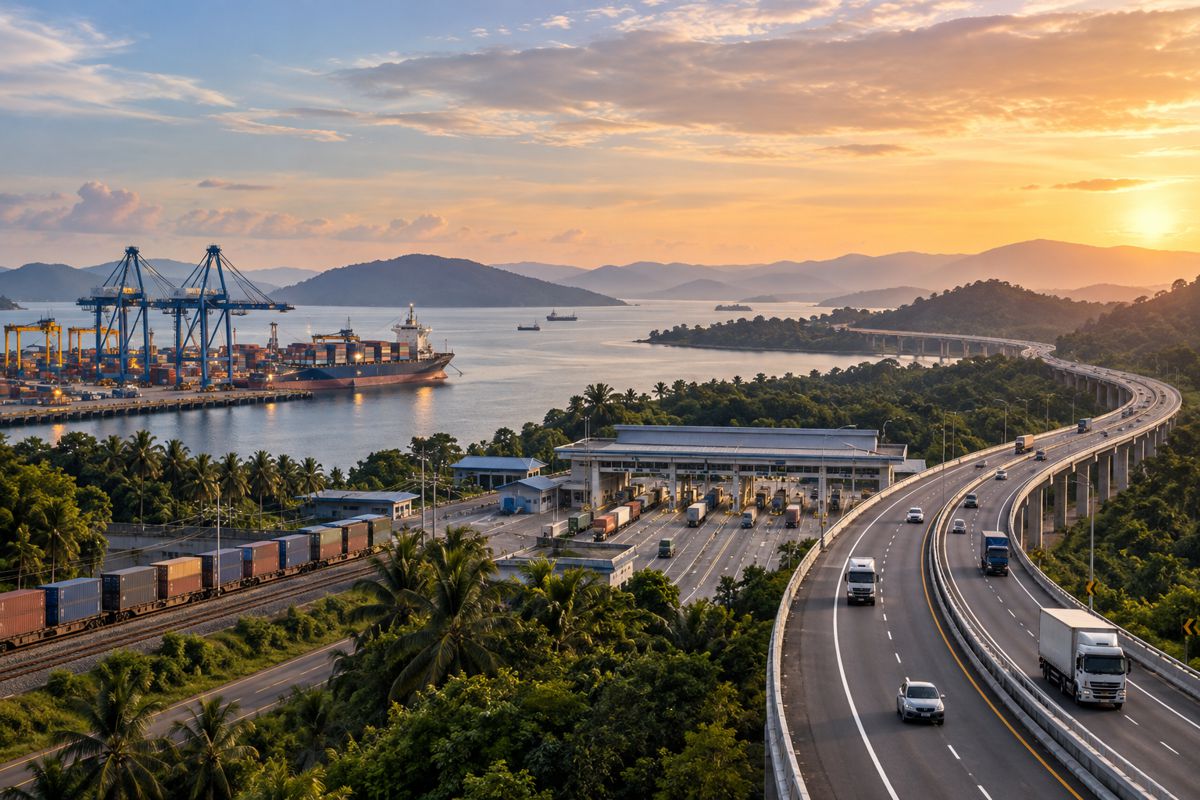
Corridors that connect inland producers to coastal ports and to one another are the unglamorous plumbing that makes a continental market plausible rather than purely aspirational. The Kara-Kabou stretch is one short segment, but segments are how these networks get built, one phase and one loan at a time.
What to Watch From Here
For investors and contractors tracking West Africa’s infrastructure pipeline, the structure of this deal is worth noting as much as its headline figure. Pooling money from the ADF, the Islamic Development Bank, WAEMU and two national governments spreads risk and signals the kind of multi-party backing that tends to get projects across the line in a region where financing can be fragile.
The “first phase” label is the other tell. It implies further work to come along the CU18 corridor, which means today’s approval is less a finish line than a starting gun for a longer programme.
The harder questions sit on the delivery side. West Africa’s track record on infrastructure is studded with projects that launched with fanfare and then stalled on procurement, land acquisition or shifting political winds, and the Sahel’s security situation adds a layer of uncertainty that no engineering plan can fully design around.
Whether the trade-facilitation reforms keep pace with the physical construction will go a long way towards determining if the corridor delivers the competitiveness gains its backers are counting on. Build the road well, cut the checkpoints, support the traders who depend on it, and a quiet 78.8 kilometres along the Benin-Togo border could end up doing more for regional integration than its modest price tag would ever suggest.