New Jersey Turns Its World Cup Highways Into A Living Map
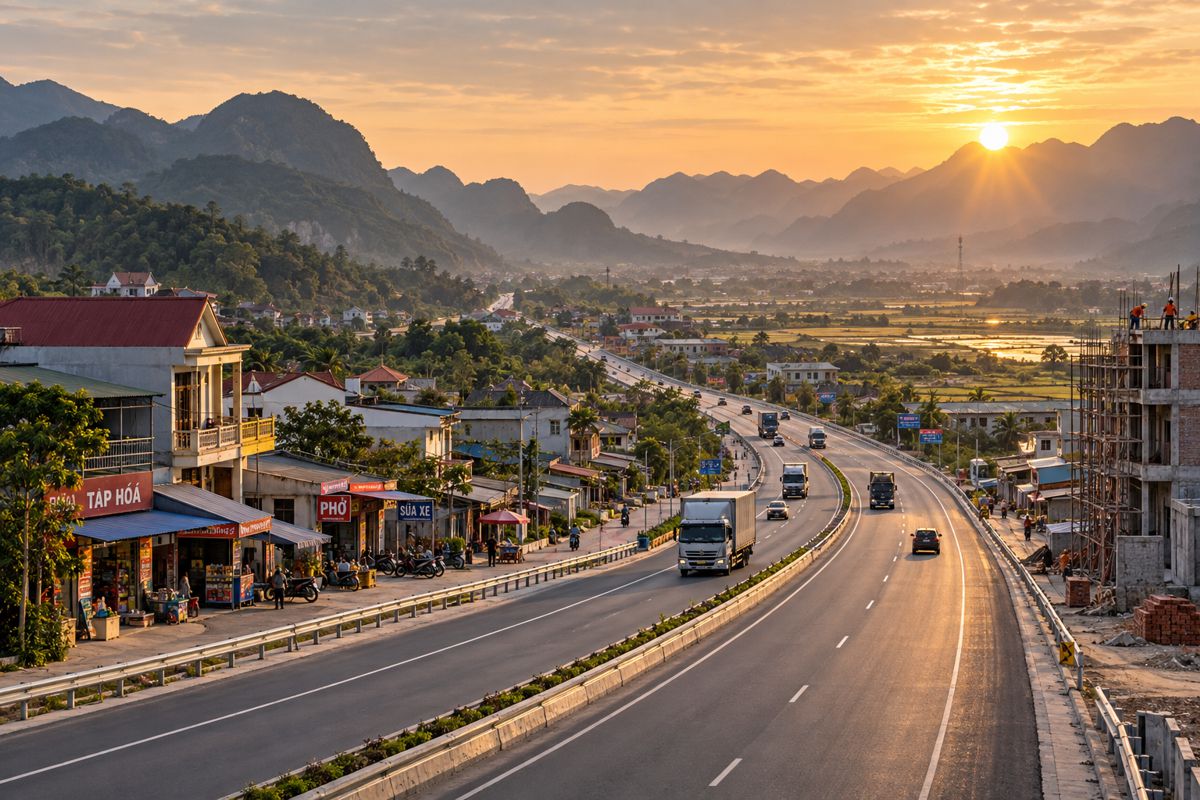
With the 2026 FIFA World Cup about to kick off across North America this week, the roads feeding into New Jersey’s MetLife Stadium have quietly become one of the most closely watched stretches of highway in the United States.
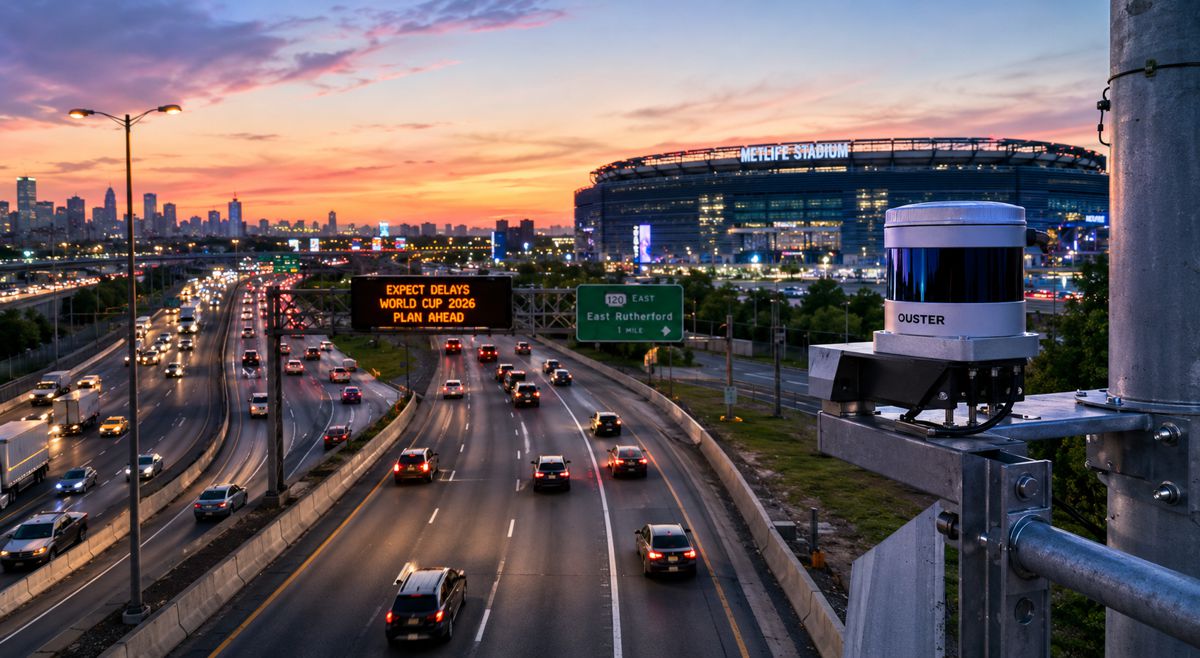
On 9 June, the day before the tournament’s opening fixtures, Ouster confirmed it had finished installing its BlueCity lidar system at more than 40 locations along the highways and freeways surrounding the venue. The build, commissioned by the New Jersey Department of Transportation back in 2025, came in just under the wire.
The timing is no accident. MetLife, rebranded “New York New Jersey Stadium” for the tournament under FIFA’s rule barring corporate venue names, will host eight matches in all, among them the final on 19 July. With more than a million visitors expected across the New York and New Jersey region over the coming weeks, the question keeping transport planners up at night hasn’t really been whether the stadium can fill its 82,500 seats. It’s whether the road network wrapped around it can shift that many people without grinding to a halt.
Briefing
- Ouster has finished a BlueCity 3D lidar deployment at over 40 highway locations around MetLife Stadium, wrapping up days before the 2026 FIFA World Cup begins.
- The work stems from a 2025 NJDOT contract awarded to Ouster and its distribution partner, Signal Control Products.
- The sensors feed a digital traffic twin that’s wired into New Jersey’s statewide Advanced Traffic Management System.
- ITS America has described it as the largest intelligent transportation project NJDOT has ever taken on.
- The system is permanent, built to manage congestion and safety long after the final whistle in July.
A Statewide Nerve Centre For The Meadowlands
What NJDOT has built around the stadium complex isn’t a scattering of standalone gadgets. It’s a connected corridor. The department has stitched the urban highways and freeways near MetLife into a single digital traffic twin, a live virtual mirror of the road network that pulls together data streams from lidar and other roadside technologies. Ouster’s BlueCity sits inside that picture, plugged directly into the statewide Advanced Traffic Management System so that operators get a real-time view of what’s happening on the tarmac and can act on bottlenecks and incidents as they form rather than after they’ve already snarled up the approaches.
The scale of it has caught the attention of the wider industry. “This is the largest ITS project NJDOT has ever done, and they did it in record time,” said Laura Demeo Chace, CEO of ITS America. “We visited New Jersey to see the cutting-edge technologies being deployed to provide one million World Cup fans a safer and smoother experience. With the integration of multiple technologies – from lidar sensors to camera-based video analytics to roadside units, all into a statewide Advanced Traffic Management System – this area is now packed with transportation tech to make the mobility of both visitors and NJ residents safer and more efficient.” That mix matters, because the lidar layer doesn’t work alone. Ouster’s sensors handle high-fidelity monitoring and real-time safety alerts, while separate camera analytics and roadside units round out a system that NJDOT can lean on across the whole Meadowlands.
Why The State Reached For Lidar
The choice of lidar over a camera-only approach tells you something about the conditions NJDOT was planning for. BlueCity pairs 3D digital lidar with Ouster’s own AI detection software to classify vehicles, cyclists and pedestrians and to trigger signal actuation, alerts and analytics. Where cameras tend to falter at night, in glare or in heavy weather, lidar keeps measuring distance, speed and movement reliably whatever the light or the forecast, which is no small thing for a tournament that runs deep into a humid North American summer. The sensors also capture data anonymously. Their point clouds can’t render a face or a number plate, so the system sidesteps the surveillance objections that often dog camera networks while still giving operators the detail they need.
For Ouster, the permanence of the install is the part worth dwelling on. The hardware going up now won’t be torn down once the trophy’s been lifted. “NJDOT is setting a new standard for how states can leverage technology to handle the world’s largest sporting events,” said Dr. Asad Lesani, VP, Global ITS at Ouster. “By integrating Ouster BlueCity into its existing highway traffic infrastructure, New Jersey is ensuring that its roadways are not only ready for the FIFA World Cup, but are also more resilient and safer for its residents long after the final whistle.” It’s a pitch aimed squarely at the policymakers who sign off on these budgets: spend the money for the event, keep the capability for the decade that follows.
A Month Long Stress Test
The fixtures themselves explain the urgency. MetLife opens its World Cup account with Brazil against Morocco on 13 June, then runs through France versus Senegal, Norway versus Senegal, Ecuador versus Germany and Panama versus England before hosting a Round of 32 tie, a Round of 16 match and, finally, the championship game on 19 July.
Each of those dates dumps tens of thousands of people onto a road and rail network that already groans under regular Giants and Jets traffic. NJ Transit is selling 40,000 shuttle tickets per match day between Secaucus Junction and the stadium, with the host committee adding thousands of round-trip charter coach seats on top, and all of that movement has to thread through the same corridors Ouster has now wired up.
New Jersey hasn’t put all its faith in a single supplier, mind you. The BlueCity rollout runs alongside a broader NJDOT push that has seen intelligent transportation company Derq supporting an ITS upgrade across roughly 95 sites around the stadium, layering camera-based safety and traffic analytics over the same Meadowlands geography. That patchwork of complex interchanges and event-driven surges is exactly the sort of environment that exposes weak links, so the state has effectively assembled a belt-and-braces sensor stack rather than betting the tournament on one technology.
Ouster’s Bigger Play
New Jersey is only one node in a pattern Ouster has been laying down across the host cities. Back in April the company switched on BlueCity at more than 30 intersections in Atlanta, working with the Georgia Department of Transportation and distributor Southern Lighting & Traffic Systems ahead of the matches at Mercedes-Benz Stadium. By that point Ouster said it held contracts for over 700 BlueCity deployments spanning intersections, mid-blocks and highways, evidence that smart infrastructure has matured from pilot projects into something agencies are buying at scale. For a sector that spent years tethered to slow-moving automotive programmes, government traffic contracts have become a welcome source of real revenue.
There’s a corporate story running underneath all this too. In February, Ouster closed a roughly 35 million dollar cash-and-shares acquisition of French firm StereoLabs, folding in stereo cameras, AI vision software and a developer community of more than 10,000 customers to sit alongside its digital lidar. The deal, which followed Ouster’s 2022 merger with Velodyne, fits a broader wave of consolidation among perception suppliers that also saw MicroVision pick up the assets of bankrupt rival Luminar late last year. The upshot is a company repositioning itself as an end-to-end “Physical AI” sensing platform, and the MetLife corridor is a useful shop window for that ambition.
After The Final Whistle
Strip away the World Cup branding and what New Jersey has bought is a piece of permanent infrastructure that happened to land in time for a global event. The Meadowlands corridor will still be there in August, in the following winter and for years beyond, feeding NJDOT operators the same live read on congestion and safety incidents whether the road is carrying World Cup supporters or the everyday commuter grind. That’s the deal these systems trade on, and it’s why the language coming out of both NJDOT and Ouster keeps circling back to residents rather than tourists.
For the rest of the industry, the install offers a fairly clean template. Host a mega-event, and the surge in visitors gives transport authorities the political cover and the funding to modernise infrastructure they’d otherwise have struggled to prioritise. The trick, as New Jersey has worked out, is choosing technology that earns its keep once the crowds have gone home. Whether the next round of World Cup and Olympic hosts follow the same playbook will say a lot about how seriously the sector now takes the legacy half of the equation, not just the spectacle.