ULMA’s Travelling Formwork Finished the Valryggen Bridge on Norway’s E6
The completion of the E6 Svenningelv-Lien section in December 2025 removed the oldest and most stubborn bottleneck on one of Norway’s principal north-south freight routes, and the engineering that closed it out says a good deal about how remote, weather-exposed bridge programmes now get delivered on schedule.
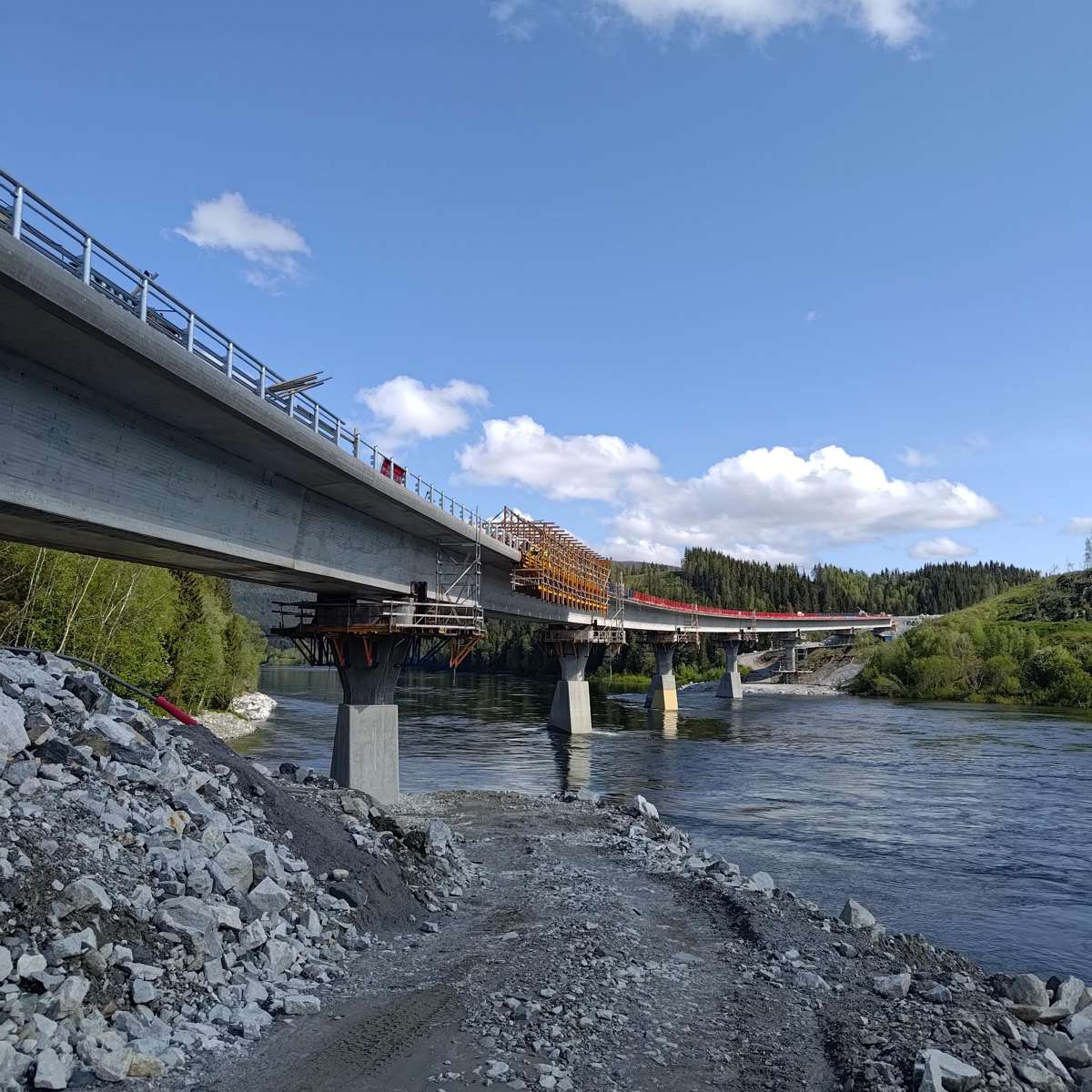
The headline numbers belong to the corridor itself: a 10.3 kilometre stretch of new highway west of Trofors in Grane municipality, built at a cost of around 1.9 billion Norwegian kroner, the single most expensive ten-kilometre section of the wider E6 Helgeland programme. Yet the work that quietly governed the finishing sequence on its largest structure, the 387 metre Valryggen Bridge over the protected Vefsna river, came down to a comparatively modest piece of equipment: a travelling parapet formwork carriage supplied by the Spanish manufacturer ULMA.
For contractors, asset owners and the investors who back civil-engineering supply chains, that detail matters more than it first appears. Edge works such as parapets and kerb beams sit at the tail of a bridge programme, on the critical path to handover, and they are carried out at height over water in conditions that punish slow or unsafe methods.
The choice of a system that can be assembled once and then advanced repeatedly along the deck, rather than struck and rebuilt at every pour, is often the difference between a predictable closing sequence and a drawn-out one. On a project already shaped by quick clay, protected salmon waters and a Nordic winter, that kind of predictability carried genuine commercial weight.
Briefing
- The E6 Svenningelv-Lien section opened on 10 December 2025, completing the E6 Helgeland programme and removing the last major bottleneck on the route between the Trøndelag border and Saltfjellet.
- The 387 metre Valryggen Bridge, a curved concrete box girder over the Vefsna, was delivered under a design-and-build contract worth roughly 1.3 to 1.4 billion kroner, led by the Norwegian contractor LNS.
- ULMA supplied a 20 metre MK parapet form carriage to cast the bridge’s 600 millimetre side parapets, using a rail and wheel movement system intended to keep edge works advancing without heavy auxiliary lifting.
- The corridor’s main river bridges were built using incremental launching, with deck segments cast on land and pushed out across the piers.
- Part of the new road was laid directly over a 600 metre stretch of bog using a method credited with cutting construction emissions by around 90 per cent against conventional excavation.
The corridor that finally needed closing
E6 Svenningelv-Lien is the concluding piece of the so-called Helgeland package, a long-running effort to rebuild the trunk route through Nordland that has absorbed roughly 9.5 billion kroner and delivered around 157 kilometres of new E6 since 2010. The stretch past Trofors had been the package’s defining problem for decades, a narrow, winding and accident-prone length that forced heavy goods vehicles to slow and, in places, to stop in order to pass one another safely.
Ground conditions repeatedly frustrated planners, and as recently as 2020 the adopted regulatory plan had to be amended after quick clay was identified along the intended alignment. The route was eventually shifted further west, closer to the railway and onto firmer rock, a decision that lengthened the main tunnel by around a kilometre but de-risked the foundations.
The build itself was structured as a single design-and-build contract, the largest transport commission in the contractor’s history. LNS led the works with Aas-Jakobsen responsible for design, while HAK delivered the bridges, Risa handled the bulk of the at-grade roadworks and Traftec carried out the electrical and tunnel systems.
When the section opened in December 2025, it shortened the run between the Trøndelag border and Saltfjellet appreciably and improved safety along a corridor that carries a substantial share of the region’s freight. The financing picture has tracked ahead of expectations as well, with toll repayment on the wider Helgeland programme now projected to conclude earlier than the schedule set when the funding model was agreed.
For Nordland, a county long regarded as having some of the country’s poorest trunk roads, the strategic significance of a finished E6 is hard to overstate.
A curved box girder over protected water
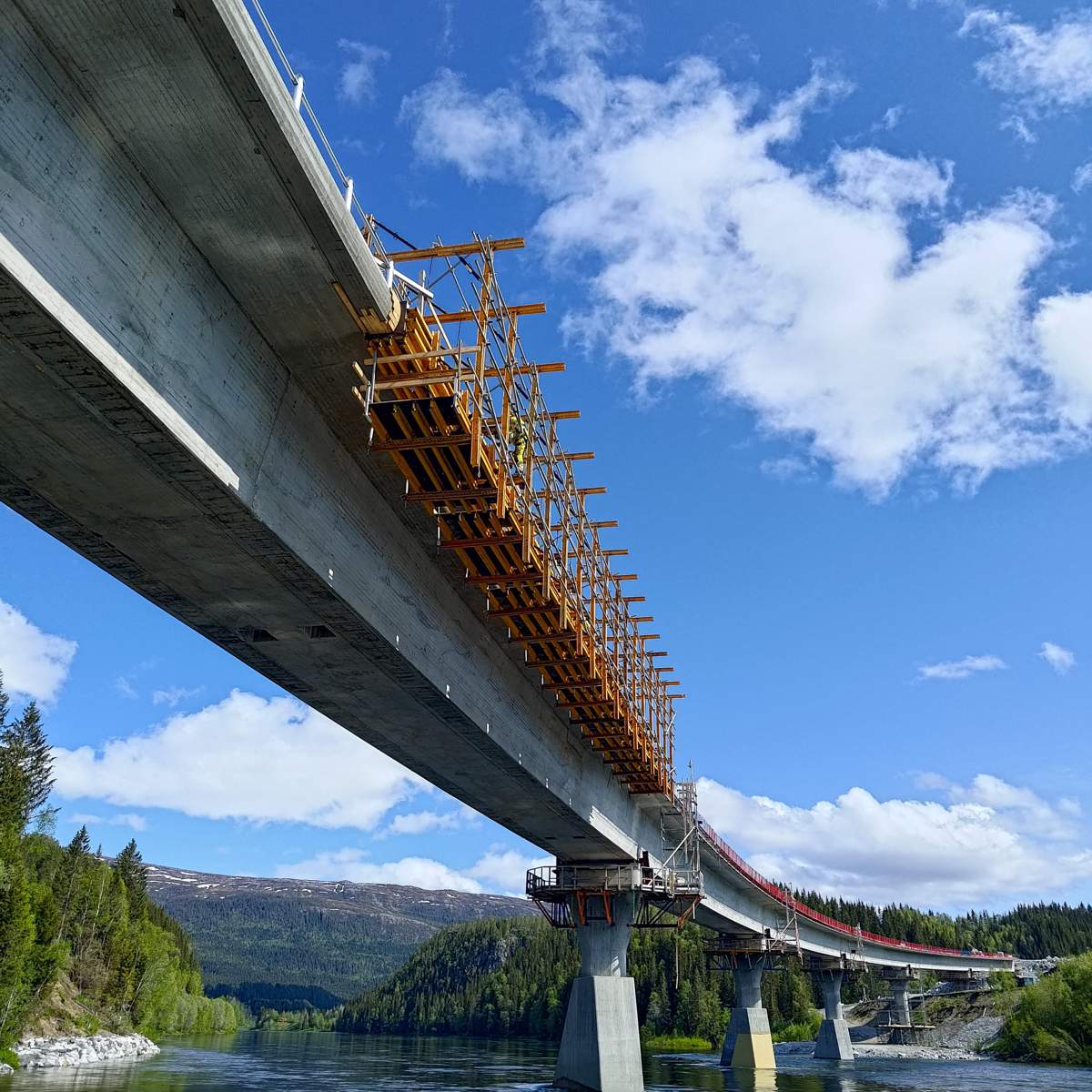
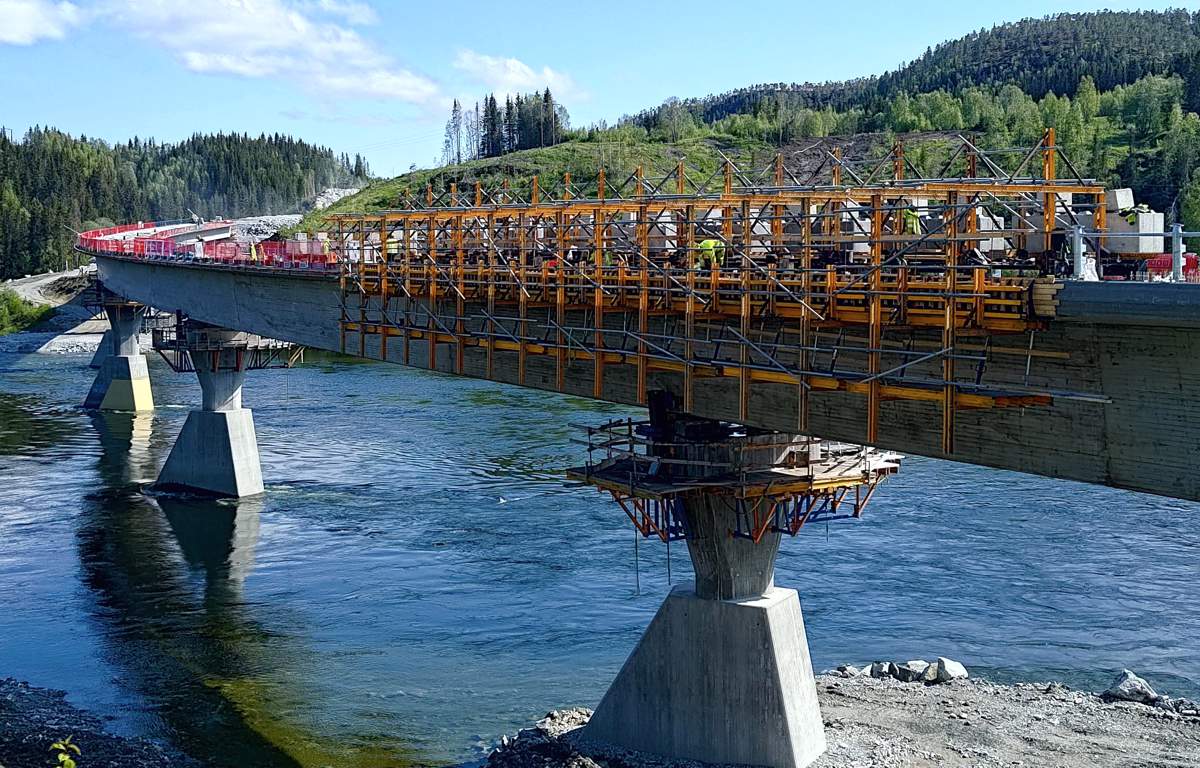
The Valryggen Bridge is the larger of the section’s two principal river crossings, a 387 metre concrete box girder distributed across seven spans, with a main span of 60 metres and a deck depth of 3.6 metres. Both horizontal and vertical curvature run through the structure, which placed a premium on geometric control during construction and left little room for accumulated error.
Crossing the Vefsna added a further layer of constraint, since the river is a protected watercourse with spawning grounds, and the environmental conditions attached to working near it were correspondingly strict. The design therefore had to satisfy demanding structural geometry and an equally demanding ecological brief at the same time.
The contractor addressed both by building the main deck through incremental launching, casting segments on land behind the abutment and pushing them out progressively over the piers. The method keeps heavy construction activity away from the riverbed and limits the temporary footprint in sensitive water, which suited the Vefsna’s protected status. It also lends itself to curved alignments, where a travelling, segment-by-segment approach can hold the line and level more reliably than piecemeal in-situ casting over water.
By the time the launched deck reached its final position, the structural spine of the bridge was complete, and the programme moved on to the finishing works that would determine the handover date.
Why the parapet stage carried the schedule
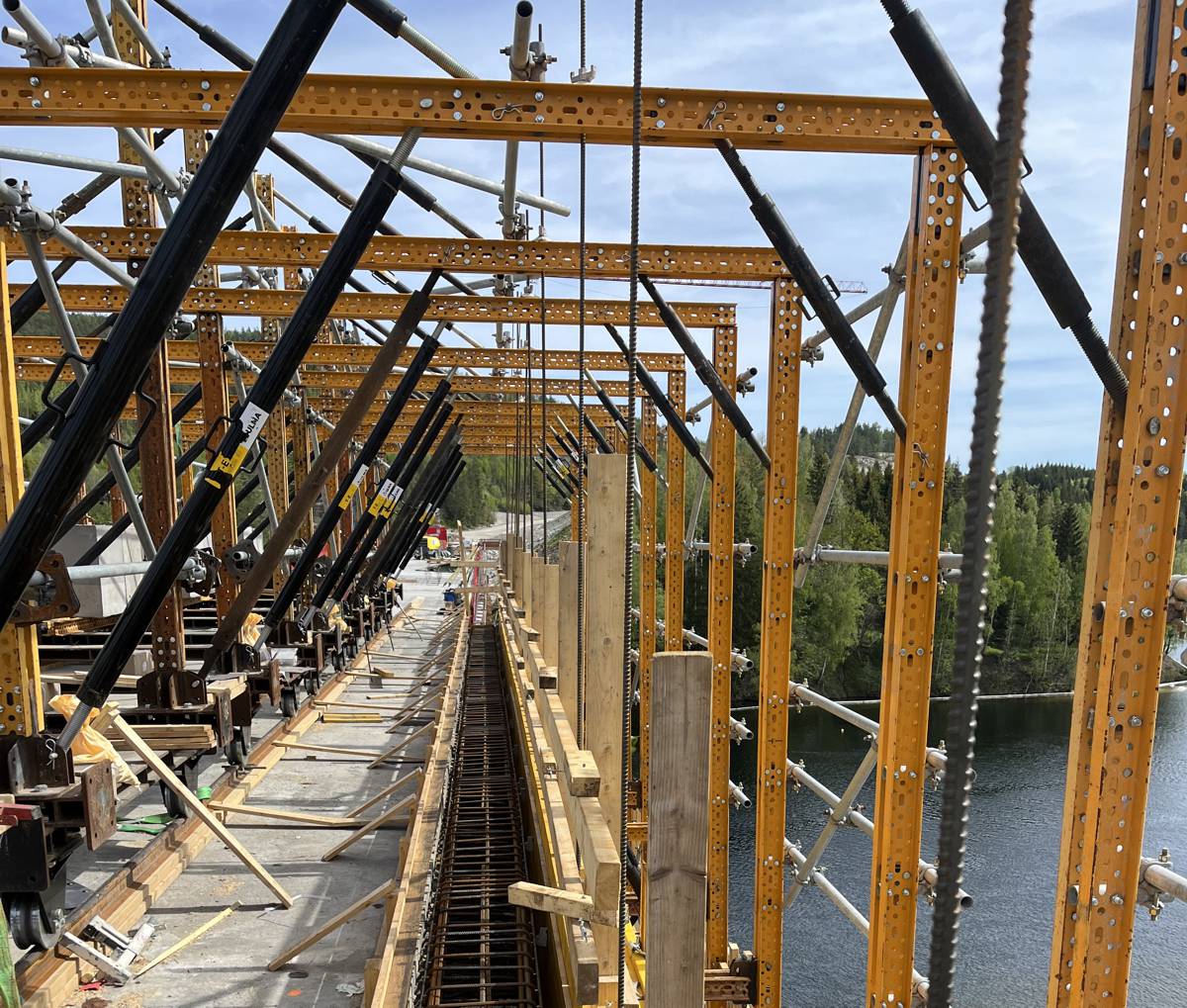
With the deck in place, the remaining task on the critical path was casting the 600 millimetre side parapets along the full length of the structure. Given the run involved, the client wanted a method that combined output with safety and allowed continuous progress, rather than a stop-start cycle of striking and rebuilding formwork at each pour.
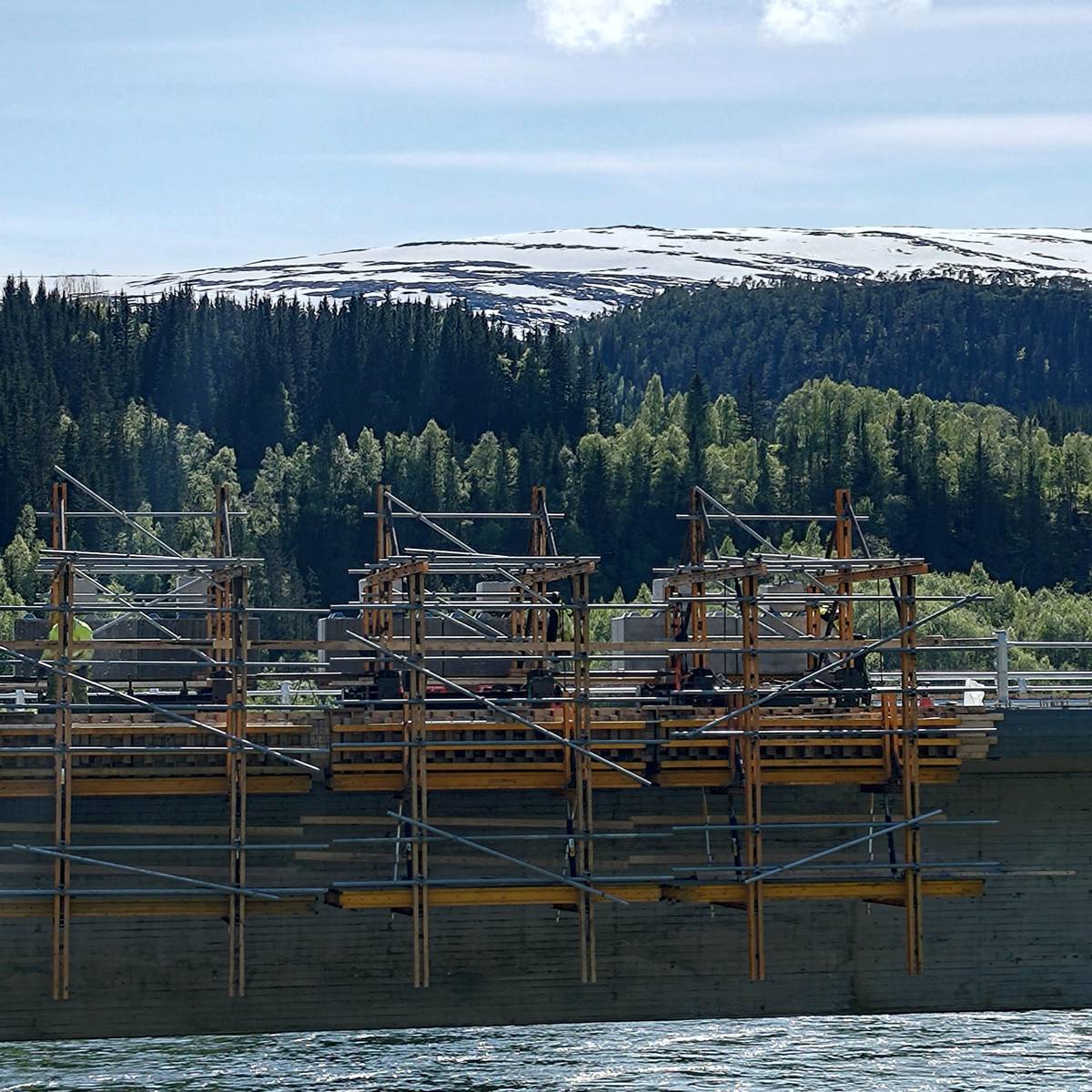
ULMA proposed a 20 metre MK parapet form carriage, a configuration drawn from its modular MK system, which is assembled from standard components and adapted to the geometry of each project, including curved decks of the kind found at Valryggen. The carriage runs on a rail and wheel arrangement that lets the unit travel along the deck and reposition for the next section without complex auxiliary operations, which is precisely the characteristic that compresses assembly, adjustment and stripping times across a long structure.
The value of getting this stage right extends well beyond the build programme. Parapets and edge beams are among the most maintenance-intensive elements of any Nordic concrete bridge, sitting directly in the path of de-icing salt, splash and repeated freeze-thaw cycling, and their durability is heavily influenced by the consistency and quality of the original pour.
A travelling carriage that delivers a uniform geometry and a controlled casting cycle along the whole deck supports the kind of edge detailing that holds up over decades, with consequences for whole-life cost that asset owners increasingly price in. There is a clear safety dimension too, since integrated working platforms and guardrails on the carriage reduce the exposure of crews working at height over the river and cut the number of crane lifts required to service the works.
On a remote site with constrained weather windows, fewer interventions and a repeatable cycle translate directly into lower schedule risk.
Formwork engineering as a productivity and risk lever
Specialist formwork rarely features in the public account of a major infrastructure project, yet it sits squarely on the critical path and shapes both the pace and the safety profile of the work. Systems such as the MK range are offered on a rental as well as a purchase basis and are built from standardised, reconfigurable components, which allows contractors to match temporary works capacity to a specific structure without carrying the capital cost of bespoke equipment between jobs.
For investors tracking the infrastructure cycle, the formwork, falsework and construction equipment rental segment is a quieter beneficiary of national road programmes, exposed to the same pipeline as the headline contractors but with a different risk and margin character. The Valryggen parapet works are a small instance of a broader pattern in which engineered temporary works increasingly determine delivery outcomes.
The wider direction of travel favours mechanisation at exactly this stage. As Nordic and European road programmes push into more difficult terrain, the labour and weather constraints that define a site like Trofors become more, not less, common, and methods that reduce crew exposure while protecting the schedule gain in value.
Norway’s road agencies have a substantial forward pipeline, and the lessons from completing the Helgeland package, around ground risk, environmental sensitivity and finishing productivity, will carry into the structures that follow. The commercial reading is straightforward enough: the marginal engineering choices made in the final weeks of a bridge programme can move the handover date as decisively as any decision taken at the outset.
What the Vefsna crossing signals for northern delivery
Read in full, the Svenningelv-Lien section is a case study in delivering ambitious infrastructure through difficult ground without compromising on environmental or durability standards. The same project that laid part of its carriageway directly over bog, with an emissions saving credited at around 90 per cent against conventional methods, also took the trouble to mechanise the casting of its bridge parapets so that the most exposed and maintenance-critical elements were built to a consistent standard.
Those choices sit alongside the corridor’s core benefits for freight, safety and regional connectivity, and they help explain why the toll model is paying down ahead of plan. Decarbonisation, durability and productivity are increasingly being engineered together rather than traded against one another.
The broader signal for the sector is that finishing methods deserve the same scrutiny as headline structural decisions, particularly on remote programmes where every avoidable intervention adds cost and risk. A travelling parapet carriage is not the part of the Valryggen story that draws attention, but it is a fair proxy for how northern infrastructure now gets completed: through configurable, repeatable systems that keep crews safer and schedules intact across long, exposed structures.
As contractors and asset owners across the Nordics and beyond plan their next generation of crossings, the appetite for that kind of disciplined, mechanised edge engineering looks set to grow rather than fade.