The Hidden Carbon Cost Of Britain’s Disappearing Roadside Trees
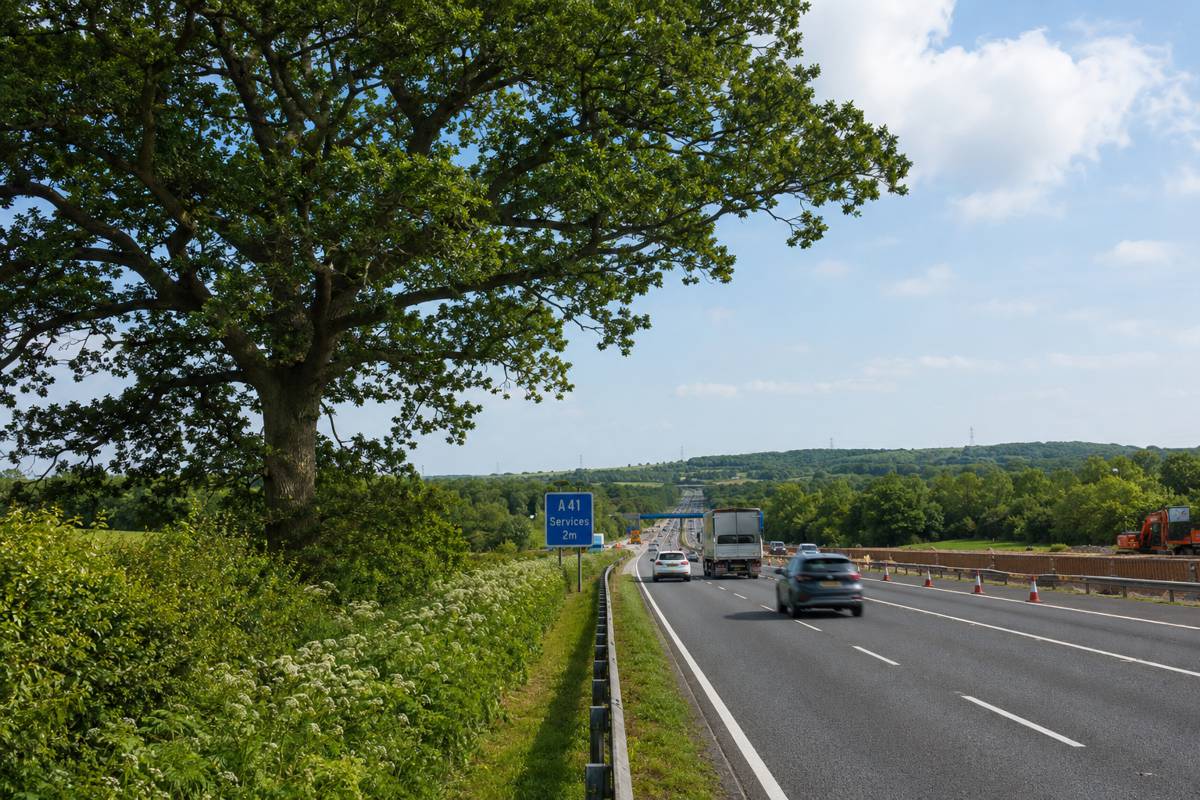
Britain has spent the last few years laying tarmac at a pace not seen in a generation. Major schemes have widened carriageways, untangled junctions and stitched new bypasses into the countryside, all while the sector talks a confident game on sustainability, biodiversity net gain and the long haul to net zero. Sitting awkwardly beneath that progress is a problem few seem keen to measure. Mature trees and established hedgerows are being cleared on a grand scale, and the carbon locked inside them is rarely counted on the way out.
That uncomfortable point sits at the heart of a recent article by Robert Wilkins, operations director at Ruskins, the Essex tree and soil specialists who have been lifting and replanting trees and hedges since 1986. This feature builds on his original piece, which argues that retaining and relocating large trees ought to be mainstream highways practice rather than a fringe technique. His case is a simple one. The industry has become very good at counting the trees it plants, and strikingly poor at counting the ones it takes away.
Briefing
- National Highways removed around 400,000 trees and shrubs for the A14 Cambridge to Huntingdon upgrade, then planted more than 850,000 replacements, a large proportion of which later died.
- The UK keeps no consistent national record of mature tree loss across its strategic road network, leaving the carbon cost of clearance largely unmeasured.
- A mature tree holds decades of stored carbon that a young sapling cannot replicate for years, so wholesale removal opens up a carbon deficit that replanting is slow to repay.
- Compacted, biologically degraded construction soil is a leading reason young trees fail, which makes raw planting numbers a weak measure of success.
- Retaining or relocating established trees and hedgerows, a service used commercially in the UK for nearly four decades, can preserve stored carbon and landscape character while cutting replacement costs.
The Numbers Nobody Keeps
Start with the data, and a gap opens up almost immediately. There’s no single, reliable national figure for how many mature trees disappear because of road building in the UK. No year-on-year reporting. No clear line drawn between a whip in a plastic tube and an established oak that took half a century to grow. What the sector has instead is a scatter of project-level numbers, and even those tell an awkward story once you line them up.
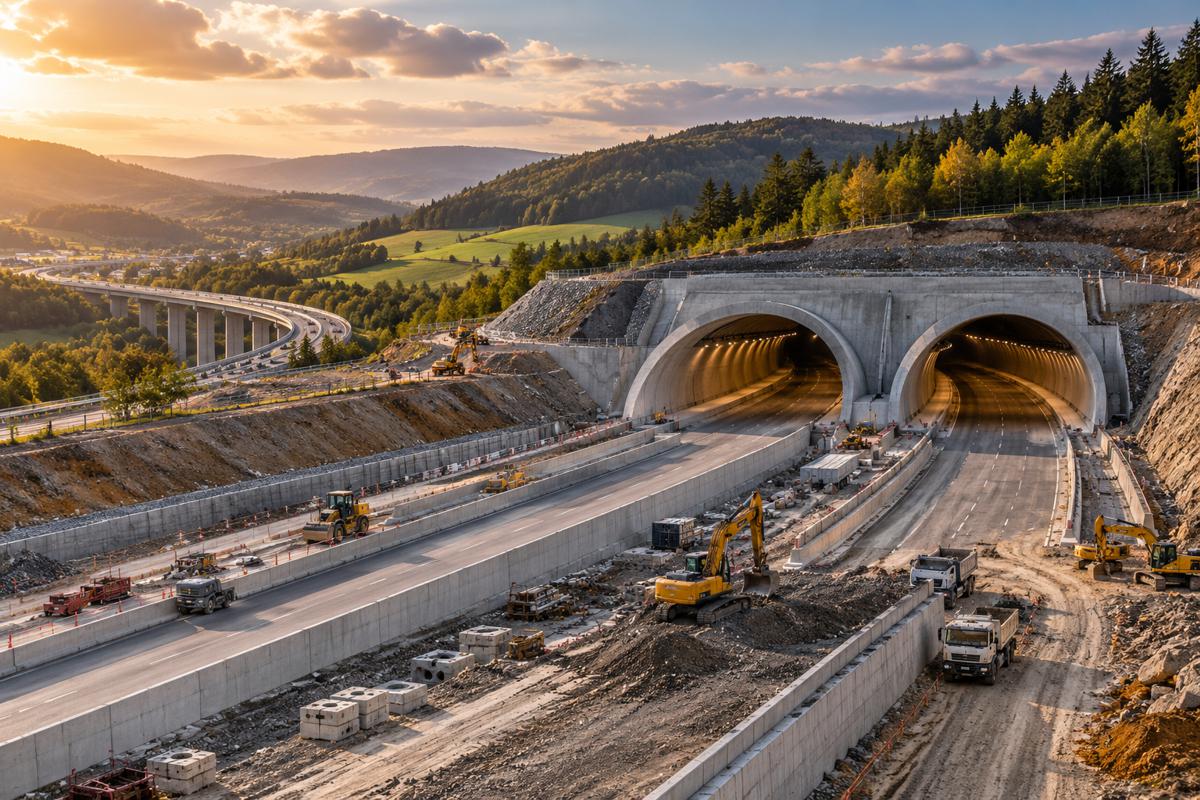
The A14 between Cambridge and Huntingdon is the obvious case in point. Delivering that £1.5 billion upgrade meant clearing roughly 400,000 trees and shrubs, a figure National Highways has confirmed repeatedly. That isn’t an abstraction on a spreadsheet. It is landscape-scale removal, much of it established vegetation rather than scrub.
Stitch the A14 together with the partial figures from other recent schemes, and Wilkins’ contention that hundreds of thousands of mature trees have been lost from the strategic network in just a few years starts to look conservative rather than alarmist. The trouble is that nobody is keeping the running total, so the true scale stays a matter of estimate.
When Replanting Is Not Replacing
The standard answer to all this felling is mitigation planting. Take one tree out, put several back. On a planning document it reads beautifully. On the embankment it has proved a good deal messier. On the A14, National Highways planted more than 850,000 replacements, and within a few years a large share of them had died. Survival estimates have ranged from the 20 to 30 per cent loss the agency reported in its own early surveys to the 50 to 70 per cent failure suggested by outside observers, with whole stretches of carriageway left dotted with empty plastic guards. Drought and an out-of-season planting window took much of the blame.
There is a more encouraging coda. National Highways reports that the 165,000 trees and shrubs it put in between October 2023 and April 2024, during the optimum planting season, have come through at close to 90 per cent. That’s a real improvement, and it shows the failures were never inevitable. But it also makes the underlying point for Wilkins. Success is still being logged as the number of trees planted, not the number that make it past their fifth year, and those are very different measures. A councillor who pushed for answers on the original die-back described it bluntly as a disastrous loss, and the gap between the planting headline and the surviving reality is exactly what worries the people watching closely.
The Carbon That Walks Off Site
Here is where the climate maths bites. Commonly cited figures put the annual carbon dioxide uptake of a mature tree somewhere in the region of 20 to 25 kilograms, though estimates swing widely with species, age and condition. The number that really counts, though, isn’t the annual figure at all. It’s the carbon already banked in a mature specimen’s trunk, branches and root system, built up steadily over decades. Fell that tree and most of that stored carbon is written off. The Woodland Trust makes a related observation that ought to give planners pause, namely that a large tree can add as much carbon in a single year as a mid-sized one has stored across its whole life to date.
Set against that, the idea that a freshly planted sapling cancels out the loss looks optimistic. A young tree doesn’t begin to mimic the carbon function of a mature one for years, sometimes decades, and only then if it survives at all. Remove established trees at scale and the result is a carbon deficit that can’t be paid back on anything like the timescale net zero demands. The landscape changes overnight. The carbon ledger takes a generation to catch up, assuming the replacements live long enough to do the job.
Why Soil Decides Who Lives
Weather, watering regimes and species choice all get cited when young trees fail, and all of them matter. Wilkins points at something less visible, though, the ground itself. Construction strips soil of its structure and its biology, leaving it compacted, disturbed and, in plenty of cases, effectively lifeless. Topsoil that’s scraped off and heaped in storage loses much of the living function that healthy soil depends on. Plant into that, and a sapling is being asked to establish in conditions tilted against it from day one.
Soil compaction has long been flagged across the arboricultural sector as a leading cause of tree failure in built environments, and the mechanism is no mystery. Roots can’t spread, water won’t move as it should, and nutrient uptake stalls. Ruskins, whose work spans soil decompaction and air-spade restoration as well as tree moving, argues that healthy soil biology is the precondition for everything else. Get the ground wrong and no amount of replanting will hold. Treat soil as a critical asset rather than spoil to be shifted, and the odds shift with it.
Keeping What’s Already Standing
The most direct fix, on Wilkins’ reading, is to remove fewer mature trees in the first place. Established trees and hedgerows don’t always have to come out to make way for a scheme. With early engagement and the right kit, many can be retained in situ or physically relocated, root ball and all. Ruskins has moved specimens of considerable size, including a mature, protected pine lifted with a 64-tonne root ball that drew coverage in the national press, and recently transplanted around 100 metres of mature hedgerow rather than grubbing it out for a housing development.
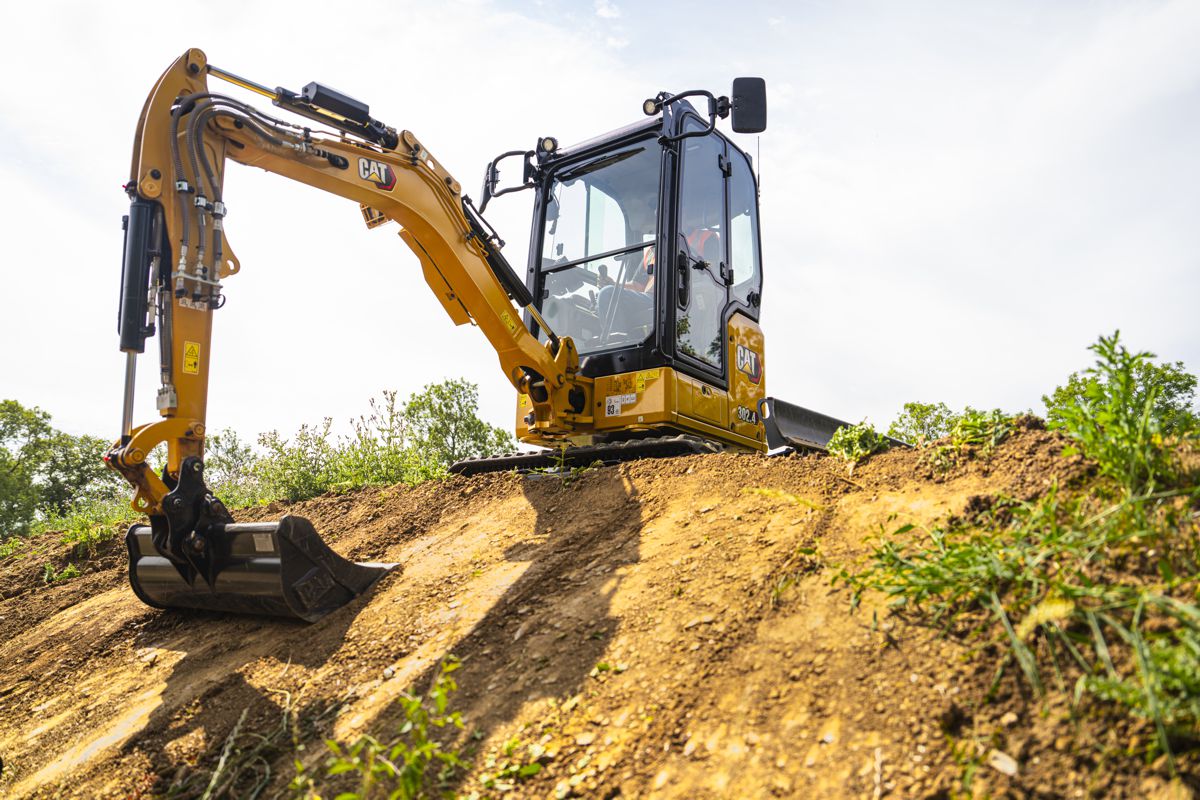
The commercial argument travels alongside the environmental one. Relocating an existing tree with specialist tree spades can cost up to 90 per cent less than buying in and establishing a new specimen of the same size, while delivering an instant mature look that fresh planting can’t match for years.
Then there’s the regulatory backdrop. Mandatory biodiversity net gain of at least 10 per cent has applied to major developments in England since February 2024, yet Nationally Significant Infrastructure Projects, the category that captures most large strategic road schemes, are only being brought into the regime from late 2026. In other words, the very projects clearing the most trees have so far sat outside the rule designed to make development leave nature better off than it found it.
Measuring What Actually Matters
The state of many highway verges reflects the priorities baked into them. Felling is treated as a necessary step to enable construction, planting as a box ticked at the end, and soil as an afterthought. That sequence has carried the sector this far, but it sits badly with the environmental commitments now stacked on top of every major scheme. Planting millions of trees sounds like progress. Losing a large slice of them, and not properly recording the mature stock removed to make room, quietly undoes a chunk of the gain.
None of this is a swipe at any single project, and the recent A14 survival figures show the trade can plainly do better when it sets its mind to it. The shift Wilkins is pushing for is one of measurement and sequence. Prioritise retaining and relocating existing trees where it’s feasible, treat soil health as core engineering rather than landscaping garnish, and track tree loss and long-term survival with the same rigour applied to traffic flow or journey times.
The UK is investing heavily in its roads and committing hard to its environmental targets at the same time. Those two ambitions can coexist. They’ll keep colliding, though, until the sector starts counting what it removes as carefully as it counts what it plants.