Jakarta Becomes the Trading Floor for Southeast Asia’s Rail Boom
When the doors of JIExpo Kemayoran swing open on 28 July, the timing won’t be lost on anyone watching Indonesia’s railways. The country has just pinned a number to its long-term ambitions that’s big enough to make even seasoned infrastructure financiers sit up, and the eighth edition of Railwaytech Indonesia 2026 lands right in the middle of that conversation.
Hosted by the Indonesian Railway Society (MASKA) and organised by GEM Indonesia with backing from the Ministry of Transportation’s Directorate General of Railways, the three-day exhibition shares its hall and its calendar with the Indonesia Railway Conference 2026 (IRC 2026) and the maritime-focused INAMARINE 2026.
That co-location matters more than it might first appear. Indonesia is an archipelago of more than 17,000 islands, so the line where steel rail meets shipping isn’t an abstraction here, it’s the everyday logistics of moving people and freight across water and land. For the manufacturers, financiers, operators and policymakers heading to Jakarta, the event has become the place where the country’s rail pipeline gets talked about in concrete terms rather than press-release abstractions. And there’s plenty to talk about.
Briefing
- Railwaytech Indonesia 2026 runs from 28 to 30 July at JIExpo Kemayoran, Jakarta, co-located with the Indonesia Railway Conference 2026 and INAMARINE 2026, under the banner of advancing safe, smart and sustainable rail transport.
- Indonesia is targeting roughly US$53 billion in private rail investment through 2030, with plans to grow the network from 6,461km to 10,524km, and a longer horizon of about Rp1,200 trillion to 2045.
- The conference programme leans hard into financing, with a dedicated panel on funding models featuring transport ministry officials, PT Kereta Api Indonesia, OCBC Bank and MASKA.
- Rolling stock, domestic manufacturing and lower-emission trains feature prominently, with PT INKA, CRRC and Indonesia’s Ministry of Industry on the agenda.
- The 2025 edition drew 115 exhibitors from 15 countries and 14,900 visitors, setting the bar for what organisers expect this year.
Following The Money
If one theme runs through the whole programme, it’s how all this gets paid for. Indonesia’s Ministry of Transportation has set its sights on around US$53 billion of private capital for railway infrastructure through to 2030, and the framing is deliberate. The government wants to lean on concessions and private money rather than stretch the state budget, a shift that puts financing structures at the centre of every serious rail discussion in the country.
Arif Anwar, the ministry’s Director of Railway Traffic and Transportation and a panellist at IRC 2026, has summed up the approach plainly: “We’ve opted for a creative financing model centered on pure private investment, using mechanisms like concessions for return on investment. This will be the foundation of railway infrastructure development under this administration.”
That’s why the conference’s panel session, billed as funding the next rail revolution, reads like a who’s who of the people who’ll actually sign the cheques. Alongside transport ministry officials sit representatives from PT Kereta Api Indonesia (Persero), academic experts from MASKA and, tellingly, OCBC Bank.
Bringing a commercial lender into the room signals that Indonesia knows project bankability, not just political will, is what turns drawings into track. For international contractors and equipment suppliers, the message is hard to miss. The work is coming, but so is a harder-nosed expectation that projects pay their own way.
A Network That Reaches Beyond Java
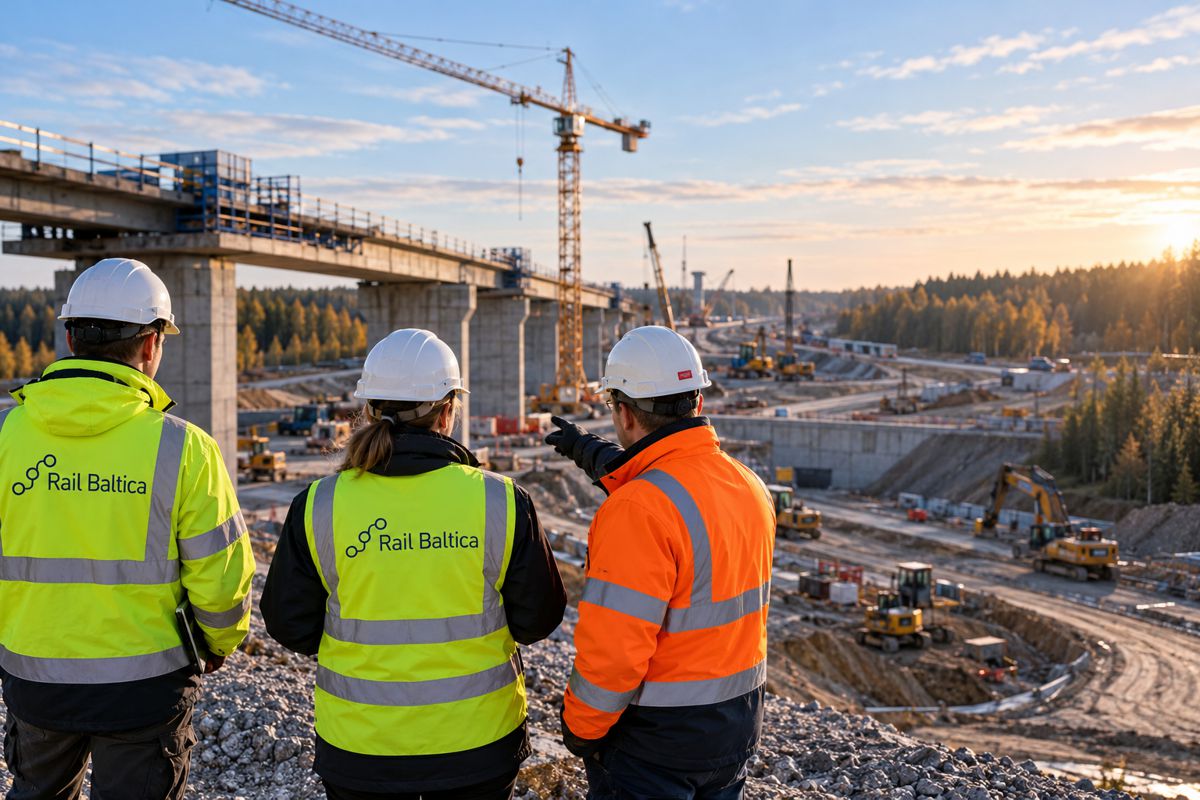
The scale of what’s being planned is the real headline. In April 2026, Coordinating Minister for Infrastructure and Regional Development Agus Harimurti Yudhoyono, who is set to deliver the conference’s opening speech, laid out a long-term vision that dwarfs anything Indonesia has attempted before.
“We estimate that if we want to add around 14,000 km in the coming years, the cost is about Rp1,200 trillion until 2045,” he told reporters after a coordination meeting in Jakarta. Much of that new mileage would sit outside Java, across Sumatra, Kalimantan and Sulawesi, where rail has historically lagged well behind the country’s economic heartland.
Some of those schemes are still on the drawing board, and it pays to be honest about that. A 2,772km Kalimantan network and a Banda Aceh to Besitang link in northern Sumatra remain under study, with routes and timelines yet to be locked down. Even so, the direction of travel is clear. Rail is being recast as a tool for spreading industrial growth and unlocking resource corridors, not simply moving commuters around Jakarta.
Freight is a big part of that calculation, with Indonesia aiming to lift rail’s share of goods movement from a sliver of the total to something far more meaningful. For mining, agriculture and port logistics, that’s a structural change worth paying attention to.
Rolling Stock And The Local Content Question
Track is only half the story, and the second day of the conference turns to what runs on it. Indonesia has a domestic champion in PT Industri Kereta Api (INKA), the state-owned manufacturer that has supplied everything from commuter units to the feeder trains serving the Whoosh high-speed line.
The government’s interest in local railway component manufacturing, voiced through the Ministry of Industry’s directorates for metals and transport equipment, reflects a wider push to capture more of the value chain at home rather than importing finished trainsets wholesale.
That ambition rubs up against commercial reality, which is where the international players come in. CRRC, the Chinese rolling-stock giant, appears on the agenda to talk heavy-haul technology, and the question of low-emission rolling stock sits squarely on INKA’s plate.
Balancing local content rules with the need for proven, financeable technology is a tightrope that plenty of emerging rail markets are walking right now. Get it right and Indonesia builds an export-capable industry. Get it wrong and projects stall over cost and capability gaps. The conversations in Jakarta will offer a useful read on which way the wind is blowing.
Lessons From The Lines Already Running
Indonesia isn’t starting from scratch, and the operators who’ve already delivered have hard-won experience to share. PT Kereta Api Indonesia brings the long-distance mainline perspective, while PT LRT Jakarta speaks to the elevated metro lines that have reshaped urban travel in the capital. Their inclusion alongside Bangalore Metro Rail Corporation, invited to discuss safe and sustainable infrastructure projects, gives the programme a comparative edge.
India and Indonesia are both wrestling with rapid urban rail expansion on tight budgets, so the cross-pollination is genuinely useful rather than ceremonial.
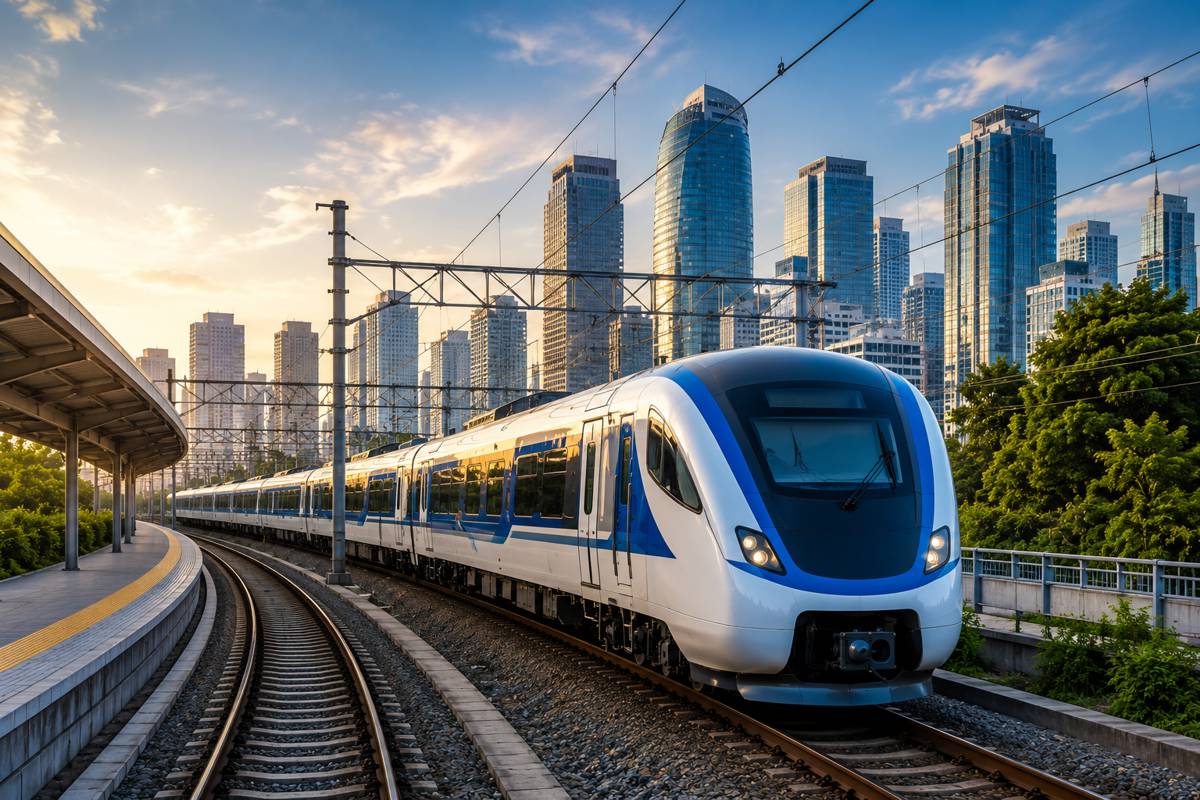
Then there’s the elephant in the room, the Whoosh high-speed line between Jakarta and Bandung. Southeast Asia’s first bullet train opened in October 2023, has carried more than 12 million passengers, and runs at up to 350km/h with on-time performance its operator puts at 99.9 per cent. It’s a genuine engineering milestone.
It also carries a heavy debt load that has prompted warnings about the financial strain on the wider state enterprise sector, a reminder that headline-grabbing megaprojects and sustainable economics don’t always travel together. Suppliers like Pandrol, on the agenda to talk track systems, are part of the less glamorous but essential business of keeping these lines safe and serviceable for decades.
Keeping Trains Safe And On Time
The final stretch of the conference shifts to the technology that quietly underpins everything else. Intelligent monitoring of railway infrastructure has its own session, drawing in signalling and control specialists such as Schweizer Electronic and PINTSCH, along with firms working on testing, maintenance and even acoustic and vibration control. It’s the sort of subject matter that rarely makes the front page, yet it’s exactly where safety records are made or broken.
For Indonesia, where new lines are being layered onto an ageing legacy network, digital monitoring and modern signalling aren’t luxuries. They’re the difference between a system that scales reliably and one that buckles under the weight of its own growth.
The presence of European, Australian and Southeast Asian technology providers on this part of the bill shows how much of the smart-rail toolkit still has to be sourced internationally, which loops neatly back to the local-content debate playing out elsewhere in the hall.
Where Land Meets Sea
What ties the whole week together is that pairing with INAMARINE, the maritime exhibition sharing the venue. In a country defined by the sea, integrated land-and-water logistics isn’t a nice-to-have, and putting rail and marine professionals under one roof is a sensible reflection of how Indonesian freight actually moves.
The 2025 edition pulled in 115 exhibitors from 15 countries and close to 15,000 visitors, and was inaugurated by AHY himself, so the political weight behind the gathering is real.
For the global construction and infrastructure community, Jakarta in late July is shaping up to be a worthwhile stop. The mix of trillion-rupiah ambition, a deliberate pivot towards private financing, and a hard look at domestic manufacturing capacity makes Indonesia one of the more interesting rail markets to watch.
Whether the country can convert its plans into financed, built and well-run railways is the open question, and the people best placed to answer it will all be in the same room.