Manitou Strengthens GEHL Network Across Gauteng and The Western Cape
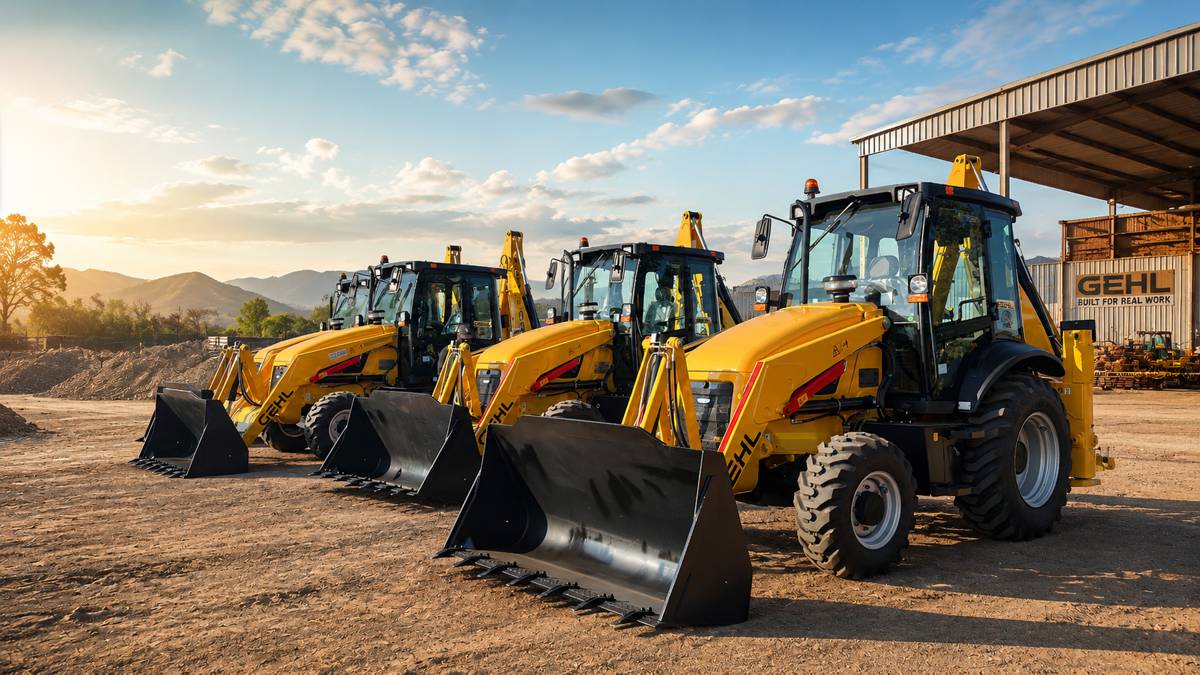
Manitou Group has moved to tighten its grip on the largest construction equipment market on the African continent, naming two new dealers for its GEHL brand in South Africa and putting fresh distribution muscle behind a product line that leans heavily on backhoe loaders.
On paper it reads like a routine network announcement, the sort of thing that lands in trade inboxes most weeks. Look a little closer, though, and it says something more pointed about where one of the world’s larger handling and earthmoving manufacturers reckons it can win ground in the second half of the decade.
The French group, which builds telehandlers, aerial work platforms and compact earthmoving kit, has framed the appointments as a deliberate push into Gauteng and the Western Cape, two of the busiest industrial corridors in the country. For South African contractors, farmers and mining contractors weighing up their next fleet purchase, the practical question isn’t whether GEHL machines exist. It’s whether someone nearby can sell them, service them and get a part on a truck before a stalled machine starts bleeding money. That’s the gap these two appointments are meant to close.
Briefing
- Manitou Group has appointed two new GEHL dealers in South Africa, covering Gauteng and the Western Cape, to support a range built around backhoe loaders, skid steers and telehandlers.
- South Africa is described by Manitou as the continent’s biggest equipment market and, on the company’s own reckoning, the fifth-largest market worldwide for backhoe loaders once North America is set aside.
- South Gear Co, based in Pretoria, joined the network in 2025; BurGerS Equipment & Spares, a Johannesburg family business with mining roots, came on board through its Cape Town branch in April 2026.
- The GEHL backhoe range traces back to 2017, when Manitou folded a former Terex-Vectra Indian production line into the brand, giving it a value-focused earthmoving offer.
- The appointments sit inside Manitou’s LIFT 2030 roadmap, which restructures the group into three regions and pushes customer proximity, electrification and circular business models.
Why South Africa Pulls Rank With The Equipment Majors
South Africa carries a weight in the equipment world that its overall economy doesn’t always suggest. It sits at the meeting point of three demanding industries, construction, agriculture and mining, each of which chews through machinery in conditions that punish anything built down to a price. Manitou has called it the largest market on the continent, and it reckons that once North America is taken out of the picture, the country ranks fifth globally for backhoe loaders.
Analysts at Arizton have pegged the South African construction equipment market at roughly 431.7 million dollars in 2022, with a path toward 573.7 million dollars by 2029, and earthmoving kit sits right at the centre of that spend.
The backhoe loader is a telling product to build a strategy around. It’s a workhorse rather than a showpiece, the kind of machine that digs a trench in the morning and shifts aggregate in the afternoon, and it sells in volume precisely because it does several jobs without a fuss. Demand for these machines across Sub-Saharan Africa has tracked the region’s appetite for roads, water schemes and urban development, and the wider Middle East and Africa backhoe segment has been growing at high single-digit rates by most market estimates.
For a manufacturer trying to convert brand awareness into actual sales, the maths is straightforward. Get the dealers right in the regions where the work is, and the machines tend to follow.
Two Dealers, Two Provinces, One Network
The first piece of the puzzle is South Gear Co, which set up shop in Pretoria and joined the GEHL network in 2025. The firm has a backstory worth knowing. It was built by people who already knew the product inside out, having come out of Manitou’s own South African operation, and from day one it focused squarely on selling and servicing the GEHL range.
Operating out of its Gauteng base, it now feeds machines into both construction and agricultural customers, and Manitou has gone as far as flagging its market entry at group level, a nod that doesn’t get handed out for every new appointment.
The second name is BurGerS Equipment & Spares, a family-owned business headquartered in Johannesburg that officially joined the GEHL dealer network in April 2026. BurGerS comes at the brand from a different angle. Its roots are in the mining sector, where uptime and rugged support count for everything, and it’s serving the GEHL line through its Cape Town branch in the Western Cape.
That gives Manitou a foothold in a province with its own distinct mix of agriculture, ports and construction activity, well away from the industrial heartland up north. Between them, the two dealers stretch the network across the country’s busiest economic zones, and they hand Manitou something it lacked before, namely boots on the ground in the regions that actually buy this class of machine.
A Backhoe Line With An Indian Backbone
It helps to understand what GEHL actually is, because the brand carries more history than most of its rivals. The name goes back to 1859 and a small foundry in West Bend, Wisconsin, and for generations GEHL was an American compact equipment specialist known above all for skid steer loaders.
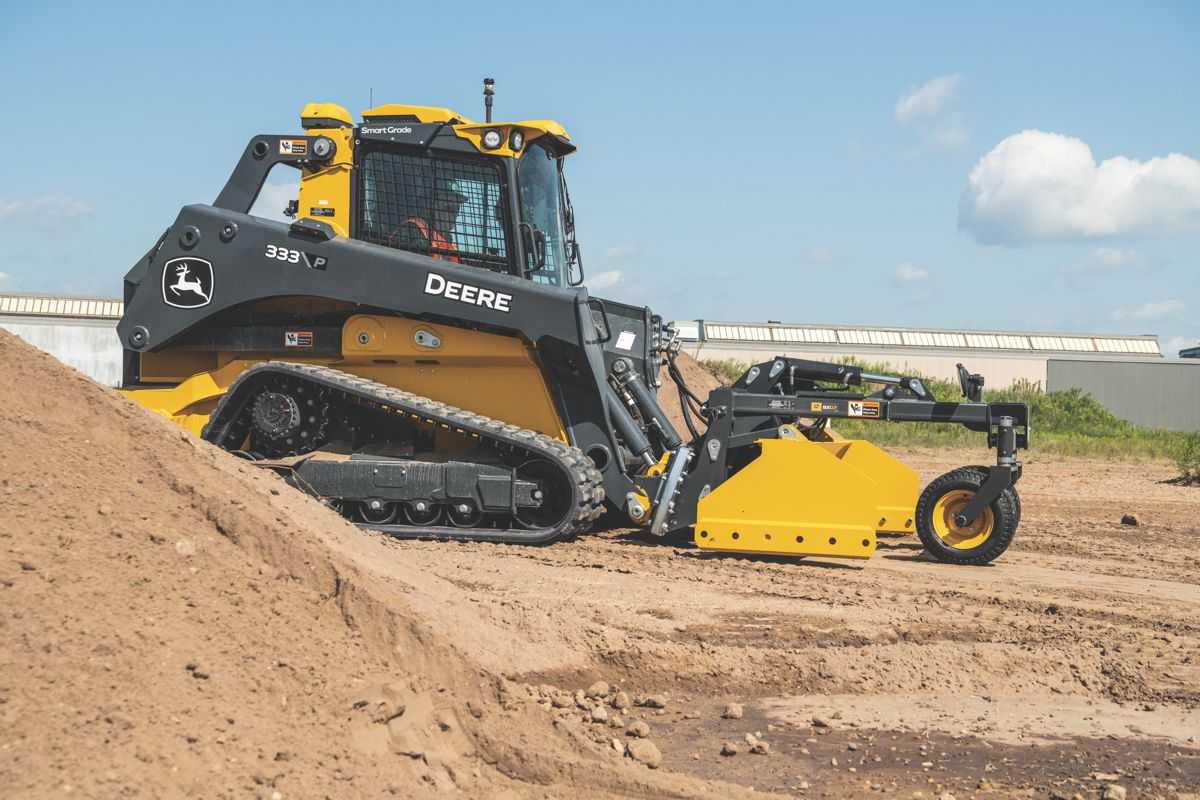
Manitou bought the company outright in 2008, having cooperated with it since 2004, and the brand has since become the group’s compact equipment standard-bearer across construction, agriculture and rental. The skid steer heritage runs deep, which is why a full range of those machines sits at the core of the South African offer alongside two specialised telehandler models.
The backhoe loaders are a newer and more interesting story. GEHL only started marketing backhoes in 2017, after Manitou acquired the former Terex-Vectra production line in India and slotted it into the brand. That gives the range an Indian manufacturing backbone, which matters commercially because Indian-built backhoes have a long record of holding up in tough, dusty, high-utilisation markets at a price that undercuts the premium European and American names.
For South African buyers used to weighing a JCB or a Cat against the rand, a GEHL backhoe built on that lineage is pitched at the value-conscious end of the market without asking customers to gamble on an unknown quantity. The two backhoe models, the wider skid steer line and the pair of telehandlers together cover the bread-and-butter tasks of a working site, and that’s the package the new dealers are now selling.
Reading The Move Through LIFT 2030
None of this is happening in isolation. Manitou rolled out its LIFT 2030 strategic roadmap in April 2025, a plan running from 2026 to 2030 that reorganises the group into three geographic zones, North America, Europe and a sprawling region the company calls LAPAM, covering Latin America, Asia-Pacific, Africa and the Middle East. South Africa falls under that LAPAM banner, now headed by Steve Ryder, who took up the regional presidency at the start of 2026. The roadmap sets out financial targets including group revenue above 2.5 billion euros, alongside a heavy emphasis on electrified machines, reconditioning and getting closer to customers, and it’s that last strand the dealer appointments speak to most directly.
Steve Ryder, President of Manitou Group’s LAPAM region, said: “South Africa is a critical market for Manitou Group, and a robust dealer network is essential to successfully support our expanding GEHL product range. Our priority is to elevate the customer experience to seamlessly meet local demands, and we look forward to seeing this strengthened foundation drive mutual business growth across the region.” The language is corporate, but the strategic logic underneath it is sound enough. A manufacturer can pour money into product development and clever marketing, yet without a dealer who can answer the phone and turn up with a spare part, the whole thing falls flat in markets like this one.
What The Two Dealers Now Have To Prove
The competitive field they’re walking into is crowded and unforgiving. South Africa’s earthmoving market is contested by the global heavyweights, Caterpillar, JCB, CNH and Komatsu among them, as well as Chinese manufacturers steadily building share on price, and homegrown specialists with decades of local goodwill. CNH launched a fresh V-Series backhoe in the country a few years back, which gives a sense of how seriously the established names take this segment.
For GEHL, the brand recognition is there, but converting it into repeat orders will come down to the unglamorous stuff, parts availability, technician quality and the speed with which a broken machine gets back to work.
That’s where the choice of dealers looks shrewd rather than merely tidy. South Gear Co brings deep product knowledge inherited from Manitou’s own ranks, while BurGerS carries a mining pedigree that translates well into the after-sales discipline these markets demand.
If the pair can build the kind of round-the-clock support reputation that has underpinned Manitou’s growth in the region before, the GEHL backhoe line has a genuine shot at carving out a durable slice of a market that keeps growing. The machines were never the hard part. Standing behind them, day in and day out, across two provinces and three industries, is the test that really counts.