Delft, Where the Dutch Build Water Security and Teach It to the World
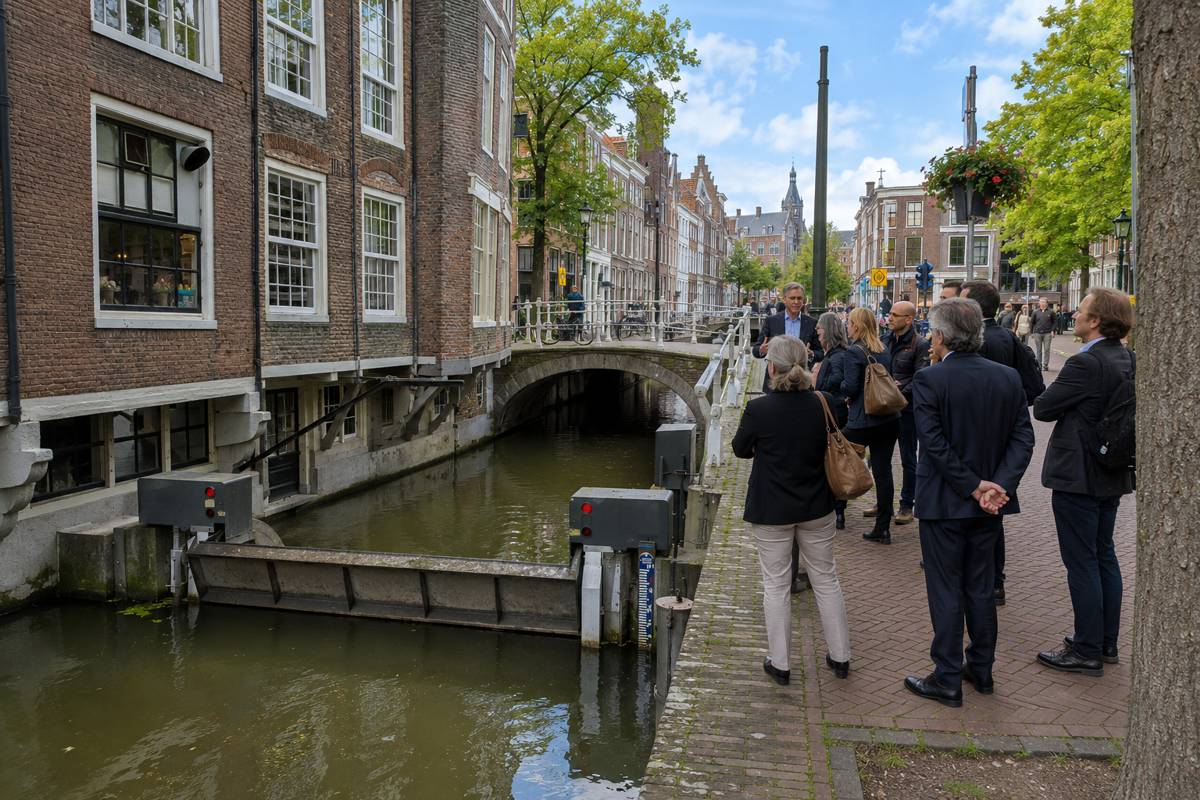
Delft is a small city with an outsized claim on the world’s water. Within a few kilometres sit the institute that has trained more of the planet’s water engineers than anywhere else, and the regional authority that keeps a densely built, half-submerged landscape from flooding every day. Together they set out a proposition the Dutch treat as settled: in the Low Lands, water management is not a service but a condition of existence.
Delfland, the regional water authority, frames it in its own briefing as an existential imperative. That conviction has a date. The North Sea flood of 1953 killed more than 1,800 people in the south-west Netherlands and reset Dutch engineering around the principle that such a disaster must never recur. The defences that followed made the country a reference point for hydraulic engineering, and within four years that reputation had produced an institution.
In 1957, as other countries began asking the Dutch to train their own engineers, a postgraduate course opened in Delft that would grow into IHE Delft. The same catastrophe produced both the defences and the school. Seven decades on, the region still runs on that dual inheritance: infrastructure that must be maintained and continually rebuilt, and expertise the Netherlands both practises and exports.
During discussions at IHE Delft with researchers Khin Nawarat and Febe Ortiz Madrid, and later with Delfland Dike Reeve Piet-Hein Daverveldt, one theme emerged repeatedly: water resilience is no longer about preventing disaster alone, but continuously adapting systems for conditions that are still unfolding.
Briefing
- Delfland protects 1.25 million residents, 541,250 households and 35,000 businesses across 408 km², half of it below sea level and reaching 6.4 metres down at its lowest point, behind 81 polders and 743 km of dikes and dunes.
- The authority is reserving physical space to raise its sea defences for one, two or three metres of future sea-level rise, and is investing around €1.2 billion in new wastewater treatment.
- IHE Delft, founded in 1957 in the wake of the 1953 North Sea flood, is the world’s largest international graduate water education facility, having trained more than 23,000 water professionals from over 190 countries.
- Water quality is now the harder problem: According to Delfland’s briefing materials, none of the assessed surface-water bodies in its management area currently meet Water Framework Directive objectives, reflecting a broader national challenge in which only a very small proportion of Dutch waters achieve full compliance.
- Dual-use schemes for storage and heat recovery are being retrofitted into a crowded delta, with treated effluent set to warm 20,000 homes in The Hague without natural gas.
A system being rebuilt for a sea that has not yet risen
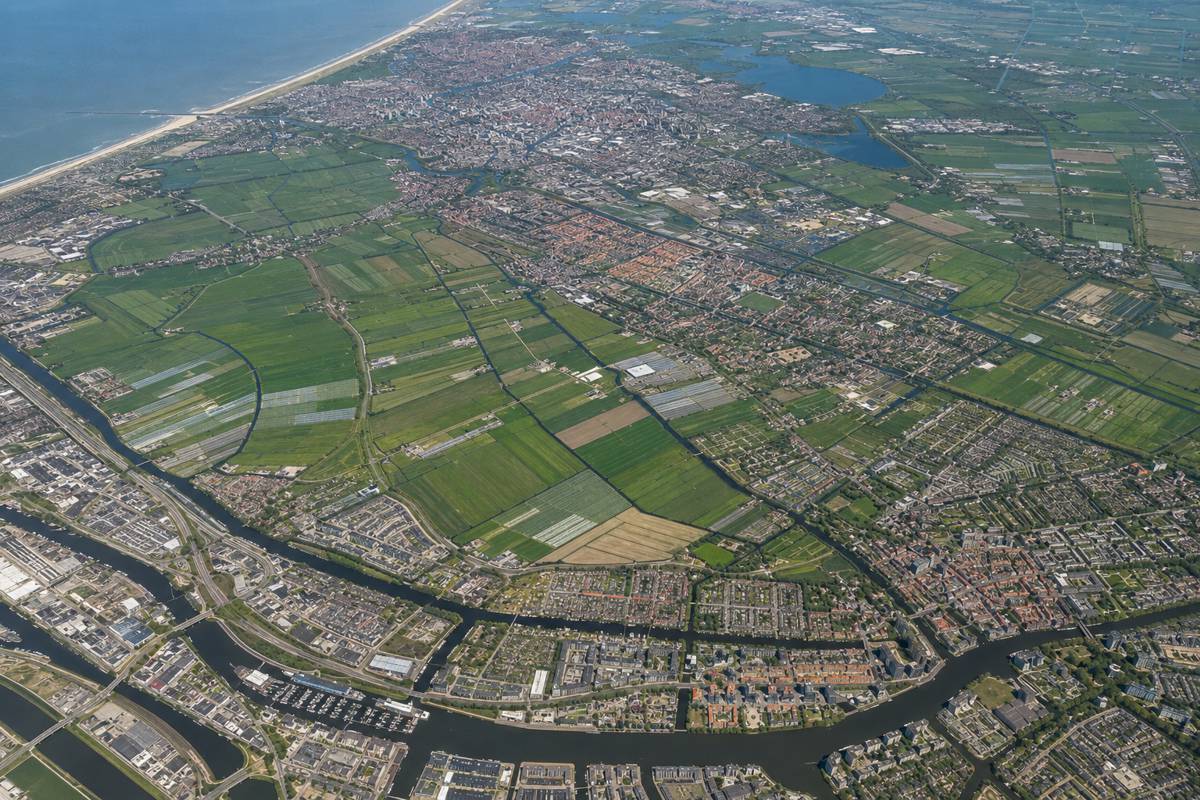
The physical task in Delfland is relentless because the ground itself is moving. The western Netherlands has been sinking since its peat soils were first drained for farming around a thousand years ago, and in the most affected areas Delfland puts the rate of subsidence at roughly a metre per century. The land does not stay still, the sea does not stay low, and the gap between them has to be engineered shut, year after year.
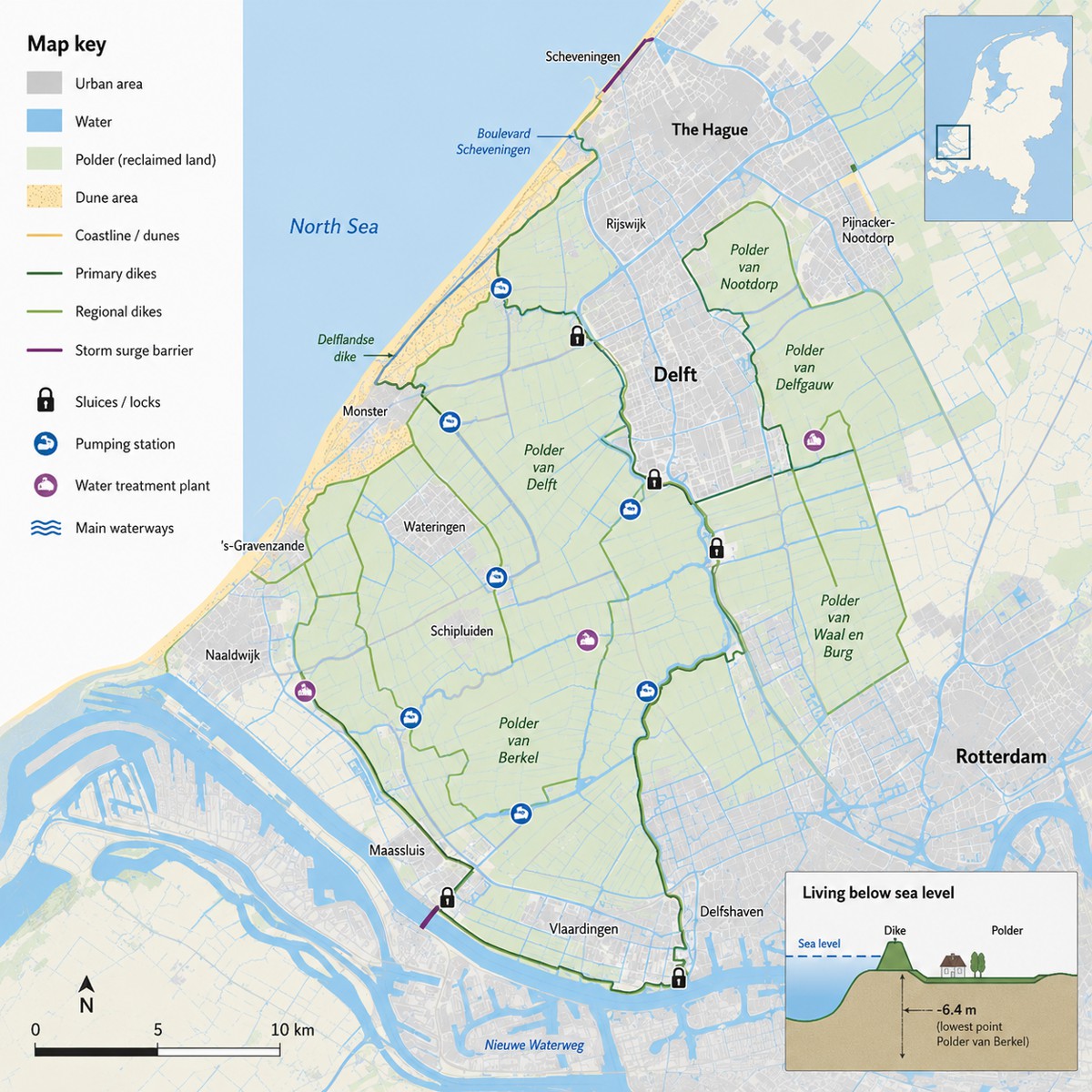
The scale of that effort is concrete. Delfland manages 81 polders and 743 kilometres of dikes and dunes across a territory where half the surface lies below sea level and the lowest point, the polder van Berkel, sits 6.4 metres down. Keeping the system functioning costs in the order of €43 million in capital and €264 million in operating expenditure each year.
What marks the current phase is that maintenance has become pre-emptive reconstruction. Rather than wait for higher seas, Delfland is reserving space alongside structures such as the Delflandse dike and Boulevard Scheveningen so they can be raised later, and is studying how to accommodate one, two or three metres of sea-level rise. The defence is being designed now for a coastline that does not yet exist.
The Ground Beneath the Defences
Water defines the Dutch landscape, but in Delfland the quieter force shaping the future may be the land itself. Long before climate change entered public debate, the western Netherlands had already begun moving downwards. Centuries of draining peat soils for agriculture, urban expansion and economic development created one of Europe’s most unusual engineering conditions: the land beneath the infrastructure continues to subside while the sea beyond the defences continues to rise.
During discussions in Delft, one statistic captured the challenge with unusual clarity. Since measurements began, parts of the region have subsided by roughly one metre every hundred years across the last millennium. The number is striking because it reframes subsidence not as a geological curiosity but as an infrastructure condition. Every road, drainage channel, foundation, pump, dike and treatment plant inherits that movement.
For the Delfland Water Board, this creates a very different planning horizon from most infrastructure authorities. Protecting the region is no longer simply about maintaining what already exists. It means continuously recalibrating a landscape that refuses to stay in place. Lower ground levels increase dependence on pumping systems, alter groundwater conditions, place additional stress on foundations and intensify the consequences of extreme rainfall events.
Climate change compounds the problem. Higher sea levels reduce the natural ability to discharge water, while hotter and drier periods increase pressure on freshwater availability and accelerate ecological stress. At the same time, intense rainfall events increase the volume of water that must be stored or moved through an already constrained system.
The result is an approach that looks less like traditional flood defence and more like managed adaptation. Space is being reserved to raise sea defences in future decades. Storage is being embedded into parks and greenhouse roofs. Wastewater plants are being redesigned as energy assets. Infrastructure is increasingly expected to perform multiple functions because there is little room left for single-purpose solutions.
The lesson from Delfland is that resilience begins beneath the surface. The challenge is not simply keeping water out. It is adapting an entire engineered landscape to conditions that are changing from below and above at the same time.
Knowledge treated as infrastructure
If Delfland is where Dutch water security is practised, IHE Delft is where it is taught and sent abroad. The institute confers accredited master’s degrees and, with Dutch partner universities, doctorates, and it has worked under the auspices of UNESCO since 2003, holding Category 2 status since 2017 and renewing it in 2024. Its reach is its defining feature. More than 23,000 graduates from over 190 countries have passed through it, most of them mid-career professionals who return home to run water systems of their own.
The institute’s research shows how that knowledge feeds back into policy. A 2026 paper in Nature Climate Change, led by IHE Delft’s Khin Nawarat, models coastal flood risk to Europe’s road and rail networks and finds that 1,592 kilometres are affected each year under present conditions, with expected damage of around €519 million annually. The result that matters most for the Dutch case is an absence. The Netherlands and Belgium fall outside the study’s modelled risk because their existing coastal protection already exceeds the flood events considered. Dutch resilience is not an accident of geography but a measurable product of sustained investment, and Delft is where that lesson is codified and passed on.
The frontier has shifted to water quality
The harder problem in Delfland is no longer keeping water out but keeping it clean. By the authority’s own account, none of the surface-water bodies in its area meet the minimum standards of the EU Water Framework Directive, against roughly 1 per cent nationally, and in the greenhouse-horticulture polders only nine of twenty-six are classed as clean. Ecological water status, Delfland reports, is not improving.
The response runs on three tracks: source control and monitoring for chemical status; nature-friendly banks, wet ecological zones and ecological mowing for ecological status; and collective treatment, backed by the €1.2 billion investment in new plant. A less obvious threat has acquired its own programme. Invasive American crayfish burrow into dikes and banks, uproot aquatic plants and degrade water quality, and Delfland is scaling its removal effort from ten locations towards 160. Resilience here is biological as much as structural.
Less fresh water, more pressure
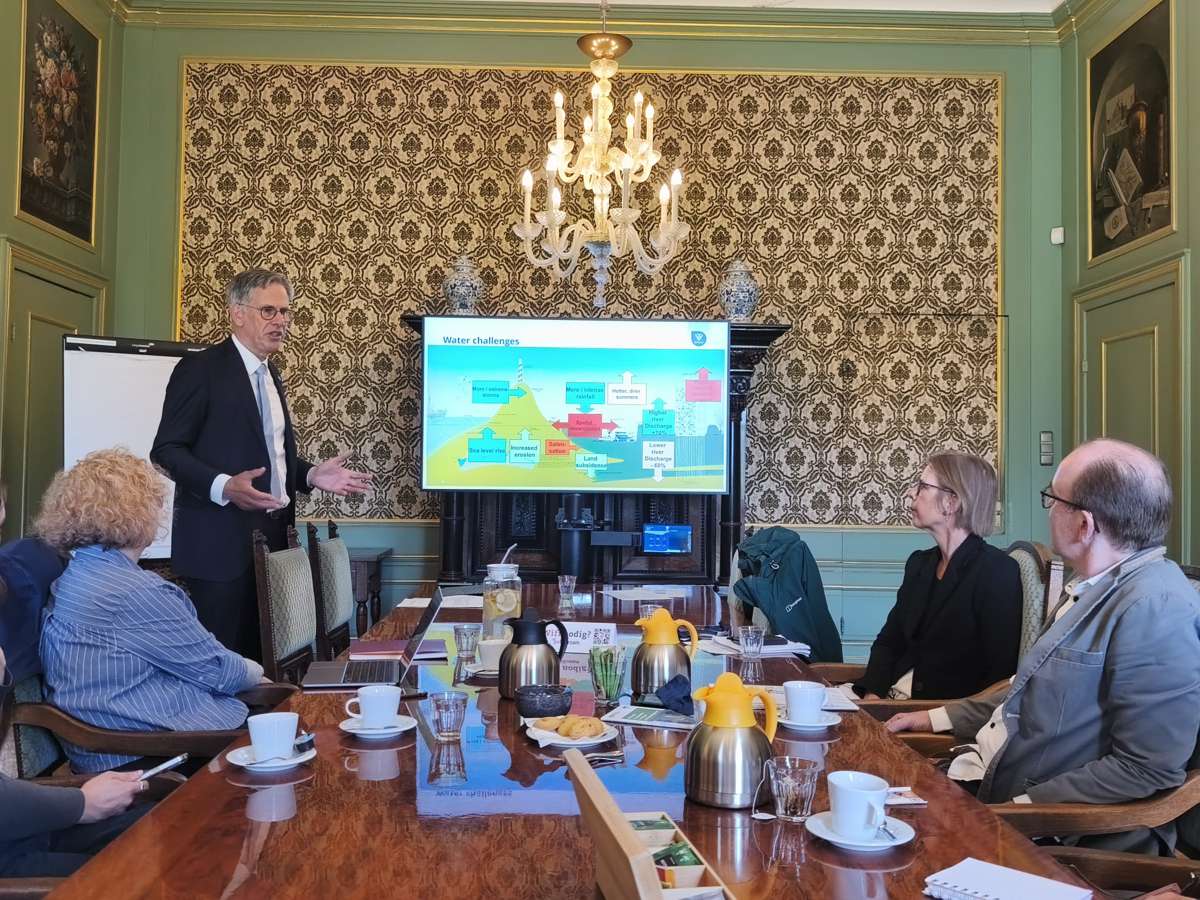
Climate change reaches Delfland as a fresh-water problem as much as a flood one. Hotter, drier summers and a projected swing in river discharge, up by around a tenth in wet periods and down by as much as 60 per cent in dry ones, reduce the fresh water available when it is most needed. Delfland links scarcer fresh water to a chain of secondary risks: deteriorating water quality, weakened building foundations, instability in the peat dikes that hold the system together, and salinisation as seawater pushes inland.
Rainfall is becoming both more intense and more prolonged, which raises the separate hazard of surface-water flooding in a landscape that has urbanised heavily over the past century. The strategy splits accordingly. Short, intense downpours are captured where they fall, while prolonged rainfall is routed into emergency storage.
Multifunctional engineering in a crowded delta
With little spare land, new water infrastructure in Delfland has to do more than one job. Molenvlietpark works as both public recreation and water storage, holding 60,000 cubic metres while supporting biodiversity and fish-spawning habitat that improves water quality. The Rainlevelr scheme turns greenhouse roofs into distributed storage, with 128 growers covering about 17 per cent of Delfland’s greenhouse area and a combined capacity of more than 60,000 cubic metres.
The same logic reaches into energy. Treated wastewater leaves Delfland’s plants at around 20 degrees Celsius and is currently discharged to the North Sea. In partnership with the Municipality of The Hague, the authority plans to recover that heat to warm 20,000 households without natural gas, converting a waste stream into a municipal energy source.
Polderen, the method that holds it together
None of this works without a way of deciding. Dutch water sits inside a layered structure in which the European Union sets directives, national government sets policy and legal standards, twelve provinces supervise, and 21 regional water authorities such as Delfland take the lead on flood protection, water quantity, water quality and wastewater treatment, alongside 342 municipalities and ten public drinking-water companies.
Holding that together is the practice the Dutch call polderen, the art of building consensus among government, business and society in pursuit of, in Delfland’s words, the common good.
For a delta that is sinking, urbanising and warming at once, consensus is not a courtesy but a piece of infrastructure in its own right. Delft’s contribution is to show both halves of the answer in one place: a water system engineered and continually rebuilt to keep a low country dry and supplied, and an institution that turns that hard-won experience into knowledge for the rest of a wetter, more crowded world.
Delft ultimately demonstrates that resilience is not a finished project but a permanent capability: infrastructure that evolves, institutions that learn, and societies willing to negotiate with water rather than pretend they can defeat it.