First USA Built Volvo Excavators Signal a Shift Towards Regional Manufacturing
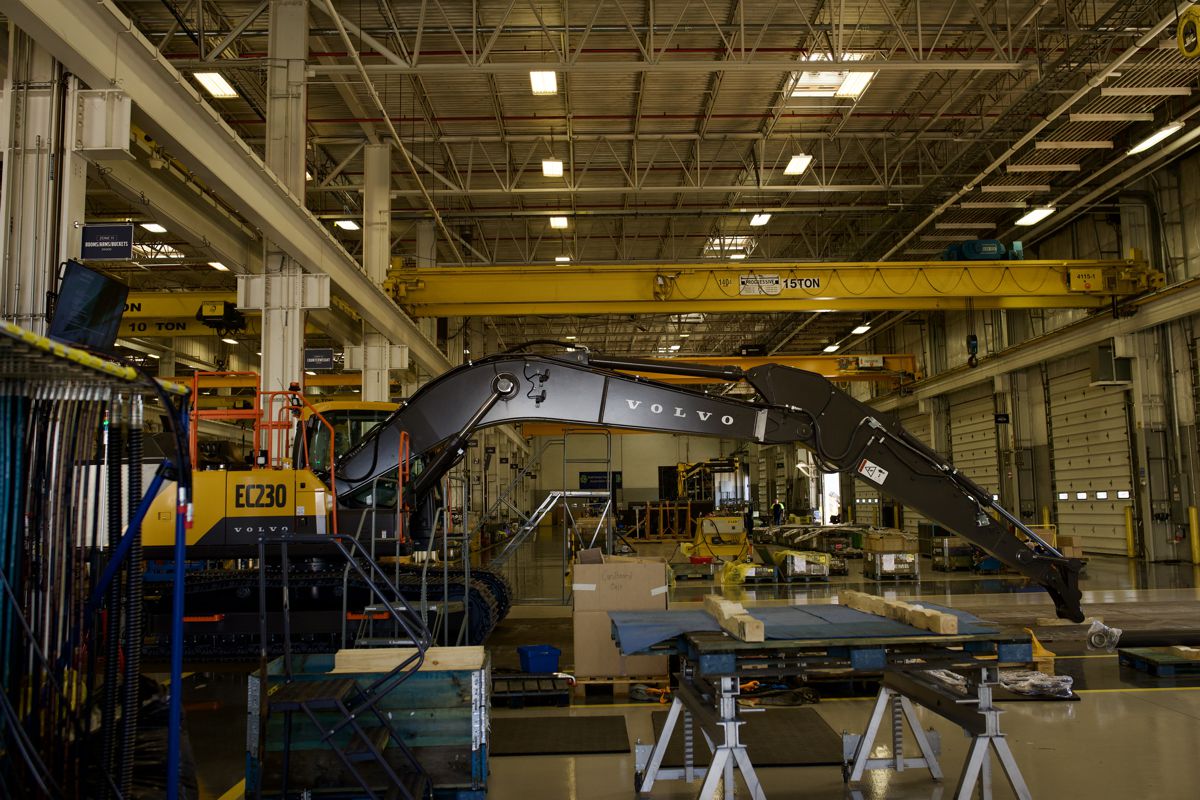
The first excavators and large wheel loaders assembled on American soil by Volvo Construction Equipment have begun reaching customers from the company’s plant in Shippensburg, Pennsylvania, and the milestone carries more commercial weight than a routine production update. The manufacturer now builds more than half of its North American machine supply at the site, having added eleven models to the local line-up and trimmed customer lead times by upwards of six weeks. For contractors and rental fleets that have spent three years navigating volatile delivery schedules and unpredictable landed costs, a shorter and more certain path to a new excavator is a tangible operational gain rather than a marketing line.
The timing matters as much as the machinery. Volvo CE committed to the expansion in June 2025, at the point where United States trade policy was reshaping the economics of importing finished equipment, and the decision reads as a deliberate hedge against both tariff exposure and long-distance logistics risk. Excavators bound for North American buyers had previously travelled from South Korea and Sweden, exposing them to shipping lead times and to a tariff regime that has made country of origin a live cost variable. By moving assembly of mid-size to large crawler excavators and larger wheel loaders into Pennsylvania, the company has converted proximity into a competitive instrument that touches availability, landed cost and service response in equal measure.
What distinguishes the Shippensburg story from the wider reshoring conversation is the discipline behind it. Rather than gamble on a greenfield plant tied to a single policy outcome, Volvo CE reengineered space it already owned, added flexible capacity without expanding its footprint or headcount, and built the workforce skills to run a far more complex product mix. That combination of caution and speed is the more instructive lesson for an industry weighing how much production to bring home, and how quickly.
Briefing
- Volvo CE is now assembling excavators and large wheel loaders in Shippensburg, Pennsylvania, lifting locally built machines to more than half of its North American supply and cutting lead times by over six weeks.
- The move forms part of a roughly $261 million global excavator investment announced in June 2025, spanning Shippensburg, Changwon in South Korea and a new plant in Eskilstuna, Sweden.
- The expansion was achieved by reconfiguring the existing 436,000 ft² site into three flexible production lines, without new buildings or additional headcount.
- Section 232 tariffs on steel, aluminium and finished machinery have made domestic assembly a hedge against both cost and supply chain disruption, reinforcing the logic of building close to the customer.
- Volvo CE aims to grow its business with Pennsylvania-based suppliers by 30% by 2030, with a global counterweight supplier already investing more than $1.5 million in a nearby just-in-time facility.
Why Domestic Assembly Has Become a Competitive Weapon
The commercial case for local assembly has sharpened considerably since Volvo CE first outlined its plans. Washington’s use of Section 232 of the Trade Expansion Act pushed tariffs on imported steel and aluminium to 50% during 2025, and a subsequent restructuring in 2026 extended that exposure to the full customs value of covered machinery and derivative products.
A June 2026 proclamation offered partial relief, capping certain mobile industrial equipment at a temporary 15% compound rate through the end of 2027 for goods originating in allied markets such as the European Union, the United Kingdom, Japan and South Korea. That relief is welcome but conditional and time-limited, and the underlying metals regime continues to keep input costs live for anyone building metal-intensive machines.
Against that backdrop, assembling excavators in Pennsylvania rather than shipping them from Changwon or Sweden changes the arithmetic for Volvo CE and its dealers. A machine finished domestically sidesteps the tariff treatment applied to imported finished equipment and shortens the delivery window that had frustrated buyers through successive waves of trade uncertainty.
The six-week reduction in lead times is the headline figure, yet the quieter benefit is predictability, because a fleet manager planning a season’s earthmoving can commit to a purchase with far greater confidence about when the machine will arrive and what it will cost to put to work. That certainty has real balance-sheet value in a business where a late delivery can idle a crew or slip a project milestone.
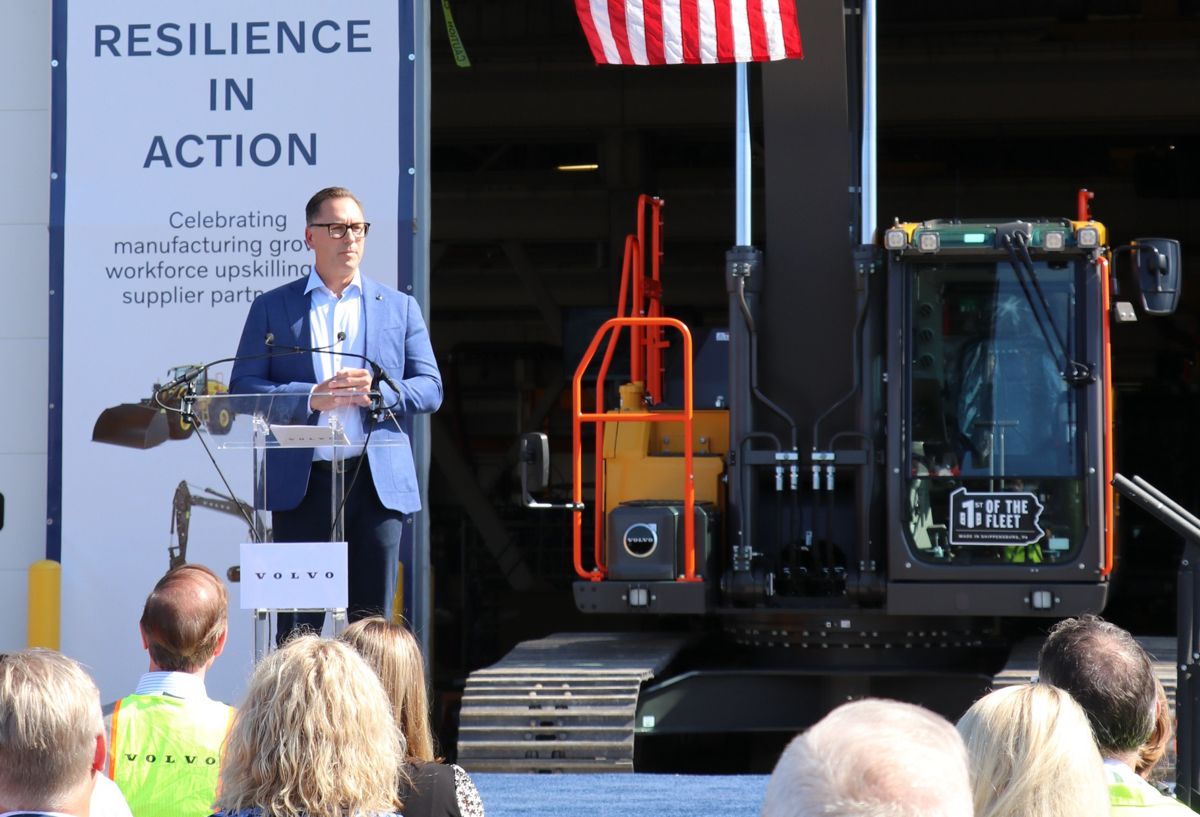
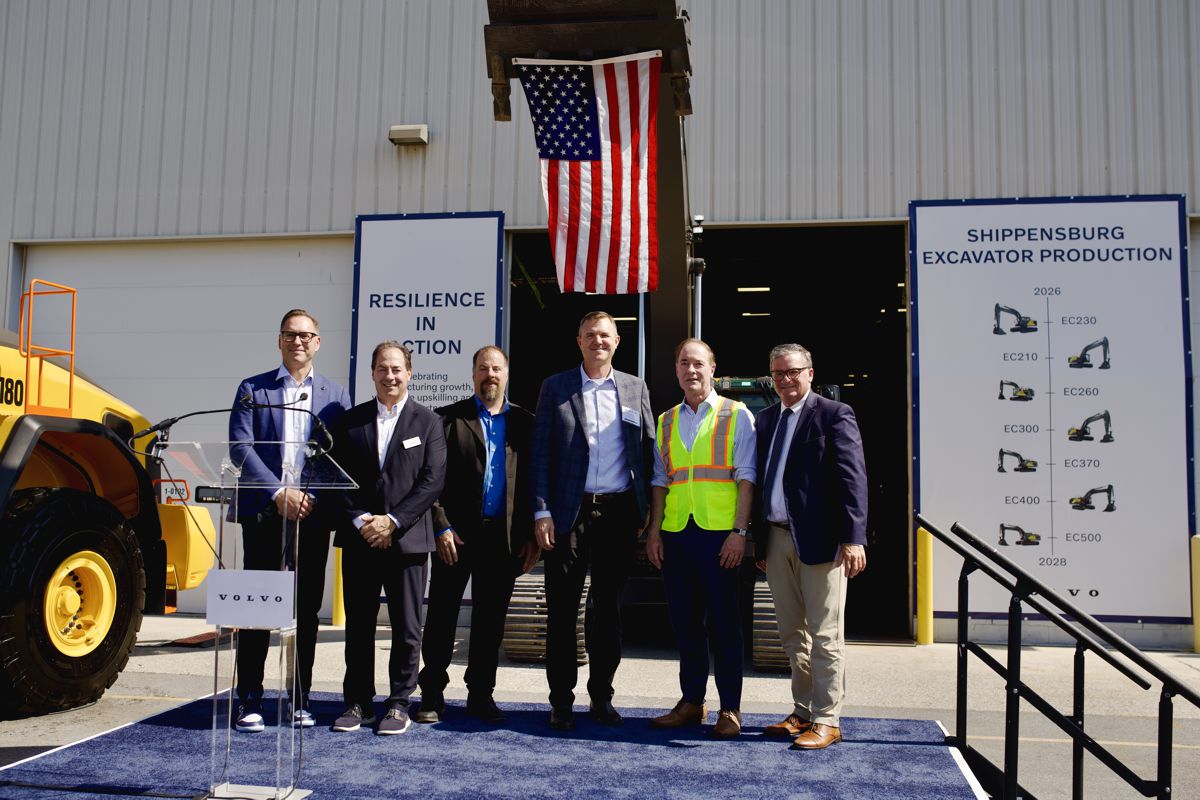
Scott Young, Head of Region North America, framed the achievement in terms of resilience rather than reaction. “What you see today is manufacturing resilience in action: adapting with purpose and speed to increase capacity and build more machines closer to our customers. This achievement advances Volvo CE’s long-term strategy to strengthen stability and flexibility across the North American market while supporting our employees and the regional economy,” he said. The emphasis on stability is telling, because the value of local assembly lies less in any single tariff line than in insulating customers from the volatility that has defined equipment procurement since 2023.
A Capital-Light Route to More Capacity
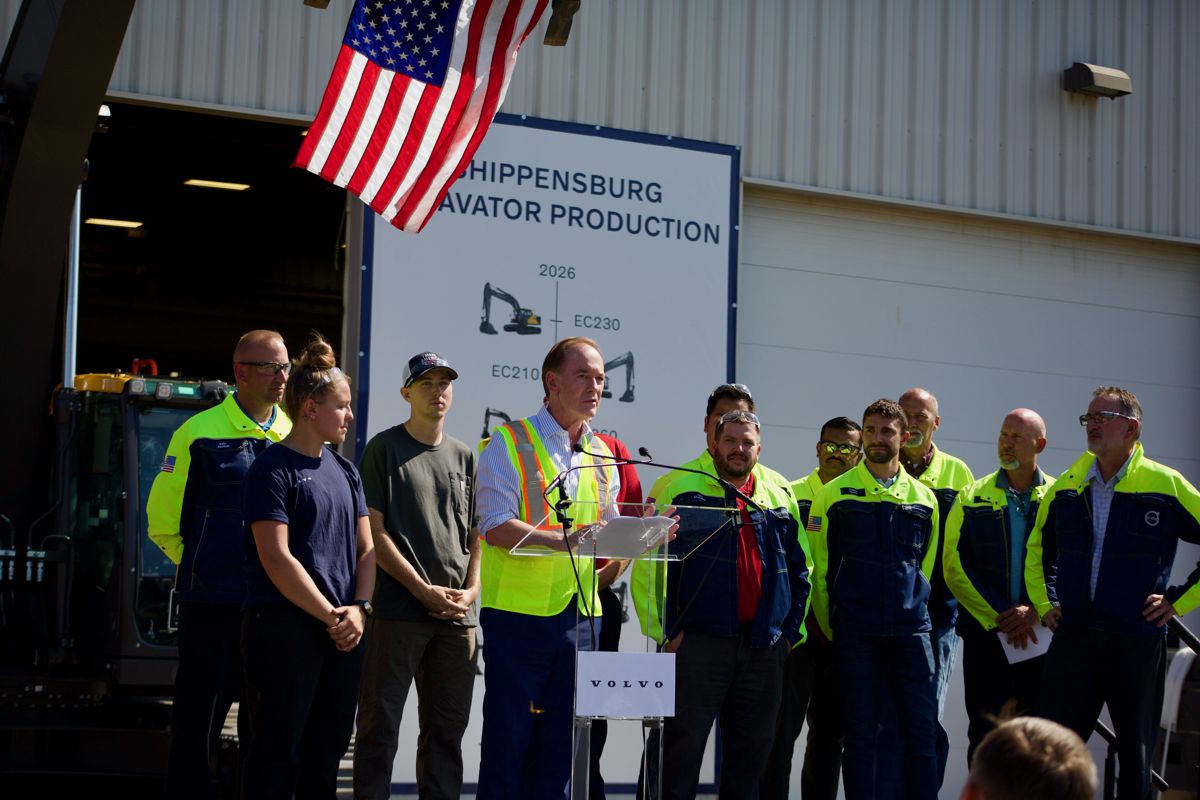
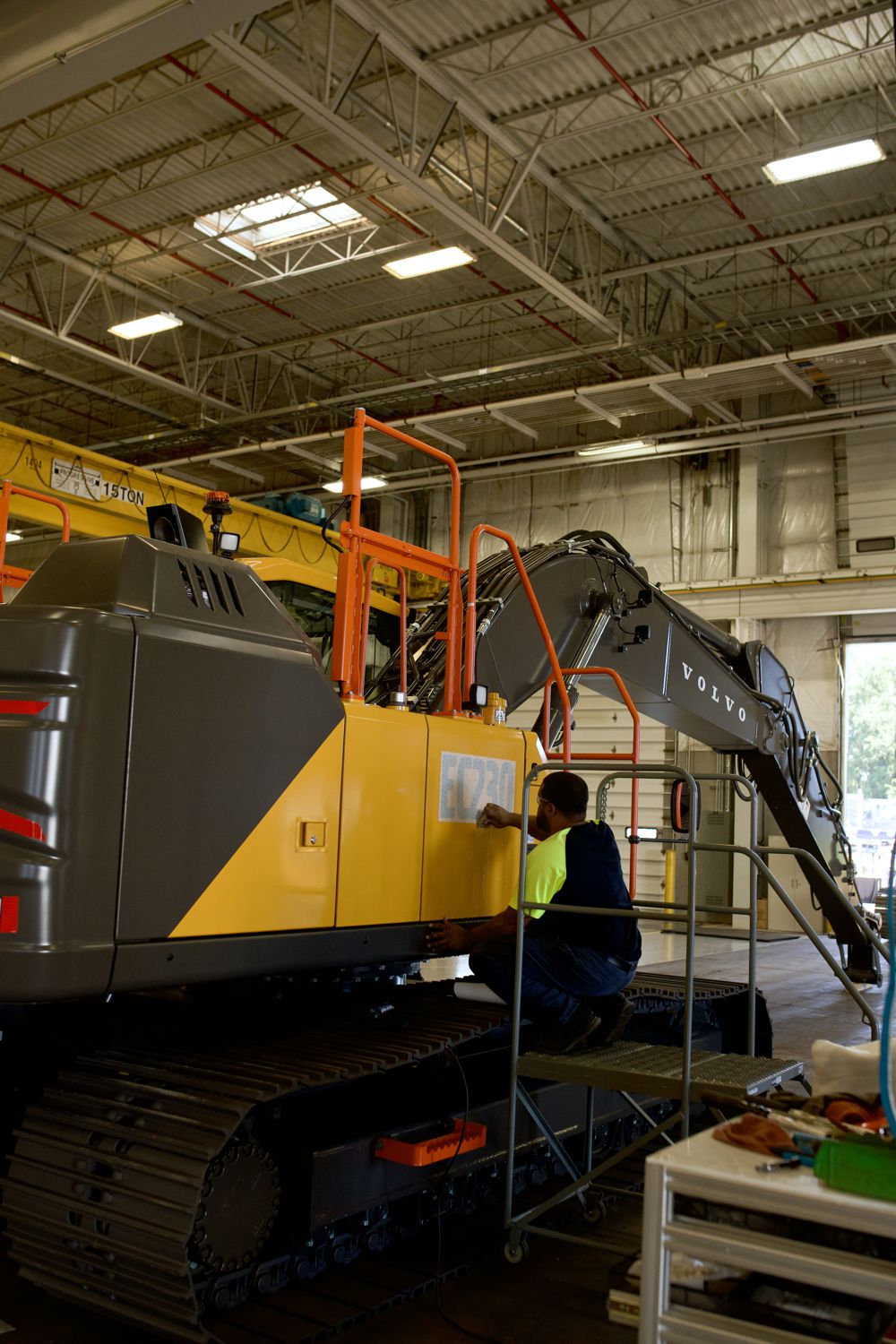
The way Volvo CE added capacity is as significant as the fact that it did. Instead of committing to a new building, the company reengineered its combined 436,000 ft² assembly and fabrication footprint into three flexible production lines capable of building the full range of excavator, wheel loader and compactor models, while adding fresh excavator welding capacity.
Growth came from automation, process improvement and more efficient use of existing floor space, which allowed the plant to expand output while holding its footprint and workforce steady. In a market where demand has been cyclical and trade policy unpredictable, that flexibility is a strategic asset in its own right, since it lets the site flex between product families as orders shift rather than locking capital into a single dedicated line.
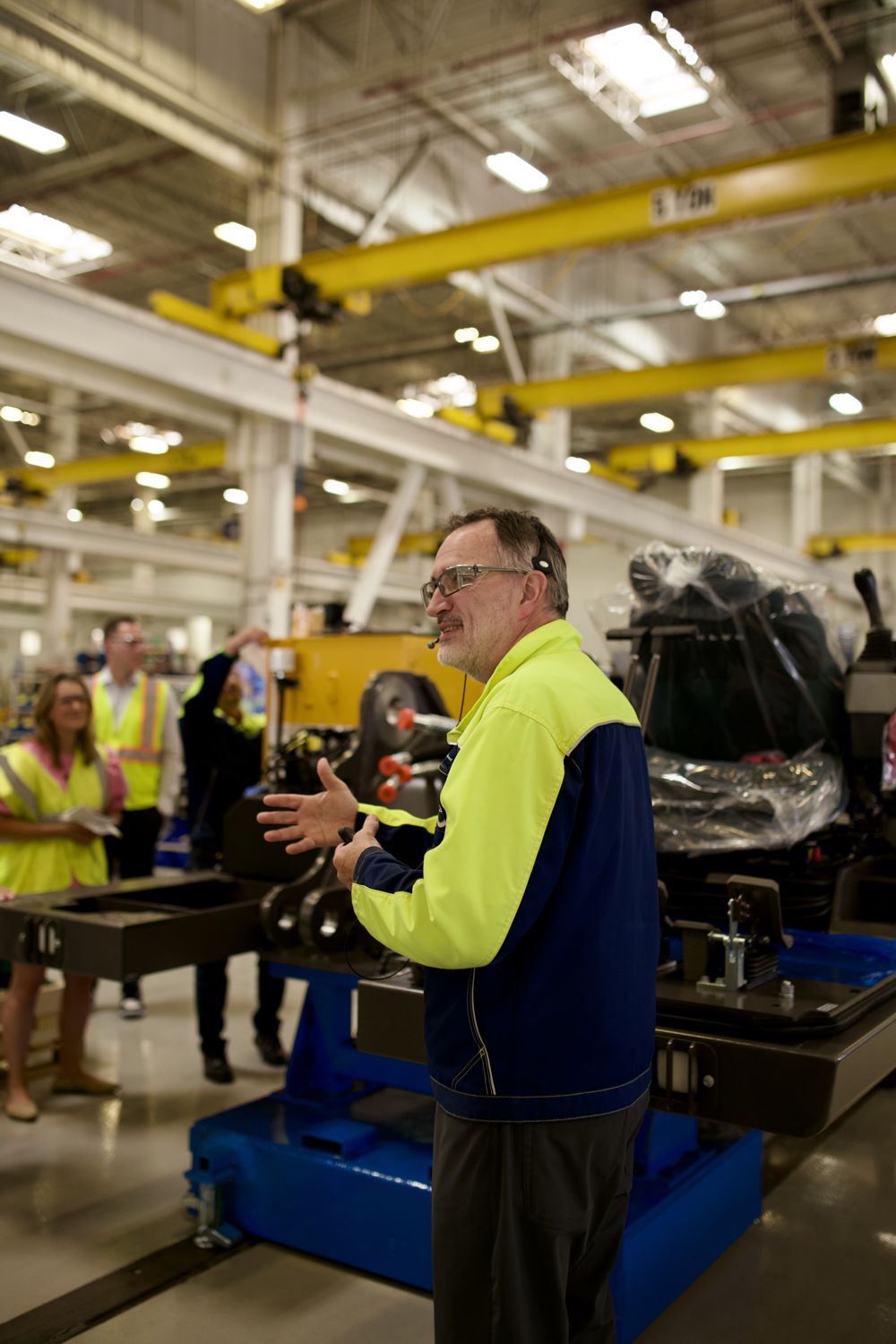
The larger wheel loaders posed the sharper production challenge, requiring around 30% more parts and complexity to build on the same line as their mid-size counterparts. To absorb that, the site pioneered a “utility specialist” model, cross-training employees across multiple zones so they could reinforce stations that needed extra labour and keep the flow steady.
The insights from that pilot are portable, applicable to the excavator line and shareable across Volvo CE plants worldwide, which turns a local staffing solution into intellectual property for the wider group. Reaching that point took extensive investment in people, with employees completing more than 180 hours of training each and drawing on exchanges with sister factories in Sweden, Korea and Brazil.
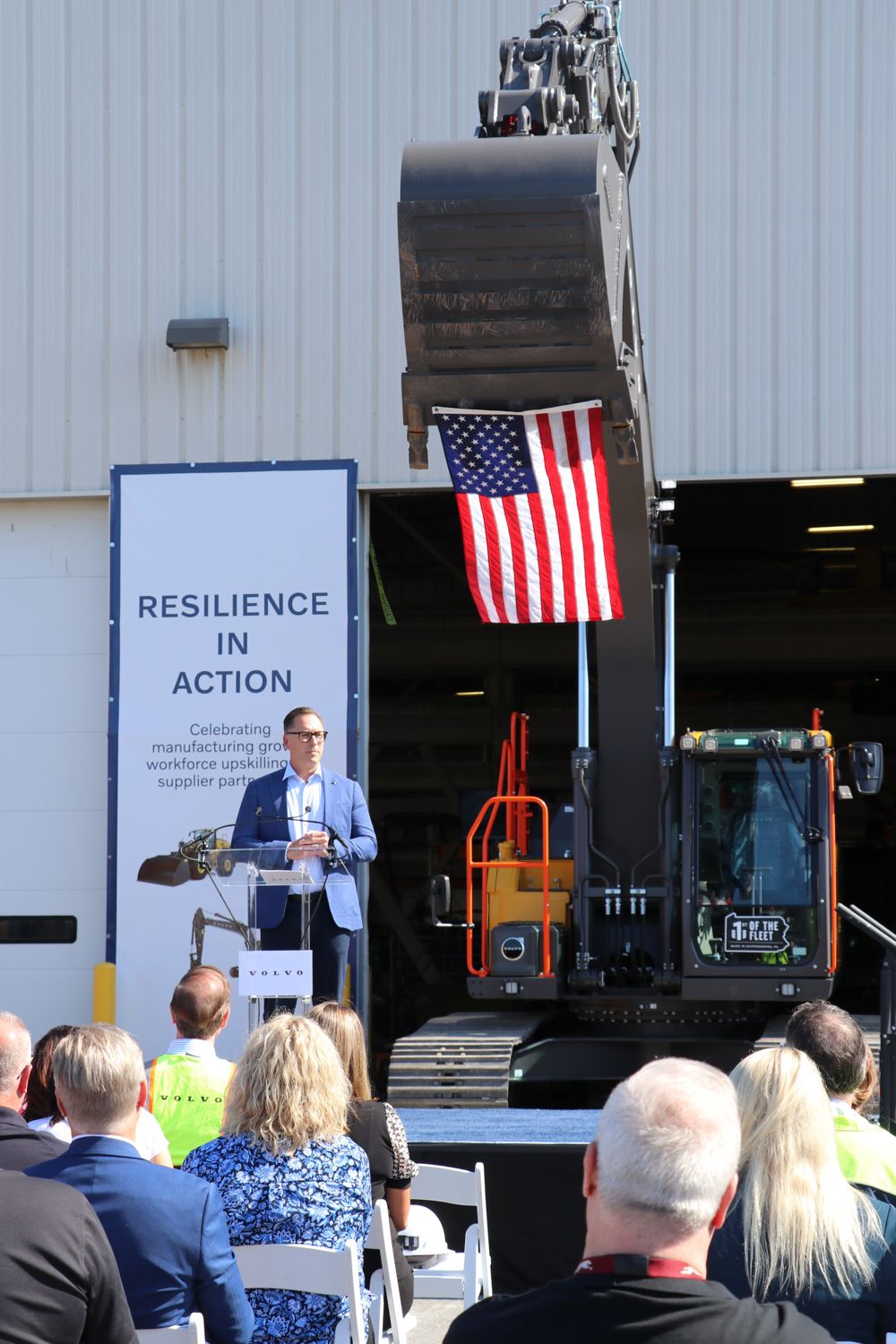
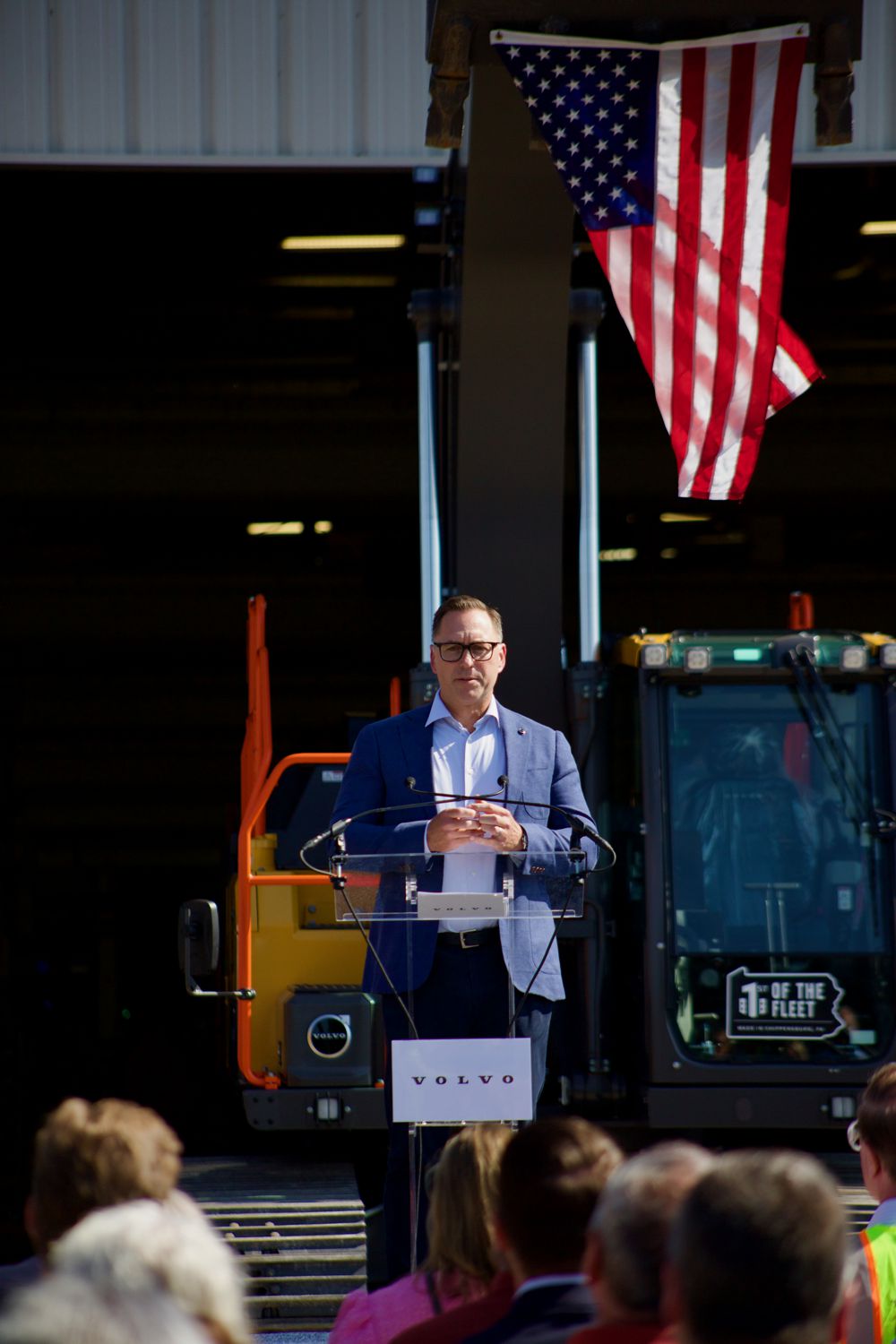
Gustavo Casagrandi, Head of Operations at Volvo CE Shippensburg, tied the effort to the plant’s competitive standing. “Over the past 11 months, our teams have demonstrated exceptional commitment and execution to expand our production capabilities here in Shippensburg. Along the way, we’ve developed new technical capabilities within our workforce, making us more resilient, and competitive as a manufacturing facility,” he said. The upskilling matters well beyond the immediate ramp-up, because a workforce fluent across excavators, loaders and compactors is precisely what a flexible, multi-product plant needs as it moves towards greater automation and digitalisation.
Building the Supplier Base That Localisation Requires
Assembling machines domestically is only half the equation, and arguably the easier half. The harder, slower work is building a local supplier base with the confidence to invest alongside the manufacturer, and Volvo CE has been candid that this ranks among the most critical challenges facing the equipment sector as a whole. Deep supplier relationships have underpinned the company’s operations for decades, but localisation raises the stakes, because a plant that depends on imported components inherits the very tariff and logistics risks that domestic assembly is meant to reduce.
To close that gap, Volvo CE has set an ambition to grow its business with Pennsylvania-based suppliers by 30% by 2030, a target that will only be met if suppliers believe the volumes are durable enough to justify capital investment. An early proof point came through a partnership with the Franklin County Area Development Corporation, which helped persuade a global excavator counterweight supplier to establish a regional operation. That supplier is investing more than $1.5 million in a local facility to finish and deliver counterweights to the Shippensburg plant on a just-in-time basis. Counterweights are among the most steel-intensive components on an excavator, so sourcing them locally doubles as a direct hedge against the metals tariffs that have squeezed margins across the industry.
Todd Papple, Head of Purchasing Americas at Volvo CE, described the shift in how manufacturers and their partners now have to work. “Strong, mutually beneficial supplier relationships have been fundamental to how Volvo CE works with its suppliers for decades. But increasingly, success requires a broader ecosystem — where businesses, economic development organizations and communities work together,” he said. The involvement of a county development corporation in what is ultimately a private sourcing decision underlines how far public-private collaboration has become a precondition for reshoring, giving suppliers the assurance to commit capital that a single purchase order never could.
One Node in a Regionalised Excavator Network
Shippensburg is best understood not as a standalone project but as one node in a deliberately regionalised production network. The Pennsylvania expansion sits within a roughly $261 million global investment, announced in June 2025, to strengthen crawler excavator production across three sites: Shippensburg, Changwon in South Korea and a new plant in Eskilstuna, Sweden.
The logic across all three is consistent, namely to produce within each region for that region’s customers, reducing reliance on long-distance logistics and building resilience against the disruptions that have repeatedly snarled global supply chains.
The European leg of that strategy is advancing in parallel. Volvo CE broke ground in 2026 on a 30,000 m² crawler excavator plant in Eskilstuna, backed by around SEK 700 million and designed to build up to 3,500 medium and large machines a year, spanning both electric and internal combustion models in the 14 to 50 tonne range, with production expected from 2028.
Set against a wider SEK 9.2 billion European investment programme unveiled at Volvo Days 2026, alongside the acquisition of dealer Swecon that hands the company direct control of around 70% of its European retail network, the pattern is unmistakable. Volvo CE is tightening the link between where machines are made, where they are sold and who sells them, and the Shippensburg milestone is the North American expression of that same thinking.
Reading the Reshoring Signal Correctly
The wider reshoring narrative deserves a clear-eyed reading, because the enthusiasm around bringing manufacturing home has outpaced the underlying data. Analysis from IoT Analytics found that, once the electronics and semiconductor sector is stripped out, United States manufacturing construction spending has risen only modestly since the tariffs took effect, with the strongest growth concentrated in data centres and power generation rather than heavy industry. Reshoring, in other words, is real but uneven, and equipment makers are approaching it with justified caution rather than treating tariffs as a one-way invitation to build.
That caution is visible across the sector. Caterpillar and John Deere already carry substantial United States manufacturing footprints, yet both have contended with softer demand, and Deere is simultaneously expanding in Mexico with a new Nuevo León plant, precisely the kind of cross-border production that a national security investigation into heavy equipment imports has since put under scrutiny.
Industry bodies have been blunt that policy stability matters more than short-term relief, with the Association of Equipment Manufacturers warning that reshoring cannot happen overnight in response to an eighteen-month tariff window, and the Associated Equipment Distributors pressing for the predictable trade policy that long-term capital decisions require. Volvo CE’s own first-quarter 2025 sales had fallen 8% to SEK 21.12 billion, a reminder that these commitments were made into a cyclical trough rather than a boom.
Congressman John Joyce, whose district includes the plant, cast the expansion in terms of American manufacturing renewal. “Volvo CE has taken seriously its commitment to investing in and revitalizing American manufacturing. This facility right here in Shippensburg is not only building world-class construction equipment; it is creating opportunities for families and workers throughout our community. Pennsylvania has always been a strong contributor to our nation’s manufacturing strategy, and this expansion is proof that we will continue to be a leader in its future,” he said. The political framing is understandable, though the more durable commercial insight is that Volvo CE has built optionality rather than betting on a single policy outcome, since a flexible plant that can shift between product families is well suited to a market where the rules keep changing.
What the Milestone Signals for Buyers and the Wider Market
For North American buyers, the practical consequences are immediate. Shorter and more predictable lead times ease the planning burden on contractors and rental companies, while machines backed by local assembly, a domestic supplier base and nearby engineering support tend to translate into better parts availability and faster service response over a machine’s working life. Those lifecycle considerations increasingly shape purchasing decisions as much as headline price, particularly for fleet operators whose profitability depends on uptime. Dealers, in turn, gain a stronger story to tell about availability and support at a moment when buyers are acutely sensitive to both.
There is a broader signal here for the equipment market and its investors. Volvo CE has demonstrated that meaningful localisation can be achieved by reconfiguring existing assets and upskilling an existing workforce, rather than through the slower and riskier route of greenfield construction. The utility specialist model, the flexible three-line layout and a technology team that now deploys across the whole product portfolio rather than a single machine family are all replicable, and the company has signalled its intention to share those lessons across its global sites.
As tariff policy, supply chain resilience and the push towards electrification and digitalisation continue to reshape where and how machines are built, the manufacturers that can flex fastest between products, regions and technologies will hold the advantage. Shippensburg is an early and concrete demonstration of what that flexibility looks like in practice.
Key Industry Questions
- How much will building excavators in Pennsylvania reduce delivery times for North American buyers? Volvo CE puts the improvement at more than six weeks for the models now assembled domestically. That reduction comes from removing the ocean freight and import handling previously involved in shipping excavators from South Korea and Sweden. For contractors and rental fleets, the more valuable gain may be predictability rather than raw speed, since domestic assembly insulates delivery schedules from the port congestion, freight-rate spikes and customs delays that have disrupted planning since 2023. Shorter lead times also let dealers hold more relevant stock and commit to delivery dates with greater confidence, which matters when a delayed machine can idle an entire crew or push back a project milestone. Certainty of supply has become a purchasing criterion in its own right.
- Does local assembly at Shippensburg mean Volvo CE machines will avoid US tariffs entirely? Not entirely. A machine assembled in Pennsylvania is no longer an imported finished good, so it sidesteps the tariff treatment applied to complete excavators shipped in from abroad. However, any imported components and raw materials it contains can still attract Section 232 duties on steel, aluminium and copper, which ran at elevated rates through 2025 and 2026. That is precisely why Volvo CE is localising steel-intensive components such as counterweights and expanding its domestic supplier base. The net effect is reduced rather than eliminated tariff exposure, combined with lower logistics risk. A June 2026 proclamation capped some imported equipment at a temporary 15% rate, but that relief is time-limited and does not change the structural case for building closer to the customer.
- Which Volvo CE models are now built in Shippensburg? The plant has added eleven models to its local line-up, taking its North American production portfolio to thirty machines across excavators, wheel loaders and compactors. It previously built soil and asphalt compactors and mid-size wheel loaders, and now also assembles mid-size to large crawler excavators and larger wheel loaders. The Shippensburg-built excavator range spans mid-size classes through to larger machines suited to heavy infrastructure and quarrying work, complementing the new-generation models Volvo CE has introduced across its global range. Producing this breadth on shared, flexible lines is central to the plant’s strategy, allowing it to shift output between product families as demand moves rather than dedicating capacity to any single machine type.
- Why did Volvo CE retrofit an existing plant instead of building a new factory? Retrofitting delivered capacity faster and with far less capital risk than a greenfield plant. Volvo CE reengineered its existing 436,000 ft² assembly and fabrication space into three flexible production lines and added excavator welding capacity, expanding output without enlarging its footprint or headcount. In a market shaped by cyclical demand and unpredictable trade policy, that approach avoids locking large sums into a dedicated facility that could sit underused if conditions shift. It also allowed the company to move from commitment to first deliveries in a compressed timeframe. The trade-off is a more complex operation on shared lines, which Volvo CE addressed through automation, process improvement and extensive workforce cross-training.
- What is the “utility specialist” production model and why does it matter? It is a staffing approach developed at Shippensburg to handle the added complexity of building large wheel loaders, which require around 30% more parts than mid-size machines on the same line. Rather than dedicating a separate line, Volvo CE cross-trained employees across multiple work zones so they can move to whichever stations need extra labour, keeping the production flow steady. The significance is twofold. It lets a single flexible line absorb a much wider product mix without bottlenecks, and the lessons learned are portable to the excavator line and to other Volvo CE plants. In effect, a local workforce solution has become transferable operational knowledge for the wider group.
- How does the Shippensburg expansion fit Volvo CE’s global manufacturing strategy? It is one of three sites in a roughly $261 million global excavator investment announced in June 2025, alongside Changwon in South Korea and a new plant in Eskilstuna, Sweden. Each site is intended to produce within its region for that region’s customers, cutting reliance on long-distance logistics and improving resilience. The European plant in Eskilstuna, backed by around SEK 700 million, will build up to 3,500 machines a year from 2028, including electric and diesel models. Taken together with a wider SEK 9.2 billion European programme and the acquisition of dealer Swecon, the strategy tightens the connection between manufacturing, sales and the customer across every major region in which Volvo CE operates.
- What does the supplier localisation drive mean for Pennsylvania businesses? Volvo CE aims to grow its business with Pennsylvania-based suppliers by 30% by 2030, which represents a meaningful opportunity for regional manufacturers able to meet its specifications and volumes. The company has partnered with the Franklin County Area Development Corporation to attract suppliers to the area, and a global counterweight supplier is already investing more than $1.5 million in a nearby facility to deliver parts on a just-in-time basis. For local firms, the appeal lies in durable demand from an anchor manufacturer, though winning that work requires the confidence to invest in capacity and remain cost competitive. The public-private support structure is designed to give suppliers exactly that assurance.
- Is the wider construction equipment reshoring trend as strong as it appears? The picture is more nuanced than the headlines suggest. Independent analysis indicates that, outside the electronics and semiconductor sector, United States manufacturing construction spending has grown only modestly since tariffs took effect, with the strongest activity in data centres and power infrastructure. In heavy equipment, established players such as Caterpillar and Deere already have large domestic footprints, and some production continues to expand in Mexico despite tariff scrutiny. Industry bodies have stressed that reshoring cannot happen quickly in response to short-lived tariff windows and have called for stable, predictable trade policy. Volvo CE’s flexible, capital-light approach is well suited to this uncertain environment, prioritising optionality over a bet on any single policy outcome.
Strategic Takeaways
- Proximity has become a measurable commercial advantage rather than a slogan, with in-region assembly now affecting lead times, landed cost and service response at once, and buyers pricing that certainty into purchasing decisions.
- Capital-light localisation, reconfiguring existing plants and upskilling existing workers, is proving a faster and lower-risk path to domestic capacity than greenfield construction, and looks set to become the template competitors follow.
- The supplier base, not final assembly, is the real constraint on reshoring, and durable volume commitments backed by public-private support are what unlock supplier investment in steel-intensive components.
- Volvo CE’s three-region excavator network signals a structural shift towards producing within each market for that market, tightening the link between manufacturing, dealers and customers across North America, Europe and Asia.
- With the reshoring boom more uneven than headlines imply and trade policy still shifting, the manufacturers that can flex fastest between products, regions and technologies will hold the durable advantage.