Hyundai and Shell Pivot to E-Fluids and Thermal Management
On the surface, Hyundai Motor Company’s decision to extend its global cooperation agreement with Shell Lubricants through 2031 reads like the routine renewal of a supplier relationship that has run since 2005.
The substance underneath is more consequential. The engine oil marketing that built the partnership over two decades is precisely the product line facing the steepest long-term decline, while the areas the two companies have singled out for expansion, namely next-generation e-fluids, thermal management, coolants dedicated to electric vehicles and digital innovation, are where the real contest for value in the lubricants sector is now concentrating. As EV penetration rises, demand is shifting from high-volume engine oils to a range of coolants, thermal management fluids, driveline fluids and greases, each carrying more stringent safety and performance standards.
For an industry long accustomed to treating lubricants as a stable, high-margin annuity, the renewal is a useful marker of how quickly the ground is moving. Shell remains the world’s largest supplier of finished lubricants, and it has held that position for nineteen consecutive years on a global market share of 11.6 per cent, according to the 2025 edition of Kline & Company’s benchmark study.
That leadership was built on combustion, on engine oils for cars, trucks and industrial machinery. Electrification removes the crankcase that made those products necessary and replaces it with a different, more demanding fluid set. Locking in a top-tier original equipment manufacturer’s future platforms now, rather than competing for them later, is the commercial logic that gives this announcement its weight.
Briefing
- Hyundai Motor and Shell have renewed their five-year Global Business Cooperation Agreement through 2031, shifting the emphasis from combustion aftersales to next-generation e-fluids, thermal management, coolants for electric vehicles and digital innovation.
- Shell has topped Kline’s global finished-lubricants ranking for nineteen straight years on an 11.6 per cent share, a position built on engine oils that electrification will progressively erode.
- The wider electric vehicle fluids market is expanding at roughly 18 to 28 per cent a year across published estimates, with the broader e-fluids category valued near USD 12.5 billion in 2024 and forecast to approach USD 30 billion by 2035.
- Shell serves as performance and innovation partner to Genesis Magma Racing in its debut FIA World Endurance Championship season, using the GMR-001 Hypercar and Hyundai’s N Division as compressed test beds for thermal and high-performance fluid development.
- The same fluid science underpins Shell’s move into data centre cooling, where its immersion cooling fluids became the first to win Intel certification, pointing to a franchise repositioning around heat management across both vehicles and digital infrastructure.
The Engine-Oil Franchise Is Being Rebuilt Around Electrification
The base oil that goes into finished lubricants has always been tied to the internal combustion engine, and that dependence is now the sector’s central strategic problem. Automotive lubricants account for more than half of total base oil demand, and while combustion lubricant demand is expected to decline only modestly in the near term, a longer-term contraction is widely regarded as inevitable.
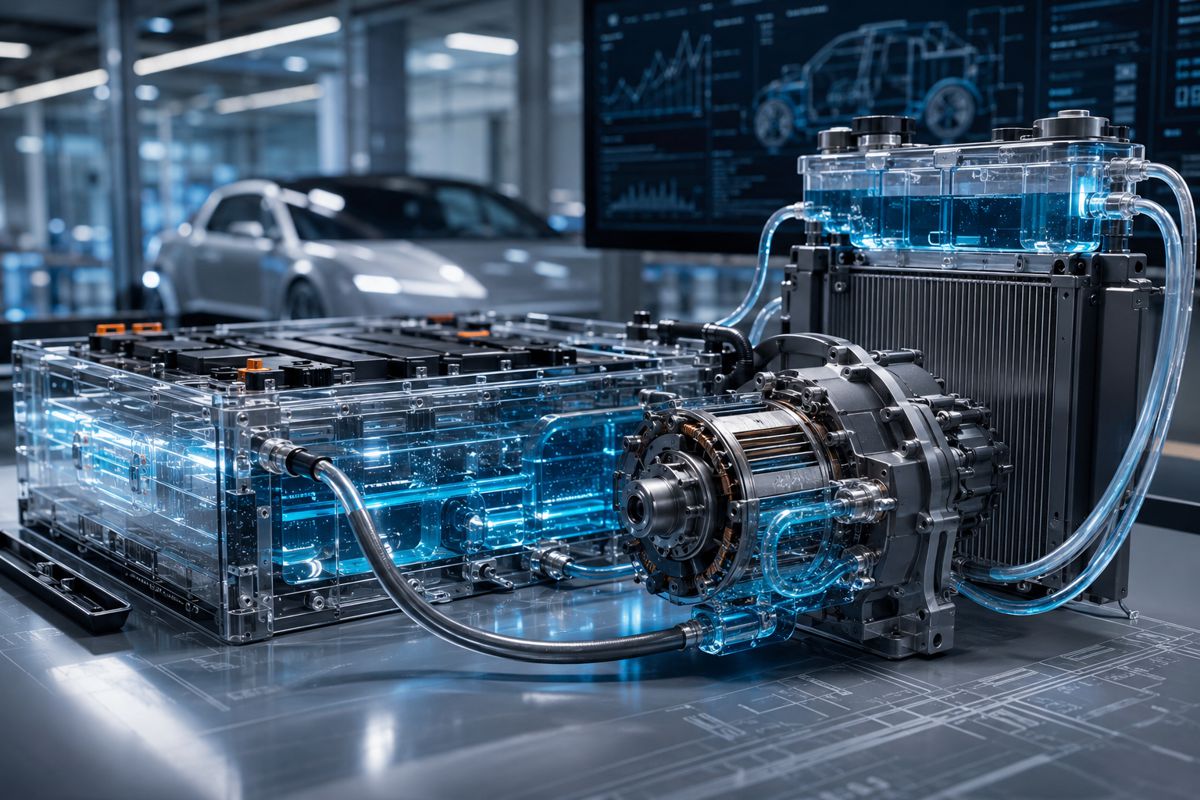
Battery-electric platforms do not consume engine oil in the way combustion vehicles do, but they introduce a fresh and more exacting requirement. Electric drivetrains need dielectric fluids, thermal management fluids and e-axle lubricants formulated on higher-performance base stocks such as Group III+, polyalphaolefins and ester or polyalkylene glycol chemistries. The margin opportunity is genuine, but so is the technical barrier, and that combination rewards suppliers who can pair formulation depth with the OEM relationships needed to win factory-fill and approval.
This is why the framing of the Hyundai renewal matters more than its length. Beom Seok Kang, Senior Vice President and Head of Global Service Sub-Division at Hyundai Motor Company, positioned the extension around adaptability rather than continuity, noting that “We are pleased to extend Hyundai Motor’s long-standing partnership with Shell. Through our collaborative aftersales service marketing initiatives over the past years, we have successfully enhanced our global aftersales service competitiveness and improved customer satisfaction by delivering Shell’s premium quality engine oils to Hyundai customers worldwide. Together, we will be better positioned to respond proactively to changes in the future mobility market while continuing to create greater value for our customers and strengthen our long-term global competitiveness.”
The important detail sits in the pivot from what the partnership has delivered to what it must now anticipate. Combustion is the foundation being defended, and electrification is the frontier being claimed, and the agreement is written to straddle both at once. The persistence of that foundation should not be understated, since the global light-duty vehicle parc is projected to exceed two billion units by 2050, ensuring a substantial installed base of combustion and hybrid vehicles for decades even as electrification expands.
Where Value Is Migrating In The Fluids Market
The market data explains why every major lubricant supplier is racing to build EV-specific portfolios rather than waiting for combustion to fade. Global EV sales reached a record 17.1 million units in 2024, a 25 per cent increase on the previous year, with China alone accounting for around 11 million. That installed base is what turns fluids from a niche into a structural growth market, and the forecasts reflect it. The broader e-fluids category was valued at roughly USD 12.5 billion in 2024 and is projected to approach USD 30 billion by 2035, driven by battery cooling, lubrication and thermal management demand across both vehicles and data centres. Narrower electric vehicle fluid estimates vary by methodology, but a commonly cited compound annual growth rate of around 18.7 per cent points to a segment reaching roughly USD 9 billion by the early 2030s.
Winning that value is increasingly a question of who controls the OEM relationship, not merely who has the best chemistry. OEMs co-develop specialised fluids with suppliers, and their approval processes and technical validations directly affect battery life, thermal efficiency and drivetrain reliability, which has turned strategic partnerships and OEM endorsements into key competitive differentiators.
The field Shell is defending against is crowded and well-capitalised. Established global lubricant and chemical companies including ExxonMobil, BP Castrol, TotalEnergies, FUCHS, Valvoline, BASF and Chevron are all building EV-specific ranges spanning battery thermal-management fluids, dielectric coolants and e-axle lubricants. Several have moved through motorsport-adjacent engineering routes of their own, with Castrol having entered a multi-year technical partnership with Williams Advanced Engineering to co-develop EV lubricants before bringing an e-transmission fluid to the European aftermarket. Against that backdrop, a renewed lock-in with a top-five global carmaker is a defensible commercial asset rather than a ceremonial one.
Motorsport As A Development Laboratory
The clearest signal of intent is where the two companies have chosen to concentrate their high-performance engineering. Lee Ming Seow, Vice President of Global Key Accounts and New Business Development at Shell Lubricants, framed the expanded remit explicitly around the technologies that will define the next decade, stating that “For more than two decades, Shell and Hyundai Motor have partnered to deliver innovation, performance, and customer value globally. Together, we have advanced lubricant technology, supported Hyundai Motor’s mobility ambitions, and translated learnings from motorsport into real-world benefits. As we look ahead, we are expanding our collaboration in next-generation e-fluids, thermal management, digital innovation, and high-performance mobility. By combining our expertise we will continue to develop solutions that enhance performance, efficiency, and sustainability for Hyundai Motor and our customers worldwide.”
The reference to motorsport learnings is not a courtesy. Endurance racing subjects fluids to compressed, extreme cycles of thermal and mechanical stress, which makes it an unusually efficient environment for validating formulations destined for road cars and electrified powertrains.
That laboratory is now operating in full view. Genesis Magma Racing, the motorsport arm of Hyundai’s luxury brand, made its debut in the FIA World Endurance Championship at the 2026 6 Hours of Imola with the GMR-001 Hypercar, a Le Mans Daytona h prototype developed with chassis partner ORECA and lubricated by Shell Helix Ultra. Genesis is the first Korean manufacturer to enter the series, and the car itself carries a hybrid architecture whose durability, thermal management and hybrid efficiency lessons are explicitly intended to feed back into Genesis road cars.
Shell’s role as performance and innovation partner, supplying specialised lubricants and coolants for the Hypercar, gives it privileged early access to that data. The partnership has also extended into Hyundai’s N Division to co-engineer lubricants for high-performance combustion engines and electric vehicles, which offers Shell both a testbed for advanced products and a global platform to market them to performance-focused customers as the division pushes further into electrified halo models.
The Data Centre Crossover That Changes The Calculus
The most strategically revealing element of Shell’s positioning sits outside the automotive story altogether. The company has extended its fluids expertise into digital infrastructure, and the crossover matters because it de-risks the electrification transition and points to where heat management value is heading next. Shell introduced DLC Fluid S3, a direct liquid cooling solution aimed at high-performance computing and artificial intelligence workloads, and its immersion cooling fluids became the first to receive Intel certification, clearing them for use in data centres worldwide.
Those products draw on the same discipline as EV thermal management, and Shell has built them on proprietary process technology. Shell Immersion Cooling Fluids are based on the company’s gas-to-liquids technology and are positioned to cut data centre energy use while improving performance.
For a business whose combustion base is under long-term pressure, this diversification is significant. Shell’s 2024 sales were split roughly evenly across three segments, with 37 per cent in consumer automotive, 32 per cent in industrial and 31 per cent in commercial automotive, so the industrial and infrastructure channels already carry substantial weight.
The rise of AI-driven computing is intensifying the thermal load in data centres precisely as vehicle electrification reshapes fluid demand on the road, and the same formulation science addresses both. A lubricant major that can move heat efficiently in a battery pack, an endurance prototype and a server rack is no longer selling engine protection. It is selling thermal control as a platform, and that reframing is what makes the Hyundai renewal part of a larger repositioning rather than a standalone automotive deal.
Read-Across For Construction And Off-Highway Fleets
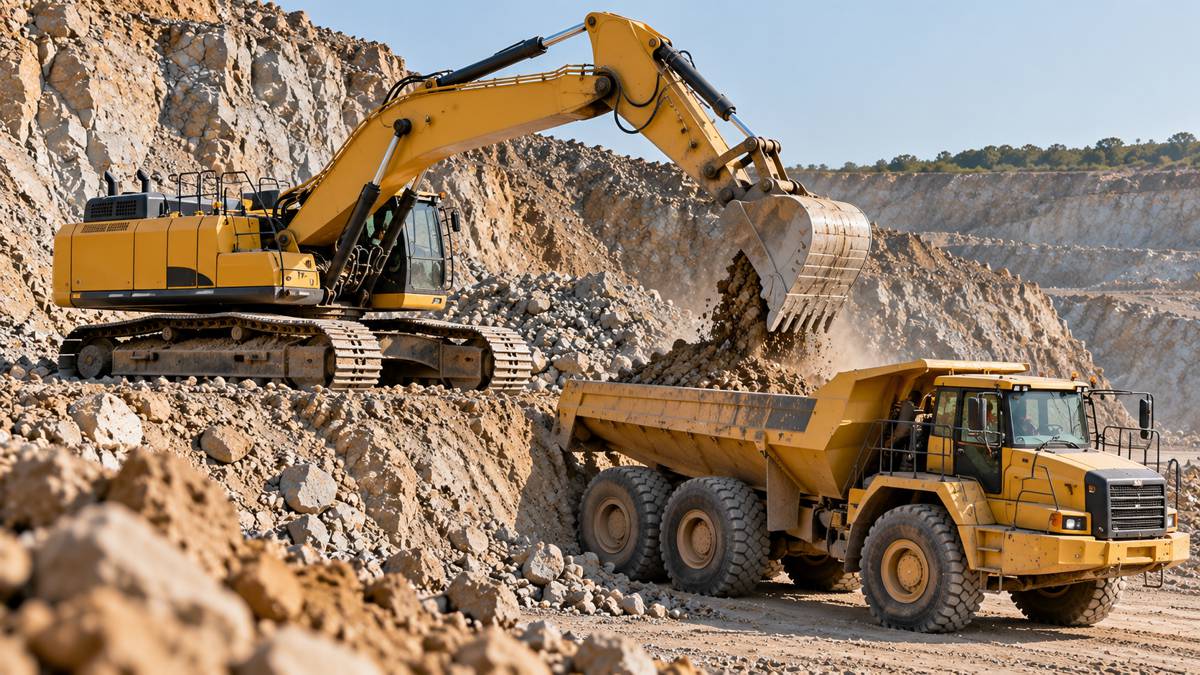
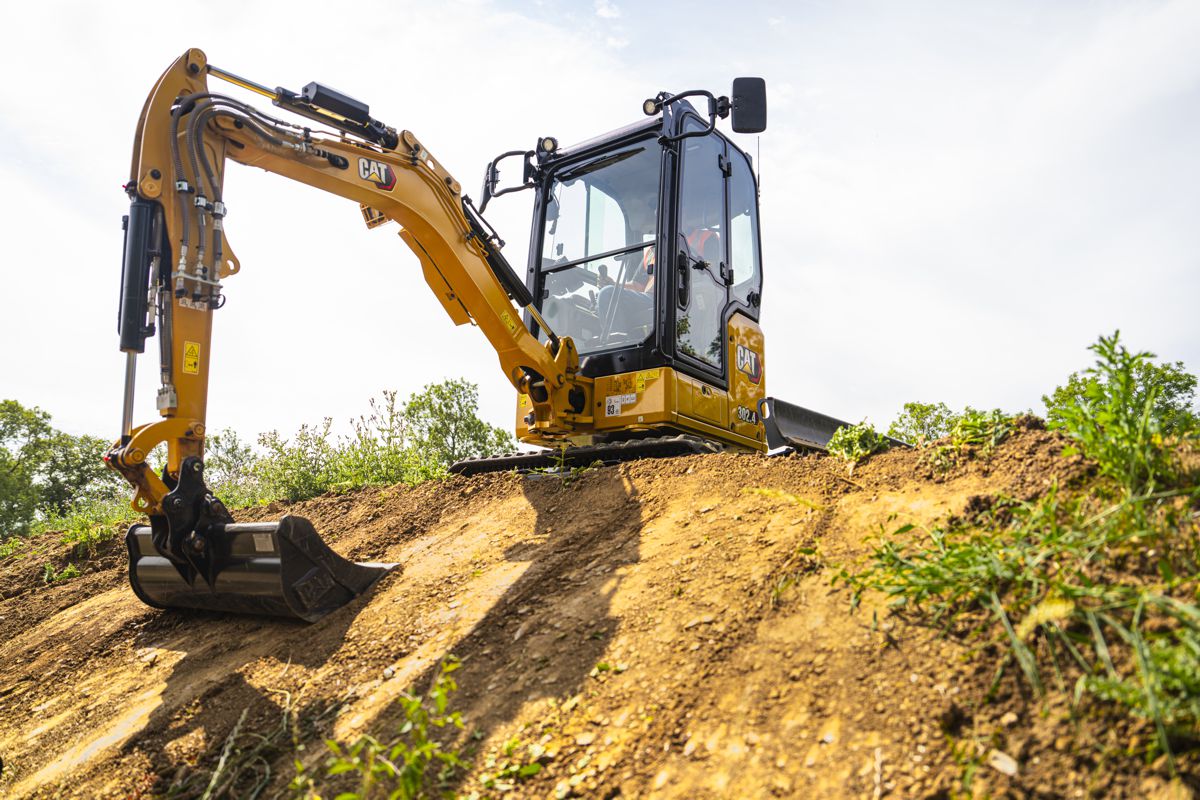
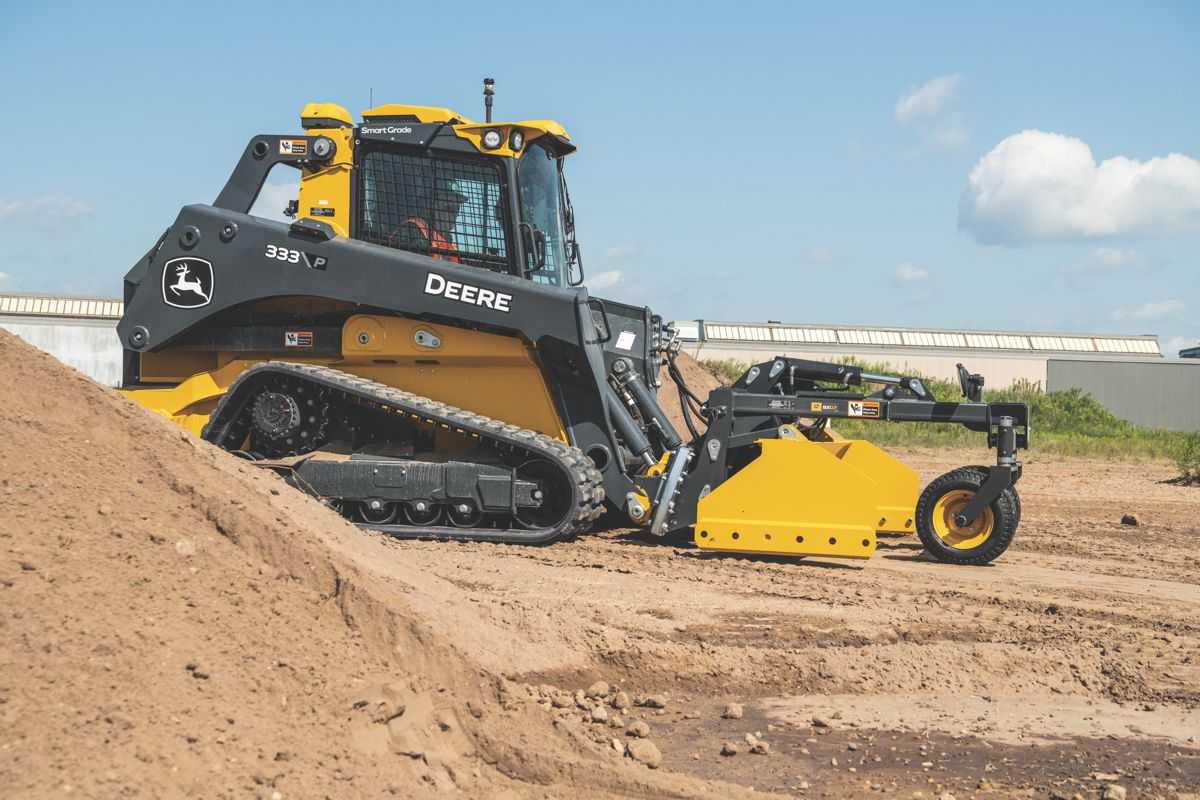
The transition visible in passenger vehicles is a leading indicator for the heavier equipment that Highways.Today’s readership depends on. Shell’s lubricants franchise already extends well beyond cars into construction, mining, power and agriculture, and the electrification of off-highway plant will bring the same fluid transition that is now reshaping the automotive segment.
As battery-electric excavators, loaders, haul trucks and compact equipment move from pilot fleets into mainstream procurement, the specifications that govern their coolants, e-axle fluids and thermal management systems will start to diverge sharply from the hydraulic and engine oils that fleet managers have bought for decades. The suppliers best placed to serve that shift are those that have already built EV-specific portfolios and OEM approvals in the passenger market.
For infrastructure contractors and equipment owners, the practical consequence is that fluid selection is becoming a lifecycle and reliability decision rather than a commodity purchase. Thermal management directly affects battery longevity, uptime and safety on electrified plant, which raises the stakes on getting formulation and OEM approval right.
Shell alone employs more than 300 product application specialists working with OEMs across automotive, construction and industrial equipment, an indication of how much technical support now sits behind the fluids that keep machinery running. Owners planning fleet electrification would be prudent to treat fluid strategy as an early procurement question, since the specification landscape for off-highway equipment is likely to follow the automotive template rather than resist it.
What The Renewal Tells Industry Leaders
Read in isolation, the extension of a two-decade supplier relationship is unremarkable. Read against the direction of the fluids market, it is a clear statement about where the largest player in lubricants believes its future revenue must come from. The engine oil business that made Shell the market leader is being carefully defended while its successor is built alongside it, and the mechanism for building that successor is privileged access to a major carmaker’s electrified platforms, its performance division and its motorsport programme.
The dual-track logic acknowledges a reality that the more excitable electrification narratives often miss, which is that combustion and hybrid vehicles will remain on the road in enormous numbers for decades while the higher-value fluids of the future are developed in parallel.
The wider lesson for infrastructure owners, equipment buyers and investors is that value in this sector is migrating toward heat management and specialty formulation, and that OEM lock-in is becoming the decisive competitive battleground. Suppliers who secure long-term co-development agreements now will hold the approvals, the data and the customer relationships when electrified fleets scale, whether those fleets are passenger cars, endurance prototypes, construction plant or the server halls that power artificial intelligence.
For anyone tracking where industrial value is concentrating, the Hyundai and Shell renewal is a small announcement that points to a large realignment, and it rewards attention well beyond the automotive aftermarket that first brought the two companies together.
Key Industry Questions
- What does the extended Hyundai and Shell agreement actually change? The renewed five-year Global Business Cooperation Agreement runs through 2031 and rebalances the partnership away from its original focus on combustion aftersales and engine oil marketing. The two companies will expand joint research into next-generation e-fluids, thermal management, coolants dedicated to electric vehicles and digital innovation, alongside continued service marketing and a broadened motorsport relationship. In practical terms, the agreement gives Shell privileged early access to Hyundai’s electrified platforms, its Genesis and N performance programmes and the engineering data they generate. For Hyundai, it secures a technically capable fluids partner as its product mix shifts. The renewal is best understood as a repositioning of an established relationship rather than a simple continuation of the previous terms.
- Why is engine oil demand expected to fall if combustion vehicles stay on the road for decades? The decline is gradual rather than sudden. The global light-duty vehicle parc is projected to exceed two billion units by 2050, which guarantees a large combustion and hybrid installed base for years to come and sustains near-term engine oil demand. The pressure comes from the direction of new sales and the mix within them. As battery-electric vehicles capture a growing share of production, the volume of conventional engine oil consumed per new vehicle falls, and mature markets are shifting toward lower volumes of higher-performance products. Base oil suppliers therefore face a slow structural contraction in combustion lubricant demand rather than a cliff, which is exactly why they are building EV fluid portfolios now to capture the replacement value.
- What are e-fluids and how do they differ from conventional engine oil? E-fluids are the specialised fluids that electric drivetrains require in place of, or alongside, traditional engine oil. They include dielectric coolants for batteries and power electronics, thermal management fluids that regulate heat in motors and packs, and e-axle or e-transmission lubricants. Unlike engine oil, they must combine electrical insulation, material compatibility with plastics and copper, low viscosity for efficient heat transfer and high thermal stability. These demands push formulators toward higher-performance base stocks such as Group III+, polyalphaolefins and ester chemistries. The result is a more technically exacting, higher-margin product set, but one that requires close OEM co-development and validation because the fluids directly affect battery life, safety and drivetrain reliability.
- How does racing in the FIA World Endurance Championship help develop road-car and EV fluids? Endurance racing compresses years of thermal and mechanical stress into a single race weekend, which makes it an efficient environment for validating fluid performance. The Genesis GMR-001 Hypercar runs a hybrid architecture, and its durability, thermal management and hybrid efficiency lessons are explicitly intended to feed back into Genesis road cars. For Shell, acting as performance and innovation partner and supplying the car’s lubricants and coolants provides real operating data under extreme conditions. That data informs the development of thermal management and e-fluid formulations destined for production vehicles. Motorsport also functions as a credibility platform, allowing a supplier to demonstrate advanced products to performance-focused customers before those technologies reach the wider market.
- Why are lubricant suppliers moving into data centre cooling? The move reflects both diversification and technical adjacency. Cooling servers is energy-intensive, and the surge in artificial intelligence workloads has sharply increased the thermal load that data centres must manage. Immersion and direct liquid cooling fluids draw on the same formulation science as electric vehicle thermal management, so a lubricant major can extend its expertise from vehicles into digital infrastructure without starting from scratch. Shell’s immersion cooling fluids became the first to receive Intel certification, clearing them for global data centre use, and its DLC Fluid S3 targets high-performance computing directly. For a business facing long-term erosion in combustion lubricants, capturing a share of infrastructure heat management provides a growth channel that is largely independent of vehicle sales cycles.
- What does electrification mean for construction and off-highway equipment fluids? The transition now visible in passenger vehicles is a preview of what electrified construction and mining fleets will require. As battery-electric excavators, loaders, haul trucks and compact machines move into mainstream procurement, their fluid needs will shift from conventional hydraulic and engine oils toward coolants, e-axle fluids and battery thermal management systems. Fluid selection becomes a lifecycle and reliability decision, because thermal control directly affects battery longevity, uptime and safety. Equipment owners planning electrification should treat fluid strategy as an early procurement question rather than an afterthought. Suppliers that have already built EV-specific portfolios and OEM approvals in the automotive market are best positioned to serve off-highway electrification when it scales.
- How important is OEM approval in the EV fluids market? It is becoming the decisive factor. Electric vehicle fluids are co-developed between suppliers and OEMs, and manufacturer approval processes validate that a formulation meets exacting performance and safety standards. Because these fluids affect battery life, thermal efficiency and drivetrain reliability, OEM endorsements now function as a primary competitive differentiator and shape market access. A supplier holding long-term co-development agreements gains the approvals, technical data and customer relationships that competitors cannot easily replicate. This is why a renewed lock-in with a top-five global carmaker carries real commercial value, and why the largest lubricant suppliers are competing hard to secure OEM partnerships across passenger, commercial and increasingly off-highway platforms before electrified fleets reach scale.
Strategic Takeaways
- The Hyundai and Shell renewal is less a supplier formality than a defensive-and-offensive repositioning, protecting a combustion revenue base while securing privileged access to a major carmaker’s electrified platforms before EV fluids scale.
- Value in the lubricants sector is migrating from high-volume engine oils toward higher-margin dielectric, thermal management and e-axle fluids, and the suppliers who win will be those holding OEM co-development agreements and factory-fill approvals.
- Motorsport programmes such as Genesis Magma Racing function as compressed R&D laboratories, giving fluid partners early operating data on thermal management and hybrid efficiency that transfers directly into production and electrified powertrains.
- Shell’s crossover into Intel-certified data centre immersion cooling signals that the fluids franchise is repositioning around heat management as a platform spanning vehicles and digital infrastructure, reducing its dependence on the automotive cycle.
- Construction and off-highway equipment owners should treat the automotive fluid transition as a leading indicator, planning fluid strategy as an early procurement and lifecycle decision as electrified plant moves from pilot fleets into mainstream use.