Insta360 Takes On DJI with the Luna Ultra and Leica Optics
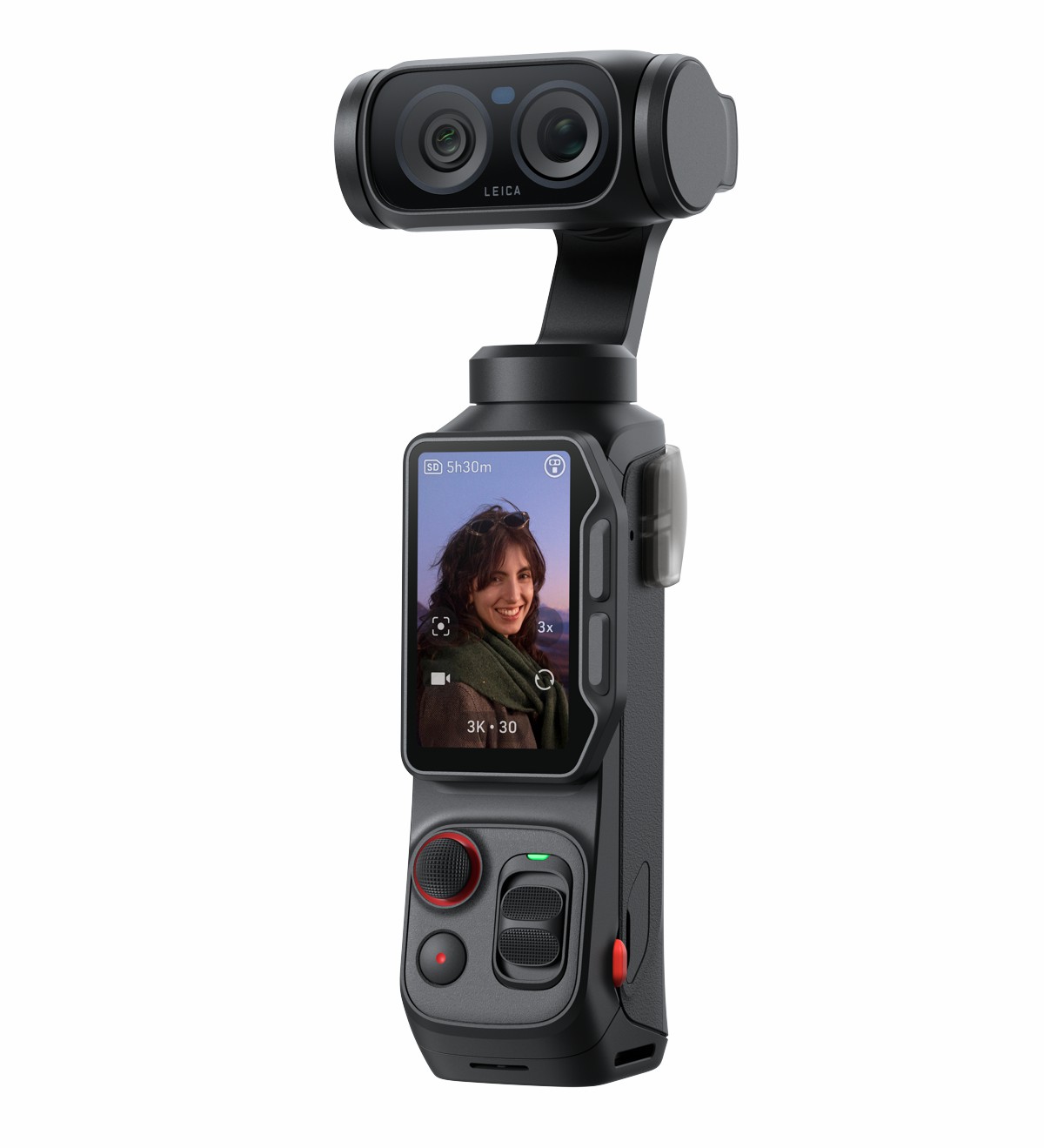
Insta360 has spent a decade defining the action and panoramic camera categories, and with the Luna Ultra it has stepped into the pocket gimbal segment for the first time.
That segment has been shaped almost single-handedly by DJI and its Osmo Pocket line, so the arrival of a serious second contender matters well beyond the consumer aisle. The Luna Ultra is co-engineered with Leica, carries a one-inch 8K sensor and a dedicated telephoto lens, and reaches the market at a starting price of US$769.99. For an imaging firm fresh from one of the year’s largest technology listings, the launch is a deliberate move to convert brand momentum into a foothold in a higher-margin category.
The wider relevance sits in how visual capture has become routine infrastructure for the construction, transport and industrial sectors. Progress photography, inspection footage, dispute records, marketing content and event coverage all now depend on compact cameras that produce stable, broadcast-quality footage without a crew.
A second well-funded specialist competing on optics, stabilisation and price tends to widen the toolkit available to the professionals who rely on that kind of documentation. The Luna Ultra is built for creators first, yet its specification reads directly onto the needs of field teams who have to record work clearly, quickly and often.
Briefing
- Insta360 has entered the pocket gimbal camera market with the Luna Ultra, its first device in the category co-engineered with Leica, priced from US$769.99 and available from 10 June.
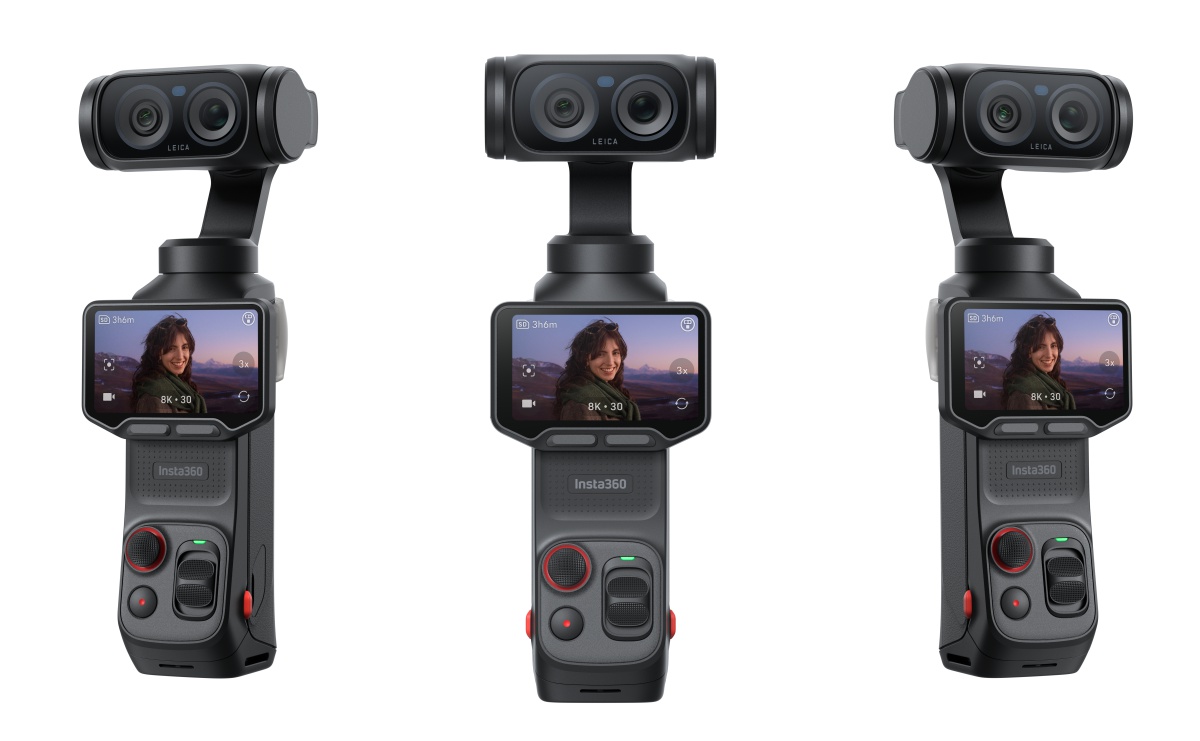
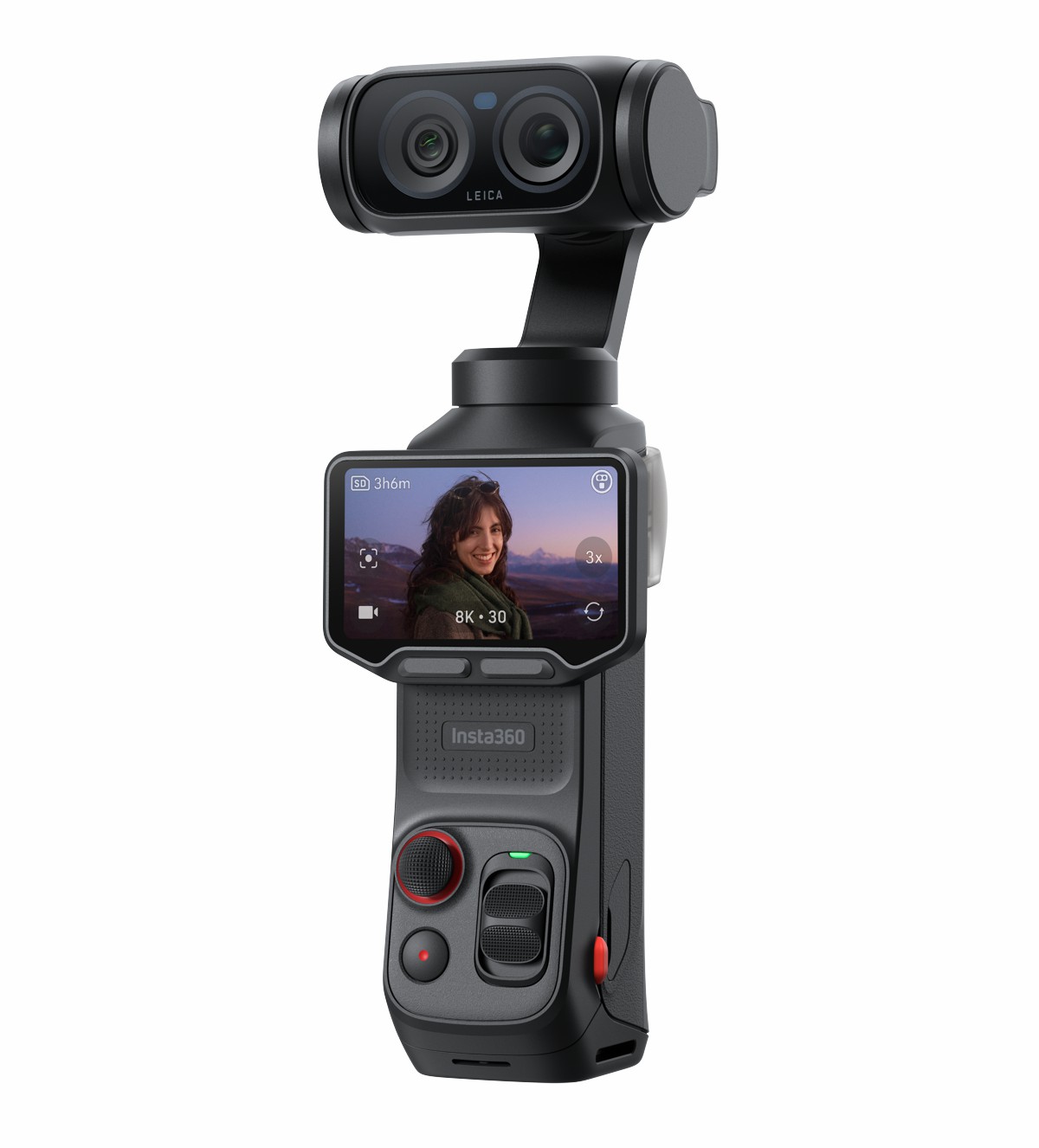
- The camera pairs a one-inch 8K main sensor and Leica Summicron optics with a dedicated telephoto lens, a dual-lens arrangement that sets it apart from single-lens rivals.
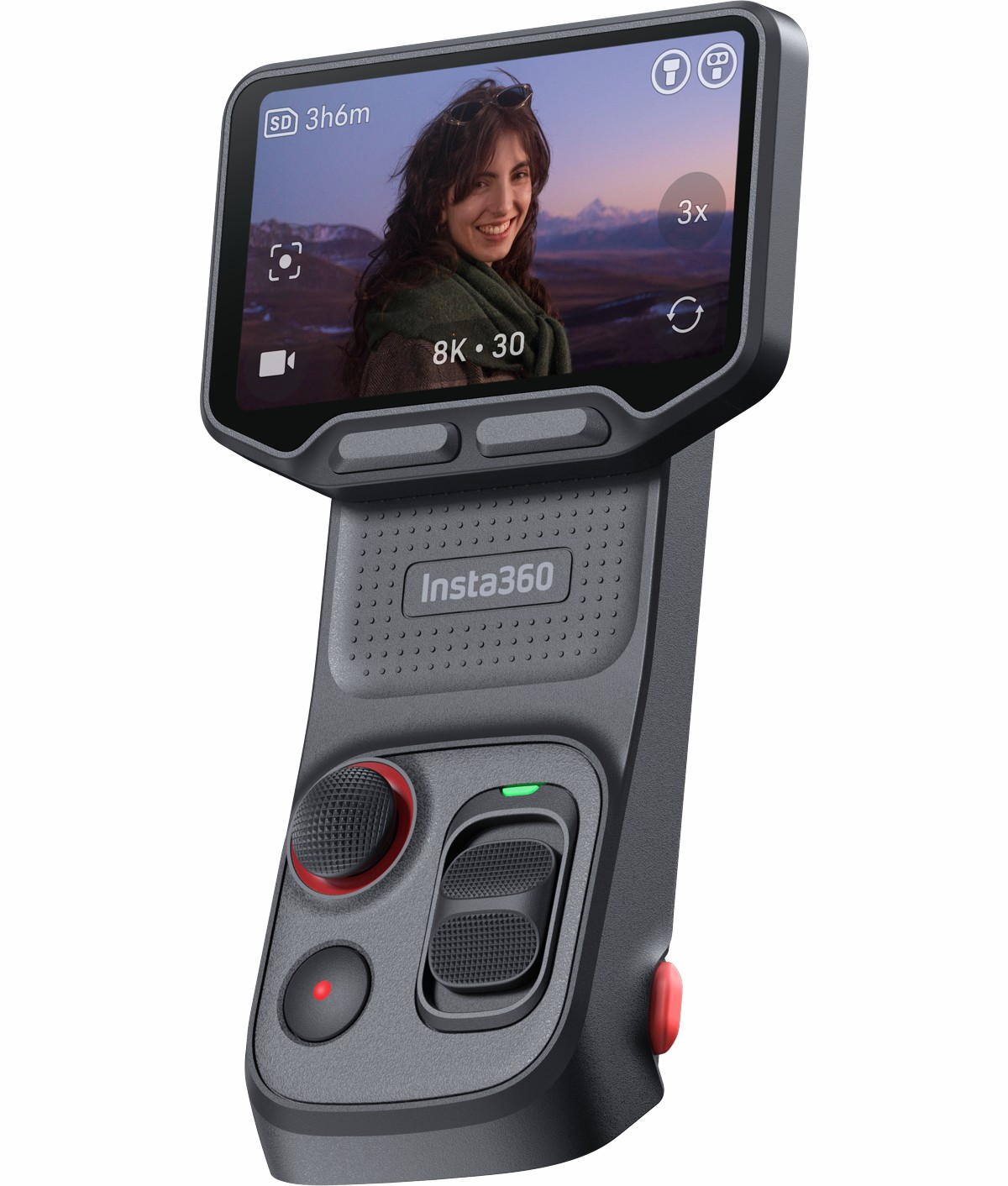
- An industry-first detachable two-inch OLED touchscreen allows remote monitoring and control at up to 20 metres, supporting solo operation and awkward shooting angles.
- Professional workflow support includes 10-bit I-Log capture, up to 14 stops of dynamic range, ACES colour management and built-in timecode for multi-camera synchronisation.
- The launch sharpens competition with DJI, whose Osmo Pocket series has led the compact gimbal segment, and signals Insta360’s intent to expand beyond action and 360 cameras.
A Calculated Entry Into DJI’s Territory
Insta360, which trades formally as Arashi Vision, listed on Shanghai’s STAR Market in June 2025, raising roughly US$270 million in the venue’s largest debut in well over a year. The shares surged on opening and briefly pushed the company’s valuation close to US$10 billion, set against 2024 revenue of around US$775 million, the majority of it earned outside China.
The firm already holds the leading position in consumer 360 cameras and ranks second in action cameras behind GoPro, so it enters the gimbal category from a position of unusual financial and commercial strength. The Luna Ultra is the clearest sign yet that Insta360 intends to use its public-market war chest to attack adjacent product lines rather than defend existing ones.
The incumbent it is challenging is formidable. DJI’s Osmo Pocket 3 has been widely regarded as the benchmark pocket gimbal camera, built around a one-inch sensor, a rotatable OLED screen and the company’s ActiveTrack tracking system, and it has typically retailed at around US$519. The Luna Ultra is priced noticeably above that, which places the burden on Insta360 to justify the premium through features the incumbent does not offer. Its two clearest answers are the dual-lens design, which adds genuine telephoto reach, and the detachable screen, which changes how a single operator can frame and monitor a shot.
Max Richter, VP of Marketing and Co-Founder of Insta360, framed the ambition in categorical terms: “Luna Ultra marks Insta360’s arrival in the gimbal camera space, backed by the full strength of our imaging expertise. We believe this category is ready for a new standard, defined by smarter technology, stronger performance, and a more intuitive user experience. Luna reflects our vision for the future of gimbal imaging, built to help people capture what matters with greater ease, confidence, and authenticity.”
Distribution reinforces the seriousness of the play. The Luna Ultra is being sold through the Insta360 store, Amazon, Best Buy and selected retailers worldwide, with some markets following later, and it ships in Cosmic Black and Stellar White. That breadth of channel from day one is the mark of a company treating the gimbal segment as a long-term position rather than an experiment, and it forces the incumbent to respond on price, features or both.
Two Lenses and a One-Inch Sensor
The optical specification is where the Luna Ultra makes its strongest technical argument. The main system combines a Leica Summicron lens with a one-inch 8K sensor, while a secondary telephoto unit uses a smaller 1/1.3-inch sensor and an F2.0 aperture to deliver natural background separation across five focal lengths. That arrangement provides up to 12 times zoom, including six times lossless zoom, in a body that weighs little more than a smartphone. A dedicated optical telephoto is uncommon in this class, where rivals tend to rely on a single fixed lens and digital cropping, and it gives the camera a practical advantage when a subject cannot be approached directly.
On the moving-image side the camera records 8K at 30 frames per second with Dolby Vision and supports 10-bit I-Log capture, giving editors greater latitude in colour grading. With up to 14 stops of dynamic range it holds detail in both highlights and shadows, while PureVideo Mode lifts brightness and suppresses noise in low light at up to 4K60. For stills it captures 37-megapixel UltraPhotos and 200-megapixel Scenic Panorama images, and a Triple AI Chip handles the image processing load.
The launch was staged at Leica’s headquarters in Wetzlar, underlining a partnership that now spans six years and five co-developed products. Marius Eschweiler, VP of Business Unit Mobile at Leica Camera AG, placed the collaboration above the hardware itself: “This launch represents more than a new product announcement. It reflects the shared vision and long-term collaboration between Insta360 and Leica, combining optical heritage with a new generation of intelligent imaging technology.”
Stabilisation, Tracking and a Detachable Screen
Beyond the optics, the camera’s handling features are pitched squarely at solo operators and lightweight crews. A three-axis mechanical stabilisation system works alongside electronic image stabilisation to smooth footage during movement, and the Deep Track 5.0 system adds Auto Tracking, Active Zoom Tracking, Group Tracking and Smart Framing to keep subjects in shot.
The headline differentiator is the detachable two-inch OLED touchscreen, which Insta360 describes as an industry first and which transmits in HD at up to 20 metres. For anyone working alone, the ability to detach the monitor and place the camera while still controlling the frame removes a long-standing constraint of compact gimbal capture.
Endurance and storage round out a specification built for sustained use rather than short bursts. The 1550mAh battery is rated for up to four hours of operation and recharges to 80 per cent in roughly 23 minutes, which suits a working day broken into recording sessions. Built-in storage offers 47GB of usable space with support for microSD cards up to 1TB, removing the need to offload constantly between takes.
Audio has been considered alongside the imaging, with a built-in wind guard for clearer outdoor recording and direct compatibility with Insta360 microphone systems in single or dual-transmitter configurations. The combined effect is a device intended to be the only camera a small team needs to carry.
Built for the Edit Suite
Insta360 has clearly aimed the Luna Ultra at professional pipelines as well as casual creators. It includes Leica colour profiles in the form of Leica Natural, Leica Vivid and Leica Chrome, a set of cinematic filters, and support for the Academy Color Encoding System, the colour-management standard used in high-end production. Built-in timecode allows the camera to be synchronised across a multi-camera setup and to drop cleanly into editing software such as Final Cut Pro and Adobe Premiere Pro. A QR Color Share feature lets users transfer colour settings between devices, while AI-assisted editing inside the Insta360 app identifies key moments and assembles ready-to-share cuts.
The accessory range is designed to extend the camera’s reach and, in commercial terms, to deepen the ecosystem around it. A POV Head Tracker enables hands-free capture, Black Mist filters add cinematic diffusion, a Wide-Angle Lens widens the field of view to 108 degrees, and a set of ND Filters gives control over exposure and motion blur.
Each addition broadens the range of jobs the camera can handle without a second body, and each also locks buyers a little more firmly into the Insta360 platform. That blend of professional standards and proprietary tooling is how imaging firms convert a single hardware sale into a longer customer relationship.
From Travel Vlog to Site Record
Insta360 markets the Luna Ultra to everyday creators and mobile filmmakers, yet compact stabilised cameras have quietly become working tools on construction and infrastructure projects. Site teams use them to log progress, capture inspection detail, brief stakeholders, and produce marketing and recruitment content, and the features that sell the Luna Ultra to vloggers map neatly onto those tasks.
Strong low-light performance helps inside partially built structures, basements and tunnels; the optical telephoto reaches plant and equipment in operation without putting an operator in a hazardous zone; and reliable tracking lets a single engineer document a walkthrough without a second pair of hands. The detachable screen has obvious value where a camera must be positioned high, low or in a confined space while the operator stays clear.
The honest caveats matter as much as the opportunities. This is a consumer-grade product rather than a ruggedised or certified inspection device, and it competes for that role against smartphones, action cameras and dedicated survey hardware. Its relevance to the built environment lies less in any single feature than in a broader trend, namely that professional-grade imaging keeps getting smaller, cheaper and easier to operate.
As that barrier falls, consistent visual record-keeping becomes practical on more sites, which in turn strengthens the evidence base for dispute resolution, compliance, asset management and progress reporting. A camera does not have to be designed for construction to end up doing useful work there.
Where the Imaging Contest Goes Next
The most durable consequence of the launch is structural rather than product-specific. Two well-capitalised specialists now contest the pocket gimbal market, and competition of that kind has a consistent habit of pushing capability upward and prices downward over successive generations. Insta360 has signalled that it intends to keep investing in core hardware, including its own chips and sensors, which suggests sustained pressure on DJI rather than a single opportunistic release. Buyers across broadcast, marketing and field documentation stand to gain from that contest regardless of which brand they ultimately choose.
For construction, transport and infrastructure organisations, the takeaway is about trajectory more than any one camera. Stabilised, high-resolution imaging is becoming a commodity capability, embedding visual documentation deeper into everyday site and asset workflows and lowering the cost of doing it well.
The Luna Ultra is a single data point in that shift, but it is a telling one, because it shows a major imaging player betting that the appetite for portable professional capture has further to run. The firms that treat visual records as core operational data, rather than an afterthought, are the ones best placed to benefit as the hardware keeps improving.