Climate Security Becomes an Engineering Discipline at TU Delft CaSS in The Hague
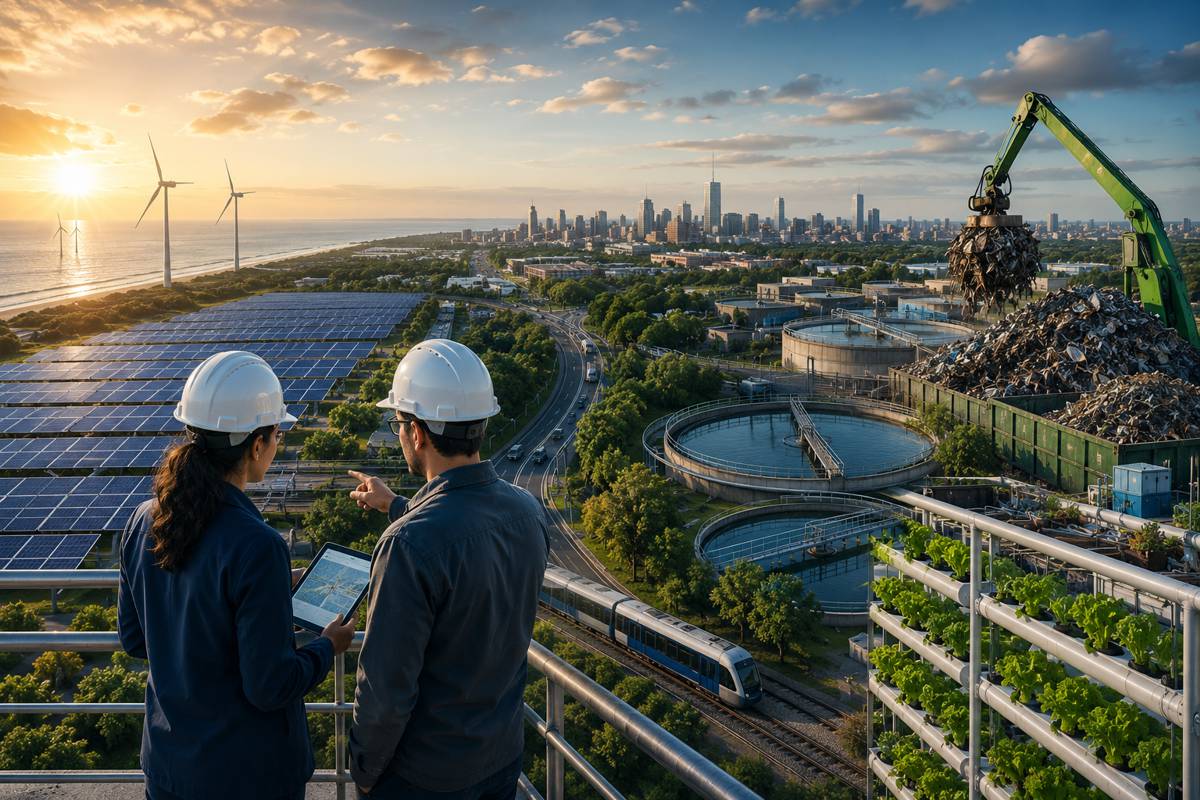
The language of climate change has shifted. For years the discussion centred on emissions, adaptation and sustainability. Increasingly, however, governments, infrastructure owners and industrial leaders are framing the challenge differently, as a question of security. Reliable access to water, energy, food and materials is no longer treated as a settled background condition. It is being treated as something that can be disrupted, contested and engineered for.
That shift is the foundation behind the Climate Safety & Security centre (CaSS) at TU Delft, formally launched at Campus The Hague on 16 April 2026. Established in 2023 as the first research initiative of TU Delft in The Hague, the centre has now moved into the university’s new Spui campus and set out a five-theme research agenda. Its location is deliberate. Sited a short walk from the Dutch parliament, the ministries and the international institutions clustered in the city, CaSS is built to shorten the distance between engineering research and the decisions that shape resilience, industrial competitiveness and strategic autonomy.
I recently attended a press event at The Hague and was given a tour of the Centre and insights into their research programmes. What emerged was not another climate initiative focused on carbon reduction. The centre treats climate stress as an operational threat to the systems modern societies depend upon, spanning energy, food, materials, infrastructure, mobility and human wellbeing. For construction, infrastructure and industrial technology professionals, that distinction carries direct commercial and planning consequences.
Briefing
- TU Delft has launched the Climate Safety & Security centre (CaSS) at Campus The Hague, placing engineering research alongside national and international policymaking.
- The centre was established in 2023, was formally launched on 16 April 2026, and is led by Scientific Director Professor Behnam Taebi, with Jennifer Kockx as Programme Manager.
- Research is organised into five flagships: Human Security and Liveable Environment, Water Security, Food Security, Energy Security and Materials Security.
- Once fully operational the centre expects to host around 30 researchers drawn from civil and mechanical engineering, materials science, architecture, physics, chemistry, and technology policy and management.
- An early flagship study mapping climate risks to the Dutch energy system has already fed into national adaptation policy, signalling the centre’s intent to convert research into implementation.
Moving Climate Research from Prediction to Preparedness
Much climate research still concentrates on forecasting impacts. CaSS is taking a different route, asking what must be engineered, redesigned or governed differently on the assumption that those impacts are already underway. Its premise is straightforward. Climate pressure increasingly threatens reliable access to critical systems, and those systems are interdependent. Food shortages affect political stability. Energy disruption affects industrial output. Water stress alters urban growth. Material scarcity reshapes construction economics. These are no longer separate policy conversations.
At the April launch, Scientific Director Behnam Taebi, professor of energy and climate ethics, framed the agenda in his opening speech. “Climate change is not a future threat, but a daily reality: a security risk that is already at our doorstep and entering our homes.” He added that the central question had moved on. “The question is no longer whether the climate is changing, but how well prepared we are to remain safe, stable and resilient in a changing climate.”
Taebi also set out why the threat compounds. Climate stress and geopolitical tension reinforce one another, he argued, with environmental shocks increasing vulnerability while conflict and political pressure erode the capacity to adapt. The centre’s response is structural. It links engineering, design and governance in the same teams, and works alongside policymakers, advisory bodies and international organisations rather than at a distance from them. “It is precisely the combination of technological expertise and in-depth knowledge of the social and ethical impact of technology that makes us ideally suited to this role,” Taebi said.
Energy Security Moves From Generation to Whole-System Resilience
Energy discussions at climate events often narrow quickly to generation technology. CaSS is widening the lens, and its most concrete early output demonstrates the value of doing so. Working with co-authors Isaac Hall and Gabriel Scher, centre researchers Jasper Verschuur and Behnam Taebi produced the first comprehensive overview of climate risks to the Dutch energy system, organised around six threats: river flooding, extreme precipitation, drought, sea-level rise, windstorms, and the combined low-wind, low-sunshine periods sometimes described as blackout risk. The study was used as supporting evidence in the Netherlands Environmental Assessment Agency (PBL) report on climate-resilient living environments and feeds into the National Climate Adaptation Strategy covering 2026 to 2036.
The headline finding matters to anyone planning or building energy infrastructure. Adaptation works best when it is designed in from the start rather than retrofitted later. The team identified practical interventions, including raising the height of substations and burying high-voltage power lines, while stressing that spatial planning choices are decisive.
The research also surfaced a risk category that infrastructure owners frequently underestimate. Cascade effects, where a failure in one network propagates into others, remain poorly quantified and the scale of these knock-on consequences is still not well understood. The broader research programme extends this systems view across storage, grid flexibility and nuclear options. On the small modular reactors now attracting interest from Dutch provinces and municipalities.
Why Materials Security Could Become an Infrastructure Priority
Of the five flagships, Materials Security may prove the most commercially significant for construction and industrial markets. Europe’s infrastructure transition depends heavily on minerals, advanced materials and global supply chains. Electrification, digital infrastructure, renewable generation and transport networks all increase exposure to critical material availability, and that exposure is now treated as a security question rather than a procurement footnote.
The research displayed has reframed the problem. Material shortages are not solely geological. They are increasingly design, recovery and circularity problems. One project examined how product design decisions influence long-term access to critical raw materials. Another explored how construction and demolition waste can become a strategic domestic resource rather than a disposal cost. One exhibit captured the argument plainly, with a line that read “The real scarcity is not materials, it’s our ability to see and recover them.”
Research teams are combining sensing technologies, process engineering and data science to identify hidden value inside existing waste streams. Construction professionals will recognise the implications at once. Recovery infrastructure, selective demolition, digital material passports and urban mining all become commercially relevant when supply chains tighten. A further project examined artificial-intelligence-supported scrap processing for steel production, aiming to raise recycled content without compromising metallurgical performance by improving recovery and sorting decisions. That direction aligns closely with European industrial policy and the growing pressure to strengthen regional supply resilience.
Infrastructure Resilience Is Becoming a Social Question
One of the more striking choices at the launch was the decision to place Human Security alongside the engineering disciplines rather than beneath them. Traditionally, infrastructure programmes measure performance in physical terms, through capacity, durability, efficiency and uptime. The Human Security flagship pushes beyond that frame, examining how climate shocks disproportionately affect communities through disruptions to water, transport, communications and access to services, and which groups absorb the greatest burden when systems fail.
The reporting on display made the point sharply. Recovery outcomes differ according to income, mobility, governance and institutional capacity, which means an asset can perform technically and still fail the population it serves. One exhibit summarised the research instinct behind this work with the observation that “the most telling response to a disaster is often no response at all.” For transport authorities, urban planners and public works agencies, that reframing increasingly shapes investment logic, because infrastructure that recovers quickly on paper may still leave vulnerable groups stranded.
The methods are notably data-driven. One project used anonymised mobile phone mobility data to study behavioural change during climate hazards in African cities, with the aim not of mapping movement for its own sake but of identifying inequality in adaptive capacity. The message running through the flagship was consistent. Data infrastructure and physical infrastructure are becoming inseparable, and resilience planning that ignores the social dimension is incomplete.
Food and Water Security Are Becoming Engineering Disciplines
Food security can appear distant from infrastructure, yet the connections are becoming difficult to ignore. Research showcased during the launch included novel protein systems that combine photovoltaics with biological production to reduce land and water demand. One project explored whether solar-driven microbial production could underpin future food systems under resource constraints, posed through the deliberately provocative exhibit framing “What if sunlight could produce protein directly?” The relevance to industrial markets lies less in the biology than in the built systems such production would require, from controlled environments to energy and water supply.
Water security extended the same systems thinking. Discussion during the launch emphasised that water resilience depends not only on engineering but on governance, spatial planning and sustained infrastructure investment, and that water systems are best understood holistically rather than as isolated technical assets. Construction firms active in utilities, treatment plants and urban development are likely to find these disciplines converging, particularly where drought, flooding and competing demand force harder choices about where and how networks are built.
Engineering Security for an Uncertain Decade
The strongest impression was not any single technology, it was the decision to redefine security itself. Across the five flagships, climate pressures were treated less as environmental side effects and more as forces capable of reshaping infrastructure demand, industrial competitiveness and national resilience. The early energy-system study shows what that reframing produces in practice, namely evidence specific enough to inform national adaptation policy and detailed enough to change how networks are planned.
That shift carries consequences for investors, contractors and policymakers alike. Asset decisions increasingly need to account for cascading effects across energy, mobility, materials and social systems, and programmes built around yesterday’s assumptions risk becoming stranded faster than expected. By placing engineers, designers and governance experts in the same room, and locating them beside the decision-makers in The Hague, TU Delft is attempting to compress the distance between research and implementation. Whether the model scales is not yet clear, but the direction of travel is becoming difficult to ignore.