The Roads That Autonomous Vehicles Need Don’t Yet Exist
Autonomous vehicles are coming to the UK but are our roads ready? The lane-keep assist and driver safety systems fitted to millions of cars depend on being able to read road markings and signage clearly. On British roads as they currently stand, that is not always possible.
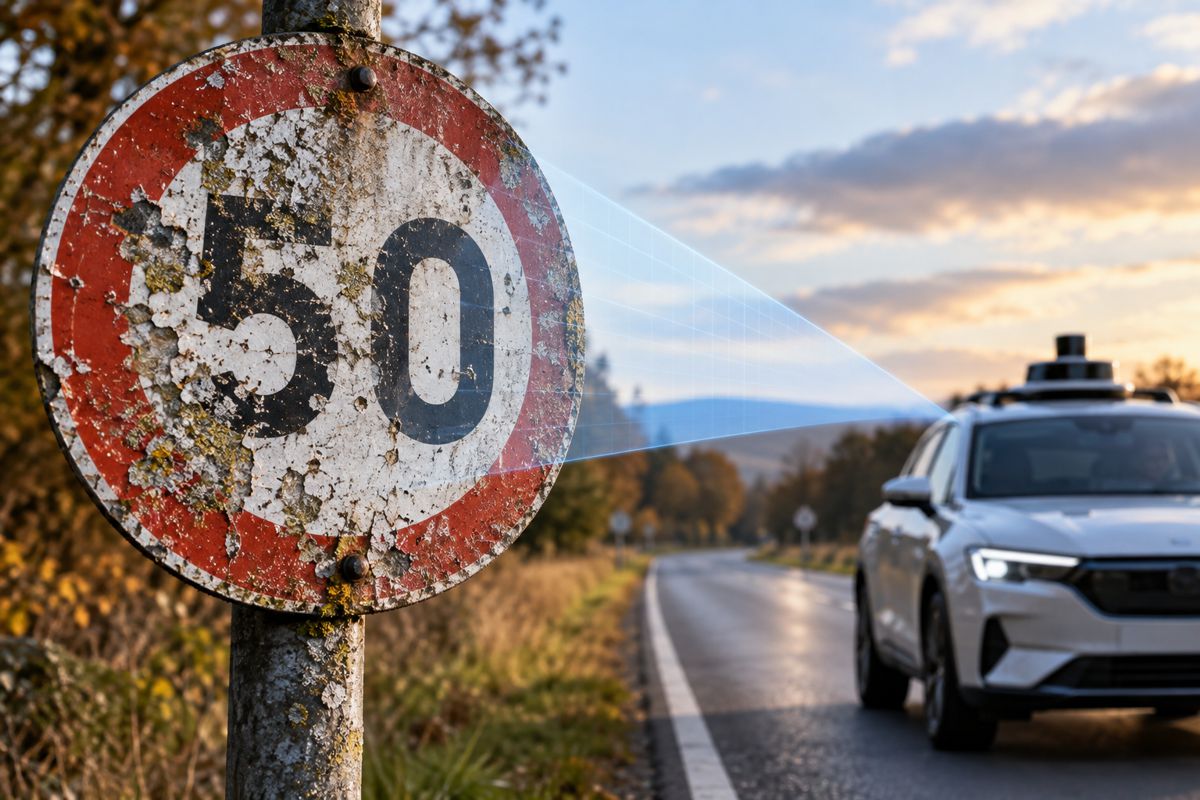
Picture a lane marking that passes every regulatory inspection. It is fresh enough to meet retro-reflectivity standards and completely compliant on paper. Yet, to the camera array of a lane-keep assist system navigating a wet motorway at dawn, it is essentially invisible.
This reality has immediate consequences for the millions of drivers already relying on vehicles that can partially drive themselves. If today’s driver assistance systems cannot reliably read the road, fully autonomous vehicles will face the same problem on a far greater scale. The tech industry assumes UK roads are ready for autonomy. They are not.
The machine-readability of road infrastructure is among the least discussed and most consequential variables in the autonomous mobility equation.
What do sensors see that inspectors don’t?
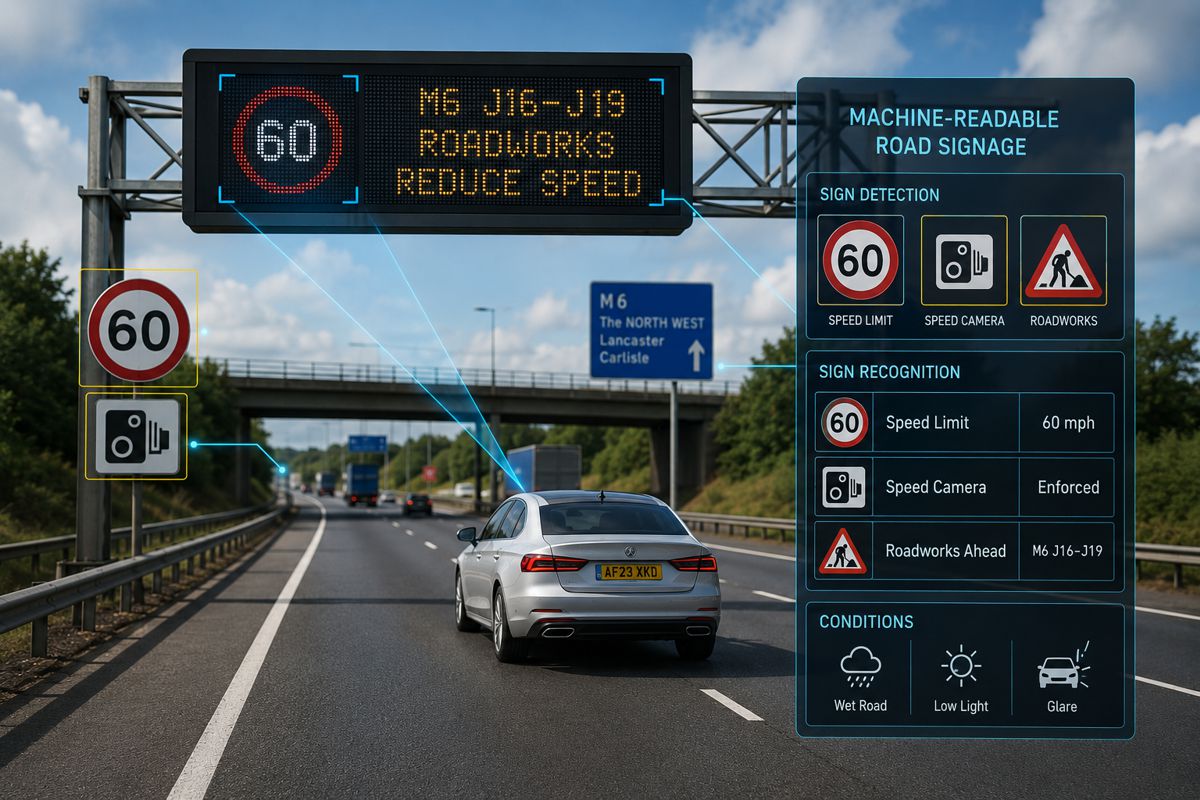
Traditional road inspection was never designed with machine perception in mind. Take retro-reflectivity, the measure of how much visible light bounces back from a road marking. During assessments, paint is washed and then measured top-down in the middle of the day. But nobody drives like that, and no sensor reads lane markings from directly above at noon on a dry day.
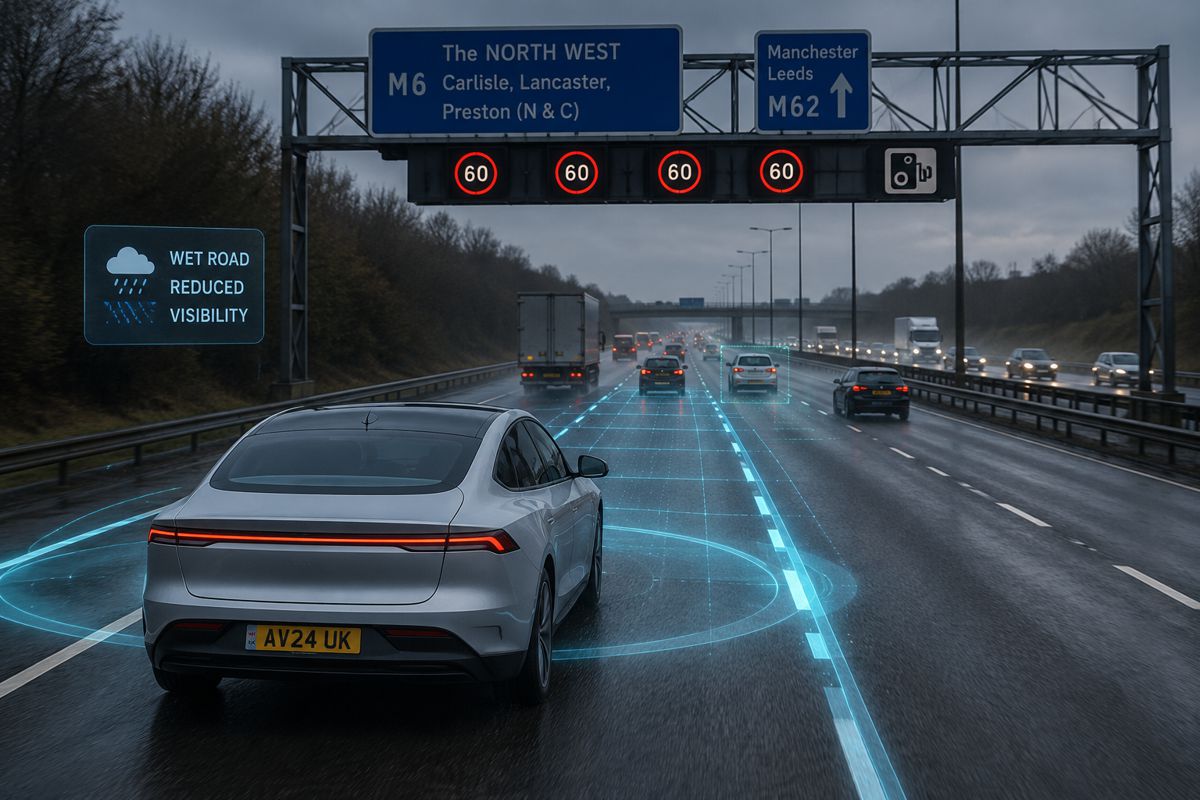
What drivers and advanced driver-assistance systems (ADAS) actually encounter is far more demanding: a marking viewed on a rain-slicked A-road at dusk or battling low-angle winter glare on a bend. Regulatory compliance and machine-readable quality are not the same, and the gap between them has real-world consequences.
Nearly 80% of all new cars in the UK offer at least one self-activating safety system, such as lane-keep assist, adaptive cruise control, or automated emergency braking. Each system depends on reading and interpreting road markings and signage in real time. They cannot operate if they cannot see the lines. As vehicle autonomy increases, so does this dependency.
A monitoring model built for a different era
The logistics of traditional road inspection are poorly suited to the demands of autonomous mobility. Survey cycles are periodic, networks are vast, and degradation that develops between inspections goes undetected for months.
The scale of the problem is stark. The 2025 ALARM survey by the Asphalt Industry Alliance found that more than half of the local road network, around 106,000 miles, has less than 15 years of structural life remaining. One in six roads has less than five years left. The repair backlog now stands at £16.81 billion, ,which means roads are resurfaced, on average, just once every 93 years.
Technological ambition is running ahead of the infrastructure conditions that make it viable. With the Automated Vehicles Act 2024 now passed and commercial AV pilots set for British roads this year, the risk is present on a much bigger scale. The infrastructure these vehicles depend on is still subject to inspection regimes designed for a pre-ADAS world.
The UK needs a fundamentally different approach to infrastructure monitoring – one that is continuous rather than periodic, scalable rather than resource-intensive, and reflective of how roads actually appear under real-world conditions.
Utilising Existing Data
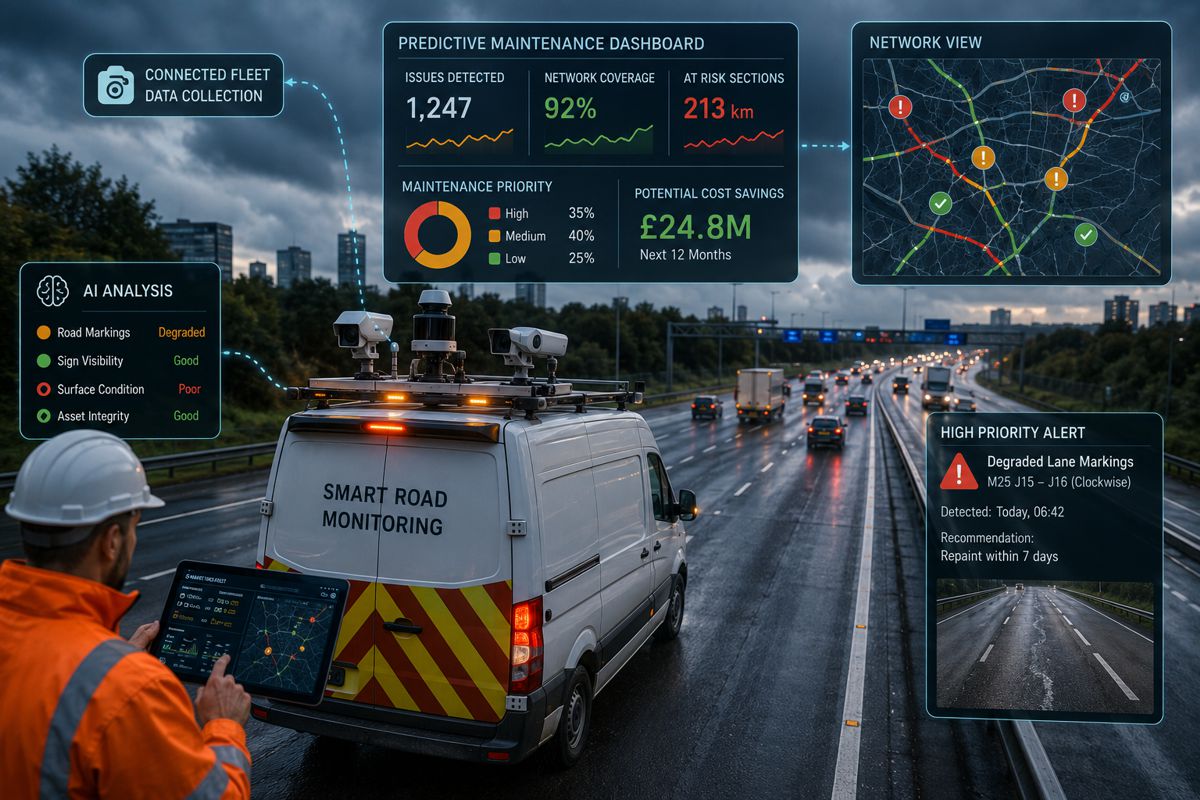
The data needed to monitor road infrastructure in near real-time already exists; it just isn’t being utilised. Commercial vehicles, from long-haul freight operators to delivery fleets, already carry cameras for their own operational purposes. Through data-sharing partnerships with high-use road users, this imagery can be put to work at a scale and frequency no dedicated survey programme could match.
Unlike scheduled survey crews or expensive LiDAR equipment, these vehicles routinely traverse the network, capturing infrastructure conditions in all weather, at all hours, and from the same perspective as every other road user.
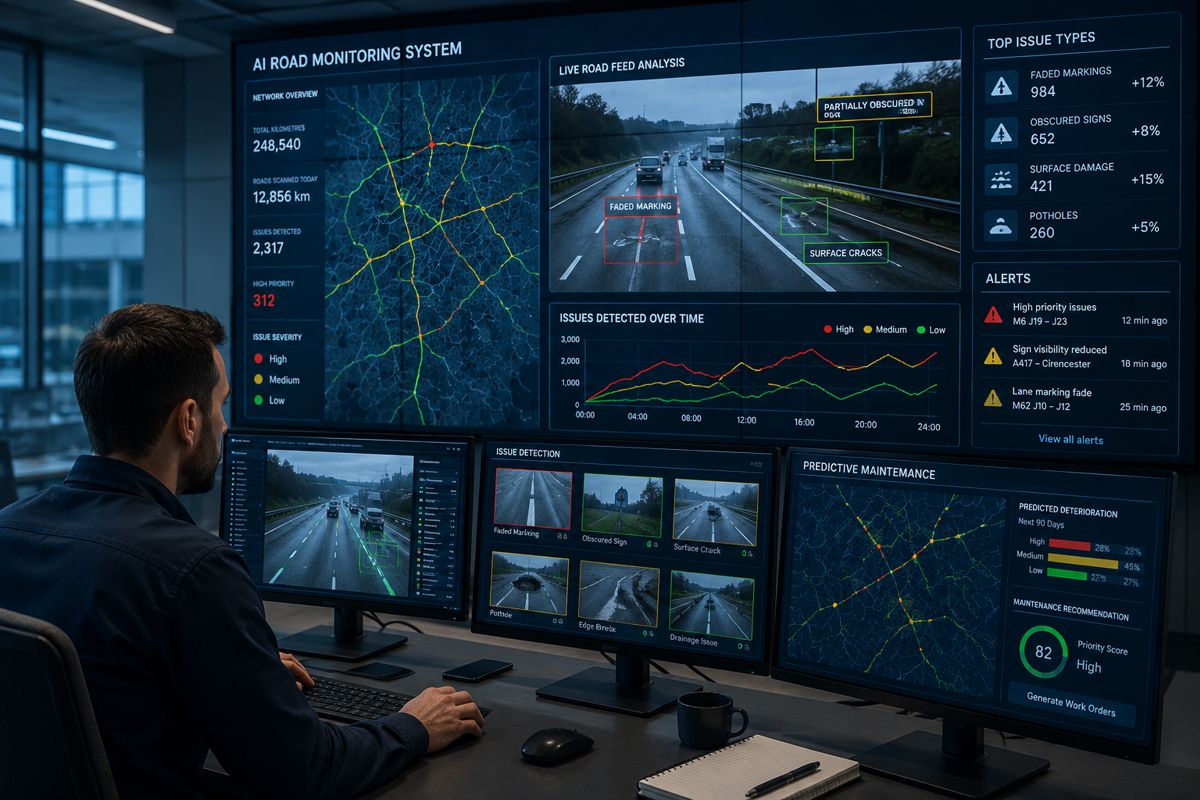
AI-powered analysis of this imagery can continuously identify degraded markings, obscured signage, pothole formation, and barrier damage. This gives infrastructure authorities near real-time visibility into where maintenance is needed most, before issues become dangerous or expensive to fix.
This proactive model aligns with the UK Government’s Transport AI Action Plan, which champions the use of machine learning to transition from reactive patching to highly predictive, targeted infrastructure maintenance.
The applications extend beyond routine maintenance. Work zones, such as lane closures, construction activity, and barriers deployed beyond their scheduled hours, are major sources of motorway congestion and hazards. Continuous monitoring allows authorities to manage these environments dynamically, keeping road conditions legible for both drivers and their automated assistants.
Time to redefine what ready means
Congestion already costs the UK economy billions each year, with the average driver losing 62 hours and £581 annually to traffic delays. Set alongside a £16.81 billion road maintenance backlog, the network is under significant strain – a strain that an ageing, increasingly sensor-dependent vehicle fleet simply cannot afford.
The gap between the sensors on new vehicles and the roads they navigate will widen before it narrows. Infrastructure quality is not just a backdrop to autonomous mobility; it is a critical dependency. Realising safe, efficient autonomous travel in Britain requires industry leaders, local governments, and legislators to recognize this. We must shift our investment focus beyond new projects to include advanced monitoring systems capable of tracking and maintaining road conditions in real time.

Article by Mark Pittman, Senior Director, Transportation AI Product & Technology at Blyncsy a Bentley Systems company. Mark is the founder of Blyncsy and the senior director of transportation AI at Bentley. He studied at the University of Utah, where he earned a JD, an MBA, and a master of science in international affairs and global enterprise. During his time at the University of Utah, he founded Blyncsy.
Key Industry Questions
- Why are current road marking standards insufficient for autonomous vehicles? Existing standards were developed to ensure that road markings are visible to human drivers under prescribed testing conditions. Autonomous vehicles and advanced driver assistance systems (ADAS) rely on cameras and machine vision operating in far more varied environments, including heavy rain, low-angle sunlight, darkness and worn road surfaces. A marking that meets regulatory requirements may still be difficult for vehicle sensors to detect consistently. As vehicle automation increases, infrastructure standards will increasingly need to consider machine perception alongside human visibility to ensure roads remain safe for all users.
- How could AI improve the way roads are inspected? Artificial intelligence enables road condition monitoring to move from scheduled inspections to continuous assessment. Cameras already installed on commercial vehicles can capture images of road markings, signs and surface conditions during normal operations. AI algorithms can analyse this imagery to detect deterioration, damaged signage, fading lane markings and emerging defects far more frequently than conventional survey programmes. This approach provides highway authorities with near real-time information, allowing maintenance to be prioritised before issues become safety risks or require more expensive interventions.
- Will better infrastructure reduce the cost of autonomous vehicle deployment? Improving road infrastructure could significantly reduce the complexity of autonomous vehicle operation. Vehicles operating on well-maintained, clearly marked roads require less computational effort to interpret their surroundings and are less likely to encounter situations where control must be handed back to a human driver. Consistent infrastructure also improves the reliability of driver assistance systems already fitted to millions of vehicles. Investment in infrastructure therefore complements advances in vehicle technology, potentially accelerating commercial deployment while improving safety across the wider transport network.
- What role could commercial fleets play in future road monitoring? Commercial fleets represent one of the largest untapped sources of infrastructure intelligence. Freight operators, delivery companies and public transport vehicles travel thousands of miles every day while increasingly carrying high-resolution cameras and telematics systems. Subject to appropriate privacy safeguards and data-sharing agreements, these vehicles could provide continuous observations of road conditions across much of the national network. This distributed monitoring model offers significantly greater coverage than dedicated inspection vehicles while reducing costs and providing authorities with more timely maintenance information.
- How does predictive maintenance support smarter transport infrastructure? Predictive maintenance combines continuous data collection with AI analysis to identify infrastructure deterioration before failures occur. Rather than relying on fixed inspection schedules or responding after defects are reported, highway authorities can identify emerging problems based on observed trends and prioritise repairs according to risk. This improves asset management, extends infrastructure life and helps allocate limited maintenance budgets more effectively. As transport networks become increasingly digital, predictive maintenance is likely to become a fundamental component of smart infrastructure strategies.
- Could poor infrastructure slow the adoption of autonomous vehicles? Yes. Autonomous vehicles depend on consistent, readable infrastructure to operate safely and predictably. While advances in sensors and artificial intelligence continue at pace, infrastructure quality remains highly variable across many road networks. Faded lane markings, obscured signs, damaged barriers and inconsistent maintenance all introduce uncertainty into automated driving systems. Unless infrastructure investment progresses alongside vehicle technology, deployment may remain restricted to carefully mapped or highly maintained routes rather than becoming widely available across the public road network.
- Should governments develop machine-readable infrastructure standards? Many industry experts believe future infrastructure standards will need to evolve beyond measurements intended solely for human visibility. Performance criteria that reflect how cameras, lidar systems and AI algorithms interpret road markings and traffic signs could become increasingly important as automation expands. Such standards would not replace existing safety requirements but would complement them, helping authorities maintain infrastructure that serves both conventional drivers and increasingly automated vehicles. Developing common standards internationally could also simplify vehicle development and improve cross-border interoperability.
- What should infrastructure owners prioritise over the next decade? Infrastructure owners should focus on creating digital-ready road networks that support both today’s connected vehicles and tomorrow’s autonomous transport systems. Priorities include improving the consistency of road markings and signage, adopting continuous condition monitoring, integrating AI into asset management and making greater use of data collected from connected vehicles. Equally important is ensuring maintenance investment keeps pace with technological change. Roads are increasingly becoming part of the digital transport ecosystem, making infrastructure quality a strategic enabler of future mobility rather than simply a maintenance responsibility.
Strategic Takeaways
- Machine-readable infrastructure is becoming as important as physical road quality, making road markings and signage critical digital assets for future mobility.
- Continuous AI-driven monitoring offers a practical alternative to periodic inspections, enabling more responsive and cost-effective maintenance.
- Investment in infrastructure must keep pace with advances in vehicle automation if autonomous mobility is to scale safely beyond pilot projects.
- Commercial vehicle fleets can become a valuable source of infrastructure intelligence, providing near real-time data without deploying dedicated survey vehicles.
- The future of autonomous transport depends on collaboration between highway authorities, technology providers, vehicle manufacturers and policymakers, ensuring that roads evolve alongside increasingly intelligent vehicles.