How Smart Street Lighting Supports Safer and More Efficient Road Infrastructure
Smart street lighting projects should connect lighting design, communication methods, monitoring platforms and handover planning before installation.
Road lighting is no longer only about installing luminaires and switching them on at night. For many municipal roads, highways, industrial roads, logistics parks, campuses and public infrastructure projects, street lighting is becoming part of a wider smart infrastructure system.
Smart street lighting can help project owners improve operational visibility, reduce unnecessary energy use, identify failures faster and plan maintenance more efficiently. For EPC contractors and municipal teams, the key is not only choosing smart lighting equipment, but specifying the right control logic, monitoring method, communication approach, documentation and handover requirements before the system is installed.
A smart lighting project should not be treated as a decorative technology upgrade. It should be specified as part of road infrastructure, with clear requirements for lighting performance, safety, energy management, maintenance and long-term operation.
Road Lighting Is Becoming Part of Smart Infrastructure
Street lighting is one of the most visible and widely distributed parts of road infrastructure. A municipal road network, industrial park or logistics zone may include hundreds or thousands of lighting poles spread across different roads, entrances, intersections and public areas.
Traditional lighting systems often depend on fixed switching schedules and manual inspection. If a light fails, the maintenance team may not know until a patrol discovers the problem or a user reports it. This can leave road sections with poor visibility for longer than necessary.
Smart lighting changes this operating model. It can add monitoring, remote control, fault visibility and maintenance data to the lighting system. Instead of treating each pole as an isolated installation, project owners can manage lighting assets as part of a connected infrastructure network.
For road and municipal projects, this visibility can support:
- Faster fault identification
- Better maintenance planning
- More practical dimming strategies
- Reduced energy waste
- Improved asset management
- More consistent handover and operation procedures
A road lighting system does not become valuable simply because it has a dashboard. Its value depends on whether the monitoring and control functions solve real operation problems for the owner.
What Makes a Street Lighting System Smart
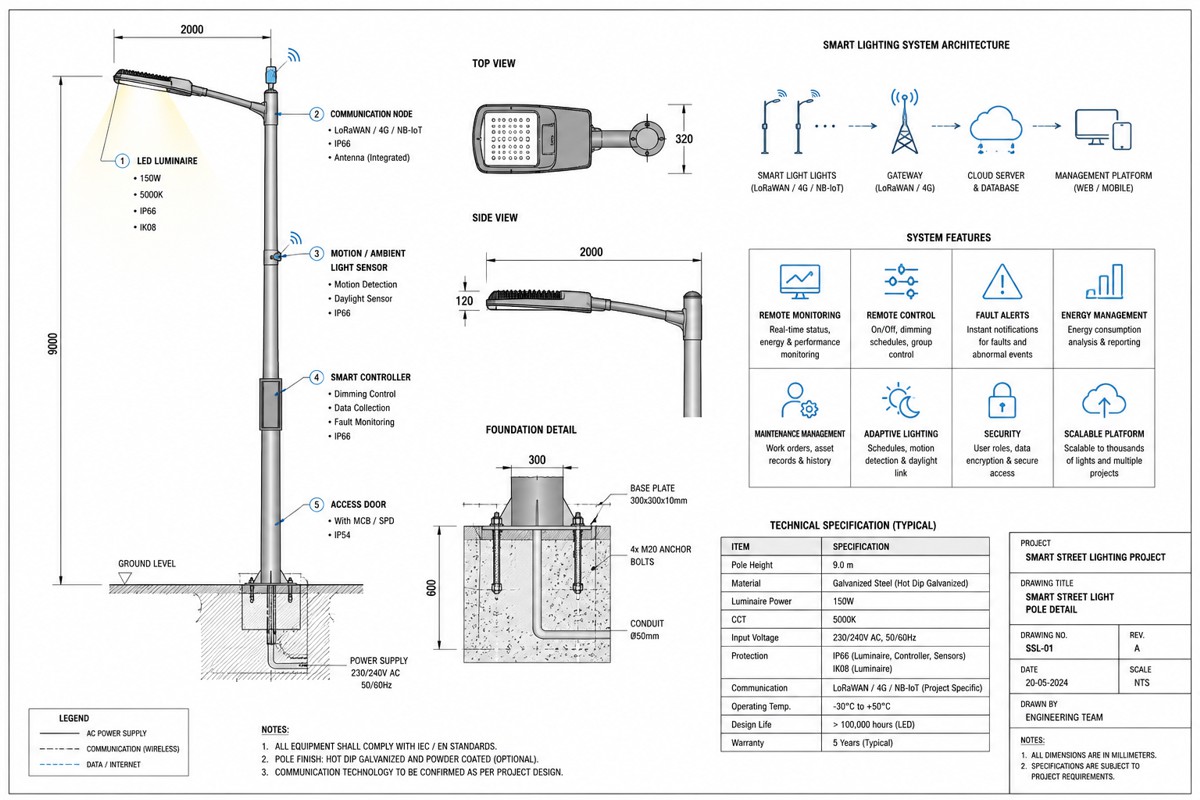
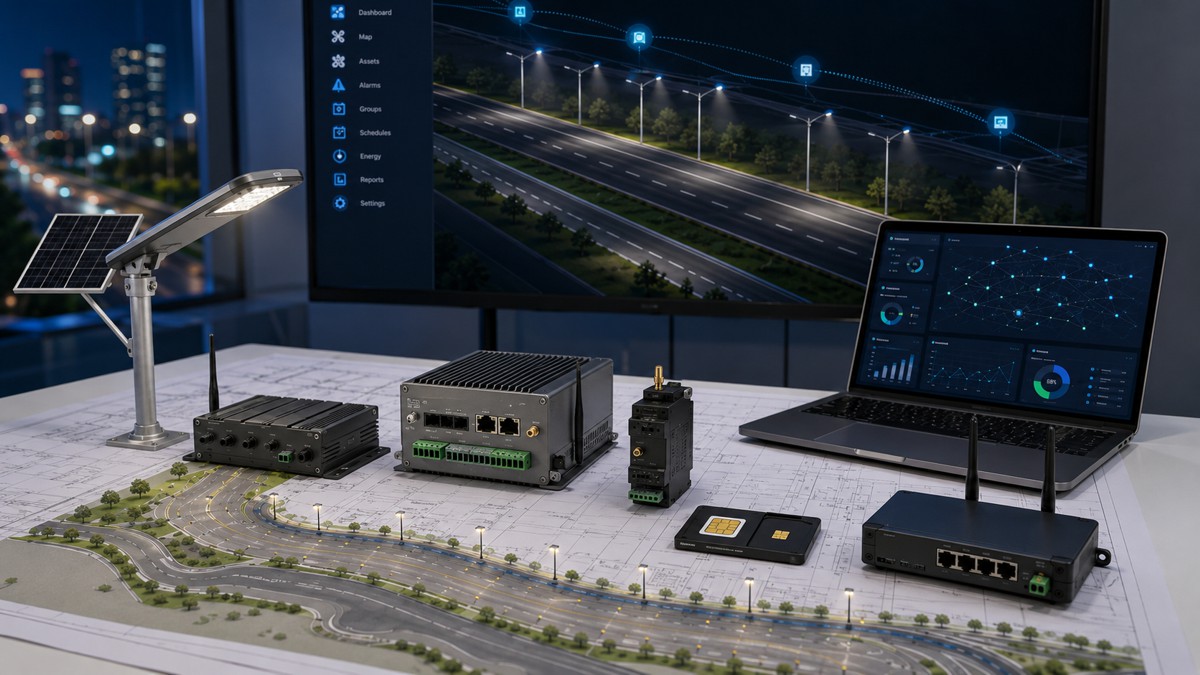
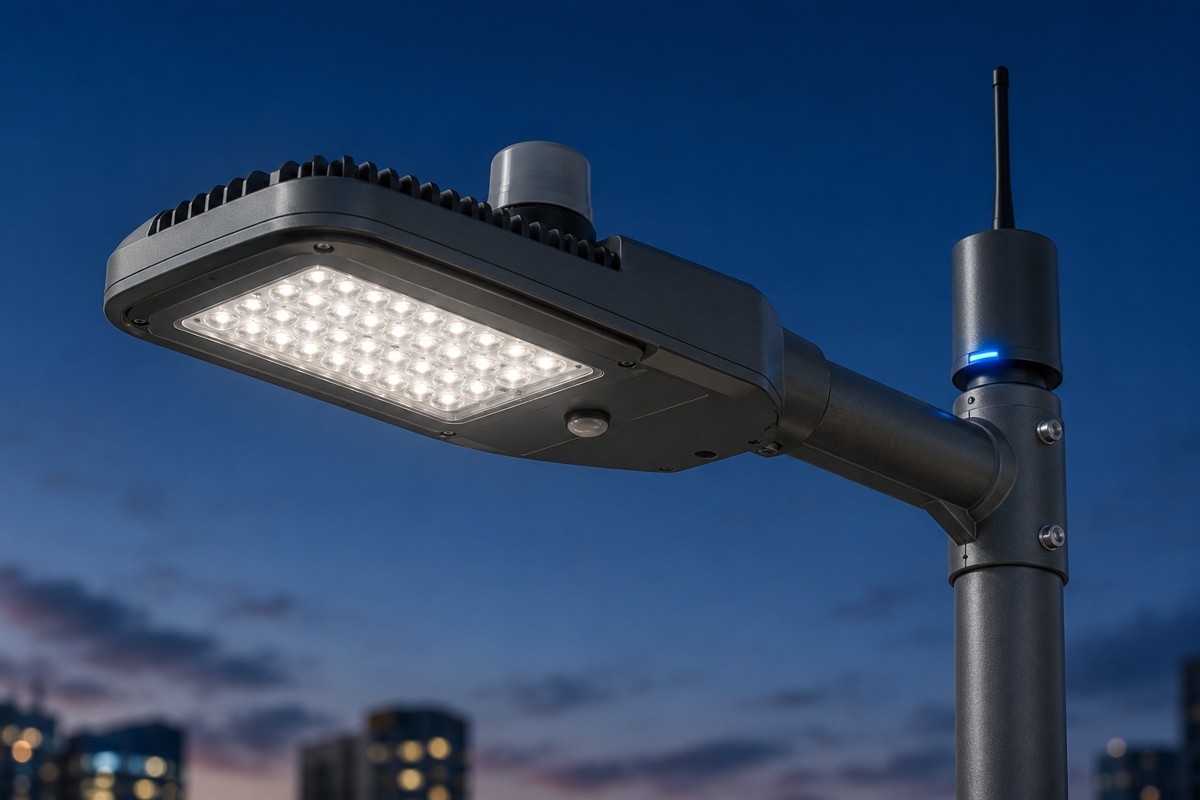
A smart street lighting system usually combines lighting equipment, controllers, communication modules, sensors and a management platform. Depending on the project, the system may support individual pole monitoring, group control, dimming schedules, motion-based operation, fault alerts, energy data and maintenance records.
For project owners planning smart road infrastructure, Sunlurio’s smart street lighting system design approach connects lighting performance, energy management, maintenance alerts and remote control within one project operating framework.
Smart street lighting systems can connect road lighting assets, communication devices and monitoring platforms into one infrastructure management framework.
Typical smart lighting functions may include:
- Remote monitoring
- Centralized control platform
- Individual pole status
- Group control by road section or zone
- Scheduled dimming
- Motion sensor integration
- Fault alerts
- Energy consumption data
- Battery and charging status for solar systems
- Maintenance logs
- User access control
- Communication through 4G, LoRaWAN, Zigbee, NB-IoT or other project-specific methods
The right configuration depends on the project. A smart city demonstration road, an industrial park and a remote solar street lighting project may not need the same communication method or control strategy. EPC teams should therefore define the operating requirement before selecting hardware.
Smart Control Can Improve Road Safety
Smart street lighting can support safer road operation when it is correctly specified, installed and maintained. It should not be presented as a technology that automatically solves all safety problems. The base lighting design, pole spacing, optical distribution and commissioning quality still matter.
Where smart control helps is in matching lighting operation with road use. Main roads, intersections and public access routes may require more stable illumination. Low-traffic roads, parking areas or internal industrial routes may allow reduced lighting during quiet hours, provided that visibility and safety requirements are still respected.
Motion-triggered boost can be useful in selected areas. For example, a road section may operate at a lower standby level during quiet periods and increase brightness when vehicles or pedestrians are detected. This can improve visibility when activity appears without requiring full output all night.
Fault alerts also support road safety. If several lights are offline in one area, a connected system can help the maintenance team identify the abnormal section faster. This reduces the time a road, entrance or public area remains underlit.
For drivers, pedestrians, cyclists and site operators, better visibility is not only about brightness. It also depends on consistency, uniformity, glare control and timely maintenance. Smart control should work together with proper lighting design, not replace it.

Adaptive Dimming Helps Balance Safety and Energy Use
Running every light at full brightness all night can waste energy, especially on low-traffic roads or internal project roads where activity drops after peak hours. At the same time, excessive dimming can create safety risks if roads become too dark for drivers, pedestrians or site users.
A staged lighting profile is often more practical. The system may use higher brightness during the evening active period, reduce output during late-night low-traffic hours and return to higher brightness when motion is detected or when the project requires it.
A practical dimming strategy should consider:
- Road type and traffic pattern
- Pedestrian activity
- Safety requirements
- Project owner expectations
- Local regulations or consultant requirements
- Energy consumption targets
- Maintenance access
- Solar battery autonomy, if applicable
For solar street lights, dimming is not only an energy-saving feature. It directly affects battery sizing, autonomy days and long-term system reliability. A solar system designed for a realistic dimming profile may perform well, while a system specified with unclear working hours may fail during cloudy or rainy periods.
This is why adaptive control should be reviewed during system sizing, not added as an afterthought.
Remote Monitoring Reduces Manual Maintenance Pressure
Traditional street lighting maintenance often relies on patrols, scheduled inspections or public complaints. This approach can work for small sites, but it becomes less efficient when the project includes many poles across a large area.
Smart lighting can help maintenance teams detect abnormal poles earlier. Depending on the system, alerts may show offline lights, low battery, abnormal charging, controller faults, communication failure or unusual energy consumption.
Remote monitoring helps maintenance teams identify abnormal poles, review status data and prioritize inspection before wider failures occur.
This is especially useful for:
- Large municipal road networks
- Industrial parks
- Logistics centers
- Ports and freight yards
- Campuses
- Remote roads
- Solar street lighting projects
- Public parking areas
A municipal team may identify several abnormal poles in one district without waiting for manual patrol results. An industrial park may plan maintenance by zone instead of checking every pole one by one. A solar lighting project may detect poor charging before full system failure occurs.
Remote monitoring does not remove the need for skilled maintenance. It helps maintenance teams prioritize where to go first, what to check and which failures may require urgent action.
Smart Solar Street Lighting Needs Engineering Review
Smart functions add value only if the base lighting and energy system are correctly designed. A remote monitoring platform cannot compensate for poor pole spacing, wrong optics, undersized batteries or weak solar charging.
For smart solar street lighting projects, the solar panel, battery, controller, lamp power and working profile should be reviewed together. Communication modules may also consume additional energy, and this should be considered during system sizing.
Key items to review include:
- Solar panel capacity
- Battery capacity and autonomy days
- Controller type and working profile
- Lamp power and dimming schedule
- Motion sensor settings, if used
- Local solar irradiation
- Shading from trees, buildings or road structures
- Dust, rain and cleaning conditions
- Communication module energy use
- Platform access and maintenance workflow
Remote monitoring can show when a battery is low, but it cannot solve a battery that was undersized from the beginning. It can report poor charging, but it cannot remove shading or dust from the panel. It can identify an offline controller, but it cannot fix an unsuitable site design.
For EPC and municipal projects, engineering review should connect system sizing, control profiles, installation planning and handover requirements before procurement.
Documentation and Handover Matter in Smart Lighting Projects
Smart lighting projects need more documentation than simple standalone lights. The owner does not only receive poles and luminaires. The owner also receives a control system, a communication method, platform access, controller settings and a maintenance workflow.
For larger projects, Sunlurio’s engineering documentation support helps align datasheets, drawings, control settings, installation notes and handover files before the system is delivered.
Important documents may include:
- Product datasheets
- Lighting layout
- Pole schedule
- Control system architecture
- Communication method
- Controller setting sheet
- Dimming profile record
- Installation manual
- Commissioning checklist
- User operation guide
- Maintenance record template
- Warranty and service notes
Without clear documentation, a smart lighting system may be installed but not properly used. The project owner may not know how to access the platform, read alarms, adjust profiles or manage maintenance tasks.
Handover should therefore include operational training. This may cover user accounts, system login, alarm interpretation, dimming adjustment, maintenance record keeping and escalation procedures.
In infrastructure projects, good handover is not a formality. It determines whether the smart functions continue to provide value after the contractor leaves the site.
Where Smart Street Lighting Makes the Most Sense
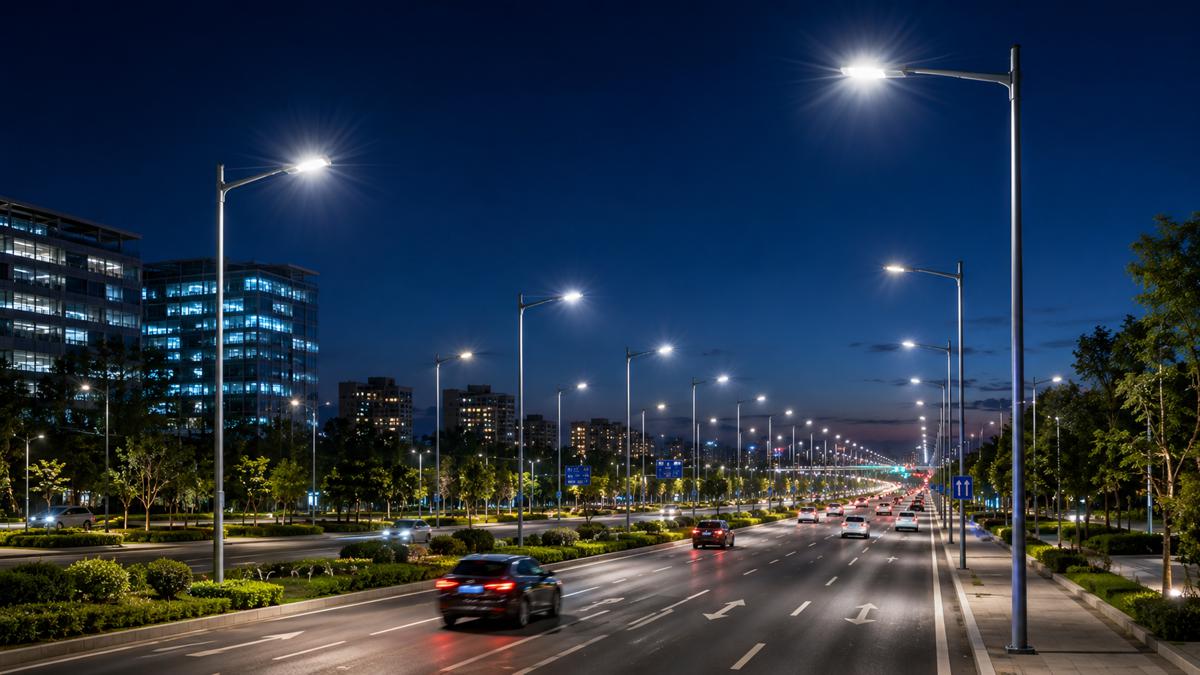
Smart street lighting is not necessary for every small lighting project. It is most useful where the owner needs visibility over many poles, predictable maintenance, energy management and long-term operation control.
Common applications include:
- Municipal roads
- Main access roads
- Highways and feeder roads
- Industrial parks
- Logistics centers
- Ports and freight yards
- Campuses
- Public parking areas
- Remote roads with difficult maintenance
- Smart city demonstration projects
For these projects, the value is not only in switching lights on and off remotely. The value is in understanding the operating condition of the lighting network, identifying abnormal sections, reducing unnecessary site checks and improving the owner’s ability to maintain the system.
Smart lighting should therefore be considered where the operational benefit is clear. If the owner has no plan to use the monitoring data, maintain the platform or respond to alerts, the smart features may not deliver their expected value.
Common Mistakes in Smart Street Lighting Projects
Smart lighting projects can fail to meet expectations when the technology is specified without enough engineering review. The following mistakes are common in road and municipal lighting projects.
Mistake 1: Treating Smart Control as a Decorative Feature
Smart lighting should solve operation and maintenance problems. A dashboard alone does not make a project successful. The system should help the owner monitor poles, manage faults, control lighting profiles and plan maintenance.
Mistake 2: Ignoring the Base Lighting Design
Remote control cannot fix poor pole spacing, wrong optics or weak lighting uniformity. The smart system should be built on a proper lighting design, not used to cover design gaps.
Mistake 3: Undersizing the Solar Energy System
Smart functions do not solve low battery capacity or poor solar charging. For solar projects, panel capacity, battery size, controller profile and dimming schedule must be reviewed together.
Mistake 4: Choosing Communication Without Checking Site Conditions
Different projects may need different communication methods. Coverage, distance, terrain, interference, operating cost and maintenance capability should all be reviewed before final selection.
Mistake 5: Leaving Handover Training Undefined
If the owner does not understand the platform, alarms or control profiles, the system may not be used properly after installation. Handover training should be part of the project scope.
Practical Checklist for EPC and Municipal Teams
Before selecting a smart street lighting system, EPC contractors and municipal teams can use a practical checklist to review whether the key project requirements are clear.
| Area | What to Confirm |
|---|---|
| Lighting design | Road width, pole spacing, optics and target illumination |
| Control method | Individual control, group control or scheduled dimming |
| Monitoring | Pole status, fault alerts, battery status and energy data |
| Communication | 4G, LoRaWAN, Zigbee, NB-IoT or project-specific method |
| Solar sizing | Panel, battery, controller and autonomy days |
| Dimming profile | Active hours, standby level and motion boost |
| Documentation | Drawings, datasheets, control settings and manuals |
| Handover | Platform access, training, maintenance process and warranty |
This checklist does not replace project-specific engineering design. It helps project teams avoid treating smart lighting as a simple product purchase and encourages them to review operation, maintenance and handover requirements early.
Reliable, Understandable and Maintainable Throughout its Operating Life
Smart street lighting can support safer and more efficient road infrastructure when it is specified as a complete project system. The value is not only in remote control or a digital dashboard. The real value comes from combining proper lighting design, reliable energy sizing, practical dimming profiles, fault monitoring, maintenance planning and clear documentation.
For EPC contractors, municipal road teams and infrastructure buyers, smart lighting should be reviewed before procurement and installation. When the system design, control strategy and handover documents are aligned early, smart street lighting can reduce maintenance pressure, improve operational visibility and support long-term road infrastructure performance.
A successful smart street lighting project is not defined by how advanced the dashboard looks. It is defined by whether the lighting system remains reliable, understandable and maintainable throughout its operating life.