Sandvik Unifies Jaw Crusher Portfolio for Smarter Primary Crushing
Primary crushing remains one of the most demanding stages of any quarrying, mining or heavy construction operation. Equipment reliability, operator safety and predictable throughput all have a direct impact on project productivity, maintenance costs and profitability.
Sandvik’s completion of its upgraded jaw crusher portfolio represents more than a routine product refresh. It reflects a broader industry shift towards machines that combine robust mechanical engineering with digital monitoring, simplified maintenance and safer day-to-day operation.
For infrastructure contractors, aggregates producers and mining companies, standardisation across an equipment range also delivers practical commercial benefits. Common control systems, familiar maintenance procedures and interchangeable operating principles can reduce training requirements, simplify spare parts management and improve fleet consistency across multiple sites. As crushing operations become increasingly data-driven, these considerations are becoming almost as important as raw production capacity itself.
Briefing
- Sandvik has completed the rollout of its upgraded stationary jaw crusher portfolio, creating a unified range across primary crushing applications.
- New features focus on operator safety, simplified crusher adjustment and digital monitoring through the ACS-j control platform.
- Hydraulic wedge adjustment, synchronised retraction systems and improved guarding reduce manual intervention during operation.
- A common design philosophy aims to improve fleet consistency, maintenance efficiency and operational reliability across installations.
- The development reflects wider industry demand for digitally enabled, lower-risk crushing equipment supporting long-term productivity.
Standardisation Brings Commercial Benefits Beyond Individual Machines
Many quarrying and mining businesses operate mixed fleets assembled over decades, often incorporating equipment from multiple manufacturers and generations. While this approach can maximise capital utilisation, it frequently introduces complexity in maintenance, operator training and spare parts management.
By completing a unified jaw crusher family, Sandvik is seeking to remove much of that operational inconsistency. Common engineering principles, shared operating systems and aligned maintenance procedures create opportunities for operators to standardise practices across multiple sites. For organisations managing dozens of crushing assets, these efficiencies accumulate over the lifetime of the equipment through reduced downtime, simplified inventory and improved workforce flexibility.
The approach also supports procurement strategies increasingly focused on whole-life ownership costs rather than simply initial purchase price. Infrastructure owners and contractors are paying closer attention to maintenance planning, component commonality and digital service support as labour shortages and tighter operating margins continue to influence equipment investment decisions.
Engineering Improvements Focus on Safety and Practical Operation
Jaw crushers have traditionally required significant manual intervention when adjusting closed-side settings or carrying out maintenance activities. These procedures can expose operators to unnecessary hazards while extending equipment downtime.
The upgraded Sandvik range introduces hydraulic wedge setting adjustment combined with a synchronised retraction arrangement, allowing crusher settings to be changed more efficiently while reducing direct operator exposure. Enhanced guarding and revised service access further reinforce the company’s emphasis on safer maintenance procedures.
Rather than introducing entirely new crushing technology, the engineering emphasis has been placed on making proven equipment easier and safer to operate throughout its working life. That reflects an important trend across heavy equipment manufacturing, where incremental improvements in usability increasingly deliver measurable gains in productivity and workforce safety.
Digital Monitoring Continues to Expand Across Crushing Equipment
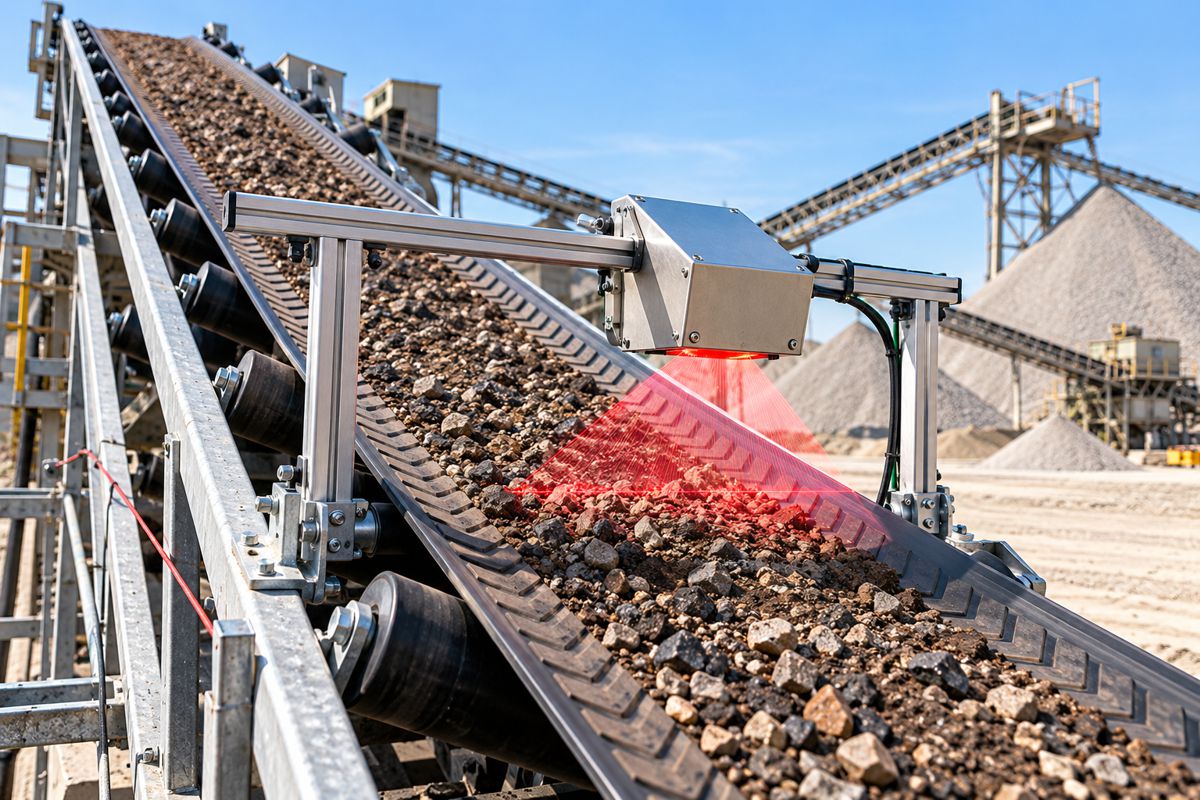
Perhaps the most significant long-term development is the increasing integration of digital monitoring into primary crushing equipment. Modern quarries and mining operations are steadily moving towards predictive maintenance and real-time operational visibility rather than relying solely on scheduled inspections.
Sandvik’s ACS-j monitoring and control platform forms part of that wider transition. The system enables operators to monitor hydraulic settings, lubrication performance and eccentric shaft bearing temperature through a web-based interface, helping maintenance teams identify developing issues before they become unplanned failures.
For fleet managers responsible for maintaining production targets, continuous visibility of machine condition can improve maintenance scheduling, reduce unexpected stoppages and support more informed operational decisions. As digital tools mature, these capabilities are increasingly becoming expected features rather than premium options across the crushing sector.
Reliability Remains the Primary Performance Metric
Although automation and digital capability continue to attract attention, customers ultimately judge crushing equipment on its ability to deliver consistent throughput with minimal interruption.
The completed Sandvik range has therefore been engineered around dependable mechanical performance alongside operational simplicity. Improvements to structural design, material quality and component standardisation are intended to support higher equipment availability while reducing the complexity of installation and servicing.
Reliable primary crushing has a cascading effect throughout an entire processing plant. Stable feed characteristics improve downstream screening, secondary crushing and material handling, reducing bottlenecks and helping operators maintain more predictable production rates across the complete operation.
Supporting Lower Operating Costs Through Simplified Maintenance
Maintenance remains one of the largest controllable costs within crushing operations. Every hour spent adjusting settings, replacing components or diagnosing faults directly affects production output.
By simplifying adjustment procedures and improving service accessibility, Sandvik aims to reduce the amount of planned maintenance labour required throughout the crusher’s operating life. Standardised components and consistent engineering across the product range may also streamline spare parts stocking and technician training for organisations operating multiple machines.
The company’s broader design philosophy also aligns with wider industry efforts to reduce lifecycle costs through energy-efficient motors, compact equipment footprints and recyclable construction materials. These factors are increasingly influencing equipment selection alongside traditional performance criteria.
Customer Feedback Shapes Product Development
Equipment manufacturers increasingly rely on continuous customer engagement rather than periodic product launches to refine their product portfolios. According to Sandvik, feedback collected during industry exhibitions and subsequent discussions played an important role in validating the latest design improvements.
The strongest themes emerging from that engagement centred on usability, operational transparency and safer working practices rather than headline production figures. This reflects changing customer priorities as experienced operators become harder to recruit and businesses seek equipment that can be commissioned, operated and maintained with greater consistency across multiple locations.
Martin Johansson, Product Manager Jaw, Gyratory and Impact crushers, Rock Processing, summarised the company’s direction: “These upgrades confirm that our development efforts are well aligned with market expectations. By focusing on safe operation, ease of use and consistent productivity, we are delivering solutions that are more intuitive, reliable and better suited to the needs of our customers.”
Digital Crushing Continues to Shape Future Investment
The completion of Sandvik’s upgraded jaw crusher portfolio reflects broader changes taking place across the global aggregates and mining industries. Manufacturers are increasingly combining mechanical reliability with automation, connected monitoring and standardised engineering platforms that simplify ownership over decades rather than years.
For contractors supplying aggregates to major infrastructure projects, these developments can contribute to safer operations, improved equipment availability and more predictable production planning. As digital asset management becomes increasingly integrated into quarry operations, primary crushers are evolving into connected production assets capable of supplying operational data alongside crushed rock.
The result is a gradual shift from machines designed solely for mechanical performance towards equipment engineered as part of wider digital production systems supporting efficiency, sustainability and long-term operational resilience.
Key Industry Questions
- What makes a unified crusher range commercially valuable? A unified equipment portfolio reduces complexity across procurement, maintenance and operator training. Standardised controls, service procedures and component design enable companies operating multiple sites to simplify spare parts inventories and improve workforce flexibility. Over the lifespan of crushing equipment, these operational efficiencies can produce meaningful reductions in maintenance costs and equipment downtime while making future fleet expansion more straightforward.
- How does hydraulic wedge adjustment improve safety? Traditional crusher adjustment often requires greater manual intervention around moving equipment. Hydraulic wedge adjustment allows operators to change crusher settings more safely and efficiently while reducing direct exposure during maintenance procedures. Combined with synchronised retraction systems and improved guarding, these features support safer working practices that align with modern quarry and mining safety standards.
- Why is digital monitoring becoming important in crushing operations? Connected monitoring systems provide continuous information about equipment condition, allowing maintenance teams to identify potential issues before failures occur. Monitoring lubrication, hydraulic settings and bearing temperatures helps operators schedule maintenance proactively, reducing unexpected downtime and supporting higher equipment availability throughout the production cycle.
- How can crusher standardisation reduce operating costs? Operating multiple machines with similar engineering, documentation and maintenance requirements simplifies technician training and reduces spare parts complexity. Maintenance teams become more familiar with equipment behaviour, troubleshooting becomes faster and inventory management becomes more efficient, contributing to lower total ownership costs over the equipment lifecycle.
- Does improved usability affect productivity? Yes. Equipment that is easier to adjust, monitor and maintain generally spends more time in production and less time undergoing maintenance or troubleshooting. Simplified interfaces also reduce the learning curve for operators, helping businesses maintain consistent performance despite ongoing workforce challenges.
- Why are manufacturers investing more heavily in automation? Automation improves operational consistency while supporting predictive maintenance and remote monitoring. Modern crushing operations increasingly rely on data to optimise production, reduce maintenance costs and improve asset utilisation. Digital systems therefore complement mechanical engineering rather than replacing it.
- What does this mean for infrastructure contractors? Contractors producing aggregates for roads, railways and major civil engineering projects benefit from more reliable primary crushing because stable material supply supports downstream production planning. Improved equipment availability helps maintain construction schedules while reducing the commercial impact of unexpected plant stoppages.
- How does this fit wider trends in quarrying and mining? The sector is steadily moving towards integrated equipment ecosystems combining automation, connectivity, energy efficiency and lifecycle service support. New crushing equipment increasingly forms part of broader digital operating strategies rather than functioning as isolated mechanical assets, enabling more efficient management of production across entire sites.
Strategic Takeaways
- Standardising crushing equipment across an entire product range can reduce maintenance complexity, simplify operator training and lower lifetime ownership costs.
- Safety improvements increasingly focus on eliminating manual intervention through hydraulic adjustment systems, better guarding and improved service access.
- Digital monitoring platforms are becoming essential tools for predictive maintenance and more efficient fleet management.
- Equipment purchasing decisions are shifting towards lifecycle performance, operational consistency and connected support rather than headline production figures alone.
- Primary crushing is becoming an integrated element of digitally managed production systems, supporting smarter quarry, mining and infrastructure operations.