How Deep Should you Compact Soil Before Laying Pavers?
Getting your soil depth wrong before laying pavers is one of the most common mistakes DIYers make, and it’s also one of the most expensive to fix after the fact. If the base isn’t compacted deeply enough, pavers shift, crack, and sink over time, turning a clean patio or pathway into an uneven hazard.
So before you lay a single stone, you need to understand exactly how deep to go and why that number shifts depending on your project.
This article covers the right compaction depths for different applications, what factors influence those depths, and how to verify your base is ready before you start setting pavers.
Compaction Depth Requirements for Pavers
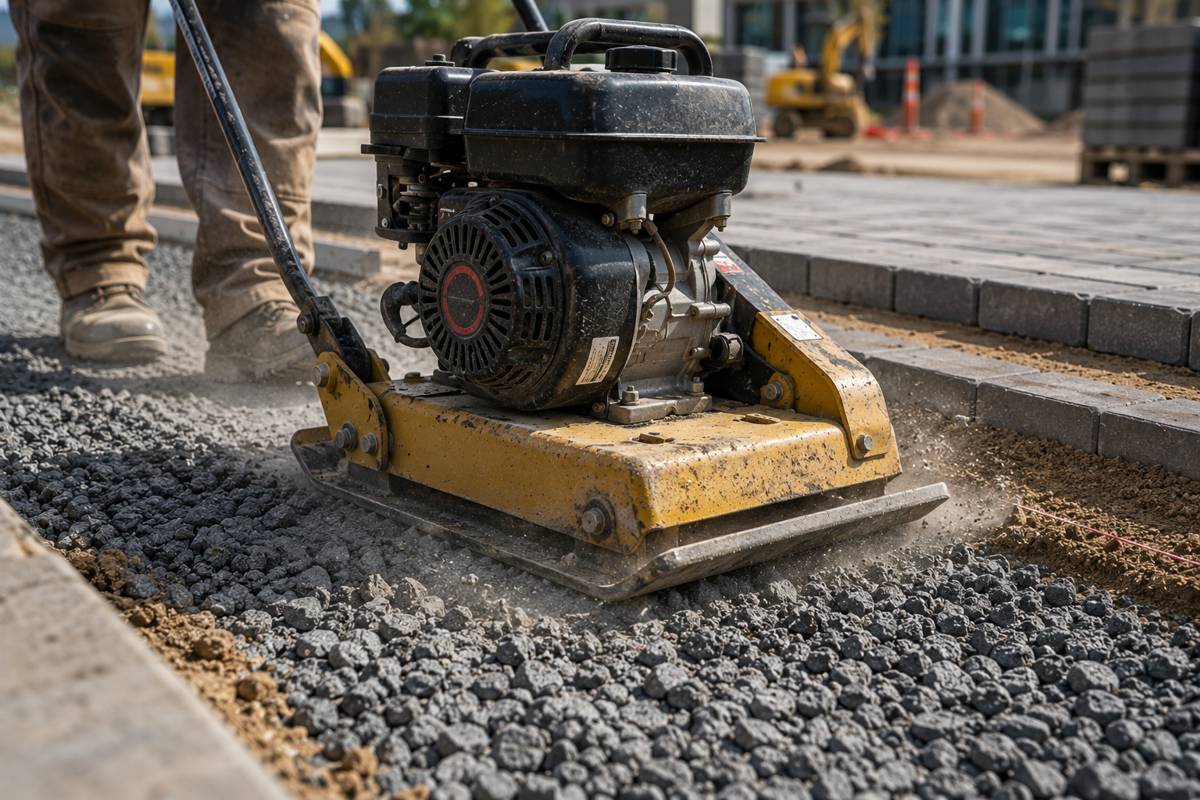
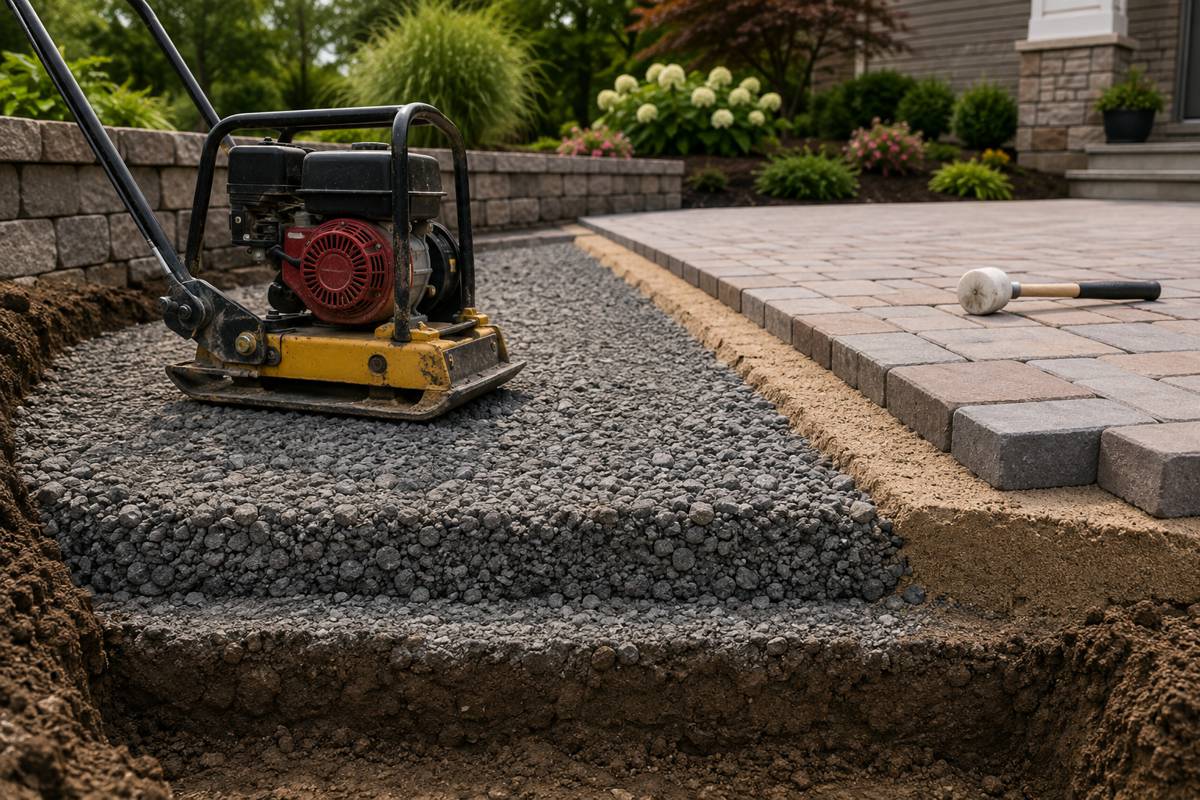
The standard compaction depth for a paver base depends on the type of load the surface will carry. A vibratory plate compactor is what most contractors and serious DIYers reach for; hand tamping simply can’t achieve the density that a mechanized plate delivers over large areas. For pedestrian surfaces like patios and garden paths, you generally need a compacted gravel base of 4 to 6 inches. For driveways that support vehicle traffic, that depth rises to 8 to 12 inches of compacted aggregate. These figures represent the compacted base layer, not the raw excavation depth. Since soil and gravel compact down by roughly 15% to 20%, you’ll need to add extra material before you compact to hit your final target depth.
Why Load Type Changes Everything
The weight a surface bears directly determines how deep the base must go. A garden path only sees foot traffic, so a 4-inch compacted gravel base on top of stable native soil is enough to prevent shifting. A residential driveway carries vehicles that can weigh anywhere from 3,000 to 6,000 pounds, so the base needs far greater depth to spread that load and prevent the sub-base from deforming over time. But commercial driveways or areas handling heavy delivery trucks push that requirement even higher, sometimes to 12 to 18 inches of compacted base. The type of traffic isn’t the only variable. Soil type, climate, and drainage all interact with load to determine the final depth you need. Sandy soil drains well and tends to stay stable; clay-heavy soil expands and contracts with moisture and temperature shifts, requiring different approaches.
Layering Your Compaction for Better Results
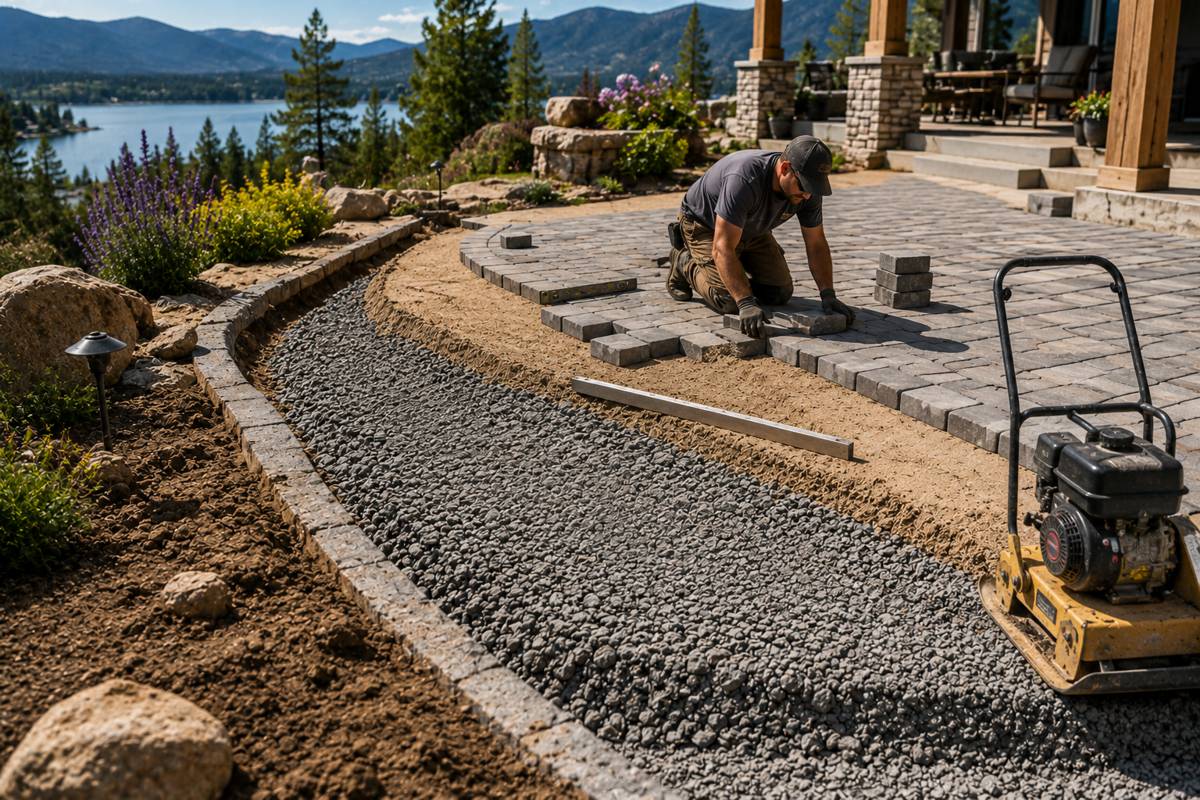
Here’s the thing: you should never compact more than 4 inches of material at a time. Plate compactors can only effectively densify material to a certain depth per pass. If you dump 10 inches of gravel into a trench and run a plate compactor over it once, the bottom few inches may remain loose and unstable. The correct method is to add material in 2 to 4-inch lifts, compact each lift fully before adding the next, and repeat until you reach your target depth. This takes more time, but it’s the only way to guarantee uniform density through the entire base. A good test: press your heel firmly into the compacted surface. If it leaves a noticeable impression, the layer needs more passes before you add the next lift.
What Soil Type Tells You About Excavation Depth
Soil conditions on your specific site influence how much you need to excavate before you can even start building your base. Not all native soils are equal, and some require more preparation than others.
Clay Soil Requires Extra Attention
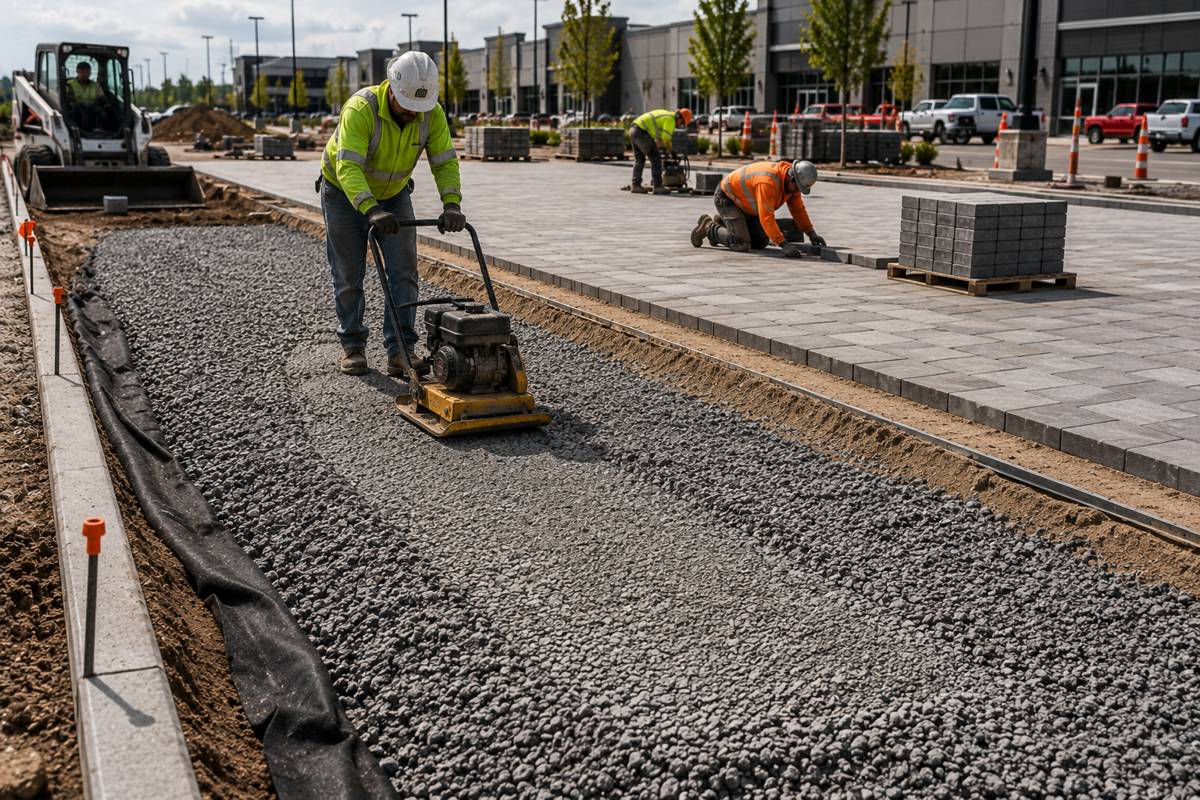
Clay expands when it absorbs water and contracts sharply as it dries out. This cycle of swelling and shrinking is particularly destructive to paver installations because it creates lateral movement beneath the base layer. On clay-heavy sites, many professionals recommend removing 2 to 4 additional inches of native soil beyond the standard excavation depth and replacing it with compactable aggregate. Some builders also add a layer of geotextile fabric between the native clay and the gravel base to prevent the two materials from mixing over time, which would compromise drainage and stability. The fabric doesn’t replace proper compaction depth; it works alongside it. And if you skip this step on clay soil, moisture from the ground below can gradually work its way into the base, softening it and allowing pavers to settle unevenly, even if you compacted the gravel base correctly at the time of installation.
Sandy and Loamy Soils Are More Forgiving
Sandy soil drains freely and doesn’t expand or contract with moisture changes the way clay does. On sandy or loamy sites, the standard excavation depths are usually sufficient without adding extra inches to compensate for soil movement. That said, loose sand near the surface should still be compacted before you build your base on top of it. Run your plate compactor over the native soil after excavation to firm up the surface and identify any soft spots. If the compactor sinks noticeably in certain areas, those spots may contain organic material or debris below the surface that needs to be removed and replaced with stable fill. Organic material, old roots, decomposed leaves, and buried wood compress over time, causing localized settlement that pushes pavers out of alignment. No amount of gravel base quality fixes that problem.
Building the Base Layer Correctly Before You Lay Pavers
Once you know how deep you need to go and you’ve addressed the native soil conditions, the actual base construction follows a straightforward sequence. Understanding how deep you should compact soil before laying pavers isn’t just about hitting a single number; it’s about executing the whole process in the right order.
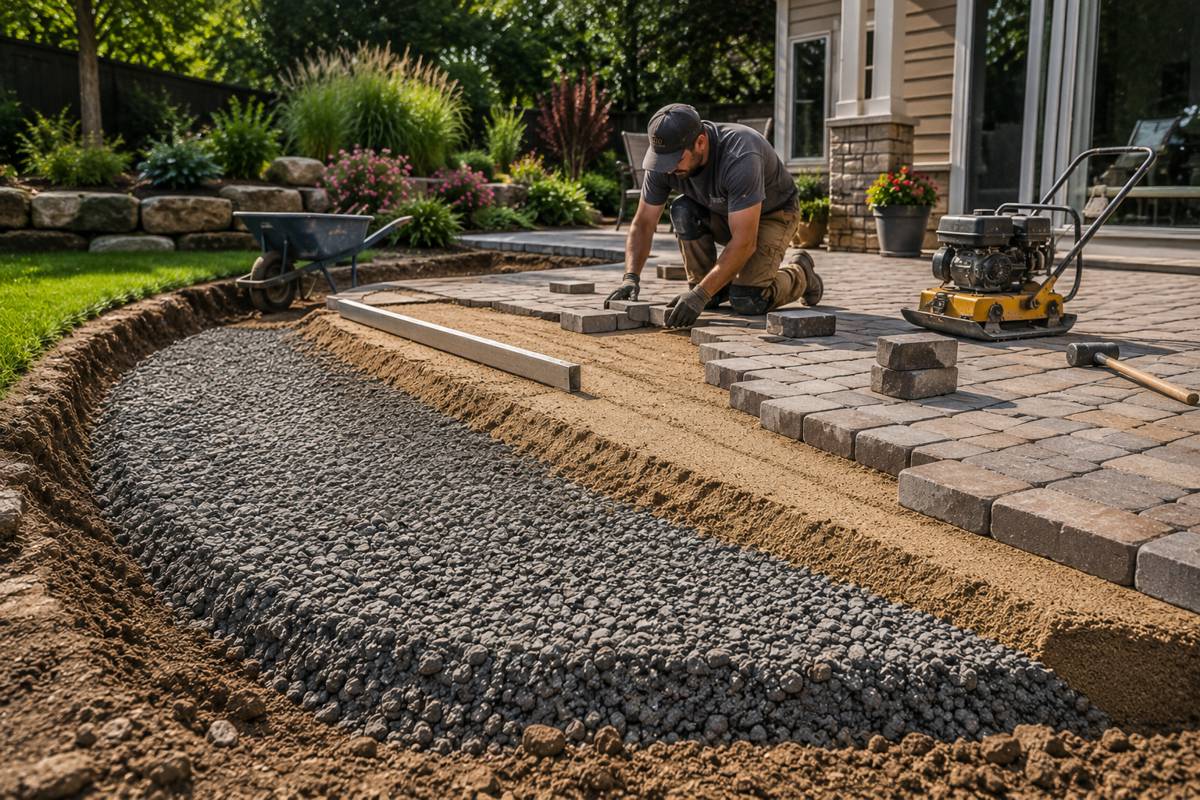
Start with a clean, excavated trench at the correct depth for your project type. Add your first 3-inch lift of crushed stone or compactable gravel, such as class II base or road base aggregate. Compact that lifts fully with at least two to three overlapping passes. Add the next lift, compact again, and repeat until you reach the target compacted depth. After the final lift is compacted, add a 1-inch layer of coarse bedding sand and screed it level; then set your pavers on top. Don’t compact the bedding sand layer before laying pavers; it should remain loose so the pavers bed into it evenly. Once all pavers are set and jointing sand is swept in, a final light pass with the plate compactor locks everything together.
Level and Stable for Years
Proper soil compaction before laying pavers comes down to matching your base depth to the load the surface will carry, accounting for your site’s soil type, and building the base in controlled lifts rather than all at once. Pedestrian areas need 4 to 6 inches of compacted base; driveways need 8 to 12 inches.
Clay soils may require deeper excavation and extra preparation steps. The layering method, no more than 4 inches per compaction lift, is what separates a base that holds for decades from one that fails in the first winter. Get these principles right, and your paver surface will stay level, stable, and structurally sound for years.