Trimble and Engineers Without Borders Rewire Uganda’s Infrastructure Pipeline
Most infrastructure stories in emerging markets are told as funding stories, built on the assumption that projects fail to happen because the capital is not there. The partnership Trimble has expanded with the Engineers Without Borders network, coordinated through Engineers Without Borders International, is interesting precisely because it inverts that assumption.
In the districts of Eastern Uganda where the collaboration’s first project is now under way, public money for water, sanitation, energy and schools does exist. What has been missing is the technical apparatus needed to turn that money into designed, costed and deliverable projects, and that gap is where the real work begins.
For a trade audience of contractors, infrastructure owners, engineers and investors, the significance sits in that distinction. A donation of hardware, software, training and cash from a global positioning and modelling company would be a modest philanthropic footnote on its own.
The value here lies in what the technology is being asked to do, which is to build the spatial and financial evidence base that allows local authorities to access funds they cannot currently draw down. That is a project-preparation problem, and project preparation is one of the most stubborn bottlenecks in global infrastructure delivery.
Uganda is the test case, but the workflow being assembled is designed to travel.
Briefing
- Trimble has expanded its long-running support of Engineers Without Borders from the United States onto the international stage, adding a monetary donation, hardware, software and training aimed at overseas projects and coordinated through EWB International.
- The first initiative is an eighteen-month critical infrastructure project in Eastern Uganda with EWB East Africa, targeting a specific problem: local government funds exist for basic services but district parishes cannot access them without the necessary data, tools and engineering capacity.
- Reporting by the Denver Business Journal placed the initial contribution at a 48,000 US dollar employee-funded grant alongside GNSS equipment, a figure not stated in Trimble’s own release, which described the donation only as substantial.
- The project runs in three phases, beginning with baseline surveys, infrastructure mapping and a population census delivered by forty trained local youth enumerators, before moving to feasibility work, financial modelling and investor-facing presentations intended to attract commercial and public-private investment.
- Capacity building is central, through a hands-on Buildathon event and a working group convened with education partner Panelle to bring female leaders from construction and engineering into the initiative’s direction.
Turning Undrawn Public Money Into Buildable Projects
The commercial heart of the Uganda project is the attempt to convert dormant public capital into a financeable pipeline. Local authorities in Uganda operate within the Parish Development Model, the government strategy launched in the 2021/22 financial year that places the parish, the country’s lowest administrative unit, at the centre of planning, budgeting and service delivery.
Infrastructure and economic services form one of its seven pillars, yet early implementation has leaned heavily on the financial inclusion pillar and its revolving fund, leaving the harder work of physical infrastructure comparatively underserved. With more than ten thousand parishes to cover, the model’s ambition has consistently outrun the technical capacity available to deliver it on the ground.
That capacity shortfall is well documented. Analyses of Uganda’s local government system point to a declining share of the national budget reaching local services and to technical posts in district administrations that are frequently only partly filled, leaving many authorities without the surveyors, planners and cost engineers a bankable project requires. This is the void the Trimble and EWB East Africa collaboration is designed to enter.
As Peter Nzabanita of EWB East Africa put it: “Working with Trimble can help unlock these funds and deliver essential master plans, financial models and engineering skills at the required scale,” adding that “This scale is crucial for creating opportunities that lead to sustained impact, including training programs that generate a local talent pipeline and government engagement for continued accountability and investment.”
Read commercially, the sequence matters more than any single element. Baseline data feeds feasibility studies and technical audits, which in turn feed financial models and cost-benefit analysis, which then support the stakeholder presentations intended to draw in commercial investment and public-private partnerships. Each stage de-risks the next, and the cumulative effect is to move a district from having a notional budget line to holding an investable proposition.
For contractors and infrastructure financiers watching African markets, that is the part worth studying, because a repeatable method for producing bankable rural infrastructure projects addresses a shortage that development finance institutions have flagged for years.
The Data Foundation Beneath the Funding
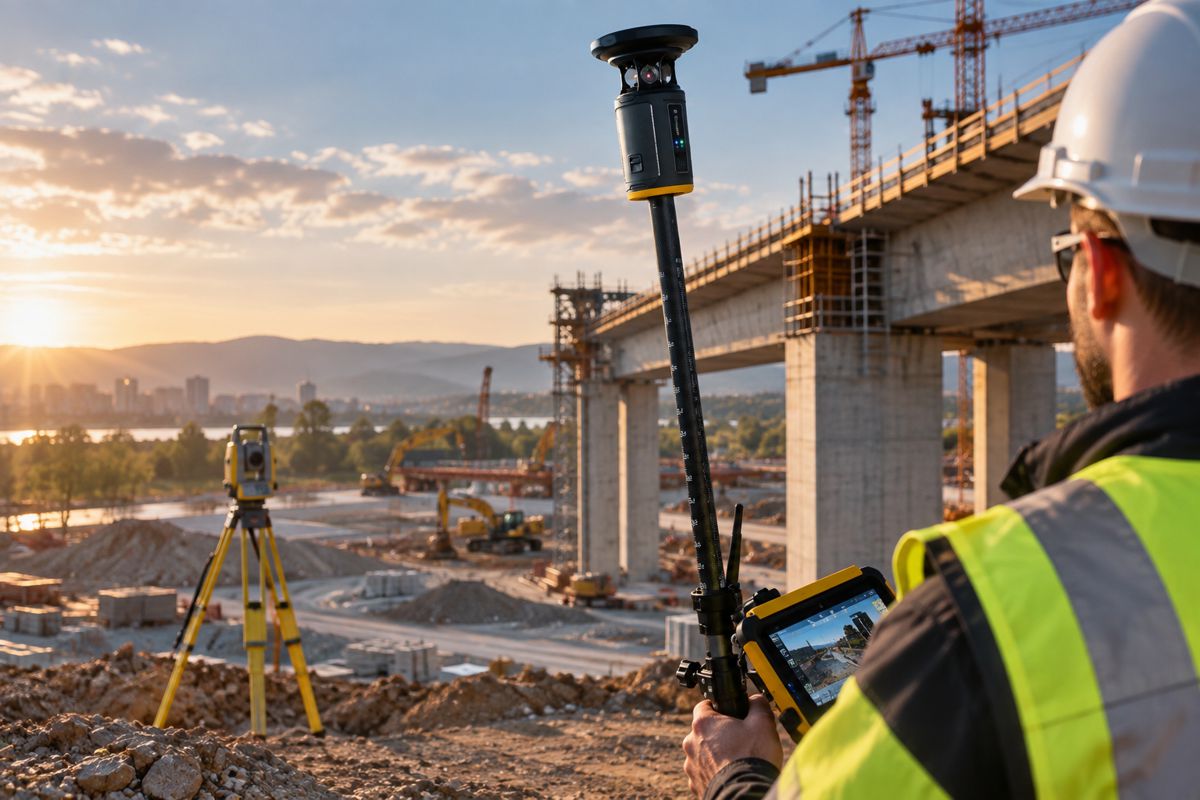
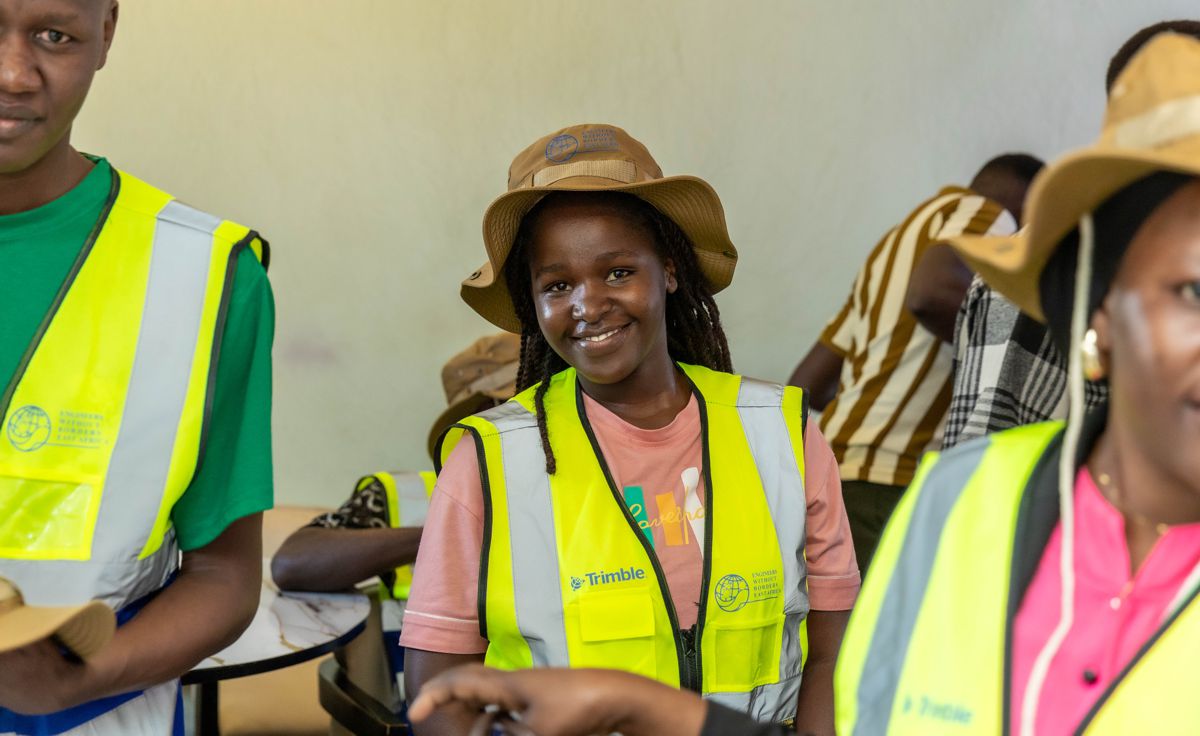
The technology underpinning the first phase is not exotic, and that is the point. The project opens with technical baseline surveys and infrastructure mapping using Trimble positioning solutions, geographic information systems and drone support, paired with the recruitment and training of forty local youth enumerators to run a population census. Together these produce something local authorities have often lacked entirely, a reliable spatial and demographic picture of what exists, where it sits and who depends on it. Without that layer, feasibility studies rest on guesswork, and guesswork does not survive contact with an investment committee.
Precise positioning does real work in this context. Trimble’s published case studies already document Engineers Without Borders student teams using its GNSS receivers with real-time correction services and field controllers to survey water-supply projects in Malawi and Guatemala, and its GNSS hardware has been applied to land-parcel mapping in Uganda.
Real-time, centimetre-level positioning lets small field teams capture survey-grade data quickly and consistently, which shortens the path from site visit to design and reduces the rework that erodes budgets. When that geospatial base is combined with drone-derived mapping and structured census data, the district gains what amounts to a digital baseline of its own infrastructure, the kind of asset a digital twin approach depends on and a prerequisite for evidence-based capital planning.
The wider industrial-technology implication is that data is being treated as the enabling input rather than an afterthought. In mature markets, the value of GIS, GNSS and reality-capture tools is usually framed around productivity gains on projects already funded and designed. Here the same tool stack is being used one step earlier in the chain, to establish whether and how a project can be funded and designed at all.
That reframing, of survey and mapping technology as an instrument of project finance rather than merely of construction efficiency, is the most transferable idea in the whole initiative.
Building Capacity That Stays After the Project Ends
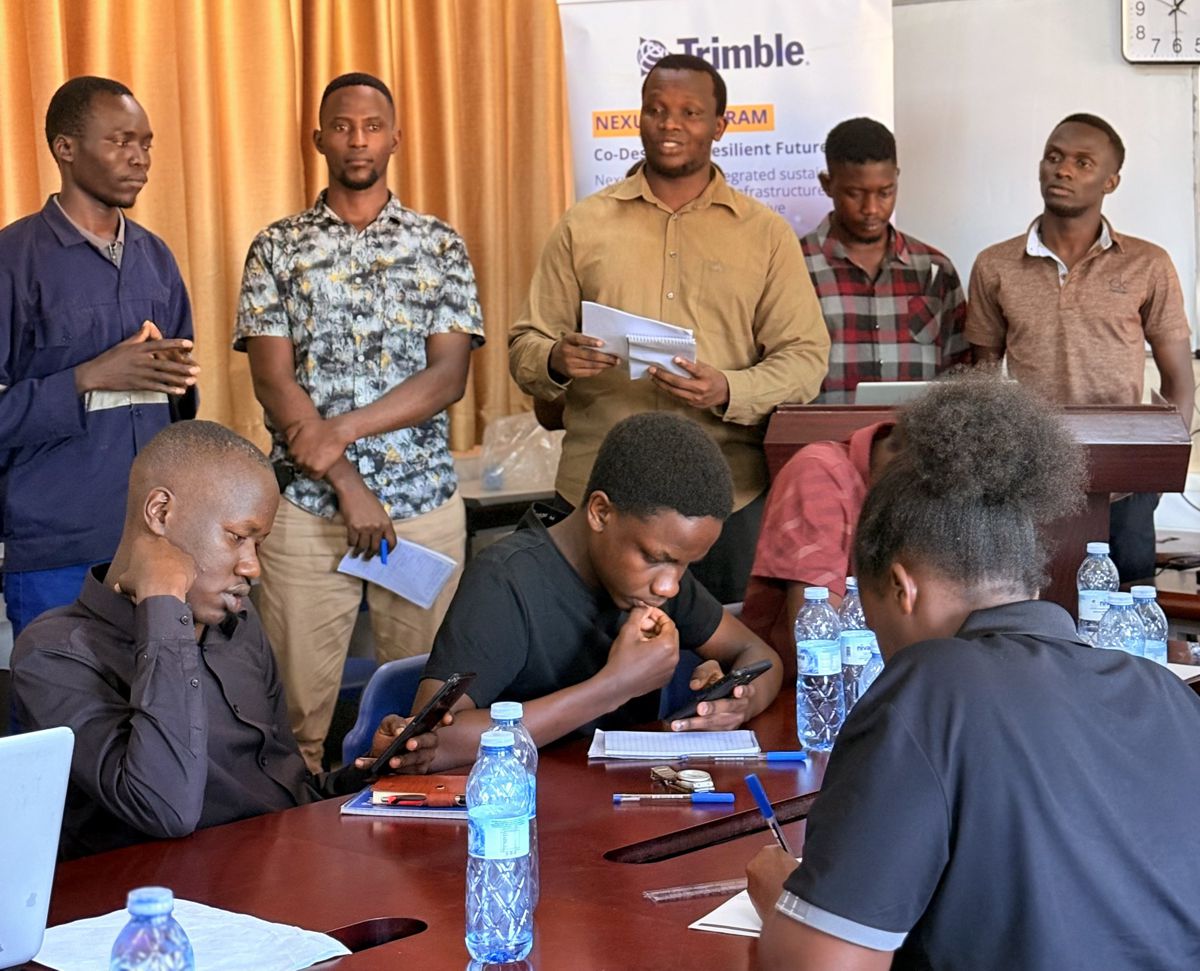
A recurring failure in donor-led infrastructure has been the departure of technical capability the moment external teams leave. The Uganda structure is built to resist that outcome. Training forty local enumerators to conduct the census is not incidental staffing, it is the deliberate seeding of a local skills base that can maintain and extend the data foundation after the eighteen-month window closes.
Nzabanita’s emphasis on a local talent pipeline and continued government engagement signals that the intended legacy is institutional, not just physical, and that ambition is what separates durable capacity building from a well-photographed field trip.
The programme layers additional mechanisms on top of that base. Phase two includes a hands-on Buildathon designed to bring Trimble teams, customers and partners together to provide rapid, practical assistance, concentrating expertise into a short, high-output burst. Alongside it, Trimble and its education partner Panelle, which connects brands with women in business and underrepresented groups, are forming a working group to gather female leaders from construction and engineering to help shape the initiative’s direction.
In sectors where women remain significantly underrepresented in technical and leadership roles, embedding that perspective at the design stage rather than bolting it on later is a meaningful choice, and one that shapes who ends up holding technical authority in these communities over the longer term.
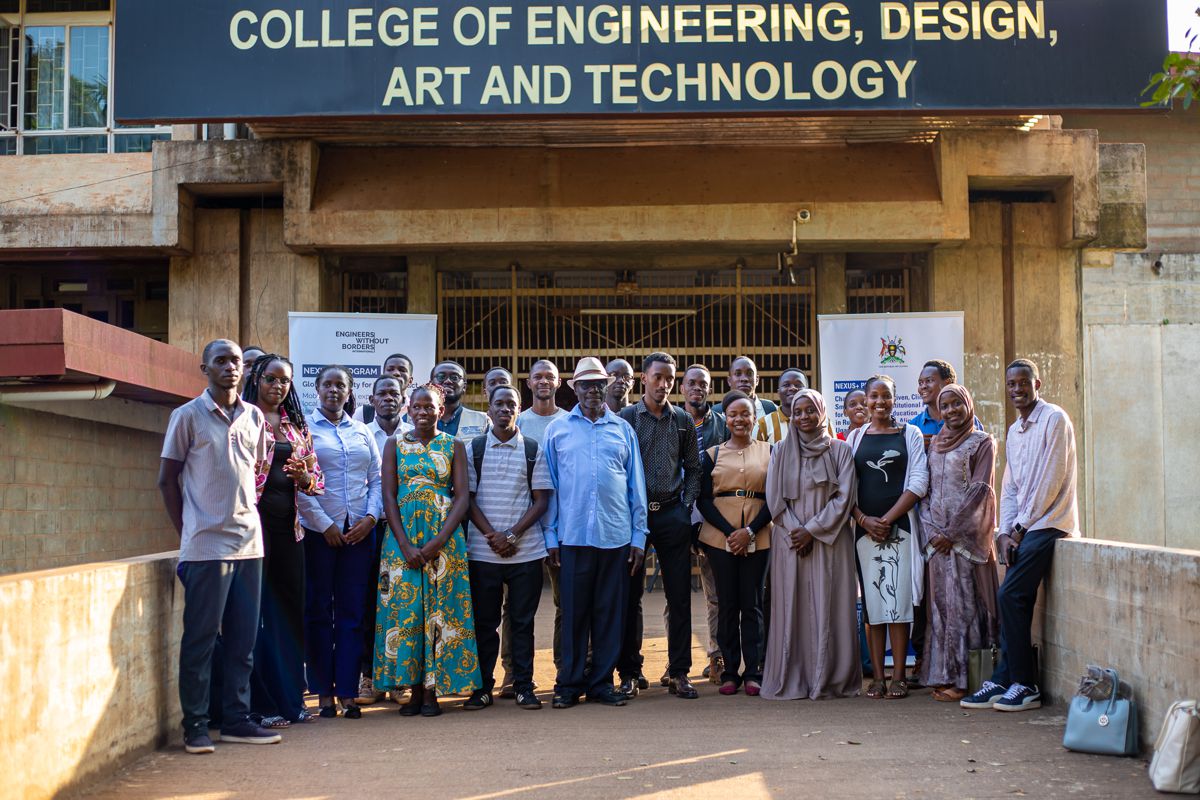
A Development Play That Doubles as Market Development
It would be naive to read this purely as philanthropy, and more useful to read it as both social investment and market development running on the same track. Trimble has supported Engineers Without Borders in the United States for years through technology donations to student chapters, disaster-relief and climate-resilience grants via the Trimble Foundation Fund, and STEM education work. Extending that support internationally puts the company’s positioning, modelling and analytics tools in front of new users, new authorities and new project types in a region where its long-term commercial footprint is still forming.
Sumele Adelana, product marketing leader for architecture and design at Trimble, framed the opening move plainly: “The critical infrastructure project in Eastern Uganda marks an ideal commencement for the expanded collaboration between Trimble and the Engineers Without Borders network,” noting that “By assisting local communities in developing engineering plans to secure funding, we can empower them to address their critical infrastructure needs both now and in the future.”
The trajectory since has reinforced that reading. In February 2026 Trimble announced a two-year sponsorship of the Engineering for People Design Challenge, led by Engineers Without Borders UK with Engineers Without Borders South Africa, a programme that in its most recent cycle reached tens of thousands of engineering students across several countries and, in the 2025/26 edition, focused on the Ladywood district of Birmingham.
The through-line connecting a Ugandan funding-access project and a UK-led student design challenge is a consistent strategy of embedding Trimble’s toolset and thinking into the earliest stages of the engineering pipeline, from students to district authorities. The stated goal of building a framework that can be replicated across other regions makes the intent explicit, and for competitors in the geospatial and construction-technology space it marks out emerging-market project preparation as contested ground rather than a philanthropic sideshow.
What Uganda Could Signal for Infrastructure Finance
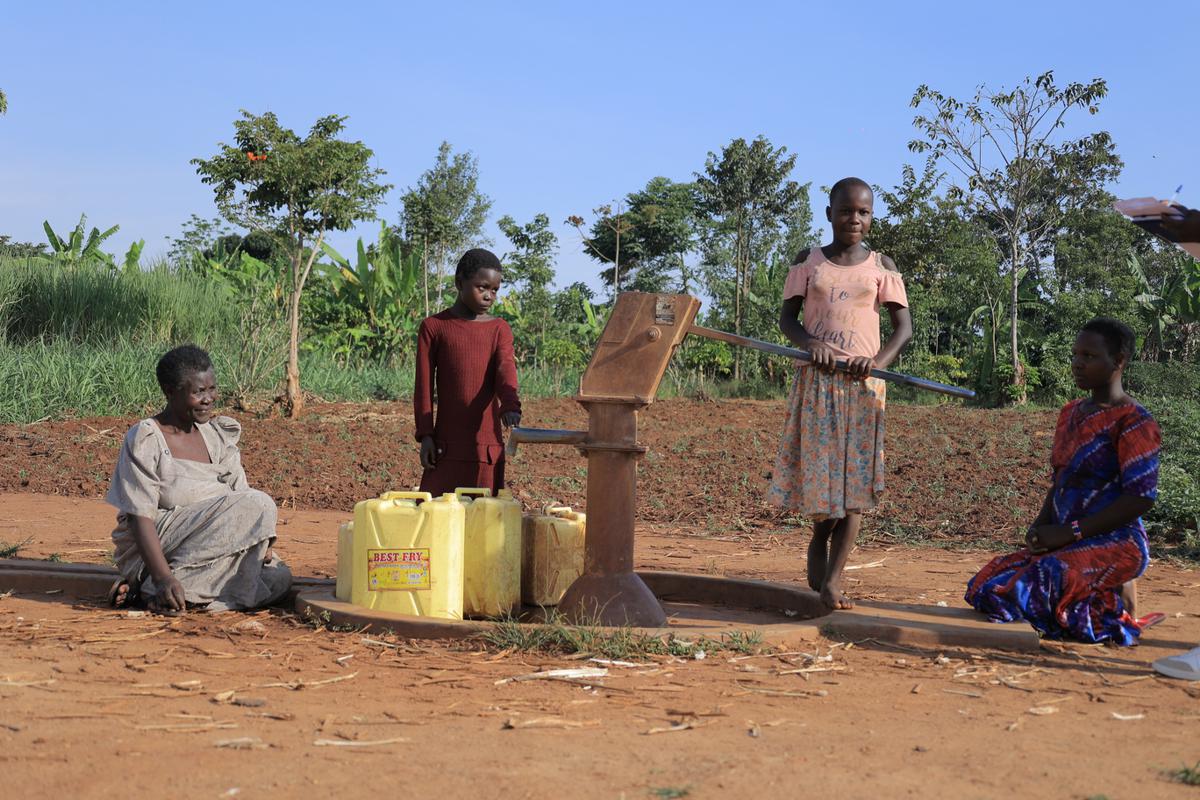
The most valuable outcome of the Eastern Uganda project may not be the water points, sanitation or school facilities it ultimately helps fund, important as those are to the communities involved. It may instead be a demonstrated, documented method for turning stranded public budgets into investable infrastructure through a disciplined chain of survey, data, feasibility and financial modelling.
If the eighteen-month programme produces master plans and financial models robust enough to attract commercial and public-private capital, it will have shown that the binding constraint on a large class of rural infrastructure was informational and technical rather than purely fiscal, and that the fix is comparatively cheap relative to the funds it unlocks.
For policymakers, that lesson points towards investing in project-preparation capacity as a precondition for spending, rather than assuming disbursement follows automatically from allocation. For investors and contractors, it suggests that the pipeline of bankable projects in frontier markets can be manufactured with the right upstream tools and partners, which changes the calculus on where and how early to engage.
The methodology still has to survive real conditions, from data quality to political continuity to the durability of local capacity once external teams withdraw, and those are the tests worth watching. What is already clear is that a positioning-and-modelling company, a global engineering charity and a set of Ugandan district authorities are attempting something more structurally interesting than a conventional donation, and the construction and infrastructure world has good reason to see whether the model holds.
Key Industry Questions
- Why can’t Ugandan district parishes access infrastructure funds that reportedly already exist? The obstacle is capacity rather than allocation. Under Uganda’s Parish Development Model, the parish is the lowest planning and budgeting unit, but many district administrations run with technical posts only partly filled and lack surveyors, planners and cost engineers. Without baseline survey data, feasibility studies and financial models, authorities cannot produce the documentation that releases funds or satisfies oversight requirements. The Trimble and EWB East Africa project targets exactly this gap, supplying the data foundation and engineering skills needed to convert budget lines into designed, costed and deliverable projects. In effect, the money is theoretically available but practically inaccessible until the technical evidence base that justifies spending it has been built.
- What is the commercial opportunity in a project preparation initiative like this? The opportunity lies in manufacturing bankable projects where none previously existed in a deliverable form. Development finance institutions have long flagged a shortage of well-prepared, investment-ready infrastructure projects in frontier markets. A repeatable workflow that moves a district from a notional budget to a costed master plan with supporting financial models creates a pipeline that contractors, equipment suppliers and public-private partnership investors can act on. For technology vendors, it establishes their tools and users at the earliest stage of that pipeline. For financiers, it lowers the cost and risk of originating rural infrastructure deals, potentially opening a project class that has historically been too small or too poorly documented to pursue.
- Which Trimble technologies are involved, and why does precise positioning matter here? The first phase uses Trimble positioning solutions, GIS software and drone support, combined with a structured population census. Precise, real-time GNSS positioning lets small field teams capture survey-grade spatial data quickly and consistently, which shortens the path from site assessment to design and reduces costly rework. Trimble’s own case studies document Engineers Without Borders teams using its GNSS receivers and correction services on water projects elsewhere, so the field template is proven. When accurate positioning is combined with drone mapping and demographic data, a district gains a reliable digital baseline of its infrastructure, which is the prerequisite for credible feasibility studies, cost estimation and any later digital twin or asset-management approach.
- How does baseline data actually unlock financing? Financing decisions rest on evidence. Investors, lenders and public-private partners need to know what infrastructure exists, its condition, the population it serves and the realistic cost and benefit of intervention. Baseline surveys and census data feed feasibility studies and technical audits, which support financial models and cost-benefit analysis, which in turn underpin the stakeholder presentations that attract capital. Each stage reduces uncertainty for the next party in the chain. A district that can present a data-backed master plan and a defensible financial model is a fundamentally different proposition to one holding only an aspiration, and that difference is what moves a project from unfundable to investable.
- Is this philanthropy or commercial market development for Trimble? It is reasonably read as both operating on the same track. Trimble has supported Engineers Without Borders philanthropically for years, and extending that internationally delivers genuine social benefit. At the same time it places the company’s positioning, modelling and analytics tools in front of new authorities, users and project types in a region where its long-term commercial footprint is still developing, and builds familiarity with its ecosystem among the next generation of engineers. The stated ambition to create a replicable framework, alongside a February 2026 UK student design challenge sponsorship, points to a consistent strategy of embedding the toolset early in the engineering pipeline. Social value and commercial positioning are aligned rather than in tension.
- Can this model be replicated elsewhere in Africa or beyond? Replication is an explicit goal, with the partners describing an intention to establish a framework applicable to other regions. The underlying constraint the project addresses, a shortage of the data and engineering capacity needed to prepare investable infrastructure, is common across many decentralised, resource-constrained systems, so the method has broad theoretical relevance. Whether it travels well depends on factors that will only emerge in practice, including local data quality, the stability of government engagement, the durability of skills once external teams withdraw, and the availability of investors willing to back the resulting pipeline. Uganda functions as the proving ground, and a documented success there would give the approach credibility to be adapted elsewhere.
- What happens to local technical capacity after the eighteen-month project ends? The structure is deliberately designed to leave capability behind. Training forty local youth enumerators to conduct the census seeds a local skills base rather than importing and then removing expertise. The emphasis on a local talent pipeline and continued government engagement signals an institutional legacy, with the intention that district authorities retain the ability to maintain and extend the data foundation. A Buildathon concentrates external expertise into practical knowledge transfer, and the Panelle working group broadens who holds technical authority. Sustained capacity is never guaranteed in donor-linked projects, so this will be a key measure of success, but the design clearly prioritises retention over dependency.
- How does this fit Trimble’s wider international strategy? The Uganda project sits within a broader pattern of Trimble embedding its technology and thinking at the early stages of engineering and infrastructure development in international markets. Its February 2026 sponsorship of the Engineering for People Design Challenge, led by Engineers Without Borders UK with EWB South Africa and focused in its current cycle on a district of Birmingham, reaches large numbers of engineering students and reinforces the same upstream positioning. Taken together with an existing geospatial footprint and the stated aim of building replicable frameworks, the initiatives suggest a company treating emerging-market and student-stage engagement as strategic ground. For competitors, it marks project preparation and engineering education as arenas of genuine competition rather than peripheral corporate responsibility.
Strategic Takeaways
- The binding constraint on a large class of rural infrastructure is informational and technical, not purely fiscal, and organisations that can build the data and engineering evidence base cheaply may unlock disproportionately large pools of previously inaccessible public funding.
- Survey, GIS and GNSS tools are being repositioned from instruments of on-site construction productivity to instruments of project finance, used to determine whether and how a project can be funded rather than only how efficiently it can be built.
- A documented, repeatable workflow for producing bankable projects addresses the long-standing shortage of investment-ready infrastructure in frontier markets, and could reshape how contractors, financiers and public-private partners originate rural deals.
- Durable local capacity, seeded through trained enumerators, knowledge-transfer events and inclusive working groups, will be the decisive test of whether this model produces lasting institutional change or a time-limited intervention.
- Technology vendors are increasingly treating emerging-market project preparation and engineering education as strategic, commercially relevant ground, so social-impact partnerships in this space should be assessed for their market-shaping intent as well as their development value.