MIDA Civils Deepens Kubota Commitment as Fleet Expands Beyond 100 Machines
When a contractor barely five years old commits to fifteen new excavators in a single order, the number itself is less telling than the reasoning behind it. Bedfordshire-based MIDA Civils has added fifteen Kubota compact machines to a fleet that now exceeds one hundred excavators, and the decision reveals a good deal about how a newer generation of groundworks specialists intends to grow.
Rather than leaning on hire desks to flex capacity, the company is buying, branding and running its own plant, tying equipment ownership directly to a self-delivery model that keeps labour and machinery under one operational roof. That approach runs against the grain of a UK market where rental has absorbed much of the demand for compact machines, and it places procurement decisions squarely at the centre of the firm’s commercial strategy.
The order carries relevance well beyond one contractor’s balance sheet because it illustrates a route to scale that many younger civils businesses are weighing carefully. Owning plant brings capital cost and maintenance responsibility, yet it also delivers a degree of control over availability, safety standards and on-site productivity that hired fleets cannot always guarantee.
For housebuilders and developers commissioning groundworks, a partner able to mobilise its own machines quickly is an attractive proposition, particularly where programmes are compressed and site access is restricted. Seen in that light, MIDA’s latest investment reads less as a routine equipment refresh and more as a statement of intent about how the company plans to compete across the East of England and the surrounding regions.
Briefing
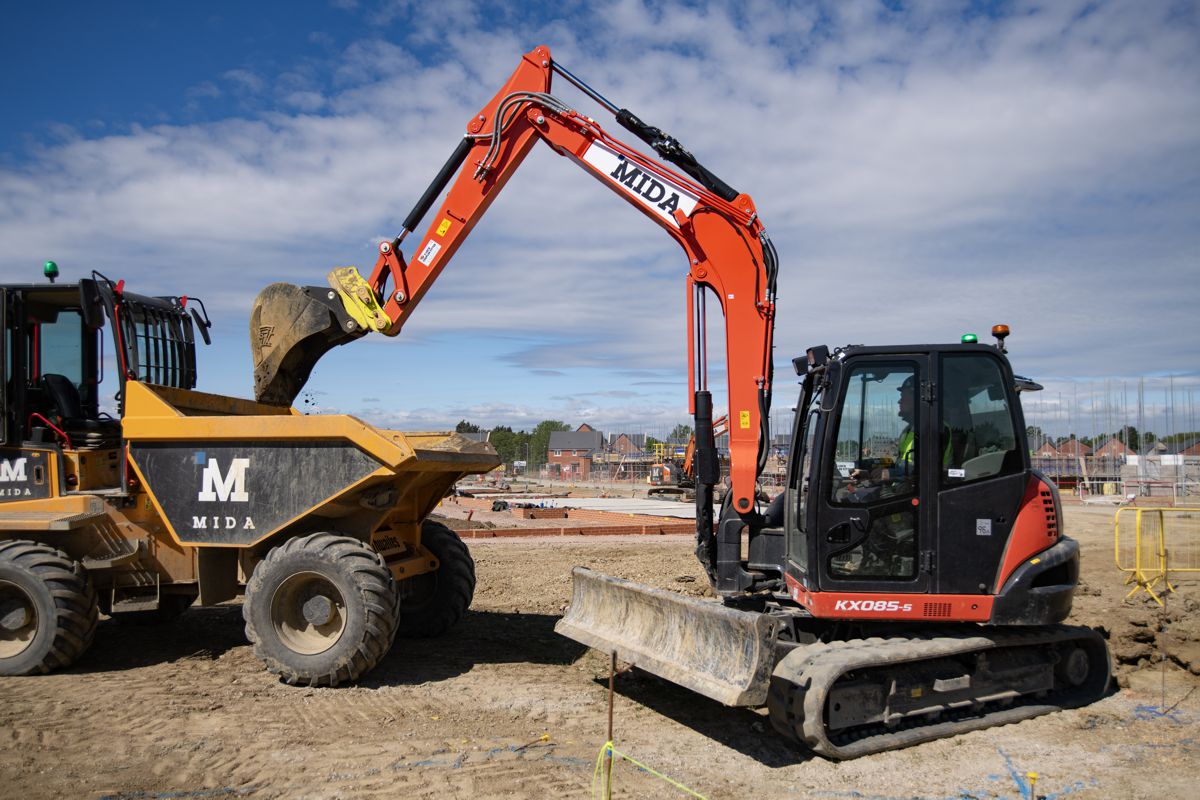
- MIDA Civils has taken delivery of fifteen new Kubota compact excavators, comprising ten 5-tonne U50-5 zero-tailswing machines and five 8.5-tonne KX085-5 midis, supplied and supported by authorised dealer Shellplant.
- The additions lift MIDA’s Kubota count to more than twenty-five machines within a total fleet exceeding one hundred excavators, spanning the 1 to 8.5-tonne range.
- Equipment is renewed on a four-year replacement cycle, with the plant fleet deployed solely on the company’s own projects under a self-delivery strategy.
- MIDA opened dedicated plant workshops in 2025 and now brings a growing share of maintenance in-house, while Shellplant continues to provide warranty cover and parts back-up.
- Procurement priorities cited by the company centre on reliability, operator familiarity, performance and residual value, reflecting a fleet run for productivity rather than short-term hire economics.
Fleet Ownership As A Growth Engine
The strategic heart of this story is not the machinery but the operating model it supports. Established in 2020 and now headquartered in Bedfordshire, MIDA has built its proposition around self-delivery, retaining a directly employed workforce alongside a wholly owned fleet of plant and heavy goods equipment. That structure allows the company to mobilise quickly onto sites, control the standard of both operators and machines, and avoid the availability gaps that can arise when demand for hired equipment peaks across the sector. For a business scaling fast within the residential, commercial and industrial markets, the ability to guarantee that the right machine and the right operator arrive together is a genuine commercial advantage rather than an operational nicety.
Bringing plant ownership in-house has been matched by a deliberate move to bring servicing in-house as well. The company established its own plant division and opened dedicated workshops in 2025, a step that reduces reliance on external maintenance and shortens the loop between a fault being reported and a machine returning to work.
Vicky Carr, Head of Plant and Procurement at MIDA, framed the relationship with the dealer in terms of that transition, noting that “Shellplant have always been a great support. We are bringing more and more of the work in-house, and they are supporting us in that process.” The comment captures a balance that many growing contractors are trying to strike, developing internal capability without severing the dealer support that underpins warranty cover, parts supply and technical back-up.
This model matters because it sits at odds with a broader industry drift towards rental for compact equipment. Analysts tracking the European mini-excavator sector have noted that hire fleets increasingly dominate the deployment of the smallest machines, while contractor ownership tends to anchor around standard sizes used on longer-cycle work. MIDA’s decision to own its compact fleet outright, and to run it exclusively on its own contracts, therefore represents a considered bet that control and utilisation will outweigh the flexibility of hire. For infrastructure clients, the practical consequence is a supply chain partner whose productivity is not hostage to third-party fleet availability.
Why Compact Excavators Anchor The Civils Fleet
Compact excavators have become one of the most heavily used equipment categories in UK groundworks, and MIDA’s purchasing pattern reflects why. The company’s works range from pre-construction services and enabling works through earthmoving, groundworks and finish landscaping, a spread of tasks that rewards machines able to move easily between operations and across confined plots. Operating as far north as Peterborough and Oakham, south into North London and west towards Oxford, the business depends on a fleet that can be transported readily and deployed flexibly, which is precisely the territory in which compact machines excel. Because the plant is used only on MIDA’s own projects, utilisation and productivity carry more weight in the buying decision than they might for a hire company chasing broad market appeal.
Procurement priorities at the company are notably pragmatic. Daniel Clorley, Finance Director, placed dependability at the top of the list, stating that “Reliability is key, first and foremost,” before adding that “Driver familiarity, strong performance and residual values are also important factors in our machine choice.” Those criteria explain the steady accumulation of Kubota machines within the fleet, since operator familiarity across a standardised range reduces training time and error, while strong residual values protect the capital tied up in plant across a four-year replacement cycle. Retained value is a particularly important consideration for an owner-operator, because a fleet that holds its worth lowers the effective cost of the renewal programme that keeps machines current and reliable.
The commercial logic extends to how the fleet is refreshed. A four-year cycle keeps the average age of machines low, which supports uptime, limits major repair exposure and ensures the business benefits from successive improvements in emissions performance and cab technology. The latest fifteen machines are intended primarily to support growth, though some existing units will be rotated out and replaced over the coming years as the cycle turns. That disciplined approach to renewal is one of the quieter markers of a maturing plant operation, distinguishing a strategically managed fleet from one that simply accumulates equipment as workload rises.
Inside The Machines
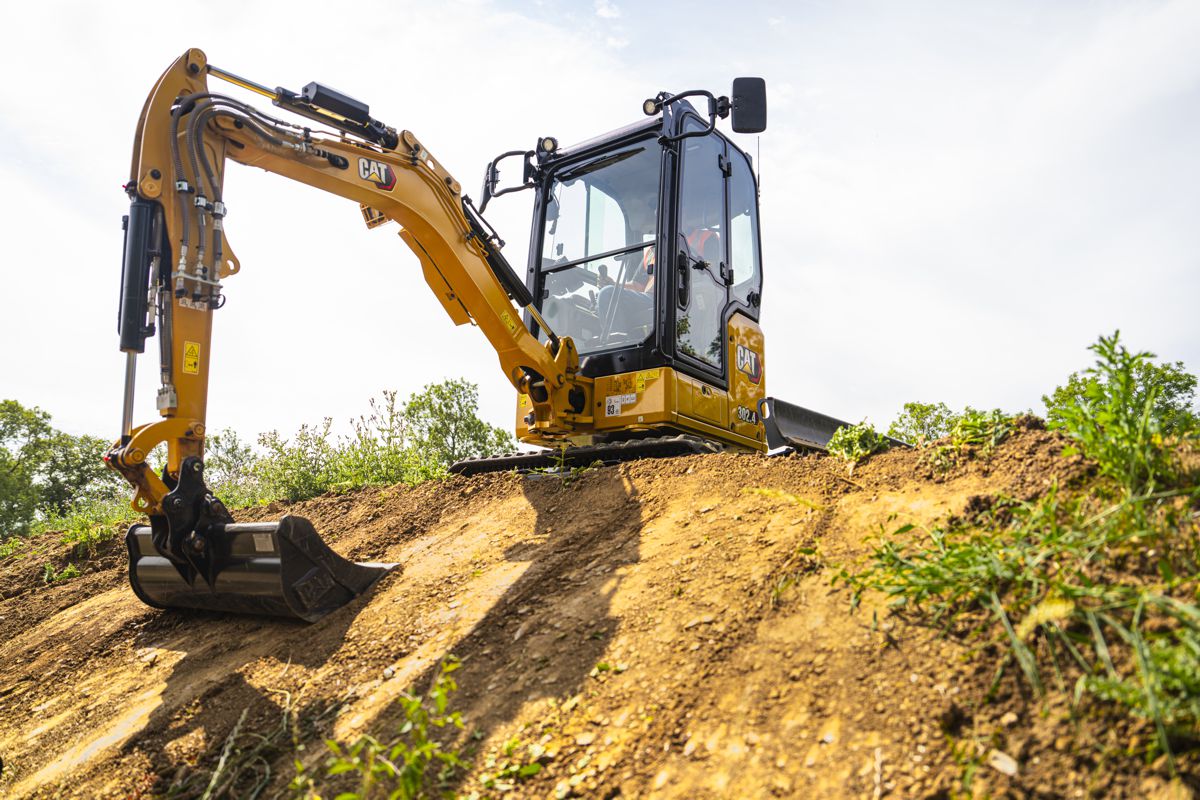
The two models chosen serve distinct roles within the same civils workflow. The 5-tonne U50-5 is built around a zero-tailswing design, meaning its upper structure does not overhang the tracks during rotation, a characteristic that pays off on the tight housebuilding plots and confined urban sites where much of MIDA’s work is carried out. It pairs compact overall dimensions with a Stage V compliant Kubota diesel engine, giving operators a manoeuvrable machine that still delivers meaningful digging and lifting capability. For a contractor working repeatedly in the housebuilding sector, where plots are increasingly dense and access is rarely generous, that combination of small footprint and useful power is central to keeping groundworks moving.
The larger 8.5-tonne KX085-5 sits at the top of MIDA’s Kubota range and handles heavier civils duties. It is powered by Kubota’s Stage V turbo-diesel V3307 engine, rated at around 66 horsepower, and offers an arm reach in excess of seven metres alongside digging depths approaching four and a half metres. A load-sensing two-pump hydraulic system supports smoother simultaneous movements and the operation of auxiliary attachments, while safety and comfort features such as anti-drop valves, a rear-view camera, roll-over and operator protection structures, and an anti-theft system are fitted as standard. Kubota markets the machine variously as an 8 and an 8.5-tonne class excavator depending on configuration, a distinction worth noting for anyone comparing specifications across suppliers.
For a fleet of this scale, the connectivity built into the newer machines is as commercially significant as the mechanical specification. Kubota fits its telematics system as standard on machines of five tonnes and above, allowing operators to monitor performance, plan maintenance and support security from a remote device. Across a fleet exceeding one hundred excavators spread over multiple live sites, that visibility feeds directly into the self-delivery model, helping the plant division schedule servicing, track utilisation and reduce the risk of unplanned downtime. Telematics and connected fleet management have moved from premium extras to standard purchasing criteria across the compact sector, and a contractor running its own machines at volume is precisely the kind of operator that stands to benefit most.
The Dealer Relationship That Underpins In-House Ambition
Every one of MIDA’s Kubota machines has been supplied and supported by Shellplant, the local authorised dealer, and the relationship has deepened as the contractor has grown. The current excavator order follows an earlier fleet expansion in which Shellplant supplied thirty-three Thwaites site dumpers, underlining a supply partnership that now spans more than one equipment category. Even as MIDA develops its own workshops and brings servicing in-house, the dealer continues to provide warranty support and parts back-up when required, an arrangement that lets the contractor build internal capability without carrying the full technical burden alone. That division of responsibility is a practical template for growing plant operations, combining the responsiveness of an in-house team with the depth of manufacturer-backed support.
From the supplier’s perspective, a customer moving work in-house is not a threat but a maturing account. Tom Hayward, Sales Manager at Shellplant, described the trajectory in personal terms, saying “I have enjoyed watching the growth of Mida Civils since the business started, with their ever-growing fleet of Kubota excavators and look forward to securing and supporting increasing Kubota business with them over the coming years.” The comment reflects a commercial reality in which dealers increasingly succeed by supporting a contractor’s whole lifecycle of ownership, from initial supply through parts, warranty and eventual renewal, rather than simply completing one-off sales. As MIDA’s four-year replacement cycle turns, that continuity of relationship becomes a recurring source of business for the dealer and a source of operational stability for the contractor.
Market Backdrop And Investment Signal
MIDA’s confidence sits within a compact-equipment market that remains structurally healthy despite recent cyclical wobbles. Research firm Arizton has valued the UK compact construction equipment sector at roughly 36,000 units in 2022, forecasting growth towards around 48,500 units by the end of the decade at a compound annual rate in the region of four per cent. Wider European estimates point in the same direction, with the mini-excavator market valued at several billion dollars and projected to expand steadily through the 2030s. Those figures should be read as indicative rather than precise, given differences in methodology and reporting dates across research houses, but the direction of travel is consistent and points to sustained demand for compact machines in dense, access-constrained construction.
Underlying that demand are forces that favour exactly the kind of investment MIDA has made. Urban densification and constrained plot sizes reward smaller, more manoeuvrable machines; persistent skills shortages make operator familiarity and intuitive controls commercially valuable; and tightening emissions rules under Stage V continue to push contractors towards newer, compliant equipment. A disciplined four-year renewal cycle keeps a fleet aligned with each of those pressures, ensuring machines remain efficient, compliant and attractive to operators. Against a backdrop in which parts of the UK equipment market saw softer sales through the middle of the decade, a growing contractor committing capital to owned plant is a constructive signal of confidence in the pipeline of residential and civils work ahead.
The wider implication is that ownership-led delivery models are proving viable for ambitious mid-tier contractors, not only for the largest tier-one firms. A business that can demonstrate a modern, well-maintained and well-utilised fleet, backed by in-house workshops and a dependable dealer relationship, presents a lower delivery risk to developers and a more resilient operation to lenders. That combination of factors is likely to matter increasingly as housebuilding activity recovers and as procurement teams place a premium on contractors able to guarantee mobilisation, safety performance and programme certainty.
What The Investment Signals For The Sector
The story of fifteen excavators is, in the end, a story about how growing contractors are choosing to build durable businesses. MIDA has opted to own rather than hire, to service in-house rather than outsource entirely, and to standardise on a machine range that its operators know and that holds its value, all while retaining a supportive dealer relationship for the tasks that benefit from manufacturer backing. Each of those choices reinforces the others, and together they describe a self-delivery model designed for control, reliability and steady expansion rather than short-term flexibility. For a company still in its first decade, that is a notably deliberate way to scale.
Whether the approach becomes more widespread will depend on how the wider market evolves, and in particular on the balance between the certainty of ownership and the flexibility of hire. What MIDA’s investment demonstrates is that a well-run ownership model can support rapid growth in the residential and civils sectors, provided procurement discipline, maintenance capability and supplier relationships are managed with equal care. As housebuilding demand firms and emissions requirements tighten, contractors that have invested early in modern, connected, owned fleets may find themselves better placed to win and deliver work. On the evidence of this order, MIDA intends to be among them.
Key Industry Questions
- Why would a growing contractor own its excavator fleet rather than hire? Ownership gives a contractor direct control over machine availability, condition and safety standards, which is difficult to guarantee through third-party hire when demand peaks. For a self-delivery business, that certainty translates into faster mobilisation and more predictable site productivity, both of which are attractive to housebuilders working to tight programmes. Ownership also builds an asset base and, where residual values hold up, keeps the effective cost of renewal manageable. The trade-off is the capital tied up in plant and the responsibility for maintenance, which is why in-house workshops and dealer support matter. For contractors with steady, self-generated workloads rather than sporadic project demand, the utilisation economics of ownership increasingly stack up.
- What makes zero-tailswing excavators suited to housebuilding sites? A zero-tailswing design means the machine’s counterweight and upper structure stay within the width of its tracks as it rotates, so the rear does not overhang into surrounding obstacles. On dense residential plots, where machines often work close to boundaries, foundations, scaffolding or other trades, that characteristic reduces the risk of strikes and allows productive work in confined spaces. It also lets an operator position the machine more freely without constantly repositioning to avoid the tail. For contractors building on increasingly compact urban plots, zero-tailswing models such as the 5-tonne class have become a natural fit, combining a small operating envelope with useful digging and lifting capability.
- How significant is the four-year replacement cycle? A disciplined replacement cycle keeps the average age of a fleet low, which supports uptime, limits exposure to major repairs and ensures machines benefit from successive improvements in emissions compliance, cab design and connectivity. It also protects residual value, since younger, well-maintained machines command stronger resale prices, lowering the net cost of each renewal. For an owner-operator, this turns fleet management into a rolling, predictable programme rather than a reactive scramble when machines fail. The cycle length is a strategic choice, balancing the cost of buying new against the rising maintenance and downtime risk of ageing equipment, and a four-year horizon is a common benchmark for intensively used compact plant.
- What role does telematics play in managing a large plant fleet? Telematics systems provide remote visibility of machine location, hours, performance and maintenance needs, which becomes increasingly valuable as a fleet grows and spreads across multiple sites. For a contractor running more than one hundred excavators, that data supports smarter servicing schedules, better utilisation tracking and improved security against theft. It also feeds predictive maintenance, helping a plant division act before a fault causes unplanned downtime. Because connectivity is now fitted as standard on many compact machines above five tonnes, contractors can build fleet-wide oversight without specifying costly extras, making telematics a practical tool for the self-delivery operating model rather than a premium indulgence.
- How does the UK compact excavator market look for the rest of the decade? Independent research points to steady structural growth, with the UK compact construction equipment market forecast to expand at a low single-digit annual rate towards the end of the decade, and the broader European mini-excavator market projected to grow through the 2030s. Demand is underpinned by urban densification, constrained site access and residential construction, all of which favour smaller, versatile machines. These forecasts vary between research houses and should be treated as indicative, but the consistent direction is upward. Cyclical softness in equipment sales during the middle of the decade reflects wider construction conditions rather than a structural decline in compact-machine demand, which remains resilient.
- What does Stage V compliance mean for contractors buying now? Stage V is the European emissions standard for non-road diesel engines, requiring substantial reductions in particulate matter and nitrogen oxides through technologies such as diesel particulate filters and common-rail systems. For contractors, buying Stage V compliant machines protects against regulatory risk and positions the fleet for tightening environmental expectations on site, including in noise and emission-sensitive residential areas. Compliance does add cost to powertrains, but a regular renewal cycle spreads that expense and keeps the fleet current. As clients and planning regimes place growing weight on the environmental performance of construction activity, a modern, compliant fleet is increasingly a competitive as well as a legal requirement.
- Why do dealer relationships still matter when a contractor services machines in-house? Even a capable in-house workshop benefits from manufacturer-backed warranty cover, genuine parts supply and technical expertise for more complex work. A strong dealer relationship lets a contractor build internal servicing capability progressively while retaining a safety net for warranty claims and specialist repairs. It also smooths the renewal process, since a dealer that understands a customer’s fleet and cycle can support timely replacement. For the dealer, supporting a contractor across the full ownership lifecycle generates recurring business more valuable than one-off sales. The result is a partnership in which in-house capability and external support complement rather than replace one another.
- What should developers take from a contractor investing in owned plant? A contractor investing in a modern, owned and well-maintained fleet signals delivery capacity and lower programme risk, both of which matter when commissioning groundworks on time-sensitive developments. Owned plant backed by in-house workshops reduces the chance of delays caused by hire availability, while a disciplined renewal cycle indicates a business managing its assets strategically rather than reactively. For developers, this points to a partner able to mobilise quickly, maintain consistent safety standards and sustain productivity across a programme. It is also a marker of financial commitment to the sector, suggesting a contractor confident enough in its pipeline to tie up capital in equipment for the long term.
Strategic Takeaways
- Ownership-led self-delivery is proving a viable growth model for ambitious mid-tier civils contractors, offering control over mobilisation, safety and productivity that hire fleets cannot always match, and developers are likely to reward that certainty in procurement decisions.
- Standardising on a familiar machine range with strong residual values lowers the effective cost of a disciplined renewal cycle, making procurement strategy a core commercial lever rather than a back-office function.
- Telematics fitted as standard on larger compact machines turns fleet-wide data into an operational advantage for owner-operators, supporting predictive maintenance, utilisation tracking and security at scale.
- Dealer relationships are evolving from transactional sales towards whole-lifecycle support, and contractors building in-house capability still gain from manufacturer-backed warranty, parts and technical depth.
- Sustained structural demand for compact excavators, combined with tightening Stage V requirements, favours contractors that invest early in modern, connected and compliant owned fleets as housebuilding activity recovers.