Worldsensing’s G7 Digital Logger and the Quiet Rewiring of Infrastructure Monitoring
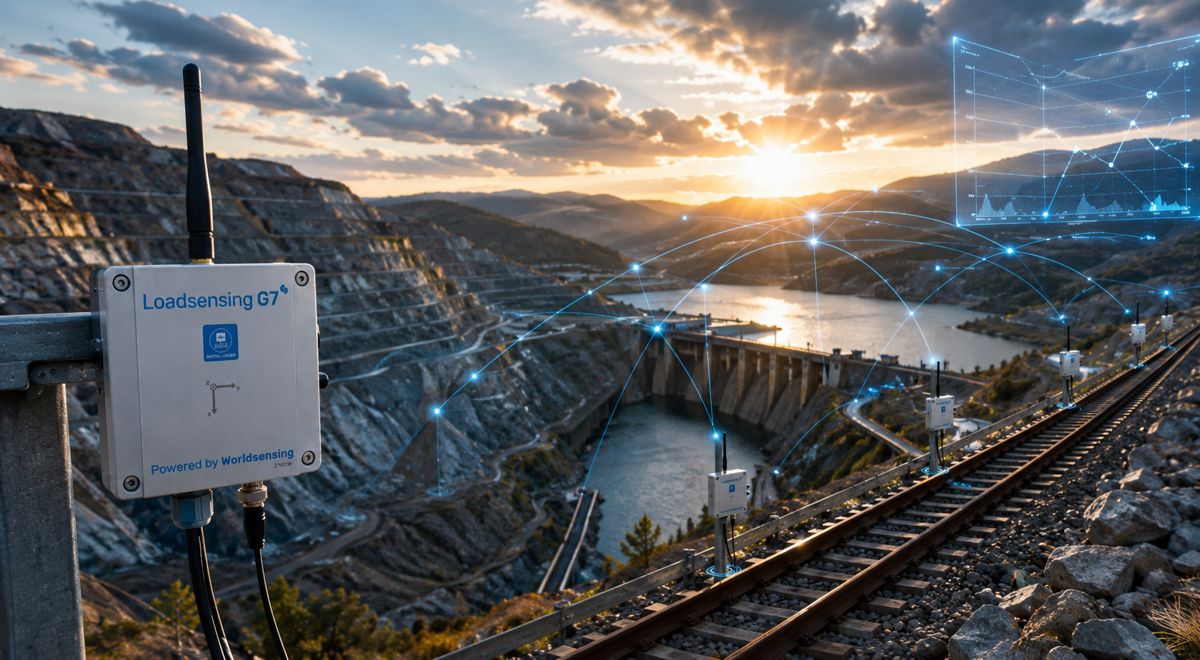
The most commercially significant thing about the Loadsensing G7 Digital Data Logger is not its specification sheet. It is what the device says about where value is moving in infrastructure monitoring. The market is shifting away from standalone instruments that record numbers for someone to collect later, and towards edge-intelligent field devices that decide what matters, act on it locally, and feed clean, continuous data into digital twin and asset-management platforms. Worldsensing has built its business on that transition, and the G7 is the clearest signal yet of where the Barcelona firm intends to sit in the value chain.
That position matters because monitoring itself is changing character. For decades, geotechnical and structural instrumentation was treated as a discretionary cost, deployed heavily on marquee projects and thinly everywhere else. Regulation, liability and the economics of ageing assets are steadily removing that discretion. The Global Industry Standard on Tailings Management has set hard conformance deadlines for mine operators, insurers are pricing structural risk more aggressively, and owners of bridges, tunnels and dams are being pushed towards continuous, auditable surveillance rather than periodic visual inspection.
In that context a low-power logger with a decade of battery life and on-board decision-making is not a niche upgrade. It is infrastructure for the compliance economy that is now forming around critical assets.
Worldsensing’s relevance rests on a second point that the launch reinforces rather than states outright. The company is already the preferred sensor connectivity partner for Bentley Systems’ iTwin IoT digital twin services, and it acquired the sensemetrics Thread connectivity business from Bentley in 2023 as part of a strategic agreement that also saw Bentley lead its Series D round. The G7 Digital Logger extends the field layer of that arrangement. Every device that captures cleaner, event-triggered data at the edge makes the platform above it more valuable, and the platform is where the recurring revenue and the customer lock-in increasingly live.
Briefing
- The Loadsensing G7 Digital Data Logger (model LSG7DIG-1XLO) is a rugged, low-power LoRa logger built for digital sensors across industrial, structural, geotechnical and environmental monitoring, with a stated battery life of more than ten years on user-replaceable D-cells.
- Its commercial importance lies less in the hardware than in its role as a field-layer feeder for digital twin platforms, following Worldsensing’s 2023 acquisition of the sensemetrics Thread business from Bentley Systems and its status as Bentley iTwin IoT’s preferred connectivity partner.
- Edge intelligence is the differentiator: an Advanced Operational Mode processes data locally, while a Triggered Measurements Mode uses a built-in three-axis accelerometer to fire sensor readings only when movement thresholds are breached, cutting transmission overhead and extending deployment life.
- Regulatory pressure is the demand engine, with the Global Industry Standard on Tailings Management pushing mine operators towards continuous, auditable monitoring and a broad conformance milestone reached in August 2025.
- The device ships with SDI-12 first on a dual-protocol digital port, with RS-485 to follow, alongside pulse counter and Time Domain Reflectometry interfaces, and carries certifications across North America, Europe, the Middle East, Latin America and the Asia-Pacific region.
Why Autonomous Monitoring Has Stopped Being Optional
The clearest driver behind devices such as the G7 is regulatory, and it is concentrated in mining. Following the collapse of Vale’s tailings dam at Brumadinho in January 2019, the International Council on Mining and Metals, the United Nations Environment Programme and the Principles for Responsible Investment developed the Global Industry Standard on Tailings Management, a framework of fifteen principles and seventy-seven auditable requirements covering the full lifecycle of a tailings facility.
Operators committed to bringing their highest-consequence facilities into conformance by August 2023 and the remainder by August 2025, and the newly established Global Tailings Management Institute is building the independent audit and certification machinery that will hold them to it. Conformance is not a paperwork exercise. It requires demonstrable, continuous monitoring of ground movement, pore pressure and structural behaviour, and it requires the data to be defensible under third-party scrutiny.
That regulatory architecture converts monitoring from a judgement call into a standing obligation, and it does so precisely in the remote, hazardous settings where manual data collection is most expensive and most dangerous. A tailings dam in a mountain valley cannot be visited daily, and a slope that fails does so faster than a monthly inspection cycle can catch.
The commercial consequence is a structural rise in demand for wireless devices that can be left in the field for years, that raise the alarm autonomously when conditions change, and that produce an unbroken data record. The G7’s Triggered Measurements Mode, which uses an on-board three-axis accelerometer to launch primary sensor readings when user-defined movement thresholds are exceeded, maps directly onto that requirement. The same logic extends beyond mining to ageing transport structures and water assets, where owners face parallel pressure to move from inspection to instrumentation.
The Economics of the Edge
Edge intelligence is often described in technical terms, but its significance is financial. When a logger processes data locally and transmits only what matters, it does three commercially useful things at once. It shrinks the volume of data moving across constrained low-power radio links, it stretches battery life by keeping the radio quiet, and it reduces the number of physical visits an asset owner must fund over a deployment’s lifetime.
Worldsensing quotes a battery life of more than ten years on user-replaceable 3.6-volt D-cells for the G7, and in remote monitoring that figure is not a vanity metric. Every avoided site visit to a landslide-prone slope or an underground excavation removes cost, carbon and human exposure from the operating budget, and a decade of unattended service changes the whole-life economics of a monitoring programme.
Francesc Agüera, Product Director at Worldsensing, framed the device in exactly these terms, saying: “The launch of the Loadsensing G7 Digital Logger represents a major leap forward in edge-intelligence for critical infrastructure monitoring. By integrating advanced operational modes, seamless SDI-12 digital sensor connectivity, built-in TDR technology, and environmental self-diagnostics into a single, low-power device, we are empowering engineering teams to transition from static data collection to truly autonomous, event-driven monitoring strategies.”
The strategic word in that description is autonomous. A logger that only records data leaves the intelligence, and the cost, downstream. A logger that reacts locally moves decision-making to the point of measurement, which is what makes continuous monitoring viable across thousands of points rather than dozens. Self-diagnostics reinforce the same economics, with an integrated barometer and temperature and humidity sensors tracking enclosure sealing integrity so that a failing device flags itself before its data quietly degrades.
From Field Sensor to the Digital Twin Stack
The deeper commercial story sits above the hardware. Worldsensing reports networks connecting more than 250,000 sensors worldwide, and that installed base is only as valuable as the platforms it feeds. The company’s 2023 agreement with Bentley Systems, under which it acquired the sensemetrics Thread connectivity business and became the lead-funded partner for Bentley’s iTwin IoT digital twin cloud services, positioned it as a reference connectivity layer for mining, construction, rail and structural monitoring.
Bentley’s iTwin Ventures and Cisco sit among its investors, which tells its own story about who expects the field-to-cloud pipeline to matter. The G7 Digital Logger strengthens the bottom of that stack, and a stronger field layer makes the software above it stickier.
This is where purchasing power is quietly concentrating. Asset owners are no longer buying instruments in isolation; they are buying monitoring outcomes delivered through a platform that ingests sensor data, models the asset and raises alerts. In that arrangement the logger becomes the razor and the platform becomes the blade, with the recurring value attaching to the software, the analytics and the compliance reporting rather than the box in the field.
Worldsensing’s advantage is that it owns credible hardware and a credible seat at the platform table simultaneously, an unusual combination in a market where many hardware makers are being commoditised beneath other companies’ software. For infrastructure owners, the practical implication is that hardware choices increasingly carry platform consequences, and a logger’s data model and interoperability now matter as much as its accuracy.
One Device, Many Markets, Fewer Part Numbers
The G7’s interface strategy is a deliberate answer to a procurement problem. The device’s dual-protocol digital port ships with the industry-standard SDI-12 interface first, allowing chains of digital sensors to be connected on a single logger, with RS-485 support to follow in a later phase. Alongside that sit a pulse counter and a built-in Time Domain Reflectometer, the latter capable of locating cable faults and detecting soil fractures or ground movement without a separate instrument.
For a contractor or asset owner, consolidating those functions into one certified, ruggedised unit reduces the sprawl of part numbers, spares and training that quietly inflates the cost of a monitoring estate. Standardising on SDI-12 also protects buyers from single-vendor lock-in at the sensor level, because it lets them source compliant instruments from multiple manufacturers.
That versatility maps onto genuinely different end markets that share a common need for reliable, long-term data. In geotechnical work the device targets lateral ground movement on tailings dams, landslides, slope stability and tunnel excavation. In structural health monitoring it addresses loads in rock bolts and ground anchors. In water management it supports high-precision level, quality, flow and pressure measurement.
An IP68-rated aluminium alloy housing rated from minus forty to eighty degrees Celsius makes those deployments credible in the field rather than the datasheet, and the breadth of certification, spanning FCC and ISED in North America, CE and UKCA across Europe and the Middle East, ANATEL, MTC and SUBTEL in Latin America, and ACMA across the Asia-Pacific region, is what allows a single product to be sold into a company that operates in more than seventy countries. In a market where regulatory approval is a real barrier to entry, that certification footprint is a commercial asset in its own right.
A Fragmented Market Consolidating Around Data
The competitive backdrop explains why Worldsensing is pushing so hard on the field-to-platform proposition. Independent analysts value the geotechnical instrumentation and monitoring market at roughly USD 4.8 billion in 2025, with most forecasts pointing to high single-digit or low double-digit annual growth and a doubling of the market within a decade, driven by infrastructure investment, urbanisation and tighter safety regulation.
Yet the supply side remains fragmented. Analysis of the adjacent structural health monitoring segment suggests the top ten players accounted for only around a quarter of revenue in 2024, leaving a long tail of specialist instrument makers. Established names such as Nova Metrix, which owns Geokon and Soil Instruments, along with Fugro, Keller, Trimble and Campbell Scientific, compete across overlapping niches, and consolidation is now a defining strategic theme.
The direction of that consolidation favours whoever controls the data layer. Hexagon’s move to integrate Geokon sensor technology into its monitoring solutions, and the broader push by software and positioning firms into geotechnical data, both point the same way: hardware is being pulled towards platforms rather than the reverse.
Worldsensing’s response is to make its own hardware more intelligent while keeping it interoperable and platform-connected, so that its devices remain the natural choice for owners building monitoring programmes on top of digital twins. For buyers, the lesson is that the monitoring market is quietly reorganising around data ownership and interoperability, and that hardware purchases made today will shape which analytics and compliance ecosystems they can plug into tomorrow.
What Infrastructure Owners Should Take From This
Read narrowly, the G7 Digital Logger is a capable field device with long battery life and useful edge features. Read in context, it is a marker of three converging shifts that infrastructure owners, investors and policymakers should be tracking. Monitoring is becoming a regulated obligation rather than a discretionary spend, edge intelligence is making continuous surveillance affordable at scale, and commercial value is migrating from instruments to the platforms they feed. Each shift reinforces the others, and together they favour vendors that can operate credibly at both the hardware and software ends of the chain.
The practical takeaway for anyone specifying or funding infrastructure monitoring is that procurement decisions now carry longer commercial tails than they used to. A logger chosen for a tailings dam, a metro tunnel or a reservoir is not just a data-collection choice; it is a bet on a data model, an interoperability standard and, increasingly, a platform relationship that will shape compliance reporting and asset intelligence for a decade.
Devices that lower the whole-life cost of continuous monitoring, that keep buyers free of sensor-level lock-in, and that sit inside a strong field-to-cloud stack are the ones most likely to reward that bet. Worldsensing has built the G7 to be exactly that kind of device, and the wider industry would do well to judge competing products by the same criteria.
Key Industry Questions
- Why is continuous geotechnical monitoring becoming mandatory rather than optional? The strongest driver is the Global Industry Standard on Tailings Management, developed after the 2019 Brumadinho dam collapse by the ICMM, UNEP and the Principles for Responsible Investment. Its seventy-seven auditable requirements push mine operators towards demonstrable, continuous monitoring of ground movement and structural behaviour, with a broad conformance milestone reached in August 2025 and an independent institute now building the certification framework. Beyond mining, insurers and infrastructure owners are applying parallel pressure to ageing bridges, tunnels and dams. The combined effect is to convert monitoring from a project-by-project judgement into a standing, auditable obligation, which in turn creates structural demand for autonomous devices that can operate unattended for years and produce a defensible data record.
- What does edge intelligence actually change for monitoring economics? Processing data at the device rather than in the cloud changes the cost structure of a monitoring programme in three ways. It reduces the volume of data crossing constrained low-power radio links, it extends battery life by keeping the radio idle until something meaningful happens, and it cuts the number of funded site visits over a deployment’s life. For remote or hazardous assets, where a single truck roll can be expensive and dangerous, those savings compound quickly. Event-triggered measurement, where a device wakes and records only when movement thresholds are breached, also improves the signal-to-noise ratio of the data itself, which matters when that data must later survive regulatory or insurance scrutiny.
- How does a device like the G7 fit with digital twin platforms? It functions as the field layer that feeds them. Worldsensing is the preferred sensor connectivity partner for Bentley Systems’ iTwin IoT digital twin services, having acquired the sensemetrics Thread connectivity business from Bentley in 2023, and its loggers stream data into that platform environment for modelling, visualisation and alerting. The commercial significance is that value is increasingly attaching to the platform, the analytics and the compliance reporting rather than to the sensor hardware alone. A cleaner, more reliable field device therefore raises the value of the software above it, which is why field-layer improvements and platform strategy are now tightly linked.
- What is the commercial advantage of SDI-12 and multi-interface support? SDI-12 is an established digital sensor standard, and building a logger around it lets buyers connect chains of compliant sensors from multiple manufacturers rather than being locked into a single vendor’s instruments. Combining that with a pulse counter and a built-in Time Domain Reflectometer in one certified unit consolidates functions that once required several separate devices. For asset owners, the effect is fewer part numbers, fewer spares, less training and lower integration risk across a large monitoring estate. Interoperability at the sensor level also preserves negotiating power, because it keeps the choice of instruments open even after the logging infrastructure is committed.
- Which markets are driving demand for autonomous monitoring? Mining is the sharpest, because tailings regulation now effectively requires continuous surveillance of dams, slopes and excavations. Transport infrastructure is a second major market, as owners of ageing bridges, tunnels and rail structures move from periodic visual inspection towards instrumentation. Water management is a third, covering level, quality, flow and pressure monitoring across reservoirs and networks. These markets differ in engineering detail but share a common commercial need for devices that survive harsh conditions, run for years without intervention and raise alerts autonomously, which is why a single versatile logger platform can address all of them.
- How does a ten-year battery life change procurement decisions? It shifts the buying conversation from unit price towards total cost of ownership. A logger that runs for more than a decade on user-replaceable cells removes recurring maintenance visits, reduces logistics in remote locations and lowers the lifetime carbon and safety burden of a monitoring programme. For a large estate, those avoided interventions can dwarf the original hardware cost. Long service life also supports the continuous, uninterrupted data records that regulation increasingly demands, because it reduces the gaps and handovers that occur when devices are frequently serviced or replaced. Procurement teams that evaluate only headline price will consistently misjudge the real economics of field monitoring.
- What does market consolidation mean for buyers of monitoring hardware? The geotechnical monitoring market remains fragmented, but it is consolidating around control of the data layer, with hardware increasingly pulled towards software platforms rather than sold in isolation. For buyers, that means a hardware decision now carries platform consequences, because it influences which analytics, digital twin and compliance ecosystems the data can feed. The safest position is to favour devices built on open standards and strong interoperability, which preserve flexibility as the vendor landscape shifts through mergers and partnerships. Committing to closed hardware that only speaks to one proprietary platform raises the risk of being stranded if that platform loses momentum or changes ownership.
- Does event-triggered monitoring risk missing important changes? Handled correctly, it does the opposite. A device such as the G7 combines routine scheduled measurement with a triggered mode that fires additional readings when an on-board accelerometer detects movement beyond user-defined thresholds. That means the system captures gradual trends through regular sampling while also responding immediately to sudden events, rather than relying on a fixed interval that might fall between two readings. The engineering task is setting thresholds appropriately for each asset, which is a configuration discipline rather than a limitation of the approach. Combined with self-diagnostics that flag a failing enclosure or sensor, the result is generally more responsive and more trustworthy than fixed-interval logging.
Strategic Takeaways
- Regulation, not novelty, is the demand engine for autonomous monitoring, and the tailings standard has turned continuous, auditable surveillance into a baseline obligation that will keep pulling investment into wireless field instrumentation.
- Commercial value in infrastructure monitoring is migrating from instruments to the platforms they feed, so hardware choices increasingly lock buyers into data models, interoperability standards and software ecosystems for the life of an asset.
- Edge intelligence should be assessed as an economic feature, not a technical one, because local processing and event-triggered measurement are what make continuous monitoring affordable across thousands of points rather than a handful.
- Interoperability is becoming a procurement safeguard, and standards-based devices that avoid sensor-level lock-in protect buyers as the fragmented monitoring market consolidates around whoever controls the data.
- Total cost of ownership, driven by battery life and avoided site visits, is the metric that should govern monitoring procurement, and decisions made on headline hardware price will consistently misprice the real lifetime economics.