Making Existing Diesel Trucks Compatible with Electric Highways
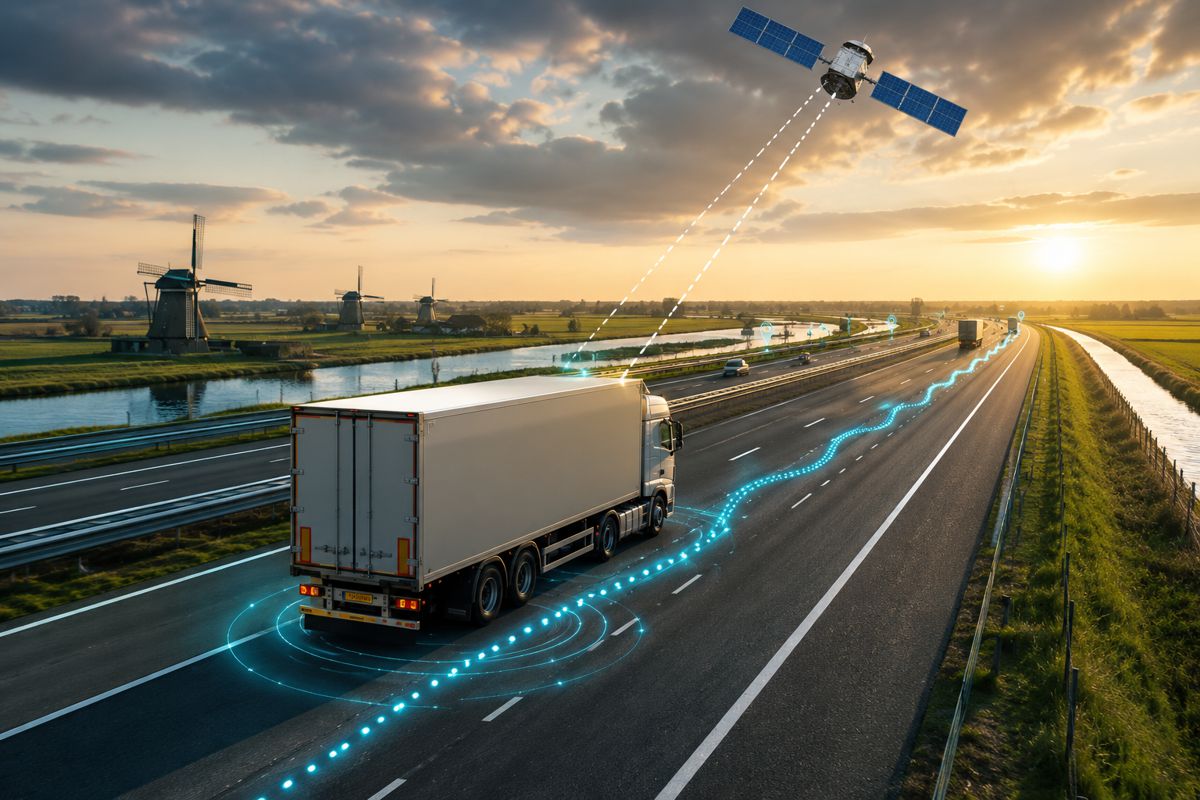
Europe has spent years proving that heavy trucks can draw power from overhead lines while travelling at motorway speeds. Germany’s ELISA field trial ran from 2019 until the end of 2024, putting specially equipped trucks into real traffic and recording more than 146,000 kilometres under catenary power. Infrastructure availability reached as high as 98%, while researchers concluded that the system could be integrated into a motorway without substantial interference with either traffic or the road surface.
The harder problem has always been what comes afterwards. Building hundreds or thousands of kilometres of overhead infrastructure makes little commercial sense if relatively few trucks can use it, while buying specialised pantograph-equipped vehicles is difficult to justify when only isolated sections of motorway are electrified. Germany’s technically successful trials consequently ended without triggering the national rollout once envisaged for the technology, while Sweden’s planned E20 electric road between Hallsberg and Örebro was ultimately abandoned after procurement was cancelled amid rising costs and insufficient funding.
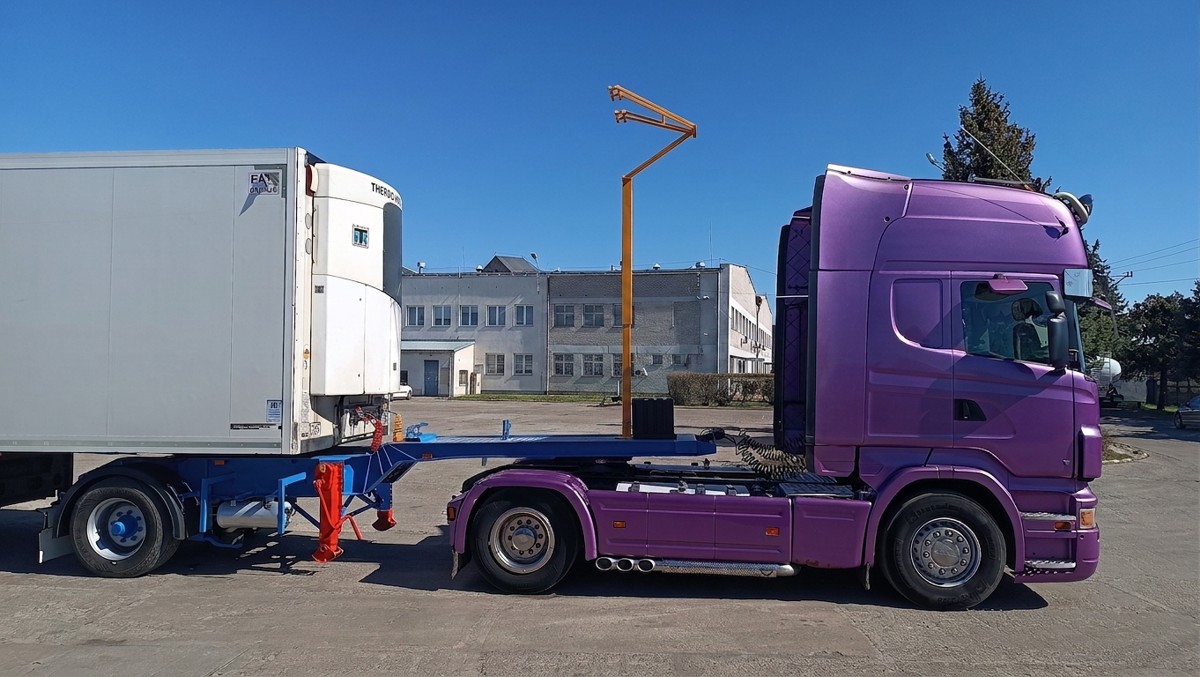
Polish inventor Łukasz Wantuch believes that problem might be approached from the vehicle rather than the motorway. His Hybrid Connector is an additional electrically powered module designed to sit between an ordinary tractor unit and an ordinary semi-trailer. Equipped with its own driven axle and pantograph, it would collect electricity from an overhead road system and use its electric motor to push the complete articulated combination along the electrified section. Neither tractor nor trailer would require permanent conversion.
That apparently simple distinction gives the proposal a more interesting role than another experimental electric truck. If the engineering can be made to work reliably, safely and legally, the Connector could allow existing diesel trucks to become temporary users of an Electric Road System, potentially changing the economics of how an ERS network is introduced.
Briefing
- The Hybrid Connector sits between a conventional tractor unit and semi-trailer and requires no permanent modification to either vehicle.
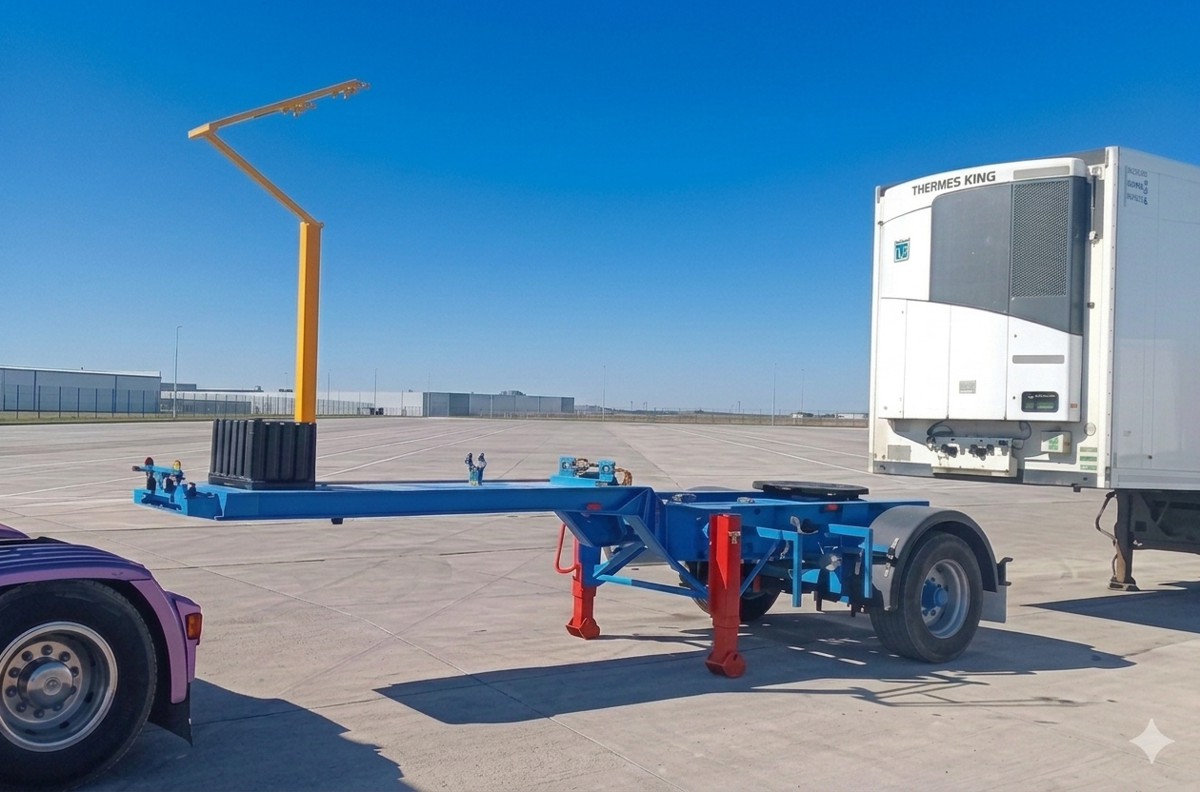
- A full-scale steel demonstrator has already been constructed, although it does not yet contain the final electric drive, electronics or working pantograph.
- The proposed concept combines a driven axle, electric motor, pantograph, controls and a small auxiliary battery.
- A functional prototype and controlled road test are the next stages, with later development targeting approximately 80 to 90 km/h.
- Motorway electrification could initially concentrate on heavily trafficked freight corridors rather than requiring a continuous network from the outset.
Putting the Electric Motor Behind the Tractor
The mechanical principle is straightforward. A conventional articulated truck reaches an interchange or designated connection point, the tractor is separated from its trailer, the Hybrid Connector is inserted between them and the combination continues its journey.
The current concept uses a steel frame carrying an axle, electric drive and pantograph. Wantuch’s development document envisages an electric motor of around 100 kW, although that remains a design assumption rather than a validated production specification. A small battery is proposed to provide approximately one kilometre of independent operation when the pantograph has to be lowered, including during lane changes or beneath infrastructure where overhead collection is unavailable.
The motor is intended primarily to maintain the speed of a moving combination on suitable motorway sections rather than reproduce the full performance of the tractor’s diesel engine. The conventional powertrain would remain available when additional power is required or the truck leaves the electrified road, making the Connector closer in principle to an electrically powered trailer axle than to an electric tractor.
Wantuch has already built a full-scale demonstrator weighing approximately three tonnes. It has the physical frame and running gear necessary to illustrate the arrangement but does not yet contain the electric motor, power electronics and working current collection system required to demonstrate the central proposition.
The next stage is therefore considerably more important than the demonstrator itself: a functional prototype capable of propelling a tractor-Connector-trailer combination. A first test is envisaged on a closed section beneath existing overhead electrical infrastructure, initially with a conventional tractor and unloaded semi-trailer. Later development would target normal motorway operating speeds of around 80 to 90 km/h.
The Existing Truck Fleet
Electric Road Systems have traditionally required infrastructure and vehicle to develop together. Overhead catenary systems need trucks fitted with current collectors and appropriate electric drivetrains, while conductive or inductive road systems similarly require compatible equipment on the vehicle.
Hybrid Connector separates those investments. Instead of converting the tractor, the electrical equipment becomes an interchangeable piece of transport equipment. In principle, a fleet operator could continue using conventional tractors for local collection, urban operation and unelectrified routes, attaching a Connector only when a journey uses an electrified motorway.
Wantuch’s development document envisages both fleet-owned Connectors and a rental model. Large logistics companies operating predictable corridors could keep their own units, while smaller hauliers could collect and return Connectors at what he calls Electromobility Points. His demonstrator connection trials have reportedly achieved attachment and removal in less than three minutes, although this has not yet been demonstrated with a complete powered prototype in operational freight service.
A relatively small population of Connectors could potentially serve a much larger population of tractor units, particularly on predictable high-mileage corridors where utilisation could be kept high. Ownership might also sit with logistics operators, infrastructure concessionaires, leasing businesses or specialist equipment providers rather than individual hauliers.
Whether those economics work will depend on utilisation, electricity prices, maintenance, infrastructure access charges, coupling time, additional weight and the eventual cost of production equipment. Wantuch currently estimates that mass-produced Connectors might cost tens of thousands of euros rather than the hundreds of thousands required for a new electric tractor, but no production prototype or independently validated manufacturing cost yet exists.
The additional weight also deserves attention. An extra axle distributes the Connector’s load through the combination, but it does not remove the commercial penalty of carrying approximately three tonnes of additional tare on payload-limited work. For bulk, tanker and other weight-sensitive freight operations, that could materially affect the economics.
Lessons from Germany’s eHighway Trials
Germany’s motorway experiments suggest that the central challenge facing overhead ERS is no longer simply whether the technology functions.
The country operated public-road trials in Hesse, Schleswig-Holstein and Baden-Württemberg. The A5 ELISA installation achieved infrastructure availability of up to 98%, while equipped trucks accumulated more than 146,000 kilometres using overhead electricity. Schleswig-Holstein’s A1 trial similarly operated in normal motorway traffic before concluding at the end of 2024.
Researchers and project managers found no fundamental technical obstacle preventing wider deployment. What did not follow was the political and commercial commitment required to build the network.
Sweden provides another example. Its proposed permanent E20 Electric Road System moved towards procurement before higher costs and inadequate funding halted the programme. In February 2025, the project was removed from Sweden’s national transport infrastructure plan.
The gap is therefore between demonstrating an electric road and assembling enough compatible vehicles to justify extending it. Hybrid Connector is an attempt to reduce that dependency by bringing existing trucks into the system without waiting for fleet replacement.
Building the Network in Pieces
Because the conventional tractor remains part of the combination, an electrified road would not necessarily have to extend for the entire journey.
A truck could run conventionally from its depot to the motorway, collect a Connector, travel electrically across an equipped section and return to diesel propulsion beyond it. Electrification could initially concentrate on motorway sections where truck volumes and utilisation offer the strongest economic case.
The approach sacrifices the zero-emission purity of a fully electric journey in favour of potentially displacing diesel consumption across the busiest parts of the network much sooner.
A corridor could, for example, be selected around concentrated freight movements between ports, logistics parks, distribution centres and industrial areas. Connectors could be deployed alongside the infrastructure without requiring participating haulage companies to replace their tractor fleets. Further sections could then be added as traffic and utilisation justified the investment.
This would sit alongside rather than necessarily compete with Europe’s rapidly developing battery-electric truck infrastructure. The EU’s Alternative Fuels Infrastructure Regulation already requires increasingly extensive heavy-duty charging provision along the TEN-T network, meaning Electric Road Systems must demonstrate an economic advantage alongside a charging network that is itself receiving substantial investment.
The Connector presents a different proposition because its potential market includes vehicles that are not battery-electric at all.
Engineering and Regulatory Questions
The concept remains at an early enough stage that some of its hardest questions are unresolved.
A three-tonne module inserted into an articulated vehicle changes its geometry, axle configuration, weight distribution, braking behaviour and dynamic characteristics. The demonstrator also increases the overall length of the combination, immediately raising regulatory questions in jurisdictions built around standard tractor and semi-trailer dimensions.
Wantuch acknowledges that a tractor-Connector-semi-trailer combination cannot presently operate as an ordinary legal combination in Poland without special permission, although longer European Modular System combinations are already permitted on selected networks elsewhere in Europe.
Vehicle control integration may prove more demanding than the basic propulsion system. An independent driven axle must coexist safely with the tractor’s braking, ABS, EBS, stability systems, transmission and driver controls. The tractor cannot simply become passive weight while another axle pushes the combination from behind.
Wantuch has consulted a road transport specialist about maintaining compressed-air supply for the braking system, with possibilities including a pneumatic connection from the Connector or keeping the tractor engine idling during electric operation. Neither should yet be regarded as a settled production solution.
Further development would have to address traction management, emergency braking, coupling loads, jack-knifing behaviour, tyre loading, electromagnetic compatibility, functional safety and the response to a sudden loss of overhead power.
The pantograph adds another engineering layer. A system that works on a stationary or low-speed demonstrator must ultimately maintain reliable electrical contact at motorway speed while the combination moves vertically and laterally beneath the catenary.
None of those questions makes the concept inherently unworkable. They make the powered prototype the beginning of the engineering evaluation rather than its conclusion.
Beyond Overhead Wires
Wantuch has designed the initial proposal around overhead power because the underlying infrastructure technology already exists, but the modular architecture does not depend entirely on a pantograph.
The driven module could theoretically receive electricity through other dynamic power systems, including conductive road infrastructure or inductive wireless power transfer. Separating the propulsion equipment from the tractor means the same basic architecture could potentially survive a change in the method used to deliver electricity from the road.
There is also a possible transition path within the concept. If a mature electric-road network eventually made purpose-built electric trucks commercially attractive, those vehicles could gradually replace Connector-equipped diesel combinations.
The Connector would not therefore have to become the permanent architecture of European road freight to have performed a useful function. It could serve as transitional equipment that helps create demand for electric-road infrastructure while the dedicated vehicle population develops.
From Steel Frame to Moving Truck
For now, Hybrid Connector remains considerably closer to an engineering proposition than a transport system.
Wantuch has built the full-scale mechanical demonstrator and developed a much wider vision around it, extending eventually to electric buses, autonomous freight modules and other vehicles. The immediate project is narrower and more testable: install an electric drive, power electronics, control system and working current collector and demonstrate that the module can safely propel a conventional articulated combination.
That test will determine whether the project deserves to move into the much harder territory of vehicle dynamics, homologation, durability and commercial operation.
Electric highways themselves no longer need the same demonstration. Germany’s field trials have shown that overhead infrastructure can operate reliably in real motorway traffic. What Europe has not established is a sufficiently convincing route from a handful of specially equipped trucks beneath a few kilometres of wire to a transport system worth deploying at network scale.
The Hybrid Connector offers an intriguing answer: do not wait for the motorway and the truck fleet to become electric at the same time.
Key Industry Questions
- What is the Hybrid Connector? It is a proposed electrically driven module positioned between a conventional tractor unit and semi-trailer. It carries its own axle, electric drive and current-collection equipment.
- Does the tractor need to be converted? The concept is specifically intended to avoid permanent modification of either tractor or semi-trailer. Detailed interfaces for production vehicles would still require engineering and regulatory approval.
- Has the system driven a truck yet? No. A full-scale mechanical demonstrator has been built, but the functional electric prototype and powered road test are the next development stages.
- How powerful would the Connector be? Wantuch’s current concept proposes approximately 100 kW, primarily for maintaining motorway speed rather than providing the complete acceleration performance of a conventional tractor. This remains a proposed specification rather than a validated production figure.
- Could existing diesel trucks use it? That is the central proposition. A compatible conventional tractor and trailer would temporarily become an electrically propelled combination while travelling on an equipped route.
- Would every motorway have to be electrified? No. Because the tractor retains its conventional drivetrain, the concept could operate across a mixture of electrified and unelectrified roads.
- Is the Connector currently road legal? Not as a standard combination everywhere. Its additional length, axle and weight create regulatory and homologation issues that would have to be resolved for each market.
- What effect would the additional weight have? The demonstrator weighs around three tonnes. The additional axle helps distribute that weight, but additional tare would reduce payload capacity on weight-limited freight operations.
- Could it work with wireless electric roads? Potentially. The modular architecture could accommodate other forms of dynamic energy collection, although no such operational prototype has yet been demonstrated.
- Why revisit overhead electric roads when battery trucks are developing rapidly? Battery-electric trucking and motorway charging are developing quickly, but the Connector addresses a different problem: allowing part of the existing combustion-engine fleet to use electrified roads without immediate tractor replacement.
Strategic Takeaways
- Europe’s ERS trials suggest that deployment economics and vehicle availability are now harder problems than basic current collection.
- Making the electric drivetrain separable from the tractor could broaden the usable vehicle fleet during the early development of an ERS network.
- Retaining conventional propulsion allows infrastructure investment to concentrate initially on freight corridors with the highest utilisation.
- Connector rental or equipment-as-a-service models could prove more relevant than requiring individual hauliers to own dedicated units.
- Vehicle dynamics, braking integration, additional tare, regulatory length and homologation are likely to be more demanding challenges than the basic electric propulsion principle.