AI is Becoming an Operating Cost Construction Can No Longer Ignore
Artificial intelligence has acquired something that every construction business understands: a meter.
Generative AI systems consume tokens as they process instructions and generate responses. At the scale of an individual engineer asking an AI assistant to summarise a document, the economics can appear almost irrelevant. Multiply that consumption across design, project controls, asset management and autonomous AI agents, and a new category of operating expenditure begins to emerge.
The Linux Foundation formally launched the Tokenomics Foundation in August 2026, bringing together companies from technology, finance and enterprise computing to develop open, vendor-neutral methods for measuring the cost and value of artificial intelligence.
Hitachi has now joined the foundation, with Hitachi Digital Services representing the wider group. Its involvement brings experience from industrial and operational environments where AI is increasingly expected to perform useful work rather than simply demonstrate what a model can do.
Behind the slightly awkward name of “tokenomics” sits a practical problem familiar to construction. If artificial intelligence becomes another productive resource, businesses need to know how much of it they are consuming, what it costs and what they receive in return.
Briefing
- The Linux Foundation launched the Tokenomics Foundation in August 2026 to develop common approaches to AI economics.
- The initiative is developing vendor-neutral methods for measuring AI cost, consumption and business value.
- Its work extends beyond token prices to include compute, storage, data infrastructure and engineering costs.
- AI agents present a particular challenge because automated workflows can generate repeated model calls without individual human prompts.
- Construction and infrastructure businesses could eventually measure AI against individual workflows, assets and operational outcomes rather than treating it as a general software expense.
Putting a Price on Intelligence
The token has become one of the basic accounting units of generative AI. Text, code and other information supplied to a model are broken into tokens for processing, while the model’s response consumes output tokens. More sophisticated systems can add reasoning, caching and other forms of consumption.
Commercial AI providers commonly meter this activity, but the price of tokens alone provides an incomplete picture of what an AI system costs to operate. Compute, storage, databases, retrieval systems and the people developing and supervising applications can all contribute to the final bill.
The Tokenomics Foundation is proposing a broader reference model covering the full cost of AI. Its roadmap includes methods for measuring cost per call, frameworks connecting expenditure with business outcomes, classification of different AI workloads and improvements to the FOCUS open cost and usage specification.
There is a precedent in cloud computing. As companies moved applications and infrastructure into the cloud, variable consumption made traditional IT budgeting increasingly difficult. FinOps developed as a discipline for connecting cloud usage with cost and business value, and the Tokenomics Foundation is working with the FinOps Foundation to extend similar principles into AI.
AI introduces additional complications. A cheap model that requires repeated attempts to complete a task may ultimately cost more than an expensive model that completes it once. A highly capable model used for routine work may consume unnecessary resources. The useful comparison is therefore the cost of completing the work, rather than simply the advertised price of the model.
From Software Licences to Consumption
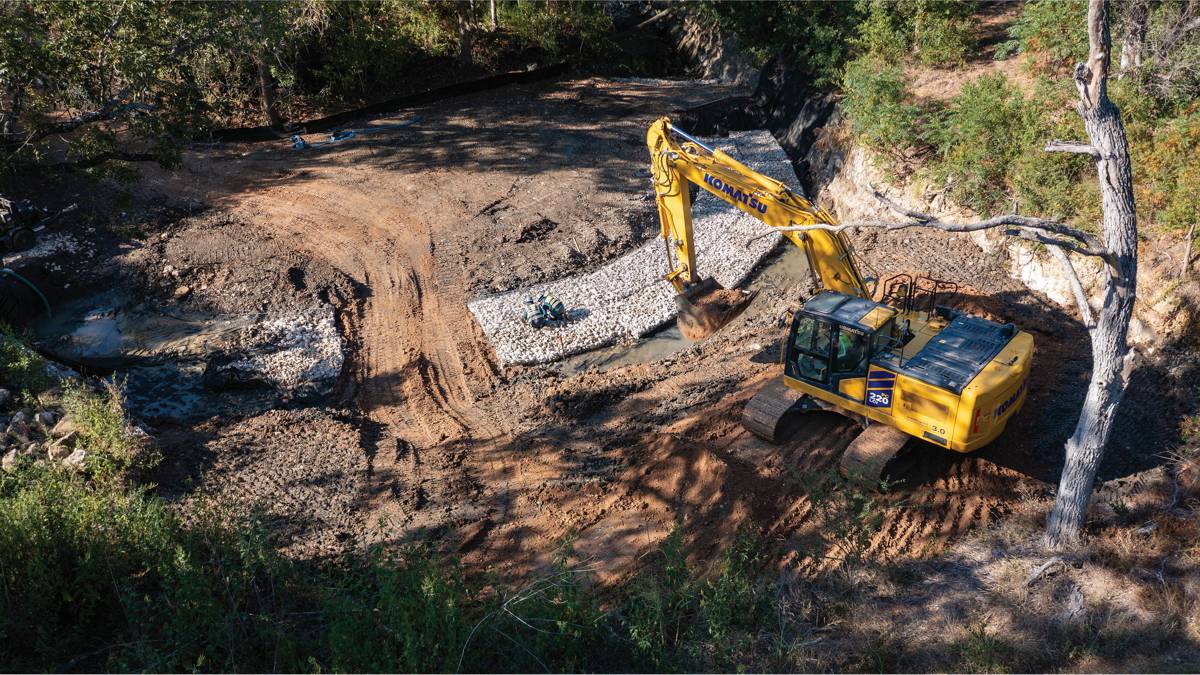
Construction businesses already manage resources this way. An excavator is not evaluated purely by its purchase price. Fuel consumption, utilisation, maintenance, operator cost, productivity and residual value contribute to the economics of the machine. Similar calculations surround asphalt plants, crushing equipment, vehicle fleets and almost every other productive asset.
AI has largely escaped that discipline during its experimental phase.
An engineering business might purchase licences for AI assistants and record them as another software expense. That remains relatively straightforward while employees use those systems manually. The economics become more complicated when AI is embedded directly into operational workflows.
An AI system could analyse drawings, interrogate specifications, compare revisions, classify inspection imagery, extract information from project documentation or assist with estimating. Other systems could monitor assets, examine sensor information or support maintenance decisions. Each operation consumes computational resources, and sufficiently large deployments can turn small individual costs into substantial operational expenditure.
Different approaches can also produce very different economics. One model may be faster but more expensive. Another may be cheaper but require additional processing. A smaller specialist model could outperform a large general-purpose model on a narrowly defined engineering task. Some workloads might be processed locally, while others justify access to large cloud models.
Those choices are difficult to optimise without comparable information about what the completed work actually costs.
The Economics of AI Agents
Autonomous AI agents make the calculation harder. Conventional generative AI usually begins with a human request. An engineer asks a question, supplies a drawing or requests an analysis, and the model responds. Agentic systems can receive an objective, determine the steps required, access software or databases, call AI models, evaluate the response and initiate further actions. Multiple agents can also cooperate on a workflow.
A single instruction can therefore trigger many individual AI operations.
Consider a future project-control agent monitoring a major infrastructure programme. It might read programme information, compare progress reports, examine procurement data, identify schedule changes, interrogate correspondence and prepare updated risk assessments. Finding a potential delay could trigger another agent to examine contracts, another to assess resource availability and another to calculate alternative sequencing.
A useful system could perform thousands of such operations while people concentrate on decisions requiring engineering judgement or commercial authority. Poorly designed agents could also consume considerable computing resources while accomplishing relatively little.
As autonomous systems become more complex, the connection between a human action and the resulting AI bill becomes progressively less obvious.
Measuring AI Against the Job
The Tokenomics Foundation is proposing “cost to serve” as one way of moving beyond raw token counts. Rather than treating tokens themselves as the finished economic measure, organisations could calculate the complete cost associated with performing a particular AI operation.
For construction, that opens the possibility of measuring AI against recognisable units of work.
An estimating system could be measured by the cost of processing a tender. A document agent could be measured against each technical submittal reviewed. Computer vision could be assessed per kilometre of road inspected, per structure examined or per batch of imagery processed. An asset-management application might be compared against inspections avoided, faults identified or maintenance interventions supported.
Cost alone cannot establish whether those systems are worthwhile. Quality, accuracy, supervision and the consequences of errors still have to be considered. A cheaper automated engineering process is not economical if its output requires extensive checking or introduces additional risk.
Tokens are also an imperfect proxy for intelligence. Different models use different architectures, capabilities and pricing structures, while applications can depend on considerable infrastructure beyond the model itself. The Tokenomics Foundation’s proposed framework consequently includes compute, storage, databases, caching and human engineering costs rather than treating token consumption as the entire system.
This becomes particularly relevant when businesses combine commercial AI services, open models, private infrastructure and edge computing within the same operation.
Industrial AI Moves Into Operations
Hitachi’s involvement gives the initiative an industrial perspective. The group operates across information technology and operational technology, with activities spanning energy, manufacturing, transport and other infrastructure sectors. Hitachi Digital Services says its contribution will include experience of high-volume AI consumption, simultaneous consumption channels and workflows involving both AI agents and AI-assisted software engineering.
Its Hitachi Application Reliability Centers already provide oversight of operational software and cloud environments, including performance, reliability and cost. Hitachi expects emerging tokenomics standards to complement that work by extending established FinOps practices into AI operations.
“The next phase of enterprise AI will be defined by how effectively organizations convert infrastructure, energy, data, and intelligence into measurable business outcomes. Tokenomics provides a common language for understanding that value chain, from AI production and token consumption to economic impact,” said Premkumar Balasubramanian, Chief Technology Officer at Hitachi Digital Services and GlobalLogic.
The industrial applications provide some indication of where this accounting could eventually become useful. A contractor deploying AI across estimating, project management and equipment operations may gain more from knowing the cost of individual automated workflows than from knowing how many tokens the entire company consumed during a month.
Infrastructure owners could face similar calculations as AI becomes embedded in asset monitoring, traffic systems, predictive maintenance and digital twins. Systems running continuously for years magnify differences in computational efficiency that may appear trivial during a short pilot project.
Intelligence as a Productive Input
Construction has become extremely good at measuring physical inputs. Fuel is measured against operating hours. Asphalt is measured by tonnes. Labour is recorded against tasks and projects. Equipment utilisation is monitored, while materials are tracked through procurement and increasingly through digital information systems.
Artificial intelligence introduces an input that is less tangible but increasingly measurable. The unit will probably not be the token alone, with the emerging work around AI economics already moving towards the total cost of performing useful work.
Businesses could eventually compare competing AI architectures by the economics of completed tasks rather than model specifications or subscription prices. Engineering teams might route straightforward work towards inexpensive models while reserving greater computational resources for problems requiring more capability.
None of this guarantees that the Tokenomics Foundation’s emerging standards will become universally adopted. The organisation is new, the technology is developing rapidly and methods for assigning financial value to AI output remain immature.
The underlying accounting problem is nevertheless already appearing as AI moves from applications that employees occasionally open towards systems running continuously through businesses, software platforms and industrial operations. Construction has always measured the inputs required to build something. Intelligence may simply become another one.
Key Industry Questions
- What is an AI token? A token is a unit used by generative AI models when processing and generating information. Commercial AI services commonly use token consumption as one component of their pricing.
- Is tokenomics simply the cost of AI tokens? No. The Tokenomics Foundation’s proposed approach includes wider costs such as compute, storage, databases, caching and engineering resources. Tokens provide a measurable usage unit, but do not represent the entire cost of an AI system.
- How is tokenomics related to FinOps? FinOps provides practices for understanding and managing variable cloud expenditure. The Tokenomics Foundation is working with the FinOps Foundation to develop comparable approaches for AI consumption and value.
- Why could AI agents increase costs? Agents can perform sequences of operations autonomously, including repeated calls to AI models and other agents. A single user instruction can therefore initiate considerably more model activity than a conventional request-and-response interaction.
- How could construction companies measure AI productivity? Useful measures could connect total AI cost with a defined unit of work, such as processing a tender, analysing inspection imagery or reviewing project documentation. The appropriate measure will depend on the application and still needs to account for accuracy and human supervision.
- Will cheaper AI models always reduce operating costs? Not necessarily. A cheaper model could require more attempts, additional processing or greater human checking. Total workflow cost provides a more useful comparison than token price alone.
- Could different AI models be used for different construction tasks? Yes. Applications can potentially route straightforward work to smaller or cheaper models while using more capable models where the task warrants additional computational expense.
- Are tokenomics standards already established? No. The Tokenomics Foundation was formally launched in August 2026 and is developing frameworks, specifications and best practices. The eventual level of industry adoption remains to be seen.
Strategic Takeaways
- AI expenditure becomes harder to manage as systems move from individual assistants into continuously operating workflows.
- Agentic AI can separate computational consumption from individual human actions, increasing the value of automated cost controls.
- Cost per completed task is likely to be more informative for industrial users than headline token prices.
- Construction already possesses much of the operational discipline required to manage AI as a metered productive resource.
- Common standards could make it easier to compare AI architectures and workflows on the economics of useful work rather than subscription price alone.