Construction Automation is Moving Beyond the Machine
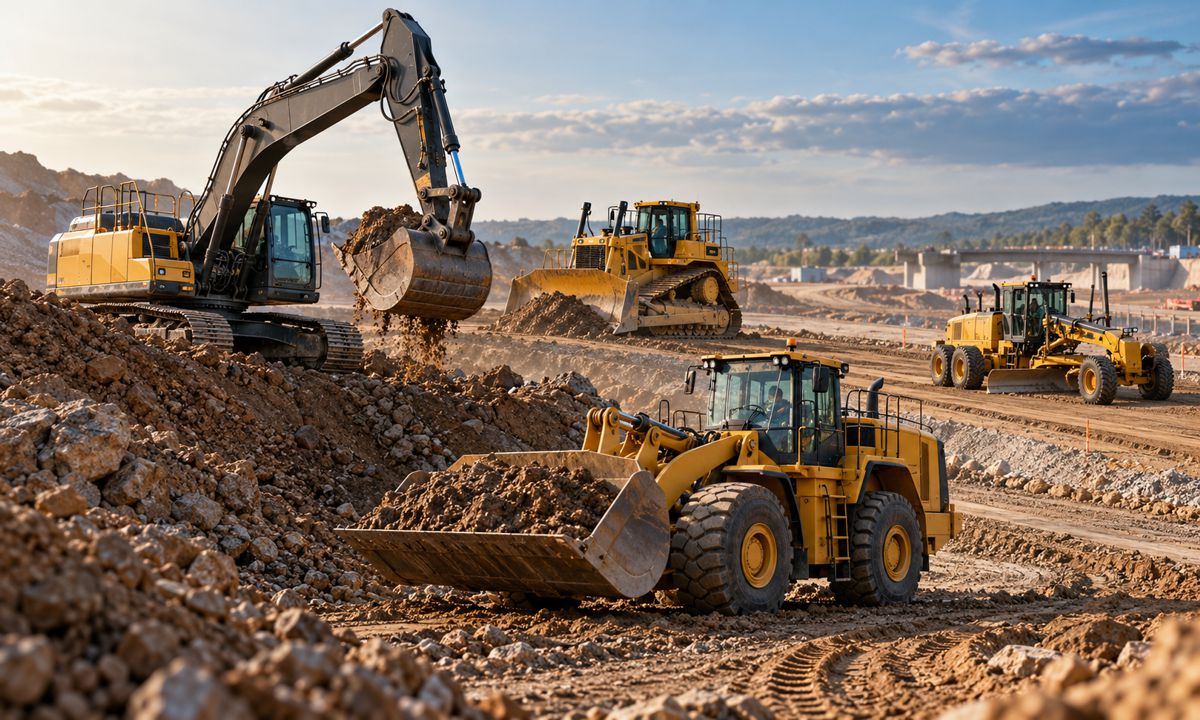
More than 63,000 cubic metres of earth had to be moved to create Yorkshire Water’s new integrated constructed wetland at Dearne Reach. The earthmoving itself was conventional enough. Excavators and dozers still had to cut, carry, spread and grade material through a Yorkshire winter.
What changed was the way the work was organised. Mott MacDonald Bentley used artificial intelligence to plan the cut-and-fill operation and soil distribution before intelligent construction machinery carried out the work against digital project information. The resulting earthworks achieved a balance between cut and fill without importing or exporting soil, while reducing the need for engineers and banksmen to work alongside operating plant.
The earthworks finished three weeks ahead of the initial prediction, contributing to a reported £350,000 cost reduction. It provides a useful indication of where construction automation is heading beyond the increasingly familiar spectacle of a machine operating without somebody holding the controls.
Autonomous machines are becoming technically impressive, but the larger productivity opportunity sits one level above them: coordinating machines, designs, surveys, quantities, progress information and people as parts of the same production system.
Briefing
- More than 63,000m³ of earth was moved on Yorkshire Water’s Dearne Reach integrated constructed wetland project.
- AI was used to plan cut-and-fill operations and soil distribution before intelligent plant carried out the earthworks.
- The project achieved a balanced cut and fill without importing or exporting soil.
- The earthworks programme finished three weeks earlier than initially predicted, with a reported £350,000 cost reduction.
- Machine control is increasingly being connected with surveying, digital twins, remote support and automated progress measurement.
From Machine Control to Site Control
Construction machinery has been moving towards automation for considerably longer than the recent enthusiasm surrounding artificial intelligence might suggest.
GNSS machine guidance allowed operators to see a machine’s position against a digital design. Machine control went further by allowing the machine itself to assist with movements such as grading and excavation. Komatsu introduced its factory-integrated Intelligent Machine Control system on dozers in 2013 and excavators in 2014, with successive generations adding increasingly sophisticated automated functions while retaining the operator.
The latest iMC 3.0 excavator functions include automated grading assistance, boundary control and automated movements for repetitive operations such as trenching and loading. Individual elements of the work cycle can increasingly be handed to software while the operator remains responsible for the machine.
Complete autonomy presents a considerably harder problem. A quarry haul road, mine or other tightly controlled production environment can provide relatively predictable routes, operating rules and interactions. General construction sites are less accommodating. Ground conditions change, temporary works appear, haul routes move, subcontractors arrive and disappear, excavations open, designs are revised and people work around machinery performing different tasks.
A machine capable of steering or controlling its attachment therefore solves only part of the problem.
Dearne Reach and the Connected Earthworks Model
The 44,000m² integrated constructed wetland at Dearne Reach provides a practical example of the alternative approach. Mott MacDonald Bentley delivered the project for Yorkshire Water to improve water quality in the River Dearne, using AI to schedule the cut-and-fill operations and determine the soil distribution workflow before earthmoving began.
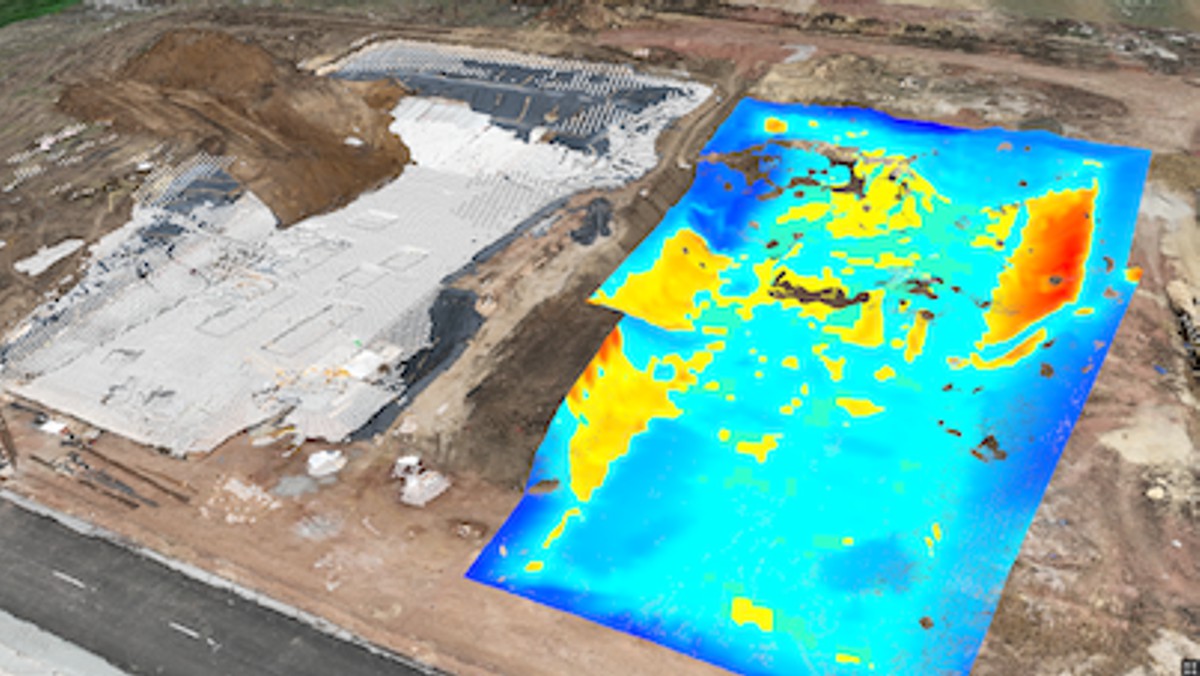
The project team uploaded its design model into the Smart Construction environment, which was used to develop an earthmoving plan and determine the plant requirement. Point-cloud surveys then provided progress information as work proceeded, allowing actual ground levels and material quantities to be compared with the design.
The resulting plant plan included five D6 dozers, two 36-tonne excavators and four 21-tonne excavators. More than 63,000m³ of earth was moved without overcutting or the need to remove surplus material from the site.
An excavator working more accurately can reduce overdigging. A dozer following a digital surface can reduce unnecessary grading passes. Survey information can show how much material has actually moved, while software can compare progress with the planned earthworks balance. Connected together, those individual capabilities begin influencing how the entire earthmoving operation is organised.
The Dearne Reach project also reduced routine interaction between engineers, banksmen and operating machinery. Engineers could monitor the digital information rather than continuously working beside the plant, with intervention concentrated where it was required.
Machines as Survey Instruments
The boundary between construction machinery and site measurement is becoming less distinct. Komatsu’s intelligent dozers, for example, can collect topographical information while carrying out their normal work. The company’s high-density as-built system can capture up to 25 topographic points per square metre as a machine travels across the site, feeding the information into Smart Construction Dashboard and turning productive machine movements into a source of survey data.
Traditionally, checking progress can require a separate survey operation. Work may stop or surveyors may need access to areas where heavy equipment is operating. Measurements are then processed before the project team gets an updated picture of the site.
Continuous machine-generated data changes that sequence. Cut-and-fill quantities, progress and differences between the design and constructed surface can be examined while the earthworks are still under way.
It does not eliminate the surveyor. Establishing control, validating data and dealing with higher-order surveying work remain specialist functions, but routine measurement simply to establish what the machines have already built can be reduced.
Remote connectivity is extending the same principle into machine support. Komatsu made Smart Construction Remote standard with its branded machine guidance and control systems in 2025, allowing design files to be transferred to machines and support staff to access machine-control displays remotely. The practical separation between the site office, survey team and cab becomes smaller.
Automation Without the Empty Cab
Much of the public discussion around autonomous construction equipment concentrates on removing the operator. Mining has helped create that expectation because autonomous haulage systems have demonstrated that very large machines can work productively without drivers in carefully managed operating environments.
Construction may follow a less direct path. Automating selected machine functions can deliver useful gains without solving the vastly more difficult problem of allowing an entirely driverless machine to interpret every condition encountered on a changing construction site.
An excavator that automatically prevents overdigging does not need to understand the whole project. A dozer following a digital design does not need human-level awareness of every activity taking place around it. Software optimising a cut-and-fill operation can improve material movements without controlling every machine directly.
Experienced operators remain particularly valuable because the physical site rarely behaves as neatly as its digital representation. Soil changes, weather intervenes, access becomes constrained and activities conflict. Machine intelligence can handle repeatable elements of the work while leaving judgement and exceptional conditions to people.
The progression is already visible. Guidance becomes machine control, machine control absorbs more individual functions, and machines collect information about the work they perform. That information can update the digital representation of the site and feed subsequent planning. Full autonomy may emerge where the environment and task justify it, but it does not have to arrive first.
Productivity at Site Level
The construction industry’s productivity problem is rarely caused by a single excavator moving its bucket too slowly. Waiting for information, correcting work, moving material unnecessarily, repeating surveys, dealing with design changes and coordinating plant all consume time without necessarily appearing in a machine’s headline production figures.
Connected construction attacks those losses differently. If the design reaches the machine digitally, the operator has current information. If the machine prevents overdigging, less corrective work follows. If its movements generate as-built data, progress measurement becomes part of production. When that information feeds back into the project model, discrepancies can be identified while there is still time to deal with them.
The machine remains important, but its productivity increasingly depends on the information surrounding it. Komatsu’s development of Intelligent Machine Control reflects that progression from machine control towards remote design transfer, automated data capture, progress monitoring and increasingly automated machine functions.
The technology is also moving into mixed fleets. Smart Construction 3D Machine Guidance has been developed for standard Komatsu machines and equipment from other manufacturers, recognising the reality that contractors operate machinery of different ages and brands. As more site operations become connected, the ability to move useful information between machinery, positioning systems and construction software will become increasingly relevant.
The Site Becomes the System
Driverless machines attract attention because autonomy is easy to see. A cab without an operator provides an immediate picture of technological change, while the quieter development is taking place around the machine.
Design models are moving directly into cabs. Machines can record the surfaces they create, survey information can become available while work is under way, and software can calculate material movements before the first bucket enters the ground. Remote specialists can support operators without travelling to the machine.
Dearne Reach shows what happens when several of those elements are combined around an actual construction operation. More than 63,000m³ of material still had to be moved by heavy machinery through difficult winter conditions. The physical work did not disappear; what changed was the intelligence surrounding it.
Construction automation may eventually produce sites populated by genuinely autonomous excavators, dozers, rollers and haulage equipment. Long before that becomes commonplace, connected machines can already make the site itself more automated.
Key Industry Questions
- How much material was moved at the Dearne Reach project? More than 63,000m³ of earth was moved during construction of the integrated constructed wetland.
- Was the machinery at Dearne Reach fully autonomous? No. Intelligent plant and digital construction systems supported the operation, but operators remained involved. The project demonstrates connected and increasingly automated construction rather than a fully autonomous site.
- What did AI do on the project? AI was used to help schedule cut-and-fill operations and plan soil distribution before the earthworks were carried out.
- What is intelligent machine control? Machine control combines positioning, digital design information and machine systems to assist or automate elements of excavation and grading. More advanced systems can control particular machine movements while the operator supervises the overall operation.
- Can construction machines collect survey data while working? Some systems can. Komatsu’s intelligent machine control equipment can collect position and elevation information during normal operations and feed as-built information into its Smart Construction software environment.
- Does machine control eliminate surveyors? No. It can reduce routine grade checking and progress measurement around operating machinery, while survey specialists remain necessary for control, verification and more complex measurement work.
- Why is construction harder to automate than mining? Many construction sites change frequently and contain multiple trades, temporary works, people and changing access arrangements. Large mining operations can offer more controlled and repeatable environments for autonomous haulage and other automated processes.
- Will construction automation require fully driverless equipment? Not necessarily. Significant automation can be introduced by automating individual machine functions, connecting equipment with digital designs and improving site-level planning and measurement while retaining operators.
Strategic Takeaways
- Site-level coordination may produce productivity gains before fully autonomous construction machinery becomes commonplace.
- Automated data capture is turning productive machinery into part of the project’s measurement infrastructure.
- Partial automation allows contractors to automate predictable machine functions while retaining operators for judgement and changing site conditions.
- Connecting design, earthmoving, surveying and progress information can reduce rework and unnecessary material movement.
- Mixed fleets make interoperability between machines, positioning systems and construction software an increasingly important part of practical automation.