AI Moves Into the Equipment Rental Walkaround
A dent in an excavator counterweight, a chip in a windscreen or a puncture buried in the tread of a tyre can be surprisingly difficult to spot during a hurried equipment handover. Record360 is applying computer vision to that problem with 360AI, a suite of inspection tools designed to flag possible damage while an operator is still standing beside the asset.
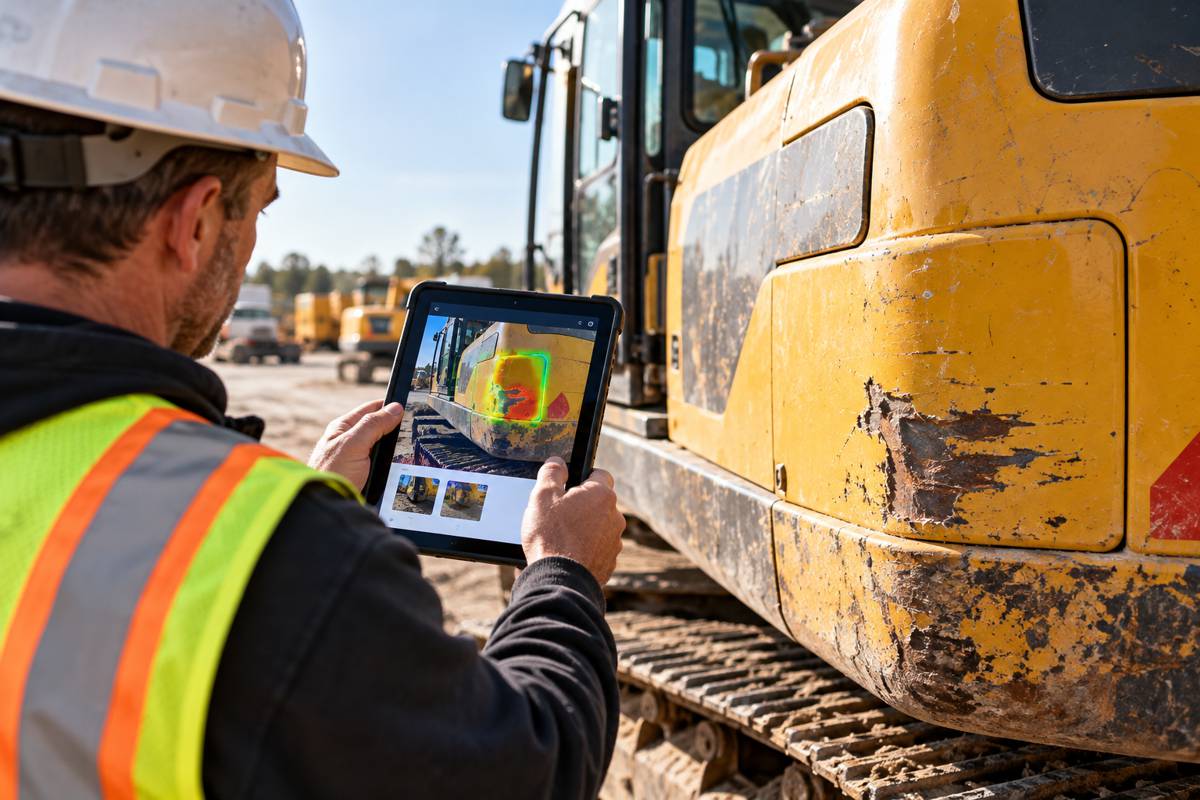
The system runs within Record360’s existing mobile inspection application rather than requiring a dedicated inspection bay or fixed camera installation. Photographs taken during a walkaround are analysed for possible glass, tyre and body damage, with visual heatmaps directing the inspector towards areas that deserve closer examination.
The distinction between detection and decision is deliberately retained. 360AI can flag something that looks like damage, but the inspector or manager decides whether damage is actually present and what should happen next. Damage documentation can determine who pays for a repair, whether a customer disputes a charge and whether an operator can demonstrate the condition of an asset when responsibility changed hands.
Briefing
- Record360 has launched 360AI for AI-assisted vehicle and equipment inspections.
- Computer vision models analyse photographs for glass, tyre and body damage during mobile walkarounds.
- Nearly 3 million photographs were processed during beta testing, with Record360 reporting more than 70,000 confirmed cases of damage surfaced.
- Human inspectors and managers retain responsibility for confirming AI findings and making damage decisions.
- The suite also includes blur detection, automated VIN, registration plate and barcode scanning, voice inspection and a central review workflow.
Computer Vision at the Point of Inspection
Automated vehicle inspection is not itself new. Camera arrays and drive-through inspection systems can photograph vehicles from multiple angles and use computer vision to identify changes in condition. For large, controlled vehicle operations, the infrastructure can make sense.
Rental machines may leave from a branch, return to a yard, move directly between customers or be inspected on a construction site. Trucks, trailers, access equipment, compact machines and heavy construction equipment vary considerably in size and geometry, while the inspection point moves with the asset.
Record360 has consequently taken a mobile-first approach. Its damage-detection models operate through photographs captured on phones or tablets already being used for inspections, removing the requirement for a vehicle or machine to pass through a fixed scanning installation.
The current detection tools concentrate on glass, tyres and bodywork. Record360 says specialised models examine captured images and generate heatmaps showing where possible damage has been identified, allowing the operator to examine the asset rather than accepting the software’s classification as definitive.
Construction equipment accumulates scratches, dents, dirt and wear during ordinary use, while different components can have very different standards for acceptable condition. Identifying a visual anomaly is therefore only part of an equipment inspection. Determining whether it represents new damage, normal wear or something requiring maintenance still needs context.
Building a Better Inspection Record
Some of the less conspicuous functions within 360AI may prove equally useful in everyday operations. Blur Detection checks image quality when a photograph is taken, allowing an inspector to retake an unusable image before the asset has left. Smart Scan reads registration plates, VINs and barcodes to populate asset information, while Voice Inspect converts spoken observations into structured inspection fields.
A missed photograph, incorrectly entered unit number or blurred image can become important several days later when somebody needs to establish whether damage existed at checkout. Improving the record at the point of capture reduces the need to reconstruct an inspection later from incomplete evidence.
Record360’s Smart Review workflow carries AI-flagged images from the field into a central queue. Managers can view the original photograph alongside the highlighted area, confirm whether damage exists and classify it before deciding what action to take.
The company describes this as a human-in-the-loop model. The AI identifies photographs and areas requiring attention but does not independently determine customer liability or make the final damage decision.
Three Million Photographs
The more substantial question surrounding any visual detection system is how well it performs outside demonstrations and controlled examples.
Record360 says its beta programme processed nearly 3 million photographs and surfaced more than 70,000 confirmed cases of real damage. The images covered assets ranging from passenger vehicles and commercial trucks to heavy equipment and machinery.
The figures indicate considerable operating volume, but do not by themselves establish detection accuracy. Record360 has not published, alongside the launch information reviewed for this article, the corresponding number of false positives, false negatives or the proportion of actual damage successfully identified.
Those figures would provide a clearer measure of model performance. A system that identifies genuine defects can still create unnecessary work if inspectors have to process excessive false alerts, while a more conservative model risks allowing subtle damage to pass unnoticed. Human review provides the final check in either case.
From Photograph to Workflow
Record360 has also been developing the surrounding digital workflow rather than treating damage recognition as an isolated feature.
Its existing platform records before-and-after inspection information, photographs, video, timestamps and signatures, allowing condition records to follow an asset through checkout, return, delivery and other handovers. The company has also been developing integrations that can move inspection results into other rental and fleet systems.
Once damage has been confirmed, structured inspection information can support repair decisions, customer discussions, claims and greater automation between inspection and maintenance systems. Record360 has previously said it is exploring how AI-generated damage information could play a larger role in automatically creating work associated with damage and failed checklist items.
Detecting something unusual in an image, confirming that it is damage, determining when it occurred and deciding who is responsible are separate problems. Connecting them into one digital workflow does not make them the same decision.
The Economics of Mobile Inspection
Record360 is packaging 360AI through its existing subscription structure rather than charging for individual AI scans.
Smart Scan is included with the Basic tier. Standard adds mobile Damage Detection and Blur Detection, while Professional includes the Smart Review Dashboard and Voice Inspect alongside early access to subsequent AI capabilities. Record360 says applicable AI functions can be used without per-scan charges.
A rental fleet can generate large numbers of handovers, and usage-based computer vision costs could discourage employees from using detection routinely. Subscription pricing removes the question of whether an individual inspection is worth another AI charge.
Adoption presents a different challenge. An AI inspection tool delivers little operational value if staff bypass it when the yard is busy, photographs are inconsistent between branches or managers do not review what the system flags.
The mobile approach avoids the need to install inspection arches, dedicated cameras or specialised lanes at every location before deploying the system. The same workflow can follow equipment into yards, branches, jobsites and customer premises.
Keeping the Inspector in the Loop
Artificial intelligence is steadily moving into construction equipment through machine control, predictive maintenance, telematics, safety systems and autonomous operation. Inspection presents a different problem because the software is not controlling a machine. It is helping establish evidence.
A missed defect may leave a rental company carrying a repair cost, while an incorrectly attributed defect can produce an equally undesirable argument with a customer. Reliable photographs, consistent inspection procedures and a traceable human decision remain important even when AI becomes capable of finding increasingly subtle anomalies.
Record360 has kept that boundary visible in 360AI, using the software to identify areas requiring attention while leaving the assessment with the inspector.
Key Industry Questions
- What is Record360 360AI? 360AI is a suite of AI-assisted inspection functions integrated into Record360’s mobile asset-inspection platform. It combines visual damage detection with image-quality checking, automated asset identification, voice input and manager review tools.
- What types of damage can 360AI identify? Record360 currently describes specialised detection for glass, tyres and vehicle or equipment body surfaces, including chips, cracks, punctures, sidewall damage, scratches and dents.
- Does 360AI automatically decide whether a customer caused damage? No. The system flags potential damage for human review. Inspectors and managers remain responsible for confirming findings and making subsequent decisions.
- Does the system require fixed inspection equipment? No. 360AI is designed to operate through the Record360 mobile application on phones and tablets, allowing inspections to take place at branches, yards, jobsites and customer locations.
- How extensively has the technology been tested? Record360 says nearly 3 million photographs were processed during beta testing and more than 70,000 confirmed cases of real damage were surfaced.
- Has Record360 published an accuracy rate for damage detection? The launch information reviewed for this article does not provide sufficient false-positive and false-negative data to calculate an independent detection accuracy rate.
- What does Blur Detection do? It checks whether photographs are sufficiently clear while they are being captured, allowing poor images to be retaken before the inspection is completed.
- How does Smart Scan support inspections? Smart Scan reads registration plates, VINs and barcodes to populate asset information and reduce manual data entry.
- Is AI usage charged per inspection? Record360 says there are no per-scan charges for the AI capabilities included within the applicable subscription plan.
Strategic Takeaways
- Mobile computer vision suits fleets whose assets move between branches, yards, jobsites and customers without passing through fixed inspection infrastructure.
- Damage detection is only one part of the process; reliable capture, asset identification, review and condition history determine whether an inspection becomes usable evidence.
- Human review remains particularly important for construction equipment, where wear, cosmetic damage and operational damage can be difficult to distinguish from images alone.
- Nearly 3 million beta photographs provide a substantial operating dataset, although the published figures are insufficient to independently assess detection accuracy.
- Subscription rather than per-scan pricing removes a potential disincentive to routine AI-assisted inspections across high-volume rental operations.