Beyond Heavy Iron – Reinventing the Construction Machine
Electric powertrains, hydrogen engines, fuel cells, robotics and machine intelligence are opening up new possibilities for construction equipment. The next generation may change far more than the fuel in the tank or the person sitting in the cab.
Beneath the engine covers of a modern hydraulic excavator lies an arrangement that has remained recognisable for decades. A diesel engine drives hydraulic pumps, pressurised oil moves the boom and bucket, steel tracks provide mobility, and an operator controls the entire machine from a cab mounted above the undercarriage.
The electronics have become considerably more sophisticated, engines cleaner and hydraulic systems more efficient, but the underlying architecture remains familiar. Manufacturers are now developing alternatives that challenge different parts of that arrangement, including battery-electric drives, hydrogen combustion engines, fuel cells and machines capable of operating without an onboard driver.
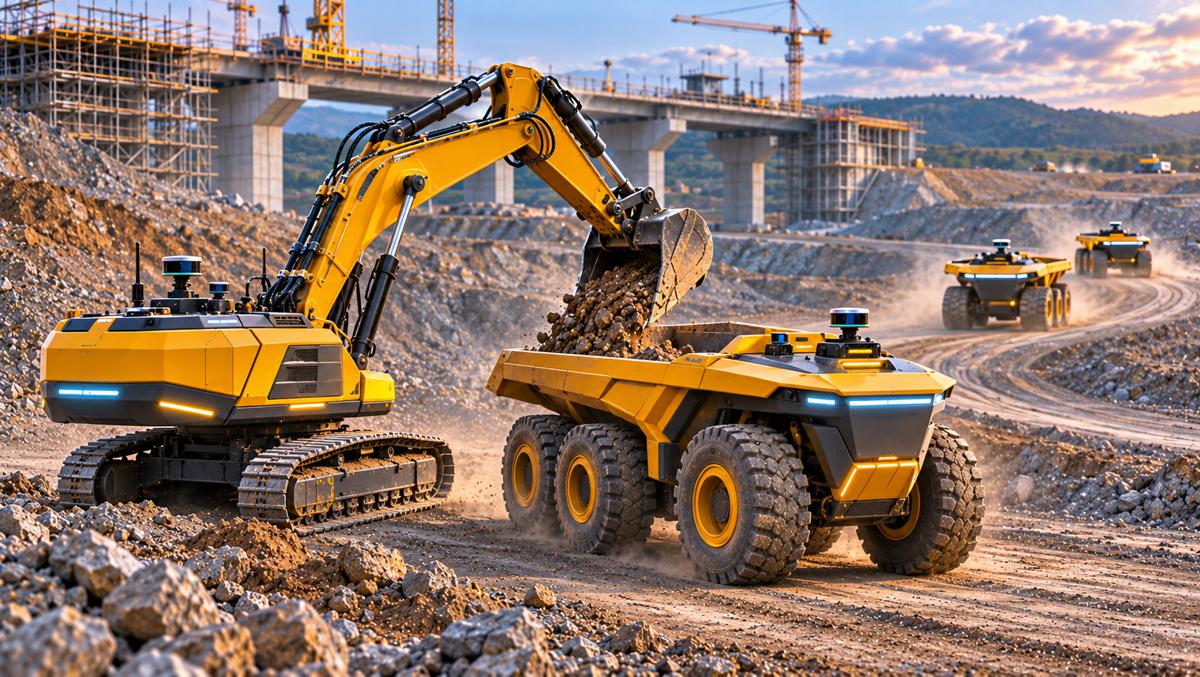
An excavator might draw electricity from a battery, receive power through a cable or generate it onboard using a hydrogen fuel cell. Electronic controls can already help operators follow digital designs, while cameras, positioning systems and onboard computers are allowing increasingly complex tasks to be automated. In mining and quarrying, autonomous haulage has progressed well beyond experimentation, and battery-electric articulated haulers are now in production.
These technologies are advancing at different speeds, and their commercial prospects depend heavily on the environments in which they operate. Together, they are beginning to give machinery designers more freedom to reconsider the relationship between power generation, mechanical systems, human control and the physical form of the equipment.
Briefing
- Volvo Construction Equipment began serial production of its A30 Electric and A40 Electric articulated haulers in April 2026, with payloads of 29 and 39 tonnes respectively.
- JCB launched its production 3CX Hydrogen backhoe loader in May 2026, using a 55 kW hydrogen combustion engine and a mobile refuelling solution developed with HYKIT.
- Komatsu, Obayashi and Iwatani tested a hydrogen fuel-cell excavator on a Japanese construction project in December 2025, examining soil-handling performance and on-site refuelling.
- Caterpillar reported in September 2026 that its autonomous trucks had hauled more than 13 billion tonnes of material worldwide, with quarry deployments expanding to smaller truck classes.
- Future construction fleets are likely to employ multiple power sources and varying levels of automation, selected according to duty cycle, infrastructure, economics and site conditions.
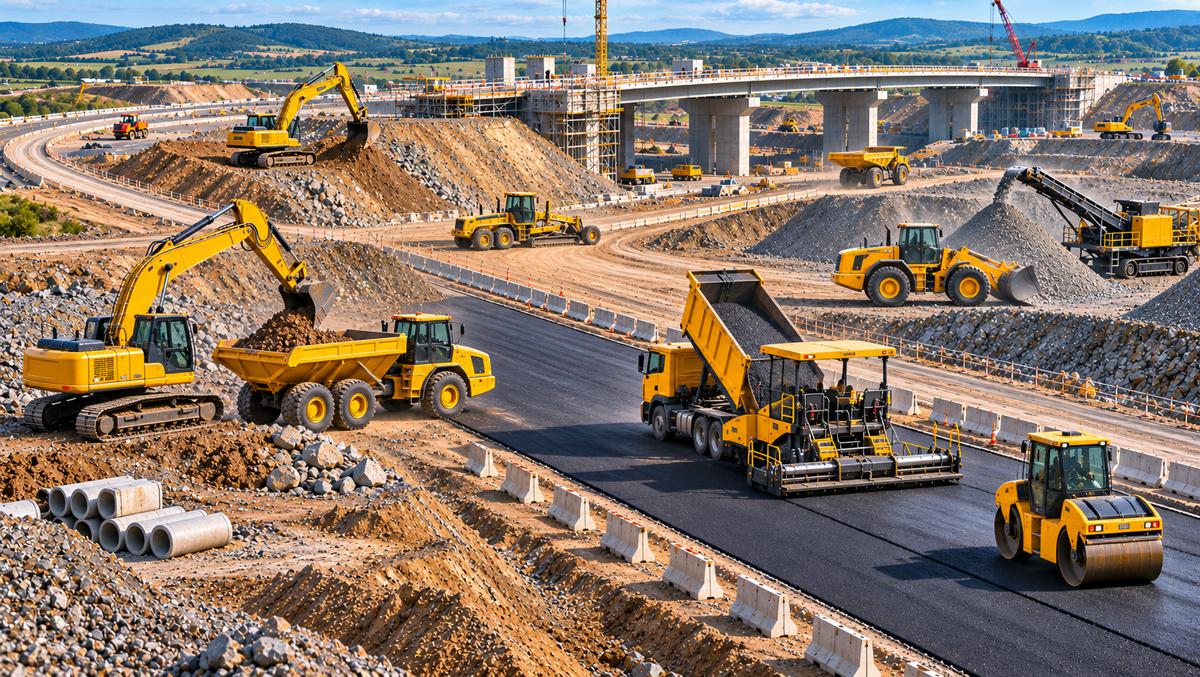
Machine Layout Without a Diesel Engine
The internal combustion engine has influenced construction machinery design for more than a century. Its size, weight, cooling requirements, fuel system and mechanical connections determine much of the available space inside a machine.
On an excavator, the engine and hydraulic equipment occupy a substantial proportion of the upper structure. On a wheel loader, the engine, transmission, axles and cooling package influence the shape and weight distribution of the entire vehicle. Larger machines must also accommodate exhaust aftertreatment, service access, air filtration and protection against dust, vibration and heat.
Electric propulsion allows engineers to reconsider some of these arrangements. Electric motors deliver substantial torque at low rotational speeds, and their output can be controlled precisely through power electronics. Depending on the application, they may drive conventional hydraulic pumps, mechanical transmissions or individual traction systems.
An electric excavator does not automatically become mechanically simpler. Batteries, inverters, thermal-management systems, high-voltage protection and charging equipment introduce their own requirements, while the machine may retain almost all its conventional hydraulic components. Nevertheless, removing the diesel engine creates opportunities to distribute energy storage within the chassis, rearrange drivetrain components and manage power electronically between propulsion, hydraulic functions and auxiliary systems.
Volvo Construction Equipment explored some of these possibilities through its LX03 autonomous wheel loader prototype. Developed as a research machine rather than a commercial product, it combined electric propulsion with sensors and intelligent operating systems to investigate alternative approaches to machine operation and design. Purpose-designed electric machinery allows engineers greater freedom to rearrange components than conversions of existing diesel platforms.
Battery-Electric Machinery Moves Beyond Compact Equipment
The earliest commercially practical applications for battery-electric construction machinery have generally involved smaller machines operating within predictable duty cycles. Compact excavators, wheel loaders and site dumpers can be well suited to urban construction, building interiors and municipal maintenance, particularly where noise restrictions, ventilation requirements or local emissions rules influence equipment selection.
An electric mini excavator working inside a building eliminates diesel exhaust at the point of operation, while a compact loader serving a municipal depot may be able to recharge overnight. Equipment working intermittently throughout the day can also benefit from opportunities to recharge between tasks.
Larger machines present more demanding engineering requirements. A heavy excavator working continuously in difficult material requires substantial energy for hydraulic functions, rotation and travel. An articulated hauler must repeatedly accelerate a heavy payload, climb gradients and operate over rough ground, while large mining equipment may be expected to work across multiple shifts with limited interruptions.
In April 2026, Volvo CE began serial production of its A30 Electric and A40 Electric articulated haulers at Braås in Sweden. The machines offer payload capacities of 29 and 39 tonnes respectively, with Volvo quoting up to six hours of operation on a charge, depending on the application.
That operating-time qualification is central to the commercial assessment. Haul distance, gradients, payload, ground conditions and opportunities for charging will influence whether the machines can deliver the required production throughout a working shift. Volvo’s June 2026 delivery of A30 Electric haulers to a Norwegian hydropower project also provided an early example of deployment beyond the factory.
In mining, BHP, Rio Tinto and Caterpillar are testing battery-electric Cat 793 XE Early Learner haul trucks at BHP’s Jimblebar iron ore operation in Western Australia. Two of the seven Early Learner trucks involved in the wider development programme are at Jimblebar, where the trial is examining performance under Pilbara operating conditions and the practical requirements of charging very large haulage equipment.
The programme includes investigation of static and dynamic charging, with charging while the truck is moving among the technologies under evaluation. Electrical distribution, fleet scheduling and charging infrastructure become part of the production system when machinery operates at this scale.
Hydrogen Combustion Enters Production
Hydrogen provides a different route to reducing dependence on diesel, with two distinct technologies being developed for construction equipment. The first burns hydrogen in an internal combustion engine, allowing manufacturers to adapt conventional combustion technology rather than replacing the engine with an electric motor and a large battery.
The engine retains familiar components such as pistons, connecting rods, a crankshaft and valve gear, although hydrogen’s combustion characteristics require changes to fuel delivery, ignition, controls and other systems. Manufacturers with established engine expertise can therefore draw on existing mechanical knowledge and production capabilities.
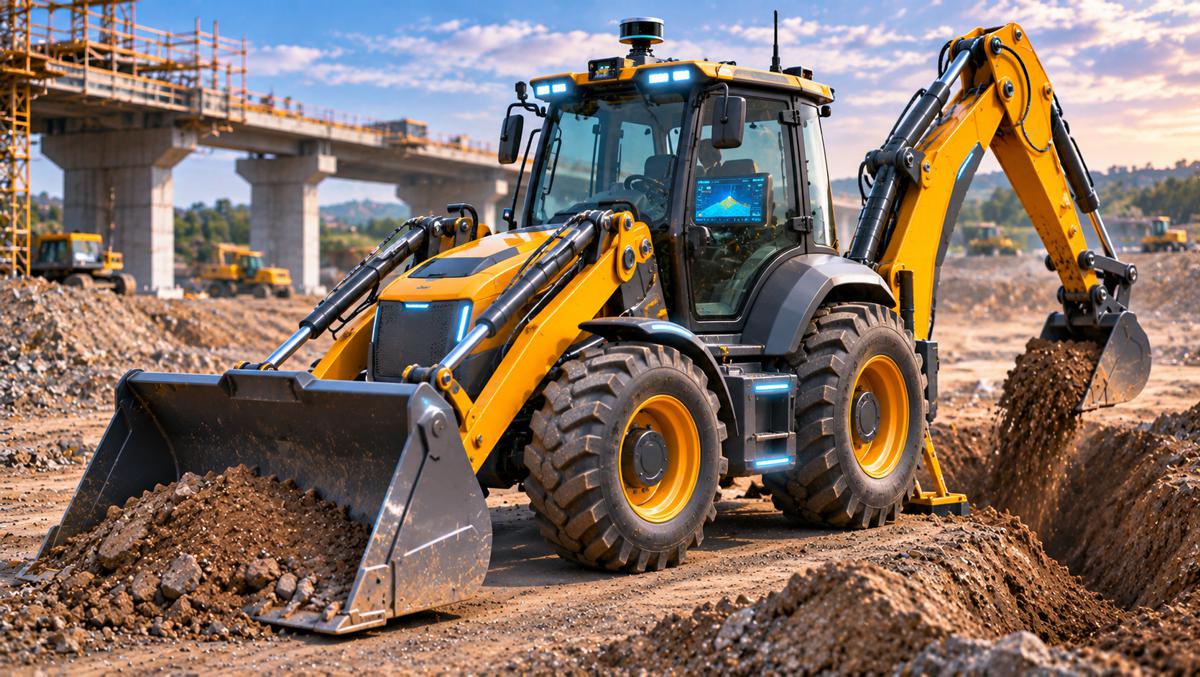
JCB’s hydrogen programme has now progressed beyond evaluation machinery. After securing European Union type-approval for its hydrogen combustion engine in 2025, the company formally launched its production 3CX Hydrogen backhoe loader in May 2026.
The machine uses a 55 kW hydrogen combustion engine and carries three composite-wrapped hydrogen tanks mounted on the cab roof. Hydrogen is stored at 350 bar, with JCB stating that the arrangement provides sufficient fuel for all-day operation under the intended working conditions.
The company has invested more than £100 million in hydrogen engine development and produced more than 150 engines during its evaluation programme. Trials have covered backhoe loaders, telescopic handlers and power-generation applications. JCB states that the 55 kW hydrogen engine matches the power and torque characteristics of its diesel equivalent, while operators involved in trials have separately reported that the hydrogen-powered backhoe feels much like the conventional diesel machine.
The production launch also includes a commercial support approach. JCB has described a three-year operating lease and service-contract offering, while its collaboration with HYKIT has produced a mobile hydrogen refueller intended to supply construction machinery directly on site.
That refuelling arrangement addresses one of the principal practical objections to hydrogen machinery: the absence of a conventional filling-station network serving temporary construction sites. Its wider effectiveness will depend on the cost, availability and logistics of delivering hydrogen to contractors operating in different locations.
Hydrogen combustion does not produce carbon dioxide from the hydrogen fuel itself, although lubricating-oil consumption can contribute small carbon-containing emissions and high-temperature combustion can produce nitrogen oxides. Engine calibration and emissions-control measures remain necessary, while the overall climate performance depends on how the hydrogen is produced and delivered.
JCB’s production launch establishes a commercial option for hydrogen combustion machinery. The economics of operating it across a wide range of construction environments will become clearer as customer deployment expands.
Hydrogen Fuel Cells and Electric Drive
A hydrogen fuel-cell machine uses the same fuel but converts its chemical energy into electricity through an electrochemical process rather than combustion. Hydrogen stored onboard reacts with oxygen in a fuel-cell system, producing electrical power, water and heat. The electricity can drive traction motors or hydraulic pumps, often supported by a battery or capacitor to manage transient loads and recover energy where practical.
Komatsu has been developing this approach for medium-sized hydraulic excavators. Between 10 and 23 December 2025, Komatsu, Obayashi Corporation and Iwatani Corporation conducted an on-site proof-of-concept test at a temporary storage yard associated with the Joshin-Etsu Expressway rockfall countermeasure project in Japan.
The machine was used to relocate surplus soil, while the project team also examined the practical requirements of refuelling its onboard hydrogen tanks at a working construction site. According to the companies, the fuel-cell excavator demonstrated working performance comparable with a conventional diesel-powered model. They also reported reduced engine-related vibration, lower noise levels and improved situational awareness for the operator.
The trial identified requirements for greater onboard hydrogen capacity and faster refuelling. It also helped establish which types of construction-site environment may be suitable for hydrogen equipment, taking account of legal restrictions and the changing conditions of an active project.
Volvo CE has investigated a similar powertrain concept through its HX04 hydrogen fuel-cell articulated hauler prototype, which entered testing in June 2022. The machine was designed to explore hydrogen-electric propulsion in heavy off-road haulage and has not entered commercial production.
Fuel cells and hydrogen combustion engines differ in efficiency, emissions characteristics, maintenance requirements, thermal management and integration with the machine. Both face the challenge of storing sufficient hydrogen onboard.
Hydrogen contains considerable energy per kilogram, but its low volumetric energy density makes it difficult to store compactly. High-pressure tanks and supporting equipment occupy valuable space and add mass, creating packaging constraints that must be considered alongside the performance of the powertrain.
Hydrogen Supply and Construction-Site Infrastructure
Hydrogen machinery requires a dependable fuel supply, and the practical arrangements differ considerably between projects. A quarry, mine or major infrastructure project with a predictable fleet and a long operating life may be able to justify dedicated hydrogen storage and refuelling infrastructure. A smaller contractor moving between temporary sites faces a different problem, with fuel delivery, safe storage, personnel training and reliable supply potentially introducing costs that outweigh the advantages of the machine.
JCB’s HYKIT mobile refuelling arrangement offers one response by bringing hydrogen to the equipment rather than requiring the machine to travel to a permanent filling station. The company has also identified Ryze Power as a hydrogen supply partner in the UK. Such arrangements reduce some practical barriers, although their economics and reliability across dispersed fleets remain to be established through wider use.
Komatsu’s Japanese trial approached the problem from another direction, examining the placement of refuelling equipment within an active construction project. The companies identified site layout, legal requirements and changing working conditions as factors that influence where hydrogen machinery can be operated safely and efficiently.
Hydrogen production adds another consideration. According to the International Energy Agency’s Global Hydrogen Review 2026, global hydrogen demand exceeded 100 million tonnes in 2025, while low-emissions hydrogen production reached almost one million tonnes. Most hydrogen production still relies on fossil fuels without emissions abatement, so the climate benefit of hydrogen-powered construction equipment depends substantially on the production pathway and associated supply-chain emissions.
Producing hydrogen through electrolysis, compressing it, transporting it and converting it back into useful mechanical work involves several energy-conversion stages. Where direct electricity supply is practical, battery-electric machinery generally provides a more energy-efficient route from electricity generation to useful work.
Hydrogen may offer operational advantages where battery mass, charging interruptions, remote locations or demanding duty cycles make direct electrification difficult. The commercial choice will depend on delivered fuel cost, refuelling arrangements, operating requirements and the availability of supporting infrastructure.
Hybrid and Cable-Powered Equipment
Several established and developing technologies sit between conventional diesel machinery and fully battery-electric equipment. Diesel-electric systems use a combustion engine to generate electricity, which is then supplied to traction motors or other electrically driven equipment. This architecture has long been familiar in large mining haul trucks, allowing engineers to control power distribution electronically while retaining diesel’s established supply infrastructure and onboard energy storage advantages.
Hybrid systems introduce energy storage or recovery to improve efficiency under suitable operating conditions. A wheel loader repeatedly accelerates, brakes, lifts and lowers heavy loads, creating opportunities to recover some of the energy normally dissipated during those movements.
The potential savings depend on the working cycle, machine architecture and effectiveness of the recovery system. Equipment operating through repeated acceleration and deceleration may offer different opportunities from machinery performing relatively constant high-load work.
Cable-powered equipment provides another alternative, particularly where machines operate within a limited area. Large electric excavators and mining machines can receive electricity directly from a fixed supply, avoiding the need to carry all their operating energy onboard.
The trade-off is reduced freedom of movement and the need to manage cables, electrical connections and site infrastructure. These constraints may be acceptable for stationary or semi-mobile equipment, while machines travelling continuously across changing construction sites face different practical requirements.
Future fleets could therefore include battery-electric compact equipment, hydrogen-powered machines, cable-connected excavators, hybrid loaders and conventional diesel machinery working alongside one another, with each selected according to the demands of its application. Contractors operating mixed fleets will need to consider the supporting energy infrastructure alongside the equipment itself.
Electric Actuation and Hydraulic Systems
Changing the power source creates opportunities to reconsider how machines convert energy into movement. Hydraulic systems remain highly effective for construction equipment because they can transmit large forces through compact components while providing controllable movement across multiple functions. Their advantages are particularly evident in excavators, loaders, cranes and other machines requiring powerful, precisely controlled movements.
Conventional hydraulic systems incur energy losses through pumps, valves, pressure drops, throttling and heat generation. Electrically driven hydraulic pumps can provide more flexible control of power delivery, while energy-recovery systems may capture energy from lowering loads or decelerating moving components.
Electromechanical actuators offer another approach. Instead of using pressurised hydraulic oil to move a cylinder, an electric motor drives a mechanical actuator to produce linear movement. Such systems can offer precise positioning and potentially reduce some hydraulic losses, but heavy construction applications introduce demanding requirements involving shock loads, durability, sealing, mechanical wear and extreme operating forces.
Replacing hydraulic cylinders throughout a large excavator is considerably more complicated than substituting an electric motor for a diesel engine. Some future machines may therefore combine hydraulic and electromechanical actuation, selecting each technology according to the forces, movement and operating conditions involved.
Advances in power electronics and control systems may also give engineers greater freedom to separate energy storage, power generation and working mechanisms. Machinery layouts could consequently evolve beyond arrangements originally established around internal combustion engines.
Remote Operation and Cabless Machinery
The operator’s cab is one of the defining features of conventional construction equipment. Its location influences visibility, machine balance, structural design, access, safety protection and the arrangement of surrounding components.
Excavators, loaders and dozers are designed partly around the need for a human operator to see the work and control the machine safely. Remote operation allows machinery to retain conventional mechanical systems and controls while separating the operator from the equipment, an arrangement particularly useful in demolition, unstable ground, hazardous environments and certain mining operations.
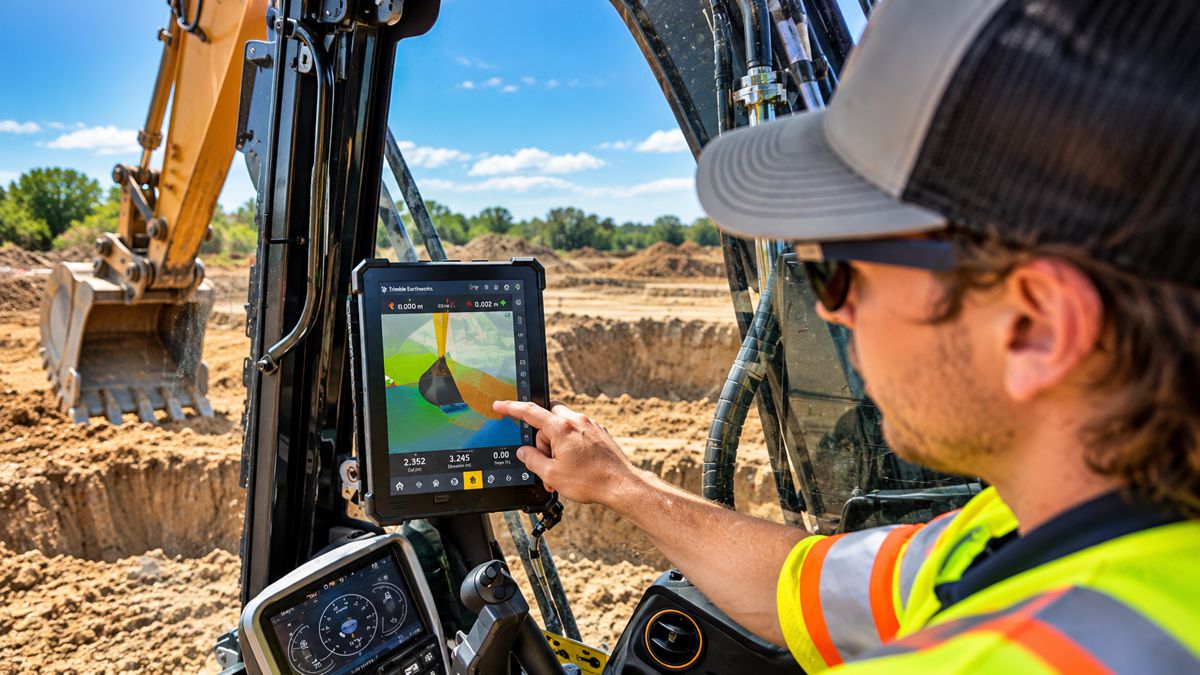
Autonomous operation extends the principle through sensors, positioning systems, onboard computing and control software that allow defined tasks to be performed without continuous human input. A dozer automatically maintaining blade elevation against a digital terrain model performs a very different function from an autonomous haul truck navigating a mine without an onboard driver. Both represent advances in machine control, but their operational requirements and safety challenges differ substantially.
Machines capable of operating without an onboard human create opportunities to reconsider the cab itself. Removing it could reduce machine height, alter weight distribution and free space for other components, although equipment may still require human access for maintenance, recovery, inspection and occasional manual operation.
Safety responsibilities also change when the operator is no longer present. Sensors, control software, communications and the surrounding operating environment must support reliable hazard detection and safe responses when conditions differ from those anticipated by the machine’s designers.
Autonomous Haulage in Mining and Quarrying
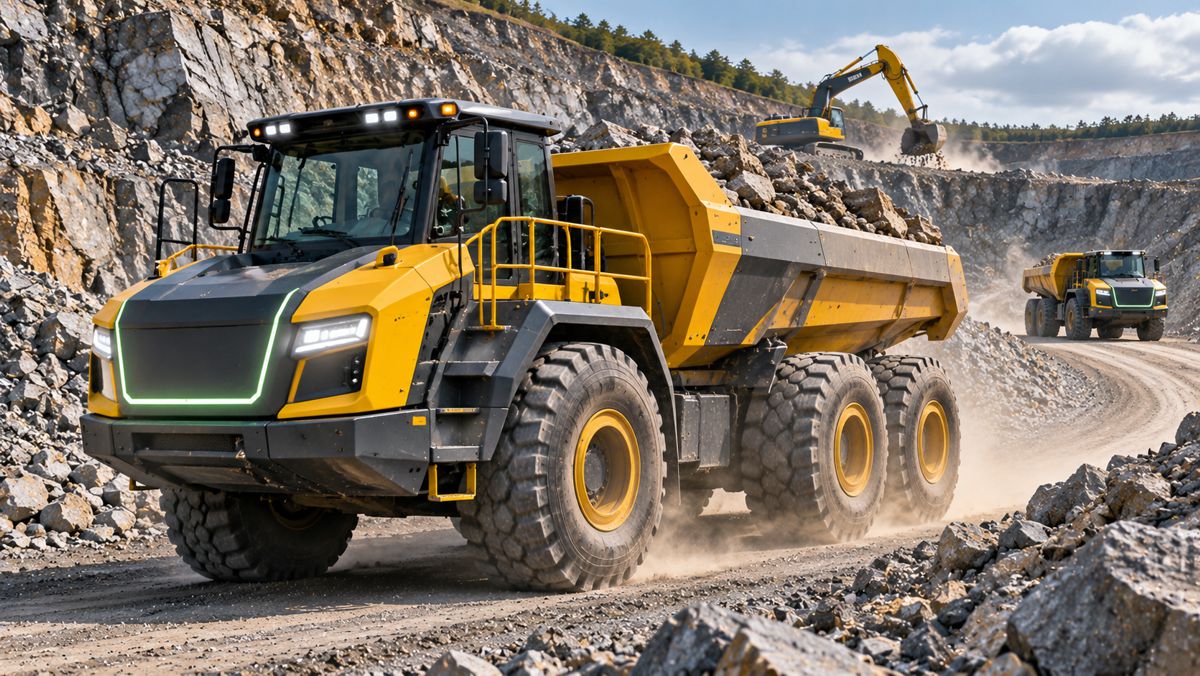
Mining has provided one of the most important proving grounds for autonomous heavy machinery. Large open-pit mines often have controlled access, established haul routes, extensive site communications and fleets operating repetitive cycles over long periods. Those conditions make automation more manageable than on construction sites where excavation fronts, access routes and workforce movements change frequently.
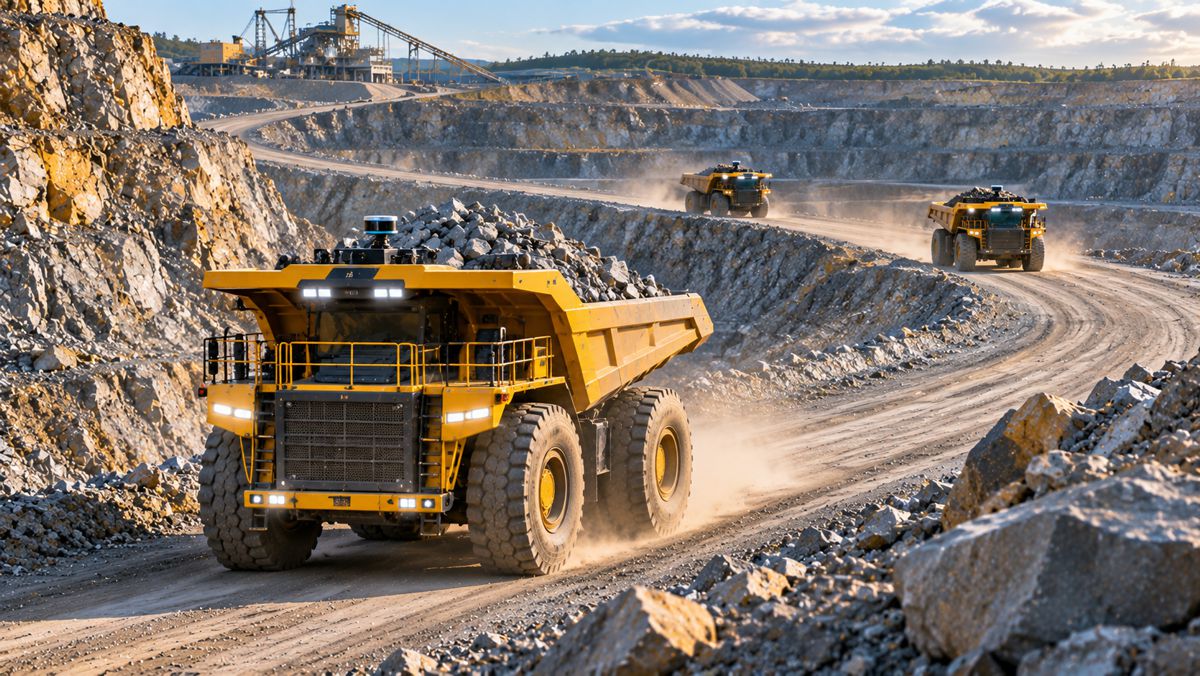
Caterpillar has accumulated substantial operational experience through its autonomous haulage systems. In September 2026, the company reported that its autonomous trucks had transported more than 13 billion tonnes of material worldwide and travelled more than 455 million kilometres with no reported injuries while operating.
The technology is also moving into smaller quarry operations. At Luck Stone’s Bull Run Quarry in Virginia, autonomous Cat 777 haul trucks began operating in November 2024. By September 2026, Caterpillar and Luck Stone reported more than 3.5 million US short tons, approximately 3.2 million metric tonnes, hauled autonomously.
The companies also announced expansion to Luck Stone’s Boscobel and Bealeton quarries, introducing autonomous Cat 775 haul trucks. Moving the technology into this smaller truck class broadens its potential application beyond the largest mining operations.
Autonomous haulage can support more consistent driving behaviour, controlled routing, repeatable operating cycles and integrated fleet dispatching. Deployment nevertheless requires investment in site preparation, communications, personnel training, maintenance and operational procedures.
General construction presents additional challenges because access routes, excavation areas and workforce movements may change repeatedly during a project. Autonomous systems must accommodate these conditions while operating alongside conventional equipment, personnel and other contractors.
Specialist Robots and Automated Excavation
Some of the earliest practical applications of construction robotics involve automating repetitive tasks within existing construction processes. Trenching involves repeated excavation movements that can be planned against a defined route and depth, making it suitable for certain automated operations.
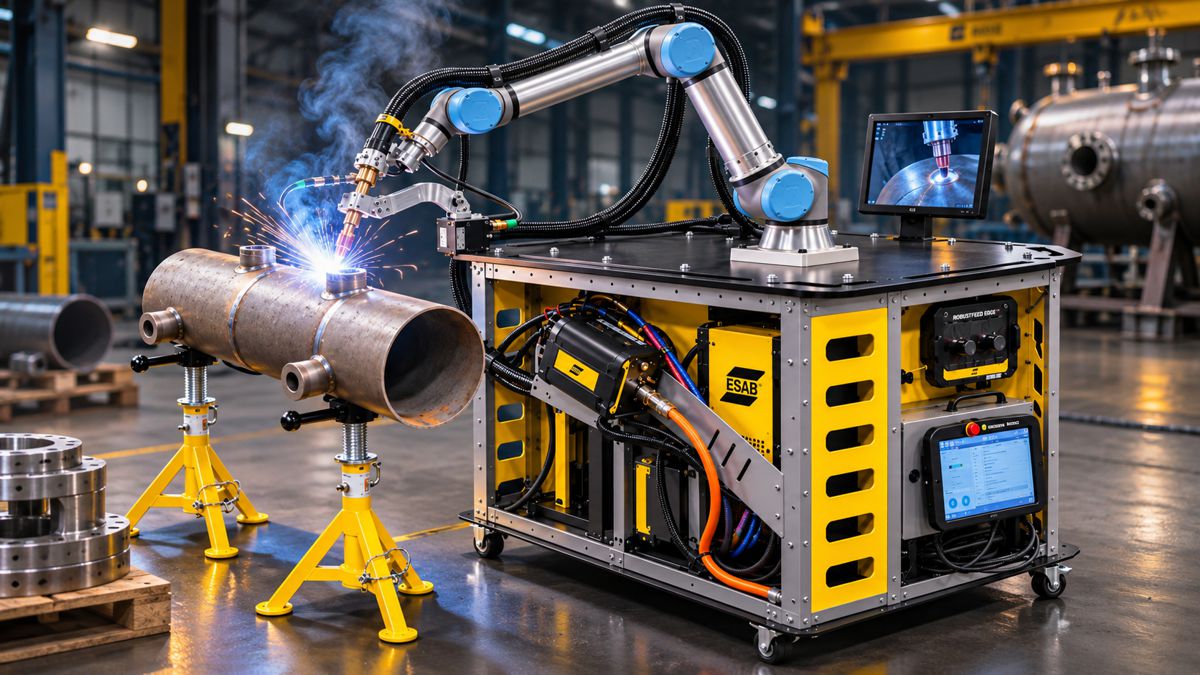
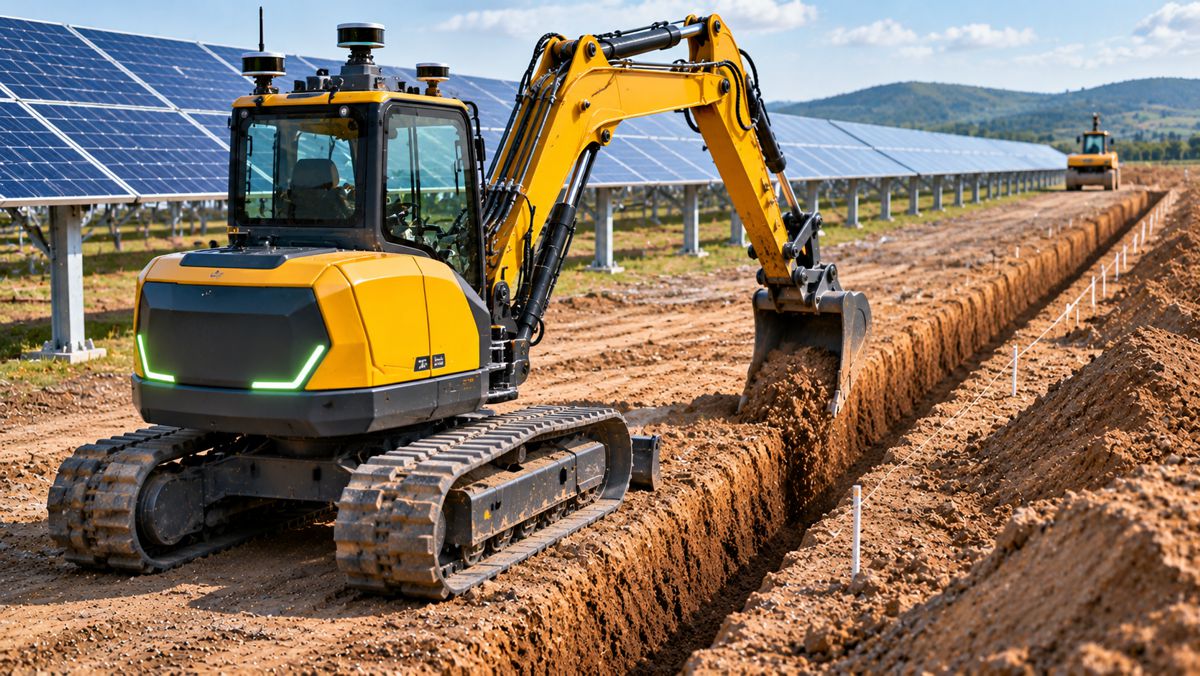
Built Robotics developed its Exosystem, an aftermarket automation system designed to allow compatible conventional excavators to undertake autonomous trenching, particularly for solar energy projects. The system combines positioning technology, sensors, cameras, computing equipment and safety controls to guide excavation along a planned alignment.
Built Robotics describes the installation as reversible, allowing the excavator to retain conventional manual operation when required. This approach adds automated capability to an existing machine rather than requiring contractors to purchase an entirely new equipment category.
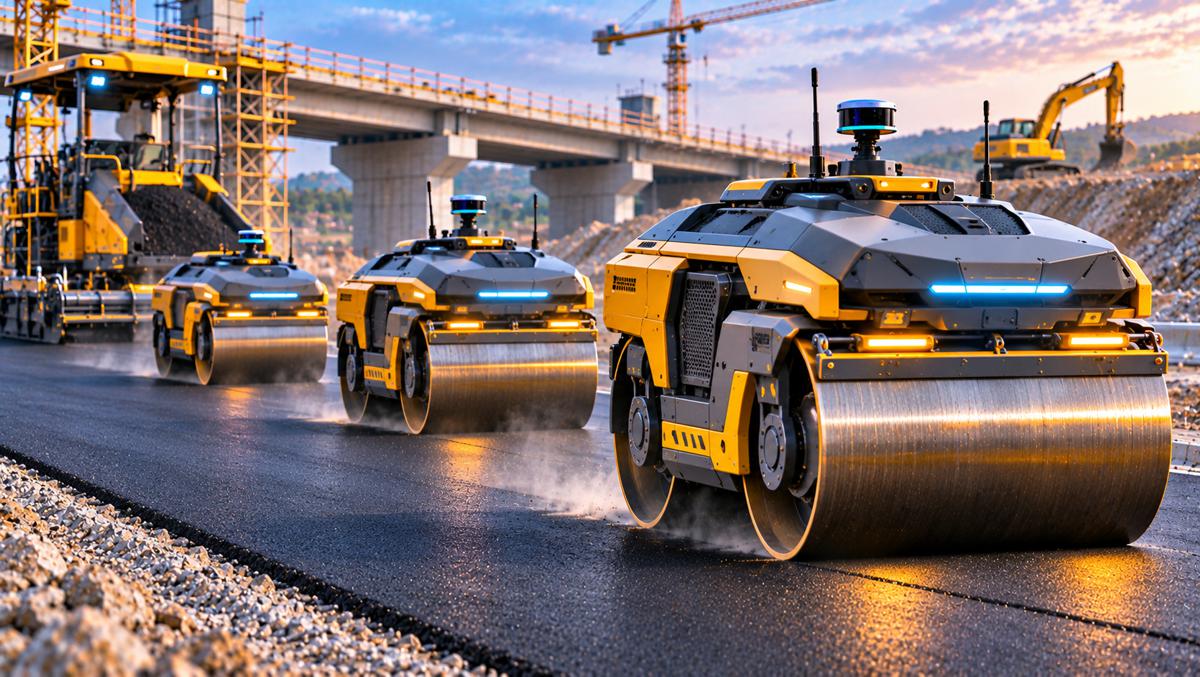
Other developments may involve purpose-built robotic systems for repetitive compaction, surveying, demolition, material handling and operations where tasks can be clearly defined and operating conditions controlled. Smaller autonomous machines could offer advantages in environments where conventional heavy equipment is difficult to deploy, although the relationship between machine size and productivity remains governed by physical requirements.
Moving large quantities of dense material still requires sufficient force, traction, structural strength and energy. A fleet of small robots will not automatically outperform a large excavator simply because it operates autonomously, and machine architecture must continue to match the work.
Fleet Coordination and Machine Data
The previous Machinery Spotlight Month feature, The Economics of Moving Earth, explored how construction productivity depends on the interaction between equipment rather than the performance of individual machines alone. Modern machines can increasingly measure and exchange information about their own performance and operating conditions. An excavator may report its location, bucket position, operating load and production rate, while a haul truck can provide payload, route, travel-time and energy-consumption data. Compactors can record the areas covered and the operating parameters used.
When these systems exchange reliable information, fleet management can respond more effectively to changing conditions. Dispatching software may allocate trucks according to loading requirements, maintenance systems can identify developing component problems before they interrupt production, and digital terrain models can help machines work towards a common design surface.
More advanced coordination could eventually allow excavation, haulage, placement and compaction to be managed as connected operations. Loading sequences, truck movements and material placement could be adjusted according to production conditions, while electric equipment coordinates charging around operational requirements and available electrical capacity.
Such integration remains a developing ambition for general construction, particularly on complex sites with mixed fleets and multiple contractors. Reliable positioning, interoperable data, common operating rules, safety systems, resilient communications and appropriate human oversight are all necessary. A failure in one part of a closely coordinated system can affect the wider operation, making cybersecurity, redundancy and recoverability important considerations alongside productivity.
The Commercial Reality of Intelligent Machinery
Contractors will continue judging equipment by its ability to complete work safely, reliably and economically, regardless of the technology involved. A battery-electric loader may offer lower energy and maintenance costs in a suitable application, but the calculation changes if charging reduces productive hours or requires expensive electrical upgrades. A hydrogen-powered machine may offer familiar operating characteristics and avoid lengthy charging periods, although its commercial viability depends on dependable fuel supply at an acceptable delivered price.
Autonomous machinery may improve consistency and reduce exposure to hazardous work while introducing costs associated with software, sensors, specialist maintenance, communications and system supervision. Equipment manufacturers increasingly provide digital services alongside physical machinery, including telematics, diagnostics, productivity tools and software-based capabilities.
As more machine functions become dependent on software, contractors must consider long-term support, data access, cybersecurity updates, interoperability and the ability to repair equipment independently. A mechanically durable machine can remain useful for decades, and its electronic systems must remain serviceable over a comparable working life if the owner is to realise the full value of the asset.
Mixed fleets are common throughout construction, where contractors cannot always standardise around a single manufacturer and machines from different generations must work together. Digital systems that integrate with existing fleets may therefore offer more practical value than those requiring otherwise serviceable equipment to be replaced.
The Construction Workforce Evolves Again
Machinery has always changed the skills required to build infrastructure. Animal-powered earthmoving depended on people capable of handling and maintaining working animals, while steam machinery introduced boiler operators, mechanics and specialised crews. Diesel-hydraulic equipment created demand for operators and technicians familiar with increasingly powerful mechanical systems, and electronic controls subsequently added diagnostic equipment, sensors and software to the workshop.
Battery-electric machinery requires technicians trained in high-voltage systems, electrical isolation and energy storage. Hydrogen equipment introduces fuel-handling procedures, pressure-system safety and specialist maintenance requirements, while autonomous fleets need personnel capable of supervising operations, responding to abnormal conditions and maintaining machine-control systems.
Experienced equipment operators may become increasingly involved in supervising automated tasks, interpreting production information and handling situations that software cannot reliably resolve. The transition will vary between markets, with some regions facing shortages of experienced operators and technicians while others have abundant labour but limited access to capital, specialist training or advanced infrastructure.
The economic case for automation and alternative powertrains will differ accordingly. Traditional operating and mechanical skills will remain valuable wherever understanding ground conditions, equipment behaviour and practical site operations is essential to making new technology work.
The Machinery That Will Remain
A hydraulic excavator remains an effective solution to the physical problem of digging and lifting material. Crawler tracks continue to provide traction and distribute weight across difficult ground, while articulated loaders and haulers retain geometric advantages that electrification does not eliminate.
Diesel engines also possess practical strengths, particularly in remote operations where established fuel logistics, high energy demand and limited electrical infrastructure favour conventional equipment. Alternative fuels, more efficient combustion systems and hybrid technology may extend the usefulness of existing machine architectures.
Some equipment will be redesigned around electric propulsion and digital control, while other machines will retain familiar forms as their internal systems change substantially. An autonomous electric hauler could operate within a carefully managed quarry fleet, a hydrogen-powered backhoe loader may work on a project with an established fuel supply, and a conventional diesel dozer can use sophisticated machine control to complete grading operations with greater precision.
These are different engineering responses to different operating requirements. The future of construction equipment is unlikely to involve the disappearance of familiar machines or their replacement by a single universal technology.

The Next Century of Construction Machinery
The evolution of construction machinery has been shaped by a continuing effort to turn available energy into useful work. The opening feature of Machinery Spotlight Month, From Horsepower to Kilowatts, traced that journey from animal power through steam and internal combustion to modern electric systems. The second, Why Construction Machines Look the Way They Do, examined how engineering requirements produced the familiar shapes of excavators, loaders, graders and dozers. The third explored the economics of productive work, where the performance of an entire operation often matters more than the capacity of any individual machine.
A century from now, some construction machines may look remarkably familiar. Excavators will still need to generate digging forces, haulers will still need to transport heavy loads, and equipment working in difficult ground will still require traction, stability and durability. Other machines may operate without conventional cabs, diesel engines or even the mechanical arrangements that have defined construction equipment for generations.
Their development will depend on advances in energy storage, hydrogen production, power electronics, sensors, software and the ability to coordinate increasingly complex operations. Some technologies will prove commercially successful, while others will remain confined to particular applications or disappear as better alternatives emerge.
Construction machinery began by extending the physical strength of people and animals. Over successive generations, it concentrated extraordinary power in machines capable of transforming landscapes and building the infrastructure of modern civilisation. The next generation will offer contractors more choices in how that power is produced, controlled and applied, with the strongest investments likely to be those that match new technology to the practical demands of the work.
Key Industry Questions
- Will electric construction machinery replace diesel completely? A complete replacement is unlikely in the foreseeable future. Battery-electric equipment is increasingly practical for certain applications, while diesel, hybrid, hydrogen and externally powered machinery may remain appropriate for different operating conditions.
- What is the difference between a hydrogen engine and a hydrogen fuel cell? A hydrogen combustion engine burns hydrogen to produce mechanical power. A fuel cell converts hydrogen into electricity through an electrochemical reaction, which can then power electric motors and other systems.
- Are hydrogen construction machines commercially available? Yes. JCB launched its production 3CX Hydrogen backhoe loader in May 2026, together with a supporting mobile refuelling approach. Commercial availability and fuel supply remain market-dependent, while several hydrogen fuel-cell construction machines are still at prototype or demonstration stage.
- Is hydrogen more efficient than battery-electric machinery? When both systems begin with electricity, direct battery-electric operation is generally more energy-efficient because hydrogen production, compression, distribution and conversion introduce additional losses. Hydrogen may offer operational advantages where battery charging or storage is difficult.
- Can construction machines operate without drivers? Yes, within defined operating conditions. Autonomous haul trucks are commercially established in mining and increasingly used in quarrying. Autonomous excavation and other construction applications are at varying stages of deployment and development.
- Will future construction machines still use hydraulics? Hydraulics are likely to remain important because of their high force capability and compact power transmission. Electrically driven hydraulic systems and electromechanical actuators may increasingly complement conventional arrangements.
- Could construction machinery operate without a cab? Remote and autonomous operation can make an onboard cab unnecessary for certain tasks. However, safe operation, maintenance, recovery and occasional manual control must still be accommodated.
- What is the biggest obstacle to intelligent construction fleets? The challenges include reliable perception, changing site conditions, safety assurance, equipment interoperability, communications, cybersecurity and the commercial cost of integrating multiple systems.
Strategic Takeaways
- Future machinery development is likely to involve several powertrain technologies rather than a single replacement for diesel.
- JCB’s production hydrogen backhoe loader establishes a commercial application for hydrogen combustion, although fuel logistics and operating economics remain central to wider adoption.
- Electrification creates opportunities to redesign machinery, while conventional hydraulics and proven machine geometries remain effective.
- Autonomous haulage is established in mining and expanding into quarrying, with general construction presenting more variable operating conditions.
- Fleet investment decisions will increasingly depend on the compatibility of machinery, energy infrastructure, software support and production requirements.