






Belkin’s New Privacy Glass Tackles Smartphone Brightness and Battery Life
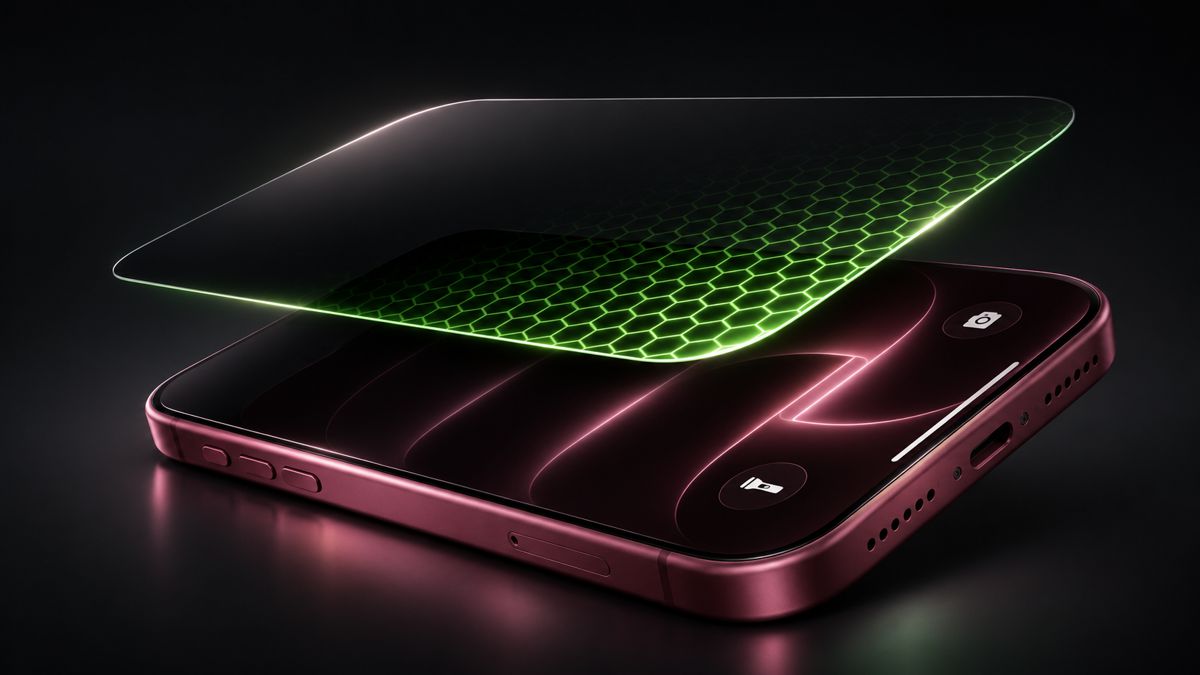
Belkin has developed a smartphone privacy screen protector that promises to overcome one of the persistent drawbacks of conventional privacy glass: the loss of display brightness that comes with restricting viewing angles. Its Titan SmartShield Pro Bright Privacy Screen Protector uses light-diffusing optical technology to limit what people can see from the side while preserving more of the display’s original brightness.
The company reports improvements of up to 10% in screen brightness and battery life compared with traditional two-way privacy protectors under controlled testing conditions. The product has also been named a CES Innovation Awards 2027 Honoree in the Mobile Devices, Accessories & Apps category, ahead of the January technology exhibition in Las Vegas.
Although developed for the consumer smartphone market, the technology addresses a familiar problem for mobile professionals who need to read information clearly while preventing people nearby from seeing commercially sensitive material. For engineers, project managers and other employees working between offices, construction sites and public spaces, privacy protection is considerably less useful if it makes a screen difficult to read.
Briefing
- Belkin’s Titan SmartShield Pro Bright Privacy has received CES Innovation Awards 2027 recognition.
- Light-diffusing technology restricts side-angle viewing while preserving display brightness.
- Belkin reports up to 10% greater brightness and 10% longer battery life in controlled comparisons.
- Nano-Titan reinforced glass offers impact and scratch protection alongside anti-reflective treatment.
- The technology could improve visual privacy for professionals handling sensitive information on mobile devices.
Overcoming the Brightness Problem
Traditional smartphone privacy protectors rely on optical filtering that restricts the angles from which a display can be viewed. Somebody looking directly at the screen can continue reading it, while people sitting alongside see a substantially darker image. The approach works reasonably well for casual visual privacy, but the filtering also reduces the amount of light reaching the intended viewer.
That loss becomes particularly noticeable outdoors, under strong artificial lighting or whenever reflections make the display difficult to read. Users often compensate by increasing screen brightness, which can increase power consumption and reduce the time available between charges. The effect depends on the display technology and brightness settings, but it creates an awkward trade-off between privacy and everyday usability.
Belkin’s Bright Privacy technology uses a light-diffusing optical construction intended to maintain stronger forward visibility while limiting side-angle viewing. An anti-reflective coating further reduces surface glare, helping preserve image clarity and colour reproduction without requiring the user to remove the protector in brighter surroundings.
According to Belkin’s technical documentation, the design provides two-way privacy protection when the smartphone is held in portrait orientation. It does not restrict visibility equally from every direction, and somebody looking over the user’s shoulder or directly towards the screen may still be able to read the display.
Belkin’s reported brightness and battery improvements are based on third-party laboratory comparisons with standard privacy screen protectors. The company states that the technology can provide up to 10% better screen brightness and up to 10% longer battery life, although the precise benefit will depend on the handset, display settings and usage conditions.
The battery advantage is associated with retaining more usable display light, potentially allowing users to operate at a lower brightness setting. Wireless communications, active applications and background processes continue to influence overall battery consumption, so the laboratory figures should not be interpreted as a guaranteed improvement across an entire working day.
Protecting Information During Mobile Working
Smartphones have become routine working tools across construction and infrastructure projects, carrying everything from contract correspondence and procurement information to engineering drawings, project photographs and financial records. Much of this material is accessed outside conventional office environments, where employees have limited control over who may be standing or sitting nearby.
A project manager checking a confidential tender while travelling, or an engineer reviewing client correspondence in a shared site office, may inadvertently expose information without the device itself being compromised. The risk is commonly known as shoulder surfing, where somebody obtains information simply by observing another person’s screen.
The concern is recognised in established cybersecurity guidance. The US Army Cyber Command identifies privacy screens as one practical method of reducing visual observation of sensitive information in public or shared environments.
A physical privacy filter provides an additional safeguard alongside device authentication, access controls and appropriate information-handling procedures. It cannot prevent information being exposed through insecure applications, compromised accounts or careless sharing, and its effectiveness depends on the observer’s position relative to the screen.
For people who regularly work outdoors, however, there is also the practical question of visibility. Construction sites, transport facilities and temporary project offices can present difficult lighting conditions, while smartphones may need to be used with one hand, at varying angles or under direct sunlight. A protector that retains more display brightness could make visual privacy easier to maintain without encouraging users to remove the glass whenever conditions become challenging.
There are compromises. Restricting side-angle visibility can make it harder to show a drawing or photograph to a colleague standing nearby, and the available test information does not establish how Belkin’s protector performs under every outdoor lighting condition. Organisations considering privacy glass for operational devices would still benefit from testing it in the environments where employees actually work.
Reinforced Glass and Everyday Durability
Belkin has combined the optical design with its Nano-Titan reinforcement technology, which is intended to improve resistance to impact and everyday wear. The company reports that the protector has survived controlled drop testing from heights of up to nine feet, approximately 2.7 metres, together with scratch testing involving up to 10,000 abrasion cycles.
Those results describe the screen protector’s performance under specified laboratory conditions rather than guaranteeing that an entire smartphone will survive a comparable fall. Dropping a device onto concrete, steelwork or uneven aggregate can produce different impact forces depending on the angle of contact, handset construction and protective case.
Scratch resistance is also relevant to mobile working, particularly where devices are frequently carried with keys, tools or other equipment. Belkin’s testing provides an indication of surface durability, although laboratory abrasion procedures cannot reproduce every form of damage encountered in practical use.
The protector includes an anti-fingerprint coating to reduce visible smudging and an installation tray designed to simplify alignment with the smartphone display. Belkin’s product support information lists compatibility with the iPhone 18 Pro and iPhone 18 Pro Max, together with support for Face ID and selected protective cases.
These features are familiar in the premium screen protection market, where glass strength, coating quality and installation accuracy have become established selling points. Bright Privacy’s additional emphasis on optical efficiency provides a more technically distinctive element, particularly where screen brightness and power consumption influence how comfortably a device can be used.
CES Recognition and Product Availability
The Consumer Technology Association has recognised the Titan SmartShield Pro Bright Privacy Screen Protector through its annual CES Innovation Awards programme, which attracted nearly 4,000 submissions for 2027 across 37 technology categories.
Entries are evaluated by an independent panel drawn from engineering, design, media and other professional disciplines. The Honoree designation recognises the product’s design and engineering, although the awards programme does not constitute independent certification of every technical or performance claim.
For Belkin, which operates in a crowded international market for mobile accessories, the recognition provides an opportunity to distinguish a product whose principal development is less immediately visible than a new device feature or physical design. Privacy screen protectors are already widely available, but maintaining their effectiveness while reducing the associated loss of display brightness remains a practical engineering challenge.
Dermot Keogh, Senior Director of Product Management for Belkin’s Device Protection category, explained the company’s approach:
“With Bright Privacy, we set out to solve a common frustration with traditional privacy screen protectors by bringing together privacy, clarity, protection and power efficiency in one solution.”
The Titan SmartShield Pro Bright Privacy Screen Protector is available for selected iPhone models through Belkin and participating retailers, with availability dependent on the market.
For businesses purchasing mobile accessories, the relevant considerations extend beyond the CES recognition. Device compatibility, replacement costs, physical durability and the ability to maintain clear visibility in different working environments all affect whether a privacy protector is suitable for routine professional use.
Belkin’s controlled testing provides an initial measure of its optical and battery performance, while broader independent comparisons would help establish how much improvement users can expect under everyday conditions. If the brightness advantage translates consistently into practical use, privacy glass may become a more attractive option for employees who have previously found conventional protectors too restrictive.
Key Industry Questions
- 1. What is the Belkin Titan SmartShield Pro Bright Privacy Screen Protector? It is a reinforced smartphone screen protector that restricts side-angle viewing while preserving more display brightness than conventional two-way privacy glass.
- 2. How does Belkin’s Bright Privacy technology work? The protector uses a light-diffusing optical construction to reduce visibility from lateral angles while allowing more screen light to reach the intended viewer. An anti-reflective coating helps reduce surface glare.
- 3. How much brighter is the screen with Belkin Bright Privacy? Belkin reports up to 10% greater brightness compared with traditional privacy screen protectors under controlled laboratory conditions. Actual performance depends on the handset and operating environment.
- 4. Can privacy glass improve smartphone battery life? Potentially. More efficient light transmission may allow users to select a lower screen-brightness setting. Belkin reports improvements of up to 10% in controlled comparisons, but this is not a guaranteed increase in daily battery life.
- 5. Can privacy screen protectors help construction and infrastructure professionals? They can reduce casual observation of confidential emails, tender documents, financial information and project records when smartphones are used in public spaces or shared working environments.
- 6. Does the protector prevent people from seeing the screen from every direction? No. The product uses two-way privacy filtering, principally restricting lateral viewing angles when the smartphone is held in portrait orientation. It does not provide complete visual concealment.
- 7. How durable is Belkin’s Nano-Titan screen protection? Belkin reports controlled drop testing from heights up to approximately 2.7 metres and scratch resistance testing involving up to 10,000 cycles. These results do not guarantee protection against every impact or abrasion.
- 8. Does the CES Innovation Award independently verify Belkin’s performance claims? No. The award recognises design and engineering through a judging process. The Consumer Technology Association does not independently certify all product performance claims.
Strategic Takeaways
- Privacy and usability: Improving light transmission reduces the compromise between restricting unwanted viewing and maintaining a readable smartphone display.
- Information protection: Physical privacy filters can supplement digital security measures when commercially sensitive information is accessed in public or shared environments.
- Operational performance: Battery efficiency and outdoor visibility are practical purchasing considerations for organisations relying on smartphones throughout the working day.
- Product evaluation: Laboratory impact, scratch and brightness results provide useful reference points, but field performance remains dependent on the device and operating conditions.
- Commercial differentiation: Optical efficiency gives Belkin a more measurable product feature in an accessories category traditionally dominated by durability, fit and installation convenience.