VolvoCE invests in production of Electric Wheel Loaders in Sweden
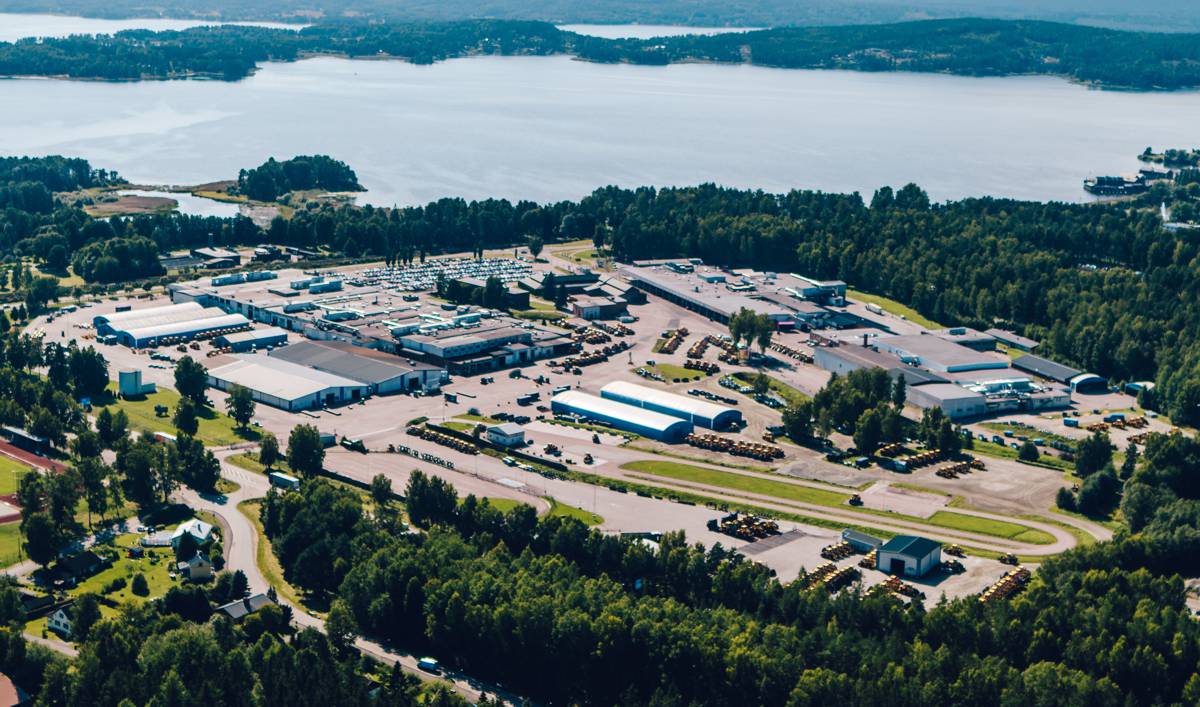
As part of its ambition towards industry transformation through sustainable solutions, Volvo Construction Equipment (Volvo CE) has announced an investment into the production of electric wheel loaders from its plant in Arvika, Sweden.
The SEK 65 million (around $6.3 million) investment from Volvo Group will allow the Arvika factory in Sweden – which specializes in the production of medium and large wheel loaders – to expand its facilities with a new building and allow for the phased introduction of new electric wheel loaders.
It is not only a milestone in the plant’s almost 140-year history, but a significant moment for Volvo CE and its determination to be completely fossil free by 2040 – in line with the aims of the Paris Agreement and as laid out in the manufacturer’s industry leading Science-Based Target goals. It is also a pioneering step forward in its ambition for 35% of its machines sold to be electric by 2030.
Coming soon after an announcement to invest in electric haulers from the company’s production facility in Braås, Sweden, it is also a signpost that Volvo CE is committed to achieving more sustainable solutions for customers across all its product lines – and is dedicated to driving that change forward in the here and now. These announcements are part of an investment strategy that allows Volvo CE to advance electric solutions across its production facilities, including also the Konz facility in Germany, Belley in France and Changwon in South Korea, where other electric machines are made.
Site Manager Mikael Liljestrand says: “This is a clear signal of our commitment to building the world we want to live in. It is more than 40 years since we last invested in a new building and what better reason now than to invest in our future, our planet and the next generation. We know that this is not only important to our customers and stakeholders, who rightly have high expectations on us, but it is also close to our hearts to be part of something bigger in building our future.”
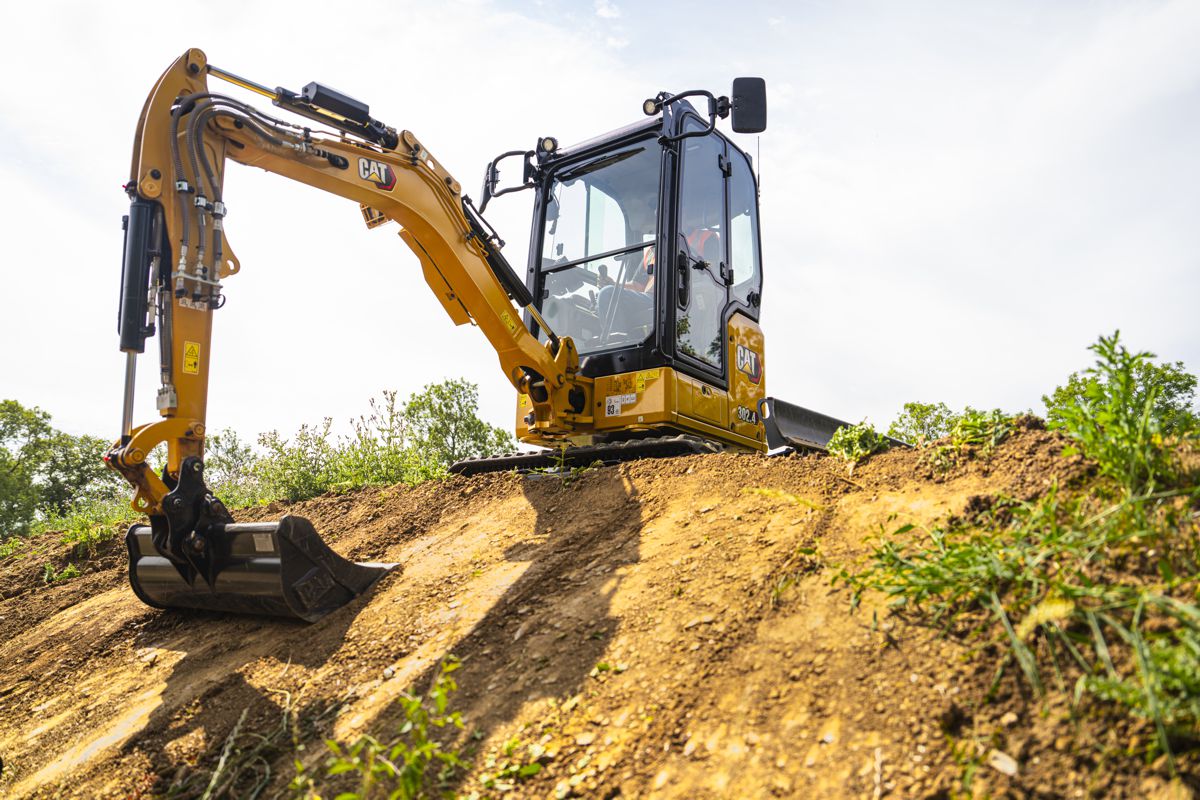
Volvo CE has already successfully introduced compact electric wheel loaders to the global market with the L20 Electric and L25 Electric wheel loaders proving to be efficient, zero-exhaust emission solutions capable of driving down carbon emissions while maintaining high productivity across a variety of customer applications. Together with the ECR25 Electric, ECR18 Electric and EC18 Electric compact excavators and the mid-size EC230 Electric excavator, Volvo CE has one of the largest electric ranges on the market.
SUSTAINABILITY TRANSFORMATION
Thanks to the investment, Arvika will erect a new building, approximately 1,500 sq m, which will allow the facility to free up areas inside its assembly factory to be able to build electric wheel loaders. While it has not yet been announced which models will begin their electric transformation and exactly when, production of both electric wheel loaders and more traditional wheel loaders fitted with combustion engines will continue for now on the same production line.
Volvo CE will ensure a phased introduction model by model, taking into account all aspects of the electric ecosystem as it does so, including infrastructure requirements, charging solutions, battery handling and business models. The result will be reliable mid-size and larger electric wheel loaders that can easily be integrated into customers’ business.
It is not the first sustainability initiative from the Arvika facility. Despite actually increasing production last year, the factory managed to reduce its internal climate footprint by 350 tons of CO2 thanks to a variety of emission reduction efforts.
“Our goal at the factory in Arvika, as well as Volvo CE and the entire Volvo Group is to be climate-smart and to produce fossil-free machines,” continues Mikael. “Together, we are quite clear that we want to lead this transformation and be the driving force of more sustainable ways of working for the benefit of our planet. This investment is Arvika’s exciting first step towards electrification.”
Building work is set to begin later this year, with further announcements on when production will begin to come.