New Hanoi Metro Line Sparking Green Mobility Revolution in Vietnam
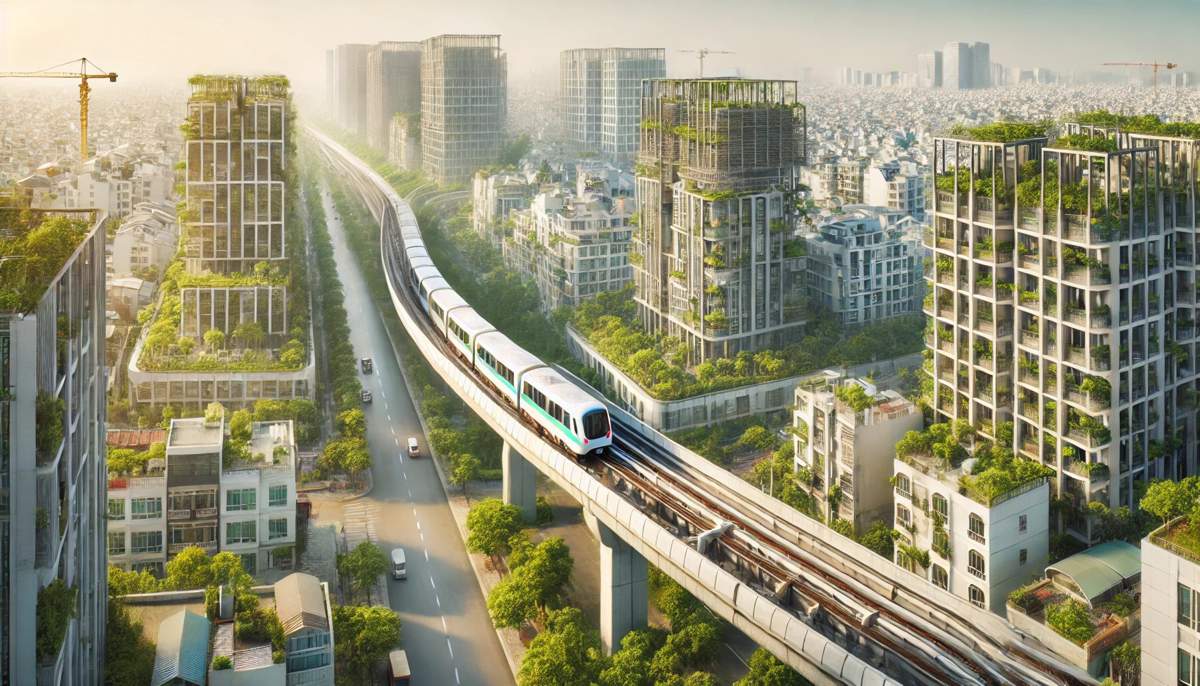
On 9th November 2024, the elevated section of Hanoi Metro Line 3 was officially inaugurated, marking a significant leap in Vietnam’s journey toward sustainable urban mobility.
This section, stretching approximately 8 km from Nhon to Cau Giay, encompasses eight stations designed to serve the bustling capital. It’s set to provide an environmentally friendly mode of transportation that promises to reduce congestion and transform daily commutes in Hanoi.
But the journey doesn’t stop there. The underground section, which will extend the line by four more stations, kicked off its construction on 30th July 2024. Once completed, this will connect directly to Hanoi Railway Station, integrating the metro line seamlessly into the city’s transport network. The long-term vision includes extending Line 3 further south, with plans to seek funding from the European Union’s Team Europe initiative, along with contributions from Agence Française de Développement (AFD) and KfW Development Bank.
A Triumph of Global Collaboration
This ambitious project represents a shining example of international cooperation, with the Vietnamese government working closely alongside France and major global financial institutions. The AFD, the European Investment Bank (EIB), and the Asian Development Bank (ADB) have collectively financed the venture, underscoring their commitment to supporting Vietnam’s sustainable transport objectives.
France, in particular, has played a pivotal role, contributing over €500 million through the Directorate General of the Treasury and AFD. The ADB’s investment of $407.8 million and EIB Global’s contribution of €141 million have further strengthened the project’s financial foundation.
According to Olivier Brochet, the French Ambassador to Vietnam: “The opening of this section demonstrates the ability of Franco-Vietnamese teams to successfully undertake ambitious infrastructure projects in the rail transport sector. It underscores our commitment to supporting Vietnam in its transition to a low-carbon economy.”
European Expertise and Cutting-Edge Technology
Beyond financial support, the project is driven by the technological prowess of industry leaders. French companies like Alstom, Thales, and Colas Rail supplied the rolling stock, signalling, and communication systems. Meanwhile, RATP Smart Systems delivered a state-of-the-art ticketing solution to ensure smooth operations.
On the ground, civil construction was managed by a consortium of companies, including Vietnam’s VINACONEX and Hancorp, alongside international heavyweights like Daelim (Korea) and Ghella (Italy). The Tunnel Boring Machines for the underground segment, supplied by Hyundai E&C and Ghella, were officially launched in July 2024. This marks a critical phase in advancing Hanoi’s metro network.
Jean-Alexandre Egea, the French Embassy’s Economic Counsellor, emphasised: “The opening of Hanoi Subway Line 3’s elevated section is a key milestone in Vietnam’s green mobility journey. It showcases French companies’ capability to deliver complex infrastructure projects in partnership with Vietnamese authorities.”
Transforming Hanoi’s Urban Mobility
The ultimate goal of Hanoi Metro Line 3 is to alleviate the city’s chronic traffic congestion and provide a cleaner, greener transportation alternative. Once fully operational, the metro line is expected to carry up to 90 million passengers annually, boosting the use of public transport from 15% to an ambitious 40%.
Shantanu Chakraborty, ADB’s Country Director for Vietnam, highlighted the broader impact, stating: “Urban vehicles in Asia’s cities are doubling every six years, significantly contributing to greenhouse gas emissions. Hanoi’s Metro Line 3 will offer an affordable, reliable, and safe public transport option, cutting travel time by 25% along its corridor.”
Furthermore, the metro system is projected to reduce CO₂ emissions by 33,150 tonnes per year, aligning with Vietnam’s commitment to achieving net-zero emissions by 2050. The project is also a cornerstone of the Just Energy Transition Partnership (JETP), which aims to support Vietnam’s shift toward low-carbon development.
Challenges and Triumphs in Project Implementation
The implementation of such an extensive infrastructure project in a rapidly growing city like Hanoi is no small feat. The project has faced challenges, from navigating the complexities of urban construction to managing international collaboration among diverse stakeholders. However, the commitment of all parties involved has been unwavering.
Hervé Conan, AFD’s Director in Vietnam, noted: “The new Line 3, combined with a robust bus network, will be a game changer for sustainable urban transport in Hanoi. Beyond reducing carbon emissions, it will significantly improve the daily lives of Hanoi’s residents by providing safer, cleaner, and more efficient mobility options.”
Indeed, the collaborative efforts of global partners, Vietnamese authorities, and private contractors have paved the way for the successful completion of the elevated section. The ongoing construction of the underground portion promises to deliver further benefits as the project reaches its final stages.
Future Expansion and Ongoing Commitments
Looking ahead, the vision for Hanoi’s metro system doesn’t end with Line 3. Plans are already underway to extend the line further, with an eye on securing additional funding from Team Europe and other international financiers. The project has not only opened up new avenues for public transport but has also laid the groundwork for future collaborations in sustainable urban infrastructure.
EIB Vice-President Nicola Beer expressed optimism, stating: “This project underscores our commitment to sustainable transport in Vietnam. By combining expertise with local and international partners, we’re bringing effective mobility solutions that align with global climate action goals.”
The EU’s Global Gateway initiative also plays a crucial role in strengthening Vietnam’s transport infrastructure, aiming to narrow the global investment gap in green technologies.
Building a Greener Future
At its core, Hanoi Metro Line 3 is more than just a transport project; it’s a bold statement of Vietnam’s commitment to sustainable development. By investing in public transit, the country is addressing its pressing air pollution issues and setting a course for a greener, more resilient urban future.
Julien Guerrier, the EU Ambassador to Vietnam, affirmed: “The EU remains dedicated to working with Vietnam to curb CO₂ emissions through sustainable transport. Projects like Hanoi Metro Line 3 are testament to what can be achieved through international collaboration.”
With the support of global partners, Vietnam is well on its way to becoming a leader in sustainable urban mobility. The success of this project offers a blueprint for other cities in the region grappling with similar challenges.
Looking Ahead with Optimism
The opening of the elevated section of Hanoi Metro Line 3 marks not just the completion of a project, but the dawn of a new era in urban mobility for Vietnam. As the country continues to invest in infrastructure that prioritises sustainability, the benefits will extend far beyond the immediate reduction in traffic congestion. It’s a transformative step that sets a positive precedent for future urban development projects across Southeast Asia.
As Vietnam’s cities continue to grow, initiatives like Line 3 will play a crucial role in ensuring that this growth is sustainable, efficient, and beneficial for the environment and citizens alike. In partnership with international financiers, local authorities are proving that ambitious, green projects are not just dreams, but achievable realities.