Volvo Plugs the EWR150 Electric Wheeled Excavator into our Zero Emission Future
Volvo Construction Equipment has put its first battery electric wheeled excavator on sale, and it’s Europe that gets first dibs. The EWR150 Electric, a 15 to 17 tonne machine built to do everything its diesel twin can do but without a tailpipe, has moved from concept to a model customers can actually order.
For a segment that until now has run almost exclusively on diesel, that’s a meaningful shift, and it lands at a moment when access to Europe’s busiest urban jobsites increasingly hinges on what comes out of the exhaust.
The headline isn’t simply that Volvo has electrified another machine. It’s the type of machine. Wheeled excavators earn their keep by driving themselves between jobs on public roads, no low loader required, which makes them the workhorses of inner city utilities, road maintenance and tight infill construction. Electrifying that mobility, rather than a tracked digger that has to be hauled everywhere, is where the commercial logic starts to bite.
Volvo is betting that contractors who already value the wheeled format will pay to keep it once cities start fencing off diesel altogether.
Briefing
- Volvo CE’s EWR150 Electric is on sale now in Europe, the first region to get the company’s debut battery electric wheeled excavator.
- The 15 to 17 tonne machine matches its diesel equivalent on reach, lifting capacity, travel speed and weight, with a short swing radius suited to confined urban work.
- A 270 kWh battery and an energy recovery system deliver a typical eight to ten hours of operation, with up to 150 kW DC fast charging and 22 kW onboard AC charging.
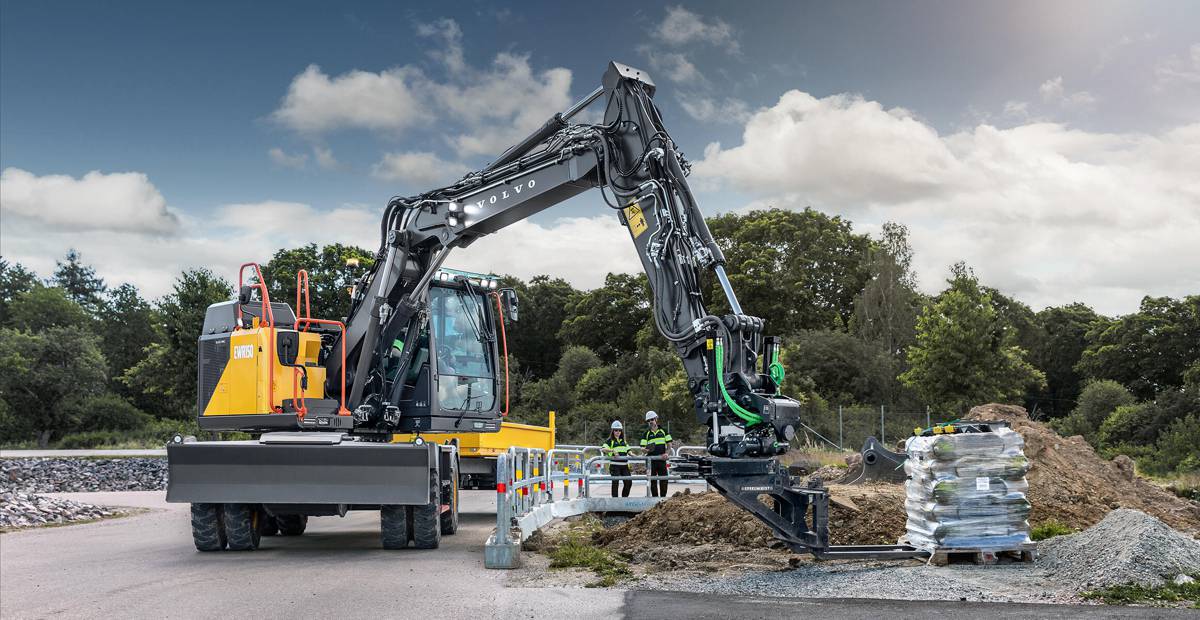
- The machine drives on public roads under its own power, removing the cost and hassle of trailering it between sites.
- Europe leads because zero emission zones, noise limits and green public procurement are concentrated there, making it the strongest near term market for the format.
Why road legal mobility is the whole point
Strip away the powertrain and the wheeled excavator’s defining trait is independence. It travels at up to 35 km/h, relocates between jobs without a transport trailer, and turns up ready to work. That self sufficiency is exactly what’s been missing from the electric conversation, which has so far leaned heavily on compact and tracked machines tethered to a single site.
By keeping the EWR150 Electric road capable, Volvo preserves the one feature that makes the format commercially attractive in the first place, then bolts zero emission operation on top.
The compact short swing design does the rest of the heavy lifting in dense environments. With a tail swing radius of 1,720 mm, the machine can pivot in spaces where a conventional counterweight would foul kerbs, scaffolding or parked vehicles. That matters for the kind of work electric machines are best placed to win, namely utilities, landscaping, road construction and demolition in built up areas where quiet, emission free running lets crews operate outside standard hours and inside increasingly restricted city centres.
A working day on a single charge
At the core sits a redrawn drive concept. An electric travel motor pairs with a hydraulic boom energy recovery system that captures and reuses energy as the boom lowers, stretching runtime to a typical eight to ten hours depending on the application.
For a single shift operation, that’s the number that matters, and it’s the figure that tends to make or break electric adoption on a real site rather than in a brochure. The 270 kWh battery running at 600 volts gives the machine the headroom to sustain demanding cycles without operators rationing their digging.
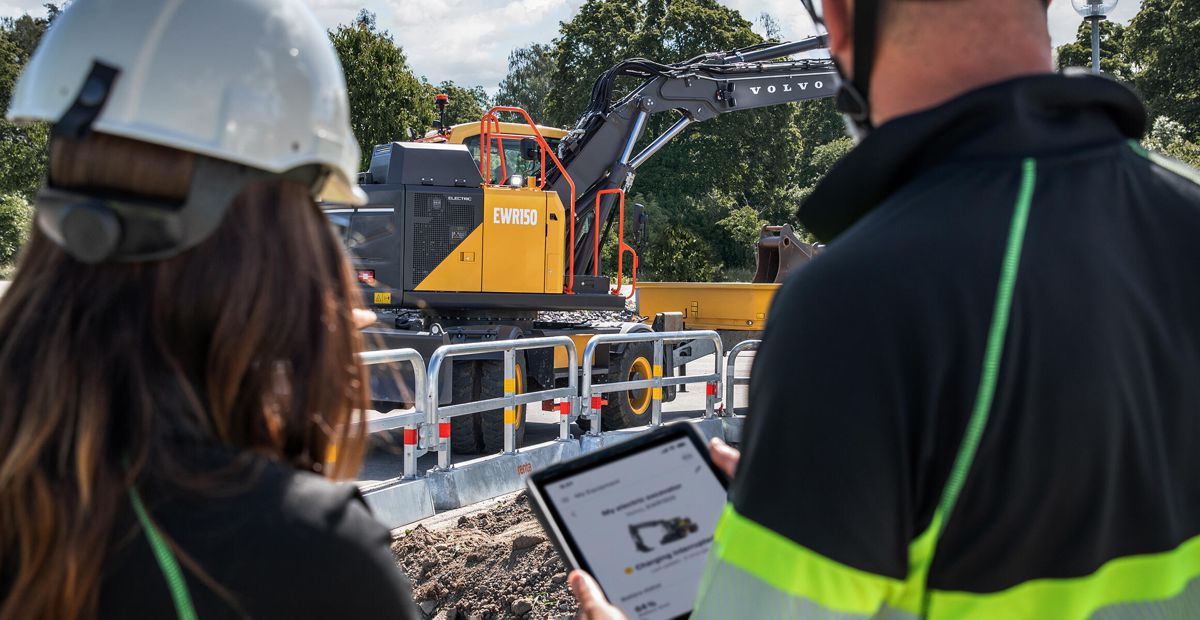
Charging flexibility is where Volvo has clearly listened to fleet managers. The EWR150 Electric accepts up to 150 kW DC fast charging through a CCS2 connector for a rapid turnaround or a top up during breaks, alongside up to 22 kW onboard AC charging for slower overnight replenishment. That dual approach hedges against the patchy charging infrastructure that still dogs urban construction sites, letting a contractor trickle charge from a depot socket one night and blast the battery back to working capacity in a lunch break the next day. Spec sheets evolve, and these figures mark a step up from the slower onboard charging quoted when the machine first appeared as a concept in 2024.
The maintenance and ownership maths
Electric drivelines carry fewer moving parts, and that translates directly into the ledger. Volvo points to reduced maintenance requirements and improved uptime, both of which feed a lower total cost of ownership across the machine’s life.
No diesel particulate filters to regenerate, no engine oil changes on the same cadence, and fewer components that wear out under vibration and heat. For rental fleets and public agencies running tight utilisation targets, that uptime story can matter as much as the emissions one.
The fuel side of the equation is moving in electric’s favour too. Volatile diesel prices and the operational savings from simpler servicing are reshaping the sums that contractors run before they buy, and the industry consensus is that total cost of ownership is increasingly tilting towards battery machines even where the upfront sticker is higher.
Volvo has also made a point of building the EWR150 Electric as a factory machine rather than a diesel chassis converted after the fact, which it argues delivers better energy efficiency than aftermarket conversions of the same class.
A market being rewritten by zero emission zones
The timing isn’t accidental. Analysts peg the global electric construction equipment market at somewhere between 11 and 16 billion US dollars in 2025, with forecast annual growth rates ranging from the high teens to the low twenties in percentage terms over the next decade. Europe sits at the sharp end of that curve. One estimate has the region’s electric construction equipment volumes climbing from around 3,700 units in 2024 to nearly 15,000 by 2030, a compound annual growth rate above 26 per cent, driven overwhelmingly by regulation rather than novelty.
That regulation has a name in city after city. Zero emission zones, low emission zones and green public procurement rules are widely cited as the single strongest demand driver for electric machinery, because they convert a sustainability preference into a hard condition of site access. German cities including Berlin, Hamburg and Munich are pushing zero emission construction zones, while France’s wave of urban transport megaprojects has come with tighter emissions and noise rules on city sites.
Launching in Europe first, as Marc Engels, Global Product Manager at Volvo CE, said: “With the EWR150 Electric, we’ve applied electric technology to the wheeled excavator segment without changing how customers use the machine. By bringing this machine to market in Europe first, we are responding directly to customer demand for solutions that can operate efficiently in urban and noise-sensitive environments, without compromising productivity or capability.”
Volvo isn’t alone in chasing this, and the competitive field is filling out fast. Caterpillar, Komatsu, Hitachi and JCB have all expanded battery electric ranges, with Hitachi unveiling its largest electric excavator line up at bauma 2025 and Caterpillar rolling out electric mini and medium excavators. What Volvo has done is plant a flag in the wheeled excavator niche specifically, a corner of the market where factory built electric options have been thin, giving it a window to define the segment before rivals crowd in.
Where the EWR150 Electric goes from here
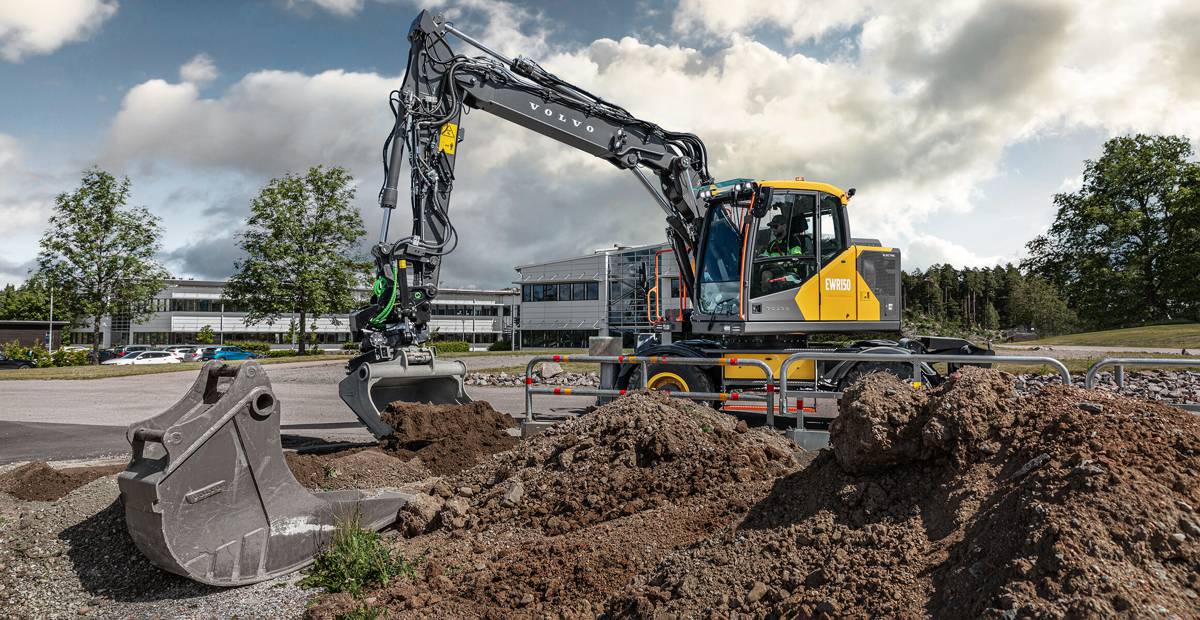
Versatility is the pitch that keeps the machine relevant beyond the city limits. Volvo lists agriculture and landscaping, forestry, building and demolition, road construction, utilities, and waste and recycling among the jobs it’s built for, and the quiet running opens up night work and noise sensitive sites that a diesel machine would be barred from. Because it matches the diesel EWR150 on reach, digging depth of 5,230 mm, breakout force and lifting capacity, contractors aren’t asked to trade capability for cleaner credentials, which has historically been the sticking point that stalls electric adoption on demanding sites.
The EWR150 Electric also slots into a broader Volvo CE electric push that now spans compact machines, wheel loaders such as the L90 Electric, and articulated haulers including the A30 and A40 Electric heading into serial production.
Shown in production ready form at Volvo Days 2026 after its 2024 concept debut, the wheeled excavator rounds out a line up that’s edging from pilot projects towards mainstream fleet renewal. For construction professionals, investors and the policymakers writing the next round of emissions rules, the signal is straightforward enough. The segments still considered too tough or too mobile to electrify are running out of places to hide.