Big Joe Forklifts at 75 looks at Lithium-Ion and Autonomy
A seventy-fifth anniversary would ordinarily sit in the softer corner of the trade press, a moment for company photographs and a look back at old catalogues. In the case of Big Joe Forklifts, the milestone is more useful read as a market signal than a birthday.
The company, founded in 1951 and now the North American arm of the EP Equipment group, is using the occasion to restate a commercial position that lands squarely on the two forces reshaping warehousing and industrial logistics: the switch from combustion to electric power, and the early, cautious arrival of autonomy on the warehouse floor. For anyone moving building materials, precast units, merchant stock or finished goods, the material handling layer is where electrification and automation are arriving fastest, at the lowest entry cost, and with the clearest payback.
That matters to the construction and infrastructure supply chain in ways that are easy to overlook. Builders’ merchants, precast and block yards, distribution centres serving major projects, and the ports and freight terminals that feed them all run on Class 1 to Class 3 lift trucks. The economics of those fleets are shifting quickly as lithium-ion power reaches performance parity with propane and diesel, as emissions rules tighten in key markets, and as chronic labour shortages push operators towards automation they can actually deploy.
Big Joe’s pitch, that integrated lithium equipment is now a straight replacement for internal combustion and that autonomy can be introduced in approachable steps rather than wholesale, is a fair summary of where the mid-market of the industry is heading.
Briefing
- Big Joe Forklifts, established in 1951 and part of the EP Equipment group since 2009, is marking its seventy-fifth year under the theme “Powering Progress,” positioning integrated lithium-ion equipment as a direct replacement for propane and diesel forklifts.
- The company is building on EP’s scale in Class 3 warehouse equipment and its in-house lithium-ion battery manufacturing, a vertical integration play that shapes cost, service and supply security for buyers.
- Big Joe’s autonomous division expanded its line-up at Automate 2026 in Chicago, adding an autonomous pallet truck, stacker, tugger and three-wheel forklift aimed at operators facing persistent labour constraints.
- Regulatory pressure is accelerating the shift, with California’s Air Resources Board restricting new sales of certain propane and gasoline forklifts from 2026, reinforcing the commercial case for electric replacement.
- Analysts value the autonomous forklift market at roughly USD 3 billion to USD 6 billion in 2026 depending on scope, with double-digit annual growth forecast into the early 2030s and lithium-ion already the majority power source in US forklift sales.
The Commercial Case for Replacing Combustion
The most commercially significant part of Big Joe’s message is not the anniversary but the claim that integrated lithium equipment now stands in as a one-for-one substitute for propane and diesel machines. That framing has moved from marketing aspiration to something closer to market reality over the past two years. In the United States, lithium-ion systems accounted for a majority of forklift revenue in 2025 on Mordor Intelligence’s figures, and electric units captured around sixty per cent of volume, with fuel savings against combustion trucks estimated near eighty per cent and maintenance savings of up to half.
For fleet owners weighing total cost of ownership rather than sticker price, the argument for staying on combustion has narrowed considerably, particularly in indoor and mixed-use environments where air quality and noise carry their own operational costs.
Regulation is sharpening that calculus in the markets that tend to set the pace. California’s Air Resources Board has adopted rules restricting new sales of certain large spark-ignition forklifts, the propane and gasoline machines common in warehousing, with the phase-in beginning in 2026 and covering tens of thousands of trucks across the state.
Where one large market moves, fleet standardisation and resale considerations tend to pull others behind it, and manufacturers with a credible electric replacement for every combustion duty cycle are the ones positioned to benefit. Dan Rosskamm, president and chief executive of Big Joe Forklifts, put the company’s stance plainly, describing Big Joe as uniquely positioned to lead the electrification movement, providing purpose-built, integrated lithium solutions as a direct replacement for propane and diesel powered forklifts.
The commercial substance behind that line is the growing overlap between what electric trucks can lift and how long they can run, and what combustion machines were previously required for.
Vertical Integration and the EP Advantage
Behind the brand sits a structural advantage that deserves more attention than it usually receives. Big Joe was acquired in 2009 through Big Lift LLC, a partnership involving the fast-growing Chinese manufacturer EP Equipment and the investment firm Granite Creek Partners, and it has since operated inside a group that designs and builds its own lithium-ion power systems.
EP, founded in 1993 and based in Hangzhou, has grown into one of the largest producers of electric warehouse trucks in the world and describes itself as the leading manufacturer in the Class 3 category that covers electric pallet trucks and walk-behind stackers. That vertical integration, from battery cell systems through to finished trucks and, increasingly, autonomous platforms, gives the group control over the component that most determines a modern forklift’s cost, reliability and residual value.
For buyers, in-house battery manufacturing is not an abstract point of pride. It shapes lead times, simplifies service by keeping the power system and the truck under one engineering roof, and reduces exposure to the third-party battery supply constraints that have periodically disrupted electrification programmes across the wider vehicle sector.
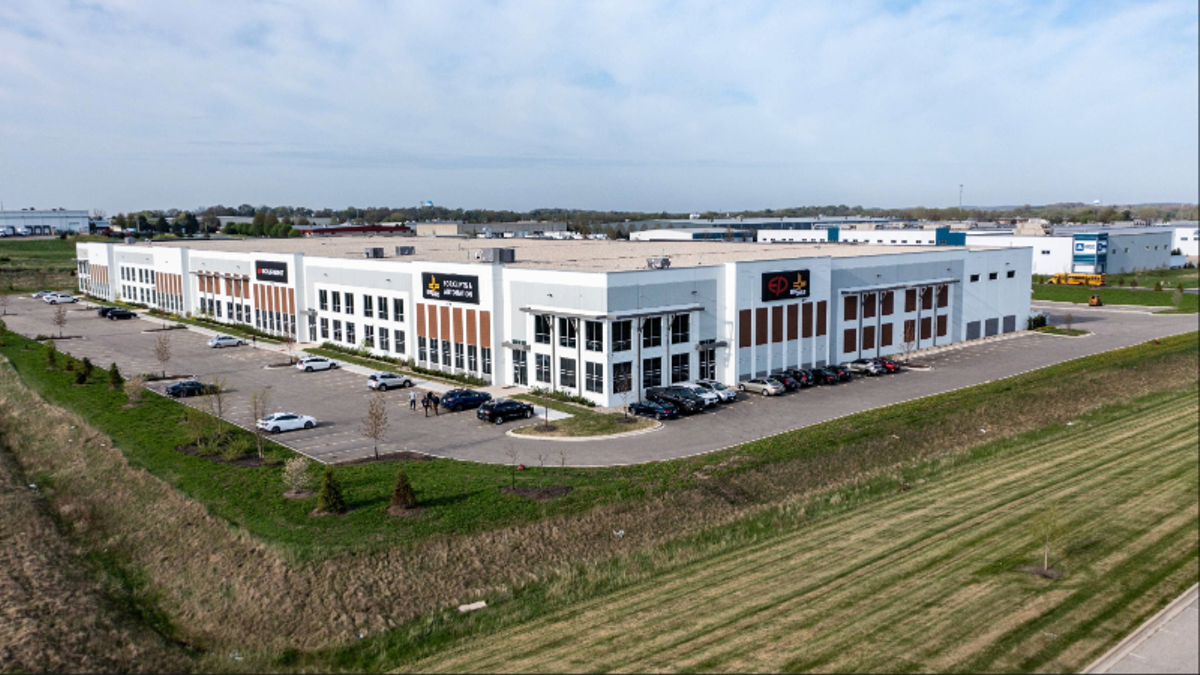
It also underpins Big Joe’s ability to offer purpose-built lithium trucks rather than combustion designs retrofitted with batteries, a distinction that affects weight distribution, ergonomics and runtime. The group’s scale in Class 3, combined with a North American engineering and manufacturing base in DeForest, Wisconsin, lets it pair global buying power with locally tailored products, a balance that few competitors in the mid-market segment can match.
The Push Into Approachable Autonomy
The second strategic thread is automation, and here Big Joe is positioning itself deliberately away from the heavy, integration-intensive end of the market. At Automate 2026 in Chicago, its autonomous division expanded its range with a fully autonomous pallet truck, an autonomous stacker, an autonomous tugger and an autonomous three-wheel forklift, extending an approach the company describes as user-directed and scalable rather than a full replacement of human operators. The logic is grounded in labour economics.
Warehouse and transport roles have proven persistently hard to fill, turnover in some distribution centres runs extraordinarily high, and operators are increasingly turning to automation not to cut headcount but to keep throughput steady when headcount cannot be maintained.
The market context supports the bet without requiring hyperbole. Independent estimates of the autonomous forklift market vary with how the category is defined, ranging from around USD 3 billion to close to USD 6 billion in 2026 across research houses including Mordor Intelligence and Grand View Research, with most forecasts pointing to compound annual growth in the low-to-mid teens through the end of the decade.
Adoption is being driven by labour scarcity, e-commerce fulfilment speed and a rising safety and compliance agenda, with lithium-ion and opportunity charging emerging as the default power strategy for multi-shift autonomous fleets. Rosskamm framed the company’s ambition in measured terms, saying Big Joe is also emerging as a disrupter in the autonomous space, offering approachable solutions that simply work.
The emphasis on approachability is the commercially interesting part, because the barrier to automation for most mid-sized operators has been integration complexity and cost rather than the underlying technology.
Seventy-Five Years of Class 3 Engineering
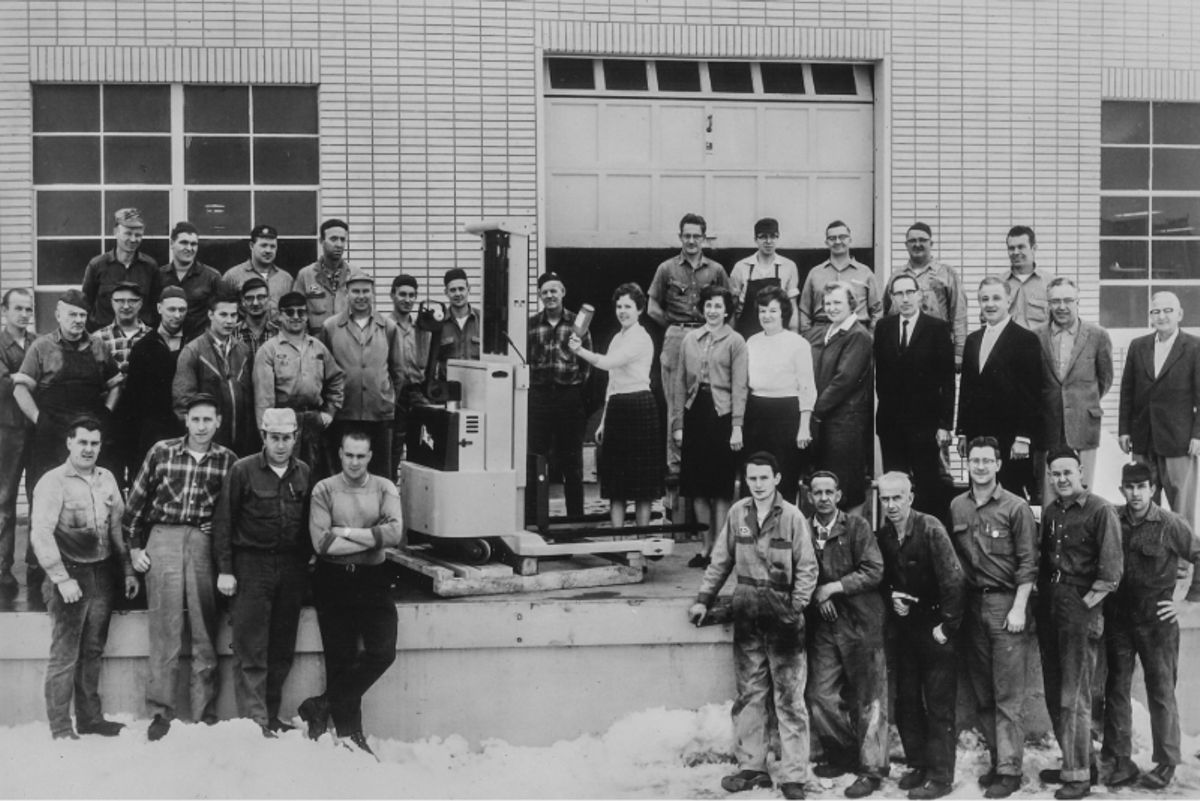
The heritage that Big Joe is celebrating is genuinely relevant to its current position, rather than decorative. Its first product, the In Between Handling straddle stacker introduced in 1951, remains in production from the company’s Wisconsin operations, a rare instance of a product line spanning the entire history of a manufacturer and still earning its place. The company has spent decades in the walk-behind and pedestrian truck segment that the industry classifies as Class 3, developing power-drive pallet trucks and compact powered stackers that became fixtures in retail and warehouse operations. That long specialisation in low-cost, easy-to-operate equipment is precisely the base from which integrated lithium and approachable automation now extend, because the customers for a simple walkie stacker are often the same operators who want automation without a systems-integration project.
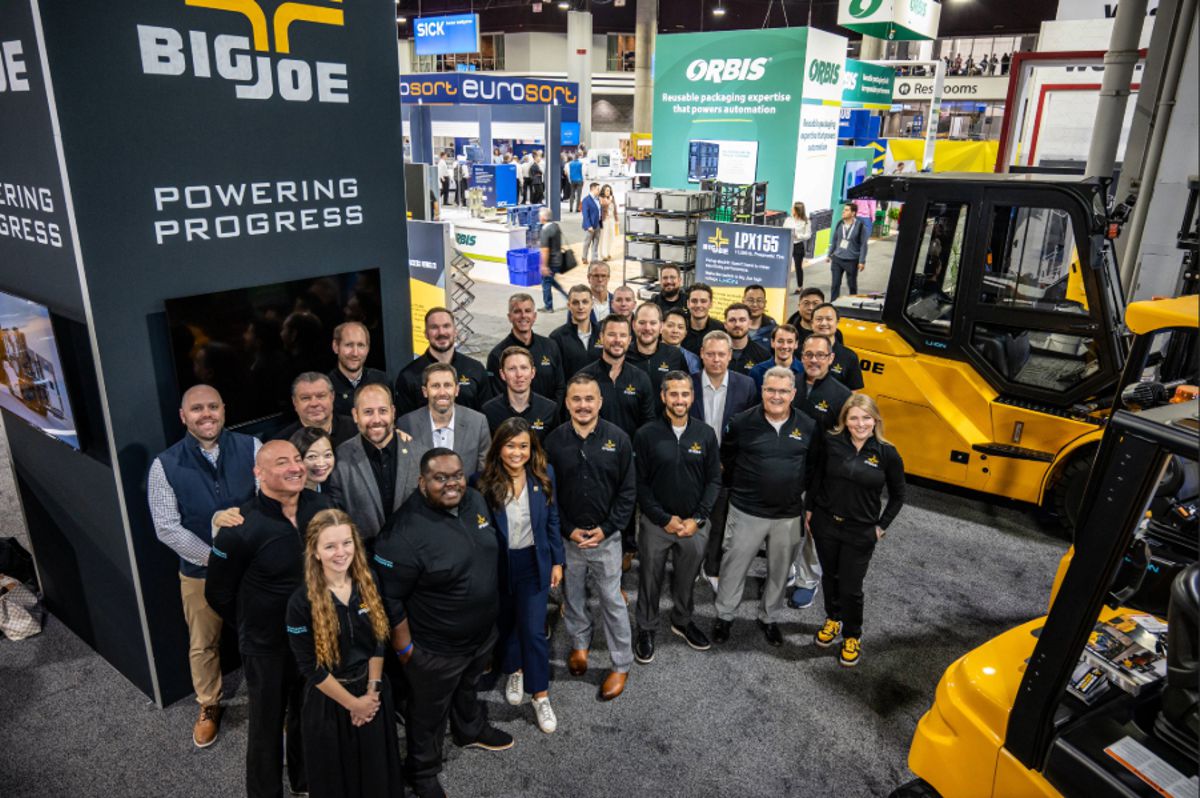
Martin Boyd, chief marketing officer, tied that continuity to the company’s stated mission, noting that from the original IBH stacker through to its lithium and autonomous work, Big Joe has always focused on empowering the people who move things. He characterised the anniversary as forward-looking rather than nostalgic, describing it as not just a celebration of where we’ve been – it’s a statement about where we’re headed as we continue helping customers move confidently into the future of material handling. The through-line from a 1951 straddle stacker to a 2026 autonomous tugger is consistency of customer, the operator who needs dependable equipment that solves a specific handling problem without unnecessary complexity, and it is that continuity of focus, more than any single product, that has kept the brand commercially relevant across seven and a half decades.
Powering Progress Into the Next Cycle
The wider significance of Big Joe’s anniversary lies in what it says about the trajectory of the equipment that sits beneath almost every construction and industrial supply chain. Material handling is no longer a static, combustion-dominated category insulated from the electrification and automation debates playing out in on-road transport and heavy plant. It is one of the fastest-moving fronts, with lithium-ion already the majority choice in leading markets, regulation closing off combustion in stages, and autonomy shifting from pilot projects to procurement lines. For infrastructure owners, contractors, merchants and investors, the practical takeaway is that fleet renewal decisions taken over the next few years will lock in cost structures and compliance positions for a decade, and the manufacturers best placed to serve them are those that control their own power systems and can offer automation in manageable steps.
Big Joe’s “Powering Progress” theme, and its parent group’s scale in lithium and Class 3 equipment, describe a business trying to be present at both ends of that transition at once, replacing combustion today while introducing autonomy at a pace buyers can absorb. Whether the group can convert its manufacturing depth and its approachable-automation positioning into durable share against far larger global rivals is the open commercial question, and the answer will be shaped by service networks, financing and total cost of ownership as much as by product. What the anniversary makes clear is that the company intends to treat its history, in Rosskamm’s phrasing, as our launch pad for the next 75, and that the segment it helped define is now central to how the industrial economy electrifies and automates.
Key Industry Questions
- What does it mean that a forklift is a Class 3 machine, and why does it matter to buyers? Class 3 in the Industrial Truck Association’s classification covers electric motorised hand trucks and hand-rider trucks, the walk-behind pallet trucks and stackers used for lower-level, high-frequency moves. They matter commercially because they are the lowest-cost, easiest-to-operate entry point into powered handling, often replacing manual pallet trucks and reducing injuries. For construction merchants, distribution centres and manufacturing sites, Class 3 equipment typically forms the largest share of a mixed fleet by unit count. Big Joe and its parent EP built their positions in this segment, which is also where electrification and, increasingly, automation are cheapest to introduce, making it a natural proving ground for new power and control technologies before they move up into heavier truck classes.
- How close is lithium-ion to genuinely replacing propane and diesel forklifts? For most indoor and mixed-duty applications, the gap has largely closed. Lithium-ion systems now hold the majority of US forklift revenue on recent analyst figures, and higher-capacity lithium packs are reaching lift capacities that were once the preserve of combustion machines. The advantages of fast and opportunity charging, near-elimination of battery maintenance and substantial fuel savings have made total cost of ownership competitive or superior across many duty cycles. Combustion trucks retain an edge in some heavy-duty outdoor, cold or long-shift roles where energy density and refuelling speed still count, though that margin is narrowing. For the bulk of warehouse and distribution work, purpose-built lithium equipment is a credible one-for-one replacement rather than a compromise.
- What is California’s forklift regulation and does it affect operators outside the state? California’s Air Resources Board has adopted rules restricting new sales of certain large spark-ignition forklifts, the propane and gasoline machines widely used in warehousing, with the phase-in beginning in 2026 and affecting tens of thousands of trucks in the state. While the rule is state-level, its practical reach extends further. National operators tend to standardise fleets to simplify service and maintenance, resale values for combustion trucks are affected by shrinking future demand, and manufacturers redesign product roadmaps around the largest regulated markets. Operators outside California are therefore likely to feel the effects indirectly through product availability, pricing and residual values, which is one reason electric replacement has moved up the agenda even in unregulated jurisdictions.
- What does “approachable” or user-directed autonomy actually mean in practice? It refers to automation that can be deployed incrementally, often on standard truck platforms, without a full warehouse systems-integration project. Rather than converting a facility to a fully automated operation at once, operators add autonomous pallet movers, stackers or tuggers to handle repetitive point-to-point tasks, while human operators continue with more variable work. The equipment typically uses onboard sensing and navigation and can often switch between autonomous and manual modes. The commercial appeal is a lower barrier to entry and a faster return on investment, particularly for mid-sized operators who cannot justify the cost and disruption of a comprehensive automated storage and retrieval installation but still face labour shortages.
- How large is the autonomous forklift market and how fast is it growing? Estimates vary with methodology. Research houses place the 2026 market somewhere between roughly USD 3 billion and close to USD 6 billion, with the spread reflecting different definitions of what counts as an autonomous forklift versus a broader mobile robot. There is closer agreement on direction, with most forecasts projecting compound annual growth in the low-to-mid teens through the end of the decade and into the early 2030s. Growth is driven by labour scarcity, e-commerce fulfilment demands and a strengthening safety and compliance agenda. Asia-Pacific currently leads on share, while North America is frequently cited as among the fastest-growing regions, supported by high warehouse turnover and rising operator wages.
- Why does in-house lithium battery manufacturing matter when choosing a supplier? The battery is the single largest determinant of a modern electric forklift’s cost, runtime, reliability and residual value. A manufacturer that designs and builds its own lithium systems can integrate the power source with the truck rather than adapting third-party packs, which affects ergonomics, weight distribution and service simplicity. It also reduces exposure to external battery supply constraints that have periodically slowed electrification across the vehicle sector. For buyers, that can mean shorter lead times, a single engineering point of accountability for the whole machine, and more predictable long-term support. EP’s vertical integration in this area is central to how Big Joe differentiates itself in the mid-market against rivals reliant on external battery suppliers.
- Who owns Big Joe, and how does the EP relationship shape its products? Big Joe was acquired in 2009 through Big Lift LLC, a partnership that involved EP Equipment and the investment firm Granite Creek Partners, and it now operates as the North American arm of the EP group. EP, founded in 1993 in Hangzhou, is one of the largest producers of electric warehouse trucks globally and leads the Class 3 category. The relationship gives Big Joe access to global buying power, shared lithium and autonomous technology, and a broad product base, while retaining North American engineering and manufacturing in Wisconsin. In practice, buyers get globally scaled power and automation systems combined with locally tailored products and support, a balance that distinguishes the group from both purely domestic and purely import-based competitors.
- What should fleet operators weigh when moving from combustion to electric or autonomous handling? The decision turns on total cost of ownership rather than purchase price. Operators should model fuel and maintenance savings, charging infrastructure and electricity costs, duty cycles and shift patterns, and the residual value of combustion trucks in a market where demand for them is contracting. On autonomy, the key questions are integration complexity, the availability of user-directed options that avoid full systems projects, safety certification and service coverage. Financing structures and dealer support networks often prove decisive, because uptime depends on responsive service. A phased approach, electrifying first and layering in automation where labour gaps are most acute, is generally lower risk than attempting both transitions simultaneously.
Strategic Takeaways
- Fleet renewal decisions taken in the next few years will lock in cost and compliance positions for a decade, favouring suppliers that offer credible electric replacements for every combustion duty cycle rather than partial line-ups.
- Vertical integration in lithium-ion power is becoming a genuine competitive moat, shaping lead times, service accountability and residual values, and buyers should treat battery ownership as a supplier-selection criterion, not a technical footnote.
- Autonomy is shifting from pilot to procurement, and the commercially significant battleground is approachable, user-directed automation that mid-sized operators can deploy without a full systems-integration project.
- Regulatory action in leading markets such as California is reshaping combustion resale values and product roadmaps well beyond state borders, pulling electrification forward even in unregulated jurisdictions.
- Class 3 walk-behind and pedestrian equipment remains the most cost-effective entry point for both electrification and automation, making it the segment where new power and control technologies are proven before moving into heavier truck classes.