Volvo EC400 Hybrid Excavator Cuts Fuel Use by 30% at Clariant Bentonite Mines
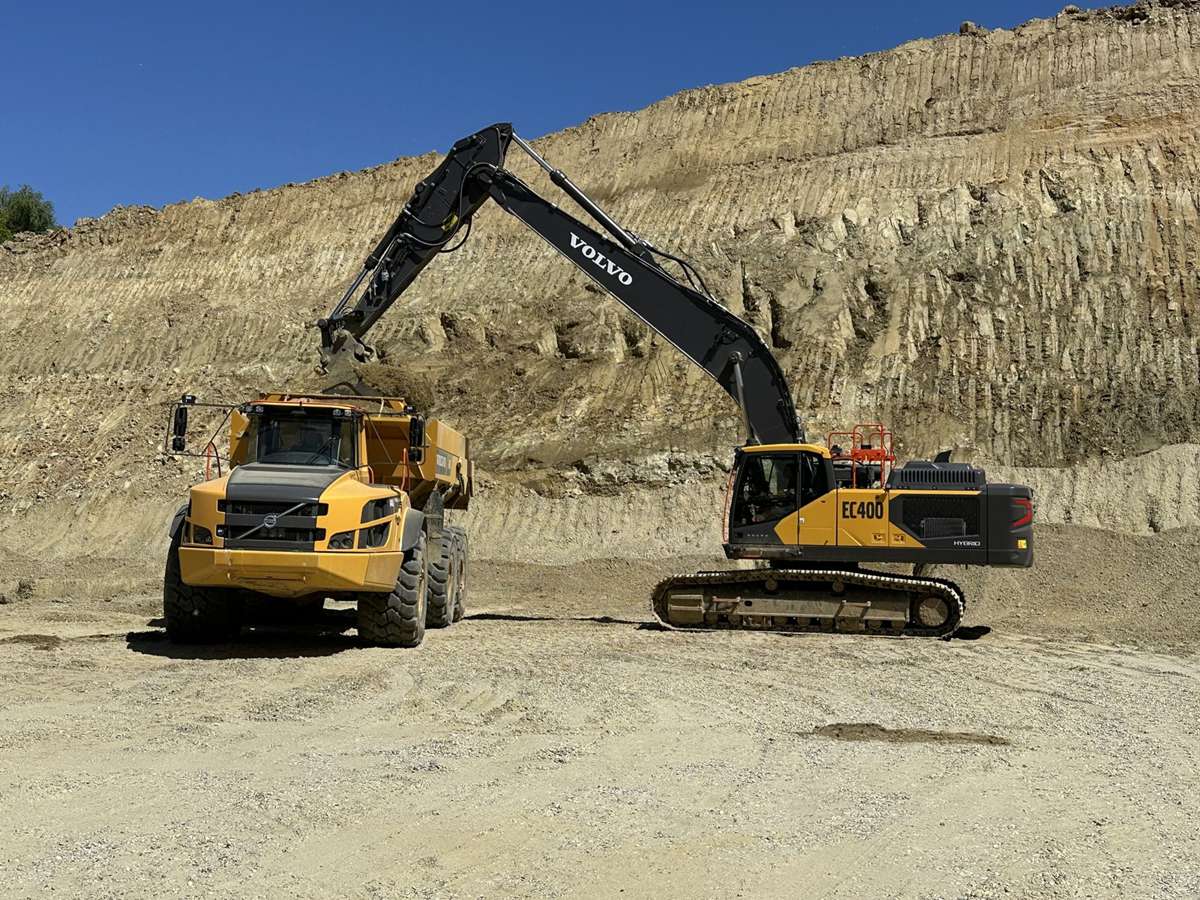
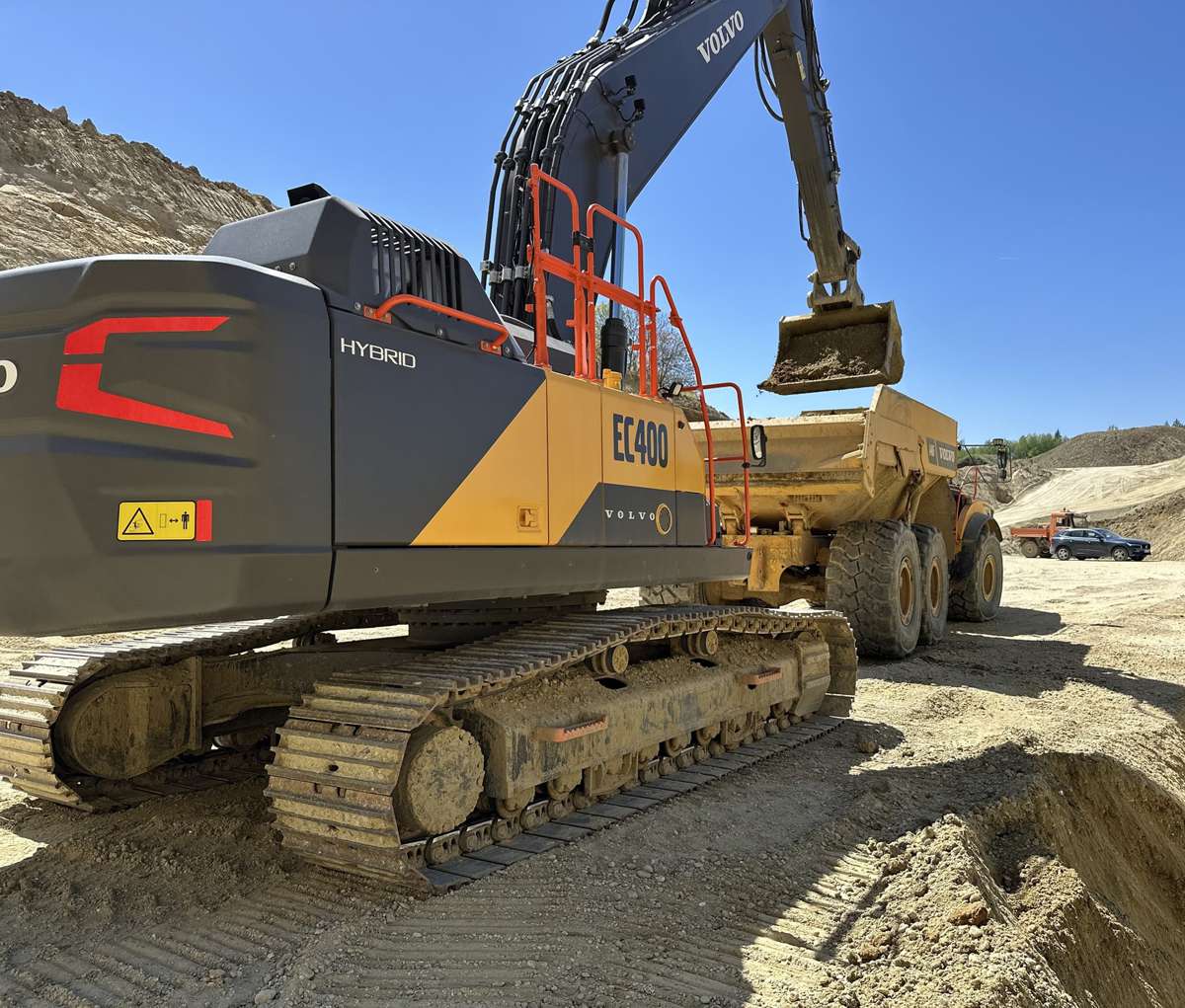
At Clariant’s bentonite pits in Lower Bavaria, a Volvo EC400 Hybrid excavator has reduced fuel consumption by around 30% against the EC380E it replaced. The saving comes from the repeated stripping of overburden that must be moved before any bentonite is reached, a production cycle that plays directly to the strengths of the machine’s hydraulic hybrid system.
Briefing
- A Volvo EC400 Hybrid working on overburden removal at Clariant’s opencast bentonite mines near Mainburg, Moosburg and Landshut has cut diesel use by roughly 30% versus the conventional EC380E it succeeded.
- The excavator recovers energy from boom-down movements and returns it to assist the power-intensive boom-up cycle, a benefit that increases with cycle frequency and favours repetitive earthmoving.
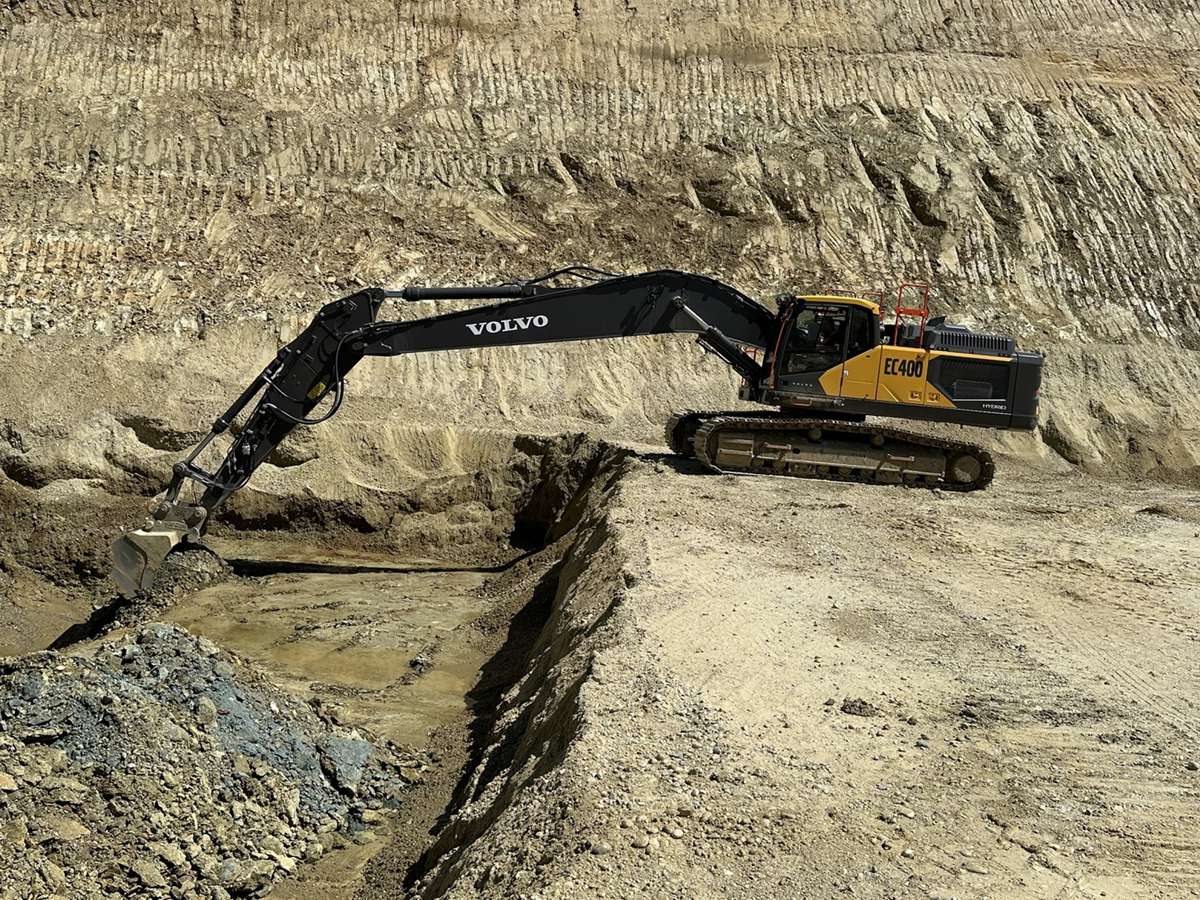
- A 3.50m transport width and hydraulically detachable counterweight help Clariant move the machine between pits while meeting its transport requirements.
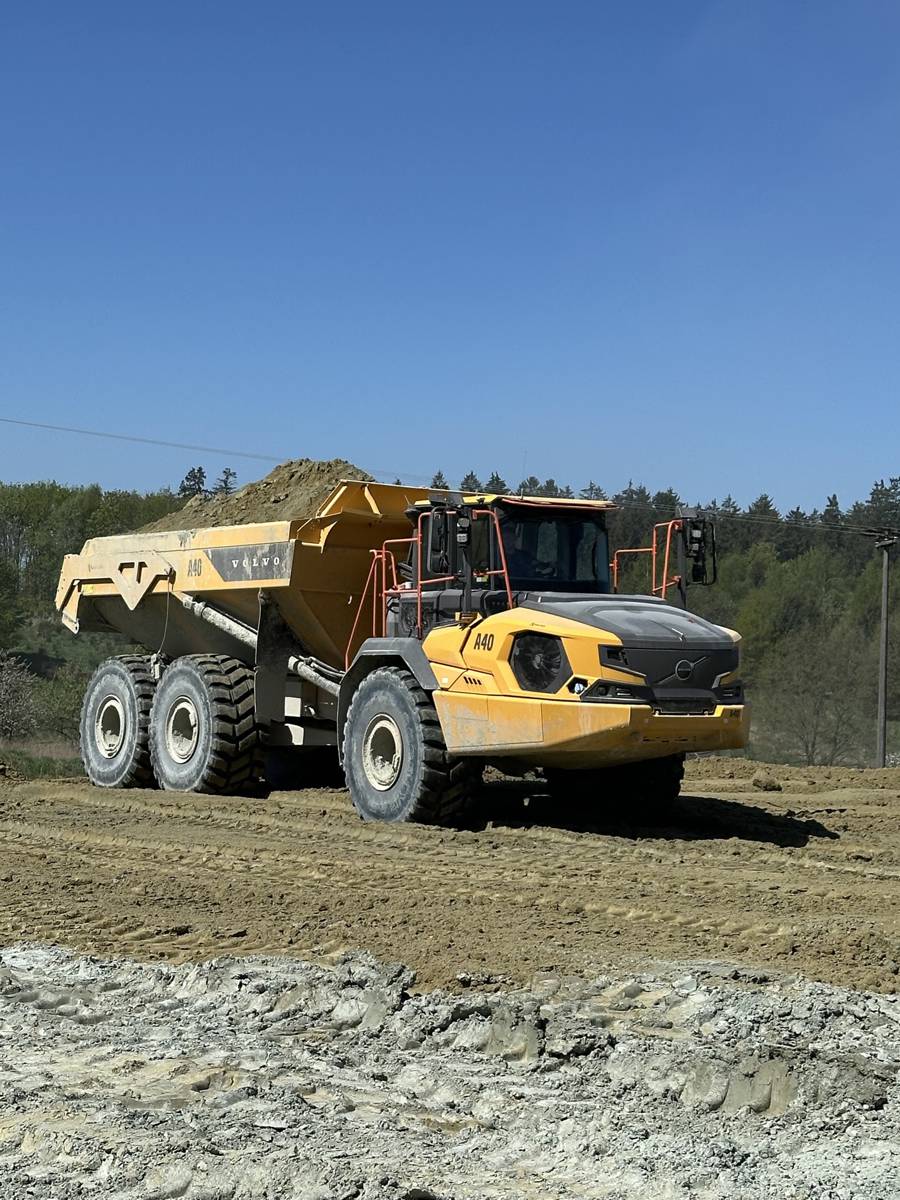
- The excavator works alongside five new-generation Volvo A40 articulated haulers, with regional dealer Robert Aebi providing service and support.
Bentonite, Overburden and Duty Cycle
Bentonite is a swelling clay valued across foundry, drilling, civil engineering, edible-oil refining, paper and desiccant markets, and Bavaria sits on one of the world’s longest-established commercially worked deposits. The seam itself can be relatively thin in the deposits of the North Alpine Foreland Basin, often little more than a metre or two, which means the economics of extraction are heavily influenced by removing the several metres of soil and rock above it.
Clariant, formerly Süd-Chemie and a major bentonite producer, works several pits across the region and processes the raw material at its Moosburg site into bleaching earths, foundry and drilling additives, and other specialities.
Those conditions favour a particular type of machine utilisation. Overburden stripping involves a sustained sequence of digging, swinging, loading and returning throughout the shift, making diesel consumed during that cycle a recurring part of the cost of reaching the mineral below. With the excavator’s core task dominated by repetition, each boom movement creates another opportunity for a hydraulic hybrid system to recover energy, so the frequency and consistency of the cycle become central to the economics of the machine.
Hydraulic Energy Recovery
Volvo’s hydraulic hybrid does not carry the type of traction battery associated with hybrid road vehicles. An accumulator mounted behind the boom captures high-pressure oil generated as the boom descends, recovering energy that a conventional excavator would otherwise dissipate as heat, before releasing it through an assist motor to support the power-intensive boom-up movement. Volvo rates its new-generation hybrid range, running from the EC260 Hybrid through to the EC400 and EC500, at up to around 20% better fuel efficiency in digging and dumping applications and roughly 15% lower carbon dioxide emissions.
The 30% reduction recorded by Clariant is considerably higher than that headline efficiency figure, reflecting an application in which frequent boom movements provide repeated opportunities to capture and reuse energy. Overburden stripping therefore sits towards the favourable end of the operating spectrum for hydraulic hybridisation, while machines undertaking intermittent or more varied duties are unlikely to reproduce the same result. For fleet buyers, expected savings depend heavily on the work an excavator actually performs during its operating hours rather than on a single percentage taken from another site.
Christian Gammel, Team Leader Technology at Clariant, said: “The EC400 Hybrid was particularly interesting to us, especially in the current climate of rising diesel prices. Fuel consumption is always a major consideration, so this was one of the key factors in our decision. In addition, the excavator’s 3.50m transport width was a perfect fit for our requirements, helping to ensure compliance with transport permit regulations when moving between sites. In day-to-day operation, we’ve seen that we made the right choice, with the machine delivering significant cost savings.”
Moving Between Pits
Mobility carried almost as much weight as fuel consumption in Clariant’s decision because the operation is spread across several relatively small pits rather than centred on a single extraction face. Teams move between workings according to the grade of clay required, the progress of extraction and prevailing weather conditions, so a production excavator has to be practical to relocate as operating priorities change.
The EC400 Hybrid’s 3.50m transport width suited Clariant’s requirements around transport permits, while a hydraulic removal feature allows the heavy counterweight to be detached when preparing the machine for relocation. These are relatively mundane characteristics beside engine power, digging forces or bucket capacity, but they have a direct bearing on utilisation where equipment changes location regularly. A machine that performs exceptionally once established in a pit loses some of that advantage if moving it to the next productive location becomes a major operation in itself.
Jörg Tscharke, Operations Manager, said: “What makes our operation special is the flexibility of the extraction process. We have small teams working across different pits and must constantly assess which material qualities are needed where. The weather also plays a major role, so we need to be flexible and able to move equipment quickly to work wherever conditions are most favorable.”
The extended boom adds another operational advantage, allowing the operator to reach material at greater depth while keeping the excavator safely positioned above the working area. This reduces the need to construct additional working platforms to bring the machine closer to the deposit, cutting ancillary earthmoving and site preparation as extraction progresses. Greater reach consequently affects the work surrounding the excavator as well as its digging envelope, with fewer temporary platforms potentially saving machine hours and material movements elsewhere in the pit.
Excavation and Haulage in Balance
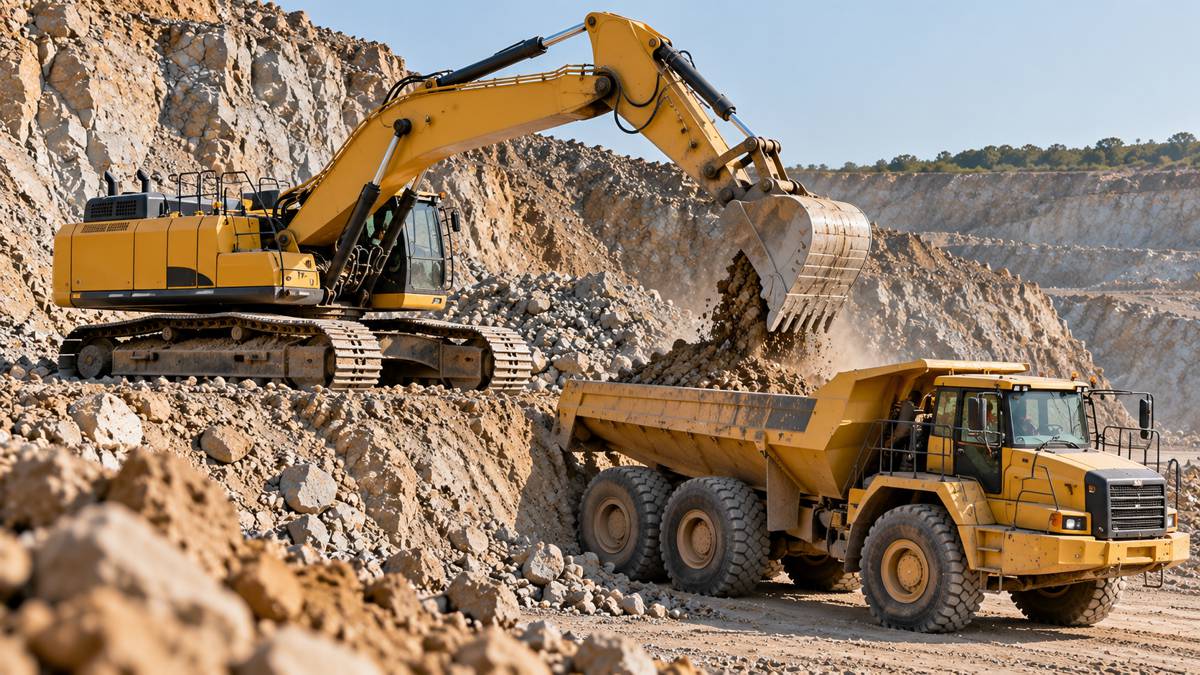
Five new-generation Volvo A40 articulated haulers move overburden between the pits and storage and recultivation areas, making the haulage fleet an integral part of the production cycle. Matching available haul capacity with excavator output keeps material moving rather than leaving either side waiting, particularly where ground conditions and haul distances change as the workings develop.
Operator conditions become increasingly relevant when haulers spend long shifts repeatedly travelling between loading and tipping points. Suspension, visibility, controls and cab ergonomics influence fatigue and concentration as the hours accumulate, while a comfortable working environment also matters when skilled operators are difficult to replace. In production operations where consistency across a full shift matters as much as peak performance during an individual cycle, those characteristics have an operational value beyond simple driver preference.
Gammel said: “In addition to their performance, Volvo haulers are widely known for best-in-class driving comfort and ergonomics. With the new generation, further improvements have been made in areas such as ergonomics and safety, with new lighting for example. Our employees really appreciate the comfortable ride which makes the machines a pleasure to operate over long shifts and helps them stay focused and productive.”
Hybrid Complexity and Service Support
Hybrid equipment inevitably adds another consideration to the ownership calculation: whether the reduction in fuel consumption is accompanied by additional maintenance demands or downtime. Volvo’s system remains hydraulic, without a traction battery or electric drive, keeping the additional technology close to systems already familiar to heavy-equipment technicians. Regional dealer Robert Aebi provides service and support for the Clariant operation, an important part of the production equation when excavator and hauler availability have to remain closely matched.
The financial case therefore depends on the relationship between duty cycle, fuel saving, machine utilisation and support rather than on hybrid technology in isolation. High-repetition work such as overburden stripping and static quarry loading gives the system frequent boom-down events from which to recover energy, while intermittent or low-cycle work offers fewer opportunities.
Clariant’s experience places the technology firmly in the former category, where the reported fuel reduction is large enough to have a material effect on operating cost.
Duty Cycle and Fuel Economics
For mines, quarries and earthmoving operations built around repetitive production cycles, the Bavarian deployment supports treating hydraulic hybridisation primarily as a fleet-economics decision. Diesel saved on a high-utilisation excavator feeds directly into the cost of material moved, while lower carbon emissions follow from reducing the fuel required to perform the work. Procurement teams considering a hybrid against a conventional machine therefore need to understand cycle frequency, utilisation and the proportion of operating time spent on suitable digging and loading work before modelling the likely return.
Clariant’s experience also shows how that calculation extends beyond the drivetrain. Transport width and counterweight removal affect how readily the excavator can follow production between pits; extended reach can reduce preparatory earthworks; hauler capacity determines whether excavation output can be carried away efficiently; and operator conditions influence consistency across long shifts. These factors accumulate across the working life of a fleet, making machine selection increasingly dependent on how closely equipment characteristics fit the actual production system.
Hydraulic hybridisation will not produce the same return across every excavator application, and the 30% recorded in Bavaria should be read in the context of an unusually favourable duty cycle. For operations with similarly repetitive digging and loading patterns, however, the opportunity is straightforward: movements already occurring hundreds of times during a shift can become a source of recoverable energy, reducing the amount of diesel required to move each tonne.
Strategic Takeaways
- Hybrid fuel savings track cycle frequency, putting repetitive duties such as overburden stripping and production loading among the strongest applications for hydraulic energy recovery.
- The roughly 30% saving reported by Clariant exceeds Volvo’s up-to-20% digging-and-dumping efficiency figure for its latest hybrid range, reflecting the particularly favourable operating cycle in Bavaria.
- Operators assessing hybrid excavators should model their own working cycles rather than assume the Clariant result will transfer directly to other applications.
- Transport width, counterweight removal and digging reach can influence utilisation and supporting earthworks alongside conventional measures of excavator productivity.
- Excavator and hauler capacity are best considered together, with fleet balance, operator conditions and service support contributing to production performance.
Frequently Asked Questions
- How much fuel did the Volvo EC400 Hybrid save at Clariant? Clariant reports around 30% lower fuel consumption compared with the EC380E it replaced during overburden-removal work at its Bavarian bentonite operations. The result reflects a particularly repetitive duty cycle and should not be treated as a universal saving.
- How does the hydraulic hybrid system work? An accumulator captures hydraulic energy generated as the boom lowers and releases it through an assist motor to support the subsequent boom-up movement. The system does not rely on the type of traction battery used in hybrid road vehicles.
- Why is bentonite mining a good application for a hybrid excavator? Reaching the bentonite requires substantial overburden removal, producing repeated digging, loading and boom movements throughout the shift. Each boom-down movement gives the hydraulic hybrid system another opportunity to recover and reuse energy.
- Why is transportability important to Clariant? The company operates several pits between Mainburg, Moosburg and Landshut and moves equipment according to material requirements and site conditions. The EC400 Hybrid’s 3.50m transport width and hydraulically detachable counterweight support those relocations.
- Should every operator expect a 30% fuel saving? No. Volvo’s broader rating for its latest hybrid excavator range is up to around 20% better fuel efficiency in digging and dumping applications. Clariant’s result comes from a duty cycle particularly well suited to repeated energy recovery, so expected savings should be calculated against the intended application.