Sovereign AI Brings Intelligence Back Inside Critical Infrastructure
Artificial intelligence is beginning to acquire something it largely avoided during the first wave of generative AI adoption: a physical location.
For governments, infrastructure operators and heavily regulated businesses, where an AI model runs is becoming increasingly difficult to separate from where operational data is stored, who controls the computing infrastructure and whether an external provider remains somewhere in the chain.
Airrived is addressing that problem with a Sovereign AI Platform designed to run its Agentic OS on an organisation’s own infrastructure, including private GPU systems, on-premises data centres and fully air-gapped environments. Customers can use their own models or Airrived models without requiring operational data or AI interactions to leave the controlled environment.
The architecture becomes more interesting as AI moves beyond generating text, images and analysis towards software capable of interacting with other systems and taking actions. An AI assistant drafting a report presents one class of security problem. An agent with access to asset-management platforms, maintenance records, digital twins, project systems or operational data sits considerably closer to the infrastructure itself.
Airrived’s proposition is to keep that intelligence layer inside the perimeter.
Briefing
- Airrived has launched a Sovereign AI Platform capable of operating on-premises, on private GPU infrastructure or in fully air-gapped environments.
- Organisations can run their own AI models or Airrived models while retaining the underlying infrastructure and data within their controlled environment.
- The platform combines models, agent orchestration, enterprise context, governance, observability and AI applications within its Agentic OS architecture.
- Airrived has already taken its sovereign deployment model into Qatar through a partnership targeting government, energy and financial-sector applications.
- The company will demonstrate the Sovereign AI Platform at GISEC Global in Dubai from 16 to 18 September 2026.
AI Sovereignty
Data sovereignty is not a new problem. Governments and regulated industries have spent years determining where sensitive information can be stored, processed and transferred, particularly where national borders, privacy legislation or security classifications are involved.
Agentic AI expands the problem. Alongside databases and applications come models, prompts, inference workloads, vector databases, enterprise knowledge and software agents capable of working across several systems. Some may eventually interact with cybersecurity platforms, asset-management software, maintenance systems or operational workflows.
Airrived’s Sovereign AI Platform is designed to bring those components into an environment controlled by the customer. Its Agentic OS combines orchestration, models, enterprise context, reasoning, governance, observability and applications, while allowing organisations to build their own agents and multi-agent applications.
The company describes sovereignty in broader terms than data residency alone. “AI sovereignty isn’t simply about where your data is stored. It’s about who controls the entire intelligence stack,” said Anurag Gurtu, Co-founder and CEO of Airrived. “Enterprises should be able to own their data, choose their models, operate their agents and control their infrastructure — without sacrificing the power of agentic AI. That’s what we’re delivering.”
Keeping a database inside a national boundary does not necessarily create technological sovereignty if the applications interpreting it, the models reasoning over it or the computing infrastructure executing those models remain dependent on external services.
Agent Access and Critical Infrastructure
Generative AI largely began as an interface between a person and a model. The user submitted a request, received a response and decided what happened next. Agentic architectures extend that relationship by allowing software to interrogate information, invoke tools, communicate with other agents and execute workflows.
The difference becomes significant around physical assets. Transport operators already hold inspection histories, condition data, maintenance records and increasingly detailed digital representations of their networks. Construction businesses are connecting project controls, procurement, equipment, design information and site data. Utilities and industrial operators can hold information much closer to operational systems.
Giving an AI system access to those environments does not require unrestricted autonomy to make control of the intelligence important. An agent capable of opening work orders, interrogating asset records, modifying workflows or triggering another application occupies a very different position from a chatbot answering questions from a document library.
Sovereign deployment does not make such systems inherently safe. An autonomous agent operating inside a private data centre can still make a poor decision, inherit excessive permissions or act on misleading information. Identity management, access controls, auditability, testing and human oversight remain necessary regardless of where the model runs.
Airrived includes enterprise access controls, governance and observability within its architecture, reflecting the practical problem of controlling what agents can see and what they are permitted to do once deployed.
Private and Air-Gapped Infrastructure
The most restrictive version of Airrived’s architecture is an air-gapped deployment, where AI workloads can operate on networks physically or logically isolated from external systems.
Such an approach brings its own costs. Private AI infrastructure requires computing hardware, technical expertise, model management, security controls and sufficient capacity to accommodate workloads that might otherwise be absorbed by a hyperscale cloud provider. Defence systems, government networks, utilities and some industrial facilities already operate under security requirements that limit external connectivity, however, and bringing AI into those environments cannot always depend upon information being transmitted to an external model endpoint.
Local deployment also changes the economics. Cloud AI commonly converts computing demand into usage-based expenditure, while private infrastructure moves more of that cost towards owned or dedicated compute. Neither approach is inherently cheaper. The calculation depends on utilisation, hardware, model size, energy consumption, maintenance and the scale of inference required.
Airrived argues that private infrastructure can reduce dependency on external token-based pricing. Customers can operate private GPU infrastructure and select customer-controlled or Airrived-native models, potentially separating the surrounding agent architecture from allegiance to a particular model provider.
That separation could become increasingly useful as AI models continue to change much faster than the infrastructure around them.
Compute Infrastructure
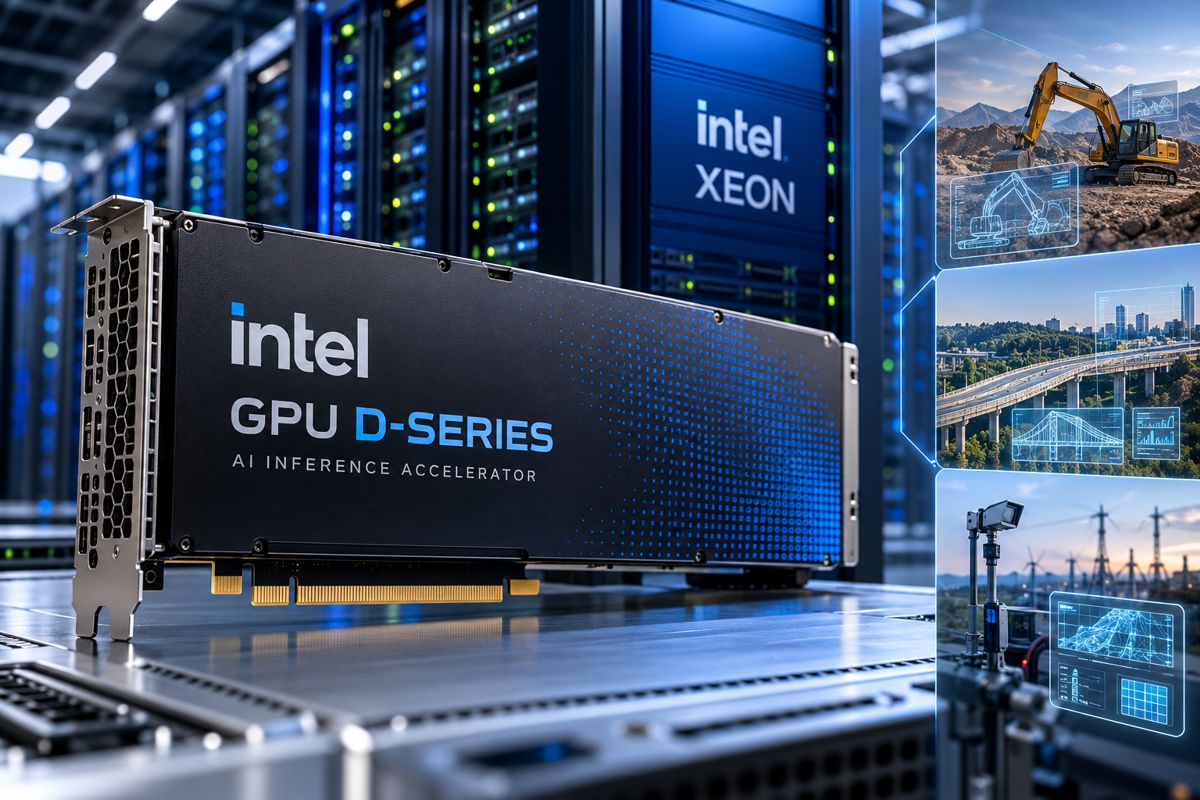
Running advanced models locally requires GPUs, power, cooling, storage and networking. Governments pursuing sovereign AI capabilities therefore need considerably more than software, while enterprises choosing between public AI services, private cloud, dedicated GPU infrastructure and isolated systems are making physical infrastructure decisions alongside technology decisions.
The contrast is particularly sharp in sectors whose assets operate for decades. Roads, railways, power networks, ports and industrial facilities cannot reorganise their operational architecture every time the AI market produces another leading model.
An architecture capable of accommodating different models offers one way of separating long-lived infrastructure decisions from a much faster AI development cycle. Airrived says customers can select their own models while retaining the orchestration, governance and agentic layers around them, alongside tools for building domain-specific systems.
The practical test will come from deployments. Sovereign AI has a clear security and strategic rationale in some environments, but powerful models still have to be operated economically and reliably. Private compute must be provisioned for workloads that can change quickly, while GPU hardware, models and supporting software continue to evolve.
For infrastructure owners accustomed to planning assets over decades, that mismatch in development cycles may prove as important as the question of where the data resides.
A Gulf Market for Sovereign AI
The Middle East provides an interesting operating environment for this model. The UAE National Strategy for Artificial Intelligence 2031 identifies logistics and transportation, resources and energy, and cybersecurity among priority areas for AI application, while infrastructure and governance form part of the foundations for developing national AI capabilities.
Transport authorities hold large volumes of traffic and mobility data. Utilities manage information about energy networks and critical assets, while governments operate public infrastructure alongside databases containing commercially, strategically or personally sensitive information. As AI begins interpreting those datasets and interacting with the systems around them, ownership of the computing and intelligence layer becomes another part of the architecture.
Airrived has already taken the sovereign deployment model into Qatar through a partnership with Wisdom Technology. Announced earlier in 2026, the project combines Wisdom’s data-centre infrastructure with Airrived’s Agentic OS for applications aimed at energy operators, government organisations and financial institutions.
The company was also ranked first in the AWS/CTIB Cybersecurity Startup Accelerator involving AWS, CrowdStrike, CyberE71 and the UAE Cyber Security Council.
The new Sovereign AI Platform extends the principle beyond sovereign cloud infrastructure by allowing organisations to run the technology within their own computing environment, including networks that cannot connect to external AI services.
Operational AI
AI assistants can remain relatively peripheral to an organisation. Their output can be reviewed before anything happens. Agentic systems are being developed specifically to reduce that intervention by allowing software to perform sequences of tasks across connected applications.
That brings artificial intelligence progressively closer to the operational layer.
Asset condition, inspection histories, engineering documentation, maintenance systems, procurement platforms, project controls and digital twins all provide plausible territory for increasingly capable agents. In utilities and industrial facilities, the information available to those systems can extend much closer to operational technology.
The question then becomes one of authority as much as intelligence. Organisations will have to determine what an agent can access, what it can change, which actions require human approval and where the reasoning behind those actions takes place.
Airrived will demonstrate its Sovereign AI Platform at GISEC Global at Dubai Exhibition Centre from 16 to 18 September 2026.
“Cloud democratized infrastructure. Generative AI democratized intelligence. The next step is making that intelligence truly yours,” Gurtu added. “The future of enterprise AI will not just be agentic. It will be sovereign.”
Public AI services retain substantial advantages in scale, accessibility and their ability to absorb rapidly changing computing requirements. Private clouds, locally hosted models and isolated systems are therefore likely to coexist, selected according to the sensitivity and operational consequences of individual workloads.
The important change is that organisations now have reason to decide where the intelligence itself should reside. Once AI moves from answering questions to operating systems, that becomes an engineering decision as much as an IT one.

Key Industry Questions
- What is sovereign AI? Sovereign AI generally describes AI infrastructure in which an organisation or jurisdiction retains control over important elements such as data, computing infrastructure, models and their operation. The precise definition varies between deployments.
- How is sovereign AI different from data sovereignty? Data sovereignty principally concerns control, storage and jurisdiction of data. AI sovereignty can extend that principle to models, inference workloads, computing infrastructure, agents and the software used to govern them.
- Can Airrived operate without an external cloud connection? According to the company, the Sovereign AI Platform can operate on-premises, on private GPU infrastructure and within fully air-gapped environments.
- Can organisations use their own AI models? Yes. Airrived says customers can deploy selected customer-controlled models as well as its own models within the local environment.
- Why might critical infrastructure operators want locally hosted AI? Local hosting can help organisations control where sensitive operational information is processed and reduce reliance on external connectivity or infrastructure. This can be relevant where security, regulatory or data-residency requirements restrict external processing.
- Does running AI locally automatically make it secure? No. Local deployment changes where the system operates but does not remove risks associated with access permissions, model behaviour, compromised data, software vulnerabilities or autonomous actions.
- What additional risk does agentic AI introduce? Agents can interact with applications and potentially execute actions rather than simply provide information to a human user. Their permissions, governance and access to operational systems therefore become important parts of the security architecture.
- Is sovereign AI necessarily cheaper than cloud AI? No. Private infrastructure can reduce exposure to usage-based external model charges but introduces costs for GPUs, power, cooling, maintenance, technical staff and hardware replacement. Economics depend heavily on workload and utilisation.
- Where is sovereign AI likely to appear first? Government, defence, financial services, energy, telecommunications and other regulated or strategically sensitive sectors are natural candidates. Critical infrastructure applications are particularly relevant where AI requires access to sensitive operational information.
Strategic Takeaways
- AI sovereignty extends the familiar issue of data residency into control of models, compute, agents and inference workloads.
- Agentic AI increases the importance of deployment architecture because software can act across operational systems rather than simply analyse information.
- Air-gapped AI provides an option for environments where external model connections are unacceptable, but creates its own computing and management requirements.
- Sovereign AI infrastructure must accommodate AI models and hardware developing on much shorter cycles than the physical assets it may eventually support.
- Critical infrastructure is likely to use a mixture of public, private and isolated AI according to the sensitivity and operational consequences of individual workloads.