Zeroth Bridge Takes the Humanoid Robot into Developer Territory
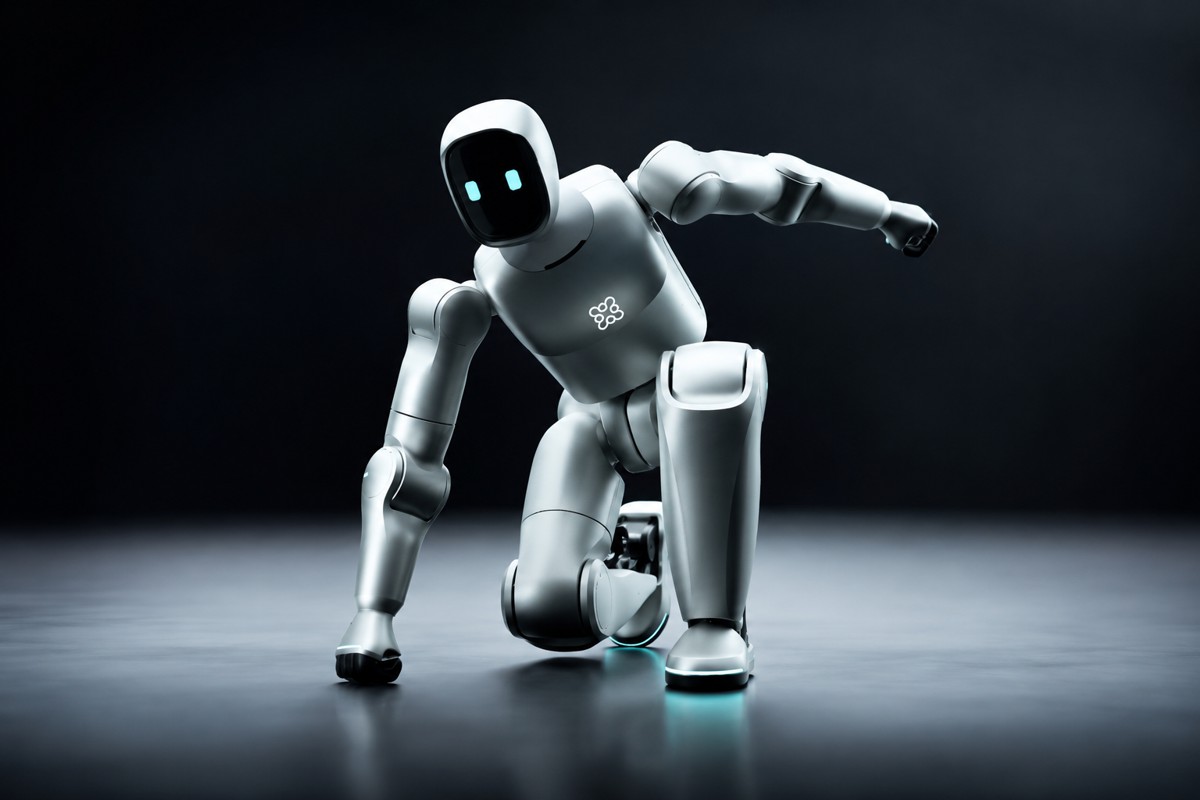
Zeroth has opened global bookings for Bridge, an 88 cm humanoid robot weighing about 13 kg, but the hardware may be the less interesting part of the launch. Alongside it comes OpenBridge, an open-source development environment intended to let programmers create, exchange and build upon physical robot capabilities rather than treating each machine as a largely closed system.
The combination places Bridge somewhere between a compact humanoid, a robotics development kit and a physical platform for embodied AI experimentation. Zeroth is giving developers access to software development kits, motion-control APIs, motion capture and virtual reality integration, while OpenBridge adds common development tools, training resources and a public Skill Hub. The launch is therefore less a contest over who can build the most human-looking machine and more an experiment in who gets to programme what robots eventually become capable of doing.
Briefing
- Bridge stands 88 cm tall and weighs approximately 13 kg, with 30–40 cm arms and two-finger grippers.
- The robot supports bipedal walking, obstacle avoidance, motion control and a library of pre-developed movements.
- Developers receive access to SDKs, open motion-control APIs and motion capture and VR integration.
- OpenBridge provides development tools, training resources and a Skill Hub for creating and sharing robot capabilities.
- Zeroth’s Bridge Builder Program will shortlist 500 developers, with 200 receiving complimentary access to Bridge and another 300 receiving priority purchasing and SDK access.
A Smaller Platform for Physical AI
Much of the humanoid robotics market has concentrated on machines intended eventually to undertake economically useful work in factories, warehouses, logistics operations and other human-designed environments. That pushes development towards human-scale machines capable of carrying meaningful loads and operating around equipment originally designed for people. Bridge takes a different route, with its smaller dimensions and relatively low weight pointing primarily towards development rather than heavy physical work.
At less than a metre tall and sufficiently light to be handled without the infrastructure associated with a full-size humanoid, Bridge has 30–40 cm arms terminating in two-finger grippers. Zeroth says the standard system provides stable bipedal walking, obstacle avoidance and a collection of human-like movements and choreography, while developers can move beyond those supplied capabilities through the company’s SDKs and motion-control interfaces.
The smaller format imposes obvious limits on the physical jobs Bridge could perform, but those limitations are less troublesome for hardware intended to explore locomotion, perception, control and embodied AI. Research equipment that can be moved by one person, operated in relatively modest spaces and acquired without the capital expenditure associated with industrial-scale humanoids potentially broadens the population able to experiment with physical AI.
Chinese reporting ahead of the international launch described precisely that gap. Laboratory humanoids can cost hundreds of thousands or even millions of yuan and may require specialist facilities and several people to operate, while inexpensive robots have historically compromised on performance. Bridge was presented domestically as an attempt to occupy the space between those extremes.
Chinese launch coverage put the Geek Edition at RMB 8,888, although Zeroth says international pricing will vary by region. At that level, Bridge enters territory potentially accessible to individual developers, universities, smaller laboratories and engineering teams rather than being confined to major robotics programmes.
Opening the Robot Stack
OpenBridge extends the same approach into software. Zeroth describes it as an open-source ecosystem for embodied intelligence, with shared development tools, training resources and a Skill Hub through which robot capabilities can be contributed and reused. Bridge supports the environment natively.
The underlying idea is familiar from computing even if applying it successfully to robotics is considerably harder. Instead of every manufacturer or laboratory developing capabilities inside an isolated hardware and software stack, developers could create skills that other participants can inspect, adapt and extend.
Zeroth itself invokes Android as the analogy, although Android succeeded with enormous manufacturer participation, a mature application economy and eventually billions of devices. OpenBridge is at the beginning of that process, with a single newly launched hardware platform at its centre, and robotics presents complications that smartphone software largely avoids.
A piece of software controlling a physical machine depends upon actuators, sensors, dimensions, payloads, balance, environmental perception and safety constraints. A manipulation routine cannot necessarily migrate between robots in the way an application moves between compatible smartphones; even apparently straightforward capabilities such as reaching for an object depend on the geometry and dynamics of the machine performing the movement.
The value of OpenBridge will therefore depend partly on how much of that complexity can be abstracted without sacrificing the low-level access researchers and developers need. The extent of its openness should also become clearer as developers examine the repositories, licences, documentation and hardware interfaces behind the platform. If the Skill Hub begins accumulating reliable locomotion, manipulation, perception, teleoperation and task-level capabilities that other developers can genuinely reuse, it could become more consequential than the individual movements supplied with the robot.
Building the Developer Base
Zeroth is attempting to populate the platform through its Bridge Builder Program. The first phase will shortlist 500 developers for a co-creation challenge, with the top 200 due to receive complimentary access to Bridge and participate in developing the OpenBridge ecosystem. The other 300 will receive priority purchase access to the Geek Edition, SDK access and eligibility for later stages of the programme.
Open platforms face a circular problem: developers are attracted by useful ecosystems, but useful ecosystems require developers. Putting several hundred machines and development environments into the hands of people specifically selected to build with them gives Zeroth an opportunity to generate capabilities before relying on conventional hardware sales to create a community.
The quality of those contributions will matter more than the number of participants. A repository containing demonstrations and novelty movements is very different from one accumulating dependable capabilities that solve development problems and can be adapted by other users.
Bridge has already appeared publicly in China, with reporting around the World Robot Conference in August describing the machine alongside an early presentation of OpenBridge. The 2 September announcement is therefore better understood as the formal international commercial launch rather than the robot’s first public appearance. Reports described OpenBridge around a combination of data infrastructure, training tools, a Skill Hub and the Bridge robot itself, with capabilities intended to be created, reused, shared and iterated rather than remaining confined to individual machines.
The Meaning of AI-Native
Zeroth describes Bridge as the world’s first “AI-native embodied robot”, a claim that requires some caution. There is no universally accepted technical category establishing where an AI-enabled robot ends and an AI-native robot begins, while embodied AI is already an active field involving numerous humanoid and non-humanoid platforms.
Zeroth uses the term to describe the way Bridge has been designed, with its hardware, motion-control stack and developer interfaces intended from the outset for AI-driven physical interaction and third-party development rather than being a conventional programmed robot subsequently given an AI layer.
For developers, access to those interfaces is more tangible than the terminology. Open motion-control APIs, custom algorithm deployment and motion capture or VR integration provide several routes through which new behaviour can be created rather than restricting development to a predefined application layer. Motion capture can provide demonstrations, VR can support teleoperation and data collection, direct motion APIs allow researchers to work closer to the machine, and higher-level software can explore autonomous behaviour.
How effectively those different approaches can be converted into reusable OpenBridge skills should become clearer once outside developers have spent time with the platform.
From Robot Products to Robot Ecosystems
Zeroth was founded in 2024, making it a young participant in an increasingly crowded Chinese robotics sector. Its own material describes a broader portfolio spanning family companionship, multi-scenario interaction and exploration.
Bridge gives the company a route beyond selling individual robots. An installed base provides the hardware, while meaningful developer access can create an ecosystem if the software produced around those machines retains value for other users.
Computing has repeatedly demonstrated the power of that model, but robotics still lacks a dominant equivalent of the PC operating system, smartphone application platform or web browser: a broadly adopted layer upon which large numbers of independent developers can create useful capabilities without owning the entire underlying technology stack. Physical hardware makes such standardisation unusually difficult because different joints, motors, hands, sensors and dimensions change what software can accomplish, while safety and reliability requirements rise sharply when code moves machinery rather than pixels.
Tying OpenBridge initially to a known piece of hardware removes some of that complexity. Developers can work against the same physical reference platform while Zeroth establishes the software environment around it. An ecosystem confined to Bridge could still make the robot a useful development machine; one that eventually allows capabilities to move meaningfully between different forms of robotic hardware would be a considerably more ambitious proposition. The launch material does not yet establish that level of portability.
Global bookings for Bridge opened on 2 September, with regional pricing rather than a single worldwide figure. Applications for the Bridge Builder Program are also open.
“We hope that one day, everyone can participate in creating robots. To make that possible, we want to make robotics more open to everyone,” said Renjie Guo, Founder and CEO of Zeroth. “The world has no shortage of walls. We choose to build bridges.”
The more revealing measure will come when the first few hundred developers have had time with the machine. Bridge can be judged as hardware fairly quickly. OpenBridge will have to prove whether an open community can turn that hardware into something larger.
Key Industry Questions
- What is Zeroth Bridge? Bridge is a compact bipedal humanoid robot designed primarily as a development platform for embodied AI, robotics software, motion control and related experimentation. It stands 88 cm tall and weighs approximately 13 kg.
- What can developers access? Zeroth says developers will have access to SDKs, open motion-control APIs, custom algorithm deployment and motion capture and VR integration.
- What is OpenBridge? OpenBridge is Zeroth’s open-source development ecosystem for embodied intelligence. It combines development tools, training resources and a Skill Hub intended to allow robot capabilities to be created and shared.
- Is Bridge really the world’s first AI-native embodied robot? That is Zeroth’s description, but “AI-native embodied robot” is not a sufficiently standardised category to establish the claim independently. Zeroth uses the term to describe hardware, motion systems and developer interfaces designed around AI-driven physical interaction.
- How much does Zeroth Bridge cost? Zeroth says international pricing varies by region. Chinese launch coverage put the Geek Edition at RMB 8,888.
- What is the Bridge Builder Program? Zeroth plans to shortlist 500 developers. The top 200 will receive complimentary access to Bridge, while another 300 receive priority purchase access, SDK access and eligibility for subsequent programme openings.
- Is Bridge intended for industrial work? The available specifications and developer positioning point primarily towards research, development, education and embodied AI experimentation rather than human-scale industrial handling. Its compact dimensions and two-finger grippers inevitably limit the physical work it can perform.
- Why use a small humanoid for embodied AI development? A compact machine can reduce cost, space and handling requirements while retaining many of the locomotion, perception and control problems associated with bipedal robots. That can make physical experimentation accessible to a wider development community.
- Can OpenBridge work with robots made by other manufacturers? The supplied launch material establishes native support for Bridge but does not establish broad cross-manufacturer hardware compatibility.
Strategic Takeaways
- Bridge’s strongest proposition is its role as accessible physical development hardware rather than its humanoid appearance or “AI-native” branding.
- Compact humanoids could occupy a useful space between inexpensive educational robots and costly full-scale research or industrial machines.
- OpenBridge will depend on the quality and reusability of developer-created skills rather than the nominal openness of the platform.
- A common reference robot simplifies early ecosystem development because contributors can work against broadly consistent hardware.
- Cross-platform portability would substantially increase OpenBridge’s value, but the launch material does not yet establish that capability.