Hydrogen Power Moves From Concept To Construction Reality
The transition to low-carbon power on construction sites has often been framed as a future ambition rather than a present-day solution. That narrative is beginning to shift. The arrival of the world’s first hydrogen-powered generator into a commercial rental fleet signals a notable change in direction, one that brings alternative fuel technologies directly into operational use rather than confined to pilot projects or demonstration units.
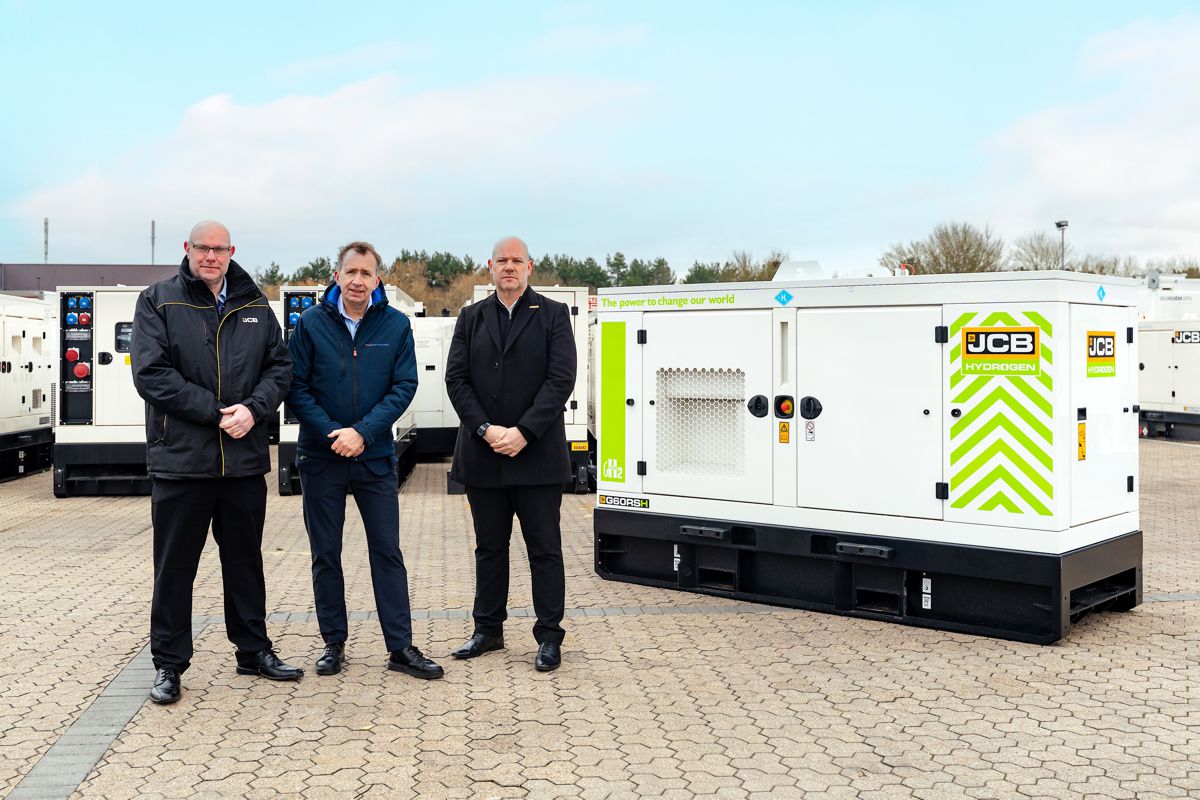
With Dawsongroup taking delivery of a hydrogen combustion generator developed by JCB, the conversation moves beyond theory. This is not simply a prototype sitting behind barriers at a trade show. It is a working asset, deployed in a real-world environment where reliability, uptime and cost still matter more than headlines.
The implications stretch far beyond a single machine. Temporary power sits at the heart of construction, infrastructure delivery, data centres, and major events. If hydrogen can prove itself here, under demanding and often unforgiving conditions, it opens the door to broader adoption across the entire construction ecosystem. The industry has been searching for viable alternatives to diesel that do not compromise performance. Hydrogen combustion, it seems, is now firmly in that conversation.
Briefing
- First commercial deployment of a hydrogen combustion generator in a rental fleet
- Equivalent performance to diesel with zero emissions at the point of use
- Initial deployment focused on data centre standby power applications
- Integration with battery systems enables hybrid microgrid operation
- Signals growing commercial confidence in hydrogen as a practical site solution
A Turning Point for Temporary Power
Temporary power has long been one of the more stubborn challenges in decarbonising construction and infrastructure. While electrification has made steady progress in tools and light equipment, high-demand applications such as generators have remained heavily reliant on diesel. The reasons are straightforward: energy density, reliability, and ease of deployment.
That’s precisely where hydrogen combustion enters the picture. Unlike fuel cells, which require entirely new system architectures, hydrogen combustion engines build on familiar mechanical principles. For operators and fleet owners, that continuity matters. It reduces training requirements, simplifies maintenance pathways, and lowers the barrier to adoption.
The G60RS H generator introduced into the Dawsongroup fleet reflects this pragmatic approach. It delivers comparable power and efficiency to its diesel counterpart while eliminating carbon emissions at the point of use. In a sector where downtime can halt multimillion-pound projects, matching diesel performance is not optional. It is essential.
What’s notable here is not just the technology itself, but the willingness of a major asset provider to invest in it. Fleet decisions are rarely speculative. They are grounded in utilisation rates, customer demand, and long-term return on investment. The inclusion of hydrogen in a working fleet suggests that demand is no longer hypothetical.
Hydrogen Combustion Finds Its Place
Hydrogen has been widely discussed as part of the future energy mix, particularly in sectors where electrification faces practical limitations. Heavy transport, industrial processes, and off-grid power generation all fall into that category. The construction sector sits squarely within this group.
The approach taken by JCB is distinct. Rather than focusing exclusively on hydrogen fuel cells, the company has invested heavily in hydrogen combustion engines. Backed by a £100 million development programme, this technology retains the core architecture of internal combustion while replacing fossil fuels with hydrogen.
From an engineering standpoint, this has several advantages. Combustion engines are well understood, robust, and capable of handling variable loads, which are common on construction sites. They can also be refuelled quickly, avoiding the downtime associated with battery-only systems in high-demand scenarios.
The generator itself does not operate in isolation. It is designed to work alongside battery storage systems, forming part of a hybrid microgrid. This combination allows energy to be stored and used efficiently, with the hydrogen generator stepping in only when needed. The result is reduced fuel consumption, quieter operation, and improved overall efficiency.
Microgrids and the Changing Shape of Jobsite Energy
The integration of hydrogen generators with battery systems points towards a broader shift in how construction sites are powered. Rather than relying on a single energy source, sites are increasingly adopting hybrid solutions that combine renewables, storage, and backup generation.
In this configuration, the generator effectively becomes a support system rather than the primary power source. It runs intermittently, topping up batteries or meeting peak demand, while the bulk of energy is managed through stored or renewable inputs. This approach aligns closely with the industry’s push towards smarter, more efficient energy use.
For contractors and project managers, this offers tangible benefits. Reduced fuel consumption lowers operating costs, while quieter operation improves working conditions and compliance with noise regulations. At the same time, the ability to integrate renewable energy sources enhances sustainability credentials without sacrificing reliability.
The concept of on-site microgrids is not new, but its practical implementation has often been limited by technology constraints. Hydrogen combustion, combined with advanced battery systems, provides a pathway to make these systems viable at scale.
Data Centres Drive Early Adoption
The first deployment of the hydrogen generator in the Dawsongroup fleet will support a data centre, a sector that has become one of the fastest-growing consumers of energy globally. The rise of artificial intelligence, cloud computing, and digital services has placed unprecedented demand on data infrastructure.
Data centres require uninterrupted power. Even a brief outage can have significant financial and operational consequences. At the same time, operators face increasing pressure to reduce their environmental impact. This creates a challenging balance between reliability and sustainability.
Hydrogen offers a potential solution. It provides a low-carbon alternative to diesel without compromising on performance. For standby applications, where generators may run intermittently but must be ready at all times, hydrogen combustion engines offer a familiar and dependable option.
The choice to deploy the generator in a data centre environment is telling. It reflects confidence in the technology’s reliability and its ability to meet stringent operational requirements. If hydrogen can perform in this context, it strengthens the case for its use across other critical infrastructure sectors.
Investment Signals Growing Confidence
Dawsongroup’s broader investment strategy provides additional context. The company has expanded its generator fleet significantly, including a substantial investment in Stage V diesel models over the past year. This indicates a pragmatic approach, balancing immediate operational needs with longer-term sustainability goals.
The addition of a hydrogen generator does not replace existing assets. Instead, it complements them, offering customers a wider range of options depending on their specific requirements. This flexibility is crucial in a market where no single solution fits every application.
The company’s role as a commercial asset supplier places it at the intersection of technology providers and end users. Its decisions are shaped by real-world demand, making it a useful indicator of broader market trends. The introduction of hydrogen into its fleet suggests that customers are not only interested in alternative energy solutions but are ready to start using them.
The Road Ahead for Hydrogen in Construction
Hydrogen’s role in construction is still evolving, and challenges remain. Infrastructure for hydrogen production, storage, and distribution is not yet as developed as traditional fuel networks. Costs also remain a consideration, particularly in comparison to established diesel systems.
However, momentum is building. Governments and industry bodies across Europe and beyond are investing heavily in hydrogen infrastructure as part of wider decarbonisation strategies. According to the International Energy Agency, hydrogen is expected to play a significant role in reducing emissions in hard-to-abate sectors.
For the construction industry, the key question is not whether hydrogen will be part of the solution, but how quickly it can be integrated into everyday operations. Early deployments such as this provide valuable insights into performance, cost, and operational considerations.
The introduction of a hydrogen generator into a commercial fleet is a small step in isolation, but it represents a broader shift. It signals that alternative fuels are moving from the margins into the mainstream, driven by a combination of technological progress, regulatory pressure, and market demand.
A Practical Path to Lower Emissions
What stands out in this development is its practicality. There is no attempt to reinvent the entire energy system overnight. Instead, it builds on existing technologies and operational models, introducing hydrogen in a way that aligns with current industry practices.
This approach is likely to resonate with contractors and asset managers who need solutions that work today, not at some undefined point in the future. By delivering familiar performance with reduced environmental impact, hydrogen combustion offers a bridge between current operations and long-term sustainability goals.
As the construction and infrastructure sectors continue to evolve, the ability to adopt new technologies without disrupting productivity will be critical. The deployment of hydrogen-powered generators suggests that this balance is achievable, marking a step forward in the industry’s transition to cleaner energy.