Why Pool Fencing Regulations Diverge From Standard Temporary Fencing Rules
Temporary fencing is commonly used on construction sites, at events, and on projects that require a secure, removable barrier. However, when applied to swimming pools, temporary fencing for pools must meet stricter and more specific regulatory requirements.
The systems and standards governing general temporary fencing are well established and widely understood within the industry. Pool environments, however, introduce a different level of risk that requires specialised compliance measures.
Why Specialist Suppliers Matter
The technical differences between general construction fencing and pool-compliant systems mean that temporary fencing for pools must be sourced from suppliers who provide products specifically designed for this purpose. These systems are engineered to meet child safety requirements rather than general site security standards.
These specialised solutions include appropriate gap spacing, height specifications, gate mechanisms, and structural properties. Each element is designed to meet the performance requirements of AS 1926 when used in a temporary configuration.
Pool construction contractors who rely on standard general-purpose fencing to secure a pool site during construction expose both themselves and their clients to regulatory non-compliance and significant safety risks. This includes the risk of unauthorised access by children, which pool fencing standards are specifically designed to prevent.
The cost of installing properly specified fencing is minimal compared with the potential consequences of inadequate protection.
The Standards That Govern Each Fence Type
Standard temporary fencing for construction and events is governed by AS 4687, the Australian Standard for temporary fencing and hoardings. This standard covers requirements for construction sites, crowd control, and asset protection, with a focus on stability, wind resistance, and visibility. Fencing that meets AS 4687 is designed primarily to restrict adult access rather than address child safety risks.
Temporary pool fencing is covered by AS 4687.4, which treats pool fencing as a separate category due to the higher safety risks involved. Young children are more likely to be present around pool areas, and barrier failure can result in serious injury or drowning rather than simple unauthorised access. For this reason, temporary pool barriers must perform consistently over extended periods, including outside active work hours.
The underlying pool safety standard, AS 1926.1, applies to permanent pool fencing across most Australian jurisdictions and establishes the performance requirements that any pool barrier must meet. Temporary pool fencing must comply with these same performance requirements for the entire period between pool construction and permanent barrier installation.
What Makes a Pool Fence Different From a Construction Fence
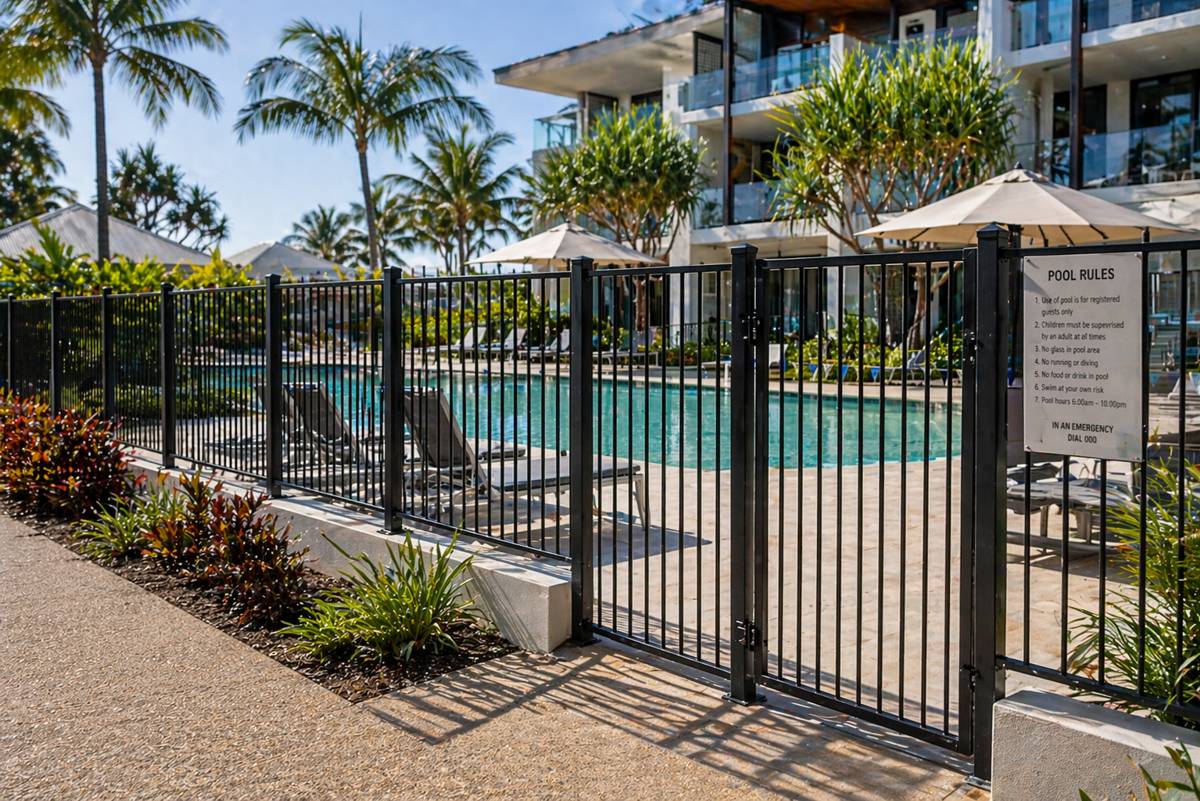
Pool fencing standards are designed specifically with young children in mind. The gaps between vertical bars must be small enough to prevent a child’s head from fitting through. Horizontal elements must be positioned to prevent climbing. The overall height of the barrier must prevent young children from gaining access.
Gates must include self-closing and self-latching mechanisms that are out of reach of children but accessible to adults. These mechanisms must operate reliably at all times, regardless of how long the temporary fence remains in place.
Standard construction fencing often includes horizontal rails that can be used as footholds, gates that are not designed with child safety in mind, and spacing that is intended to restrict adult access only. As a result, these systems do not meet pool safety requirements and should not be used as substitutes in pool environments.
The Queensland Framework and National Variations
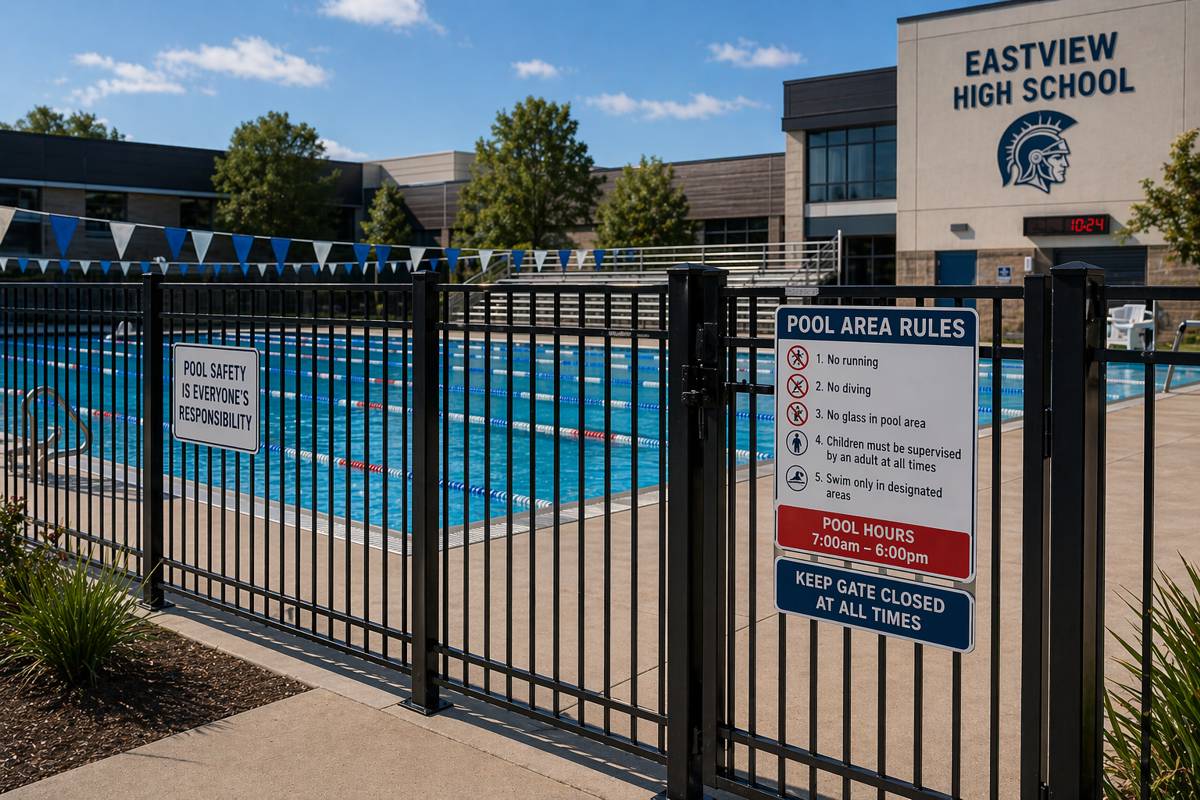
Queensland provides clearly defined rules for temporary pool fencing. A temporary fence may be used in place of a permanent barrier for up to three months from the date it is inspected and approved by a building certifier. Approval is not automatic; the certifier must inspect the fence in person and confirm compliance before this period begins.
Other Australian states and territories adopt AS 1926.1 through their respective regulatory frameworks. New South Wales, Victoria, South Australia, Tasmania, Western Australia, and the ACT follow AS 1926.1-2012, while the Northern Territory uses AS 1926.1-1993. Each jurisdiction applies its own requirements for registration, inspection, and enforcement, which influence how temporary pool fencing must be installed and managed.
The Inspection and Compliance Timeline
Once permanent pool fencing is installed, it must be certified before the pool can be used. Temporary fencing must remain in place and fully compliant until the permanent barrier has been approved. Removing temporary fencing prematurely can delay certification and may lead to enforcement action depending on the jurisdiction.
Contractors should plan for the regulatory timeline from the outset of a project. By coordinating the installation of temporary fencing, the transition to permanent barriers, and required inspections, they can reduce compliance risks and avoid project delays.
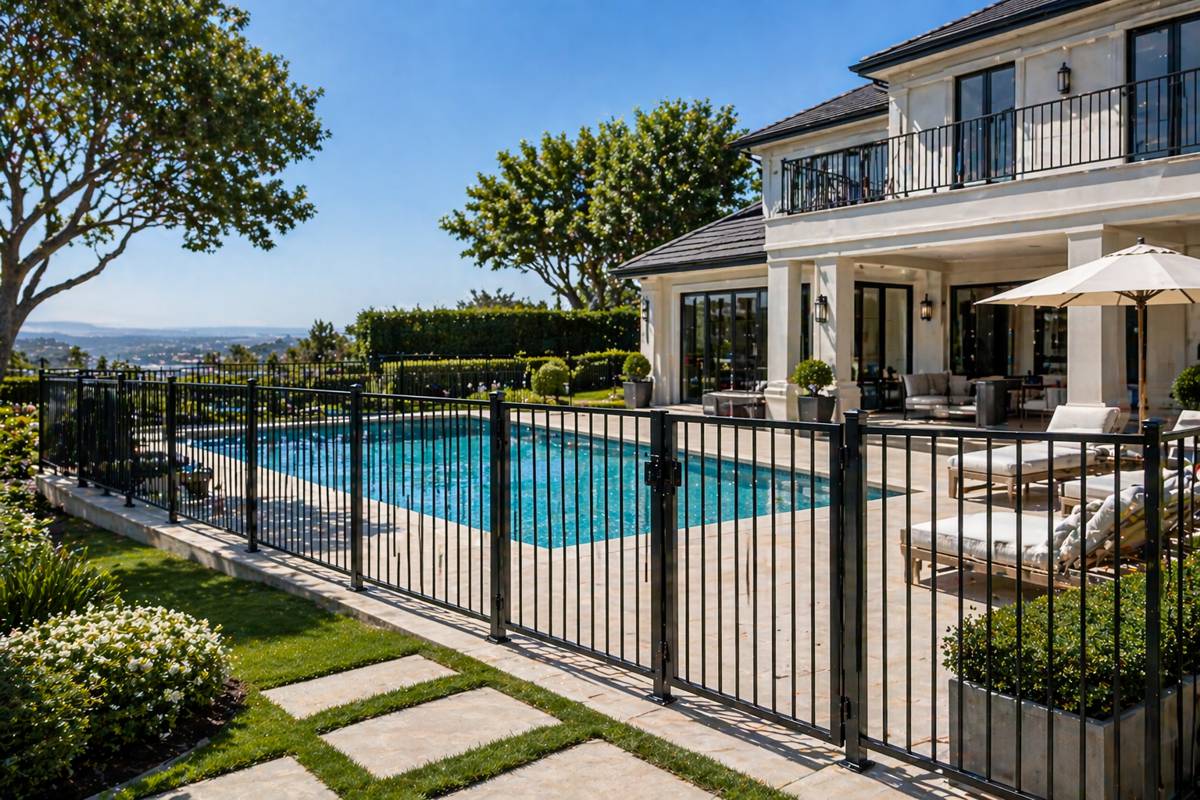
Understanding the Stakes of Pool Safety Compliance
Temporary pool fencing is not simply a variation of standard site barriers. It is a specialised system designed to meet significantly stricter safety requirements. Understanding the differences in standards, design, and compliance obligations is essential for maintaining safety and avoiding regulatory issues.
With appropriate planning and correctly specified systems, pool areas can remain secure throughout construction while meeting all applicable legal and safety requirements.