Kazakhstan Sets Course for Clean Power with QaJET Investment Platform
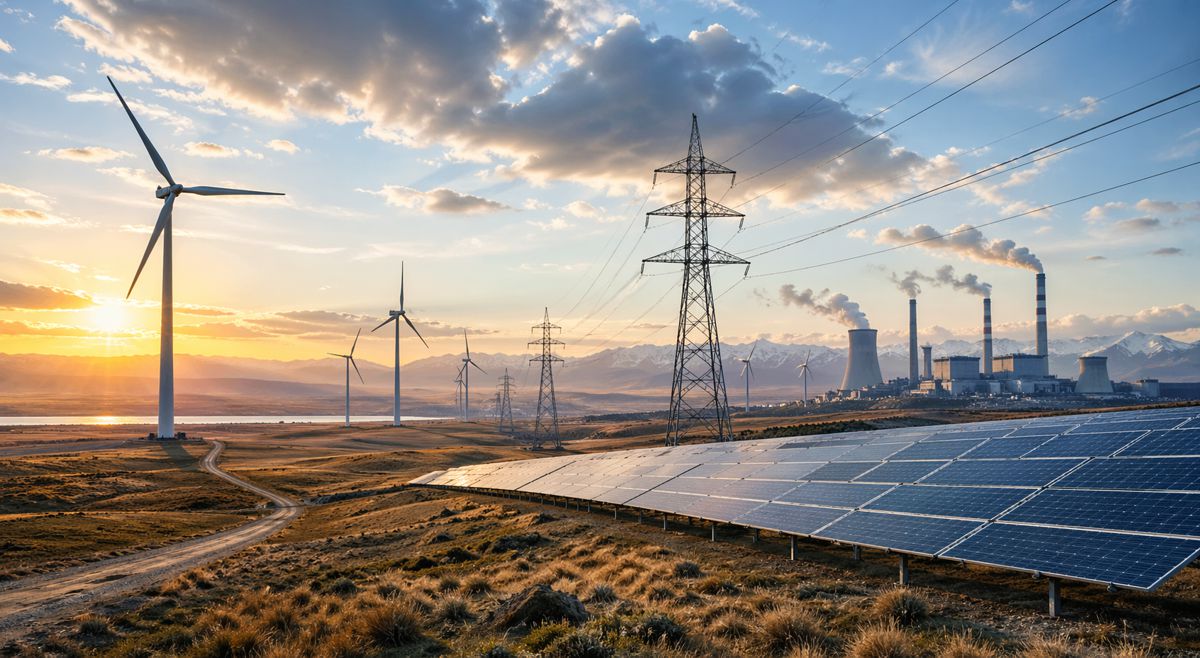
Kazakhstan has taken a decisive step in reshaping its energy future with the launch of the QaJET investment platform, a national framework designed to accelerate the transition away from carbon-intensive power generation. Announced at the Regional Ecological Summit 2026 in Astana, the initiative signals a coordinated effort to align climate targets with infrastructure investment and industrial transformation.
At its core, QaJET is about scale and structure. The platform aims to mobilise approximately US$20 billion in investment to deliver 10 GW of new renewable energy capacity by 2035. That figure alone places Kazakhstan among the more ambitious emerging energy transition markets, particularly given its historical reliance on coal-fired generation and energy-intensive heavy industry.
The agreement underpinning QaJET was formalised through a memorandum of understanding between Kazakhstan’s energy and environmental ministries and the European Bank for Reconstruction and Development. This framework sets out how public institutions, international lenders, private investors and development partners will collaborate to turn policy ambition into deployable infrastructure projects.
Briefing
- Kazakhstan launches QaJET to deliver 10 GW of renewable energy capacity by 2035
- Platform expected to mobilise around US$20 billion in public and private investment
- Emissions reductions projected at more than 20 million tonnes annually
- Focus includes grid upgrades, electrification and industrial decarbonisation
- Backed by cooperation with international partners led by the EBRD
Moving Beyond Coal Dependency
Kazakhstan’s energy system has long been defined by its dependence on coal, which still accounts for a substantial share of electricity generation. While this has historically supported industrial growth and energy affordability, it has also left the country exposed to emissions intensity and ageing infrastructure challenges.
Transitioning away from this model is not simply a matter of replacing generation capacity. It requires a reconfiguration of the entire energy ecosystem, from transmission networks to industrial consumption patterns. QaJET addresses this by combining renewable deployment with grid modernisation and electrification strategies, rather than treating these as separate policy strands.
From a global perspective, Kazakhstan’s position is particularly relevant. As one of Central Asia’s largest economies and a major energy exporter, its transition pathway offers a test case for how resource-rich nations can pivot without undermining economic stability. That balance between decarbonisation and resilience sits at the heart of the QaJET framework.
Investment Scale Meets Infrastructure Reality
Delivering 10 GW of renewable capacity is not just a financing exercise. It is a logistical and engineering challenge that will stretch across multiple sectors. Wind and solar projects in Kazakhstan benefit from vast land availability and strong natural resource conditions, yet grid connectivity and transmission capacity remain key constraints.
QaJET explicitly targets these bottlenecks. Planned investments include upgrades to transmission and distribution networks, alongside the integration of battery storage systems. These measures are essential to stabilise intermittent renewable generation and ensure reliable power delivery across a geographically vast country.
The inclusion of heat supply solutions within the platform also reflects regional realities. In colder climates such as Kazakhstan, decarbonising heat is as critical as electricity. Piloting renewable technologies for district heating could therefore play a pivotal role in reducing emissions from urban energy consumption.
Coordinated Financing and International Alignment
The involvement of the European Bank for Reconstruction and Development provides both financial credibility and technical expertise. With nearly US$12 billion already invested in Kazakhstan across hundreds of projects, the institution brings a track record of delivering complex infrastructure programmes in the region.
QaJET builds on similar platforms supported by the EBRD in other markets, including Egypt’s water-energy nexus initiatives and industrial decarbonisation programmes in Türkiye. These models have demonstrated the value of bundling projects into structured investment pipelines that can attract institutional capital at scale.
For Kazakhstan, this approach reduces fragmentation. Instead of isolated projects competing for funding, QaJET creates a coordinated pipeline that aligns policy objectives with investor expectations. That, in turn, improves bankability and accelerates deployment timelines.
Industrial Decarbonisation and Economic Competitiveness
Beyond power generation, QaJET places a strong emphasis on the electrification of industry, businesses and households. This is a critical element of the transition, particularly in a country where heavy industry plays a central economic role.
Electrification offers a pathway to reduce emissions while maintaining industrial output, provided that the electricity itself becomes cleaner. By linking renewable deployment with end-use electrification, the platform creates a feedback loop that strengthens both supply and demand for low-carbon energy.
There is also a strategic industrial dimension. Kazakhstan is positioning itself to develop local manufacturing capacity for renewable energy components and related technologies. This could include everything from turbine components to grid equipment, creating new value chains and reducing reliance on imports.
Emissions Targets and Climate Commitments
QaJET aligns with Kazakhstan’s broader climate commitments, including its pledge to achieve carbon neutrality by 2060. In the nearer term, the country has committed to reducing net greenhouse gas emissions by up to 25 per cent by 2030 compared to 1990 levels.
The platform’s projected reduction of more than 20 million tonnes of emissions annually represents a meaningful contribution towards these targets. In proportional terms, this equates to around 7 per cent of Kazakhstan’s energy-related emissions, a figure that underscores the scale of impact expected from the initiative.
These reductions are not just environmental metrics. They carry implications for international trade and investment, particularly as carbon border adjustment mechanisms and sustainability-linked financing become more prevalent. Lower emissions intensity can enhance Kazakhstan’s competitiveness in global markets.
Knowledge Transfer and Just Transition Principles
A notable aspect of QaJET is its focus on the social dimension of energy transition. The platform includes provisions for knowledge transfer, research and development, and support for communities affected by the shift away from fossil fuels.
This reflects the broader concept of a “just transition”, where economic restructuring is managed in a way that mitigates social disruption. For Kazakhstan, this is particularly relevant in regions where coal mining and related industries are major employers.
International experience suggests that managing this transition effectively requires early planning, targeted investment and stakeholder engagement. By embedding these elements within QaJET, Kazakhstan is acknowledging that infrastructure transformation is as much about people as it is about technology.
Energy Security in a Changing Landscape
Energy security remains a central concern for any nation undergoing transition. While renewable energy can enhance long-term resilience, it also introduces new challenges related to intermittency and system balancing.
QaJET addresses this through its integrated approach to grid modernisation and storage. By investing in smarter networks and flexible capacity, Kazakhstan aims to maintain reliability while reducing its dependence on fossil fuels.
This is particularly important given the country’s geographic scale and climatic conditions. Ensuring consistent energy supply across remote and industrial regions will require careful planning and robust infrastructure investment.
A Platform with Regional Implications
Kazakhstan’s move to establish QaJET is likely to resonate beyond its borders. Central Asia is at an early stage in its energy transition, with many countries facing similar challenges around fossil fuel dependence and infrastructure modernisation.
If successful, QaJET could serve as a blueprint for neighbouring markets seeking to attract investment and accelerate decarbonisation. The platform’s structure, combining policy alignment with coordinated financing, offers a model that can be adapted to different national contexts.
For investors and infrastructure developers, this creates new opportunities in a region that has historically been underrepresented in global energy transition portfolios. The scale of planned investment alone is likely to draw attention from international capital markets.
Building Momentum for Long-Term Transformation
The launch of QaJET marks the beginning of a long-term transformation rather than a single policy milestone. Delivering on its ambitions will depend on consistent implementation, regulatory stability and continued engagement with international partners.
What stands out is the shift in approach. Kazakhstan is moving from incremental change to a structured, platform-based strategy that brings together financing, technology and policy under a single framework. That level of coordination is often what separates ambition from execution in large-scale infrastructure transitions.
As projects begin to move from planning to construction, the real test will be whether QaJET can maintain momentum and deliver measurable outcomes. For now, it represents a clear signal that Kazakhstan is positioning itself within the global shift towards cleaner, more resilient energy systems.