Smarter Anti Static Workwear Fibres Set to Redefine Industrial Safety
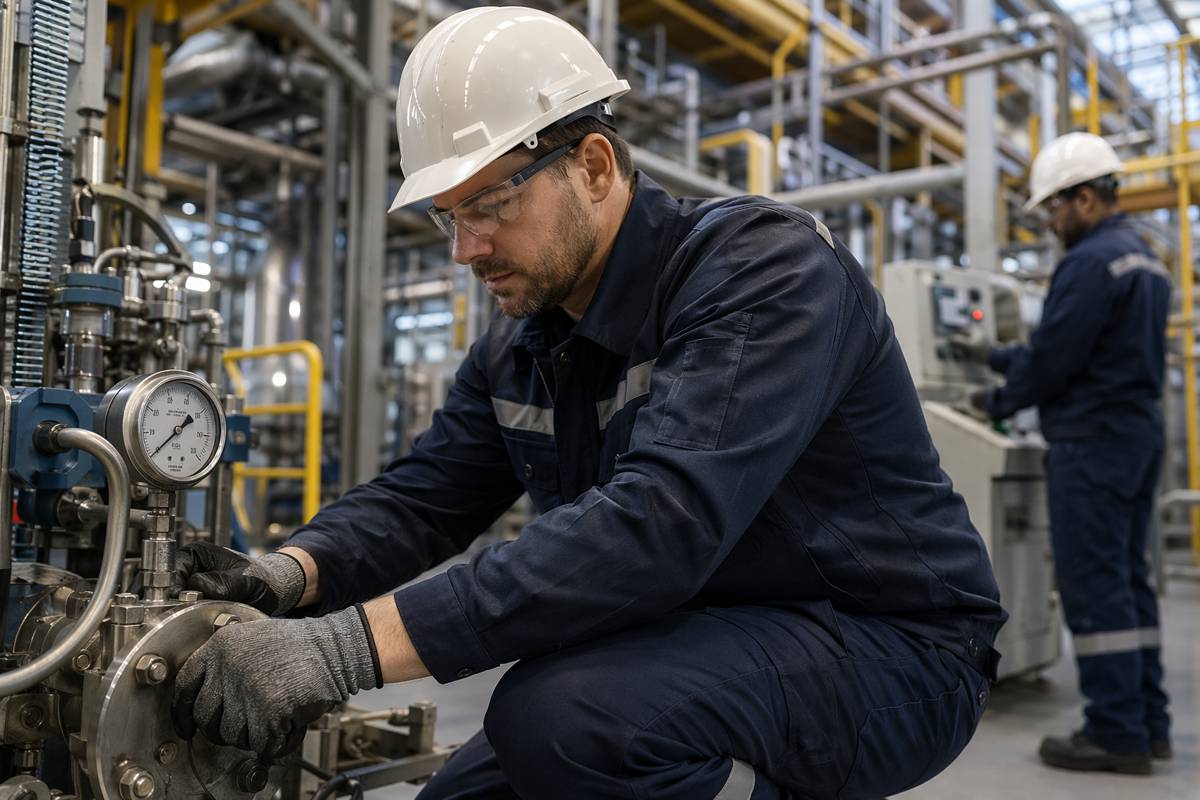
Workwear rarely grabs headlines, yet it sits at the frontline of industrial safety, quietly shaping how workers interact with hazardous environments. From petrochemical plants to semiconductor fabrication facilities, the challenge of managing static electricity has never really gone away. If anything, it’s becoming more complex as industries adopt more sensitive electronics, lighter materials, and tighter safety standards.
The LYCRA Company has now introduced a new material designed to tackle a long-standing issue without sacrificing wearability. The global launch of LYCRA ANTISTATIC fibre at Techtextil in Frankfurt places the innovation squarely in front of the technical textiles sector, where performance, compliance, and durability intersect.
At its core, the development signals a shift in how protective garments are engineered. Rather than layering anti-static treatments onto fabrics, the functionality is embedded within the fibre itself. That might sound like a subtle change, but in industrial textiles, material architecture often determines whether a solution performs consistently over time or fades after repeated use.
Briefing
- New fibre integrates anti-static properties directly into elastane structure
- Designed for industries with electrostatic discharge risks such as petrochemicals and electronics
- Compatible with existing textile manufacturing processes as a drop-in solution
- Supports compliance with standards such as EN 1149 and IEC 61340 when properly integrated
- Reflects wider industry move towards combining safety, comfort, and durability in PPE
Why Static Control Still Matters in Modern Industry
Static electricity is one of those hazards that tends to be underestimated until it causes a problem. In environments handling flammable gases or fine dust particles, a single electrostatic discharge can ignite catastrophic events. The petrochemical sector, for instance, has long relied on anti-static clothing as part of layered risk management strategies.
Yet the issue isn’t confined to heavy industry. In electronics manufacturing, electrostatic discharge can damage sensitive components worth thousands of pounds before they ever leave the production line. According to industry bodies such as the Electrostatic Discharge Association, even minor static events can degrade microelectronics in ways that aren’t immediately visible but compromise long-term reliability.
Pharmaceutical and medical environments face their own version of the challenge. Static can attract airborne particles, increasing contamination risks in cleanrooms where sterility is non-negotiable. That places anti-static performance not just as a safety feature, but as a quality control requirement embedded within broader compliance frameworks.
Engineering Anti Static Performance at Fibre Level
Traditional anti-static solutions often rely on surface treatments or conductive yarns woven into fabrics. While effective to a degree, these approaches can degrade over time, particularly after repeated washing or exposure to harsh industrial conditions. The new fibre approach takes a different route by incorporating proprietary additives directly into the elastane matrix.
That structural integration means the anti-static properties are inherent rather than applied. In practical terms, it reduces reliance on coatings that may wear off and helps maintain performance across the garment’s lifecycle. It also aligns with the growing expectation that PPE should deliver consistent protection rather than declining effectiveness.
The fibre is designed to dissipate electrical charges rather than allowing them to accumulate. When integrated into a fabric system engineered for compliance, garments can meet recognised standards such as EN 1149 and IEC 61340. As always, certification depends on the complete textile system, not just a single component, but fibre-level functionality provides a stronger foundation.
Balancing Protection with Wearability
There’s a persistent tension in PPE design. The more protective a garment becomes, the less comfortable it often feels. Workers notice that trade-off immediately, and if a garment restricts movement or causes discomfort, compliance can quietly erode over time.
That’s where stretch and recovery characteristics come into play. Elastane-based fibres are widely used because they allow garments to move with the wearer rather than against them. Integrating anti-static performance into such fibres addresses two priorities at once, protection and comfort.
“Professional workwear and protective apparel must perform reliably every day, in demanding conditions,” said Marc Souto, West & South Europe area sales manager, The LYCRA Company. “By combining anti-static functionality with the comfort, fit and freedom of movement provided by LYCRA® fibre, we help enable garments that workers are more willing to wear day after day.”
It’s a pragmatic observation. Even the most advanced protective clothing won’t deliver its intended benefits if it sits unused or is worn incorrectly. Comfort isn’t a luxury in industrial settings; it’s a factor that directly influences safety outcomes.
Integration Without Disruption to Manufacturing
One of the more commercially relevant aspects of the new fibre is its compatibility with existing textile production processes. Described as a drop-in elastane solution for knit fabrics, it allows mills to incorporate anti-static functionality without retooling their operations.
That matters because the textile supply chain is complex and cost-sensitive. Introducing new materials often requires adjustments in spinning, knitting, dyeing, and finishing processes. If those changes are too disruptive or expensive, adoption tends to stall regardless of technical merit.
By maintaining compatibility with established manufacturing methods, the barrier to entry is lowered. Mills can experiment with the fibre across different fabric constructions, from lightweight base layers to heavier outer garments, without committing to wholesale process changes.
Expanding the Performance Envelope of Workwear
The launch also sits within a broader portfolio of fibres aimed at enhancing worker comfort and garment durability. Alongside the anti-static solution, materials such as LYCRA T400 fiber, COOLMAX EcoMade fiber, and THERMOLITE fibers reflect a layered approach to performance.
Each addresses a different aspect of the working environment. Durable stretch supports longevity under industrial laundering conditions. Moisture management helps regulate body temperature during physically demanding tasks. Thermal insulation provides lightweight warmth in colder climates.
Taken together, these solutions highlight how workwear is evolving from basic protection to a more sophisticated system of performance engineering. Modern garments are expected to manage heat, moisture, movement, and safety risks simultaneously, often under extreme conditions.
The Role of Standards and Compliance
Regulatory frameworks continue to shape the direction of PPE innovation. European standards such as EN 1149 define requirements for electrostatic dissipative clothing, while international standards like IEC 61340 govern broader electrostatic control practices.
Compliance isn’t simply a box-ticking exercise. It influences procurement decisions, insurance considerations, and operational risk management across industries. For manufacturers, aligning new materials with recognised standards ensures that innovations can be adopted without creating regulatory uncertainty.
At the same time, standards are evolving in response to new materials and technologies. As fibre-level solutions become more common, testing methodologies and certification processes may adapt to reflect their performance characteristics more accurately.
A Subtle Shift with Industry Wide Implications
It would be easy to view the introduction of a new fibre as an incremental development. Yet in sectors where safety margins are thin and operational risks are high, incremental improvements often accumulate into meaningful change.
Embedding anti-static functionality directly into fibres represents a move towards more resilient, longer-lasting protective garments. It reduces dependence on treatments that degrade and supports a more consistent level of protection throughout a garment’s lifespan.
For construction, infrastructure, and industrial operations, where workers frequently move between different risk environments, that consistency is valuable. It simplifies procurement decisions and reduces the variability that can arise from mixed garment performance.
Towards More Intelligent Workwear Systems
Looking ahead, the trajectory of workwear innovation appears to be moving towards integrated systems rather than standalone features. Anti-static performance, thermal regulation, moisture control, and durability are being combined within single garments designed to handle multiple challenges simultaneously.
That direction aligns with broader trends in construction and infrastructure, where digitalisation, automation, and advanced materials are reshaping how projects are delivered and maintained. PPE is becoming part of that ecosystem, evolving to support not just safety, but productivity and efficiency.
In that sense, developments like fibre-integrated anti-static technology are less about a single product and more about the gradual transformation of industrial clothing into engineered systems. It’s a quiet evolution, perhaps, but one that carries significant implications for worker safety and operational performance across the global infrastructure landscape.