Smarter Streets Take Shape in Atlanta With AI Driven Traffic Systems
As urban traffic volumes climb and road networks strain under pressure, transport authorities are being forced to rethink how intersections function. In Atlanta, one of the fastest-growing metropolitan regions in the United States, that rethink is already underway. A major rollout of AI-enabled traffic management technology is set to transform more than 30 intersections across the city, marking a decisive shift towards data-driven infrastructure.
The deployment centres on Ouster, Inc. and its BlueCity platform, delivered in partnership with the Georgia Department of Transportation and regional integrator Southern Lighting & Traffic Systems. What might appear, at first glance, to be a localised upgrade is in fact part of a broader global transition. Cities are moving away from legacy traffic detection systems and toward intelligent, sensor-driven networks capable of interpreting complex real-world conditions in real time.
That shift carries weight. Infrastructure decisions made today will define how efficiently goods move, how safely people travel, and how cities accommodate growth over the coming decades. In that sense, Atlanta is not just upgrading intersections. It is testing the blueprint for future mobility systems.
Briefing
- Over 30 intersections in Atlanta will deploy AI-powered lidar traffic management systems
- The project builds on an earlier six-intersection pilot near a major pedestrian corridor
- The system replaces legacy loop detectors with real-time 3D perception and analytics
- Capabilities include traffic optimisation, safety monitoring, and V2X communication
- The rollout reflects a wider global trend towards intelligent, data-driven infrastructure
From legacy detection to real-time perception
For decades, traffic management has relied on inductive loop detectors buried beneath road surfaces. These systems, while reliable in their day, offer limited visibility. They detect the presence of a vehicle, but little else. They cannot distinguish between a lorry and a cyclist, nor can they interpret behaviour or anticipate risk.
That limitation has become increasingly problematic. Modern cities demand far more nuanced control, particularly as road users diversify. The rise of micromobility, increased pedestrian flows, and more complex traffic patterns have exposed the shortcomings of traditional systems.
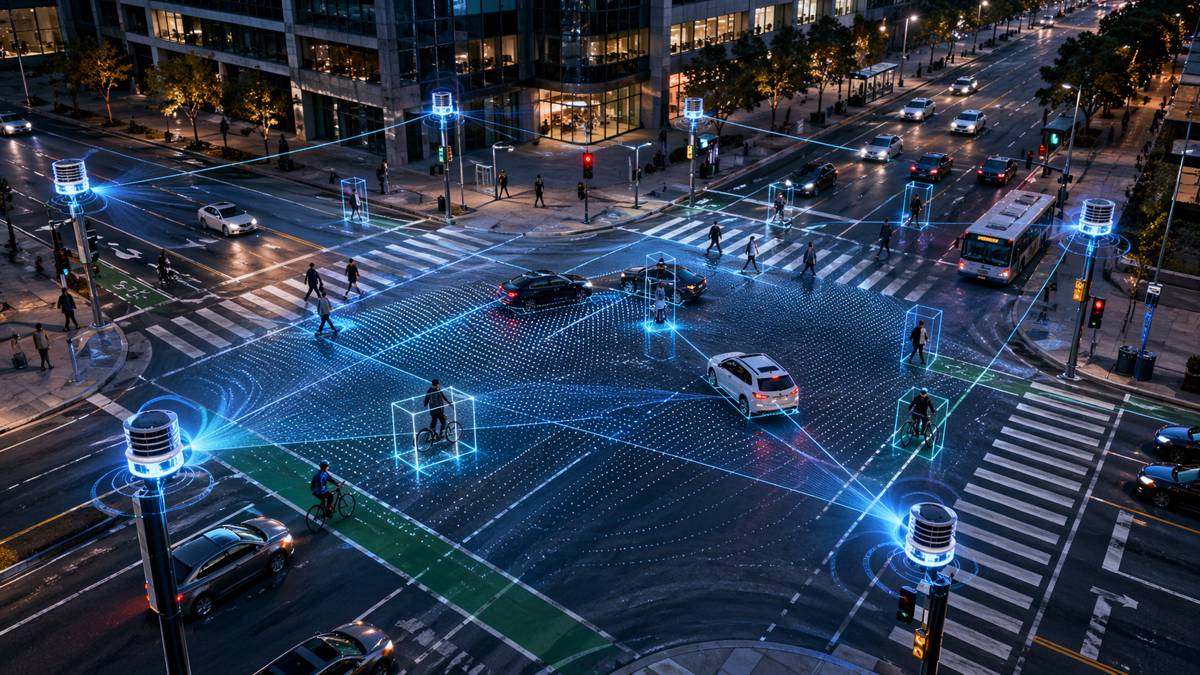
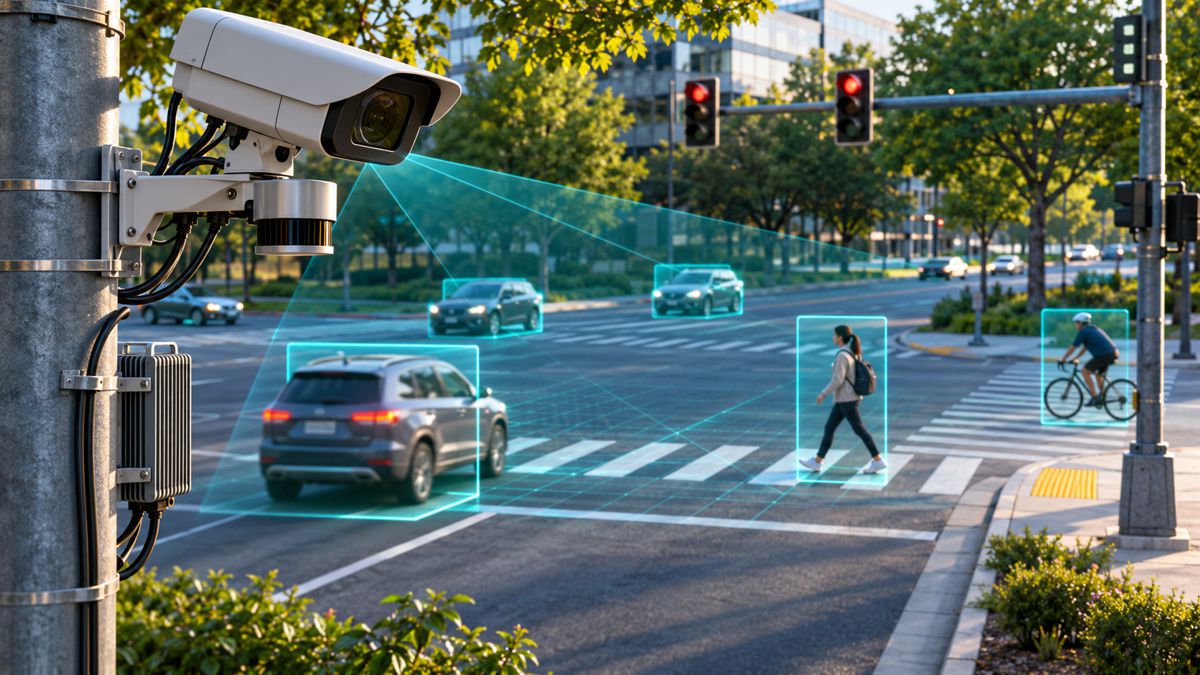
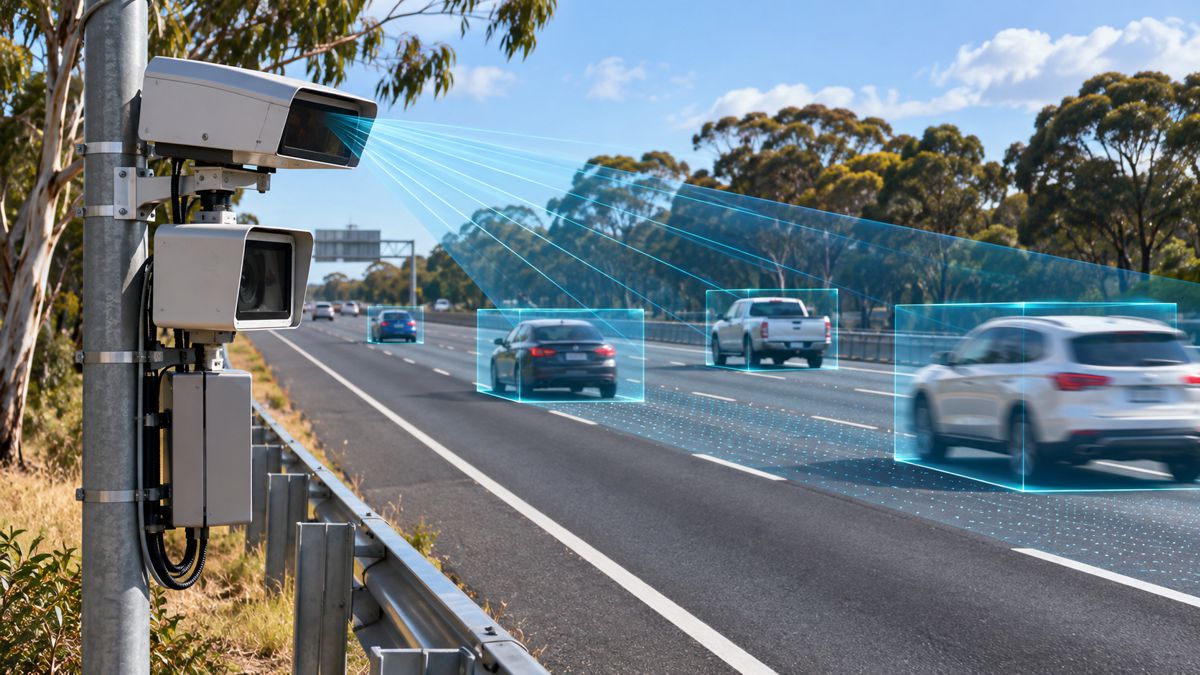
Ouster BlueCity addresses that gap by introducing 3D lidar-based perception. Instead of simply detecting presence, it creates a detailed, real-time model of the intersection. Vehicles, pedestrians and cyclists are identified, classified and tracked continuously, even in low light or adverse weather. This shift from detection to perception marks a fundamental upgrade in how infrastructure understands its environment.
In practical terms, it allows traffic signals to respond dynamically. Rather than operating on fixed timings or basic triggers, signals can adapt to actual conditions on the ground. Congestion can be eased, idle times reduced, and flows smoothed across the network.
Safety moves to the forefront of intersection design
Safety remains one of the most pressing challenges in transport infrastructure. According to data from the National Highway Traffic Safety Administration, thousands of fatalities occur annually at intersections across the United States, many involving vulnerable road users.
The Atlanta deployment directly targets that issue. By continuously tracking all movement through an intersection, the system can identify potential conflicts before they escalate. A pedestrian stepping into the road, a cyclist approaching at speed, or a vehicle failing to yield can all be detected in real time.
That intelligence opens the door to proactive safety measures. Alerts can be issued, signals adjusted, and connected vehicles notified through vehicle-to-everything communication systems. It is a move away from reactive safety, where incidents are addressed after the fact, towards a preventative model that seeks to reduce risk before it materialises.
This approach aligns with broader international strategies such as Vision Zero, which aim to eliminate road fatalities through smarter design and technology integration. While no single system can solve the problem entirely, the ability to see and interpret what is happening at an intersection is a critical step forward.
Preparing infrastructure for connected and autonomous mobility
The introduction of V2X capabilities within the system highlights another important dimension. Infrastructure is no longer passive. It is becoming an active participant in the transport ecosystem, capable of communicating with vehicles and other systems in real time.
Connected vehicle technology has been under development for years, but its effectiveness depends heavily on infrastructure readiness. Without reliable, real-time data from the roadside, vehicles operate with limited situational awareness beyond their onboard sensors.
By equipping intersections with intelligent sensing and communication capabilities, cities create a foundation for more advanced mobility systems. Autonomous vehicles, in particular, benefit from this added layer of environmental insight. Even in partially automated scenarios, such as advanced driver assistance systems, the ability to receive external data can enhance safety and efficiency.
Atlanta’s investment therefore extends beyond immediate traffic management. It lays the groundwork for a more connected, integrated transport network capable of supporting future mobility models.
Scaling intelligent infrastructure across regions
The Atlanta rollout is not an isolated case. Similar deployments have been expanding across North America, with large-scale implementations already underway in states such as Utah and cities including Chattanooga and Nashville.
This pattern reflects growing confidence among transport authorities in lidar-based systems. Early deployments have demonstrated reliability, accuracy and scalability, addressing concerns that often accompany new infrastructure technologies.
What stands out is the pace of adoption. With hundreds of sites already contracted globally, the transition from pilot projects to widespread deployment is accelerating. Agencies are no longer experimenting at the margins. They are integrating these systems into core infrastructure planning.
For contractors and infrastructure providers, this trend carries significant implications. It signals increased demand for integrated digital solutions, from sensor installation and maintenance to data management and analytics platforms. The traditional boundaries between civil engineering and digital technology are blurring, creating new opportunities and challenges across the sector.
Economic and operational implications for transport networks
Beyond safety and efficiency, the economic case for intelligent traffic systems is becoming harder to ignore. Congestion carries a substantial cost, both in lost productivity and increased emissions. The Texas A&M Transportation Institute has consistently reported billions of dollars in annual losses linked to traffic delays in major US cities.
By optimising traffic flow, systems like BlueCity can contribute to measurable reductions in travel time and fuel consumption. Even marginal improvements, when applied across a large urban network, translate into significant economic benefits.
Operationally, the ability to gather detailed traffic data also enhances planning and maintenance. Authorities gain insights into usage patterns, peak demand periods and emerging trends. This data can inform everything from signal timing strategies to long-term infrastructure investments.
In effect, intersections evolve from static assets into data-rich nodes within a broader digital network. That transformation supports more informed decision-making and more efficient allocation of resources.
Industry momentum behind Physical AI
Ouster’s positioning within what it describes as Physical AI reflects a wider industry narrative. The convergence of sensing, computation and artificial intelligence is enabling machines and infrastructure to interpret and respond to the physical world with increasing sophistication.
In sectors ranging from construction to logistics and transport, this capability is reshaping operational models. Equipment can operate with greater autonomy, systems can adapt to changing conditions, and infrastructure can respond dynamically to real-world inputs.
The Atlanta deployment illustrates how these technologies are moving from concept to application. It is one thing to demonstrate AI in controlled environments. It is quite another to deploy it across live urban infrastructure, where reliability and performance are critical.
Success in such environments builds confidence, not just in the technology itself, but in its broader applicability across the infrastructure sector.
A step towards more responsive and resilient cities
As cities grapple with growth, climate pressures and evolving mobility demands, infrastructure must become more responsive. Static systems designed for predictable conditions are no longer sufficient.
The integration of AI-driven sensing and analytics offers a pathway towards more resilient networks. By continuously monitoring conditions and adapting in real time, infrastructure can better absorb shocks, manage demand and maintain performance under varying conditions.
Atlanta’s investment reflects this shift in thinking. It is not simply about managing today’s traffic. It is about building a system capable of evolving alongside the city it serves.
With major global events such as the FIFA World Cup expected to place additional strain on transport networks, the timing of such upgrades becomes even more significant. High-profile events often act as catalysts for infrastructure improvements, accelerating projects that deliver long-term benefits.
In the end, the real story lies in the transition itself. Cities are moving from reactive management to proactive, intelligent systems. Intersections, once overlooked as basic components of the road network, are emerging as critical points of innovation. And as deployments scale, the impact will extend far beyond any single city.