Lifelong Learning Becomes Critical Infrastructure for the Future Workforce
The global labour market is entering one of the most significant transitions since the industrialisation of modern economies. Artificial intelligence, digitalisation, decarbonisation, ageing populations and shifting demographics are no longer isolated trends confined to economic forecasts or policy debates. They are now directly reshaping the skills employers need, the way infrastructure projects are delivered, and the long-term resilience of national economies.
A new report from the International Labour Organization argues that governments are dangerously underestimating the scale of the challenge. The organisation warns that without major investment in lifelong learning systems, the next phase of economic transformation could deepen inequality, widen productivity gaps and leave millions of workers behind as industries accelerate towards digital and low-carbon operating models.
For the global construction, transport and infrastructure sectors, the findings carry particular weight. These industries sit squarely at the intersection of technological disruption, labour shortages and the green transition. Contractors, engineers, manufacturers and policymakers are all confronting the same reality. Traditional workforce models are struggling to keep pace with rapidly changing operational demands.
The report, Lifelong Learning and Skills for the Future, arrives at a time when infrastructure investment is increasingly tied to digital capability and workforce adaptability. Smart highways, automated construction equipment, digital twins, predictive maintenance systems and AI-assisted project management tools are becoming embedded across major projects worldwide. Yet the labour force supporting this transition remains unevenly prepared.
“Lifelong learning is the bridge between today’s jobs and tomorrow’s opportunities. It is not only about employability and productivity, but also about supporting decent work, driving true innovation and building resilient societies, making it a central element of any successful strategy for sustainable growth and development,” said ILO Director-General Gilbert F. Houngbo.
The warning lands at a critical moment. Labour shortages are already slowing infrastructure delivery across Europe, North America and parts of Asia-Pacific. Meanwhile, emerging economies attempting to modernise transport and energy systems face growing pressure to equip younger workforces with the digital and technical capabilities required for future industries.
Briefing
- The International Labour Organization says lifelong learning must become a core economic policy priority
- Only 16 per cent of people aged 15 to 64 globally participated in structured training during the previous year
- Demand for mixed skill profiles, including digital, cognitive, communication and problem-solving abilities, is growing rapidly
- AI-related specialist skills remain a relatively small part of overall labour demand, but foundational digital literacy is increasingly essential
- Global demand for long-term care workers is projected to rise from 85 million in 2023 to 158 million by 2050
Construction and Infrastructure Face a Growing Skills Crunch
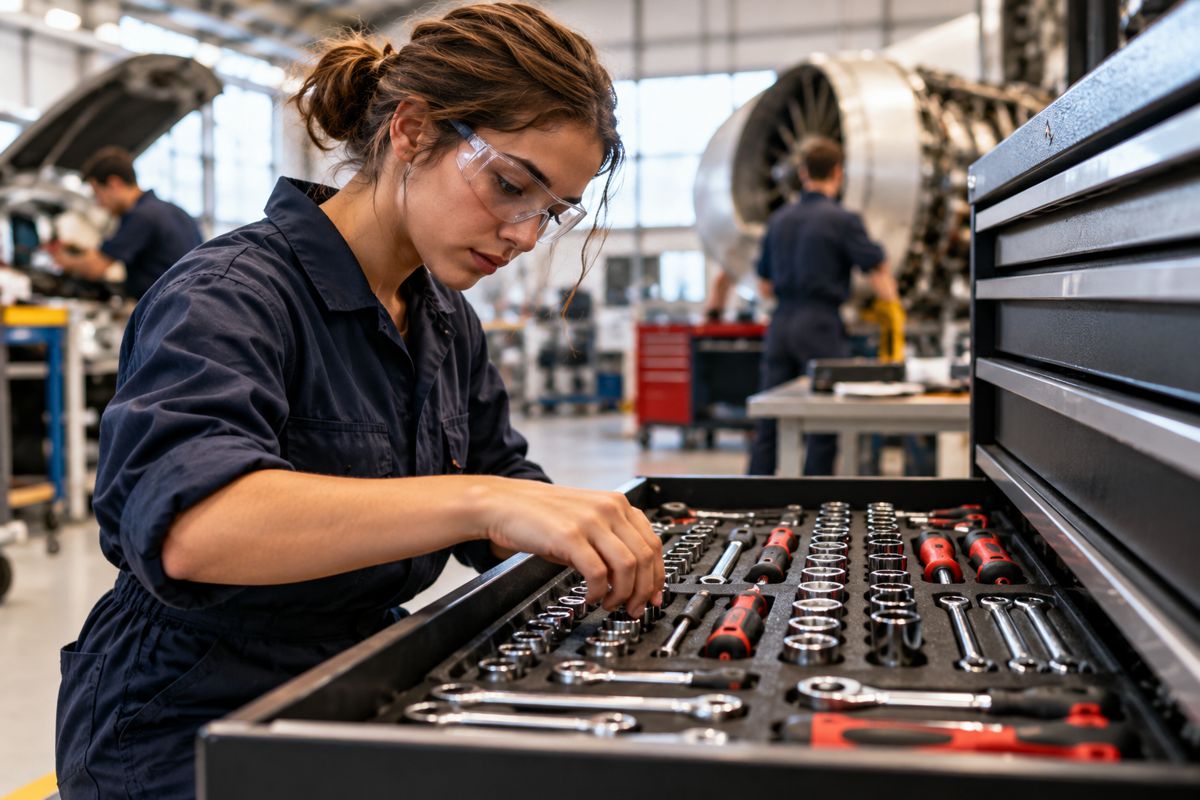
The infrastructure sector has historically relied heavily on practical experience and trade-based learning. That model still matters, but it is increasingly colliding with modern project delivery systems that demand a far broader range of competencies.
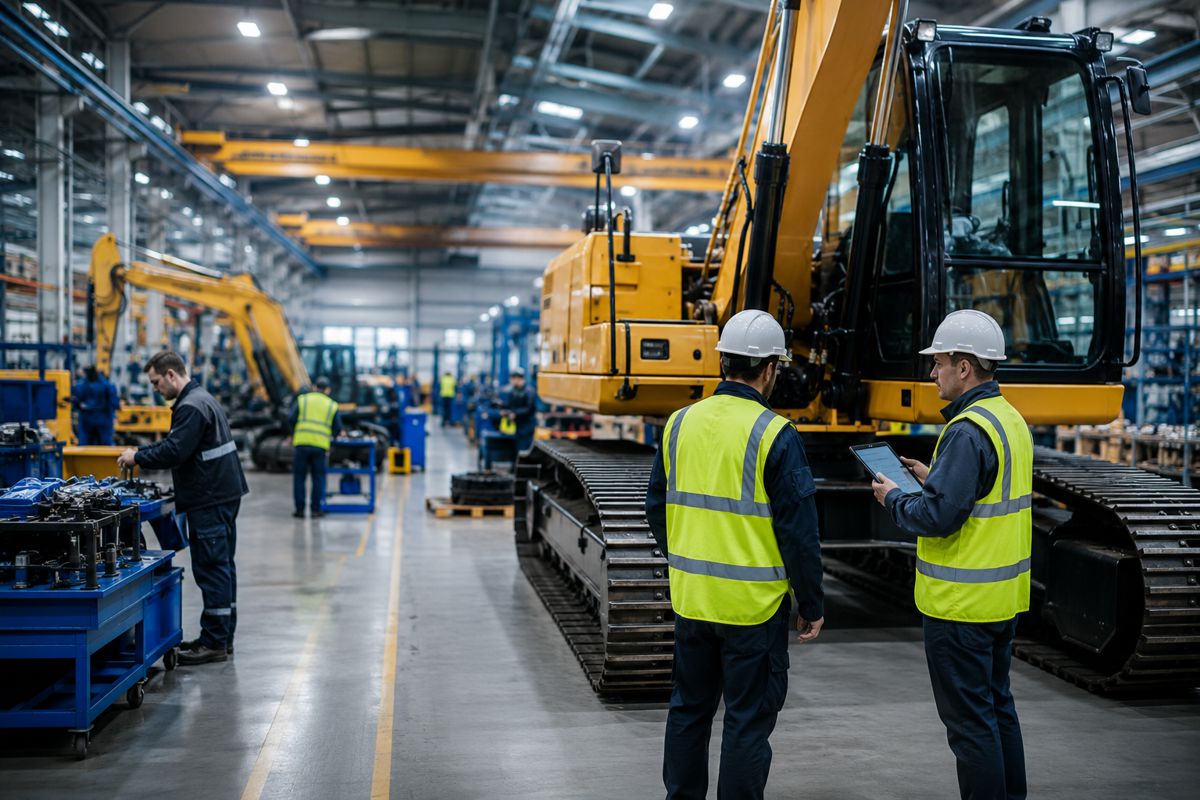
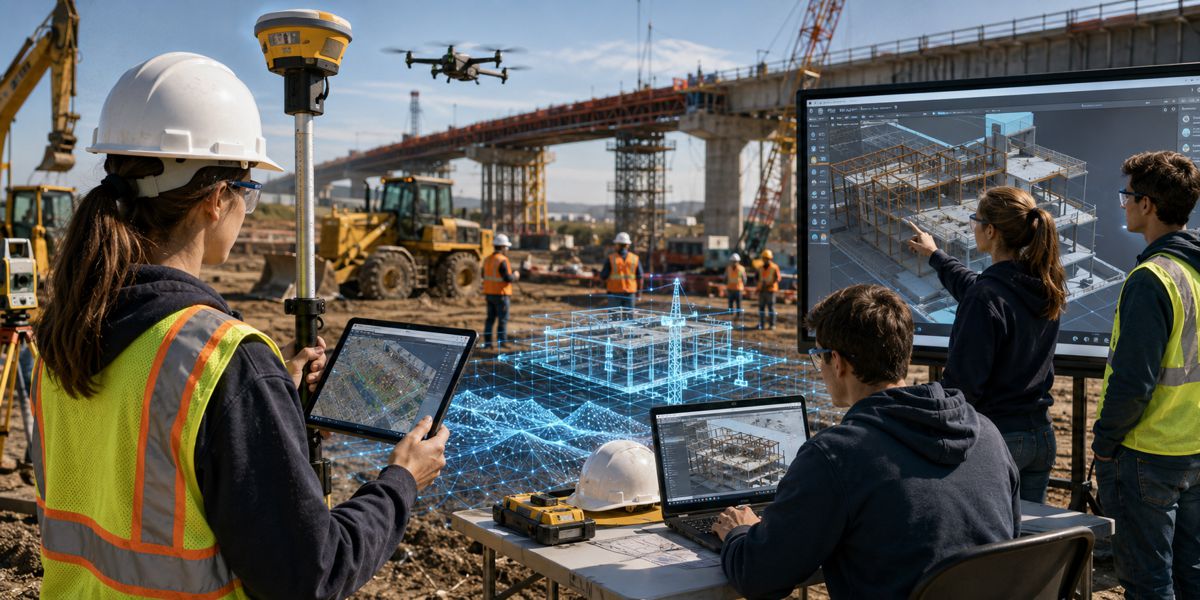
Across large-scale transport, mining and construction projects, digital tools are changing operational workflows at remarkable speed. Surveying increasingly relies on drone data and geospatial analytics. Earthmoving fleets are becoming semi-autonomous. Building Information Modelling has evolved from a specialist design process into a central coordination platform linking engineering, scheduling, procurement and asset management.
Workers are now expected to navigate both physical and digital environments simultaneously.
The ILO report highlights a growing disconnect between how labour markets are evolving and how skills systems are funded and organised. Workers in smaller enterprises and informal sectors still predominantly learn through hands-on experience rather than structured training programmes. In industries like construction, that gap can create a dangerous divide between workers exposed to advanced technologies and those left operating with outdated methods.
This matters commercially as much as socially. Infrastructure investors and project owners increasingly prioritise productivity, sustainability reporting and operational efficiency. Contractors unable to demonstrate workforce capability in areas such as digital delivery, emissions monitoring or AI-supported planning may struggle to compete for major projects.
Research from organisations including World Economic Forum and OECD has consistently shown that economies with stronger adult education systems adapt more effectively to industrial transformation. Countries investing in workforce upskilling generally achieve higher productivity growth and stronger labour participation rates over time.
AI Skills Matter Less Than Many Assume
One of the report’s more striking conclusions challenges some of the louder narratives surrounding artificial intelligence and employment disruption.
Despite widespread discussion around AI transforming entire industries, specialist AI skills still account for only a relatively small share of current labour market demand. The ILO’s analysis suggests that most workers will not require advanced programming or machine learning expertise in the near term. Instead, employers are placing far greater emphasis on foundational capabilities.
Digital literacy, communication, teamwork, critical thinking and problem-solving increasingly dominate recruitment patterns across both developed and emerging economies. Online vacancy analysis cited in the report found socio-emotional skills accounted for more than half of all requested competencies in countries including Brazil, Morocco and the United Arab Emirates.
Even in technically intensive sectors, employers continue searching for workers who can adapt, collaborate and interpret information effectively rather than simply operate software.
That finding carries important implications for infrastructure and industrial employers rushing to integrate AI systems into operations. Technology adoption alone is unlikely to solve workforce challenges if employees lack the broader cognitive and interpersonal skills needed to work effectively alongside automated systems.
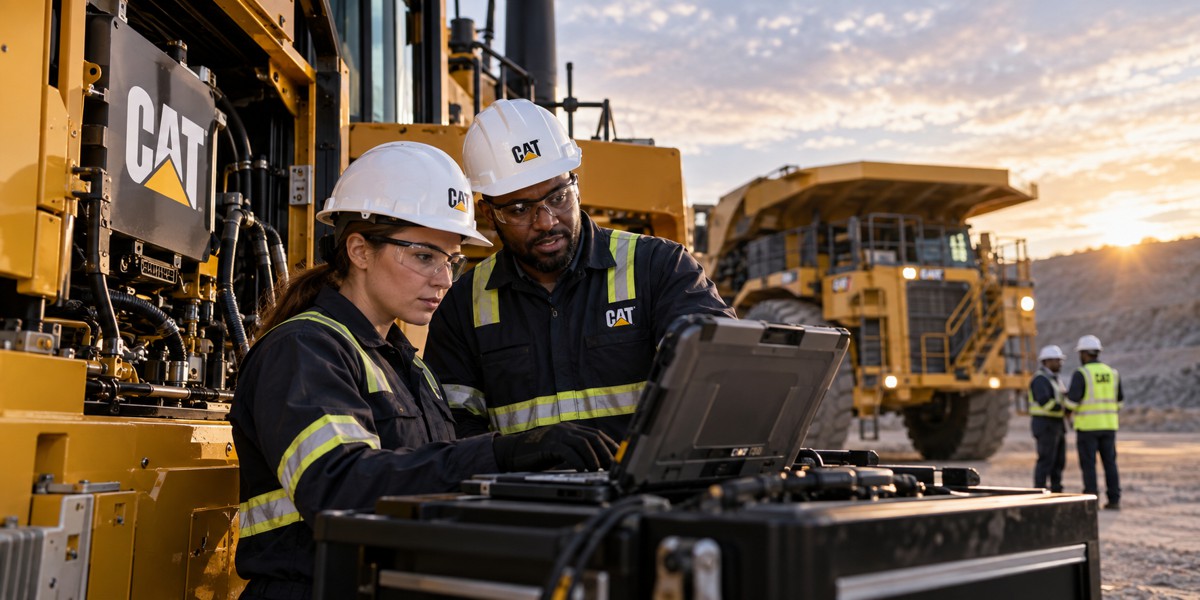
In practice, this means future infrastructure workforces may look very different from traditional assumptions. Site supervisors may spend as much time interpreting data dashboards as managing physical operations. Plant operators may increasingly oversee semi-autonomous equipment fleets rather than manually controlling machinery throughout a shift. Maintenance engineers may rely on predictive analytics platforms that flag potential failures before physical inspections occur.
The transition is already underway. Major equipment manufacturers including Caterpillar, Komatsu and Volvo Construction Equipment continue expanding automation and connected fleet technologies across mining and construction operations. Infrastructure software providers such as Bentley Systems and Autodesk are also embedding AI-driven workflows into project planning and asset management systems. Yet technology itself remains only part of the equation.
The Green Transition Is Reshaping Labour Demand
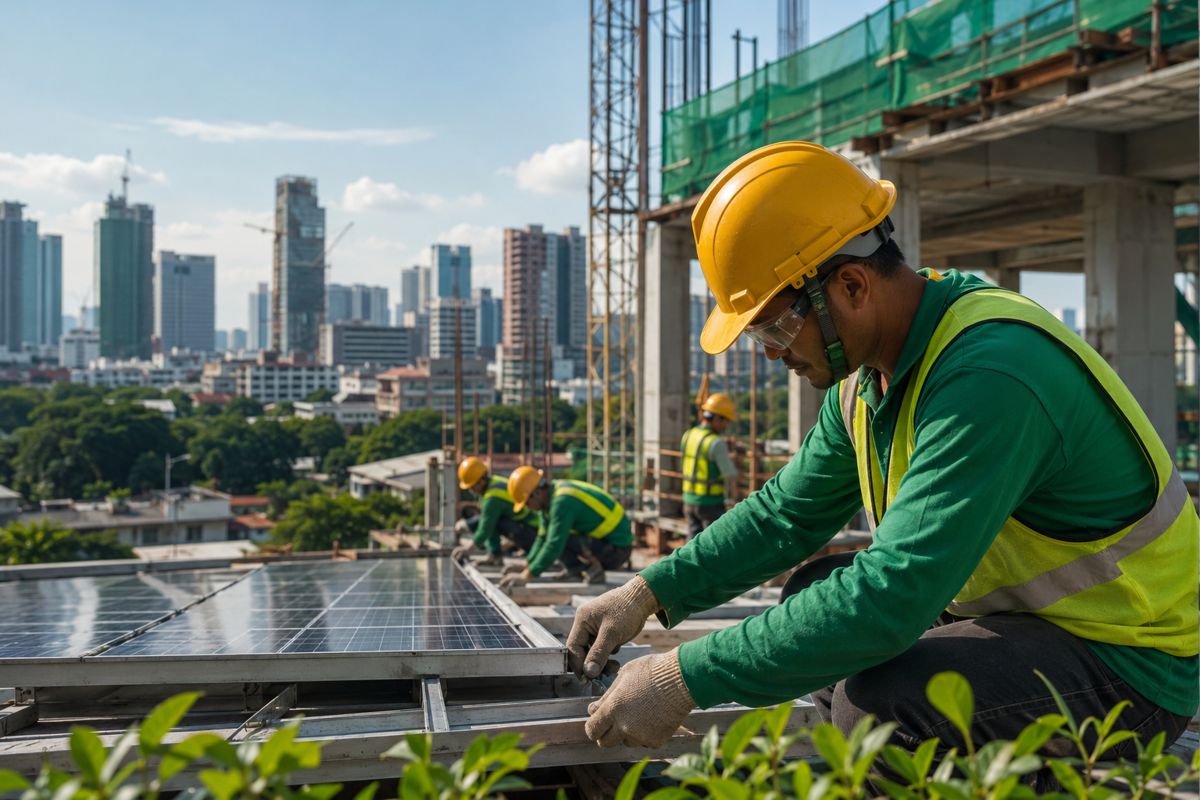
Decarbonisation policies are also accelerating pressure on labour markets worldwide. Governments are investing heavily in renewable energy systems, public transport networks, grid modernisation and sustainable infrastructure upgrades, all of which require new technical and operational capabilities.
The ILO estimates that 32 per cent of workers globally already perform environmentally relevant tasks, and that figure is likely to grow significantly over the next decade as countries pursue net-zero targets and climate resilience programmes. Infrastructure sits at the heart of that transition. Roads, railways, ports, airports, power systems and urban development projects will all require workers capable of operating within evolving environmental frameworks.
Still, the report warns against assuming that green jobs automatically translate into decent jobs. Without strong policy frameworks, workforce protections and training systems, the green transition could replicate many of the inequalities already present in traditional labour markets. Lower-paid workers and informal labour sectors may continue facing poor conditions despite participating in supposedly future-focused industries.
This challenge is especially relevant in construction, where subcontracting models and temporary employment structures remain widespread in many regions. Upskilling initiatives often favour larger firms with established training budgets, while smaller contractors struggle to release workers for structured education programmes.
At the same time, ageing populations are creating additional labour pressures across advanced economies. The report projects global demand for long-term care workers will rise from 85 million in 2023 to 158 million by 2050.
That demographic shift carries indirect consequences for infrastructure sectors too. Labour availability, migration patterns and public spending priorities are all likely to be influenced by expanding care requirements over the coming decades.
Adult Learning Systems Remain Deeply Underfunded
Despite mounting evidence that workforce adaptation is becoming economically critical, public investment in adult learning remains surprisingly weak.
The report highlights that 34 per cent of high-income countries allocate less than one per cent of public education budgets to adult learning and education. In low-income countries, the proportion rises to 63 per cent.
Those figures expose a broader policy problem. Many governments still treat education as something largely confined to childhood and early adulthood, even though labour markets increasingly require continuous adaptation throughout working life.
Infrastructure industries are particularly exposed to this weakness because technological cycles are shortening rapidly. Skills that remained commercially relevant for decades can now become outdated within a few years as automation, digital platforms and sustainability regulations evolve.
Fragmented governance structures further complicate matters. In many countries, workforce development responsibilities are divided between education ministries, labour departments, regional authorities and private sector training bodies with limited coordination between them.
The result is often duplication, inefficiency and inconsistent access.
Workers in informal employment, temporary contracts or smaller firms frequently fall through the cracks entirely. That issue remains especially acute in developing economies where large portions of the construction workforce operate outside formal training systems.
The ILO argues that governments, employers’ organisations and trade unions must work together far more closely to build flexible learning systems that reflect how people actually acquire skills across their careers.
Building Economies That Can Adapt
The debate around lifelong learning is no longer simply an education policy issue. It is rapidly becoming a question of economic resilience, industrial competitiveness and social stability.
Countries capable of continuously reskilling their workforces are likely to adapt more successfully to technological disruption and environmental transition. Those that fail may encounter widening inequality, weaker productivity growth and increasing labour market fragmentation.
For infrastructure industries, the stakes are especially high. Transport networks, energy systems, logistics hubs and urban development projects form the backbone of modern economies. Delivering and maintaining those assets increasingly requires workers who can operate across physical, digital and environmental domains simultaneously.
That transition cannot rely solely on universities or early-career training pathways. It requires systems that allow workers to continually refresh and expand their capabilities throughout decades-long careers.
The ILO report ultimately presents lifelong learning not as a social luxury, but as essential economic infrastructure in its own right. In an era defined by technological acceleration and industrial transition, the ability of societies to keep workers connected to evolving labour markets may become one of the defining factors shaping long-term national competitiveness.