Western Cape Deploys Bentley Systems AI Road Intelligence
The Western Cape Government has taken a significant step toward modernising road asset management by deploying AI-powered roadway monitoring technology across thousands of kilometres of transport infrastructure. The initiative, delivered in partnership with Bentley Systems, marks the first deployment of the company’s Blyncsy platform anywhere on the African continent and reflects a broader global shift toward predictive infrastructure maintenance driven by computer vision and machine learning.
The agreement will see approximately 5,000 kilometres of strategic roads monitored using crowdsourced imagery and automated analysis systems capable of identifying defects and safety hazards in near real time. While AI-driven transport analytics has gained traction in North America, Europe and parts of Asia, adoption across African road networks has remained comparatively limited. That makes the Western Cape deployment more than a regional technology upgrade. It represents a notable test case for how emerging economies may use artificial intelligence to stretch constrained infrastructure budgets while improving resilience against increasingly volatile climate conditions.
The timing is particularly relevant. South Africa’s transport infrastructure has faced mounting pressure from extreme weather events, urban growth, freight demand and deferred maintenance. In the Western Cape specifically, recent flooding events caused severe disruptions, isolating communities and damaging sections of the provincial road network. Maintaining operational mobility during severe weather has become as much an economic necessity as a transport requirement, especially in a region heavily dependent on tourism, agriculture and freight logistics.
Briefing
- Western Cape will deploy AI-powered Blyncsy roadway monitoring across 5,000 km of roads
- The rollout marks the first Blyncsy implementation in Africa
- Computer vision systems will identify road defects, damaged assets and vegetation encroachment
- The programme supports the province’s Roads4U initiative and Infrastructure Framework 2050
- The deployment reflects growing global adoption of predictive infrastructure management systems
AI is Changing How Roads Are Managed
Traditional road inspections remain heavily reliant on manual surveys, scheduled inspections and reactive maintenance models. Across many countries, transport departments still depend on crews physically identifying hazards long after deterioration begins affecting safety and operational performance. That process is costly, slow and often inefficient, particularly for geographically dispersed networks.
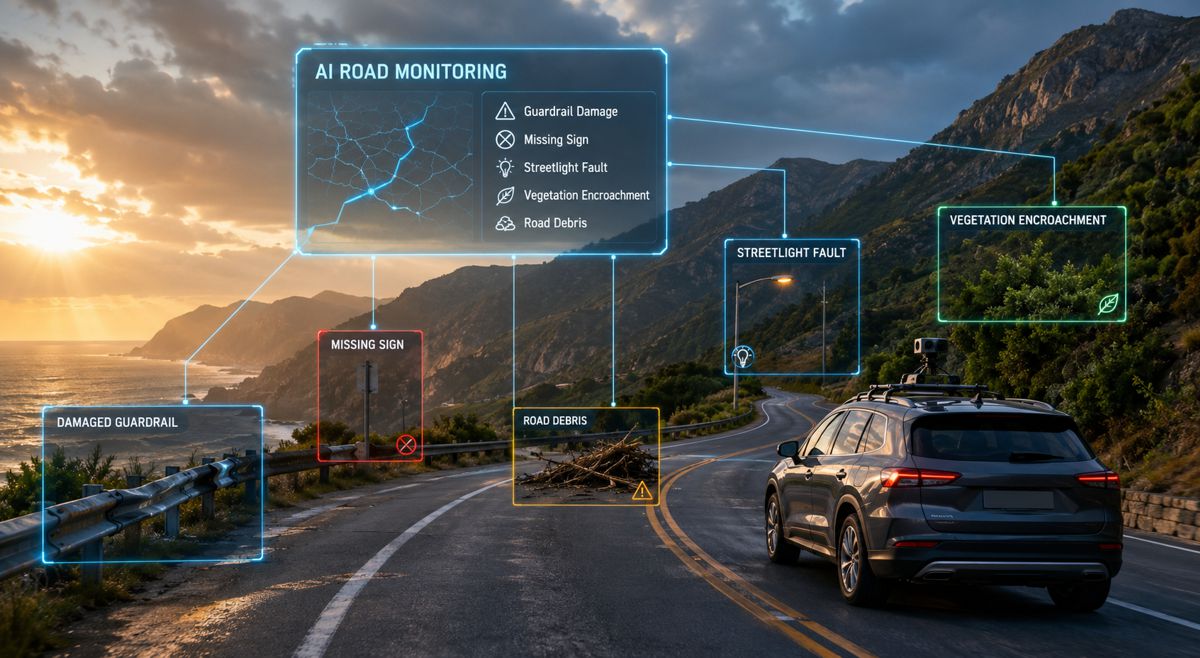
The Blyncsy system changes the operating model by turning ordinary vehicle-mounted cameras into mobile infrastructure monitoring tools. Using machine learning and computer vision, the platform analyses roadway imagery to identify issues such as damaged guardrails, missing signs, failed lighting infrastructure, debris accumulation and vegetation growth. In practical terms, that means defects can potentially be identified days or weeks earlier than conventional inspection regimes allow.
The broader infrastructure sector has increasingly moved toward predictive maintenance strategies over the past decade. Transport agencies globally are under pressure to do more with less while simultaneously improving safety outcomes and climate resilience. AI-powered analytics systems are becoming attractive because they reduce the dependency on expensive manual inspection programmes while generating continuous streams of operational data.
Several transport authorities in the United States have already deployed AI-enabled road monitoring platforms to improve pothole detection, identify damaged signage and assess pavement deterioration. European highway operators have also accelerated investment in digital twins and predictive asset analytics to support long-term infrastructure resilience planning. The Western Cape deployment places South Africa firmly within that evolving international trend.
Climate Resilience is Driving Infrastructure Innovation
Perhaps the most important aspect of the partnership is not the technology itself, but the problem it is trying to solve. Climate change is rapidly altering infrastructure risk profiles worldwide, and road networks are increasingly vulnerable to flooding, landslides, erosion and drainage failures.
The Western Cape has experienced repeated severe storm events in recent years, exposing weaknesses in existing maintenance and response systems. Debris accumulation, blocked drainage channels and unmanaged roadside vegetation can quickly transform heavy rainfall into network-wide disruption. Identifying these risks early has become essential for maintaining regional mobility.
Vegetation encroachment monitoring may sound mundane compared with futuristic AI headlines, yet it is operationally critical. Overgrown vegetation can reduce visibility, damage drainage performance and contribute to roadway obstruction during storms. Automated monitoring allows transport authorities to identify risk areas continuously rather than waiting for scheduled inspection cycles.
Globally, climate adaptation spending on transport infrastructure is expected to rise sharply throughout the coming decade. According to research from organisations including the World Bank and OECD, resilient infrastructure investment increasingly depends on digital monitoring systems capable of identifying failures before catastrophic disruption occurs. AI-powered roadway analytics now sits at the intersection of transport engineering, climate adaptation and public safety policy.
Smarter Asset Management Under Budget Pressure
Transport departments worldwide face a difficult balancing act. Infrastructure networks continue expanding while maintenance budgets struggle to keep pace with ageing assets, inflation and rising construction costs. South Africa is hardly alone in confronting this problem.
The Western Cape’s transport budget allocation of R4.56 billion must support a broad mix of maintenance, operational and infrastructure priorities. Under those circumstances, targeted maintenance becomes considerably more valuable than broad reactive repair programmes.
Automated asset intelligence allows agencies to prioritise interventions based on real-world conditions rather than assumptions or infrequent surveys. Instead of dispatching crews across entire corridors searching for issues, maintenance teams can focus directly on identified hazards. That reduces operational inefficiencies while improving response times.
This increasingly data-centric approach is transforming infrastructure management globally. Digital infrastructure inventories, condition-based maintenance and predictive analytics are now becoming standard objectives across advanced transport networks. Governments are recognising that infrastructure data itself has become a strategic operational asset.
In many respects, the Western Cape initiative reflects a wider transition underway across the infrastructure sector. Roads are no longer viewed solely as physical assets. They are becoming continuously monitored operational systems generating real-time intelligence.
Digital Twins and Transportation Analytics Expand Globally
The deployment also aligns closely with the growing adoption of digital twin technologies throughout infrastructure management. Bentley Systems has invested heavily in this area over recent years, positioning data integration and infrastructure intelligence as central components of future asset management.
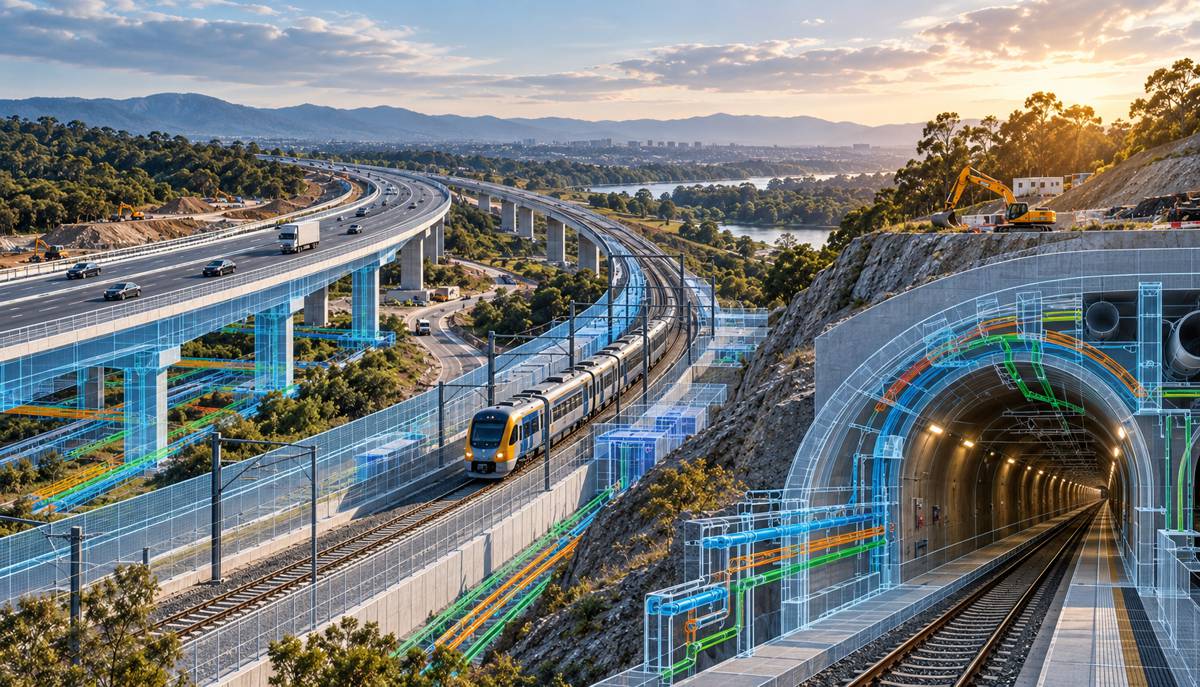
Digital twins combine live operational data with engineering models to create continuously updated virtual representations of physical infrastructure. When paired with AI-driven monitoring systems like Blyncsy, transport authorities gain the ability to track asset conditions dynamically rather than relying on static reporting cycles.
This approach has become increasingly important for cities and transport agencies managing complex infrastructure ecosystems. From bridges and tunnels to utilities and railways, infrastructure owners are seeking greater visibility into operational risks and maintenance needs.
South Africa’s infrastructure sector has also shown growing interest in digital engineering tools, particularly in water management, transport planning and urban infrastructure projects. However, large-scale AI-enabled operational monitoring deployments have remained relatively limited compared with international markets. The Western Cape initiative could therefore serve as a reference point for future adoption elsewhere across the continent.
The Roads4U Strategy and Long-Term Planning
The partnership directly supports the Western Cape Government’s Roads4U campaign and the province’s Infrastructure Framework 2050 strategy, both of which emphasise innovation, resilience and operational efficiency within public infrastructure systems.
Importantly, this is not simply a technology procurement exercise. It reflects a policy-level recognition that infrastructure management must evolve beyond reactive repair cycles. Long-term resilience increasingly depends on visibility, data integration and predictive operational planning.
“Providing safe and resilient infrastructure is the foundation of economic opportunity in the Western Cape, particularly as we manage the impacts of climate change on our road network,” said Johannes Neethling, Chief Engineer for Transport Infrastructure Systems for the Western Cape.
“By integrating Blyncsy’s AI technology, we are gaining a level of visibility that was previously impossible. This allows us to maintain a precise digital inventory of our assets, from guardrails to streetlights, ensuring that our maintenance crews are deployed where they are needed most. This isn’t just about better data; it’s about a proactive commitment to keeping our roads open and our citizens safe.”
The emphasis on operational visibility is notable. Infrastructure agencies increasingly recognise that limited situational awareness often drives maintenance inefficiencies. AI monitoring systems attempt to solve that problem by creating continuous insight into asset conditions.
Africa’s Digital Infrastructure Opportunity
The significance of this deployment extends beyond South Africa. Across Africa, rapid urbanisation and economic development are placing enormous pressure on transport infrastructure. Many countries face growing maintenance backlogs combined with limited engineering resources and constrained public finances.
Digital monitoring technologies could potentially allow transport agencies to leapfrog older maintenance models in much the same way mobile telecommunications transformed connectivity across the continent. AI-powered infrastructure monitoring may offer a scalable way to improve network reliability without proportionally increasing operational costs.
At the same time, implementation challenges remain substantial. Connectivity limitations, procurement structures, technical skills availability and data governance frameworks will all influence how effectively these systems operate over the long term.
Still, the Western Cape project signals that infrastructure digitisation in Africa is accelerating beyond planning discussions and pilot programmes into operational deployment.
“The expansion of Blyncsy into Western Cape of South Africa represents a pivotal step in our mission to provide global transportation agencies with real-time visibility into the state of their infrastructure,” said Mark Pittman, Senior Director of Transportation AI at Bentley Systems.
“Western Cape is leading the way on the African continent by embracing empirical evidence to drive financial and operational decisions. As we look toward bringing this technology to more markets worldwide, our goal remains clear: to replace historical precedent with AI-driven insights that reduce risk, lower costs, and ultimately save lives. We are proud to partner with a department that is so clearly focused on building a resilient future.”
Building Roads That Can See Problems Coming
Road infrastructure is entering a new operational era. For decades, transport systems were largely passive assets inspected periodically and repaired reactively. Increasingly, they are becoming intelligent operational platforms capable of generating continuous condition awareness.
That evolution matters because infrastructure risks are becoming more dynamic. Climate volatility, traffic growth, freight demand and ageing assets are combining to create far more complex operational environments than transport agencies faced a generation ago.
AI-driven infrastructure monitoring will not replace engineers, maintenance crews or transport planners. What it can do is provide those professionals with faster, broader and more accurate situational awareness. In practical terms, that may mean fewer unexpected closures, faster maintenance interventions and better allocation of increasingly stretched public resources.
The Western Cape deployment therefore represents more than a regional technology rollout. It offers a glimpse into how road infrastructure management may evolve globally over the coming decade as digital intelligence becomes embedded directly into the operational fabric of transport networks.