Civilisation 2.0 and the Infrastructure That Will Define It
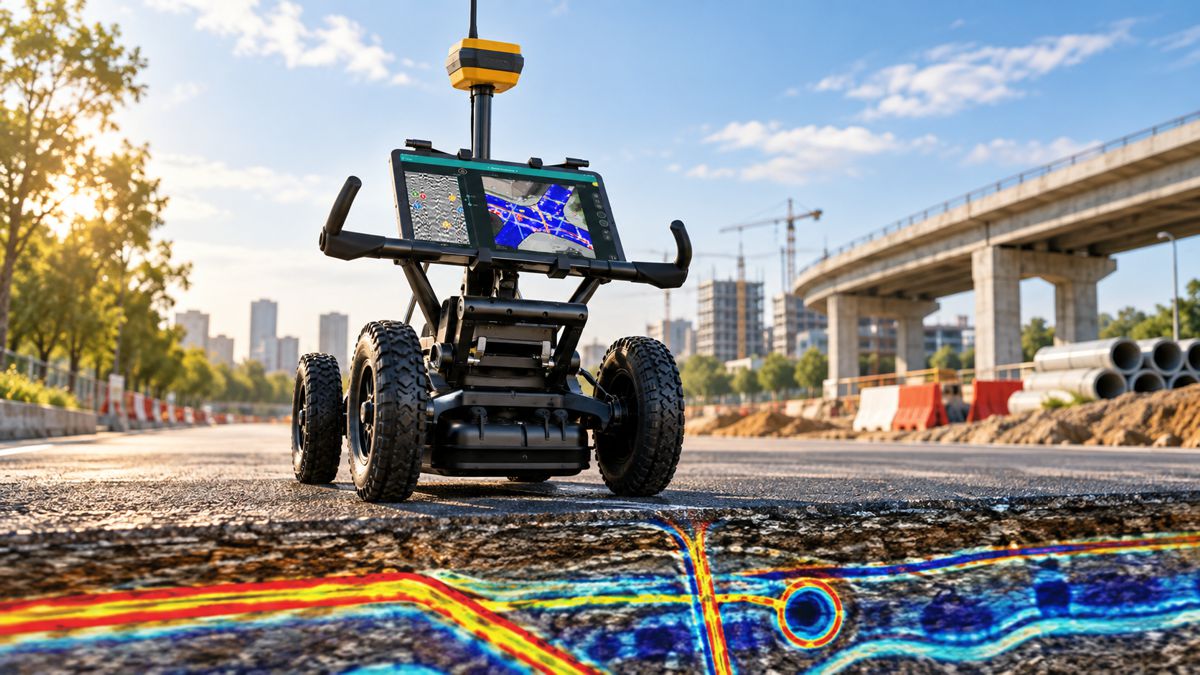
Somewhere beneath a residential street in Singapore last year, an acoustic sensor picked up a sound no human ear would have noticed. A faint, persistent signature against the ordinary noise of a six-thousand-kilometre pipe network. Within hours, an engineer had a location accurate to within a few metres. A repair crew was scheduled. A road was opened and closed again before most residents along the street had thought twice about water pressure. No flood. No burst main. No emergency. No headline. It is an ordinary story, and that is precisely the point. A decade ago it would not have been possible. Today it is becoming routine. The piece of infrastructure that mattered most in that small event was not the pipe or the road or the repair truck. It was the listening.
Multiply that quiet moment across roads in Memphis identifying potholes before complaints arrive, across the eight thousand variables per train that SNCF now monitors in real time, across the substations in dozens of countries that now balance generation and demand in milliseconds, across the bridge sensors on Tsing Ma that have produced twenty-six years of continuous structural assurance, and a pattern emerges. Infrastructure is beginning to do something it has never done before. It is paying attention.
That is the shift this series has tried to map. The first article, The Ten Trillion Bet on Intelligent Infrastructure tracked the capital, a global build-out now measured in the tens of trillions, with sovereign wealth funds, hyperscalers and infrastructure platforms competing for assets that combine essential-service economics with rich operational data. The second, When Infrastructure Starts Listening looked at how AI and sensors are quietly rewriting the daily business of maintenance, turning roads, bridges, pipes and lights into self-reporting assets. The third, The Hidden Smart Infrastructure Revolution went underground, beneath the visible megaprojects, to the fibre, sensors, edge compute and digital water systems that have become the nervous system of modern economies. Read separately, they are three sector stories. Read together, they are the outline of something much larger.
Briefing
- Intelligent infrastructure marks a categorical change in the role of the built environment, not just an incremental improvement in efficiency.
- Where previous infrastructure revolutions extended human capability, this one extends human awareness, embedding judgement into the physical systems that carry economies.
- The next decade will be defined less by the technology itself than by three choices the industry now gets to make: how to steward the intelligence layer, how to earn public trust, and how to design for resilience.
- Countries, operators and firms that take those choices seriously will define the working assumptions of the next century of infrastructure.
- Civilisation 2.0 is not a future event. It is being built now, in thousands of incremental projects, by the engineers, operators, investors and policymakers reading this article.
The Infrastructure Revolutions That Built Modern Society
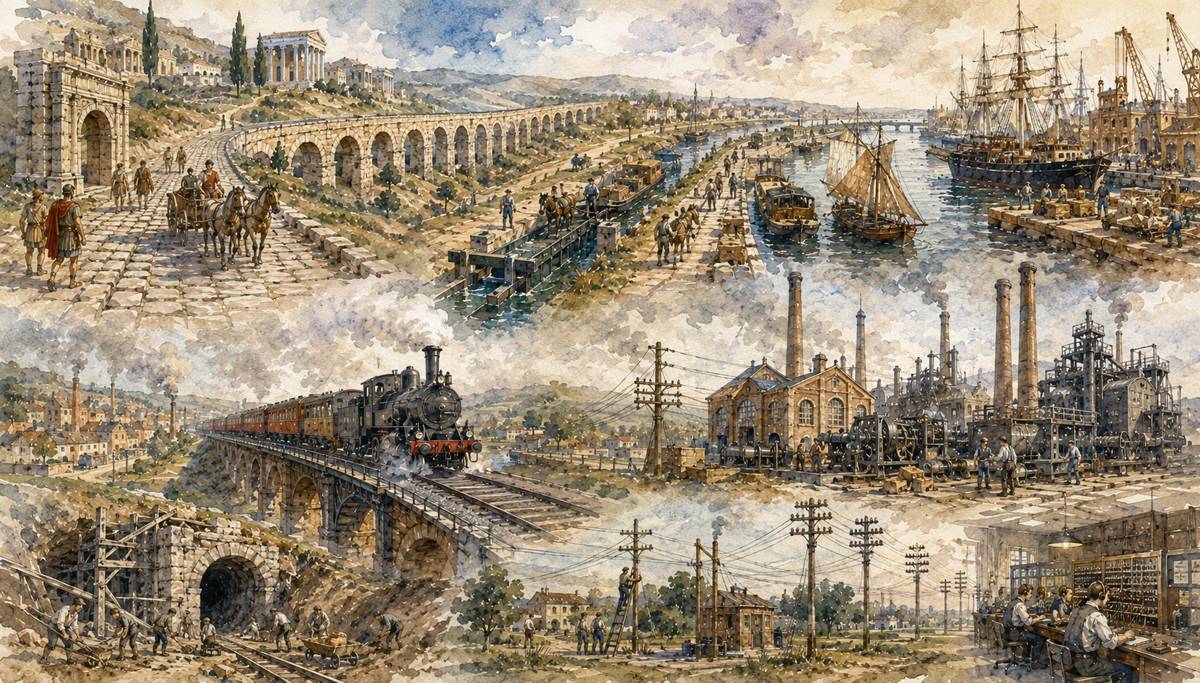
Every generation tends to view its infrastructure as ordinary. Roads become part of the landscape. Electricity becomes an expectation. Telecommunications become background noise. Yet history shows that the most profound shifts in civilisation rarely emerge from politics, finance or technology alone. They emerge when infrastructure changes what societies are capable of doing.
The Roman Empire did not become a dominant force simply because of military power. Its road network connected territories, accelerated trade, enabled administration and allowed ideas to move with unprecedented efficiency. Historians estimate that more than 400,000 kilometres of roads eventually linked vast regions of Europe, North Africa and the Middle East. The infrastructure created economic integration long before the concept existed.
Centuries later, canals transformed industrial Britain by dramatically lowering transport costs. Railways accelerated that transformation further, shrinking travel times from days to hours and allowing cities to expand around entirely new patterns of commerce. Infrastructure was no longer simply supporting economic growth. It was creating it.
The twentieth century delivered perhaps the most significant infrastructure expansion in human history. Electrification altered manufacturing, healthcare, communications and daily life. Modern highways connected regional economies. Airports enabled globalisation. Telecommunications networks accelerated the movement of information across continents.
Then came the internet. Initially viewed as a communications network, it evolved into the platform underpinning modern commerce, finance, entertainment and public services. Entire industries emerged because the infrastructure existed to support them. Digital marketplaces, cloud computing, online banking and remote collaboration all depended upon networks that most people never saw.
Every one of these revolutions followed a similar pattern. The infrastructure arrived first. The societal transformation followed later.
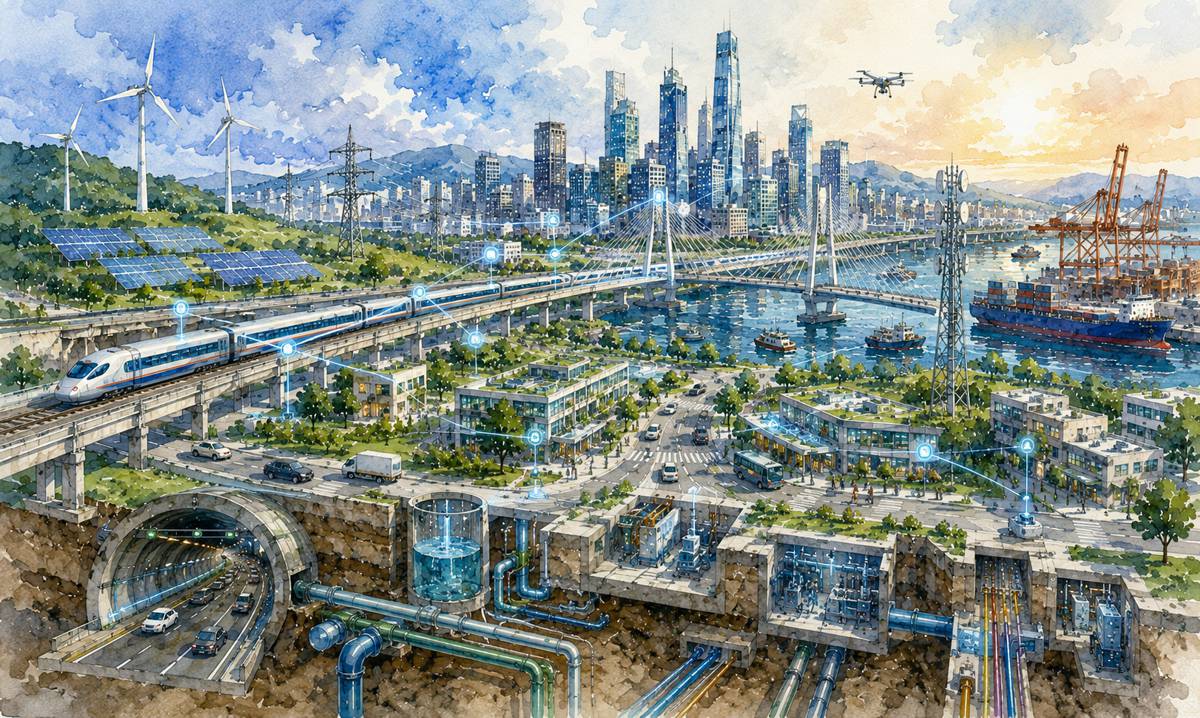
The infrastructure being deployed today may prove no different. Yet unlike previous eras, the defining characteristic is not speed, reach or connectivity alone. Intelligence itself is becoming embedded within infrastructure. Roads, railways, utilities and communications systems are beginning to sense, analyse and respond to the environments around them. For the first time in history, infrastructure is acquiring situational awareness.
A Categorical Change, Not An Incremental One
Every previous infrastructure revolution gave human beings more of something they already had. Roman roads gave us reach. Canals and railways gave us speed. Electrification gave us power. Telecommunications and the internet gave us information. Each one extended a capability the species already understood and used. Each one rewrote the economy, the city and the political settlement around it. None of them, in their first decades, looked civilisational on a Tuesday. The Victorians did not think of themselves as the architects of industrial modernity. The Romans did not know they were inventing Europe.
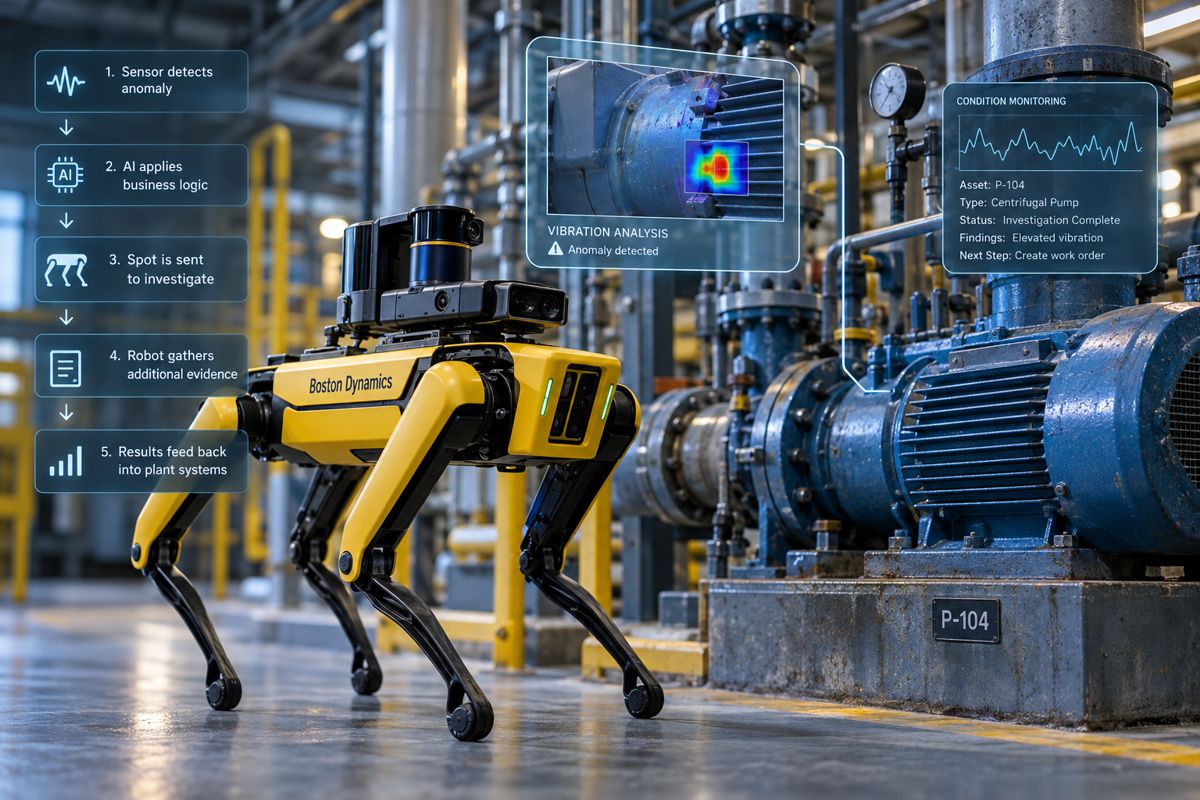
What is happening now is harder to name because it is different in kind, not in degree. Intelligent infrastructure does not extend a capability we had. It introduces one we did not. A road does not know it is a road. An intelligent road, instrumented and analysed and connected to the systems around it, does. So does a bridge that monitors its own fatigue, a substation that anticipates its own failure modes, a drainage network that interprets the weather above it, a pipe that listens for its own leaks. The asset itself begins to participate in its own operation.
That is the leap. The previous revolutions made the world bigger, faster, brighter and more connected. This one is making it aware.
The implications take some absorbing. For most of human history, the built environment was inert. It did things to us, in the sense that it shaped what was possible, but it did not know it was doing them. Infrastructure was the stage. Now the stage is starting to read the script. Engineers, operators and policymakers who grew up treating physical assets as passive are working out, in real time and in public, what it means to manage assets that report on themselves.
The case studies the prior pieces drew on are not exotic. They are the early-adopter examples of what will become ordinary. SNCF’s eight thousand variables per train, Deutsche Bahn ingesting twenty-eight terabytes a month from its fleet sensors, Network Rail’s ten per cent reduction in track incidents, Memphis identifying seventy-five per cent more potholes, Singapore’s leak-detection programme renewing over three hundred and thirty kilometres of pipe through data analytics rather than guesswork. They are the working drafts of a new operating model for the built environment.
That model is still rough, uneven and unevenly distributed. Some sectors are years ahead of others. Some countries have made it national strategy while others have barely begun. Some assets remain effectively analogue and will for decades. None of that contradicts the underlying shift. Infrastructure revolutions never arrive evenly. What matters is the direction of travel, and the direction is unambiguous.
If this is the leap, it is fair to ask what comes next. The honest answer is that the next decade will be defined less by the technology than by three choices the industry now gets to make. None of them is trivial. All of them are tractable. Taken seriously, they describe the actual work of building Civilisation 2.0.
Building Infrastructure That Learns From Day One
For much of modern infrastructure history, intelligence arrived after construction. Roads were built first and monitored later. Utilities were installed before operators considered how to collect performance data. Asset management frequently relied upon periodic inspections carried out years after commissioning. That sequence is changing.
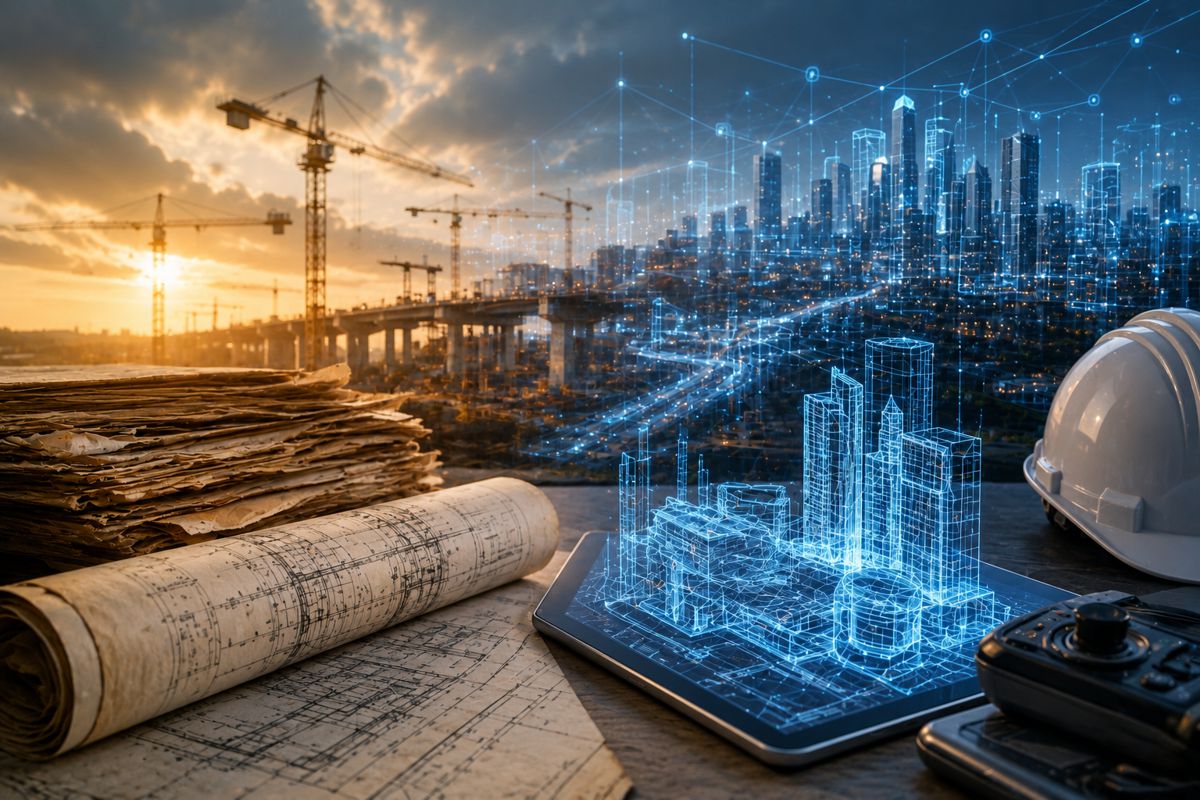
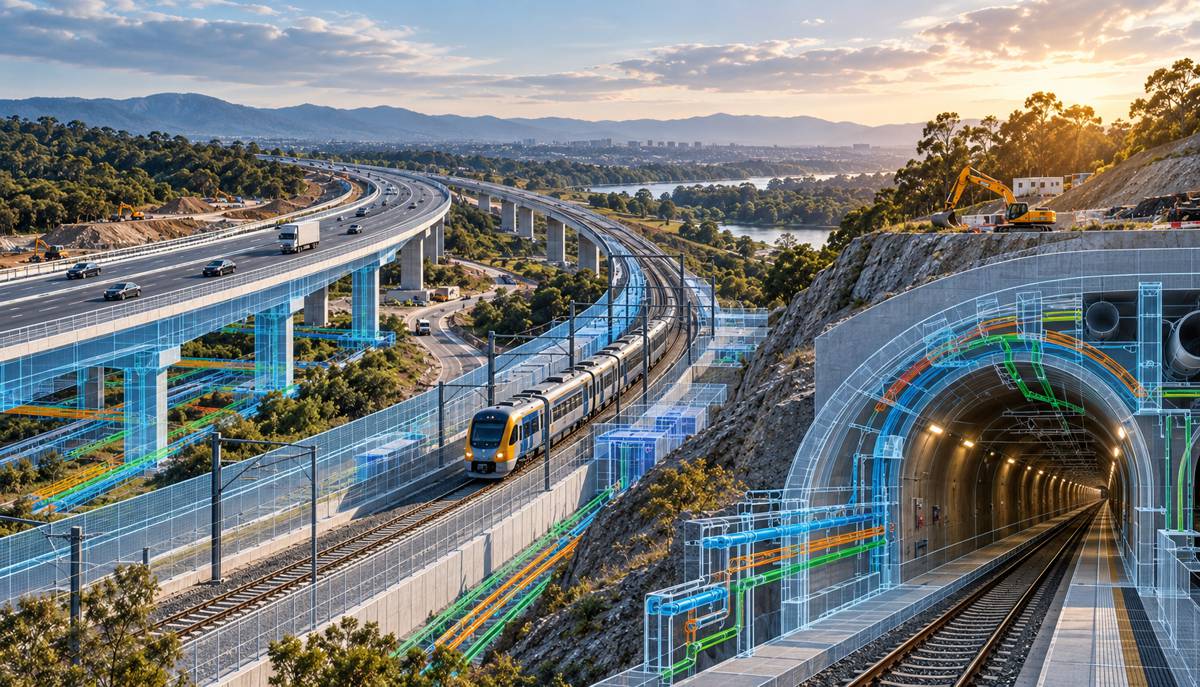
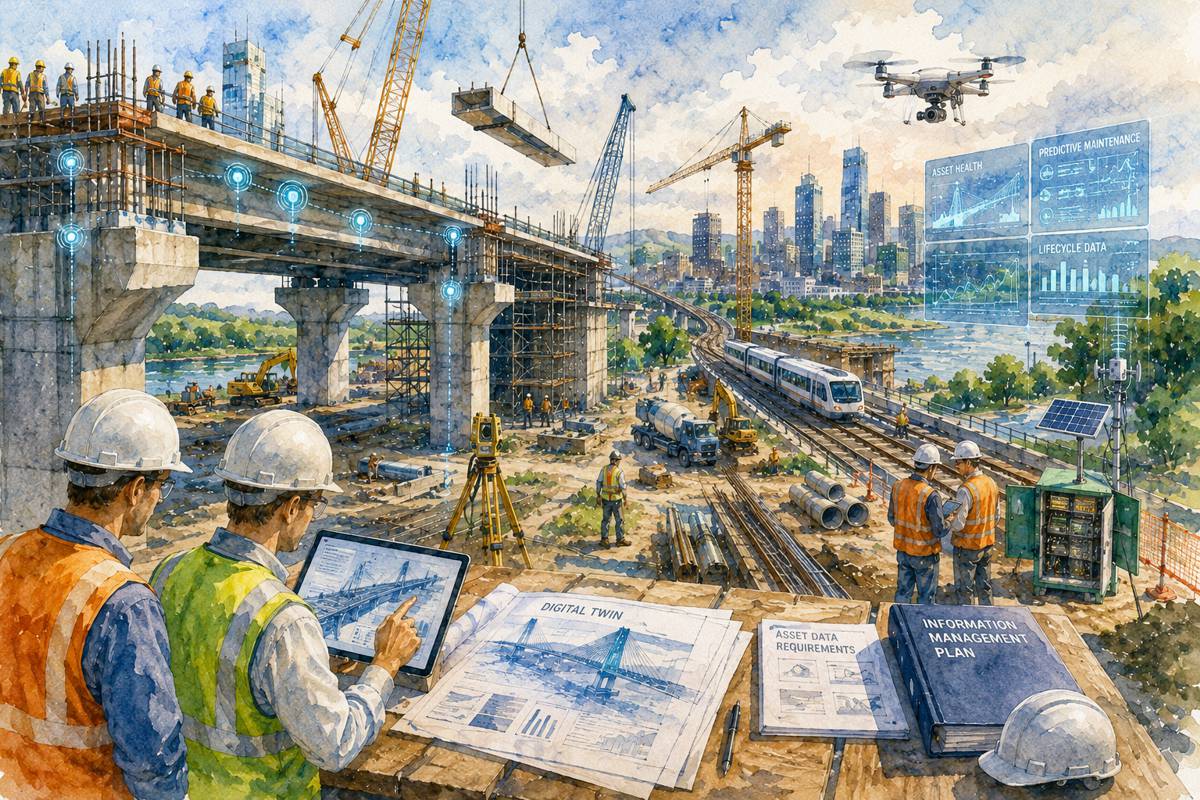
Today’s major infrastructure projects increasingly incorporate digital capabilities from the earliest design stages. Building Information Modelling, digital twins, embedded sensing technologies and connected asset management platforms are being integrated before ground is even broken. Intelligence is no longer an add-on. It is becoming part of the design brief.
Major transport authorities are already requiring digital asset information throughout project lifecycles. Contractors increasingly hand over not only physical assets but detailed digital records capable of supporting future maintenance and operational decisions. Sensors embedded during construction provide baseline performance data from the first day of operation.
The implications extend far beyond maintenance. Infrastructure capable of generating operational intelligence throughout its lifespan creates new opportunities for optimisation, resilience and efficiency. Decisions made during design and construction increasingly influence how effectively an asset can adapt to future demands.
In practical terms, tomorrow’s infrastructure is being built not merely to endure but to learn.
Stewardship Of The Intelligence Layer
The first choice is about ownership and design. Who builds, owns and operates the digital layer of national infrastructure is now one of the most consequential questions in public policy, and the window in which to answer it well is still open.
The first article in this series traced how sovereign wealth funds, hyperscalers, infrastructure platforms and private credit have converged on intelligent infrastructure as an asset class. That convergence is healthy on balance. It brings capital, expertise and operational discipline into sectors that have spent decades under-invested. Qatar Investment Authority anchoring a three-billion-dollar data centre platform, GIC partnering on hyperscale joint ventures, ADIA building with Brookfield, MGX joining the Artificial Intelligence Infrastructure Partnership — these are not threats. They are commitments to the build-out at a scale public balance sheets cannot match.
But the digital layer is not the same as the physical asset beneath it. A road built with private capital still belongs to a public authority. The data flowing across a smart road network, the algorithms making decisions about it, the cloud platform on which those algorithms run, the firmware in the sensors, the protocols by which it all communicates — these are choices that get made early in a project and prove very expensive to revisit later. Get them right and an operator has a flexible, interoperable, upgradeable platform for fifty years. Get them wrong and the operator finds itself locked to a vendor, a jurisdiction or a technology stack that no longer serves the public interest.
The opportunity is that almost none of this has been settled yet. Open standards for asset data, interoperability requirements in procurement, sovereign data frameworks, resilient vendor ecosystems with more than one capable supplier in each market — all of these are still being designed. Singapore’s national digital twin programme has shown what happens when a government treats the intelligence layer as a strategic asset rather than a vendor relationship. The European Union’s digital sovereignty work is grappling, imperfectly but seriously, with where critical data should sit. The Rocky Mountain Institute’s blunt observation that most African utilities are still operating analogue systems with limited customer or loss data is, read another way, an invitation to skip a generation of bad architectural decisions.
The most valuable thing about a long-life asset is the flexibility it preserves. The same is true of the intelligence layer. Countries, operators and firms that build with open standards, plural suppliers, portable data and clear lines of public accountability will find their assets ageing gracefully. Those that don’t will spend the late 2030s paying to unwind decisions made in the late 2020s. That is not a warning. It is a procurement opportunity, and the procurement teams already getting it right will define the working assumptions of the next several decades.
Earning Public Trust As Infrastructure Becomes Intelligent
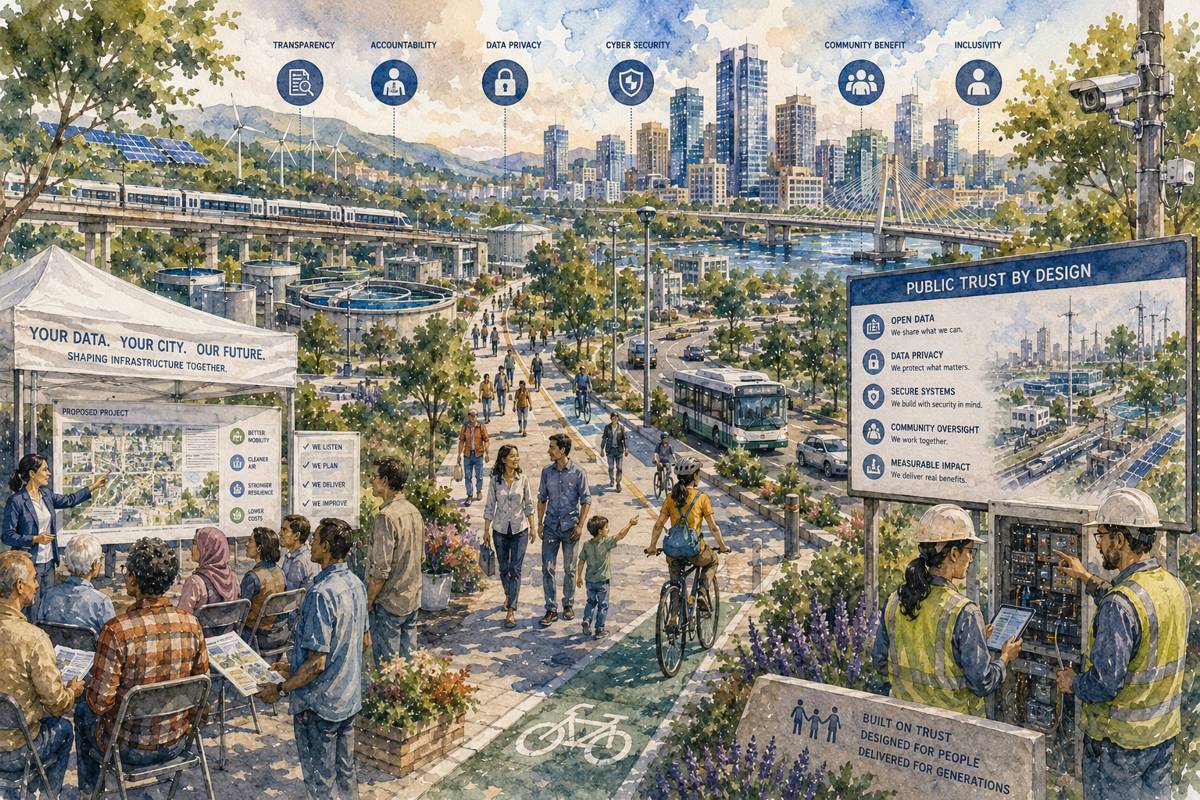
The second choice is about legitimacy. Public trust is the single resource that intelligent infrastructure most depends on and most easily loses, and the operators that take it seriously will find their projects easier to permit, easier to fund and easier to renew.
The second article in this series referenced San Diego’s smart streetlight programme. The city installed thousands of intelligent lighting nodes for entirely defensible reasons: energy efficiency, outage detection, and urban sensing. Public concern emerged later, when residents discovered that police were accessing the camera feeds in ways the original consultation had not anticipated. The programme was paused, redesigned with stricter governance and access controls, and eventually relaunched. The lesson is not that the technology was wrong. It is that the governance framework had not kept pace with the technology, and the city had to do the harder work after the fact rather than before.
San Diego is not unusual. It is a small, well-documented preview of a conversation every city, utility and transport authority will need to have. Sensors are cheap. Data is plentiful. The systems being built today are capable of seeing far more than they need to, and far more than the public has explicitly agreed they should. The instinct of a careful operator is to collect everything in case it proves useful later. The instinct of a thoughtful operator is to ask first.
The constructive framing is that trust is buildable. It is not a fixed reservoir that gets drained by each new project. The cities and utilities that consult clearly, explain themselves in plain language, set transparent retention rules, define access controls before they are needed, and treat data governance as core infrastructure rather than compliance paperwork are the ones whose next project gets a fair hearing. The ones that don’t will find each subsequent project harder.
This is not abstract. Procurement frameworks across Europe, Asia and the Americas are already evolving to incorporate explicit data governance, cybersecurity and public-engagement requirements into smart infrastructure contracts. The OECD has flagged the importance of skills and organisational capacity to handle this responsibly. The opportunity for contractors, technology providers and consultants is to bring those capabilities into bids as a differentiator rather than an afterthought. A smart street pole without a clear governance framework is not smart infrastructure. A smart street pole with one is a piece of civic furniture the community will defend.
There is a deeper point here about the relationship between intelligent infrastructure and democratic legitimacy. The systems being built will increasingly make decisions about which road gets repaired first, which neighbourhood gets the leak inspection, which substation gets the upgrade. Decisions that used to be made, however imperfectly, by accountable human beings. The technology does not remove the politics. It relocates it. The most successful operators will be the ones who understand that, and who keep the public reasoning visible even as the analysis becomes more powerful. Earning trust is not a constraint on Civilisation 2.0. It is the licence to build it.
Designing For Resilience As Systems Converge
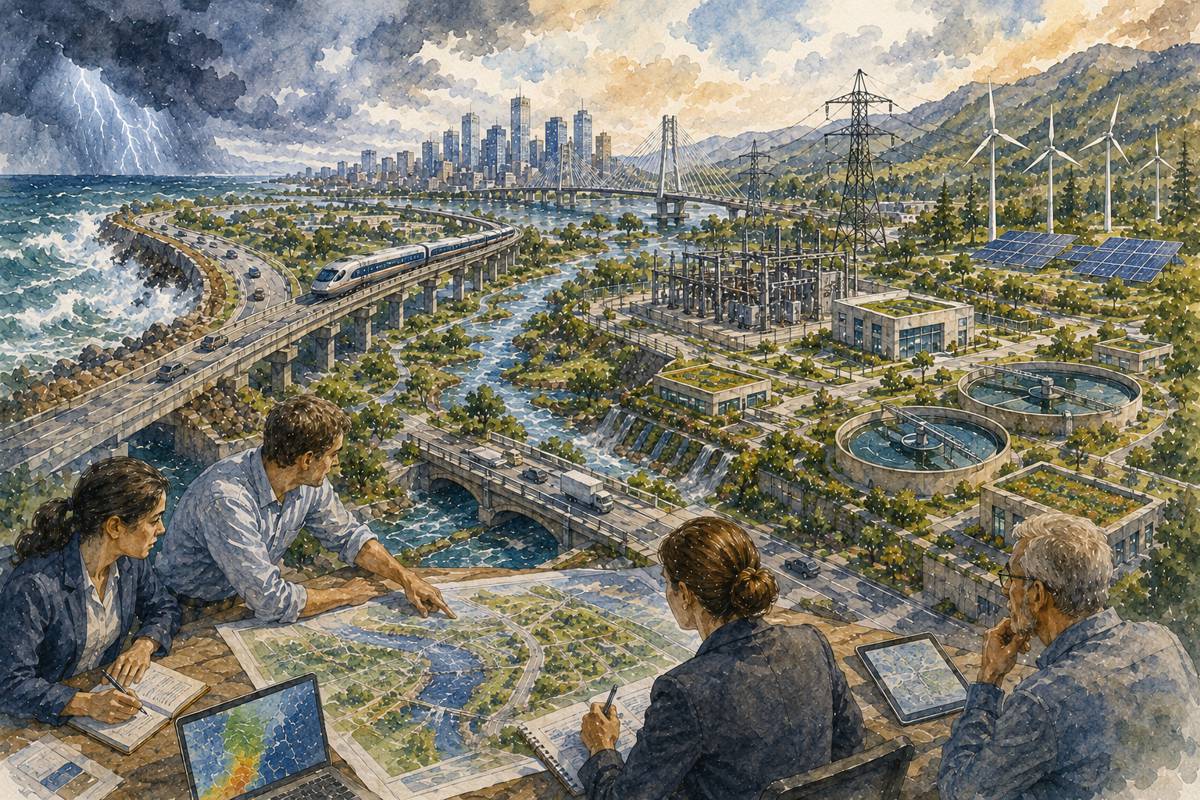
The third choice is about engineering. Convergence is the single most powerful feature of intelligent infrastructure and the single most demanding. Systems that share information richly become more capable, more efficient and more responsive. They also become more interdependent, and interdependence has to be designed for.
The first article noted the Estlink 2 electricity cable between Finland and Estonia, out of service for more than seven months after a single tanker passage damaged five submarine cables in one event. The second discussed the consequences of the American Water breach for fourteen million customers. The third returned to the 2024 Red Sea cable damage that disrupted ninety per cent of Europe-Asia communications traffic. These are not arguments against convergence. They are arguments for taking it seriously as an engineering problem.
The optimistic case here is straightforward. Resilience-by-design is achievable, and the discipline already exists. Smart grid fault isolation systems can detect and contain disturbances before they propagate. Diverse fibre routing protects against single-point failures. Edge computing architectures keep critical functions running when central systems go down. Tsing Ma Bridge’s twenty-six years of continuous structural monitoring has shown that long-term data builds rather than erodes confidence. Singapore’s integrated drainage and water management has demonstrated that converged systems can be more robust, not less, when the convergence is engineered deliberately.
What is required is a shift in how infrastructure investment is evaluated. For decades, the economic case for an asset has been built around capacity, utilisation and lifecycle cost. The case for an intelligent asset has to add resilience as a first-order variable, not a footnote in the risk register. Redundant fibre paths cost money. So do diverse cloud regions, independent backup control systems, OT segmentation, and the kind of cybersecurity hardening. None of that comes free. All of it is cheaper than the failures it prevents.
The engineering profession has always understood that the most valuable infrastructure is the kind that fails gracefully. A bridge that gives warning before it gives way. A grid that sheds load before it collapses. A water network that isolates a contaminated zone before it spreads. The principle has not changed. It now extends to the digital layer as well. The firms and engineers who master resilience-by-design for converged systems will be the most valuable in the industry over the next twenty years, and the work is already starting. The case studies that will define best practice in 2035 are being written this year.

The World We Get To Build
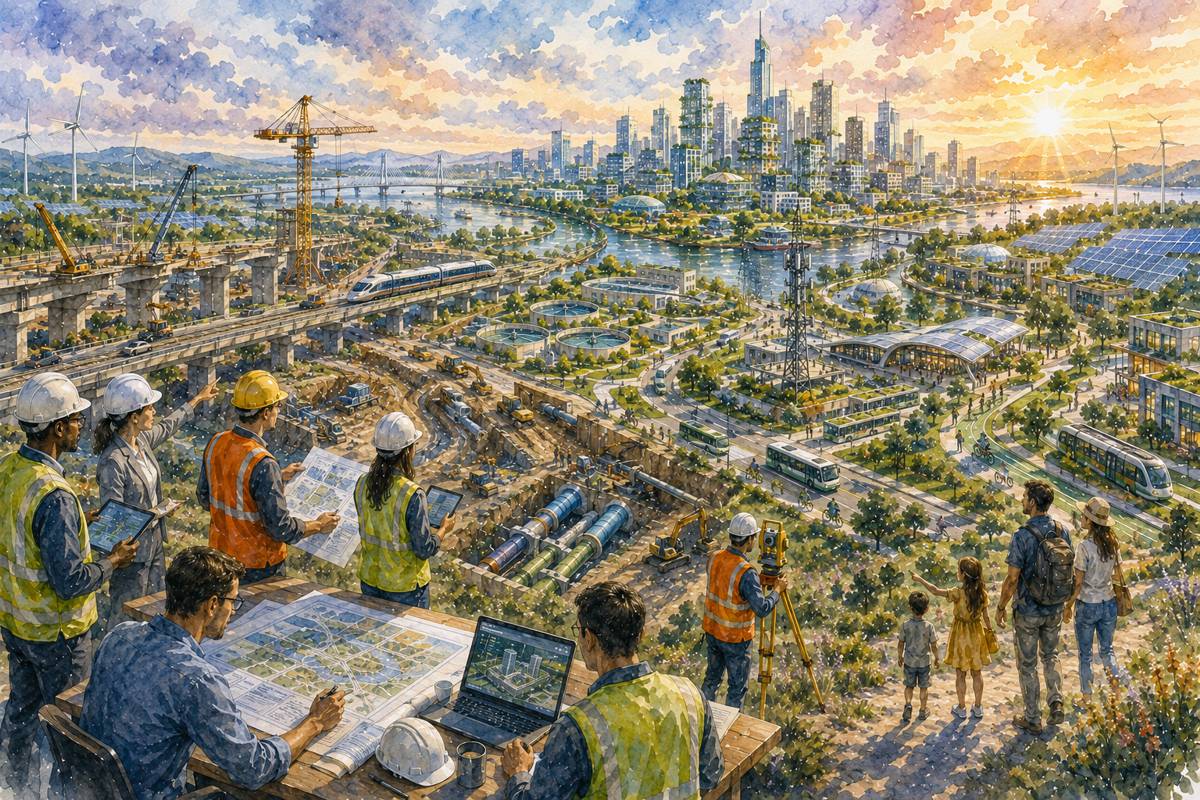
If the industry takes those three choices seriously, what does the world actually look like in 2045? It looks, in many ways, ordinary. That is the surprising part. The most successful infrastructure revolutions do not feel dramatic from inside them. Electrification did not feel like a civilisational shift to the family that finally got a refrigerator. The internet did not feel like a new operating system for society when it was used to send the first email between offices. Intelligent infrastructure will feel similar. It will feel like things working.
It looks like a city where leaks are repaired before residents notice the pressure dip, where potholes are logged and triaged before complaints arrive, where streetlights replace themselves before anyone is left walking home in the dark. It looks like rail networks where the majority of routine inspections have shifted to higher-value engineering work, because the sensors have already done the looking. It looks like power grids that integrate household solar, EV batteries, industrial demand and renewable generation without the operator thinking twice, because the balancing happens continuously and automatically. It looks like ports moving substantially more cargo through the same berths, airports turning aircraft faster without expanding their footprint, water utilities holding non-revenue water to single-digit percentages even in difficult networks.
It looks like floods predicted hours earlier and drainage networks responding in minutes. Bridges that have been continuously monitored for thirty years, with decisions about repair, strengthening or replacement made on evidence rather than inspection cycles. Substations that have not had an unscheduled outage in years. Buried pipes whose condition is better understood than the surface roads above them.
It looks, in other words, like the boring competence the prior pieces in this series documented in pilot form, scaled to the point of being unremarkable.
This is not utopia. Failures will still happen. Debates over data, ownership, governance, capital allocation and policy will still rage. Some projects will fail. Some technologies will turn out to be dead ends. Some cities will get it badly wrong and have to start over. Some countries will be much further ahead than others. None of that contradicts the underlying picture. Every previous infrastructure revolution arrived unevenly and through error. They were civilisational anyway.
The 2045 worth building is not the one where everything is automated, monitored and optimised to within an inch of its life. It is the one where the working assumption of infrastructure is competence, where things mostly function, mostly anticipate their own failures, and mostly free human attention for higher-value work. That is a more modest claim than the smart-city brochures of the 2010s. It is also far more useful, and it is the version that is actually being built.
The Foundations Are Already Being Laid
The Romans did not know they were building Roman civilisation. They were building roads. Victorian engineers laying railway track across Britain did not imagine they were creating the foundations of modern industrial society. Electric utility pioneers focused on delivering reliable power rather than transforming economic productivity. Even the architects of the early internet could scarcely have anticipated the digital economy that would eventually emerge.
Infrastructure revolutions are rarely recognised while they are happening. The engineers, contractors, operators and policymakers involved typically see only the project in front of them. A bridge replacement. A fibre corridor. A drainage upgrade. A digital twin implementation. A smart substation. A new asset management platform. Individually these projects appear practical, local and often routine.
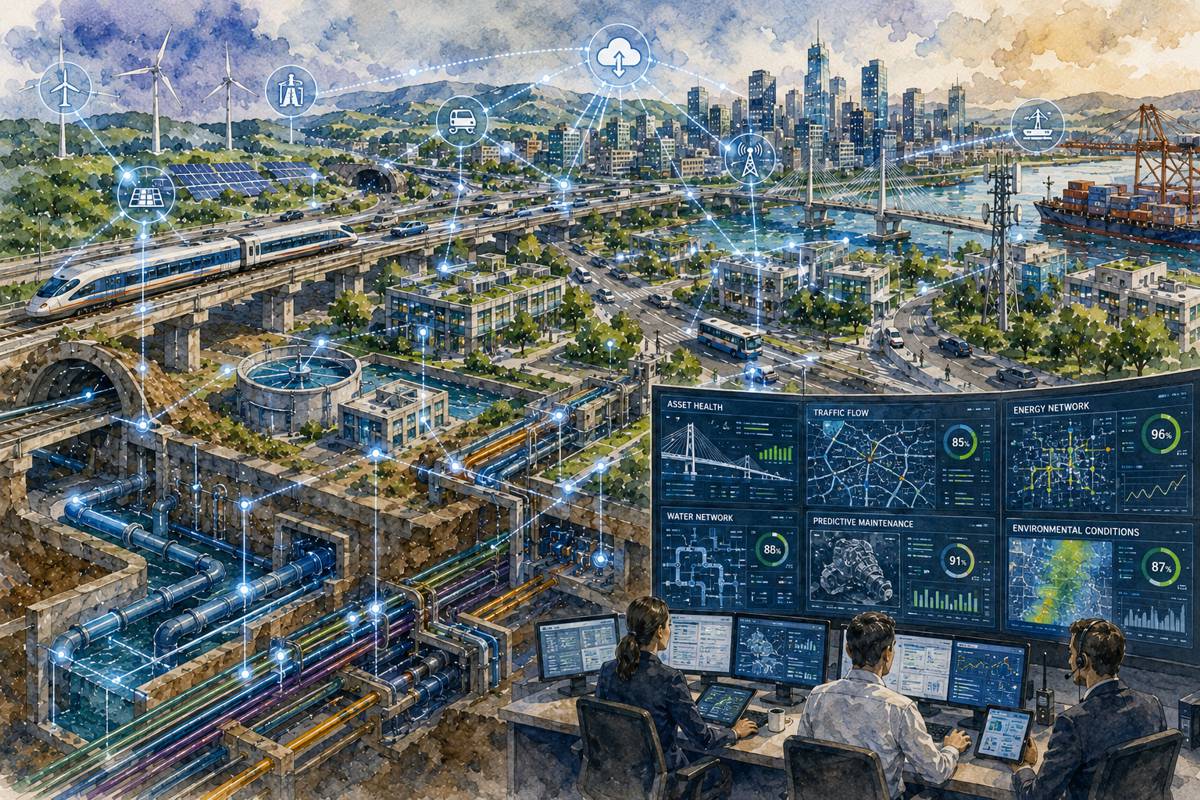
Collectively they tell a different story. Across the world, infrastructure is becoming more aware of its condition, more connected to neighbouring systems and more capable of supporting informed decisions. Roads are beginning to report defects before drivers complain. Utilities can identify failures before customers notice interruptions. Energy networks increasingly balance themselves. Cities are learning to understand their own operations through continuous streams of information.
The result is not a science-fiction future. It is something both more mundane and more significant. Infrastructure is gradually evolving from a passive foundation supporting society into an active participant in how society functions.
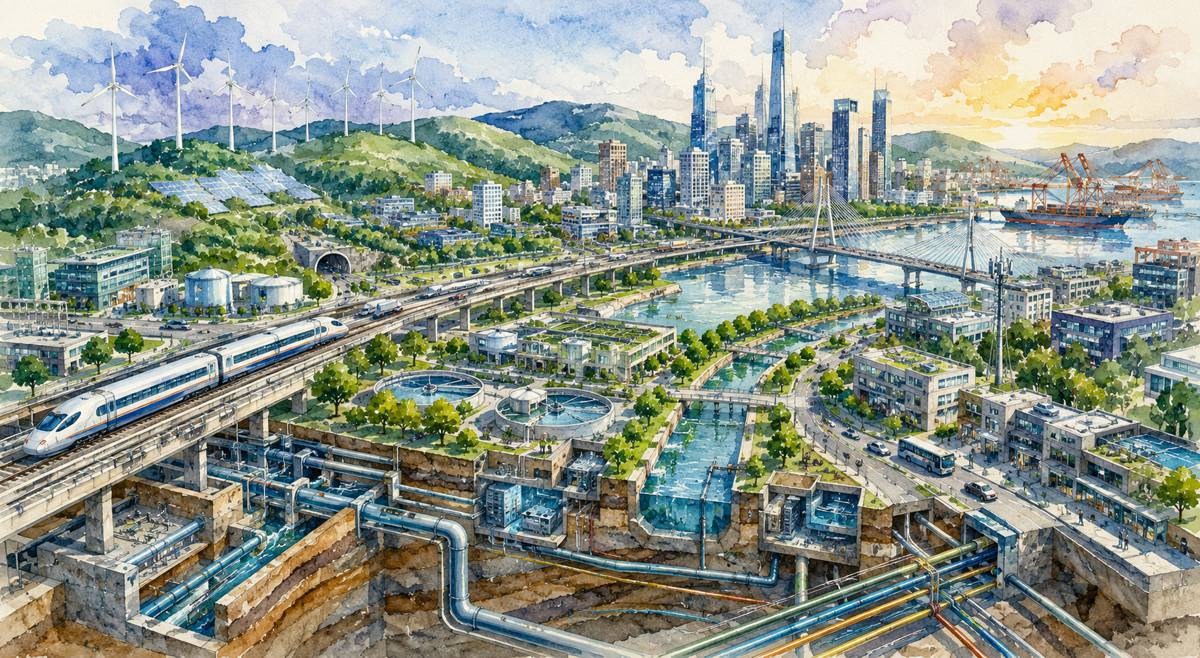
Whether future historians ultimately call this transition Civilisation 2.0 is largely irrelevant. Labels rarely matter as much as outcomes. What matters is that the foundations are already being poured, programmed, connected and commissioned across every continent. Beneath streets, inside substations, alongside rail corridors and throughout utility networks, a new infrastructure layer is quietly emerging.
Roman roads connected empires. Railways connected nations. Telecommunications connected continents. Intelligent infrastructure is beginning to connect entire systems of society.
The next chapter of civilisation may not be defined by a single technology, a single project or a single breakthrough. It may instead be defined by something more fundamental: infrastructure that understands the world around it, learns from it and helps societies respond more effectively to the challenges ahead.
And that future is no longer being imagined – it is already under construction.