XPENG Introduces First Mass Produced Robotaxi Platform
Autonomous mobility has spent the better part of a decade trapped between bold promises and limited pilot programmes. Cities around the world have witnessed impressive demonstrations of self-driving technology, yet large-scale commercial deployment has remained frustratingly elusive. Regulatory hurdles, hardware costs, safety concerns and the sheer complexity of urban driving have all slowed progress.
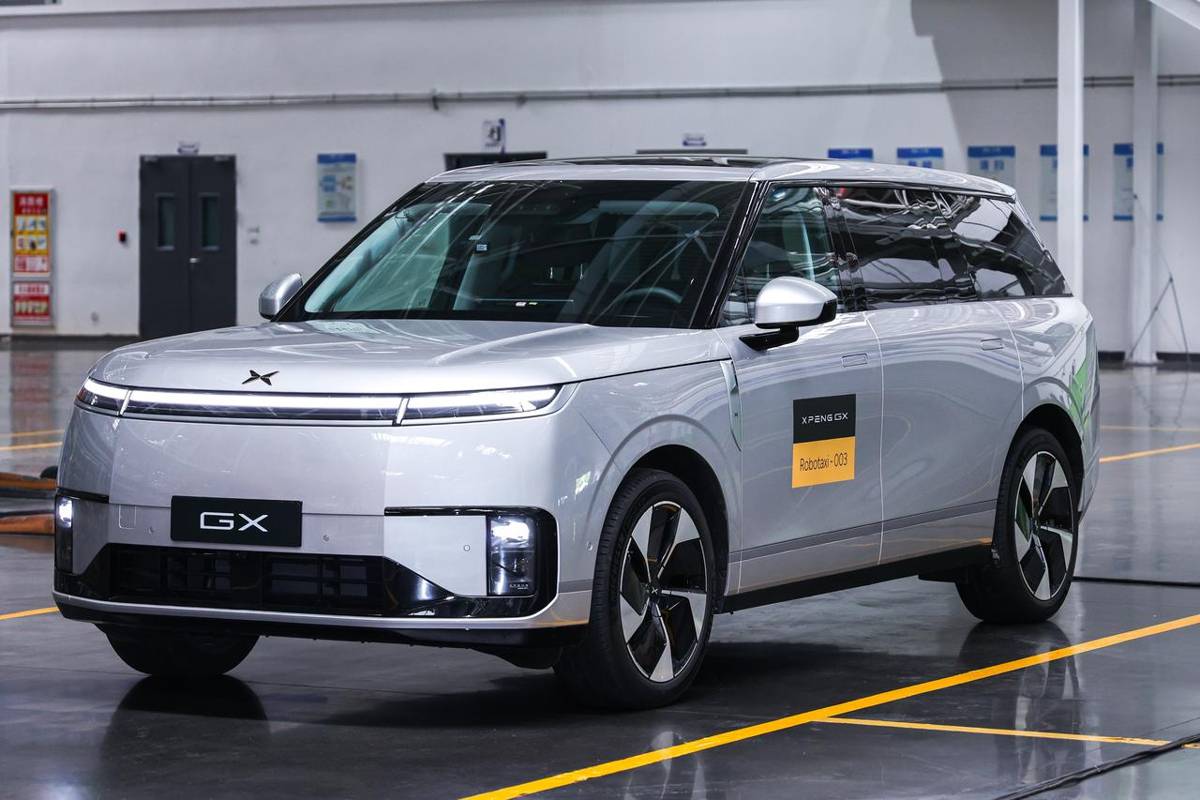
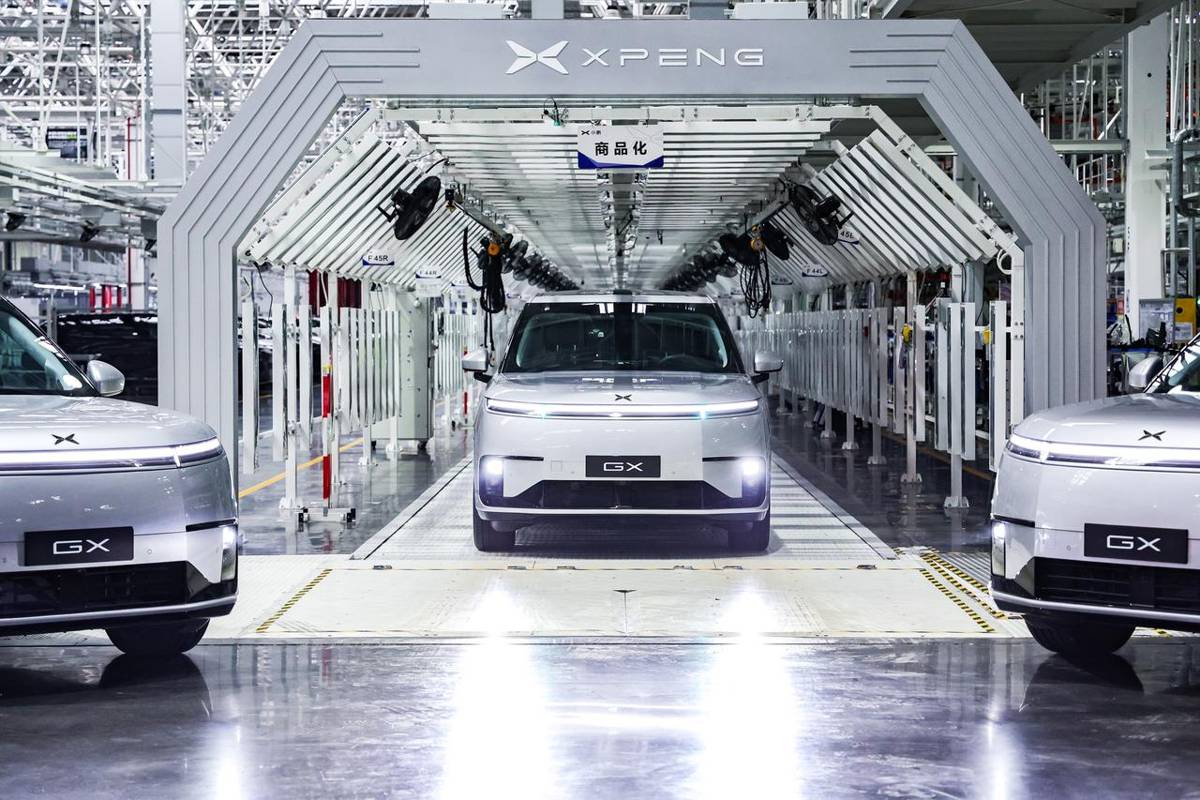
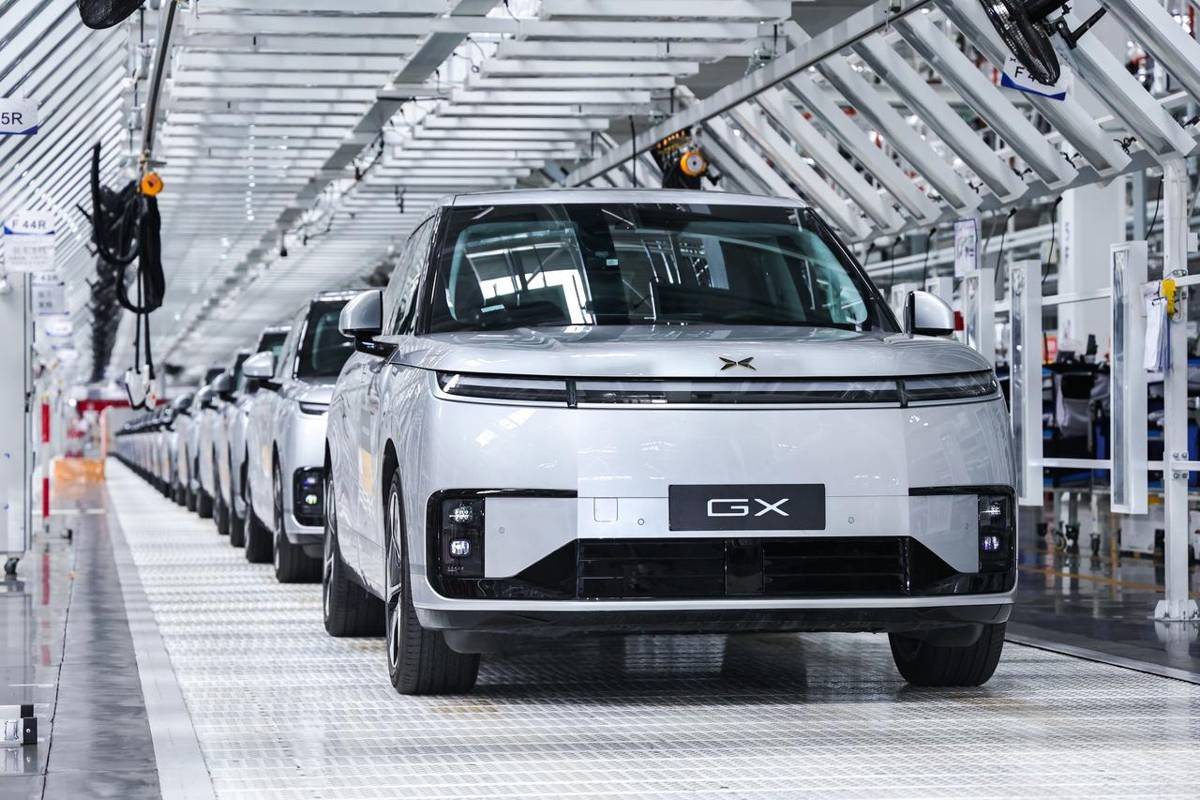
That landscape is beginning to change. Chinese mobility technology company XPENG has announced the rollout of its first mass-produced Robotaxi from its Guangzhou production facility, marking a significant milestone not only for the company but for the broader autonomous vehicle sector. According to XPENG, this is the first time a Chinese automaker has mass-produced a Robotaxi developed entirely through full-stack in-house engineering, from vehicle platform and artificial intelligence chips to autonomous driving software and vehicle integration.
The announcement arrives at a moment when autonomous mobility is shifting from experimental trials towards commercial reality. Global competition is intensifying between technology developers, vehicle manufacturers and mobility service providers seeking to establish viable Robotaxi businesses. While companies in the United States and China continue to dominate headlines, the real race is increasingly about who can industrialise autonomous transportation at scale and deliver sustainable economics.
Briefing
- XPENG has unveiled its first mass-produced Robotaxi developed entirely through in-house technologies.
- The vehicle is engineered to Level 4 autonomous driving standards and powered by four proprietary AI chips delivering 3,000 TOPS of computing power.
- The Robotaxi uses a vision-based autonomous driving system without LiDAR or high-definition maps.
- Pilot commercial operations are scheduled to begin in the second half of the year, with fully driverless operations targeted for 2027.
- The launch highlights growing momentum in the global Robotaxi market as autonomous transport moves towards large-scale deployment.
A Turning Point for Commercial Autonomous Mobility
The autonomous vehicle industry has long struggled with a fundamental challenge. Developing vehicles capable of navigating complex urban environments is only part of the equation. Building those vehicles economically and deploying them at scale is where many programmes encounter obstacles.
XPENG’s latest development seeks to address precisely that challenge. Unlike bespoke autonomous test fleets that often require extensive retrofitting, the company’s Robotaxi has been designed from the outset as a production vehicle capable of supporting commercial deployment. The vehicle is based on XPENG’s GX platform and has been engineered to Level 4 autonomy standards, meaning it is designed to operate without human intervention within defined operating conditions.
This distinction carries significant commercial implications. Manufacturing vehicles through conventional automotive production processes can dramatically reduce costs compared with retrofitted autonomous prototypes. Lower production costs, combined with improved reliability and easier maintenance, could become decisive factors as Robotaxi operators seek profitable business models.
Industry analysts increasingly view industrial scalability as the defining challenge of the next phase of autonomous mobility. Technical demonstrations alone are no longer sufficient. Investors, regulators and fleet operators are demanding evidence that autonomous systems can generate sustainable returns while maintaining high safety standards.
Building the Entire Autonomous Stack In House
One of the more notable aspects of XPENG’s Robotaxi strategy is its commitment to vertically integrated development.
The company states that the Robotaxi incorporates internally developed technologies spanning software, vehicle engineering and semiconductor design. At the heart of the system are four proprietary Turing AI chips providing a combined effective computing capability of 3,000 trillion operations per second, commonly referred to as TOPS.
Across the autonomous vehicle industry, computing power has become increasingly important as AI models grow more sophisticated. Modern self-driving systems must simultaneously process vast streams of visual information, predict traffic behaviour, identify hazards, plan routes and execute driving decisions in real time.
Control over chip development offers several advantages. It allows tighter integration between software and hardware, potentially reducing latency while optimising performance. It also reduces dependence on external semiconductor suppliers, an increasingly important consideration amid growing geopolitical competition surrounding advanced technologies.
Several major autonomous driving developers, including those in North America and China, have pursued similar strategies. However, successfully integrating custom silicon into a mass-produced vehicle platform remains a significant engineering achievement.
Challenging Conventional Autonomous Driving Architecture
Perhaps the most intriguing aspect of XPENG’s approach lies in what it excludes rather than what it includes.
Many autonomous driving systems rely heavily on LiDAR sensors and detailed high-definition maps to understand their surroundings. LiDAR creates precise three-dimensional representations of the environment using laser pulses, while HD maps provide detailed location intelligence for autonomous navigation.
XPENG has chosen a different path. According to the company, its Robotaxi operates using a pure vision architecture without LiDAR or high-definition maps. Decision making is driven by its VLA 2.0 end-to-end AI model.
The company states that this architecture eliminates intermediate processing stages found in traditional Vision-Language-Action systems, reducing response latency to less than 80 milliseconds while improving adaptability across different urban environments.
This reflects a broader industry debate regarding the future of autonomous driving. Some developers argue that camera-based systems combined with advanced artificial intelligence can achieve human-level perception while significantly reducing hardware costs. Others maintain that sensor redundancy, including LiDAR, remains essential for robust safety performance.
Whichever approach ultimately prevails, reducing hardware complexity remains critical for commercial viability. Robotaxi services can only scale successfully if operating costs become competitive with existing transportation alternatives.
Guangzhou Becomes a Testbed for Autonomous Innovation
China continues to emerge as one of the world’s most active environments for autonomous vehicle deployment.
XPENG received approval earlier this year for public road testing of intelligent connected vehicles in Guangzhou, enabling routine Level 4 testing operations. The company subsequently established a dedicated Robotaxi business division responsible for product development, testing and operational deployment.
These developments align with broader national initiatives supporting advanced mobility technologies. Chinese authorities have increasingly encouraged pilot programmes across multiple cities, creating regulatory frameworks that allow autonomous vehicle developers to accumulate operational experience while maintaining oversight.
Cities such as Beijing, Shanghai, Shenzhen, Wuhan and Guangzhou have all introduced autonomous driving zones and testing corridors. This regulatory flexibility has accelerated development cycles and allowed Chinese companies to gather extensive real-world driving data.
Data remains one of the most valuable assets in autonomous mobility. Every kilometre travelled contributes to improved model training, helping systems better understand rare scenarios and complex traffic interactions.
The Global Robotaxi Market Gains Momentum
The timing of XPENG’s announcement coincides with growing activity across the international Robotaxi sector.
According to research from consulting firms including McKinsey and Deloitte, autonomous ride-hailing could become a multi-hundred-billion-dollar industry over the coming decades. Market forecasts vary considerably, yet most analysts agree that commercial deployment will expand significantly during the latter half of the 2020s.
In the United States, companies including Waymo continue expanding autonomous ride services across multiple cities. Meanwhile, Chinese developers have accelerated testing programmes supported by favourable regulatory environments and strong domestic technology ecosystems.
Competition is increasingly shifting beyond technological capability towards operational execution. Fleet management, maintenance networks, customer adoption, insurance frameworks and regulatory compliance may ultimately determine which companies achieve commercial success.
Mass-produced autonomous vehicles could provide a decisive advantage by reducing deployment costs and enabling faster fleet expansion.
Creating an Autonomous Passenger Experience
While most discussions around Robotaxis focus on artificial intelligence and vehicle safety, passenger experience will play a crucial role in public acceptance.
XPENG’s vehicle incorporates several features intended to enhance ride comfort, including privacy glass, gravity-style seating and rear passenger entertainment screens. The company also states that passengers can interact with vehicle systems through integrated voice controls.
These features highlight an important shift in vehicle design philosophy. Once driving responsibilities are transferred entirely to autonomous systems, interior environments become increasingly important differentiators. Vehicle cabins evolve from driver-focused spaces into mobile living rooms, workspaces or entertainment environments.
This trend extends well beyond Robotaxis. Automotive manufacturers globally are investing heavily in digital cabin technologies as they prepare for progressively higher levels of vehicle automation.
Physical AI Extends Beyond the Road
The Robotaxi rollout also illustrates XPENG’s broader ambitions within what the company describes as a physical AI ecosystem.
According to XPENG, the same VLA 2.0 AI foundation supporting the Robotaxi is also being used in its humanoid robotics programme and flying car initiatives.
This convergence reflects wider developments across artificial intelligence research. Increasingly capable foundation models are beginning to bridge multiple physical systems, enabling machines to perceive, interpret and interact with real-world environments using shared learning architectures.
The implications extend far beyond transportation. Construction equipment, industrial machinery, logistics robots, warehouse automation systems and infrastructure inspection platforms could all benefit from similar advances in machine intelligence.
For infrastructure stakeholders, these developments suggest a future where autonomous systems become embedded throughout the built environment rather than confined solely to passenger transport.
Moving from Demonstration to Deployment
The history of autonomous mobility is filled with ambitious promises that failed to materialise on schedule. Yet the industry’s trajectory increasingly points towards gradual but meaningful commercial deployment.
XPENG plans to launch pilot Robotaxi operations during the second half of the year to evaluate technology performance, customer acceptance and operational viability. The company has also stated its objective of achieving fully autonomous operations without onboard safety personnel by early 2027.
Whether that timeline proves achievable remains to be seen. Regulatory approval, public confidence and operational reliability will all influence deployment speed. Nevertheless, the rollout of a mass-produced autonomous vehicle platform represents a significant step beyond laboratory testing and limited demonstration fleets.
For the wider mobility sector, the message is becoming increasingly clear. Autonomous transportation is no longer solely an experimental technology. It is steadily evolving into an industrial capability. The companies that successfully combine artificial intelligence, scalable manufacturing and operational discipline are likely to define the next chapter of urban mobility, and XPENG has now positioned itself firmly within that contest.