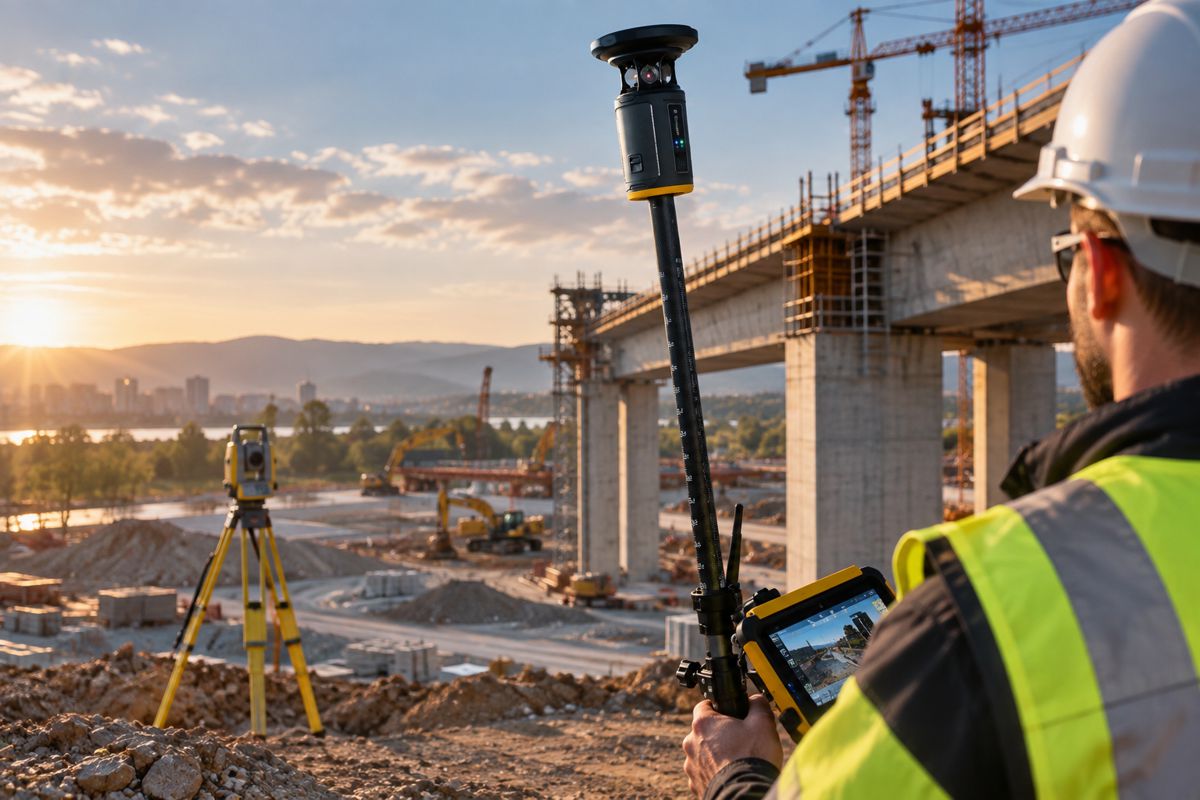
Procore Turns the Common Data Environment into a Launchpad for Agentic AI
Procore Technologies has pulled the wraps off a connected Common Data Environment built to keep a project’s digital record honest, from the moment a design gets signed off right through to handover. The construction software firm, listed in New York and run out of California, reckons the move turns what’s usually a glorified filing cabinet into something far more active: a single, verified source of truth tying together BIM models, documents, quality records and asset information.
The real prize sitting behind all that plumbing is artificial intelligence that can actually do the work, rather than just pointing at where the work might be hiding.
That ambition arrives at a moment when the industry’s data problem has become impossible to wave away. Fragmented information still slows decisions and feeds expensive delays on sites the world over, and contractors have spent years bolting together systems that barely talk to one another.
Procore’s argument is that a trustworthy data foundation isn’t a nice-to-have any more. It’s the thing that decides whether the next wave of AI amounts to a genuinely useful colleague or an expensive distraction. For European teams wrestling with ISO 19650 and the Building Safety Act, the same record happens to double as the audit trail regulators now expect to see.
Briefing
- Procore has launched a purpose-built connected Common Data Environment that verifies project data from approved design through to handover, capturing evidence in the flow of work to keep digital records aligned with what’s actually happening on site.
- The platform leans on AI from Datagrid, the vertical AI firm Procore acquired in January 2026, to introduce agentic “coworkers” that can automate workflows and execute tasks rather than simply surface information.
- Engineering consultancy Buro Happold says it’s targeting a 50% cut in administrative effort tied to RFIs and submittal reviews by embedding AI into project workflows.
- The connected record is pitched as a defensible compliance trail for European firms operating under ISO 19650 and the UK’s Building Safety Act, both of which demand a continuous, accountable digital history.
- Rollout starts in the UK and Ireland, with a localised UK Data Zone live, an EU Data Zone due in autumn 2026, and Cyber Essentials certification targeted for year end before a wider EMEA push.
AI That Executes Rather Than Suggests
The headline shift here isn’t the data environment itself, useful as it is. It’s what Procore wants to run on top of it. The company has folded in technology from Datagrid, the San Francisco vertical AI outfit it bought in January 2026 in a deal that brought founder Thiago da Costa across to lead AI and data strategy. Datagrid’s value lies in connecting fragmented data sources such as ERP systems, cloud storage and document repositories, then applying AI reasoning to orchestrate actions across them, automating multi-step jobs like submittal reviews and RFI drafting instead of just answering questions.
Da Costa’s track record includes founding and selling Lagoa to Autodesk, which tells you something about why Procore went after the team rather than building the capability in-house.
What that buys, in plain terms, is software that reasons across project context and then takes action while people keep hold of the final call. Procore’s embedded AI can dig through existing records to answer a query before anyone bothers raising a fresh RFI, flag where the approved design and the field execution have drifted apart, and stitch related workflows together to close out issues faster.
Tasks that once swallowed hours of hunting and cross-checking get done in minutes, with the sources attributed so nobody’s working on blind faith. Alain Waha, Chief Technology Officer at Buro Happold, put a number on the upside: “We’re on track to reduce construction administration work with respect to RFI creation, response, and submittal review by 50%. By embedding AI directly into project workflows, teams can spend less time navigating information and more time advancing the work.”
Why Connected Data Decides Who Wins
Strip away the AI talk and the underlying logic is about trust. An agent that acts on bad data is worse than no agent at all, which is why Procore keeps circling back to the idea of verified information captured as work happens. The numbers it cites make the commercial case plain enough. Research from Dodge Construction Network found firms with optimised data practices hit up to 23% higher productivity, handle 27.8% more construction volume on the same resources, and shave more than six days off project delays. Those same firms report up to 40% stronger overall performance, which is the sort of gap that separates a thriving contractor from one quietly bleeding margin.
Lee Miles, General Manager for Europe, Middle East and Africa at Procore, framed the problem as one of maturity rather than enthusiasm. “While construction has made significant progress in digitizing workflows, many organizations still operate across disconnected systems and siloed project data,” he said. “The challenge is no longer simply moving from paper to digital, but ensuring information flows consistently across teams, processes and the full project lifecycle. As regulatory expectations rise, projects become more complex, and firms adopt AI, connected data is becoming a competitive advantage. Organizations are moving beyond simple document storage and toward trusted and connected information environments that help improve performance today and enable agentic AI to operate with confidence.” Steve Davis, Procore’s President of Product and Technology, struck a similar note around the original acquisition, saying the goal was to “bridge the gaps between siloed data and initiate actions across their entire ecosystem.”
The Compliance Clock Europe Cannot Ignore
For policymakers and the firms they regulate, the European launch reads as more than a product release. The Building Safety Act traces back to the 2017 Grenfell Tower disaster and the subsequent Dame Judith Hackitt review, which delivered a damning verdict on the industry’s record-keeping. Out of that came the “golden thread”, a requirement that higher-risk buildings, broadly those at least 18 metres tall or seven storeys with two or more dwellings, maintain a structured digital record of safety-critical information across their whole lifecycle. A connected environment that logs who did what, when and why isn’t a marketing flourish in that world. It’s the difference between clearing a regulatory gateway and getting sent back to the drawing board.
The standards picture reinforces the point. ISO 19650 guidance underpins how information management systems and common data environments handle change control, collaboration and accountability, and a CDE already supports the early gateways before construction and during works. The snag many contractors hit is that office-bound document stores fall down the moment the action moves out to site. Procore’s wager is that a record built to capture evidence in the flow of work, rather than after the fact, is what actually keeps the golden thread intact when inspectors come calling.
Turning BIM Models Into a Working Surface
There’s a practical piece of engineering buried in the announcement that deserves more attention than it’ll probably get. Procore’s BIM Model Manager streams models of any size straight to mobile devices, which means the 3D coordination work no longer lives solely on a workstation back at the office. Site teams can pull up the model where they’re standing, line it up against live project data, and spot the gap between what was drawn and what’s been built before it hardens into rework.
That matters because BIM has long suffered from a split personality: rich and authoritative in the design office, all but invisible once boots hit the ground. Bringing the model into the field as a live workspace, tied to the same verified record everything else sits in, closes a loop the industry’s been chasing for the better part of a decade. It also feeds the AI side neatly, since an agent that understands both the spatial model and the operational data has a far better shot at flagging a real coordination clash than one squinting at documents alone.
Where and When It Lands
Procore has built this version of the CDE specifically around European requirements, and the rollout reflects that. It’s launching first in the UK and Ireland before fanning out across EMEA, a sequencing that puts the most regulation-heavy markets at the front of the queue. A localised UK Data Zone is already in place, with a dedicated EU Data Zone slated for autumn 2026, addressing the data residency questions that tend to stall enterprise deals on the continent.
On the assurance front, the platform supports ISO 19650 and the Building Safety Act, and Procore is chasing Cyber Essentials certification by the end of the year. None of that is glamorous, but it’s the kind of box-ticking that determines whether a public-sector client or a tier-one contractor will even put the software on a shortlist. Get it wrong and the cleverest AI in the world stays locked out of the projects that need it most.
The Bigger Bet
Step back and the launch fits a pattern that’s been building across construction tech through 2026, with platform players snapping up specialist AI firms and racing to position themselves as the layer everything else connects through. Procore’s move beyond document storage toward an environment where agents can reason and act is a sizeable wager on where the money flows next, and investors watching the contech space will be parsing it for signs of whether the productivity promises hold up once they meet the chaos of a real building site.
The harder question is one of openness. Procore has plenty of incentive to pull this capability tightly into its own walls, yet the industry’s interoperability headaches won’t ease if every vendor builds another moat. For now, the firm is selling trust as the foundation and execution as the payoff, betting that contractors fed up with disconnected systems will pay for a record they can actually rely on. Whether the agentic coworkers earn their keep, or simply add a fresh layer of software to an already crowded stack, is the thing the next year of live projects will settle.