Dry Hydroponics and LocalDutch Bring Smart Farming to the Smart City
A Dutch venture born in the glasshouses of Westland is bringing a different kind of food retail to American neighbourhoods, and in time to import-dependent islands: a working greenhouse and a shop under one roof.
Behind the produce lies a larger proposition, that the long chain between farm and shelf can be folded back into a single visible local loop, and the relationship between a city and its food redrawn at neighbourhood scale.
Briefing
- LocalDutch, a horticulture venture from The Hague built on the Dry Hydroponics growing system, combines a working greenhouse and a retail shop under one roof, folding grower, distributor, warehouse and retailer into a single visible local loop, and intends to franchise that format internationally.
- The trade publication The Packer reported in March 2026 that the company’s United States rollout will begin in Pennsylvania this year, targeting low-access neighbourhoods where fresh-food demand and municipal support are both high.
- Soil-free growing is a century old, so the enabling innovation is a proprietary climate-control system the company describes as a “climate autopilot,” intended to run a high-performance greenhouse with far less reliance on scarce specialist growers, which is what could make the format repeatable at neighbourhood scale.
- Public funding and political access have moved in parallel with the commercial plan, including a Pennsylvania state grant, a federal grant prioritised for a partner project in New York, and a Dutch royal working visit to Pennsylvania in April 2026 at which agriculture and horticulture were explicitly on the agenda.
- How far the network ultimately scales rests on a practical test the model has yet to settle in public: whether a single shop can run profitably at neighbourhood prices once any founding subsidy falls away.
A press trip to the Glass City
The visit formed part of a press trip to The Hague, arranged to show a group of international journalists examples of real-world sustainability in practice rather than in prospectus. Among the stops was Westland, the strip of greenhouse country that runs west from the city toward the North Sea and the Hook of Holland. At ground level the landscape reads as flat and unremarkable. From the air it resolves into something stranger: a near-continuous sheet of glass, several thousand hectares of it, the densest concentration of greenhouse horticulture anywhere in the world. The Dutch call it the Glass City, de glazen stad, and the name is close to literal.
That landscape grew out of grapes. Westland was a centre for grape production by the 1820s, shipping fruit by steamer to Britain, and from around 1850 growers began raising those grapes against heated brick walls fitted with glass, the so-called grape walls that were the ancestors of the modern greenhouse. Fully glazed houses followed by about 1900, and over the following decades the greenhouse spread across the region on a large scale until it covered most of the horticultural land. Grape growing collapsed after the Second World War, undercut by cheaper southern European fruit, and gave way to tomatoes, peppers, cucumbers and cut flowers. A parallel innovation proved as important as the glass itself: the cooperative auction, which gave growers a shared route to market and in time made nearby Naaldwijk and Honselersdijk home to one of the world’s largest flower auctions. The Westland glasshouse grape survives today as a protected regional product, a small heritage echo of how the industry began.
What sets Westland apart now is not its age but its density. Several hundred specialist horticultural businesses, together with the suppliers, breeders, logistics firms and packers that serve them, sit within a municipality of under 100 square kilometres, alongside research institutions including Wageningen University and Research and TNO. The result is less a farming district than an industrial ecosystem, one that has spent more than a century turning the cultivation of plants under glass into a precise, data-led discipline. That accumulated capability, the climate control, the plant science, the logistics and the relentless standardisation, is the inheritance every Westland venture draws on. It is also the inheritance LocalDutch has set out to package and export, and the single asset at the centre of its bet.
A greenhouse and a shop, and a bet about who runs it
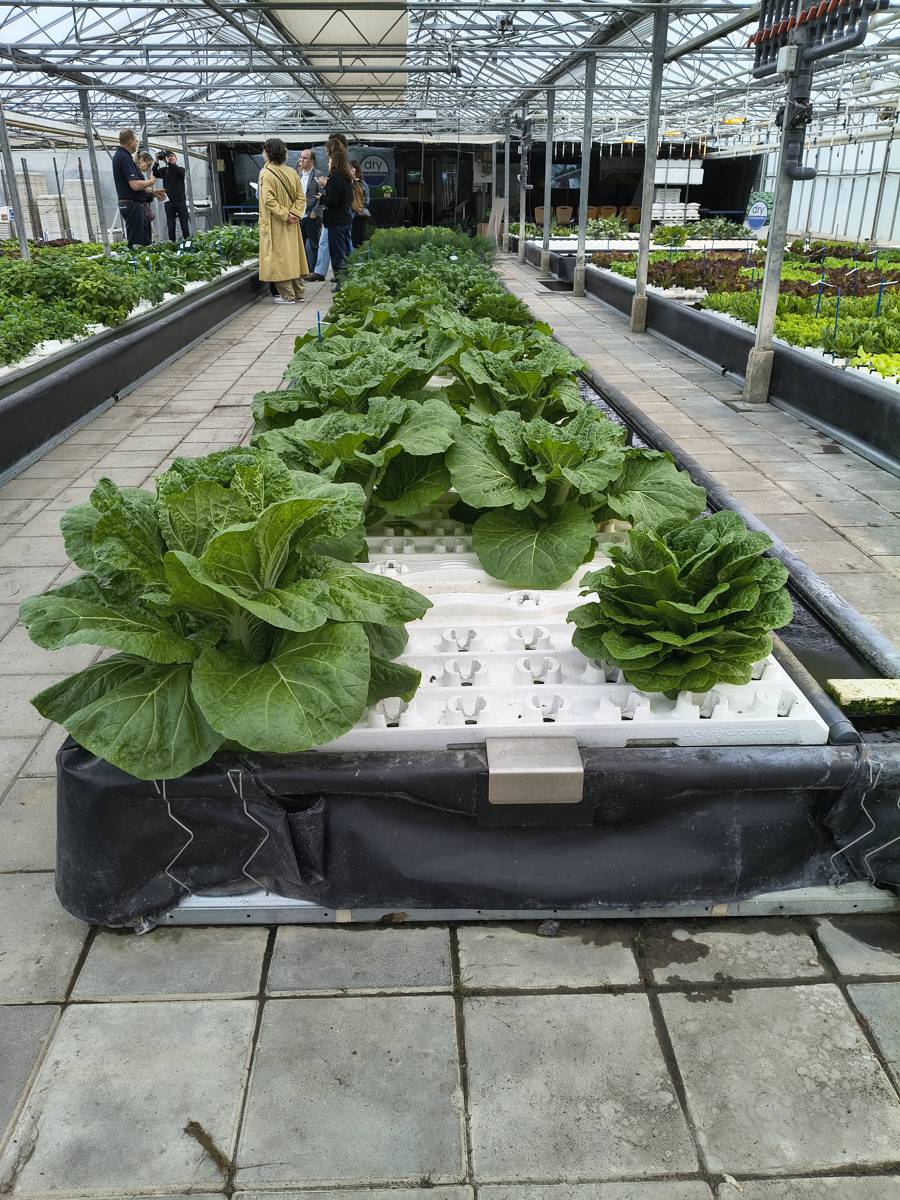
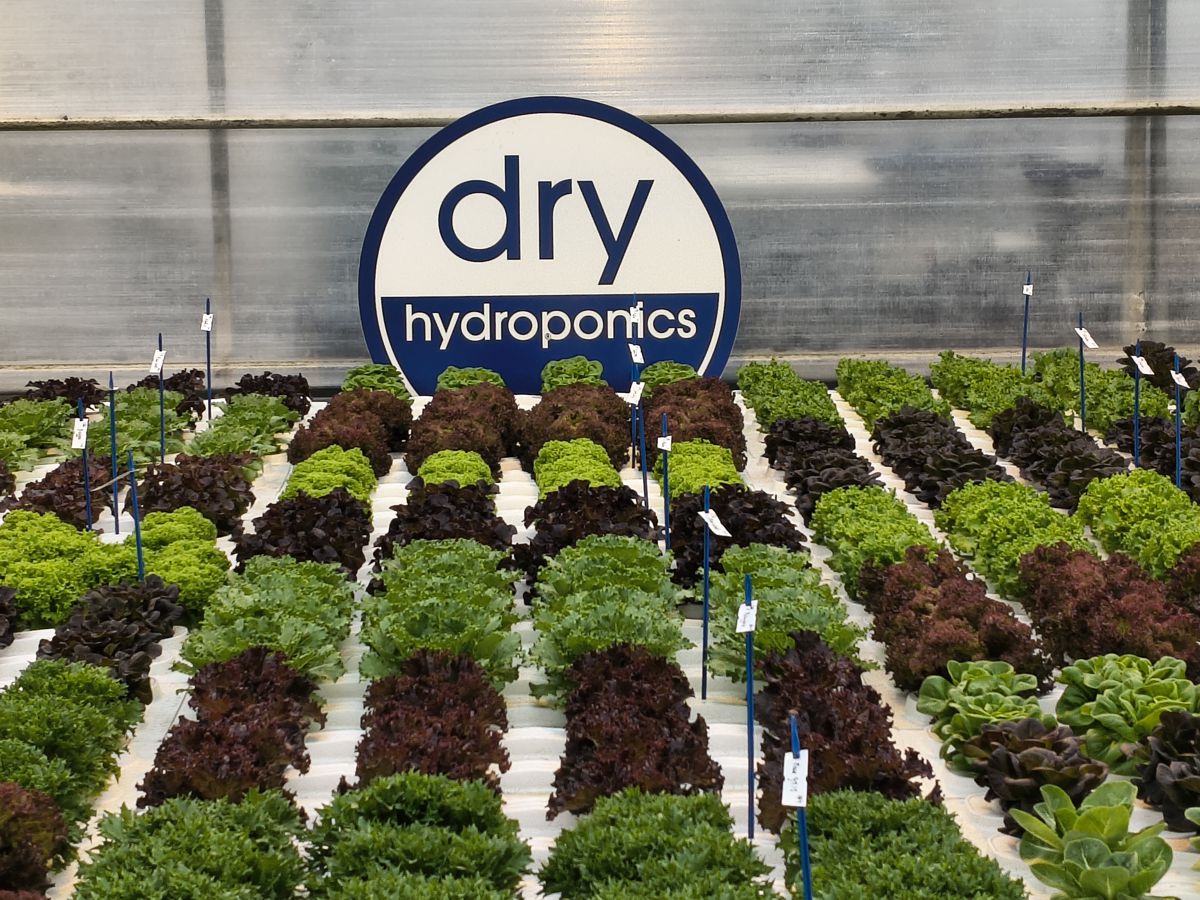
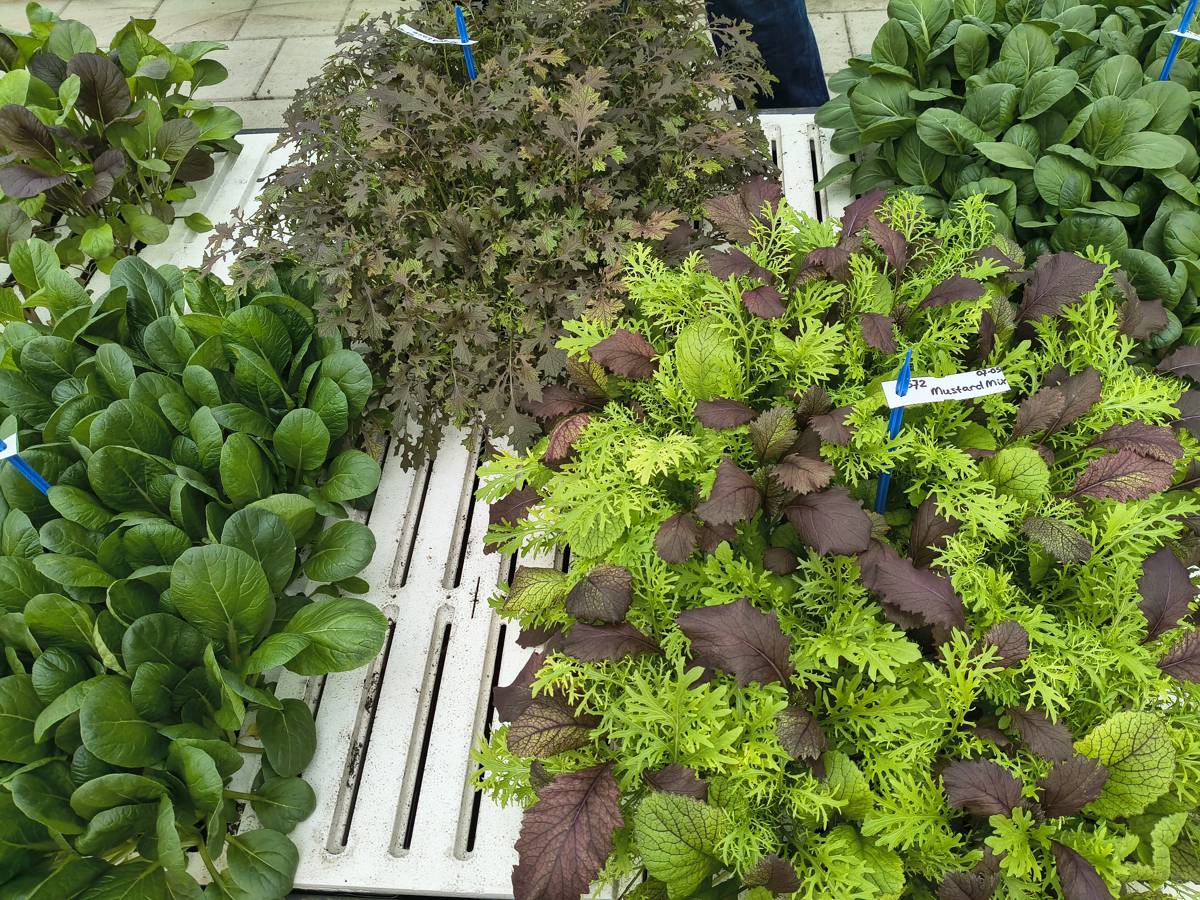
The company’s format is deliberately plain to describe. A standardised unit, built largely from prefabricated components on roughly half an acre, houses a Dry Hydroponics growing system alongside a shop that sells the harvest directly through retail, community-supported-agriculture memberships and last-mile delivery.
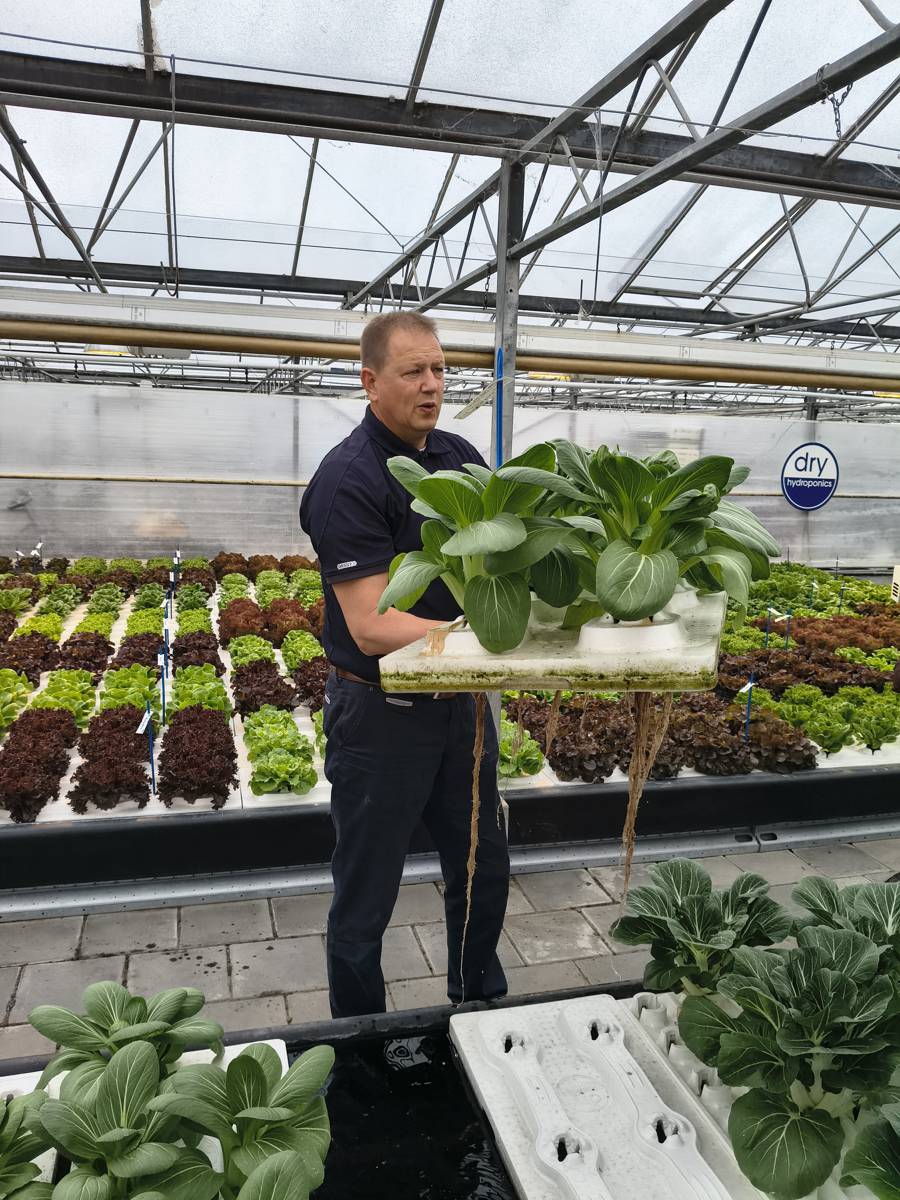
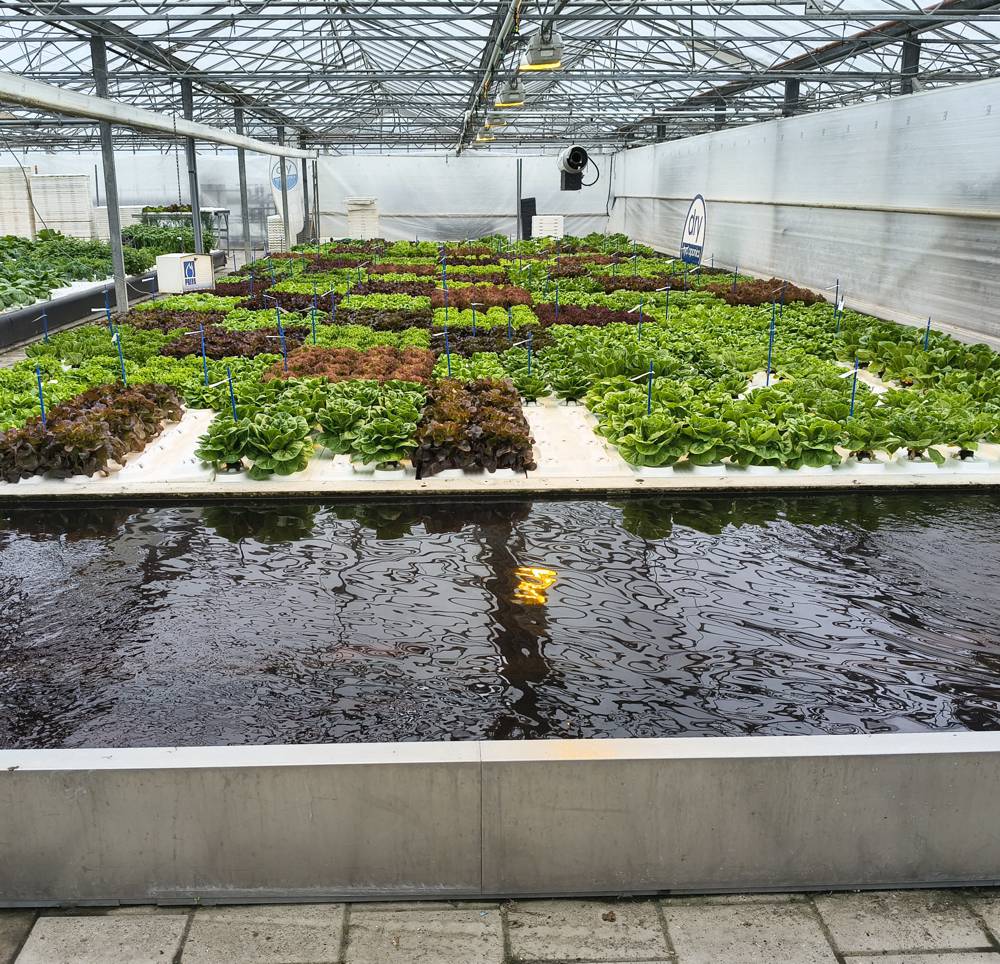
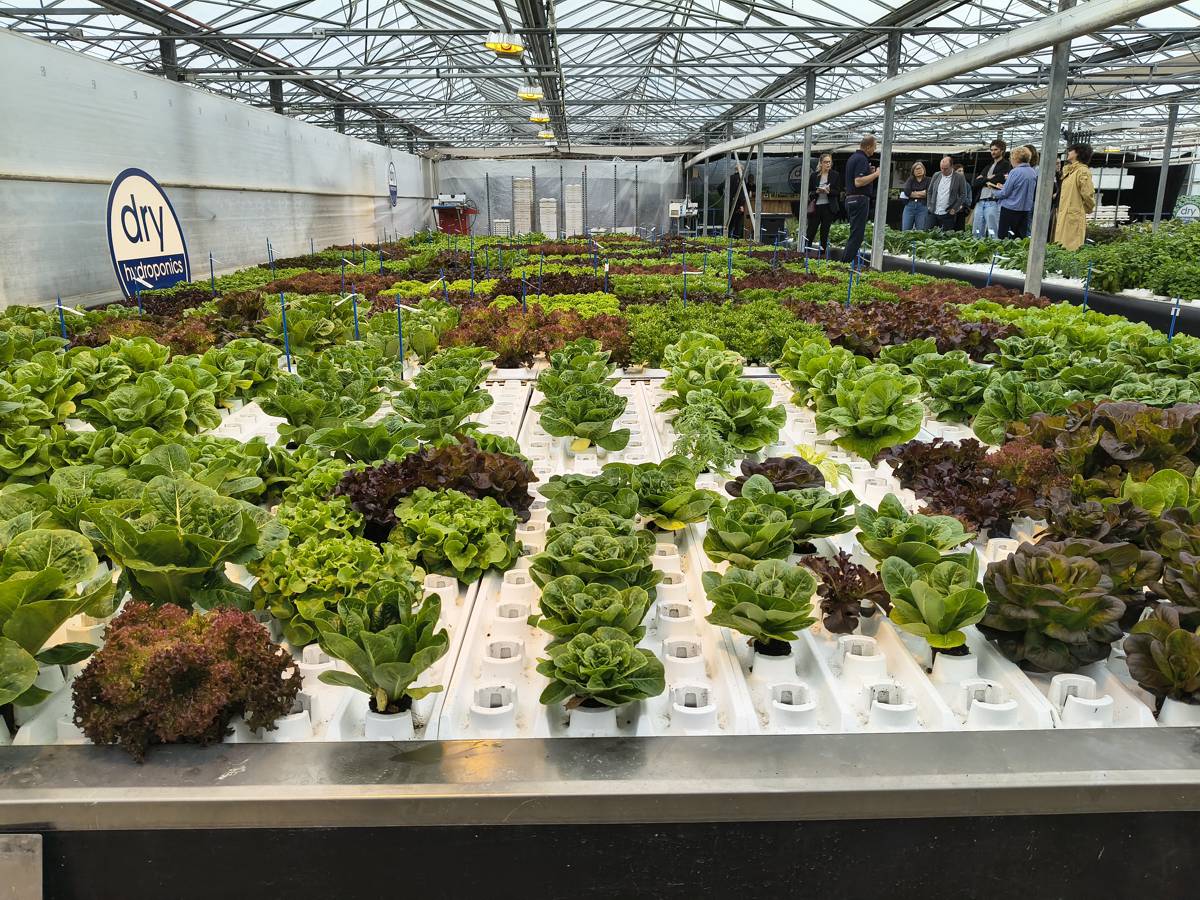
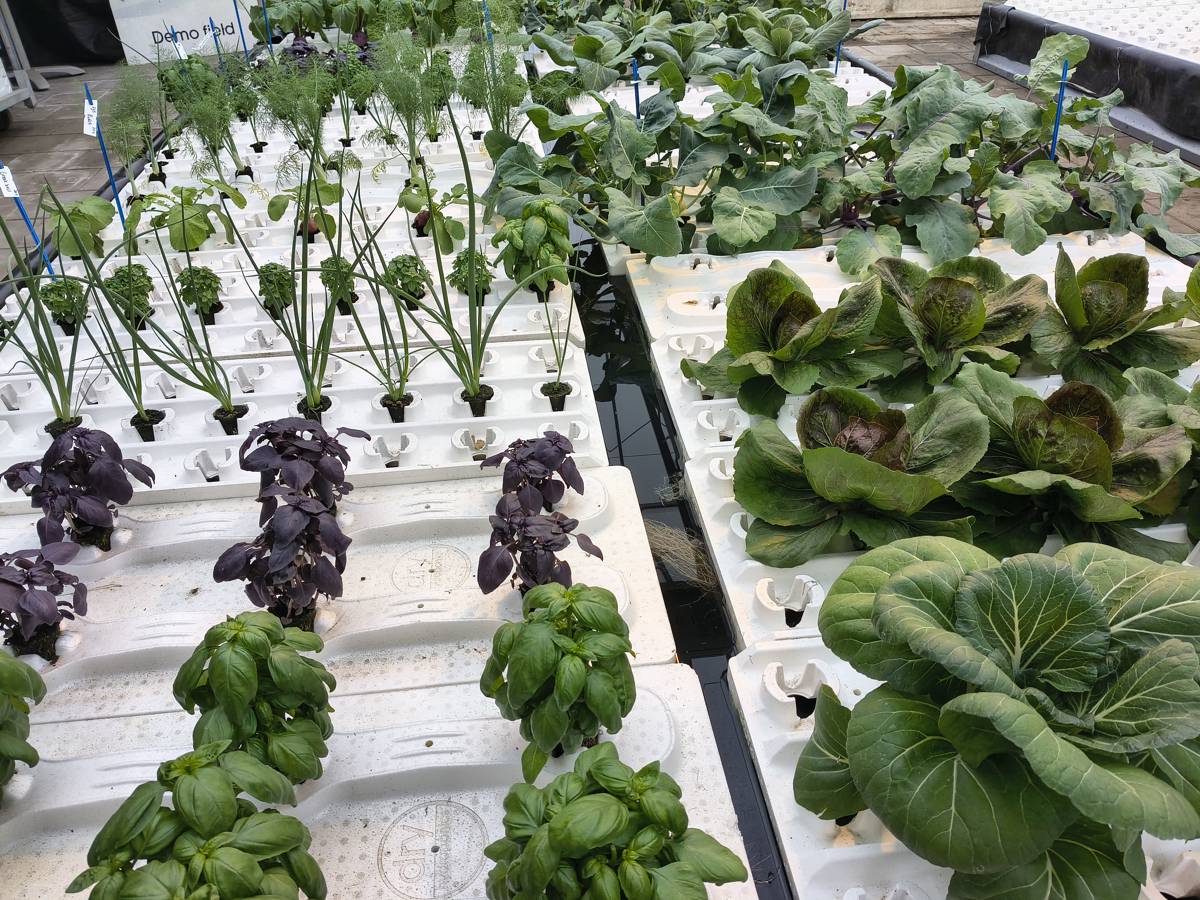
We were introduced to Dry Hydroponics by Chris Noordam. Developed in Schipluiden, their technology grows short-cycle crops such as lettuces, herbs and leafy greens in holders on floats above nutrient-rich water.
Standing inside the greenhouse, with rows of greens floating quietly in nutrient-rich channels metres from the retail concept, the distinction between agriculture and shopping suddenly felt far less fixed than most people assume.
Micha Bruinvels, an applied engineer at LocalDutch, then introduced their offshoot, and their ambition to package decades of growing experience into a software, retail and franchise model. The visible promise is freshness a customer can stand beside. The underlying bet is more ambitious, and it is more about the who, or what, runs those greenhouses.
From supply chain to supply neighbourhood
For generations, cities have kept the growing of food at arm’s length from the buying of it. The modern supermarket is built to hide production, where the shelf is at the end of a long and largely invisible supply chain that runs from a distant grower through distributors, warehouses and logistics networks before anything reaches the aisle. Much of that produce travels a long way to get there.
Fresh fruit and vegetables routinely cross thousands of kilometres and several handling stages between field and basket, and one quiet effect of that distance is that the seasons have all but disappeared from the shopping experience. A shopper in a northern city can buy much the same salad in February as in July, with little sense of where it grew or when it was cut.
LocalDutch is built on a deceptively simple proposition: that the supermarket could become the farm again. By placing the greenhouse and the shop under one roof, the model folds grower, distributor, warehouse and retailer back into a single local loop, one the customer can see rather than infer. The produce is harvested where it is sold, on a cycle measured in hours rather than the days or weeks a conventional supply chain imposes.
That collapse of distance is the part of the idea that reaches beyond horticulture. It shifts the question the venture is really asking, away from whether software can run a greenhouse and toward whether the relationship between a city and its food can be redrawn at neighbourhood scale, with production made visible, local and continuous rather than remote and concealed.
What makes the local loop repeatable
The company is candid about the problem it is solving. The Packer framed it in March 2026 as a modern paradox: demand for fresh local produce is high, while the specialist expertise needed to run a high-performance greenhouse is becoming scarce. LocalDutch’s answer is a proprietary climate-control system that integrates external weather data, internal sensors and validated growing routines to manage the indoor environment automatically. Co-founder Arne Spliet described a sector “where skilled greenhouse climate specialists are scarce” and a system that “automates much of that work.” That is not a feature of the product. It is the product.
Read in that light, the rest of the proposition falls into place. The hydroponic method, the modular shop, the franchise network and the food-desert mission all hang off a single attempt: to convert greenhouse growing from a craft practised by experts into an appliance that a non-specialist can operate at the end of a cloud subscription.
The retail surface stays human by design. As Catherine Wilsbach, a local impactor for the company, told The Packer: “Our format is compact and standardized, so we select sites based on demand and real estate fundamentals, not just a label.” The shopper meets a shopkeeper and a visible harvest. Behind the glass, the expertise that used to live in a person is being asked to live in code. The significance of that is not the lettuce, and not even the automation in itself. It is that reducing the model’s dependence on scarce specialist growers is what could let the local loop be repeated neighbourhood by neighbourhood, rather than remaining a single expert site that cannot be copied.
Why Westland is the ingredient that cannot be exported
Everything that makes Westland formidable can, in principle, be loaded onto a ship. Greenhouses, sensors, lighting, seeds, irrigation and software all travel. The accumulated instinct of a grower who has spent a working life learning when a crop is about to stress does not travel, and it cannot be hired into a Pennsylvania neighbourhood or a Caribbean island on demand. This is the constraint that has quietly defeated many attempts to plant advanced horticulture in new places: the hardware arrives, the expertise does not, and performance falls away once the founding specialists move on.
LocalDutch’s wager is that enough of that instinct can be captured in its climate system to make the gap survivable. If the wager holds, the company has something genuinely valuable, because it would have turned the scarcest and least portable input in modern horticulture into a transferable one. If it does not hold, the venture inherits the same failure mode as its predecessors, with shops that perform impressively while their original engineers are close at hand and drift afterwards. The standardisation, the prefabrication and the cloud steering are all in service of that single question of portability. The Westland inheritance on display is not the glass. It is the claim to have bottled the know-how.
The food-desert frame is also the funding mechanism
The beneficiaries in the company’s story are the residents of a low-access neighbourhood, the technical category the United States Department of Agriculture uses in place of the looser phrase food desert. The customer who signs the cheque is someone else: the operator, the franchisee, the community development corporation, the municipality or the grant programme.
The food-desert framing is the mechanism that brings those cheques into the room, and the record shows it working. The Good News Network reported that LocalDutch received a 40,000 dollar grant from Pennsylvania’s Agricultural Innovation Program in February 2025. A 2022 funding proposal filed in Monroe County, New York, describes a collaboration with LocalDutch to build a Dry Hydroponics system, with a total project cost of 2.5 million dollars and a one million dollar federal grant prioritised by Senator Charles Schumer.
The political access has tracked the commercial plan closely. When King Willem-Alexander and Queen Máxima made a working visit to Pennsylvania from 13 to 15 April 2026, the programme included a round table at which agriculture and horticulture were named among the economic areas discussed with Governor Josh Shapiro. LocalDutch has publicly acknowledged Pennsylvania’s Department of Community and Economic Development in connection with a reception tied to that visit.
The pattern is worth naming, and it is not a criticism: the social mission and the public money move together, and that alignment is a large part of what gives the model its political and financial momentum. It is also why the model can begin to scale ahead of the point at which its economics are fully settled.
The economics that will decide the scale
For the investors and policymakers who decide whether ventures like this grow, one practical test matters more than any vision statement: whether a single shop can sell enough produce, at a price its neighbourhood can pay, to cover its capital and its energy. This is the test that earlier waves of controlled-environment agriculture found hardest. Many well-funded indoor-farming ventures of the last decade struggled not because the idea was wrong but because the cost of artificial light made the arithmetic difficult at the prices their customers would bear. LocalDutch’s design reads as the considered response to that experience. Its greenhouse-first, sunlight-leaning approach is closer to the long-standing argument made by practitioners such as Manchester Bidwell, who hold that the failures lay in light-dependent economics rather than in local controlled growing itself.
That makes the model more grounded than the vertical-farming boom that preceded it, though it does not yet make it proven at scale. The ambition is measured in hundreds of shops, with the company’s own pages citing 500 outlets within either ten or fifteen years. Reaching that number depends on the same question every site must answer, which is whether the local loop can be run profitably at neighbourhood prices once any founding subsidy falls away.
The open question is how quickly operating economics converge as the model scales beyond demonstration sites.
Bonaire and the resilience case
The same architecture points toward a second market with a different logic. Small islands that import most of their food carry higher prices, thinner buffers and acute exposure to shipping shocks, and academic and regional sources describe Bonaire as heavily import-dependent in exactly this way. Local production does not need to replace imports to matter there. It only needs to remove the most fragile and perishable categories, the leafy greens and short-cycle vegetables that travel worst, from dependence on ships and warehouses. Those are precisely the crops the Dry Hydroponics system is built to grow.
The island’s energy trajectory strengthens the fit. Bonaire’s public planning, as reported by the European islands platform, targets 80 per cent clean electricity by 2030, with solar, wind and storage central to the roadmap, which suits a greenhouse model designed around sunlight and managed energy rather than constant artificial light.
There is regional precedent for the approach. The Food and Agriculture Organization’s work in Jamaica deployed solar-powered hydroponics, rainwater harvesting and recirculating systems specifically to improve climate resilience and food security.
The public LocalDutch materials reviewed for this piece refer to the Caribbean in general terms rather than naming a Bonaire site, so the island stands here as the clearest illustration of the resilience case rather than a confirmed project. Where Pennsylvania tests social relevance in a large developed market, the island case tests strategic resilience where land, water and logistics are tightest.
The bigger question
The most useful way to read LocalDutch is not as a better supermarket or a novel piece of farm technology, but as an experiment in the relationship between a city and its food. For most of the modern era that relationship has been built on distance and concealment, with production pushed far from the point of sale and hidden behind a long supply chain. LocalDutch proposes the opposite arrangement, in which growing is brought back into the neighbourhood and made visible, local and continuous.
The Dutch greenhouse expertise on display in Westland, and the automation that aims to make it portable, are the means. The end is a shorter and more legible loop between where food is grown and where it is bought.
Whether that end is reached is still an open and reportable story, and the questions that decide it are practical rather than philosophical: how much of a grower’s judgement the climate system genuinely carries today, how close a single shop can come to covering its own costs, and how the model behaves as it grows from a handful of sites into a network. None of those questions diminishes the ambition. They are simply the terms on which it will be tested. If LocalDutch can answer them, it will have done more than attach farms to shops. It will have shown that a city can grow a visible part of its own daily food close to where people live.