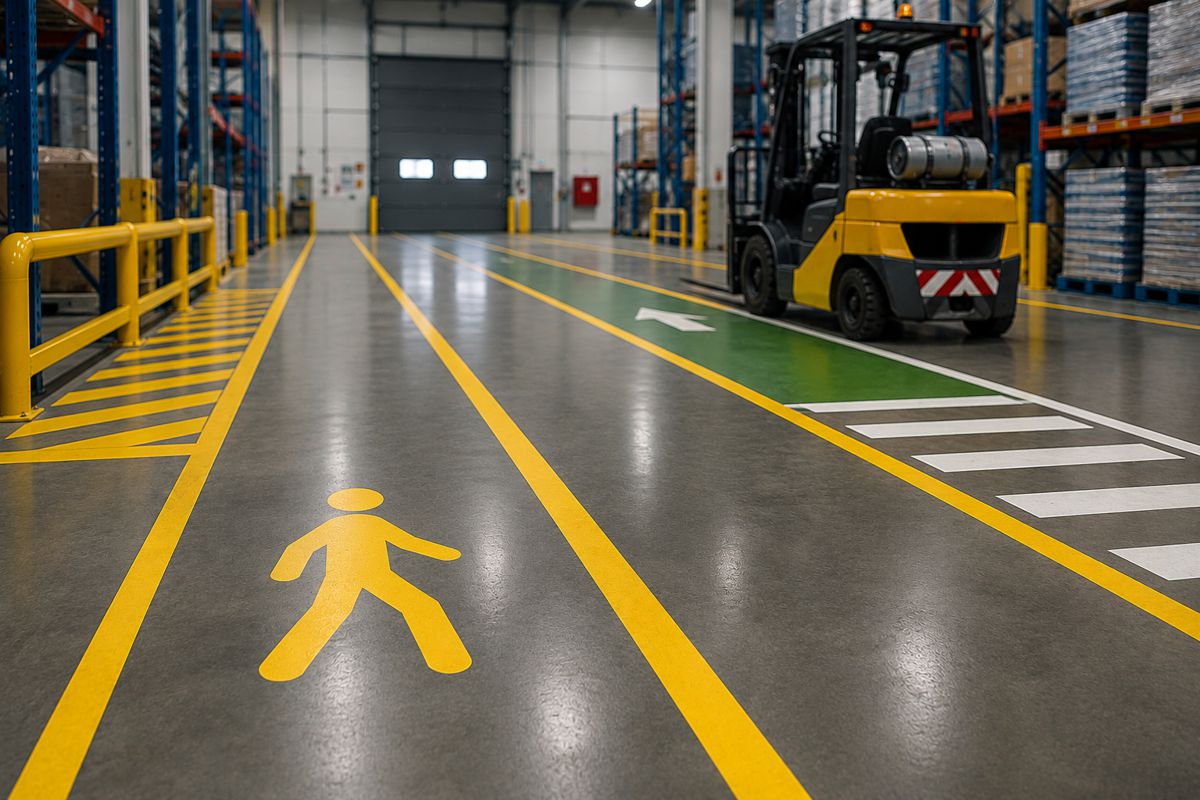
The Importance of Repairing Floor Markings for Everyone’s Safety
Floor markings are one of the quietest safety systems in any workplace. A painted walkway, a yellow forklift lane or a row of hatched lines in a car park asks nothing of the people who rely on it, yet it shapes how they move every minute of the working day.
The difficulty is that markings wear out. Tyres, foot traffic, cleaning chemicals and weather strip the paint back layer by layer until a confident line becomes a faint shadow. Repairing those markings before they fail is a small task that protects pedestrians, drivers and visitors alike.
Briefing
- Worn or faded markings can be more hazardous than no markings at all, because they introduce doubt exactly where pedestrians and vehicles share space.
- Regulation 17 of the Workplace (Health, Safety and Welfare) Regulations 1992 requires traffic routes that allow people and vehicles to circulate safely, and the Health and Safety Executive expects those routes to be maintained.
- Industry guidance points to refreshing a marking once roughly a quarter of its surface is obscured, peeling or faded.
- The durability of any repair depends on surface preparation, as new paint applied over a failing coating tends to flake away within months.
- Repairs are most effective as a scheduled maintenance task, inspected quarterly and after winter, rather than a reaction to a near miss.
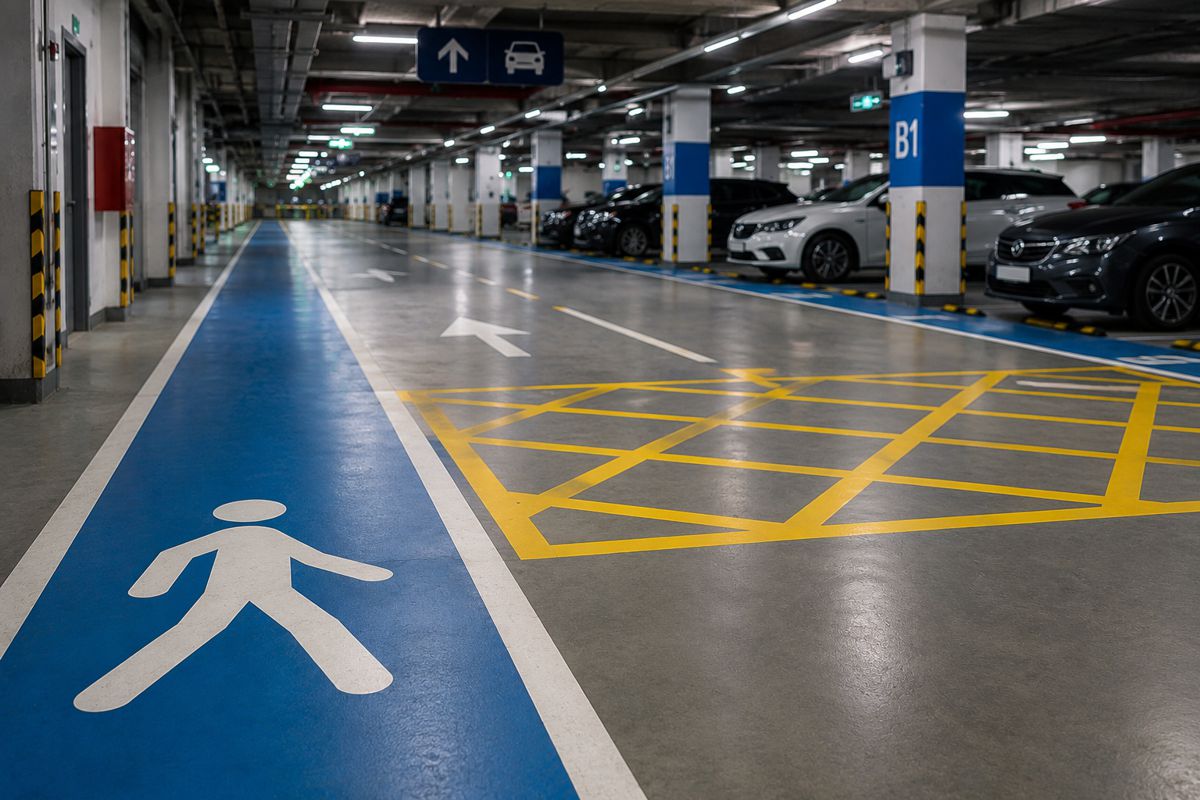
Why Faded Markings Become A Hazard
A clear line communicates instantly. A faded one forces a decision. When a forklift driver cannot tell where a pedestrian lane ends, or a visitor cannot read which way a one-way aisle runs, both slow down, second-guess and occasionally guess wrong. Safety specialists describe faded markings as worse than none, because a blank floor at least signals that no guidance exists, whereas a half-visible line implies an instruction that can no longer be followed. In fast-moving environments such as distribution centres and loading yards, that ambiguity is where near misses cluster.
Visibility falls fastest in the conditions that matter most. Early shifts, dusk, night working and power interruptions all reduce the contrast that a worn marking depends on. Markings that looked acceptable under full lighting can disappear when a site switches to emergency power or when winter light arrives, which is one reason routine repair matters more than a single repaint.
The Legal Duty Behind Well Maintained Markings
Workplace transport remains one of the most serious risk areas in British industry, and being struck by a vehicle is among the leading causes of workplace death. The regulatory expectation is set out in Regulation 17 of the Workplace (Health, Safety and Welfare) Regulations 1992, which requires every workplace to be organised so that pedestrians and vehicles can move without endangering one another, with traffic routes that are suitable and sufficient for the people and vehicles using them.
The Health and Safety Executive develops this in its guidance HSG136, A Guide To Workplace Transport Safety, which frames control around a safe site, a safe vehicle and a safe driver. The safe-site element covers the layout of traffic routes and, importantly, their maintenance. Markings are not a one-off installation under this approach; they are part of the upkeep that keeps a site compliant.
Not every line on a floor is mandated by law, but where markings form part of a site’s risk controls, allowing them to fade undermines the very arrangements an employer relies on to demonstrate safe operation. Enforcement action over inadequate pedestrian segregation has produced six-figure fines, a reminder that maintenance costs far less than the alternative.
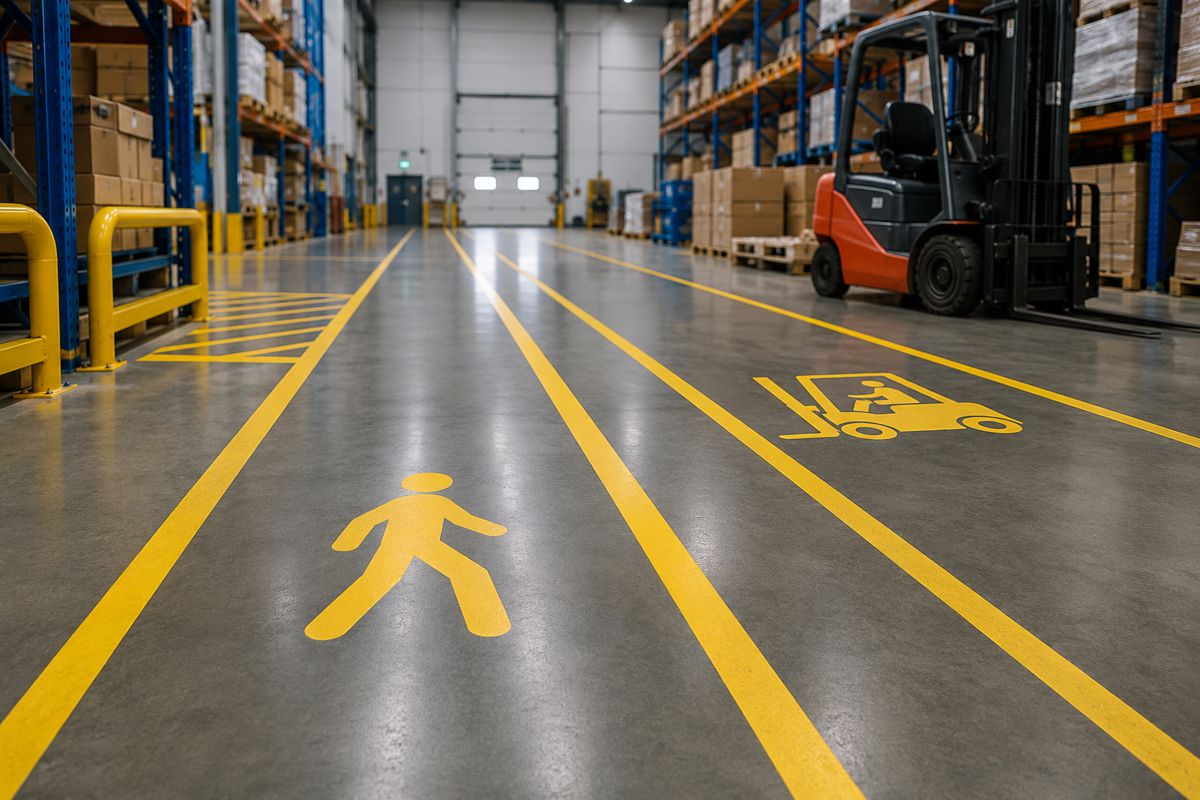
Where Worn Markings Cause The Most Harm
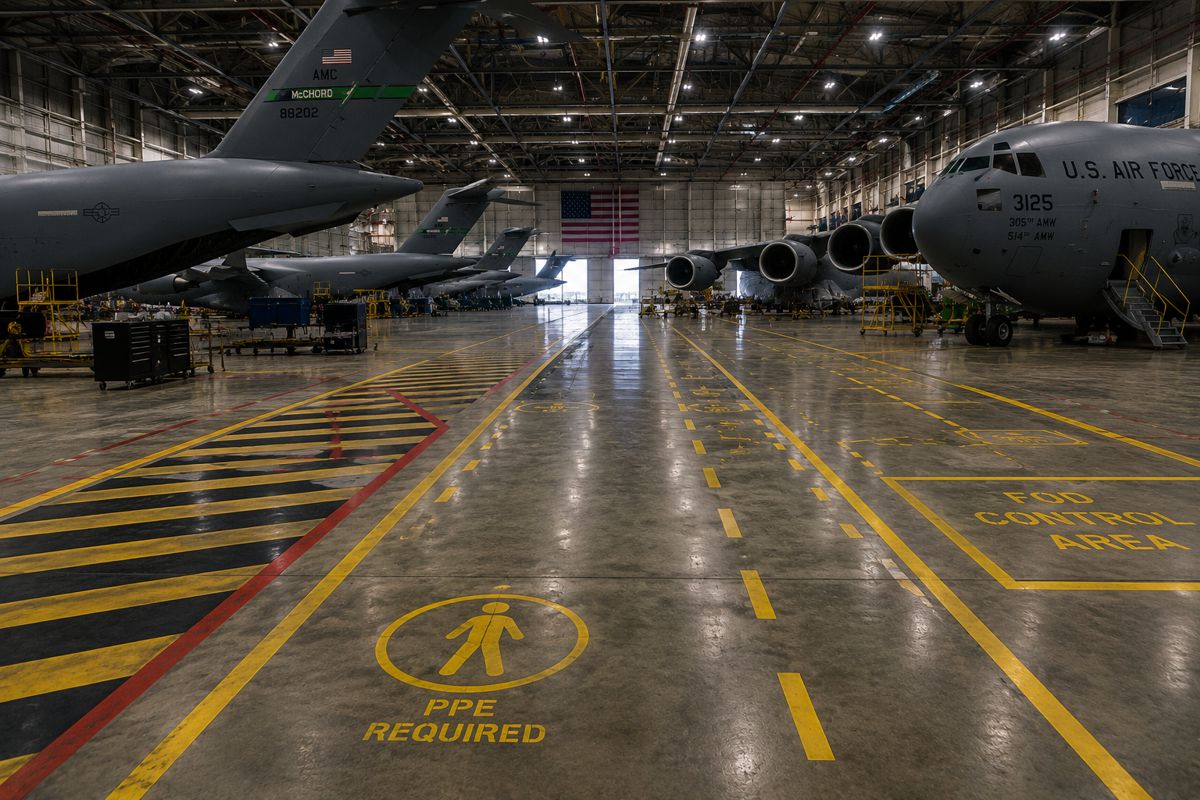
The highest stakes sit wherever people and vehicles meet. Pedestrian walkways and forklift lanes, marked crossing points, give-way lines and the boundaries of vehicle-only zones all depend on legibility to do their job. When these blur together, the separation that prevents collisions weakens.
Car parks carry their own risks. Faded bay lines invite poor parking that narrows circulation routes, worn directional arrows encourage wrong-way movement, and indistinct hatching around accessible bays and pedestrian routes erodes protection for the people who need it most. Disabled bay markings and crossing points lose their meaning once the paint thins, with consequences for both safety and equality of access.
Hazard and emergency markings are equally unforgiving. Lines that keep fire routes, extinguishers and electrical panels clear, and the black and yellow striping that flags edges, ramps and level changes, all rely on strong contrast to prompt caution in time. A faded hazard stripe is a warning that arrives too late.
Spotting Markings That Need Attention
Most failing markings announce themselves well before an incident. Common warning signs include lines that drop below clear visibility under normal lighting, paint that has begun to chip or peel, gouges that expose bare concrete, and colours that blur or bleed between zones.
Ghost lines, the faint outlines of an old layout left in place under a new one, are a particular hazard because they pull attention towards routes that no longer exist. A practical rule of thumb used across the sector is to refresh a marking once around a quarter of it is obscured, peeling or faded.
Staff feedback is a useful early indicator too. When operators report uncertainty about where a lane runs or where they may walk, the markings have already stopped working, even if some colour remains. Facilities managers weighing up how to respond will find more than one solution for floor marking and surface repair available, from durable coatings to industrial tapes suited to different traffic loads.
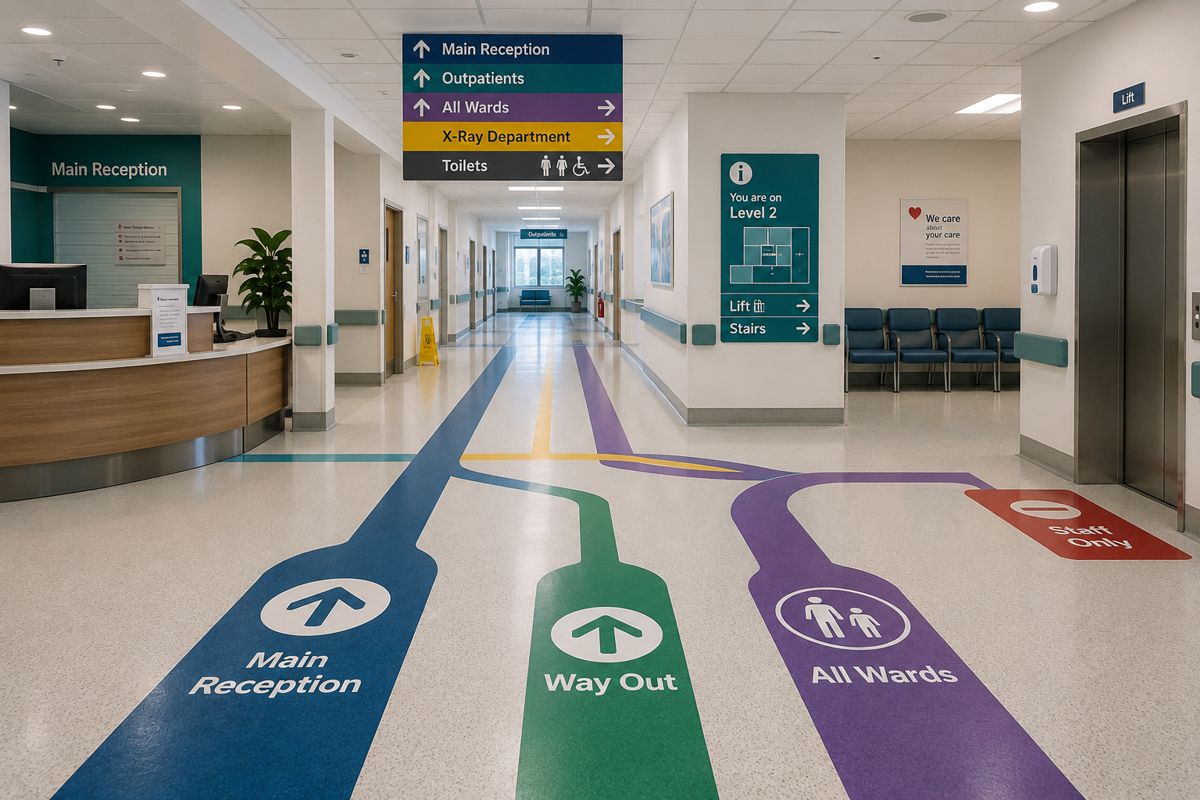
Getting The Repair Right
A repair only lasts if the surface is prepared properly. Painting fresh lines over chipped or peeling coatings is one of the most common mistakes, because the new layer bonds to failing material and lifts away quickly. Effective work usually involves stripping back the old marking, cleaning and degreasing the surface, and, where an old layout is being replaced, removing ghost lines so the new scheme reads cleanly.
Material choice shapes the outcome. Epoxy and similar coatings form a strong bond with concrete and stand up well to heavy wheeled traffic, though they need curing time that can take a working surface out of use for several days. Industrial floor tape needs far less preparation and can be replaced section by section, which suits busy sites that cannot close. Each has a place, and the right answer depends on traffic volume, surface condition and how often a layout is likely to change.
Building Repair Into A Maintenance Routine
The most reliable approach treats marking repair as routine rather than reactive. A quick visual inspection each quarter, a fuller review after winter or major cleaning cycles, and a check after any layout change will catch deterioration early, when fixing a single worn section is straightforward. Folding these checks into existing safety walks and 5S audits keeps the cost low and the floor consistently legible.
Markings also work as part of a wider system. They support, rather than replace, physical barriers, signage, lighting, traffic management and trained supervision. Kept fresh, they make all of those arrangements visible at a glance, which is precisely the function they are meant to serve.
A Small Job That Protects Everyone
Repairing floor markings rarely features on a list of major infrastructure priorities, yet few interventions deliver as much safety for as little outlay. A maintained line keeps a pedestrian on a safe path, tells a driver where to stop, and holds a fire route clear, all without anyone having to think about it.
Letting those lines fade transfers risk onto the people least able to absorb it, the worker on foot and the visitor who does not know the site. A modest, scheduled programme of inspection and repair keeps the floor doing its quiet work, and keeps everyone who crosses it safer for it.