Herrenknecht TBM Completes Critical SuedLink Tunnel Beneath the Elbe
The completion of tunnelling beneath the River Elbe has removed one of the most technically demanding obstacles facing Germany’s SuedLink electricity transmission programme. On 22 June 2026, the tunnel boring machine Elsa reached its reception shaft at Wischhafen, completing a 5.2-kilometre underground drive from Wewelsfleth in less than 18 months.
The breakthrough matters well beyond the boundaries of the tunnelling sector. SuedLink is designed to carry up to 4 gigawatts of electricity from the wind-producing regions of northern Germany to industrial and population centres in Bavaria and Baden-Württemberg. Its progress therefore affects renewable generation, industrial energy security, regional grid stability and the construction market supporting Germany’s wider energy transition.
ElbX also demonstrates the increasingly close relationship between civil engineering and power infrastructure. Delivering the crossing required a project-specific Mixshield TBM, high-capacity slurry treatment, tightly controlled precast segment production and permanent provision for cable inspection and repair. It is an integrated infrastructure asset rather than simply an underground passage.
Briefing
- TBM Elsa completed the 5.2-kilometre ElbX tunnel drive on 22 June 2026, having started tunnelling in February 2025.
- The tunnel will accommodate six 525-kilovolt direct-current cables forming part of the 4-gigawatt SuedLink transmission corridor.
- A 4.9-metre-diameter Mixshield was engineered to negotiate clay, peat, silt, sand, gravel, stones and boulders under water pressure of up to 3.8 bar.
- Approximately 4,000 concrete tunnel rings, comprising around 24,000 individual segments, were installed during construction.
- Following the breakthrough, work moves into tunnel completion, cable installation, safety systems, controls, monitoring equipment and operational fit-out.
Removing a Critical Constraint from SuedLink
SuedLink is one of Germany’s most consequential electricity infrastructure investments. Extending for approximately 700 kilometres, it will connect renewable energy resources in Schleswig-Holstein with electricity demand in southern Germany. The wider programme is being delivered by transmission system operators TenneT Germany and TransnetBW, with the Elbe crossing falling within TenneT’s area of responsibility.
High-voltage direct current technology is particularly suited to transferring large volumes of electricity over long distances while providing greater control over power flows. SuedLink is expected to enter operation in 2028, according to Germany’s Federal Network Agency, which describes the corridor as a route for offshore wind power from the North Sea to the Main and Neckar regions.
The Elbe represented a significant physical and programme interface. Conventional surface construction across the river was not a viable proposition, while the ground beneath it presented varying geology, groundwater exposure and demanding pressure conditions. Completing the underground drive gives the wider cable programme a defined and protected route across that obstacle, allowing attention to shift towards installation and commissioning.
The milestone does not mean that the ElbX project itself is complete. PORR, which was commissioned by TenneT to construct the crossing, has confirmed that internal construction and technical fit-out will follow the breakthrough. The company’s published project schedule runs to August 2027, leaving a substantial programme involving cable infrastructure, operational buildings and tunnel systems.
Engineering a Mixshield for Confined Conditions
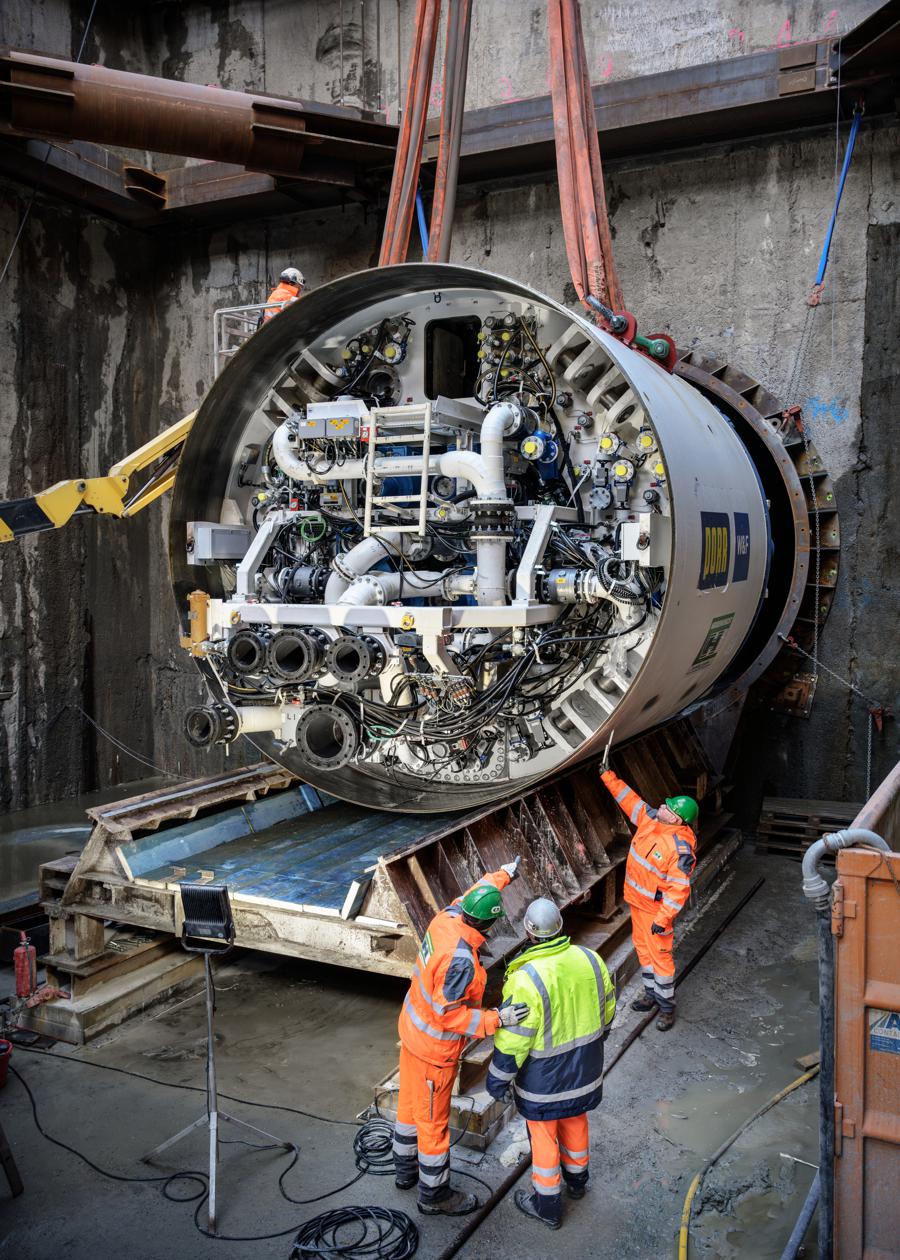
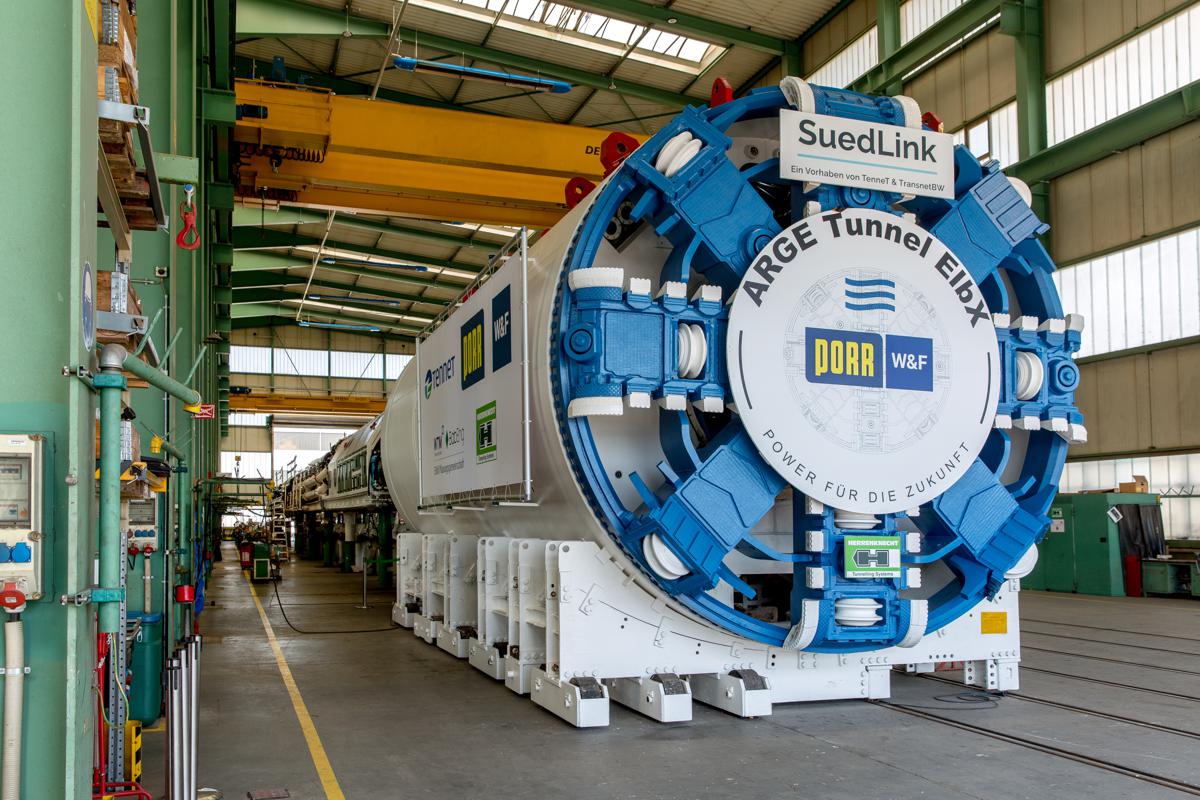
ARGE Tunnel ElbX, the joint venture between PORR and Wayss & Freytag Ingenieurbau, used a Herrenknecht Mixshield specifically configured for the crossing. Elsa measured 190 metres in length, weighed approximately 700 tonnes and had an excavation diameter of 4.9 metres. The machine simultaneously excavated the ground and installed prefabricated concrete segments to form a tunnel with an internal diameter of four metres.
That relatively compact diameter created an important engineering constraint. A Mixshield must accommodate excavation, spoil transport, slurry circulation, electrical and hydraulic equipment, ventilation, segment handling and safe access for the crew. At ElbX, supporting systems were distributed over 12 gantries behind the shield so that the necessary capabilities could be incorporated within the restricted cross-section.
The route also required the TBM to negotiate curves, gradients and changes in elevation. A navigation system supplied by Herrenknecht subsidiary VMT provided positional guidance throughout the drive. In a tunnel intended to receive high-voltage cables and permanent maintenance infrastructure, alignment accuracy influences more than the immediate success of excavation. It affects segment installation, fit-out tolerances and the geometry available for the operational railway and cable systems.
PORR’s project information indicates that the tunnel passes approximately 20 metres beneath the riverbed, with the overall works descending to around 40 metres below ground level in places. Launch and reception shafts approximately 25 metres deep required watertight construction, underwater excavation and concrete base slabs before tunnelling could begin.
Managing Mixed Geology and Water Pressure
Geological variability was one of the principal construction risks. The alignment passed through clay, silt, peat, sand and gravel, together with stones and boulders. Each material behaves differently at the excavation face, while transitions between ground types can introduce instability, tool wear and changes in slurry performance.
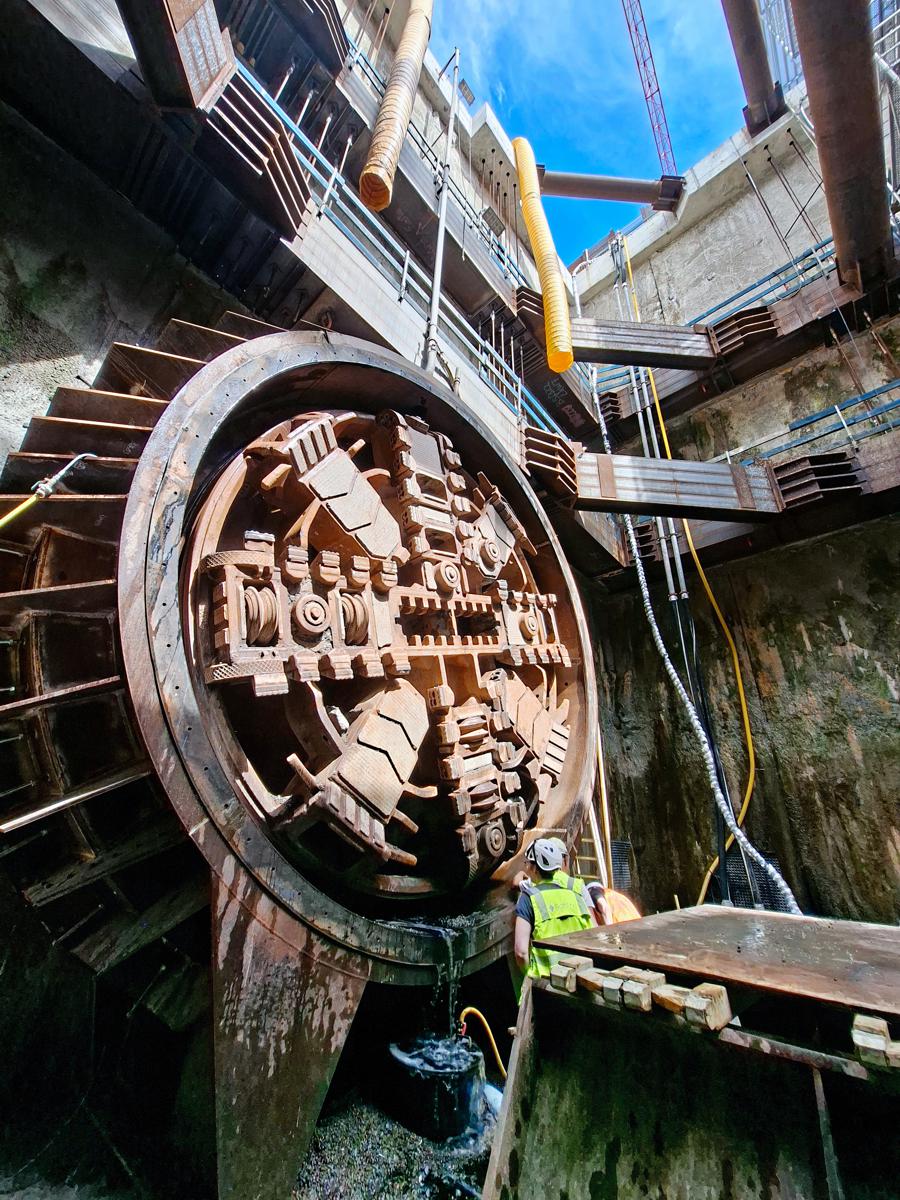
Sticky Lauenburg clay presented a particular threat because excavated material could accumulate around the cutterhead and its tools. Herrenknecht equipped Elsa with a centre-flushing system capable of delivering 500 cubic metres per hour. The machine’s complete slurry circulation system handled approximately 1,200 cubic metres of bentonite slurry every hour.
Herrenknecht project manager Johannes Faißt explained the design response: “The tunnelling route beneath the Elbe River features highly variable geology consisting of clay, silt, peat, sand, gravel, as well as stones and boulders. To cope with the extremely sticky Lauenburg clay on this geologically very heterogeneous drilling section, the TBM is equipped with a powerful center flushing system at the cutterhead with a capacity of 500 cubic meters per hour.”
Groundwater created a second, simultaneous challenge. The Mixshield was engineered to withstand pressures of up to 3.8 bar, encountered beneath the river, using a multilayer sealing arrangement. Maintaining pressure at the face while controlling the slurry circuit was essential to protect the excavation, prevent uncontrolled water ingress and sustain progress through permeable ground.
Slurry Treatment Became a Production System
The performance of a slurry TBM depends on infrastructure extending far beyond the machine itself. Excavated material must be separated from the carrier fluid so that the bentonite slurry can be conditioned and returned to the tunnel. Any loss of capacity within that cycle can restrict excavation, increase material consumption and create additional waste-handling costs.
Herrenknecht Separations supplied a project-specific separation plant incorporating chamber filter presses for fine-solid dewatering. The presses extracted water from even relatively fine material, reducing the volume requiring transport and disposal. This represents an important commercial consideration on a long tunnel drive because spoil characteristics, haulage requirements and disposal routes can materially affect productivity and cost.
“The filter presses ensured efficient dewatering of even the finest particles, thereby reducing disposal effort and costs,” said Gino Vogt, Head of Herrenknecht Separations. The installation illustrates how separation capacity should be treated as part of the excavation process rather than an auxiliary site function.
Two water treatment plants were also installed at the launch and reception shafts. These supplied process water and treated it before discharge into the Elbe under the applicable environmental requirements. Integrating excavation, separation, water treatment and regulatory compliance allowed tunnelling to continue while controlling the site’s material and water streams.
Precision Manufacturing at Infrastructure Scale
The permanent lining comprises approximately 4,000 rings, each 1.3 metres wide and assembled from six precast elements. Producing around 24,000 individual segments with repeatable geometry required close control of formwork, surveying and component handling. Herrenknecht Formwork supplied the moulds, 3D measurement services and equipment used to demould, rotate and transport the segments.
Dimensional accuracy is critical in any segmentally lined tunnel. Small variations can accumulate along the route, affect gasket compression, complicate ring building and reduce the quality of the finished structure. For ElbX, those requirements were reinforced by the need to create a reliable cable environment beneath a major river.
Average production reached 233 completed rings per month, equivalent to around 303 metres of tunnel. Sustaining that rate through changing ground conditions indicates that excavation, segment supply, slurry processing, logistics and maintenance were working as a coordinated production system.
The commercial lesson is relevant to other complex underground schemes. TBM performance cannot be judged solely by maximum daily advance. Predictable delivery depends on the complete chain of supporting activities, including component manufacturing, spoil treatment, process water, survey control, consumables and access to replacement parts.
Building for Operation and Maintenance
Once fitted out, the tunnel will carry six 525-kilovolt direct-current cables. It will also contain safety, control and monitoring equipment, associated building systems and rails for specialised tunnel vehicles. The rail provision will allow maintenance personnel and equipment to reach the cables for inspection or repair throughout the asset’s operating life.
This approach distinguishes a walkable cable tunnel from direct burial or trenchless installation of an individual conduit. It requires greater initial civil engineering investment, but it provides controlled access to strategically important cables beneath an obstacle where disruptive future excavation would be difficult or impossible.
The permanent systems also create interfaces between tunnelling, railway-style access, electrical installation, fire safety, communications and asset monitoring. Coordinating those disciplines during fit-out will be central to the next phase of the project. The engineering challenge is moving from a completed underground structure to an operational part of a high-capacity transmission network.
For infrastructure owners, lifecycle accessibility can become a decisive procurement consideration where transmission capacity is concentrated into a limited number of critical routes. The consequences of a fault beneath a navigable river make inspection capability, safe access and repair logistics strategically important.
A Growing Market for Grid-Related Underground Construction
ElbX belongs to a wider international market for underground energy infrastructure. Electricity corridors increasingly have to cross rivers, transport routes, densely developed urban areas and environmentally sensitive landscapes. Similar cable tunnels are already being constructed in cities including London and Berlin, where surface disruption and competing land uses make underground engineering necessary.
Herrenknecht estimates that Germany’s grid expansion plans alone could generate approximately 4,500 crossings. These will not all require large TBMs. Depending on distance, geology, diameter and operational requirements, projects may use microtunnelling, horizontal directional drilling, protective casing systems, pipe jacking or larger segmentally lined tunnels.
The opportunity consequently extends across the construction supply chain. Specialist contractors, drilling and tunnelling equipment manufacturers, precast producers, surveyors, geotechnical consultants, water-treatment companies and digital monitoring providers are all positioned to contribute. Equipment configuration and construction methodology will need to be selected against the risk profile of each crossing rather than applied as a standard package.
ElbX provides a useful reference because it combines difficult ground, high groundwater pressure, restricted machine dimensions and a strategically important end use. Its progress supports the view that grid expansion is becoming a significant civil engineering market in its own right, with delivery dependent on capabilities traditionally associated with transport and utility tunnelling.
From Tunnel Breakthrough to Energy Infrastructure
The completion of the drive is a visible achievement, but the project’s value will ultimately be measured by its contribution to an operational electricity corridor. Tunnel finishing, cable installation, building works, safety systems, controls, testing and commissioning must still be completed before power can pass beneath the river.
Those subsequent stages will require careful management of interfaces between the civil structure and electrical equipment. Cable handling forces, installation tolerances, thermal behaviour, access arrangements and emergency procedures all need to be accommodated within the four-metre internal diameter.
For the construction industry, the wider importance of ElbX lies in the repeatability of its engineering principles. Tailored excavation equipment, closed-loop material management, accurate segment production and provision for long-term access can help infrastructure owners negotiate difficult crossings while protecting project schedules.
Germany’s electricity transition depends on generation and transmission advancing together. Wind farms in the north cannot fully serve industrial consumers in the south without sufficient network capacity between them. By completing the most uncertain phase of the Elbe crossing, the project team has moved one of SuedLink’s principal structures from subsurface risk towards operational delivery.
Key Industry Questions
- Why is the ElbX tunnel important to Germany’s energy system? ElbX provides a protected route for SuedLink’s high-voltage direct-current cables beneath the River Elbe. SuedLink is intended to transfer up to 4 gigawatts of electricity from renewable generation regions in northern Germany to major consumption centres in the south. Without a secure river crossing, the continuity and timetable of the wider transmission corridor would be exposed to a major physical constraint. The tunnel also allows the cables to remain accessible for maintenance and repairs, which is particularly important where several high-capacity circuits pass through a single strategically significant location.
- Why was a Mixshield TBM selected for the crossing? Mixshield machines are suited to tunnelling below groundwater in variable and permeable ground because slurry pressure can be used to support the excavation face. At ElbX, the ground ranged from sticky clay and peat to sand, gravel, stones and boulders. Water pressures reached up to 3.8 bar. The machine therefore needed to balance face support, excavation and material transport while remaining sealed against groundwater. Its cutterhead flushing and high-capacity slurry circuit were specifically configured to reduce clogging in the Lauenburg clay and maintain controlled progress through changing geological conditions.
- What happens after the TBM breakthrough? Breakthrough concludes the principal excavation phase, but it does not complete the crossing. The remaining programme includes finishing the tunnel, removing or dismantling construction equipment, installing cable supports and six high-voltage cables, and completing operational buildings at the shafts. Safety, ventilation, monitoring, communications and control systems must also be installed and tested. Rails for maintenance vehicles will provide permanent access along the tunnel. These activities involve significant coordination between civil, electrical, mechanical and operational teams before the tunnel can become part of the functioning SuedLink network.
- Why are water and slurry treatment commercially important? A slurry TBM cannot operate efficiently unless excavated solids are continuously removed from the carrier fluid. Effective separation allows conditioned bentonite slurry to return to the excavation face while reducing the water content and volume of waste material. At ElbX, chamber filter presses were used to dewater fine particles that might otherwise have increased haulage and disposal requirements. Water treatment plants also supported the process-water supply and compliant discharge. These systems influence advance rates, environmental performance, material consumption, site logistics and disposal costs, making them a core part of tunnelling productivity.
- Why does precast segment accuracy matter in a cable tunnel? Segmental lining must resist ground and water pressure while maintaining the designed tunnel geometry. Each ElbX ring consists of six precast elements, and approximately 4,000 rings were required. Inaccurate components can affect ring assembly, gasket performance, alignment and the durability of the completed structure. The internal geometry also has to accommodate cables, rails, services and maintenance access. Precision formwork, 3D surveying and controlled handling therefore protect both construction productivity and the tunnel’s long-term operational suitability.
- Could the cables have been buried directly beneath the river? Direct burial and trenchless conduit installation can be appropriate for shorter or less complex crossings. ElbX, however, combines a 5.2-kilometre route, multiple high-capacity cables, difficult geology and a requirement for long-term access. A walkable tunnel provides space for six cables, safety and monitoring systems, and maintenance vehicles. It also allows inspection or repair without repeating a major river crossing operation. The correct method depends on geology, capacity, route length, environmental constraints, fault consequences and the owner’s lifecycle maintenance strategy.
- What opportunities does grid expansion create for construction companies? Large transmission programmes generate demand for far more than cable supply. They require earthworks, shafts, tunnelling, trenchless crossings, access roads, substations, drainage, precast components, surveying, water treatment and environmental management. Specialist engineering is particularly valuable at rivers, railways, motorways and urban interfaces where open excavation is constrained. Contractors able to integrate civil construction with electrical installation and digital asset requirements are likely to be well positioned as European countries expand networks to connect renewable generation, storage facilities and new industrial loads.
- What lessons can other infrastructure owners take from ElbX? The principal lesson is that tunnelling performance depends on the complete production system. A capable TBM must be supported by geological intelligence, navigation, segment manufacturing, slurry separation, water treatment, logistics and planned maintenance. Owners should also define operational access and repair requirements before selecting the crossing method. ElbX incorporated permanent rails, monitoring and safety systems because the tunnel will remain an accessible energy asset. Early integration of construction and operational requirements can reduce redesign, clarify interfaces and improve lifecycle resilience.
Strategic Takeaways
- Completing the ElbX drive removes a major geological and programme risk from a transmission corridor intended to carry 4 gigawatts of power across Germany.
- Electricity grid expansion is creating a substantial civil engineering market encompassing tunnels, shafts, trenchless crossings, precast systems and environmental treatment technology.
- ElbX shows that slurry separation, water treatment and segment logistics are production-critical systems rather than secondary construction activities.
- Accessible cable tunnels can command higher initial investment but offer operational advantages where faults, future maintenance or replacement beneath major obstacles would be difficult.
- Contractors that can integrate geotechnical, civil, mechanical and electrical disciplines will be increasingly important as energy networks encounter rivers, transport corridors and congested urban environments.