The Hidden Economy Behind Every Construction Machine
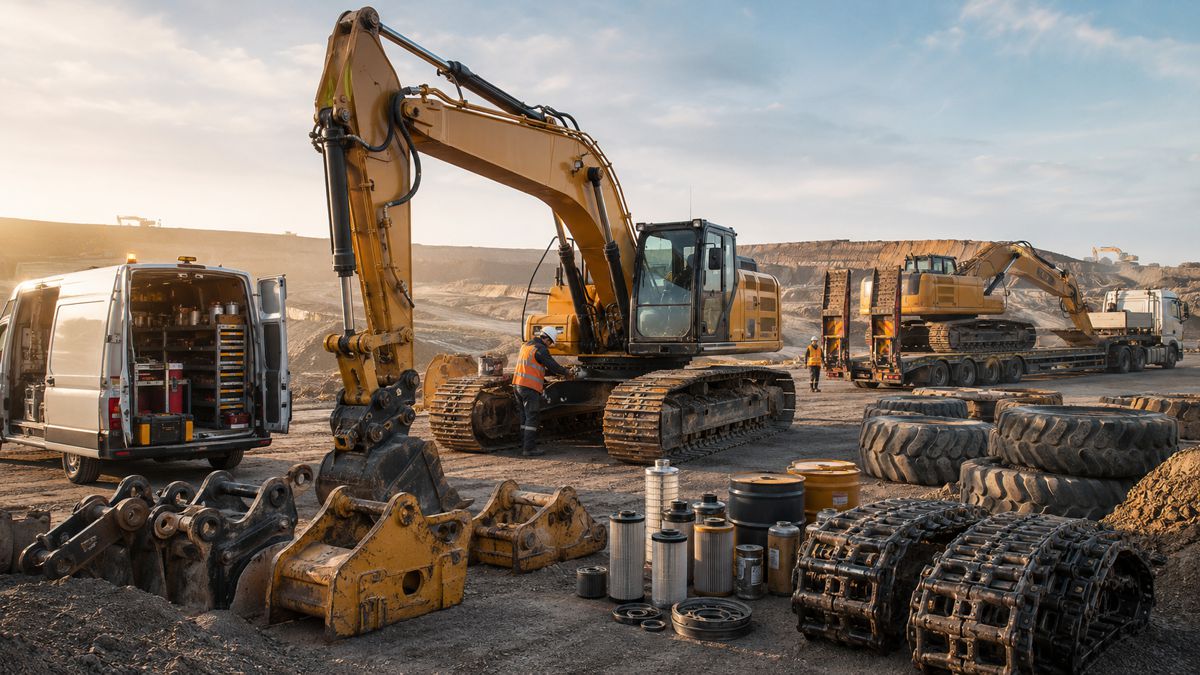
A machine may be purchased once, but it consumes, wears, moves, communicates, breaks down, gets repaired, is refinanced and eventually changes owners across a working life that can extend well beyond a decade. Attachments, tyres, tracks, lubricants, filters, hydraulic components, replacement parts, fleet software, transport, servicing, refurbishment, auctions, finance, insurance and training collectively determine whether the original investment earns an acceptable return.
This supporting economy is where a growing share of construction equipment value is concentrating. Manufacturers that once measured success principally through units shipped are strengthening their position in parts distribution, workshops, rental, connected services and remanufacturing. Independent specialists are building businesses around components, maintenance, logistics and mixed-fleet data. Auction groups, insurers and financiers are becoming more closely connected to the operational history of individual machines.
The commercial movement is already visible. Yokohama Rubber completed its US$905 million acquisition of Goodyear’s off-the-road tyre business in February 2025, adding a business serving mining, construction and other industrial markets. Volvo Construction Equipment completed its acquisition of Swecon operations across several European markets in February 2026, bringing sales, rental, aftermarket services, workshops and approximately 1,400 employees closer to the manufacturer. RB Global, the owner of Ritchie Bros., expanded its heavy-equipment auction presence by acquiring J.M. Wood Auction Co. in July 2025.
These are not disconnected corporate transactions. They show companies competing to control more of the machine’s commercial life before, during and after its time with the first owner.
Construction Equipment Month has already explored a century of earthmoving and construction machinery, examined the changing economics of equipment procurement and considered what follows when the intelligent machine arrives. The next part of that picture lies beyond the iron itself. The machine remains the physical centre of the fleet, but the ecosystem surrounding it increasingly determines cost, productivity, risk and residual value.
Briefing
- Construction machinery supports a substantial lifecycle economy spanning attachments, consumables, parts, maintenance, software, logistics, finance, insurance, training and resale.
- Recent acquisitions involving Volvo CE, Yokohama Rubber and RB Global show capital moving towards aftermarket services, specialist components and secondary-market infrastructure.
- Attachments are turning excavators and loaders into configurable production systems, allowing contractors to earn more from each prime mover.
- Machine data is beginning to connect maintenance, parts ordering, insurance, finance and resale into a continuous commercial record.
- Refurbishment and remanufacturing are extending asset lives, while professional auctions are improving the liquidity and transparency of used equipment.
Recurring revenue begins where the brochure ends
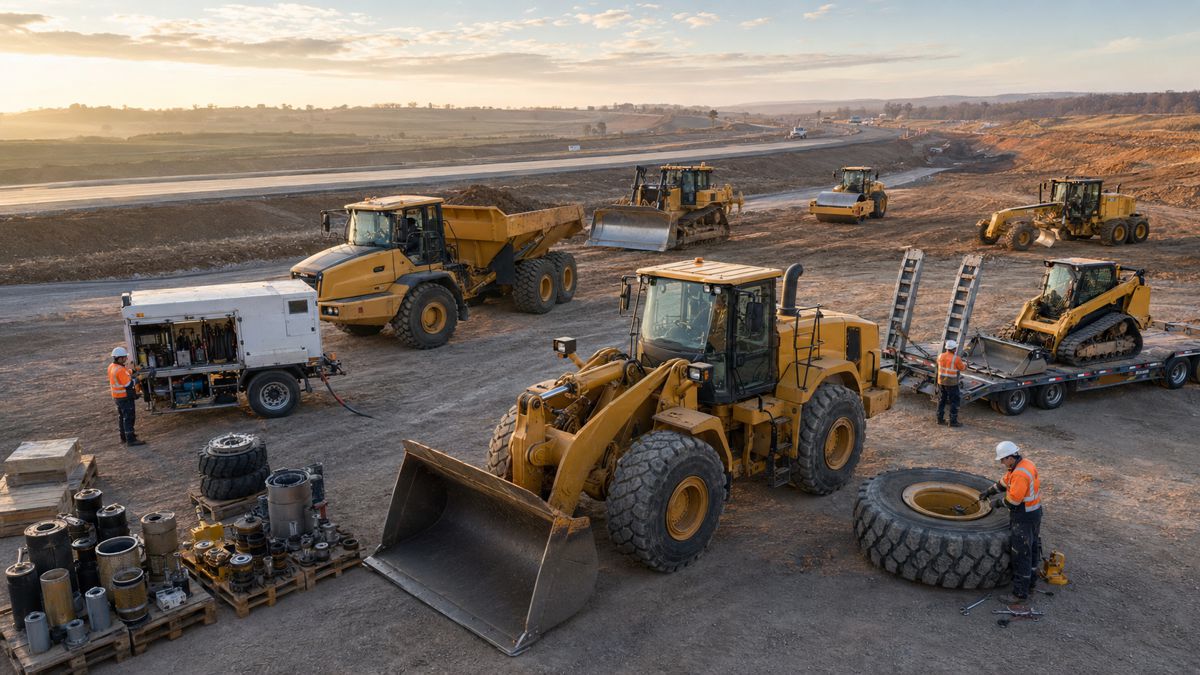
New construction equipment sales remain the most visible measure of market performance, but they are highly exposed to interest rates, construction cycles, commodity demand and contractor confidence. Aftermarket activity follows a different rhythm. A machine already working must continue to receive filters, lubricants, hoses, wear parts, inspections and repairs, even when its owner postpones the next fleet purchase.
That makes lifecycle revenue strategically attractive. It recurs, creates repeated customer contact and is supported by the installed population of machines rather than only the number sold in a particular year. Parts availability and service performance can also influence the customer’s next purchase, giving manufacturers and dealers a commercial reason to remain involved throughout the asset’s life.
Volvo Group provides an indication of the scale that services can reach within a major industrial organisation. The company reported service revenues of SEK126 billion on a rolling 12-month basis during the third quarter of 2025 across its wider transport and construction portfolio. Its subsequent acquisition of Swecon operations covered product sales, rental, aftermarket services, customer support, offices and workshops in Germany, the Netherlands, Belgium, Luxembourg and the Baltic states.
The significance lies in the breadth of the relationship. Control of a retail and service operation gives a manufacturer greater influence over machine configuration, finance, servicing, connected support, rental and eventual replacement. It also provides closer contact with customers and better visibility of how equipment performs outside the factory.
Independent businesses remain central to this economy. Hydraulic workshops, tyre specialists, lubricant suppliers, component remanufacturers, fabrication companies and mobile service engineers provide cross-brand knowledge and local responsiveness that a manufacturer cannot always replicate. Many are modest businesses in revenue terms, but their role in keeping high-value equipment productive gives them disproportionate operational importance.
The competitive question is therefore no longer limited to which company builds the best excavator or loader. It includes which network can supply the right part, diagnose the fault, move the machine and return it to production with the least interruption.
Attachments turn one carrier into an equipment fleet
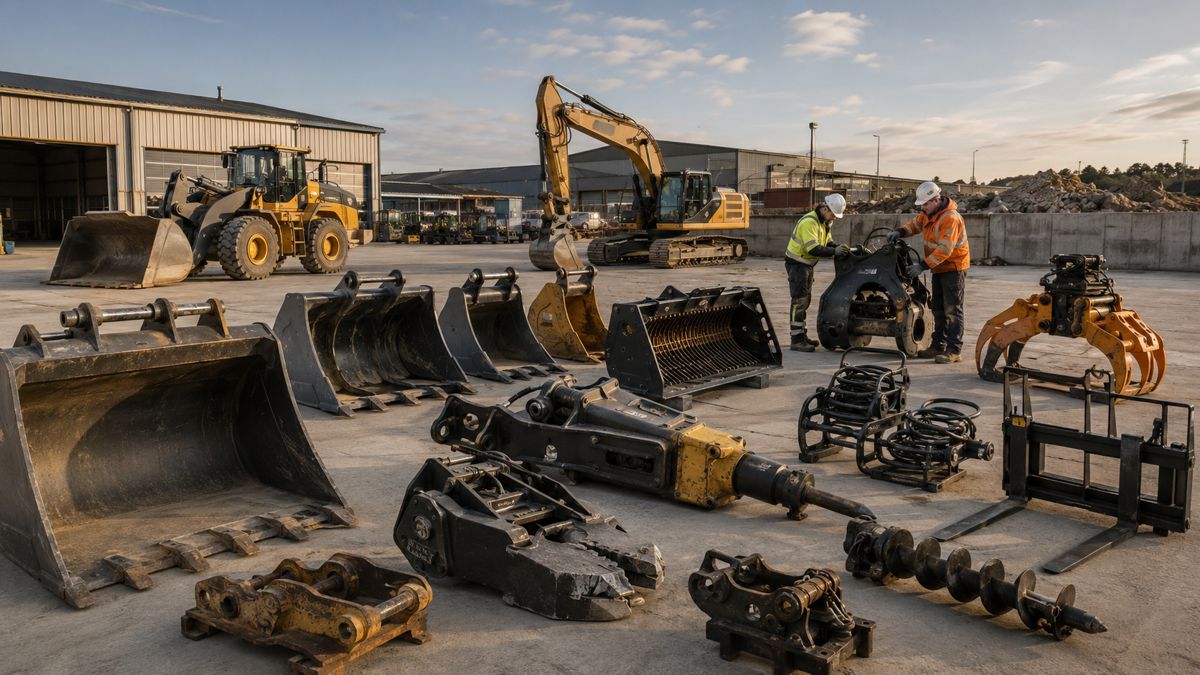
An excavator leaves the factory as a prime mover. Its attachment determines what it can earn. Buckets, breakers, grapples, pulverisers, augers, compactors, shears, screening buckets and tiltrotators can take the same carrier across earthworks, demolition, utilities, recycling, landscaping and material handling. The practical value of the machine therefore depends partly on the range of tasks it can undertake without requiring another complete piece of equipment to be mobilised.
That changes the capital calculation. A specialist attachment can be expensive, but it may still cost considerably less than owning, financing, transporting and maintaining a second dedicated machine. A crusher bucket can process certain materials where they arise. A breaker can remove the need to bring separate demolition equipment to site. A tiltrotator can allow an excavator to work from fewer positions and complete tasks that might otherwise require additional labour or machinery.
The interface is what makes this flexibility possible. Coupler design, hydraulic pressure and flow, electrical connections, control software, auxiliary circuits, machine stability and attachment weight all affect whether a tool can be used productively and safely. As attachments become more sophisticated, compatibility can no longer be left until after the carrier has been ordered.
Fleet standardisation can amplify the benefit. Common couplers and compatible hydraulic arrangements allow attachments to move between suitable machines and projects, increasing utilisation across the tool inventory. A fragmented fleet can produce the opposite result, leaving valuable attachments idle because the available machine cannot connect to or operate them correctly.
This creates a strategic market between the major manufacturers and contractors. Specialist attachment companies can gain access to a large installed population without manufacturing the underlying carriers. Rental providers can supply highly specialised tools for short project phases, while contractors retain ownership of frequently used buckets, forks, couplers and compactors.
Procurement consequently needs to treat the machine and its attachment ecosystem as one productive system. The carrier supplies power, reach and stability; the tool creates the application. Buying them through separate, uncoordinated decisions risks reducing the return on both.
Tyres, tracks and fluids govern the cost per hour
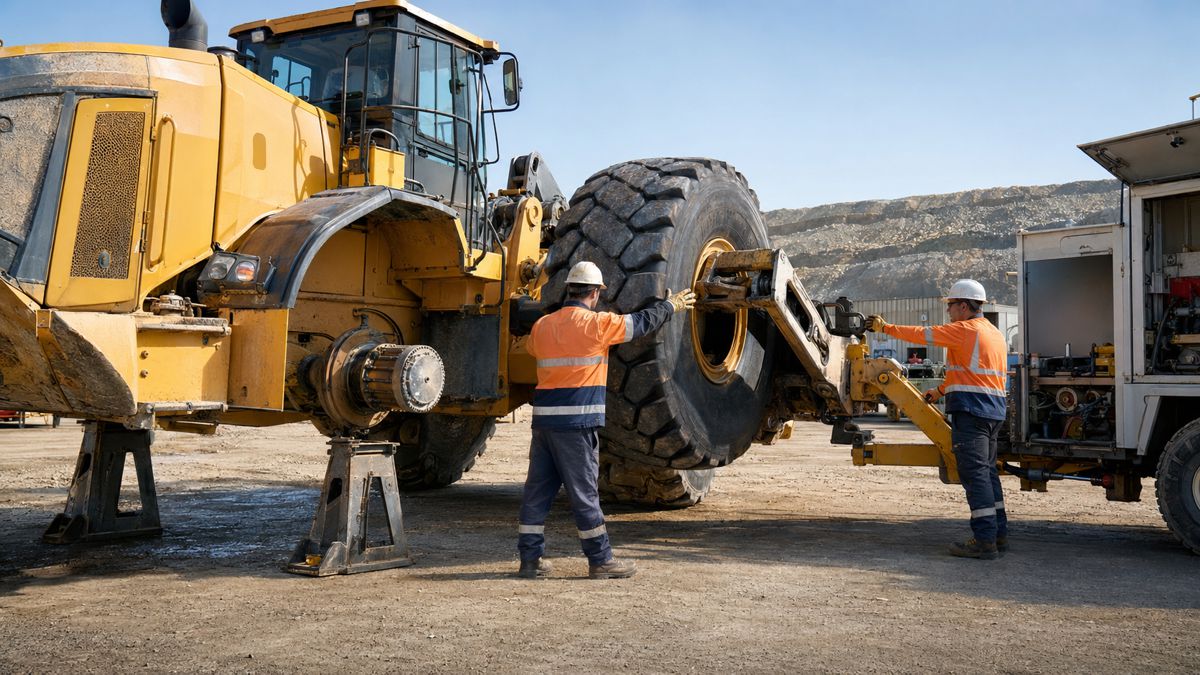
Every operating hour consumes material. Rubber wears, track components elongate, bucket teeth disappear, cutting edges lose profile, oils degrade and filters collect contamination. None attracts the attention given to a new machine launch, yet these items exert constant pressure on the hourly cost of the fleet.
Tyres and undercarriage components are among the largest recurring costs for many earthmoving, quarrying and mining operations. Selection affects traction, fuel consumption, ground pressure, operator comfort, stability and surface damage. Actual life then depends on loading, speed, haul distance, ground conditions, pressure management and operator behaviour.
Their commercial importance is reflected in corporate investment. Yokohama Rubber completed the acquisition of Goodyear’s off-the-road tyre business in February 2025 after agreeing a US$905 million transaction. The acquired operation serves mining and construction among other markets and had reported annual sales of US$678 million. The price demonstrates the strategic value attached to a specialist product that continues generating demand throughout the life of the machines it supports.
Lubricants, filters and hydraulic cleanliness form a less visible but equally important layer. Modern engines and hydraulic systems operate under high temperatures, pressure and close tolerances. The wrong fluid, a contaminated transfer container or an overdue filter can shorten the life of pumps, valves, injectors, bearings and actuators whose replacement cost greatly exceeds the consumable that protects them.
Fluid analysis turns maintenance into a source of evidence. Wear metals, coolant ingress, fuel dilution, water and changes in viscosity can reveal deteriorating conditions before a failure becomes apparent to the operator. Filter inspection can provide similar intelligence about what is happening inside an engine, transmission or hydraulic circuit.
This allows maintenance teams to intervene according to condition rather than relying entirely on fixed intervals or waiting for breakdown. It can also inform larger asset decisions. A machine showing a consistent pattern of component wear may be rebuilt, reassigned to lighter duties or sold before failure risk begins to dominate its economics.
Replacement-parts strategy completes the calculation. Holding every component locally would consume too much capital, while depending entirely on remote stock can expose projects to long delays. Mature fleets classify parts by consumption rate, supply lead time and the operational consequence of failure. Common hoses, filters, teeth, seals and wear plates may be held near the work, while high-value components are supported through dealer stock, exchange units or planned remanufacturing.
The relevant measure is not simply the price of the part. It is the cost of having it available at the moment production depends upon it.

Data is organising the aftermarket
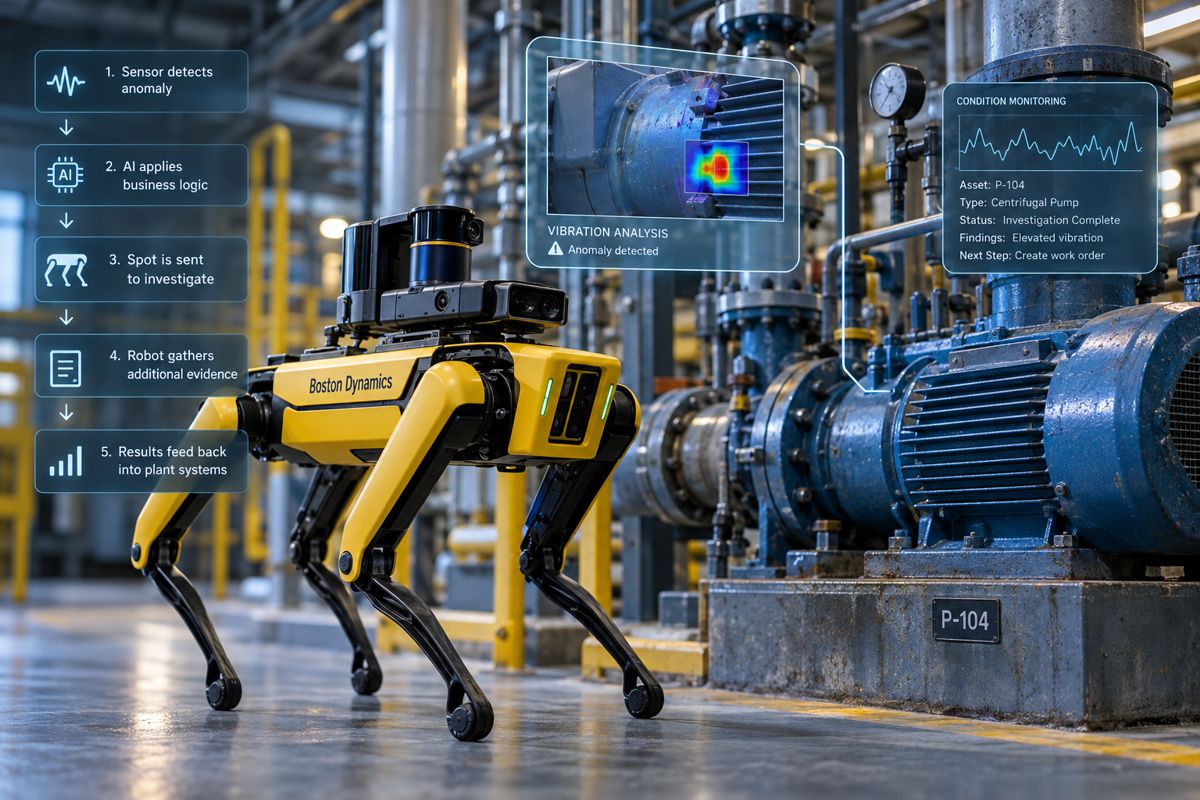
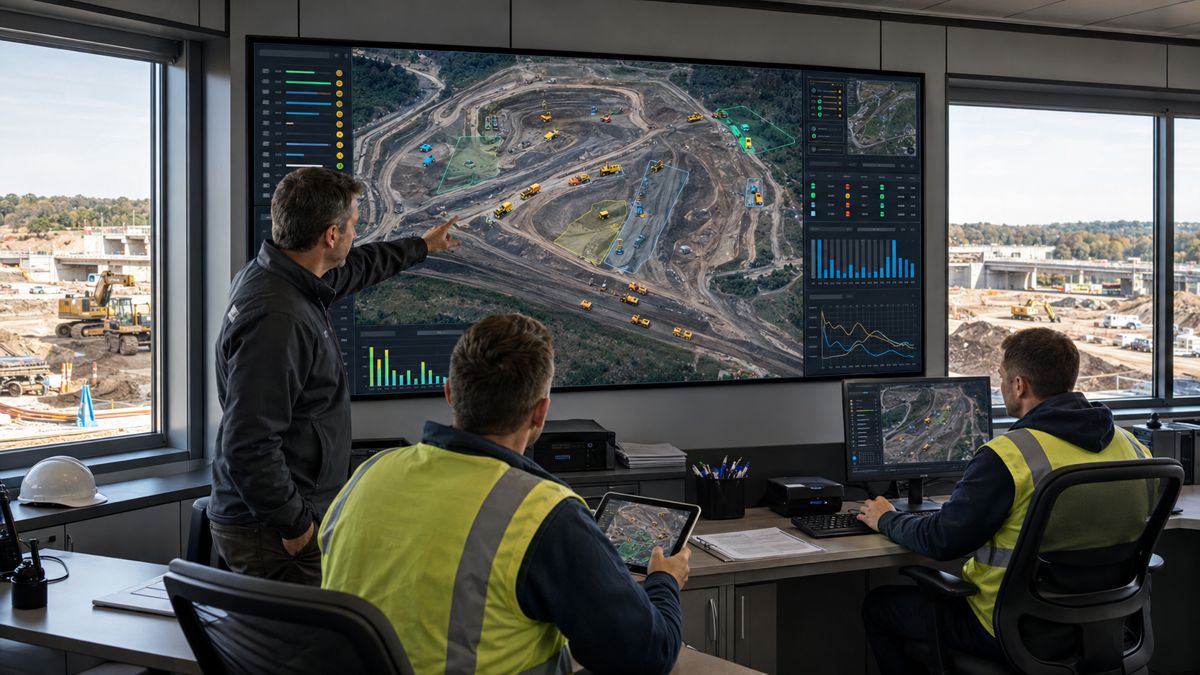
The support economy is becoming connected through the machine’s own data. Hours, location, idle time, fuel consumption, fault codes, temperatures and maintenance events can now feed a fleet platform throughout the working day.
This turns software into the organising layer between equipment and the services around it. Operating hours can trigger a maintenance task. A diagnostic alert can prompt a technician visit and parts order. Location data can support transport planning and theft prevention. Utilisation records can show whether an asset should be retained, redeployed or sold.
The commercial advantage comes from connecting activities that were previously managed separately. Planned servicing becomes easier when workshop capacity, technician availability and parts requirements are known before the machine stops. Fuel and idle-time data can identify poor operating practices. Complete digital records can later support the condition report used for finance, warranty or resale.
Mixed fleets make interoperability especially important. ISO 15143-3 provides a common telematics data framework for earthmoving machinery, allowing standardised information to be exchanged between OEM systems and third-party platforms. It does not make every machine or software product identical, but it gives contractors a route towards managing core data from several manufacturers within a common fleet view.
The European Data Act adds a regulatory dimension. Applicable since September 2025, it establishes rules concerning access to and use of data produced by connected products. For construction equipment owners, the wider significance lies in whether machine data can be made available to independent software providers, maintenance companies, insurers or other authorised third parties.
Greater data portability could strengthen competition around the machine. An independent hydraulic specialist able to receive relevant condition data may diagnose more efficiently. A mixed-fleet platform with access to standardised records can provide a clearer view of utilisation. Insurers and financiers can assess risk using evidence rather than broad assumptions.
Control remains commercially sensitive because whoever manages the data can gain an advantageous position in the next service, parts and replacement decision. Contractors therefore need to understand data ownership, access rights, subscription terms, export formats and what happens to digital records when the machine is sold.
A connected machine can be easier to maintain and more productive, but it also creates a continuing software relationship. Subscriptions for telematics, grade control, diagnostics or advanced fleet functions belong in the total cost of ownership alongside fuel and finance. Digital capability has become part of the asset, even when the owner does not permanently own every service that enables it.
Transport, servicing and training protect production
A construction machine produces nothing if it is waiting in the wrong place. Transport therefore belongs inside the equipment economy rather than being treated as an administrative detail.
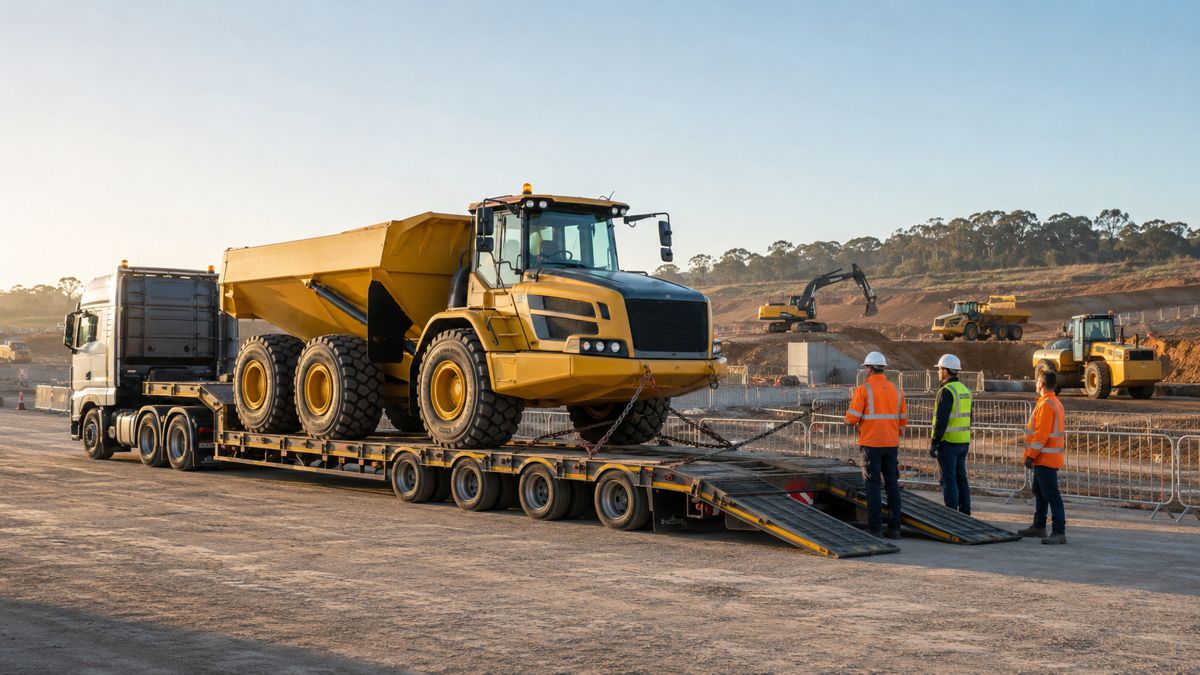
Moving heavy machinery can involve low-loaders, lifting equipment, abnormal-load permits, escorts, route surveys, washing requirements and restrictions on travel times. Bridges, overhead structures, road geometry and axle limits can all affect the route. Cross-border movements introduce additional documentation, customs and regulatory requirements.
These factors influence fleet composition. Moving a large excavator may be justified by its production advantage on a long project but uneconomic for a short task. Hiring locally can avoid mobilisation costs, while compact machinery may offer greater deployment flexibility at the expense of output. The correct decision depends on transport cost, project duration, machine availability and the production rate required.
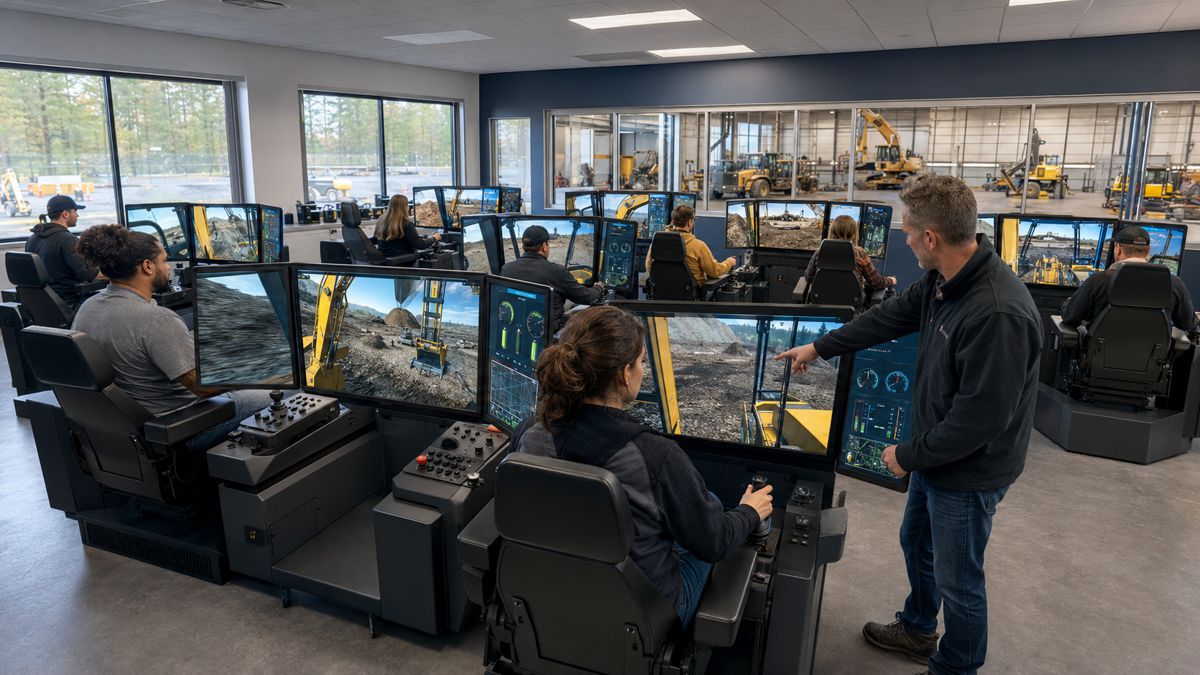
Equipment servicing faces a similar logistical challenge. Field technicians can bring diagnostics and repairs to the machine, reducing the need to transport a failed asset. Their effectiveness, however, depends on training, access to technical information, service-vehicle inventory and the availability of the correct parts.
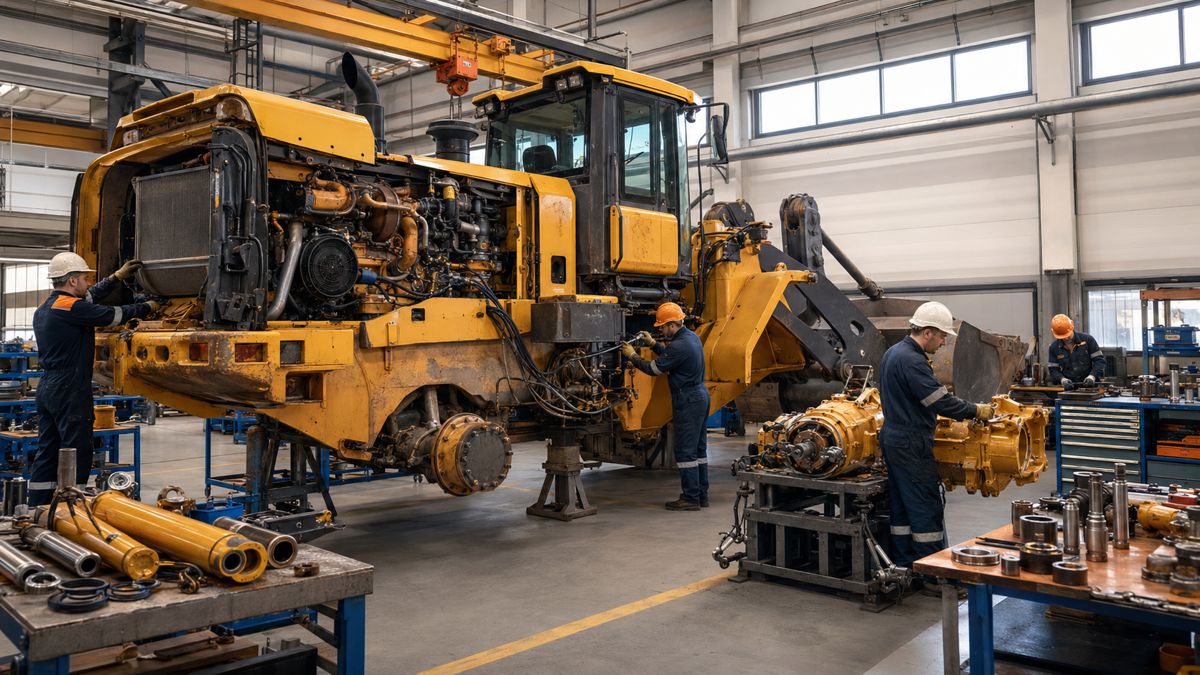
Workshops remain necessary for more extensive interventions such as engine and transmission work, hydraulic testing, line-boring, structural repair and full refurbishment. Strong service organisations combine both approaches, resolving suitable work in the field and moving major components or complete machines into controlled facilities when required.
The shortage of skilled technicians increases the value of this capacity. Modern construction equipment brings together diesel engines, emissions systems, high-pressure hydraulics, electronics, sensors, telematics and software. Electric machinery adds high-voltage systems, batteries, thermal management and power electronics. A technician increasingly needs mechanical judgement and digital diagnostic ability rather than one or the other.
Operator training is equally important because driving behaviour influences output, fuel use, tyre wear, undercarriage life and machine condition. Familiarity with couplers, lifting modes, machine-control systems and daily inspections can prevent expensive errors. Training on efficient loading, travelling and idle management can also convert fuel and maintenance savings into repeatable operating practice.
The commercial case is straightforward. A sophisticated machine without competent operators and technicians will not achieve the productivity used to justify its purchase. Training is not an accessory to the asset; it is part of the infrastructure that allows the asset to perform.
Refurbishment keeps embedded value at work
The equipment economy does not end when a machine becomes too old for its first owner. Many assets move through several businesses, applications and countries before reaching the end of their productive lives.
Refurbishment can renew undercarriage components, pins, bushes, hoses, cab equipment, paintwork and structural elements. A more extensive rebuild may address the engine, transmission, hydraulic system and electrical controls. The objective is not to make an old machine cosmetically resemble a new one, but to recover a dependable period of productive service at a financially sensible cost.
Remanufacturing applies the same principle at component level. Engines, transmissions, pumps, injectors, turbochargers and final drives can be disassembled, cleaned, inspected, restored and tested against a defined specification. Exchange programmes allow the customer to install a ready remanufactured component while returning the worn core into the production cycle.
Caterpillar reported that 140 million pounds of end-of-life material was returned through its Cat Reman programme in 2022. The figure illustrates the industrial scale of component recovery and the amount of embedded material that can remain within productive use rather than being treated as waste.
For the owner, the decision between repair, rebuild and replacement must consider more than the immediate quotation. Remaining chassis life, expected utilisation, emissions compliance, attachment compatibility, finance cost, downtime and likely resale value all affect the answer. A rebuilt machine may deliver several more productive years in an application it already suits, while a new asset may be justified by regulatory access, lower operating costs or capabilities that the older platform cannot acquire economically.
The growth of remanufacturing also changes competition. OEM programmes offer known specifications, warranty support and integration with dealer networks. Independent remanufacturers compete through cross-brand expertise, price, component availability and local turnaround. Both help extend the productive life of equipment and provide alternatives to immediate replacement.
This will become more important as fleets diversify. New electric and increasingly automated machines will work alongside established diesel equipment for many years. Some older assets will be rebuilt or repowered; others will move to less demanding applications. The transition will create an equipment population with different fuels, control systems, emissions standards and service requirements, expanding rather than simplifying the supporting economy.
Finance, insurance and auctions turn machinery into liquid capital
Before a machine starts work, finance determines how it enters the fleet. After it leaves, the secondary market determines how much capital the owner recovers.
The US equipment finance industry represents approximately US$1.3 trillion, according to the Equipment Leasing and Finance Association. Its 2024 Horizon Report estimated that 82 per cent of equipment and software end-users used some form of financing for acquisitions. Those figures cover a wider equipment market, but they demonstrate how heavily productive investment depends on loans, leases and credit rather than cash purchases alone.
For construction companies, finance structure affects liquidity, tender capacity and exposure to residual values. Outright ownership can suit highly utilised core machines. Leases and rental-purchase arrangements may preserve working capital or align payments more closely with project revenue. Rental can transfer maintenance and residual risk while providing access to specialist or low-emission equipment for limited periods.
The monthly payment tells only part of the story. Interest, deposits, end-of-term conditions, permitted hours, maintenance requirements, balloon payments and assumptions about resale all influence the eventual cost. A machine that looks affordable through a low monthly figure can prove expensive if the agreement is built around an unrealistic residual value or restrictive return conditions.
Insurance forms the next layer. Equipment must be protected against theft, damage, liability and interruptions that can extend far beyond the replacement cost of the machine. GPS tracking, geofencing, immobilisation, operator controls and documented inspections can improve the quality of the risk presented to an insurer.
Connected records may eventually allow cover to become more closely aligned with actual use and security. That can reward well-managed fleets, although it also makes data governance important. Owners need to understand which information is shared, how it is interpreted and whether it might affect claims or future premiums.
Attachment inventories should be included in the same discipline. Breakers, buckets, couplers, compactors and specialist tools can represent considerable capital, frequently move between sites and may be easier to remove than the carrier. Serial-number records, tagging, inspection histories and clear custody arrangements help protect these less visible assets.
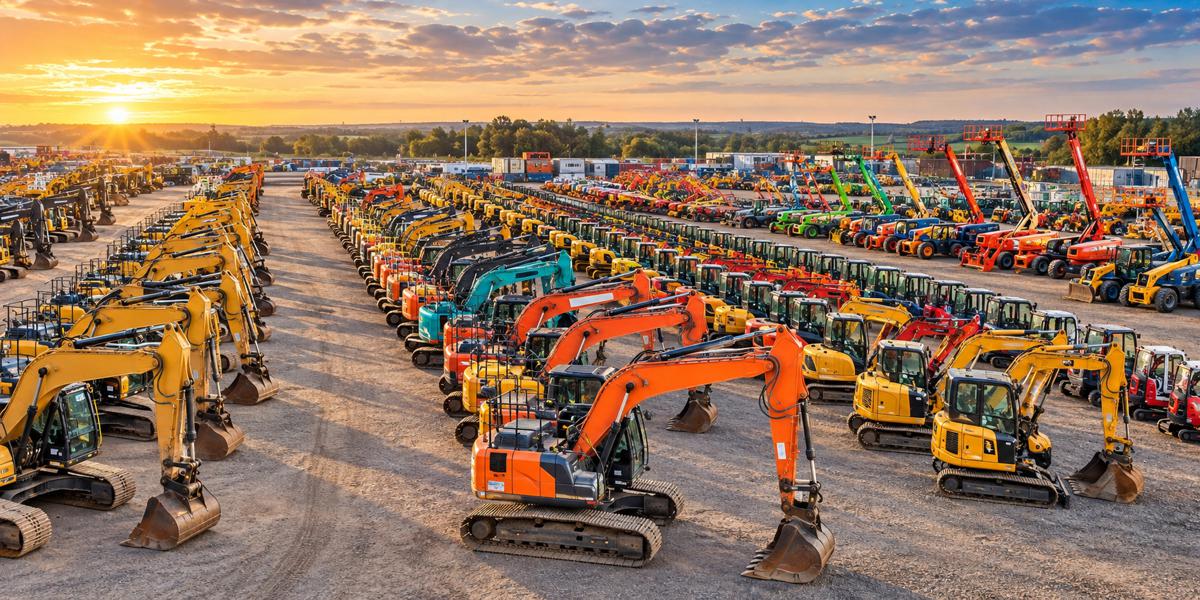
Auction houses and digital marketplaces complete the financial cycle by converting machinery back into liquid capital. Their role extends beyond running a sale. Inspections, valuations, photographs, service records, finance settlement and transport services help buyers assess risk and sellers reach a wider market.
RB Global’s acquisition of J.M. Wood in 2025 demonstrates continued investment in that infrastructure. In the fourth quarter of 2025, RB Global reported total gross transaction value of US$4.3 billion across its wider business, with growth in commercial construction and transportation partly supported by the addition of J.M. Wood. The attraction of the auction market lies in more than transaction fees: scale produces pricing evidence, buyer reach and services around the sale.
Residual values feed back into the original purchase. A brand with a deep buyer pool, strong parts support and verifiable service histories can be easier to finance because the lender has greater confidence in the asset’s end value. Contractors that maintain machines properly and preserve their records are therefore protecting future capital as well as present uptime.
The ecosystem is becoming the asset
The construction equipment market is moving towards an integrated lifecycle model. Parts, servicing, software, finance and resale are no longer separate activities orbiting the machine. They are becoming connected stages of one commercial relationship.
Manufacturers and dealers can bundle equipment, attachments, finance, maintenance and connected support. Independent specialists can compete through mixed-fleet expertise, local availability and deeper knowledge of particular systems. Software platforms can connect assets across brands, while auction groups and financiers use better records to reduce uncertainty around value.
This does not mean every supporting service must come from one supplier. Excessive dependence on a closed ecosystem can reduce bargaining power and restrict repair or data choices. The stronger procurement strategy is to understand which relationships genuinely improve lifetime performance and where competition should be preserved.
Future purchasing decisions will increasingly test the entire ecosystem. Parts fill rates, technician response, attachment compatibility, data access, subscription costs, transport requirements and resale performance will sit beside engine power, digging depth and payload. Contractors will expect suppliers to demonstrate productive availability and cost per hour rather than rely on a strong specification sheet.
The same shift opens a substantial field for future reporting. Each layer warrants closer examination: the changing economics of tyres and undercarriages, lubricant analysis, hydraulic contamination, attachment standardisation, remanufactured components, equipment logistics, technician shortages, insurance technology, captive finance and auction pricing.
The machine will remain the most visible object on the site. Yet its commercial performance is created by the less visible network surrounding it. That network is where downtime is prevented, capability is added, risk is transferred and residual value is protected. The iron earns attention, but the economy behind it keeps construction moving.
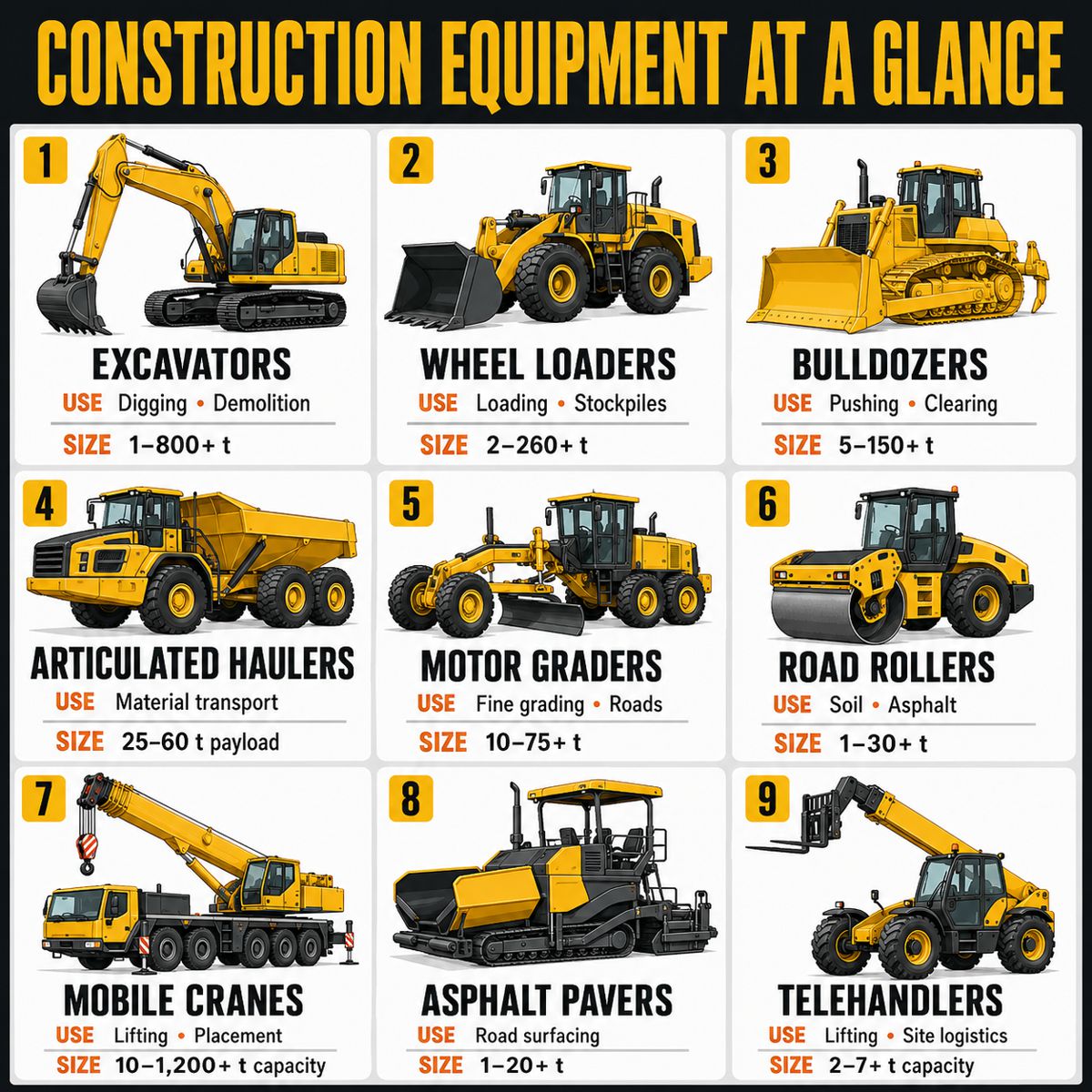
Key Industry Questions
- Why is the construction equipment aftermarket strategically important? New-machine demand rises and falls with construction activity, interest rates, commodity markets and business confidence. Aftermarket demand is supported by equipment already working, which continues to require parts, fluids, inspections and repairs during slower sales periods. This provides manufacturers, dealers and independent suppliers with a more recurring revenue base. Strong support can also influence the next purchase because contractors remember which suppliers maintained uptime when a project was under pressure. The aftermarket is therefore both a source of current income and a way of protecting future machine sales.
- How should contractors calculate the cost of equipment downtime? The calculation should include more than labour and replacement parts. It may also involve idle operators, inactive supporting equipment, hired replacements, emergency transport, lost production, overtime and programme penalties. The operational role of the machine matters greatly. Failure of a general-purpose excavator in a large fleet may be manageable, while a broken paver, crusher or quarry loading machine can interrupt an entire production chain. Assigning each critical asset a realistic hourly or daily downtime cost allows service agreements, parts stock and preventive maintenance to be assessed on commercial rather than purely technical grounds.
- Should contractors buy or rent specialist attachments? Frequently used attachments that work across several machines or projects may justify ownership. Specialist tools required for a short phase are often better rented, particularly when the rental provider also handles maintenance and inspection. Contractors should consider more than annual hours. Availability, transport, storage, compatibility and the cost of delaying work all affect the decision. An attachment with modest utilisation may still be worth owning if it prevents repeated mobilisation of another machine or protects the project programme. Standardised couplers can improve the case for ownership by allowing tools to circulate across the fleet.
- How can telematics improve machine resale value? Telematics can provide evidence of operating hours, utilisation, fault events, maintenance intervals and, in some cases, working conditions. Combined with inspection and service records, this information reduces uncertainty for a prospective buyer. It can help distinguish a well-maintained machine from one that has merely been cosmetically prepared for sale. Digital records do not replace a physical inspection, but they can improve buyer confidence, support warranty or finance decisions and help the seller defend the asking price. Their value depends on accuracy, accessibility and whether the records can be transferred with the machine.
- What is the difference between refurbishment and remanufacturing? Refurbishment usually restores the condition and function of an existing machine through repairs and replacement of worn systems. The scope can range from pins, bushes and cab equipment to extensive engine, hydraulic and structural work. Remanufacturing generally applies a defined industrial process to a component. It is dismantled, cleaned, inspected, restored and tested against a specified standard before returning to service. Both can extend equipment life, but buyers should examine the work scope, testing, warranty and expected service life rather than relying on the terminology alone.
- How do tyres and undercarriages affect total cost of ownership? They influence traction, stability, fuel use, travel speed, ride quality, ground damage and machine availability. Poor selection or management can increase fuel consumption, accelerate wear and interrupt production. Tyre pressure, haul-road condition, loading, speed and operator behaviour all affect off-the-road tyre life. Undercarriage cost is similarly influenced by ground conditions, track tension, machine movement and turning practices. Because these components are consumed throughout the machine’s life, even modest improvements in service life can produce meaningful fleet-wide savings.
- Why do residual values affect the original equipment purchase? Expected resale value determines how much of the original capital cost the owner ultimately recovers. It also influences leasing and finance because lenders consider what the machine will be worth if it is returned or repossessed. Brand reputation, emissions compliance, parts availability, condition and verified maintenance records all affect that value. Two machines with similar purchase prices can therefore have very different ownership economics. A more expensive asset may cost less over its working life if it achieves higher utilisation and retains a larger proportion of its value at disposal.
- Will connected machines reduce the role of independent repair companies? The outcome will depend substantially on access to data, diagnostic systems and replacement parts. Closed manufacturer platforms can give authorised dealers an advantage, while accessible and standardised data can help independent specialists diagnose faults and schedule repairs more effectively. The EU Data Act may support greater user control over data generated by connected products, although practical implementation will depend on contracts and technical arrangements. Independent providers will also need stronger software, cybersecurity and electronic diagnostic capabilities as equipment becomes more connected and electrified.
- How will electrification change the equipment support economy? Electric machinery will reduce demand for some diesel engine oils, filters and emissions-system components, but it will create requirements around batteries, charging equipment, high-voltage safety, power electronics and thermal management. Tyres, tracks, attachments, structural repairs, transport and many hydraulic services will remain important. Workshops will need suitable isolation procedures and technicians trained for high-voltage equipment. Financiers, insurers and used-equipment buyers will also require reliable methods for assessing battery condition and remaining life. Electrification changes the composition of aftermarket demand rather than removing it.
- Why should training be considered part of the equipment investment? Operator behaviour affects productivity, fuel consumption, tyre and track wear, attachment condition and safety. Technician capability determines whether faults are identified early and repaired correctly. As machines combine hydraulics, electronics, software and high-voltage systems, training must continue throughout the asset’s life rather than end at delivery. A business may purchase advanced machine control or predictive-maintenance capability, but it will achieve little return if its workforce cannot use the system confidently. Training converts technical capability into measurable operational performance.
Strategic Takeaways
- The construction machine is becoming the entry point into a longer commercial relationship covering parts, data, service, finance and resale.
- Attachments can reduce fleet capital requirements by allowing one carrier to perform several roles, but compatibility must be planned across the machine, hydraulics and control system.
- Tyres, tracks, fluids, filters and parts availability have a direct effect on cost per productive hour and deserve the same procurement discipline as the machine itself.
- Connected service histories can strengthen maintenance decisions, insurance risk management and residual values, making data portability an increasingly important asset consideration.
- Refurbishment, remanufacturing and professional secondary markets will extend equipment life while creating further opportunities for manufacturers, dealers and independent specialists.