MERA Oil’s US$5 Billion Refinery Reframes Route Resilience
A US-Saudi consortium’s decision to build a 200,000-barrel-per-day integrated refinery outside the Strait of Hormuz would once have read as a prudent hedge. In the second half of 2026 it reads as something closer to a template. MERA Oil, the project platform newly assembled by Fort Worth energy developer MWG Enterprises, the third-generation Patel Family Office and PWS, an associate of the long-established Saudi industrial group AHQ Group, has entered the final stage of choosing a host for a planned US$5 billion refining, storage and marine-export complex.
The sponsors have spent three years assessing Gulf locations and two years in detailed talks with three shortlisted GCC jurisdictions, each of them positioned beyond the Strait, with a preferred host expected to be confirmed before the end of the year.
What gives the announcement its commercial weight is not the headline capital figure, sizeable though it is, but the logic driving the site. For decades the vulnerability of the Strait of Hormuz was treated as a tail risk that markets acknowledged and then largely priced away.
The events of 2026 stripped out that comfort. Following strikes on Iran at the end of February, the waterway that normally carries close to one-fifth of global oil consumption was effectively closed for much of the first half of the year before a fragile reopening in early summer, according to analysis by the US Energy Information Administration and the Center for Strategic and International Studies. The practical result is that “outside Hormuz” has hardened from a slogan into an engineering and commercial specification, and MERA Oil is among the first greenfield projects to be conceived around that specification from the outset rather than retrofitted to it.
Briefing
- MERA Oil, a private consortium of MWG Enterprises, Patel Family Office and PWS (an associate of AHQ Group), is in the final stage of selecting a host for a US$5 billion integrated refinery and energy-export corridor, with three GCC jurisdictions shortlisted and a decision expected by the end of 2026.
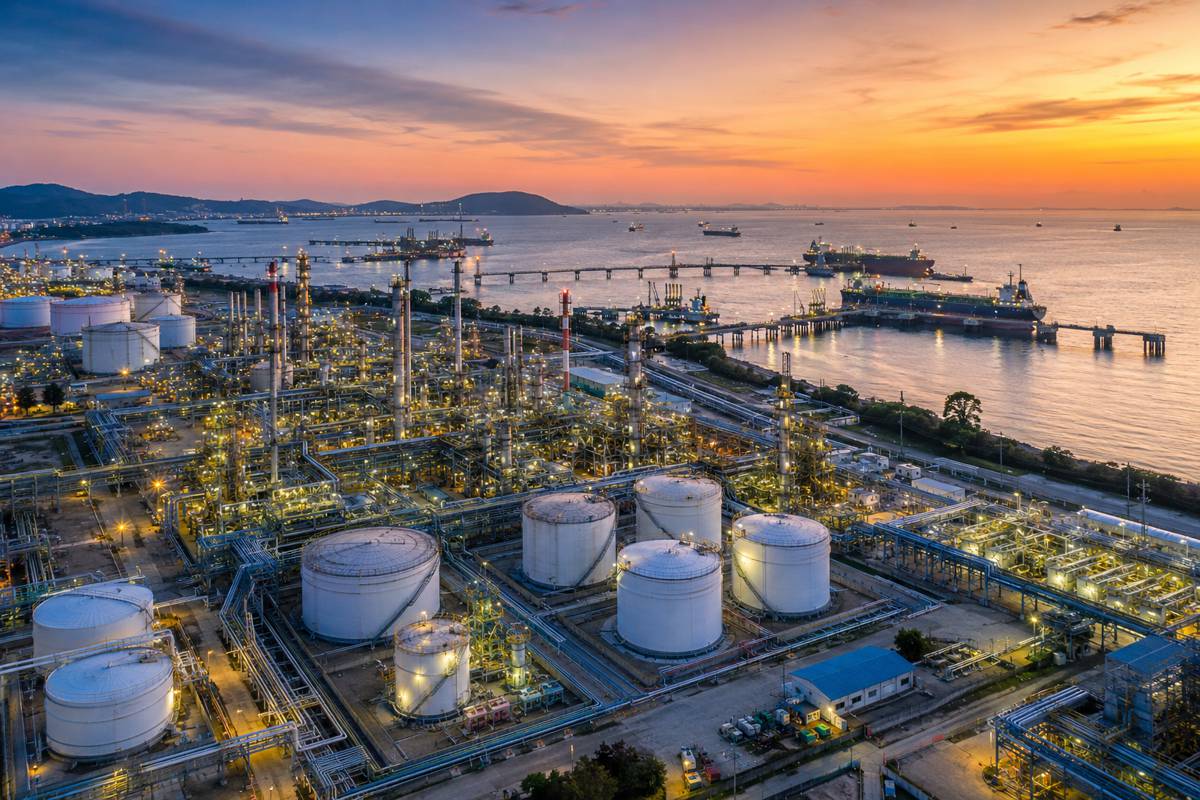
- Phase One centres on a 200,000-barrel-per-day refinery linked to deepwater port infrastructure, large-scale crude and product storage, and marine export facilities, all located outside the Strait of Hormuz for direct access to international shipping lanes.
- The product slate is weighted towards high-specification middle distillates, including ultra-low sulphur diesel and jet fuel, aimed at import-dependent markets in the United States, the Atlantic Basin, the Gulf and elsewhere, subject to final engineering and offtake arrangements.
- The development is planned across roughly 1,200 to 1,500 acres of port-connected industrial land and is expected to support up to 3,000 direct roles at peak and up to 15,000 indirect and induced positions, based on preliminary sponsor estimates and aligned with national In-Country Value frameworks.
- Mechanical completion of Phase One is targeted for the end of 2029, with financing expected to blend sponsor equity, sovereign and institutional participation, international project finance, export-credit support and Shariah-compliant structures.
A Chokepoint That Stopped Being Hypothetical
The scale of what passes through the Strait of Hormuz explains why its disruption reverberates so widely. In normal conditions the waterway handles around 20 million barrels of crude, condensate and products a day, equivalent to roughly one-fifth of global oil consumption and about a quarter of seaborne oil trade, according to EIA and International Energy Agency analysis.
The Persian Gulf is an enclosed sea with a single exit, so producers along its shores cannot easily reroute volumes when that exit becomes contested. When flows stalled through the first half of 2026, global inventories drained at a record pace and middle-distillate crack spreads climbed, a combination that told the market it was short of usable fuel rather than merely short of crude.
The disruption also exposed a subtler point that shapes the MERA Oil case directly. The bypass infrastructure the Gulf had built to route around Hormuz proved to be exposed to the same pressures that closed the primary chokepoint, with reported strikes on storage and terminal assets at Fujairah and Duqm and a period of reduced throughput on Saudi Arabia’s east-west crude line. Moving barrels around the Strait through a pipeline still leaves the loading point within reach of regional instability.
MERA Oil’s proposition is different in kind, because a refinery, storage farm and export jetty built on the ocean side of the peninsula do not depend on transiting the Strait at all. For offtakers in the United States and the Atlantic Basin, a cargo lifted from a terminal that never enters the Gulf carries a materially different risk profile, and that distinction is now something buyers and insurers are willing to pay for.
Downstream Value Moves Up the Chain
The project also sits inside a longer structural shift, as Gulf producers move to capture more of the value that has historically left the region as unrefined crude. The GCC Statistical Centre records that the six member states exported approximately 11.5 million barrels of crude oil per day in 2024, around a quarter of global crude exports, which frames the opportunity in refining and value addition in blunt commercial terms.
Oman’s OQ8 refinery at Duqm, a 255,000-barrel-per-day joint venture between OQ and Kuwait Petroleum International, and Kuwait’s own Al-Zour complex are recent evidence that the region is willing to commit tens of billions of dollars to processing capacity positioned for export. Much of that build-out has been led by national oil companies working off sovereign balance sheets.
MERA Oil enters this landscape from a different direction, as a privately sponsored merchant-style platform rather than a state enterprise, and that structure is part of its significance. Abdulmalik Alqahtani, Group Chief Executive Officer of AHQ Group, framed the industrial logic in terms of what a project should leave behind for its host: “Expanding domestic value addition remains one of the Gulf’s most important industrial opportunities. More than seven decades of industrial work across the Kingdom have taught us what a project of this kind should leave behind for its host: jobs, local suppliers, technical skill and industrial capacity that endures, in step with the region’s national visions. We look forward to concluding this process with the jurisdiction best placed to move quickly and deliver.”
The emphasis on suppliers, skills and enduring capability rather than throughput alone reflects how In-Country Value frameworks have reshaped what host governments expect a large industrial investment to deliver.
A Product Slate Aimed at a Tightening Market
The commercial reasoning behind the plant’s output is arguably as important as its location. MERA Oil intends to concentrate on high-specification middle distillates, principally ultra-low sulphur diesel and jet fuel, and it is targeting those products at import-dependent buyers. That choice lands in a refining market with unusually little slack.
A sustained round of closures across the developed world has removed capacity that is not being replaced at the same rate, including Scotland’s Grangemouth, LyondellBasell’s Houston refinery and Phillips 66’s Los Angeles operations, with Valero’s Benicia plant also winding down crude processing. Industry estimates put net global refining capacity growth for 2026 at less than one million barrels per day once closures and additions are netted off, leaving the system with a thin structural cushion before any geopolitical shock is added.
The United States illustrates why an export refinery aimed at that market has a credible thesis behind it. The EIA has forecast that domestic jet fuel supply would reach its tightest position in more than sixty years during 2026, with days of supply falling to levels not seen since the early 1960s, while combined stocks of gasoline, distillate and jet fuel were projected to sink to their lowest since 2000.
The IEA, meanwhile, has pointed to historically strong middle-distillate margins as a signal of stress rather than simply profit. A plant engineered to produce clean diesel and jet fuel to demanding specifications, sited for unobstructed access to Atlantic-facing markets, is therefore aiming at a genuine and durable gap, even allowing for the sponsors’ own caveat that final volumes and destinations depend on engineering outcomes and offtake agreements still to be concluded.
A Private Consortium in a Sovereign Neighbourhood
Financing a US$5 billion downstream complex to institutional standards in a region dominated by national champions is a test of structure as much as ambition. The sponsors expect the Phase One programme to draw on sponsor equity, sovereign and institutional participation, international project finance, export-credit support and Shariah-compliant instruments, a blend designed to spread risk and match the multi-decade life of the asset.
Lakshmi Narayanan, Vice Chair of Patel Family Office, set the tone for how the consortium intends to present itself to capital providers: “This is multigenerational infrastructure, and it has to be structured to institutional standards from the outset: sound governance, a balanced capital structure built to hold for decades, and a transparent partnership with the host government. Patel Family Office is engaging sovereign and institutional partners who share that outlook.”
That framing matters beyond the individual deal, because it signals that private and family capital sees space to co-invest in Gulf downstream alongside sovereign money rather than only around it. A consortium that pairs Texan development experience with a global family office and a decades-old Saudi industrial group is assembling the sort of mixed sponsor base that project financiers and export-credit agencies tend to reward, provided governance and offtake hold up under diligence.
The consortium is also in parallel discussions with feedstock providers inside and beyond the GCC, with firm crude arrangements expected to advance alongside the host decision, which keeps the supply side and the location decision moving on the same clock rather than sequentially.
Host Selection as a Competitive Instrument
By reaching the final stage with three shortlisted jurisdictions still in contention, MERA Oil has effectively turned site selection into a lever. The consortium has said it remains open to a decisively superior proposition from another qualifying GCC jurisdiction able to meet its route-resilience, infrastructure and timetable requirements, which keeps competitive pressure on the leading candidates.
Marc W. Gunderson, Founder of MWG Enterprises, was direct about the incentive on offer: “Three years of evaluation across the region and two years of detailed engagement with three outstanding locations have brought us to a clear decision point. The sponsor partnership is assembled, the development concept and capital strategy are defined, and we are now choosing our host. The jurisdiction that moves decisively with us in the coming months stands to secure a major new downstream, storage and energy-export platform.”
For the winning jurisdiction the prize is a single, integrated package of refining, storage, port and logistics investment on 1,200 to 1,500 acres of port-connected land, with an estimated peak of 3,000 direct roles and up to 15,000 indirect and induced positions on preliminary figures. Those numbers land at a moment when Oman’s Duqm and Salalah, the UAE’s Fujairah and Saudi Arabia’s Red Sea coast are all competing to become the region’s indispensable gateway beyond Hormuz.
A greenfield downstream anchor tenant strengthens whichever ecosystem secures it, deepening supplier bases, utilities demand and workforce development around an asset expected to operate for decades. The competitive framing gives host governments a clear commercial reason to move quickly on land, permitting and In-Country Value terms rather than allowing diligence to drift.
Designing for the Next Regulatory Cycle
The technical concept has been shaped with an eye on where refining economics and regulation are heading rather than only on today’s specifications. The sponsors describe a future-ready complex built around energy-efficient refining technologies and advanced emissions-control systems, with sustainable aviation fuel co-processing and carbon-management capabilities under evaluation as potential later components.
Treating those elements as designed-in optionality, rather than as bolt-ons to be retrofitted under pressure, is a rational hedge against tightening carbon rules and the growing tendency of institutional offtakers to favour lower-carbon barrels. A plant that can co-process SAF feedstock or add carbon capture without a wholesale rebuild protects its own competitiveness as buyer preferences evolve.
The delivery path is deliberately staged to manage that ambition against execution risk. A pre-feasibility study covering configuration, product slate, preliminary capital requirements, logistics and phased execution has reached an advanced stage, and once a host is confirmed the project is expected to move into final site diligence and engineering design.
Mechanical completion of Phase One is targeted for the end of 2029, followed by commissioning and commercial operations. That timetable is achievable for a project of this scale, though it leaves little room for slippage in host selection, permitting or financing close, which is precisely why the consortium is pressing jurisdictions to commit within months rather than years.
What the Market Should Read Into It
Read narrowly, MERA Oil is one privately sponsored refinery seeking a home on the ocean side of the Arabian Peninsula. Read more broadly, it is an early and unusually explicit example of resilience becoming a design input for new downstream capacity rather than a contingency bolted on afterwards. The 2026 disruption converted a long-theoretical chokepoint risk into a demonstrated one, and capital is now flowing towards assets that sit structurally outside that risk while also capturing the value that the Gulf has historically exported as raw crude. The combination of route resilience, downstream value capture and a tight distillate market gives the project a thesis that stands on more than one leg.
The wider signal is worth weighing for anyone downstream of the decision. Host jurisdictions have a defined window in which speed and In-Country Value terms will determine who captures a multi-decade industrial anchor. Engineering contractors, refining-technology licensors, storage and marine specialists and equipment suppliers should note that a fresh generation of resilience-sited downstream projects may follow if this model proves financeable, and financiers now have a live test of appetite for privately sponsored Gulf refining structured to institutional standards.
If MERA Oil reaches financial close on its stated terms, it will have done more than build a refinery; it will have shown that location itself can be underwritten as a resilience asset, and that is a lesson the next wave of projects is likely to copy.
Key Industry Questions
- Why locate a new refinery outside the Strait of Hormuz rather than expand existing Gulf capacity? Placing refining, storage and export capacity on the ocean side of the Arabian Peninsula removes dependence on transiting a single contested waterway. The 2026 disruption showed that Hormuz can be effectively closed for months and that pipeline bypass routes and their loading terminals share much of the same exposure. A plant that never routes product through the Strait offers offtakers and insurers a genuinely different risk profile. For buyers in the United States and the Atlantic Basin, that reliability is increasingly something they will pay a premium to secure, which strengthens the commercial case for a purpose-sited greenfield asset over incremental expansion of Gulf-facing capacity.
- How significant is the US$5 billion figure for a project of this type? A US$5 billion Phase One programme is consistent with a mid-sized integrated refinery paired with deepwater port, storage and marine export infrastructure. It is smaller than the multi-billion national oil company complexes at Duqm or Al-Zour, but substantial for a privately sponsored merchant-style development. The figure signals a serious, financeable proposition rather than an exploratory concept, particularly given that a pre-feasibility study is already at an advanced stage. The more telling number for lenders will be the eventual capital structure, since the blend of sponsor equity, sovereign and institutional capital, project finance and export-credit support will determine how the risk is shared over the asset’s multi-decade life.
- Why focus the product slate on diesel and jet fuel? Ultra-low sulphur diesel and jet fuel are where the current supply gap is most acute. A wave of refinery closures across the United States and Europe has removed capacity that is not being replaced at the same pace, and the EIA has warned of the tightest US jet fuel supply in more than sixty years during 2026. Middle-distillate margins have been historically strong, which the IEA reads as a sign of genuine scarcity. A plant engineered to produce clean distillates to demanding specifications is therefore aiming at a structural shortfall rather than a cyclical dip, though final volumes remain subject to engineering and offtake agreements still to be settled.
- What does the competitive host selection mean for GCC governments? It converts the site decision into a negotiating instrument. With three jurisdictions shortlisted and the consortium open to a superior alternative, host governments have a direct incentive to move quickly on land allocation, permitting and In-Country Value terms. The winner secures an integrated refining, storage, port and logistics package on 1,200 to 1,500 acres, with an estimated peak of 3,000 direct and up to 15,000 indirect and induced roles. For jurisdictions positioning ports such as Duqm, Salalah or Fujairah as gateways beyond Hormuz, an anchor downstream tenant deepens their supplier base, utilities demand and industrial standing for decades.
- How credible is the end-of-2029 completion target? A mechanical completion date at the end of 2029 is realistic for an integrated refinery of this scale, given that pre-feasibility work is advanced and the sponsors have a defined phased execution plan. The principal risks are sequencing risks rather than technical ones. Host confirmation, final site diligence, engineering design, permitting and financial close all need to align without significant slippage. This is why the consortium is pressing candidate jurisdictions to commit within months, since delay at the front end compresses the runway for detailed design and construction and puts the commissioning window under pressure.
- What role do the private sponsors play, and why does the structure matter? The consortium pairs MWG Enterprises’ Texan energy-development experience with the long-term capital of Patel Family Office and the industrial depth of AHQ Group through PWS. This mix gives the project development capability, patient equity and regional operating knowledge in a single vehicle. The structure matters because it demonstrates appetite among private and family capital to co-invest in Gulf downstream alongside sovereign money rather than only around it. If the consortium reaches financial close to institutional standards, it offers a replicable template for privately sponsored refining in a region long dominated by national oil companies.
- How do the emissions and sustainable aviation fuel elements affect the investment case? Designing in energy-efficient refining, advanced emissions control and the option to add SAF co-processing and carbon management protects the asset against tightening regulation and shifting buyer preferences. Institutional offtakers increasingly favour lower-carbon barrels, and a plant that can adapt without a wholesale rebuild retains its competitiveness as those preferences harden. Treating these capabilities as designed-in optionality rather than future retrofits reduces the risk of costly modification later. For financiers and export-credit agencies applying environmental screens, a credible decarbonisation pathway can also widen the pool of available capital and improve the terms on which the project is funded.
- What should suppliers and contractors take from the announcement? The project points to potential demand across refining-technology licensing, engineering, procurement and construction, storage systems, marine infrastructure and plant equipment once a host is confirmed and design begins. More strategically, it may mark the start of a broader category of resilience-sited downstream projects if this model proves financeable. Suppliers with capability in clean-fuels processing, emissions control and carbon management are well placed if SAF and capture components proceed. Contractors should track the host decision closely, since the compressed timetable the sponsors are seeking implies a rapid transition from selection to detailed engineering and early works for whichever jurisdiction prevails.
Strategic Takeaways
- Route resilience has shifted from a contingency to a design principle, and MERA Oil is an early test of whether location itself can be underwritten as a commercial asset for new downstream capacity.
- The strongest part of the thesis is that it rests on three independent supports at once: unobstructed export access outside Hormuz, Gulf value capture moving up from crude to refined products, and a structurally tight global market for diesel and jet fuel.
- Host jurisdictions face a defined window in which speed on land, permitting and In-Country Value terms will decide who secures a multi-decade industrial anchor, making the site decision a competitive instrument rather than an administrative one.
- A privately sponsored, institutionally structured refinery would broaden the model for Gulf downstream investment beyond national oil companies, and financial close on the stated terms would signal genuine private-capital appetite for the sector.
- Designed-in emissions control, SAF co-processing and carbon-management optionality position the project for a tightening regulatory cycle and buyer preference shift, and may widen its access to environmentally screened project finance and export-credit support.