Kanadevia Inova Takes Europe’s Waste-to-Energy Playbook to Morocco
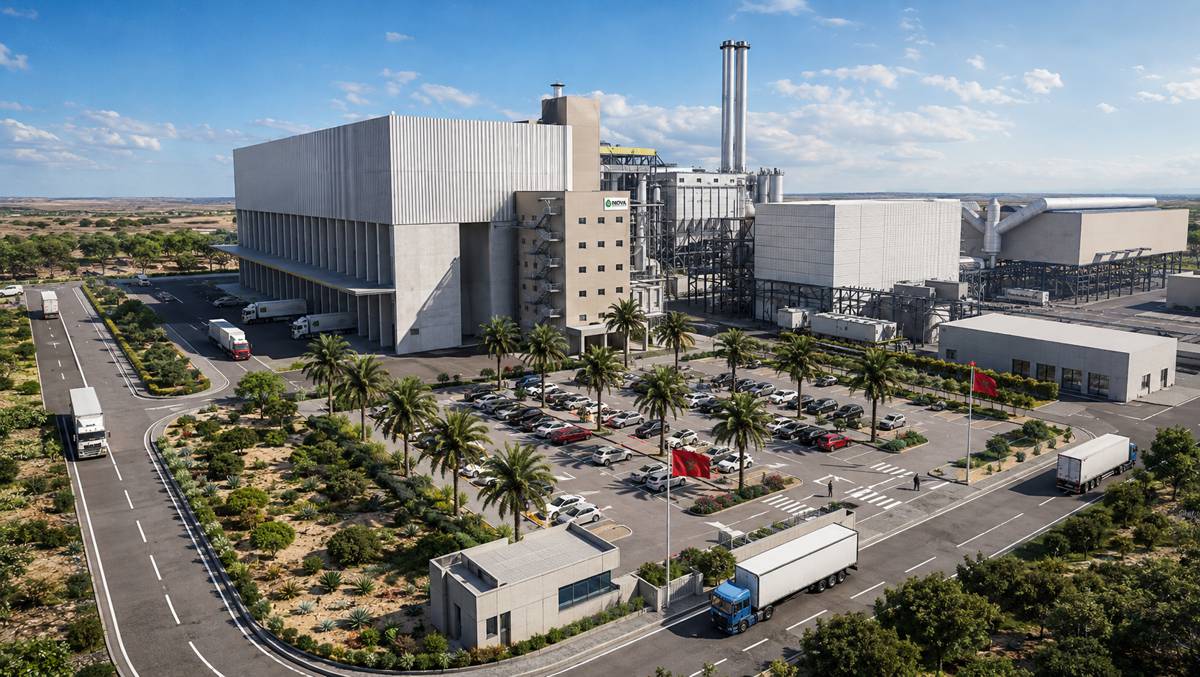
A concession agreement signed with the Municipality of Casablanca has handed a Swiss-Japanese-Moroccan consortium the exclusive right to treat one of Africa’s largest urban waste streams for the next three and a half decades. Kanadevia Inova, the former Hitachi Zosen Inova, will design, finance, build and operate the Casablanca Solid Waste Treatment and Valorization Project alongside Moroccan energy group Nareva and Japanese trading house ITOCHU Corporation.
The headline numbers are substantial in their own right: a facility processing roughly 1.5 million tonnes of municipal waste each year, around 126 MWe of installed generating capacity, a reported capital cost near 1.5 billion US dollars, and a scheduled start of operations in mid-2030. Yet the megawatts are not the most instructive part of the story for anyone tracking where infrastructure capital is moving.
What makes the Casablanca award matter to the wider construction and infrastructure economy is the model it exports rather than the plant it builds. This is the first full-scale migration of Europe’s mature, carbon-capture-ready waste-to-energy template, wrapped in a long-dated concession and underwritten by blue-chip sponsors, into a large and fast-growing African market.
The technology is proven and the emissions standards are European, but the commercial architecture is the genuinely portable asset. A local champion with balance-sheet weight, an international technology provider fresh from delivering first-of-a-kind carbon capture projects, and a trading-house partner able to structure project finance have combined to make a facility of this scale bankable in a market where sanitary landfill barely existed a generation ago. That combination, and the methane economics underneath it, is what other African and emerging-market cities will now study.
Briefing
- Kanadevia Inova, Nareva and ITOCHU have signed a 33.5-year concession to design, finance, build and operate a waste-to-energy plant next to Casablanca’s Médiouna landfill, processing around 1.5 million tonnes of municipal waste annually.
- Installed capacity is approximately 126 MWe from the thermal plant, complemented by a 50 MWp solar array and 4 MW of landfill gas recovery, delivering close to 1 TWh of electricity a year and serving the Greater Casablanca region of more than 4.2 million people.
- Reported project value is around 1.5 billion US dollars, with construction due to begin once debt and equity are secured in the fourth quarter of 2026, a build period of roughly three and a half years, and Moroccan contractor Somagec engaged to construct the facility.
- Electricity off-take is covered by agreements with national utility ONEE and the regional multiservice operator SRM Casablanca-Settat, while the facility is engineered to accept future carbon capture, utilisation and storage.
- The consortium expects the project to raise Casablanca’s waste valorisation rate to around 80 per cent and, according to ITOCHU, to avoid up to 128 million tonnes of carbon dioxide equivalent over the life of the concession, primarily by curbing landfill methane.
A Concession Engineered for Thirty-Three Years
The structure of the deal is where its commercial logic sits. Kanadevia Inova will establish a special purpose company to hold the concession, then proceed with engineering, procurement and construction alongside a long-term operations and maintenance agreement, with construction executed by Moroccan firm Somagec.
The 33.5-year term gives the consortium exclusive treatment rights over Casablanca’s municipal waste, and the revenue model rests on two contracted pillars: a long-dated waste treatment concession from the municipality and electricity off-take agreements with ONEE and SRM Casablanca-Settat. That pairing of a public gate-fee obligation with utility-backed power sales is precisely the kind of contracted, availability-style cash flow that international lenders require before committing to a billion-dollar facility in an emerging market.
The financing sequence tells its own story about how these projects now come together. Chief executive Bruno-Frédéric Baudouin has indicated that construction will begin once debt and equity are fully secured in the fourth quarter of 2026, with the consortium seeking finance from Moroccan lenders and a build programme of around three and a half years. Crucially, waste treatment and electricity generation are expected to start six to ten months before final completion, which shortens the period during which the asset carries construction risk without earning revenue.
The concession also folds in the closure and management of the existing Médiouna landfill, the construction of a new engineered landfill, a leachate treatment unit and a landfill gas recovery plant, so the sponsors are acquiring an integrated waste-management franchise rather than a single generating asset. Lifting valorisation to roughly 80 per cent is the operational target that justifies the exclusivity, since it moves Casablanca decisively away from raw dumping toward recovery.
The Balance Sheet Behind the Plant
The identity of the partners explains why a project of this ambition is credible. Nareva, the consortium’s lead investor and Moroccan partner, is a subsidiary of Al Mada, the investment holding company associated with the Moroccan royal family, and it is the Kingdom’s leading independent power producer with a portfolio of around 3.5 gigawatts and annual output exceeding 16 TWh.
Nareva built its position on wind, operating some of Africa’s largest onshore wind complexes, and on conventional thermal generation through the ultra-supercritical Safi plant, while more recently moving into desalination, water transfer and green hydrogen. Its entry into municipal waste valorisation signals that Morocco’s dominant private energy group sees waste infrastructure as the next tranche of contracted, long-life returns, and its domestic balance sheet gives the project local financial and political durability.
The international partners bring complementary strengths. ITOCHU, one of Japan’s largest trading houses, supplies the project-finance structuring and cross-border capital that these transactions depend on, and it has quantified the environmental case by estimating that the scheme could avoid up to 128 million tonnes of carbon dioxide equivalent across the concession.
Kanadevia Inova, for its part, carries the technology and the delivery record. The company operated as Hitachi Zosen Inova until October 2024, when it rebranded following the renaming of its Osaka-listed parent from Hitachi Zosen to Kanadevia Corporation, and it counts more than 1,600 reference projects worldwide with a workforce of around 3,500 across seventeen countries. The plant will run on the company’s large-scale combustion and boiler systems and its proprietary Autaro automatic combustion control, technology packages already proven across the European fleet. That triangulation of Moroccan capital, Japanese finance and Swiss engineering is the replicable formula, and it is the part most transferable to Lagos, Nairobi, Cairo or Accra.
Médiouna and the Economics of Methane
The environmental prize at Casablanca is methane, not electricity, and understanding that reframes the entire investment case. Médiouna is Morocco’s largest landfill and among the largest on the continent, and like most Moroccan dumpsites it has leaked greenhouse gases for decades while contaminating surrounding farmland and generating persistent odour complaints. Landfill methane has a global warming potential roughly 28 times that of carbon dioxide on the measure the consortium cites, and Moroccan landfills capture only a small fraction of the gas they produce, with the overwhelming majority escaping to the atmosphere. By diverting fresh waste from the tip and recovering gas from the legacy site, the project attacks the single largest source of avoidable emissions in the municipal waste chain, which is why the avoided-emissions figure runs to tens of millions of tonnes rather than the marginal savings a power station alone would deliver.
Baudouin has framed the scale in blunt terms, telling reporters that the development could cut greenhouse gas emissions by an amount equivalent to around a fifth of Switzerland’s annual output, and that the effect is “like removing 300,000 cars from the road.” Whether or not one accepts the headline comparison, the underlying point holds for investors and policymakers alike: the commercial and climate value of modern waste-to-energy is concentrating around methane abatement and diversion from landfill, not around the kilowatt-hours the turbine exports.
That shift matters for procurement, because it changes how these assets should be valued and how their revenue can be structured. A facility whose principal output is avoided methane sits in a different risk and reward category from one selling baseload power, and it opens the door to carbon-linked income streams that did not feature in earlier generations of incineration projects.
Designed for a Carbon-Constrained Future
The decision to engineer the plant for future carbon capture, utilisation and storage is the clearest signal that Kanadevia Inova is building for a tightening regulatory horizon rather than today’s rules. Capturing carbon dioxide from flue gases would push the facility toward net-negative territory, since the waste it treats would otherwise generate landfill methane, and the company has explicitly designed the site so that capture equipment can be retrofitted without a wholesale redesign of the combustion and energy-recovery train.
This is not a speculative aspiration. Kanadevia Inova received notice to proceed in late 2025 on the Protos project near Ellesmere Port in Cheshire, the first full-scale carbon capture plant at a British waste-to-energy facility, using its own amine-scrubbing technology and targeting operation around 2029, and it validated the approach earlier through a containerised pilot at the Ferrybridge site in West Yorkshire.
The Casablanca design therefore draws on a live European delivery pipeline rather than a laboratory concept. The company’s new plant for the city of Rome at Santa Palomba, treating 600,000 tonnes a year, incorporates carbon dioxide capture and liquefaction from the outset, and the broader European market is moving in the same direction as the European Union weighs extending its emissions trading system to cover waste-to-energy.
Operators that build capture-ready assets today insulate their long-dated concession income against the day carbon costs arrive, and they position themselves to supply captured carbon dioxide into utilisation and storage markets that are only now forming. For an asset with a 33.5-year life, that optionality is a material component of value, and it distinguishes a facility designed for the 2050s from one designed for the 2010s.
What Casablanca Tells Africa’s Waste Market
Placed against the continental backdrop, Casablanca becomes only the second large municipal waste-to-energy facility in Africa, following the Reppie plant that opened outside Addis Ababa in 2018, and by generating capacity it would be several times larger than its Ethiopian predecessor.
Reppie’s experience is instructive for exactly the reasons its promoters would prefer to forget. Independent analysis has found the Ethiopian plant processing well under half its design tonnage, a shortfall attributed to the high moisture content and low separation of African municipal waste streams, and that record is a warning that combustion technology is rarely the binding constraint. Feedstock quality, collection discipline and reliable waste supply determine whether a plant of this kind meets its targets, which is why the Casablanca consortium’s control of the full waste chain, from collection through valorisation to residual landfill, is more than administrative tidiness.
The market conditions in Morocco give the project a firmer foundation than many African precedents enjoyed. Municipal waste generation is forecast to approach 39 million tonnes a year nationally by 2030, urban collection coverage has already climbed above 90 per cent under successive World Bank-backed programmes, and the government’s current valorisation strategy explicitly prioritises reduced landfilling and higher recovery.
On the energy side, Morocco is pursuing a target of 52 per cent renewable electricity capacity by 2030 against demand growing at around 3 per cent a year, so a facility delivering close to 1 TWh of dispatchable, waste-derived power fits national policy rather than working against it. The combination of a credible waste feedstock, a supportive policy framework and a bankable off-take arrangement is precisely what has been missing elsewhere on the continent, and it is why Casablanca is likely to be read as a template.
Where Purchasing Power and Value Are Moving
For infrastructure owners, investors and policymakers, the most useful reading of the Casablanca award is as a marker of where value in the waste economy is concentrating. The returns increasingly sit in methane abatement, in decarbonisation-ready design that can absorb carbon pricing without stranding, and in long-dated concession income underwritten by sponsors with the balance sheet to see a three-and-a-half-year build through to a three-decade operating life.
Municipal power sales, the traditional headline of a waste-to-energy project, have become one revenue line among several rather than the centre of the case. That reweighting should inform how public authorities structure future tenders and how private capital prices them, since a concession that captures avoided-emissions value and carbon optionality is worth considerably more than one that sells electricity alone.
The strategic signal for the industry is that the mature European waste-to-energy sector has found a credible export pathway, and that the vehicle is the concession structure rather than the incinerator. Nareva’s move from wind and thermal generation into waste valorisation shows a leading emerging-market power producer treating waste infrastructure as a core asset class, while Kanadevia Inova’s willingness to bundle proven technology with capture-ready design and long-term operations demonstrates how technology providers can climb the value chain from equipment supply toward asset ownership and service.
Cities across Africa and the wider Global South face the same pressures that made Casablanca viable: rising waste volumes, overloaded dumpsites, methane liabilities and constrained public budgets. The consortium that has just won Casablanca has, in effect, published the blueprint, and the market will now test how widely it can be copied.
Key Industry Questions
- How much will the Casablanca waste-to-energy plant cost and how is it being financed? Reporting around the concession puts the capital cost at approximately 1.5 billion US dollars, a figure drawn from the consortium and interviews rather than the formal concession announcement. The project is being delivered through a special purpose company established by Kanadevia Inova, with Nareva acting as lead investor and ITOCHU providing trading-house capital and structuring. Chief executive Bruno-Frédéric Baudouin has indicated construction will start once debt and equity are secured in the fourth quarter of 2026, with financing sought from Moroccan lenders. The revenue underpinning the debt comes from a 33.5-year municipal waste treatment concession combined with electricity off-take agreements with ONEE and SRM Casablanca-Settat, giving lenders the contracted cash flows they require.
- When will the plant start operating and how long will construction take? Commercial operations are scheduled for mid-2030, with the supplied project overview citing a planned start in June 2030. Construction is expected to begin once financing closes in the fourth quarter of 2026, and the build programme is estimated at around three and a half years, with Moroccan contractor Somagec engaged to construct the facility. Notably, the consortium expects waste treatment and electricity generation to begin six to ten months before final completion, which allows the asset to start earning revenue and diverting waste ahead of formal handover. That phased commissioning reduces the window in which the project carries full construction risk without income, an important consideration for a facility of this capital intensity.
- How can burning waste reduce greenhouse gas emissions? The climate benefit comes principally from what the facility prevents rather than what it emits. Organic waste left in landfill decomposes and releases methane, a gas with a global warming potential the consortium places at roughly 28 times that of carbon dioxide, and Moroccan landfills currently capture only a small share of the gas they produce. By diverting fresh waste from Médiouna and recovering gas from the legacy site, the project cuts methane at source, which is why ITOCHU estimates it could avoid up to 128 million tonnes of carbon dioxide equivalent over the concession. The electricity generated also displaces grid power, but the methane avoidance is the dominant contributor to the environmental case.
- Is this the largest waste-to-energy plant in Africa? It would be the second large municipal waste-to-energy facility on the continent after Ethiopia’s Reppie plant, which opened near Addis Ababa in 2018, and by installed generating capacity it would be considerably the larger of the two. Reppie carries a nameplate capacity of around 25 MW, whereas the Casablanca thermal plant is rated at approximately 126 MWe before its solar and landfill gas additions. Some early coverage described Casablanca as Africa’s second-largest such plant, which understates the gap, since Reppie has also struggled to reach its design throughput. On the metrics that matter to operators, Casablanca would set a new benchmark for the scale of waste-to-energy delivered in Africa.
- What role does carbon capture play in the project? No carbon capture will be installed at commissioning, but the plant has been deliberately engineered so that capture, utilisation and storage equipment can be added later without redesigning the combustion and energy-recovery systems. That design choice reflects Kanadevia Inova’s growing carbon capture business, which includes the Protos project in Cheshire, the first full-scale carbon capture facility at a British waste-to-energy plant, and a capture and liquefaction unit within its new plant for Rome. Building capture-ready assets protects long-dated concession income as carbon pricing spreads and positions the facility to supply captured carbon dioxide into emerging utilisation and storage markets. For a 33.5-year asset, that optionality is a meaningful part of its long-term value.
- Who is Kanadevia Inova and what happened to Hitachi Zosen Inova? Kanadevia Inova is the Zurich-based waste-to-energy and renewable gas technology company formerly known as Hitachi Zosen Inova. It rebranded in October 2024 after its Osaka-listed parent, Hitachi Zosen Corporation, renamed itself Kanadevia Corporation, a coined term combining the Japanese verb for playing music in harmony with the Latin word for way. Only the name changed; ownership, management and the roughly 3,500-strong workforce across seventeen countries remained the same. The company traces its roots to a Swiss incineration business founded in 1933 and counts more than 1,600 reference projects worldwide, acting as project developer, technology supplier and engineering, procurement and construction contractor for thermal and biological waste recovery plants.
- What does the deal mean for Morocco’s energy and waste strategy? The project aligns closely with two national priorities. Morocco is targeting 52 per cent renewable electricity capacity by 2030 against electricity demand growing at around 3 per cent a year, and a facility producing close to 1 TWh of waste-derived power supports that ambition with dispatchable output. On waste, the Kingdom’s current valorisation programme prioritises reduced landfilling and higher recovery, and Casablanca’s target of lifting valorisation to about 80 per cent advances that goal for the country’s largest city. The involvement of Nareva, an Al Mada company and the Kingdom’s leading independent power producer, also signals that Morocco intends to develop exportable expertise in waste infrastructure, extending a strategy it has already pursued in wind, solar and green hydrogen.
- What are the main risks to the project? Three risks stand out. Financing must close before construction can start, and the timeline depends on securing debt and equity in the fourth quarter of 2026. Feedstock quality is the operational risk that undermined the Reppie plant in Ethiopia, where high moisture and low waste separation cut throughput well below design, so collection discipline and reliable supply will determine whether Casablanca meets its 80 per cent valorisation target. Finally, the long concession exposes sponsors to regulatory and carbon-policy change over more than three decades, which is partly why the plant is designed to accept carbon capture. Against these, the contracted off-take, integrated waste-chain control and strong sponsor balance sheets provide substantial mitigation.
Strategic Takeaways
- Value in municipal waste is migrating from power sales toward methane abatement and decarbonisation-ready infrastructure, and sponsors are increasingly pricing avoided emissions and carbon optionality rather than kilowatt-hours alone.
- The genuinely portable asset in the Casablanca deal is its commercial architecture, pairing a local balance-sheet champion with international technology and trading-house finance under a long-dated concession, a structure other African and emerging-market cities can replicate.
- Carbon-capture-ready design is becoming a baseline expectation for new waste-to-energy assets, and retrofit optionality is what protects thirty-year concession income against tightening emissions and carbon-pricing regimes.
- Feedstock quality, collection discipline and reliable waste supply, not combustion technology, decide whether large waste-to-energy plants hit their targets, and Ethiopia’s underperforming Reppie plant is the cautionary benchmark the industry should keep in view.
- Morocco is positioning itself as a testbed for exportable green-infrastructure models, and Nareva’s move from wind and thermal into waste valorisation indicates where Al Mada and the Moroccan state see the next generation of contracted infrastructure returns.