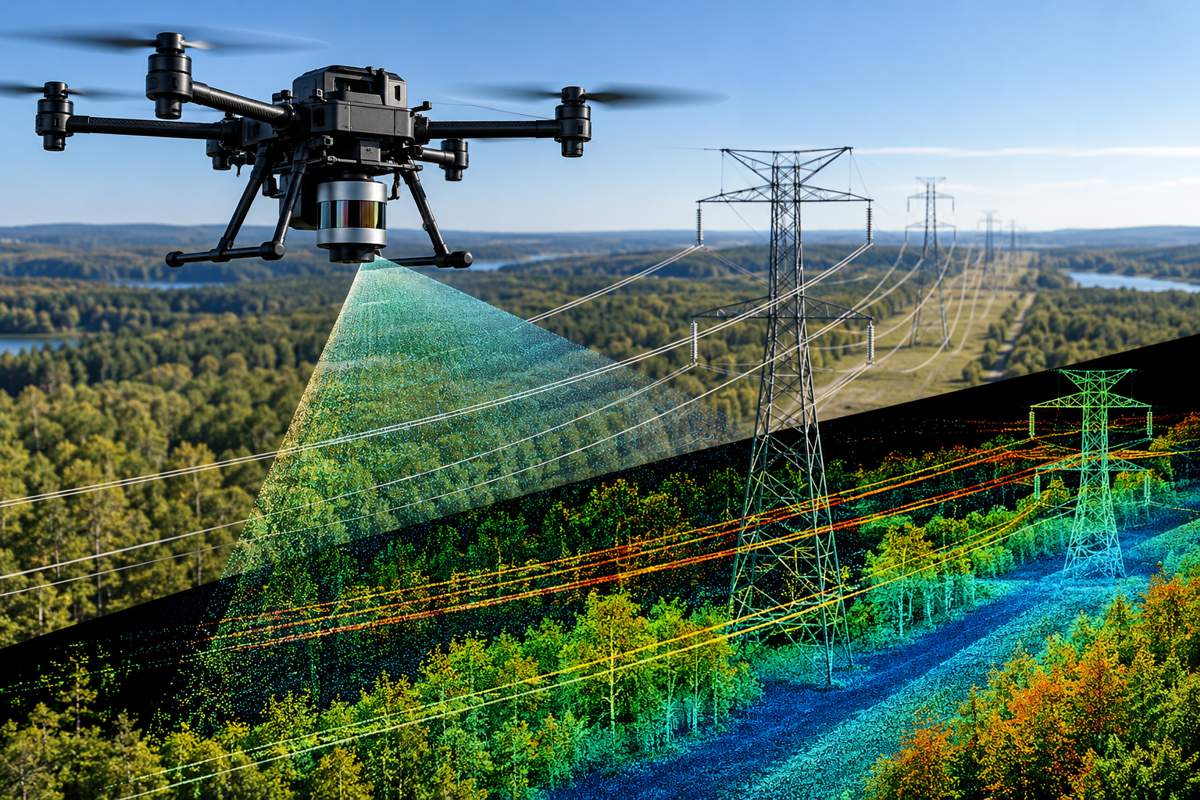
Allient Brings GaN Power Electronics to Professional Drone Propulsion
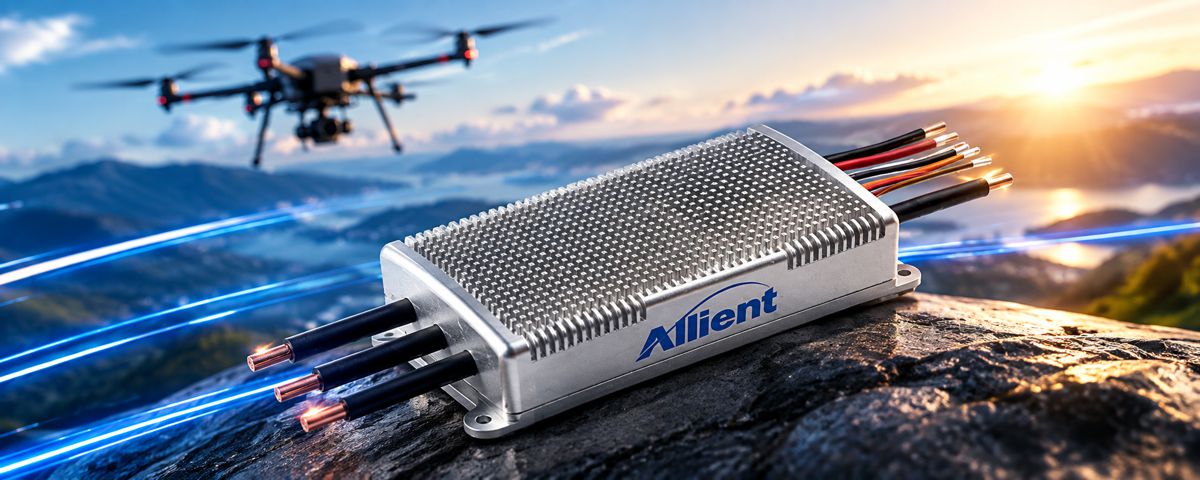
Every gram and watt matters aboard a professional multirotor, making the electronic speed controller between the battery and propulsion motor a surprisingly consequential piece of hardware. Allient has now brought gallium nitride power electronics into that part of the system with its Vyxalon Apex Drone Drive, a compact 3.6 kW electronic speed controller designed for industrial, commercial and defence unmanned aircraft.
The new controller combines GaN switching technology with high-speed field-oriented control, supporting both sensorless and encoder-based operation. Allient specifies PWM switching at up to 100 kHz and current and velocity control loops operating at 25 kHz, alongside a 60 A rated current and a 15 to 60 VDC operating range.
At 97 g and measuring 80 x 40 x 20 mm, the controller also illustrates how improvements in power electronics are influencing the physical architecture of unmanned aircraft. Allient claims its GaN electronics can reduce controller size by as much as 50% and energy losses by up to 56% compared with conventional silicon MOSFET designs. Those are manufacturer figures rather than independently verified performance comparisons, but reducing switching losses and heat creates room for smaller electronics, less cooling and potentially greater useful endurance.
Briefing
- Allient’s Vyxalon Apex is a 3.6 kW electronic speed controller for professional UAV and UAS propulsion.
- The controller uses gallium nitride power electronics with PWM switching at up to 100 kHz.
- Current and velocity control loops operate at 25 kHz with sensorless and encoder-based field-oriented control.
- The 97 g IP67 aluminium unit operates from 15 to 60 VDC and is rated at 60 A.
- Allient says the product will meet NDAA supply-chain requirements and be included within the DCMA Blue UAS framework.
GaN Moves Into Drone Propulsion
Gallium nitride has become increasingly attractive in power electronics because GaN devices can switch rapidly while reducing some of the losses associated with conventional silicon devices. In an aircraft, where electrical efficiency, heat and weight are closely connected, those characteristics have an obvious application.
The Vyxalon Apex uses GaN technology to switch at frequencies of up to 100 kHz. Allient says this reduces energy losses and heat generation while allowing the associated electronics to become smaller. The company claims energy-loss reductions of up to 56% against conventional silicon MOSFET designs, although actual savings aboard an aircraft will depend on the motor, propeller, battery, flight profile and operating conditions rather than the ESC alone.
Thermal behaviour is particularly relevant. Allient specifies an operating temperature range from -30°C to 85°C and houses the electronics in an IP67-rated aluminium enclosure. Professional UAVs used for infrastructure inspection, surveying, utilities, agriculture and emergency response are increasingly expected to operate outside the relatively benign conditions associated with recreational aircraft.
A more efficient ESC cannot by itself transform aircraft endurance, but propulsion losses accumulate throughout a flight. Any reduction achieved without adding weight is useful, particularly on aircraft carrying expensive sensors or operating close to payload and battery limits.
Controlling the Motor
Power conversion is only part of the Apex design. The controller uses field-oriented control, or FOC, to manage the motor, with both sensorless and encoder-based configurations supported.
FOC controls the magnetic field within a motor rather than simply applying a succession of switching commands. Done well, it can provide smooth torque delivery, precise response and efficient operation across changing loads and speeds. Allient’s 25 kHz current and velocity control loops are intended to give the controller sufficiently rapid feedback for demanding propulsion applications.
The company specifies acceleration from zero to full speed in 0.5 seconds and has incorporated active braking, propeller position holding and stall recovery. The latter maintains field orientation during a stall so that controlled operation can resume rather than requiring the controller effectively to rediscover the motor’s position. An inspection drone operating close to a bridge, power line or industrial structure may repeatedly change thrust as it maintains position against turbulence, while payload-carrying aircraft and autonomous aerial robots can place different demands on propulsion response.
Low vibration and smooth motor operation can also benefit cameras, LiDAR, surveying equipment and other precision sensors carried by the aircraft.
Integration Around the Aircraft
The Apex has been designed around established drone communication interfaces rather than as an isolated motor controller. DroneCAN, DShot and PWM digital command are supported, with Ethernet available as an option. This places the ESC within a broader control architecture where propulsion data can be available to other systems aboard the aircraft, while Allient also lists protection and diagnostic functions covering voltage, current, temperature and other operating parameters.
The controller forms part of a wider propulsion strategy at the company. Allient has developed a Vyxalon family of UAV motors alongside its control electronics, positioning it to supply both the motor and the electronics controlling it rather than treating the ESC as an independent component.
Matching motors and controllers involves thermal, electrical and control compromises, particularly where the propulsion package must be tuned around a specific propeller, payload or mission profile. Allient describes the Apex as field programmable, allowing parameters to be adjusted for different applications.
The Blue UAS Supply Chain
The defence element of the product extends beyond military applications. Allient says the Vyxalon Apex will meet National Defense Authorization Act supply-chain requirements and will be included in the Defense Contract Management Agency’s Blue UAS framework and catalogue.
The Blue UAS programme has evolved into the DCMA Blue List, covering compliant unmanned aircraft as well as components used to build and maintain them. Responsibility transferred from the Defense Innovation Unit to DCMA, which is expanding the programme as a procurement route for vetted UAS technologies.
DCMA’s approach places considerable emphasis on individual components. Where most of an aircraft is already built from approved parts, a component that is not yet on the list can undergo separate assessment rather than forcing the complete aircraft through the same process again. Vendors can also submit systems or components for assessment against NDAA requirements.
An approved motor controller can potentially become a building block for multiple UAS manufacturers seeking compliant supply chains rather than being tied to a single aircraft programme.
Allient has not said that the Apex has already completed that process. Its announcement states that the drive will meet NDAA requirements and will be included within the framework, so its eventual status should be distinguished from a product already appearing as an approved Blue List component.
Beyond Defence Applications
Allient identifies defence, industrial operations, robotics and agriculture as target markets for the Apex, including inspection, delivery, utility monitoring, mapping and surveying.
There is considerable overlap in the engineering requirements across those sectors. A military reconnaissance aircraft and a bridge-inspection drone may have very different missions, but both benefit from lower propulsion losses, reduced controller weight, predictable thermal behaviour and reliable communication with the flight-control system.
The interesting development is occurring below the level of the complete drone. UAV capability is often discussed through autonomy, cameras, AI and flight software, yet improvements in power electronics and motor control determine how much energy is available to keep all of those systems airborne.
The Vyxalon Apex brings several technologies already reshaping other electrically driven machinery into a particularly weight-sensitive application. Smaller, cooler and more precisely controlled propulsion electronics give drone designers another place to recover performance without simply fitting a larger battery.
Key Industry Questions
- What is the Vyxalon Apex Drone Drive? It is a 3.6 kW electronic speed controller developed by Allient for professional UAV and UAS propulsion systems.
- Why use gallium nitride in a drone ESC? GaN power devices can support high switching frequencies with relatively low switching losses. In drone applications this can help reduce heat, energy losses and the physical size of power electronics.
- How powerful is the Apex controller? Allient rates it at 3,600 W and 60 A, with an operating bus-voltage range of 15 to 60 VDC.
- How much does the controller weigh? The aluminium-housed unit weighs 97 g and measures 80 x 40 x 20 mm.
- What motor-control technology does it use? The controller uses field-oriented control with both sensorless and encoder-based operation. Allient specifies 25 kHz current and velocity control loops.
- What communication protocols are supported? Published interfaces include DroneCAN, DShot and PWM digital command, with Ethernet available as an option.
- Is the Vyxalon Apex already approved under the Blue List programme? Allient says the controller will meet NDAA supply-chain requirements and will be included within the DCMA Blue UAS framework. The announcement does not confirm that the product has already completed Blue List approval.
- Is the controller intended only for military drones? No. Allient identifies industrial inspection, utilities, delivery, autonomous aerial robotics, mapping, surveying, environmental monitoring and precision agriculture among its target applications.
Strategic Takeaways
- GaN electronics offer drone designers another route to reducing propulsion losses without increasing battery capacity.
- High-frequency control and FOC make the ESC part of flight-performance engineering rather than simply a power-switching component.
- A 97 g, IP67 controller reflects the competing UAV requirements for low weight and environmental durability.
- Allient’s development of both Vyxalon motors and control electronics points towards increasingly integrated propulsion packages.
- Component-level Blue List assessment can give compliant propulsion technology access to multiple defence UAS programmes rather than tying it to a single aircraft design.